The Doberman Pinscher is a loyal, intelligent breed renowned for its alertness, elegance, and fearless devotion as a guardian.
How the Doberman Pinscher coat is built, and what that means when you groom it.
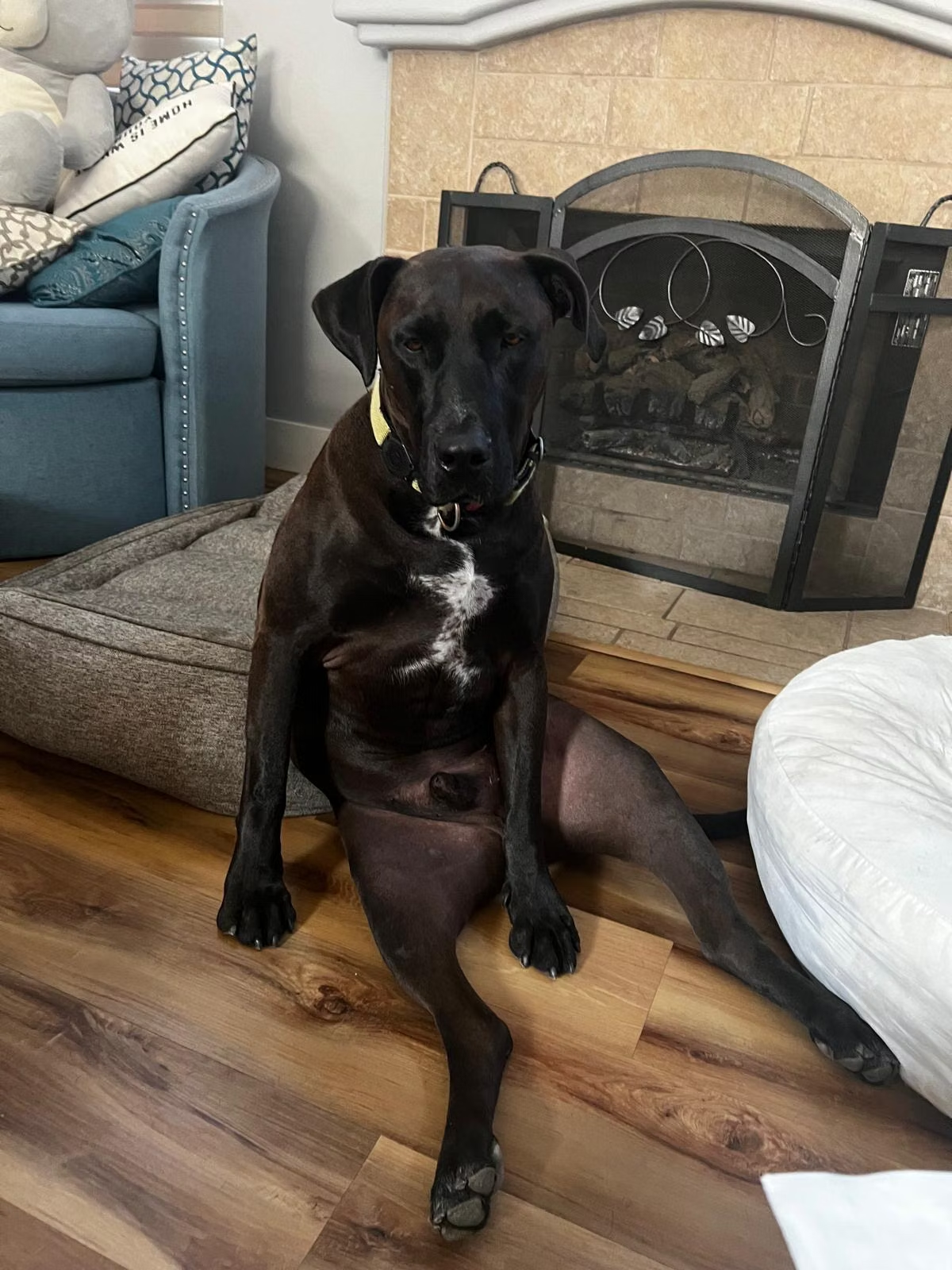
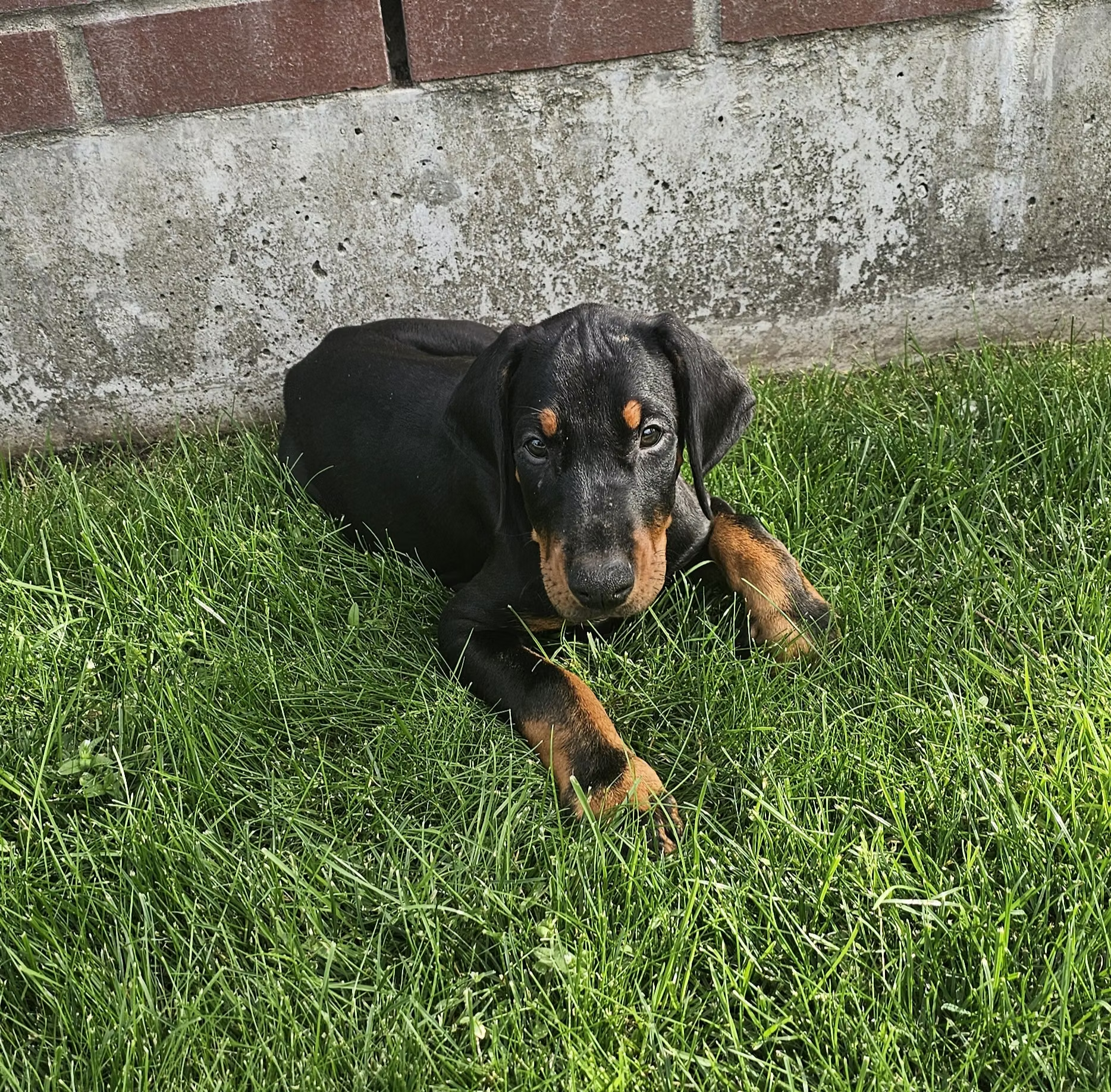
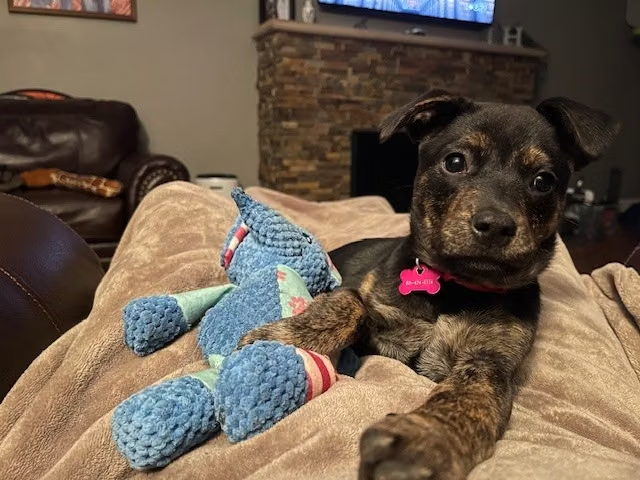
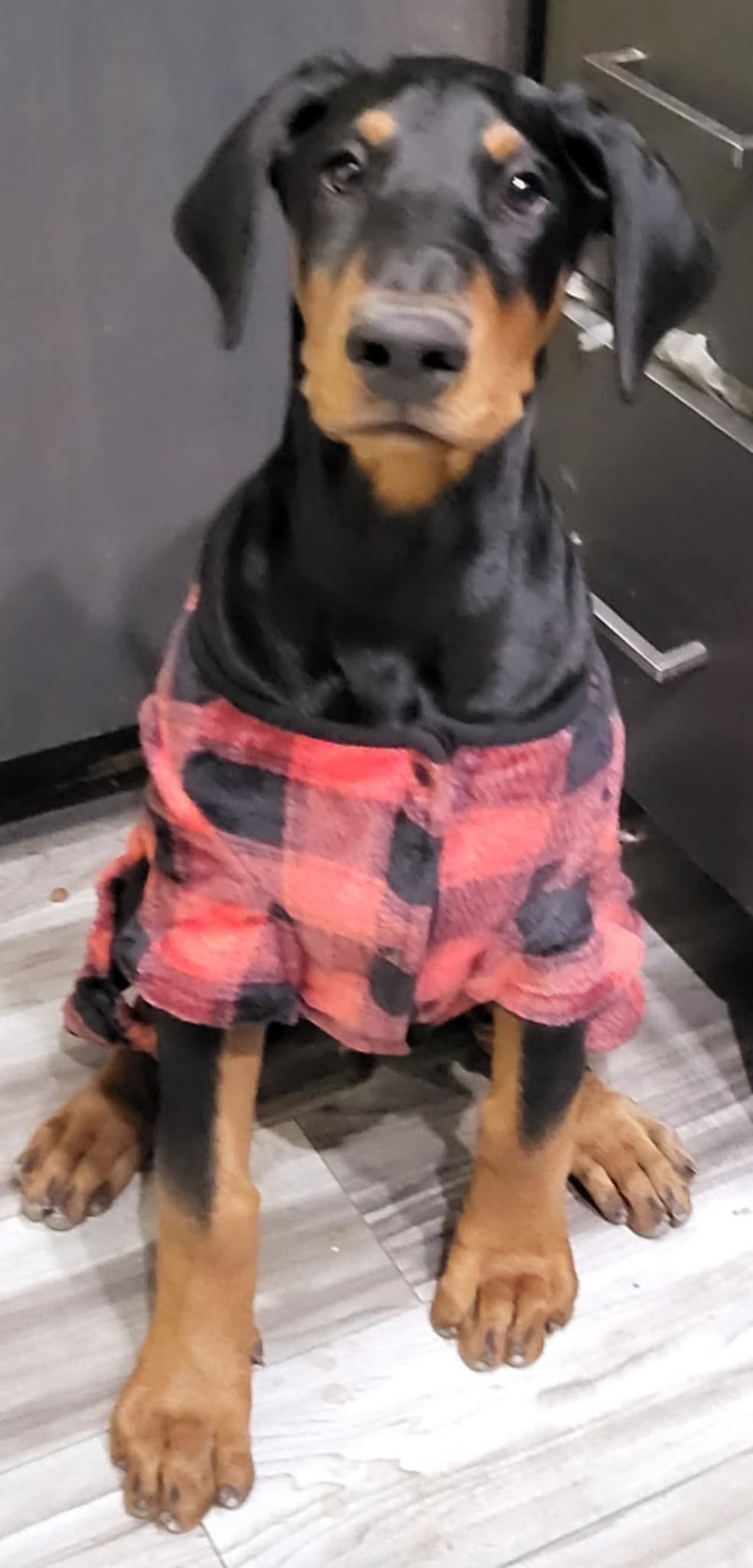
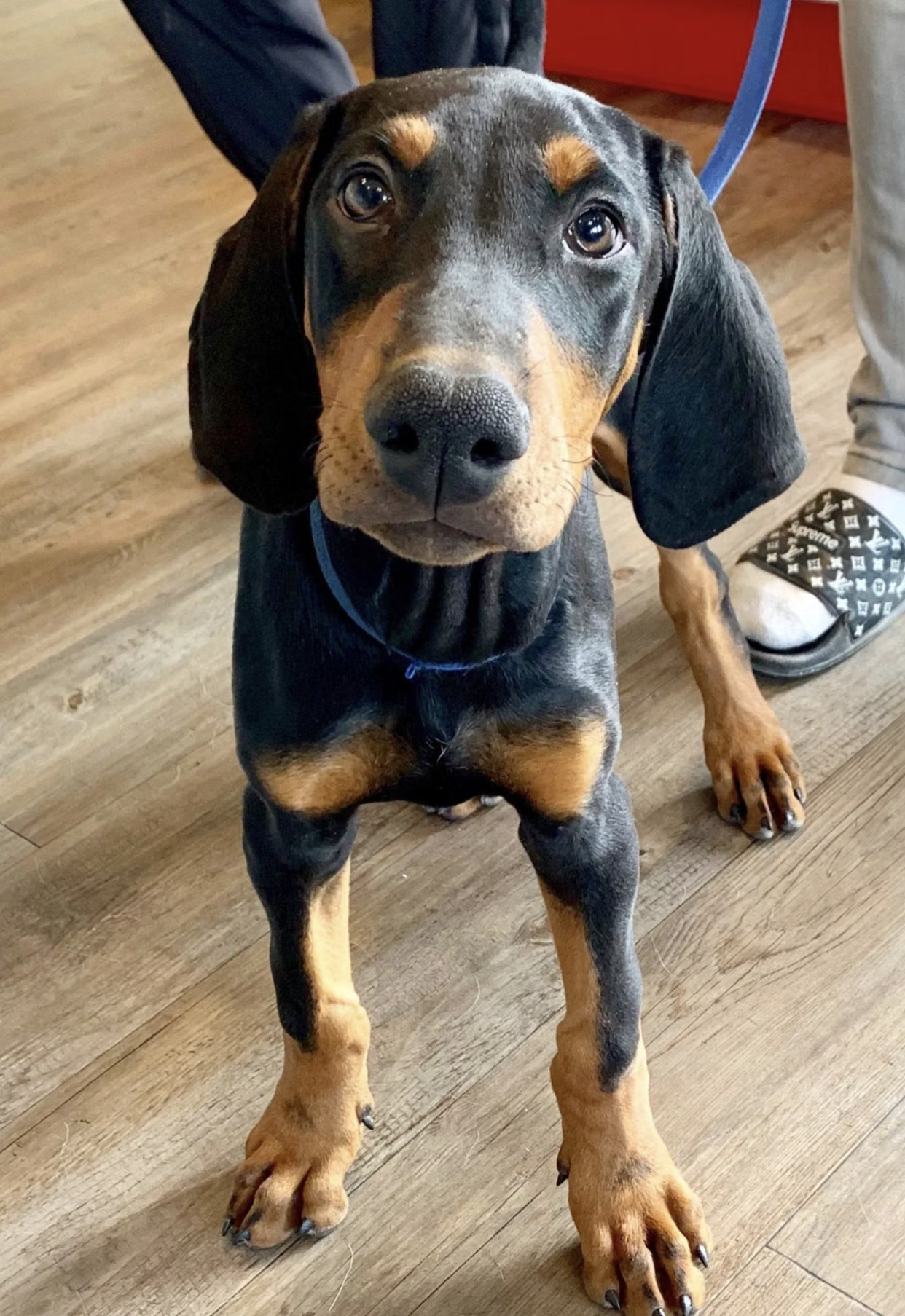
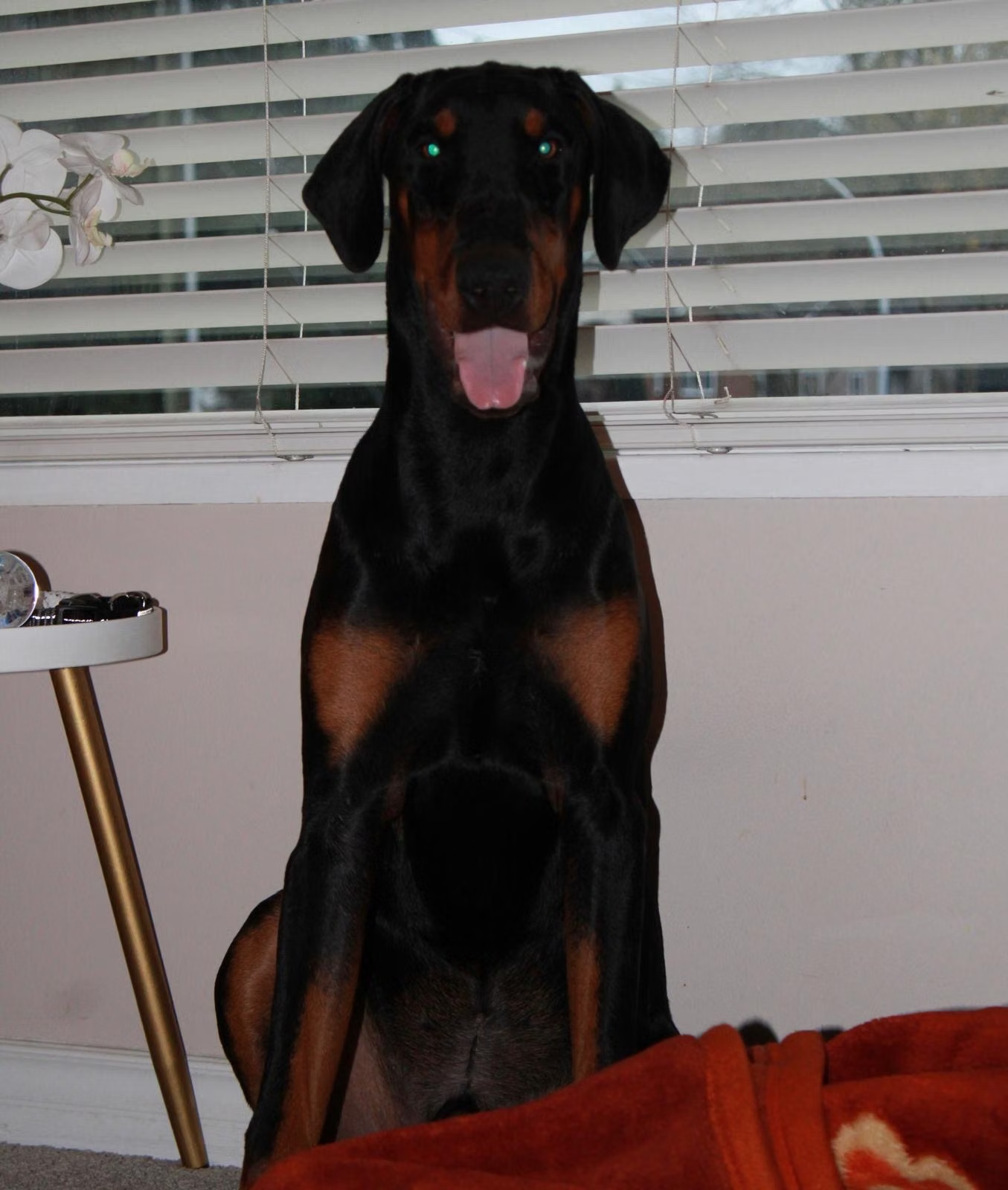
A few of the Doberman Pinscher profiles members have added to United Pet Club.
The Doberman Pinscher is a large German working dog standing 61 to 71 cm at the shoulder and weighing 27 to 45 kg, bred for intelligence and protective instinct, and suited to active owners who can provide consistent structure and daily companionship.
Developed in Germany as a personal protection and working breed, the Doberman Pinscher is one of the more recognisable large dogs registered with Dogs New Zealand. It has a compact, muscular frame, a square outline, and a bearing that reflects its working origins. Males typically stand 66 to 71 cm at the shoulder and females 61 to 66 cm, with weight ranging from roughly 27 to 45 kg.
The breed bonds closely with the people it lives with and tends to stay near its household throughout the day. That same alertness, the quality that makes a Doberman a capable guardian, also makes it sensitive and responsive to how it is handled. It is not a dog that does well left alone for long stretches.
Without daily physical and mental work, the energy and focus this breed was selected for can turn into restlessness or unwanted behaviour at home. An active household with time to train and exercise is a better fit than a quiet one.
| Attribute | Detail |
|---|---|
| Origin | Germany |
| Size | Large (27 to 45 kg) |
| Lifespan | 10 to 13 years |
| Group / role | Working breed; guardian and companion |
| Good with | Committed families, experienced owners, other pets when socialised early |
A Doberman fits well in an active household where someone is home often, enjoys training, and can commit to daily exercise. It thrives with engaged owners who like obedience or dog sports. It is less suited to long work days away from home or to owners wanting a low-maintenance companion, because the breed needs close contact and consistent direction.
The Doberman Pinscher was developed in Apolda, Germany, during the 1880s by Karl Friedrich Louis Dobermann, a tax collector who wanted a large, alert guard dog to accompany him on his rounds.
The breed's origins lie in the German town of Apolda in Thuringia during the 1880s. Karl Friedrich Louis Dobermann ran the local dog pound and also worked as a tax collector, a combination that gave him both access to a wide variety of dogs and a practical reason to want a capable guard. He set out to produce a medium-to-large dog that would travel with him while he carried money, alert to danger and willing to defend.
Dobermann did not keep detailed breeding records, and the precise crosses that produced the early dogs are not known with certainty. Breed historians generally point to a mix including the old German Pinscher, the Rottweiler, the Black and Tan Terrier, and regional herding dogs. The selection was for working temperament and reliability rather than a consistent look.
After Dobermann's death in 1894, Otto Goeller took on much of the work of refining and stabilising the breed. Recognition in Germany followed before the end of the century, and the breed spread internationally in the early 1900s.
The Doberman served as a messenger, sentry, and scout dog in both World Wars. That military history reinforced selection pressure for trainability and steady nerve, and shaped the reputation the breed carries today.
The Doberman Pinscher is a square, muscular dog with a short, smooth coat that comes in black, red, blue, or fawn with rust markings, standing 61 to 71 cm at the shoulder.
The Doberman's build is clean and athletic, with a deep chest, a level topline, and well-defined muscle visible through the short coat. The head is long and wedge-shaped, the neck arched, and the overall outline close to square. The body is balanced and powerful without appearing heavy or coarse.
| Trait | Description |
|---|---|
| Height | Males 66 to 71 cm; females 61 to 66 cm |
| Weight | Roughly 27 to 45 kg |
| Coat | Short, smooth, hard, lying close to the body |
| Colours | Black, red, blue, or fawn, each with rust markings |
| Eyes | Almond-shaped, dark in black and red dogs |
The short coat lies flat and shows the dog's musculature clearly. Each of the four recognised colours carries sharply defined rust markings above the eyes, on the muzzle, throat, chest, legs, and feet. Some dogs are born with natural drop ears and a full tail. Ear cropping is not permitted in New Zealand under the Animal Welfare Act 1999, and most Dobermans seen here retain their natural ears. Tail docking of non-working dogs is also restricted, so buyers should confirm current requirements with their vet or with Dogs New Zealand.
The Doberman Pinscher is loyal, alert, and protective, deeply attached to its household and reserved with strangers, and it benefits from early, consistent socialisation to be settled around other animals and new people.
A Doberman tends to follow its people around the house and wants to be near them through the day. It notices changes in its environment quickly and will alert to visitors or unusual activity. With strangers it is watchful and reserved, generally waiting for a cue from its owner before relaxing.
A well-bred, well-raised Doberman is steady and confident without being aggressive. Early socialisation with people, other dogs, and a range of environments shapes a settled adult temperament. Without it, the breed's alertness can tip into skittishness or overreaction. Many live comfortably with other animals when raised alongside them, though some same-sex combinations benefit from managed introductions. With children in the household the breed is generally patient, and its size means supervision around small children is sensible.
| Trait | Rating |
|---|---|
| Affection | 5 |
| Energy | 5 |
| Trainability | 5 |
| Vocalness | 3 |
| Shedding | 2 |
The Doberman needs at least one to two hours of exercise daily and close human contact, while its short coat is straightforward to maintain with weekly brushing.
The Doberman has a short coat and little body fat, so cold and wet conditions are uncomfortable without protection. New Zealand winters vary considerably by region, and in cooler areas, particularly in the south and at altitude, a dog coat for outdoor time is practical. The breed should live inside as part of the household rather than in a kennel or outdoors full-time. A securely fenced section or paddock is useful for off-lead activity, but the breed needs human contact and structured exercise more than open space alone. Under the Dog Control Act 1996, all dogs in New Zealand must be microchipped and registered with their local council, and must be under control in public.
A Doberman needs a complete diet formulated for large, active dogs, fed in two or more measured meals per day to support muscle condition and reduce the risk of bloat.
Feed a complete and balanced food appropriate for a large, active breed, with quality protein to support muscle. Portions depend on age, weight, and activity level; use the manufacturer's guide as a starting point and adjust to keep the dog lean. The Doberman is a deep-chested breed at risk of gastric dilatation-volvulus, so split the daily ration into two meals and avoid strenuous exercise for an hour either side of feeding. Fresh water should be available at all times.
| Life stage | Amount per day | Meals |
|---|---|---|
| Puppy (2 to 6 months) | Per label, growth formula | 3 to 4 |
| Adolescent (6 to 12 months) | Per label, adjust to body condition | 2 to 3 |
| Adult | Roughly 300 to 550 g dry food, by size and activity | 2 |
| Senior | Reduced calories to prevent weight gain | 2 |
Keep treats to about 10 percent of daily calories so they do not displace balanced nutrition. Most Dobermans on a complete food do not require supplements, but a vet may suggest joint support for older or working dogs. Introduce any new food gradually to avoid digestive upset.
The Doberman Pinscher lives about 10 to 13 years and carries an elevated risk of dilated cardiomyopathy and a few other inherited conditions, so health-tested parents and regular cardiac monitoring are important.
Dilated cardiomyopathy is the condition that most affects Doberman lifespans. It is a heart-muscle disease that affects a notable proportion of the breed, often with few outward signs until it is advanced. Regular cardiac screening, including echocardiograms and Holter monitoring as recommended by a vet, gives the best chance of catching it early. Buying from a breeder who screens their stock reduces risk, though it does not eliminate it entirely.
The typical lifespan is 10 to 13 years. Beyond heart disease, the breed is generally robust, but a few other inherited conditions need awareness.
| Condition | Signs | Note |
|---|---|---|
| Dilated cardiomyopathy | Weakness, fainting, coughing, sudden collapse | Leading cause of death in the breed; screen with cardiac exams |
| Von Willebrand disease | Excess bleeding, slow clotting | Inherited clotting disorder; DNA test available |
| Hip dysplasia | Stiffness, limping, difficulty rising | Choose hip-tested parents |
| Hypothyroidism | Weight gain, coat changes, low energy | Managed with daily medication |
| Gastric dilatation-volvulus (bloat) | Distended belly, retching, distress | Emergency; deep-chested dogs are at risk |
The Doberman is among the most trainable dog breeds, learning quickly and working willingly with its handler, but it needs consistent, fair handling and thorough socialisation from puppyhood.
Few breeds pick up new skills as readily as the Doberman. It remembers what it learns, looks for direction from its handler, and is motivated to work. The flip side of that intelligence is that a bored or poorly directed Doberman will find its own entertainment, which is rarely what the owner had in mind.
Start training early, keep sessions short and varied, and stay consistent so the dog has clear rules to follow. The breed is sensitive and responds best to a calm, confident handler rather than harsh correction. Socialisation with people, places, sounds, and other animals from puppyhood is as important as formal obedience, because it shapes the settled adult temperament the breed is capable of. Dogs New Zealand offers obedience and companion dog trials that suit the Doberman well.
Responsible Doberman breeding in New Zealand involves health-tested parents, typical litters of six to eight puppies, and cardiac and clotting screening before any mating.
Dobermans reach sexual maturity around 6 to 12 months of age, but responsible breeders wait until the dog is physically and mentally mature, generally around 2 years old, before proceeding. By that point the dog can complete the health screening the breed requires: cardiac evaluation for dilated cardiomyopathy, DNA testing for von Willebrand disease, and hip assessment.
Females cycle roughly twice a year. Gestation runs about 63 days after a successful mating. Litters typically contain six to eight puppies, though smaller and larger litters occur. The dam usually whelps without assistance, but a breeder should remain present throughout and have a vet ready to contact if labour does not progress normally.
Puppies are nursed for the first weeks, with gradual weaning beginning around 3 to 4 weeks. Early handling and careful socialisation during the first two months lay the foundation for a stable adult. Puppies should remain with the litter until at least 8 weeks to learn from the dam and siblings. Breeders registered with Dogs New Zealand agree to a code of practice covering these standards.
| Metric | Value |
|---|---|
| Sexual maturity | 6 to 12 months |
| Recommended breeding age | About 2 years |
| Gestation | About 63 days |
| Average litter size | 6 to 8 puppies |
| Weaning | Around 3 to 7 weeks |
| Leave for new home | 8 weeks or later |
Alongside council registration, a free United Pet Club record keeps a live phone number behind your Doberman Pinscher and its chip.
Keeping a Doberman Pinscher findable is mostly paperwork: a profile carrying your phone number, a photo, and the dog's details, sitting where a scan can reach it. Registering your dog with United Pet Club sets that up free, and the record never lapses or bills you.
Getting the chip implanted was the vet's job; giving the number somewhere to point is yours. Registering the microchip with United Pet Club costs nothing on the lifetime plan, suits any brand a Kiwi vet reaches for, and keeps the record searchable at any hour from anywhere. Creating a free account ties the profile and the chip together.
Setting up a free United Pet Club account, adding your Doberman Pinscher's details and a photo, and saving is all it takes. The record stays free for the dog's whole life, chip or no chip.
Just add the fifteen digit number to your free account along with your current address and phone. Under the lifetime plan there is nothing to pay for the registration or any later update.
Dogs registered for the first time since 2006 need one under the National Dog Database rules, working farm dogs aside. The council record and your United Pet Club profile do different jobs, and the second one is free.
Nothing. The free lifetime plan carries the profile, the chip record, and every update, and no renewal notice ever arrives.
Common questions from New Zealand owners cover the Doberman's size, temperament, exercise needs, lifespan, suitability as a family dog, and what legal requirements apply.
It is a large breed. Males typically stand 66 to 71 cm at the shoulder and females 61 to 66 cm, with weight ranging from about 27 to 45 kg depending on sex and build.
Yes, with proper breeding, socialisation, and training. The breed bonds closely with its household and is generally good with children it has grown up with. Because of its size, young children should be supervised around it.
At least one to two hours of physical activity each day, split into sessions. Walks, running, off-leash play in a secure paddock or yard, and mental work like obedience or scent games all count. Without enough activity the breed becomes restless.
The typical lifespan is 10 to 13 years. Dilated cardiomyopathy, a heart condition common in the breed, is the main factor that reduces it, which is why regular cardiac monitoring is important.
A well-bred and well-raised Doberman is alert and protective rather than aggressive. It is reserved with strangers and steady with people it knows. Temperament depends heavily on genetics, socialisation, and handling from an early age.
Under the Dog Control Act 1996, all dogs must be microchipped and registered with the local council. Dogs must be under control in public, and some regions have additional bylaws. Check with your local council for the rules that apply where you live.
Start with Dogs New Zealand, which keeps a register of member breeders. Look for breeders who health-test parents for heart disease, von Willebrand disease, and hips. Breed-specific rescue groups are also worth checking before buying a puppy.