The Dalmatian is an energetic, athletic breed famous for its unmistakable spotted coat and its history as a loyal carriage and coaching dog.
How the Dalmatian coat is built, and what that means when you groom it.
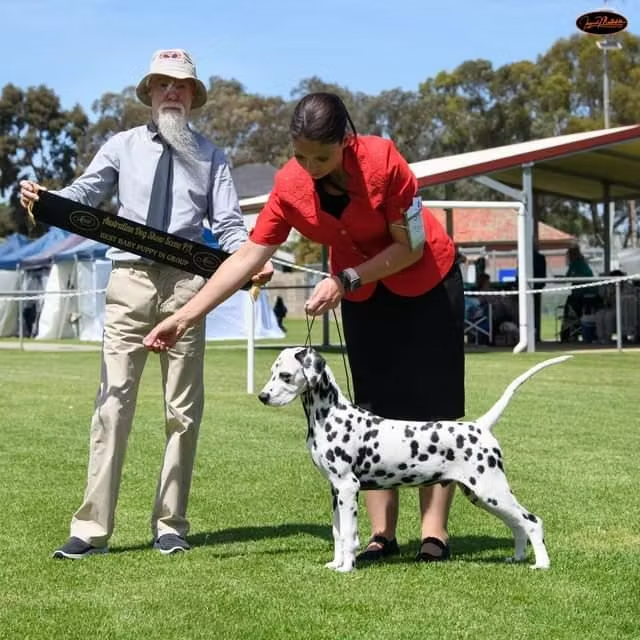
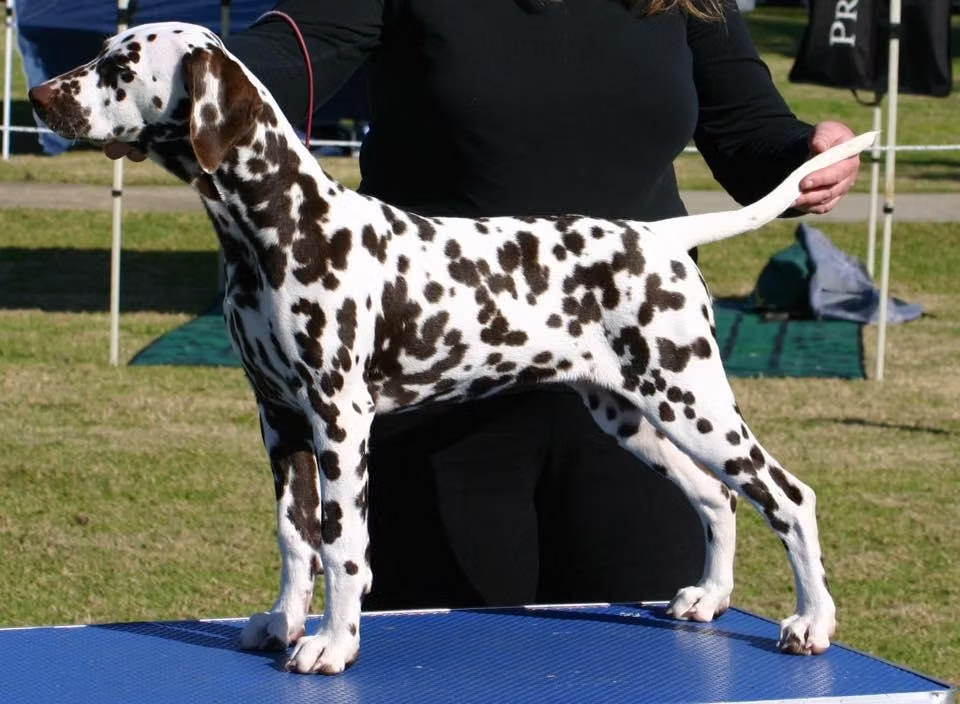
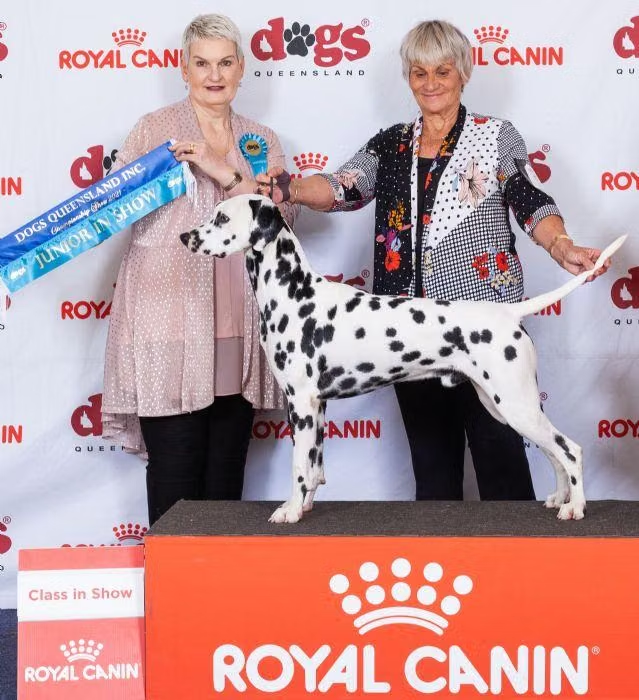
A few of the Dalmatian profiles members have added to United Pet Club.
The Dalmatian is a large, athletic dog with a distinctive white coat of black or liver spots, once famous for running alongside horse-drawn carriages.
The Dalmatian is a medium to large dog, instantly recognisable for its short white coat scattered with round black or liver spots. A grown dog stands about 19 to 24 inches at the shoulder and weighs 45 to 70 pounds, with a lean, athletic build made for covering long distances. Its name comes from Dalmatia, the historic Adriatic region now part of Croatia.
Energetic and alert, this breed forms close bonds with its household. Dalmatians were originally worked alongside horse-drawn carriages, trotting for miles at a stretch, and that stamina has never really left them. A Dalmatian left without enough to do each day tends to get restless and can pick up habits nobody wants, from chewing to constant barking.
Around familiar people the breed is affectionate and loyal, though it can be standoffish with strangers until it gets to know them. Given proper socialising early on, most Dalmatians get on well with kids and other dogs. The breed suits owners who can commit to daily exercise and steady training rather than an occasional walk around the block.
| Attribute | Detail |
|---|---|
| Origin | Dalmatia (modern day Croatia) |
| Size | Large (45 to 70 lb) |
| Lifespan | 11 to 13 years |
| Group / role | Companion dog, historically a carriage dog |
| Good with | Families, older children, other dogs with proper socialising |
This is a dog for an active household prepared to put in an hour or more of solid exercise daily. Runners, trampers, and people keen on dog sports tend to get the most out of the breed. It is not a good fit for anyone who is away from home for long stretches, or who wants a quieter, low-key companion.
The Dalmatian is named after Dalmatia on Croatia's Adriatic coast and became known across Europe as a coaching dog that ran with horse-drawn carriages.
The breed takes its name from Dalmatia, a stretch of coastline on the eastern Adriatic that today lies within Croatia. Spotted dogs closely resembling the modern Dalmatian turn up in European paintings and written records from the 1600s and 1700s, although exactly how the breed developed in those early years is not well documented.
Its lasting reputation, though, comes from work on the road. The Dalmatian trotted alongside or underneath horse-drawn carriages, keeping watch over the horses and the coach's contents while travelling and at rest stops. That job called for real stamina, a calm temperament around horses, and a natural liking for long journeys, qualities that still show up in the breed today.
During the 1800s the Dalmatian also became associated with firefighting in a number of countries. Fire engines were horse-drawn at the time, and the dogs ran ahead to help clear a path, then stayed close to the horses once the crew arrived on scene. That history is why fire stations still keep the Dalmatian as an unofficial mascot in many places.
Kennel clubs began drawing up formal breed standards for the Dalmatian in the late 1800s and early 1900s, and the breed has been recognised for well over a century. In New Zealand, Dalmatians are registered through Dogs New Zealand, formerly the New Zealand Kennel Club. Over the generations the breed has moved from working road dog to companion and show dog, though it has kept the drive and endurance bred into it from its carriage days.
The Dalmatian is a clean, muscular dog with a short white coat marked by distinct black or liver spots spread evenly across the body.
The Dalmatian has a balanced, athletic frame: a deep chest, level back, and a long tail that tapers to a point. The head is clean cut, the ears set fairly high and carried close to the skull. Overall the dog looks strong and built for endurance rather than bulk.
| Trait | Detail |
|---|---|
| Height | 19 to 24 inches at the shoulder |
| Weight | 45 to 70 pounds |
| Coat | Short, dense, fine, and smooth |
| Colours | White with black spots, or white with liver (brown) spots |
| Eyes | Round, dark brown on black-spotted dogs and amber on liver-spotted dogs |
The spotting is what sets the breed apart. Puppies are born completely white, and the spots come through gradually over the first few weeks. They should be round and well defined, ranging from about coin sized up to two inches across, with smaller spotting on the head, legs, and tail. Black-spotted and liver-spotted are the two recognised varieties, and the two colours never appear together on one dog. The short coat sheds steadily right through the year.
Dalmatians are friendly, loyal, and high-energy dogs that bond closely with their family and stay alert to what's going on around them.
The Dalmatian is outgoing and genuinely people focused. It wants to be part of whatever the family is doing and does not cope well with being left alone for long stretches. Within its own household it is affectionate and playful, often shadowing its favourite person from room to room.
With people it does not know, a Dalmatian tends to be watchful and a little reserved at first, which makes it a decent watchdog without being an aggressive one. It will notice and announce anything out of the ordinary rather than let it slide. Consistent socialising from an early age helps the dog stay confident instead of wary.
The breed is generally good natured with children, though given its size and drive it suits households with older kids who can keep up with an active dog. Most Dalmatians get on fine with other dogs when raised together or introduced sensibly. They are also intelligent and fairly independent minded, a combination that can look like stubbornness unless training is firm and patient.
| Trait | Rating |
|---|---|
| Affection | 5 |
| Energy | 5 |
| Trainability | 3 |
| Vocalness | 3 |
| Shedding | 4 |
Dalmatians need plenty of daily exercise and regular coat care to manage their steady, year-round shedding.
A Dalmatian can live happily in a house or flat, but only if its exercise needs are properly met. It is very much an indoor dog that wants to be near its family, and it does not do well shut outside or left alone for long periods. New Zealand's cool temperate climate means the short coat gives little protection against the cold, so the dog needs a warm, dry place to sleep and a coat of its own for wet, chilly weather.
Dalmatians do well on a complete, balanced diet, and owners should pay particular attention to hydration and urinary health.
Feed a complete and balanced diet suited to the dog's life stage and activity level. Active adult Dalmatians burn through plenty of energy, so portion sizes should keep the dog lean, with ribs easy to feel but not visible. Splitting the daily amount into two meals helps keep energy steady and lowers the risk of bloat.
| Life stage | Amount per day | Meals |
|---|---|---|
| Puppy (2 to 6 months) | As per puppy food label, split across meals | 3 to 4 |
| Puppy (6 to 12 months) | As per puppy food label, split across meals | 2 to 3 |
| Adult | About 1.5 to 2.5 cups dry food | 2 |
| Senior / less active | Reduced to maintain a lean weight | 2 |
Keep treats to around 10 percent of daily calories. Most Dalmatians on a good complete commercial diet do not need extra supplements, though a vet may suggest specific support for urinary health. Constant access to fresh water matters more for this breed than most.
Dalmatians typically live 11 to 13 years and are generally hardy, though the breed is prone to congenital deafness and urinary stones.
The Dalmatian is generally a robust, long-lived breed, with a typical lifespan of 11 to 13 years. Responsible breeding and regular vet care go a long way toward managing the conditions known in the breed. Two health issues are particularly linked to Dalmatians: congenital deafness and a tendency toward urinary stones.
| Condition | Signs | Note |
|---|---|---|
| Congenital deafness | No response to sound, in one or both ears | Common in the breed; puppies can have hearing tested (BAER) early |
| Urinary (urate) stones | Straining to urinate, blood in urine, frequent attempts | Linked to the breed's uric acid metabolism; needs prompt vet attention |
| Hip dysplasia | Stiffness, reduced activity, difficulty getting up | Screen breeding dogs; keep weight under control |
| Skin allergies | Itching, redness, recurring irritation | Manage with vet guidance and diet review |
Dalmatians are intelligent, capable learners that respond best to patient, reward-based training and early socialising.
The Dalmatian is a sharp, quick learner, but it also has an independent streak that can turn training into something of a negotiation. Sessions work best kept short, varied, and interesting, since a bored Dalmatian switches off fast. Everyone in the household needs to stay consistent, because the breed is quick to notice and take advantage of mixed messages. Deaf Dalmatians train just as well using hand signals and vibration cues instead of verbal ones.
Dalmatian breeding centres on health screening, particularly hearing tests and selection to reduce inherited deafness and urinary problems.
Dalmatians reach sexual maturity at around 6 to 12 months, though responsible breeders hold off until a dog is physically and mentally mature, usually around two years old, before breeding from it. Females typically come into season roughly twice a year, and gestation runs about 63 days after a successful mating.
Litters tend to be large, commonly around 6 to 9 puppies, though bigger litters do happen. Puppies arrive pure white, with spots showing up gradually over the following weeks. Newborns rely entirely on their mother for warmth and food in the first weeks, weaning generally starts around 3 to 4 weeks, and puppies are usually ready for new homes from about 8 weeks old.
Because congenital deafness and urate stones both run in the breed, responsible breeders hearing test their breeding stock and puppies, and pay close attention to lines with better urinary and joint histories. Raising a litter well means early handling and gentle socialising to set puppies up with steady temperaments.
| Metric | Value |
|---|---|
| Sexual maturity | 6 to 12 months |
| Recommended breeding age | Around 2 years |
| Gestation | About 63 days |
| Typical litter size | 6 to 9 puppies |
| Weaning | About 6 to 8 weeks |
Alongside council registration, a free United Pet Club record keeps a live phone number behind your Dalmatian and its chip.
Keeping a Dalmatian findable is mostly paperwork: a profile carrying your phone number, a photo, and the dog's details, sitting where a scan can reach it. Registering your dog with United Pet Club sets that up free, and the record never lapses or bills you.
Getting the chip implanted was the vet's job; giving the number somewhere to point is yours. Registering the microchip with United Pet Club costs nothing on the lifetime plan, suits any brand a Kiwi vet reaches for, and keeps the record searchable at any hour from anywhere. Creating a free account ties the profile and the chip together.
Setting up a free United Pet Club account, adding your Dalmatian's details and a photo, and saving is all it takes. The record stays free for the dog's whole life, chip or no chip.
Just add the fifteen digit number to your free account along with your current address and phone. Under the lifetime plan there is nothing to pay for the registration or any later update.
Dogs registered for the first time since 2006 need one under the National Dog Database rules, working farm dogs aside. The council record and your United Pet Club profile do different jobs, and the second one is free.
Nothing. The free lifetime plan carries the profile, the chip record, and every update, and no renewal notice ever arrives.
Common questions about the Dalmatian cover its size, temperament, exercise needs, lifespan, and suitability for different homes.
Dalmatians are a large breed, standing about 19 to 24 inches at the shoulder and weighing roughly 45 to 70 pounds once fully grown.
Dalmatians are friendly, loyal, and full of energy. They bond closely with their family, stay alert around strangers, and are generally good with children and other dogs when socialised early.
They take a moderate amount of effort. Grooming itself is simple, but the breed needs plenty of daily exercise and consistent training, and it sheds heavily all year, so it suits active owners who are around often.
A healthy Dalmatian typically lives 11 to 13 years. Regular vet care, a lean weight, and attention to hearing and urinary health all help it reach a full lifespan.
Yes, for an active family. They do best in homes with older children, plenty of exercise, and people around often, since they dislike being left alone for long stretches.
Congenital deafness is common in the breed and is linked to the genetics behind its coat pattern. Puppies can have their hearing tested early, and deaf dogs can still live full lives once trained with hand signals.
Dalmatians are available through reputable breeders who health and hearing test their dogs, as well as through breed-specific rescues and shelters. Bringing one in from overseas means working through New Zealand's biosecurity rules and the standard pet import quarantine process.