
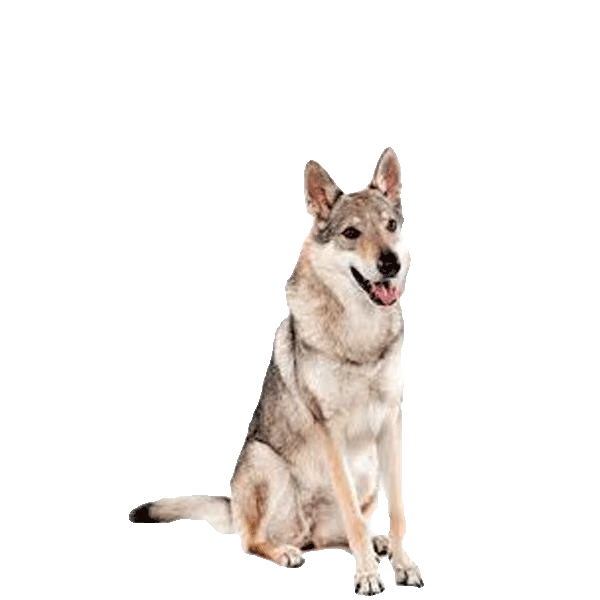
Czechoslovakian Vlcak
The Czechoslovakian Vlcak is a wolf-like, athletic breed known for its fierce loyalty, independence, and remarkable stamina.
- Size
- Large
- Lifespan
- 12–16 years
- Origin
- Czech Republic
- Temperament
- Loyal
- Standard colors
- Grey and Silver
Characteristics
Coat and grooming
How the Czechoslovakian Vlcak coat is built, and what that means when you groom it.
- Coat layers
- Double coat
- Coat texture
- Plush
- Coat length
- Medium
- Shedding
- Seasonal shedding
Grooming guidance
Critical: A Czechoslovakian Vlcak should not be shaved.
The undercoat keeps heat out as well as in, and the outer coat shields the skin from sun and insect bites. Clipping the whole coat off removes both. It often grows back patchy, soft or a different colour, and in some animals the guard hairs never return properly. Brush the undercoat out instead of cutting it off.
Information: A Czechoslovakian Vlcak drops its undercoat in heavy bursts.
The undercoat comes out in heavy bursts over a few weeks. An undercoat rake, or a bath followed by a proper blow-dry, clears it far faster than daily brushing. Clipping the coat down is not a shortcut for this.
Czechoslovakian Vlcak colors and patterns
What each club's breed standard says about every Czechoslovakian Vlcak color and pattern. Point at a ruling to see the club's own wording.
Breed standards describe the Czechoslovakian Vlcak in Grey and Silver. Standard patterns: Sable.
| Color or pattern | FCI | AKC | UKC |
|---|---|---|---|
| Grey | Standard (“Yellowish-gray”) | Standard (“Yellow Gray”) | Standard (“Yellowish-gray”) |
| Silver | Standard (“silver-gray”) | Standard (“Silver Gray”) | Standard (“silver-gray”) |
| Albino | Disqualifying | Not recognised | Disqualifying (“Albinism”) |
| Patterns | |||
| Sable | No ruling | Standard (“sable”) | No ruling |
| Solid | No ruling | Disqualifying (“Any solid-colored coat”) | No ruling |
%22%3E%3Crect%20x%3D%220%22%20y%3D%220%22%20width%3D%2264%22%20height%3D%2264%22%20fill%3D%22url(%23g)%22%2F%3E%3Cg%20fill%3D%22none%22%20stroke%3D%22%231C1C1C%22%20stroke-width%3D%221%22%20stroke-linecap%3D%22round%22%20stroke-linejoin%3D%22round%22%3E%3Cpath%20d%3D%22M15.7%2014.8l1.9%203.6M26.4%2024.1l1.2%204.1M42.7%2029.5l0.1%203.3M35.9%2025l1.6%203.2M31.3%2028.1l0.7%203.7M15.5%2011.1l1.6%203.6M41.1%2023.8l0.6%203.2M12.1%2020.7l1.2%203M15.4%2011.2l0.8%203.8M42.9%2027.3l0.7%202.9M48.2%2033.2l0.5%204.1M23.1%2024.7l1.4%203.4M51.9%2036.1l0.3%204.3M18.7%2023.9l1.2%203.7M50.4%2027.4l0.5%204.1M18.4%2020.4l0.1%203.1M55.6%2021.4l1.1%203.9M18.6%2024.9l1.7%203.8M8.3%2023.2l1.7%202.9M18.7%2024.2l0.2%203.1M46.4%2022.7l0.6%202.6M14.3%207l0.9%203.5M50.5%2024.9l0.5%203.7M23.2%2024.7l1.2%204.3M10.5%2022.3l1.6%203.4M56.9%2018.2l1.1%202.5M20.8%2021.7l1.1%203.5M10.9%2020.2l0.2%203.9M6.6%2023.3l1%202.4M54.5%2021.7l0.9%203.8M13.3%2021l0.4%203M11.7%2019.5l0.3%204M39%2023.2l0.7%202.5M20.8%2016.7l0%202.6M18.4%2016l0.2%202.6M46.4%2038.2l1.4%203.2M12.9%2022.6l0.6%203.3M13%2020.9l0.3%204.3M35.3%2024.9l1.3%202.3M29.5%2022.1l0.5%202.8M36.6%2023.4l0.2%204.3M20.5%2017.6l0.7%204.1M18.3%2020.6l0.6%203M20.5%2025.8l0.5%203.8M23.5%2040.2l1.1%202.9M22.8%2024.9l1.5%203M25.5%2023.1l0.5%203.3M47.7%2024.7l1.5%203.7M12.9%2018.4l1.9%203.8M29.5%2023.7l0.5%204.1M37.7%2026.5l0%202.9M16.8%2016.4l0.1%203.3M49.8%2028l1.7%203.8M29.4%2025.5l0.5%203.6M9.3%2023l1.3%203.1M47.4%2025.6l0.5%203.5M48.1%2023.8l1.6%203.2M9.9%2018.3l1.3%202.5M12.2%2016.6l0.4%203.2M22%2022.1l1.4%202.7M43.9%2024.7l1.4%203.9M14.3%2020l1.8%203.2M46.3%2040.1l0.3%203.6M14.9%207l0.3%204M17.5%2016.7l1.2%202.4M54.6%2040l1%203.5M13.3%2013.9l1.6%204.2M15.3%2016.5l1.2%202.9M23.8%2038.5l0.2%203.8M18.2%2019l0.6%203M11.2%2023.6l0.7%204.1M33.1%2023.2l0.9%204.3M13.6%2019.9l0.4%204.5M19.7%2023.1l1.9%203.7M50.5%2027.1l0.3%204.1M28.2%2028.5l0.2%203.8M29%2028.4l0.1%204M47.7%2024.5l0.6%202.5M10.7%2017.2l1.4%202.7M25.5%2040.3l0.6%204.1M37.6%2022.8l0.7%204.4M57%2018.6l0.2%203.4M16.9%2022.2l1.7%203.8M43.5%2024.7l1.8%203.4M49.2%2026l1.5%203.6M47.7%2032.3l0.4%203.7M35.4%2030.8l0.5%202.7M47%2026.1l1%203.9M24.3%2028.1l1.5%204.2M50.5%2023.8l1.3%203.4M58.1%2014.1l0.3%202.6M13.9%2018.2l0.7%202.5M8.2%2021l0.7%202.9M41.4%2026.4l0.4%202.7M16.3%2020.4l0.5%204.3M43.4%2025.9l1.2%203.2M32.3%2022.4l0.3%203.9M43.6%2025.9l2.1%203.8M33.5%2026.3l1.5%203M48.3%2030.6l1.4%203.4M44.2%2024.7l0.9%203.2M12.3%2017.7l0.9%203.7M46.2%2032l1.9%203.4M51%2028.3l0.1%203.7M30.4%2023.1l1.1%203.2M52.6%2022.6l0.9%204.3M16.6%2015.4l0.9%203.1M58.4%2012.8l0.3%202.8M42.8%2032.5l1.8%203.2%22%2F%3E%3Cpath%20d%3D%22M16.4%2026.1l0.1%204.3M14%2017.1l1.3%202.8M36.9%2027.2l1.3%202.6M38.6%2025.8l0.4%203.6M57.6%2014.3l0.3%203.9M14.7%208.2l1%204.3M53.4%2023l1.9%203.4M51.5%2030.3l0.8%202.7M56.2%2020l1.9%203.5M15.9%2010l0.2%202.8M15.8%2022.6l1.8%203.9%22%2F%3E%3C%2Fg%3E%3C%2Fg%3E%3Cuse%20href%3D%22%23s%22%20fill%3D%22none%22%20stroke%3D%22%233B2A20%22%20stroke-opacity%3D%220.6%22%20stroke-width%3D%221%22%20stroke-linejoin%3D%22round%22%2F%3E%3Cellipse%20cx%3D%223.2%22%20cy%3D%2221.7%22%20rx%3D%221.3%22%20ry%3D%221.2%22%20fill%3D%22%231C1C1C%22%2F%3E%3Ccircle%20cx%3D%2210.8%22%20cy%3D%2219.3%22%20r%3D%221.1%22%20fill%3D%22%231C1C1C%22%2F%3E%3C%2Fsvg%3E)

| Color or pattern | FCI | AKC | UKC |
|---|---|---|---|
| Amber | Standard (“amber coloured”) | Standard (“color can vary from amber to yellow”) | Standard (“amber in color”) |
| Yellow | No ruling | Standard (“color can vary from amber to yellow”) | No ruling |
| Black | Fault (“Dark brown, black or different coloured eyes”) | No ruling | Fault (“Dark brown or black eyes”) |
| Dark brown | Fault (“Dark brown, black or different coloured eyes”) | No ruling | Fault (“Dark brown or black eyes”) |
| Patterns | |||
| Odd-eyed | Fault (“different coloured eyes”) | No ruling | Fault (“Eyes of different colors”) |
%22%3E%3Ccircle%20cx%3D%2216%22%20cy%3D%2232%22%20r%3D%228%22%20fill%3D%22%23D9C3A0%22%2F%3E%3Ccircle%20cx%3D%2216%22%20cy%3D%2232%22%20r%3D%223.4%22%20fill%3D%22%231C1C1C%22%2F%3E%3Ccircle%20cx%3D%2213.6%22%20cy%3D%2229.6%22%20r%3D%221.3%22%20fill%3D%22%23F5F5F0%22%2F%3E%3C%2Fg%3E%3Cpath%20d%3D%22M3%2032Q16%2017%2029%2032Q16%2047%203%2032Z%22%20fill%3D%22none%22%20stroke%3D%22%233B2A20%22%20stroke-opacity%3D%220.75%22%20stroke-width%3D%221.4%22%20stroke-linejoin%3D%22round%22%2F%3E%3Cpath%20d%3D%22M35%2032Q48%2017%2061%2032Q48%2047%2035%2032Z%22%20fill%3D%22%23F5F5F0%22%2F%3E%3Cg%20clip-path%3D%22url(%23e1)%22%3E%3Ccircle%20cx%3D%2248%22%20cy%3D%2232%22%20r%3D%228%22%20fill%3D%22%23847865%22%2F%3E%3Ccircle%20cx%3D%2248%22%20cy%3D%2232%22%20r%3D%223.4%22%20fill%3D%22%231C1C1C%22%2F%3E%3Ccircle%20cx%3D%2245.6%22%20cy%3D%2229.6%22%20r%3D%221.3%22%20fill%3D%22%23F5F5F0%22%2F%3E%3C%2Fg%3E%3Cpath%20d%3D%22M35%2032Q48%2017%2061%2032Q48%2047%2035%2032Z%22%20fill%3D%22none%22%20stroke%3D%22%233B2A20%22%20stroke-opacity%3D%220.75%22%20stroke-width%3D%221.4%22%20stroke-linejoin%3D%22round%22%2F%3E%3C%2Fsvg%3E)
| Color or pattern | FCI | AKC | UKC |
|---|---|---|---|
| Black | Standard (“black”) | Standard (“Black”) | Standard (“black in color”) |
What the rulings mean
- Standard
- Described by the club's breed standard.
- Fault
- Named by the club's breed standard as a fault: the animal can be shown but is penalised.
- Disqualifying
- The club's breed standard disqualifies an animal of this colour or pattern.
- Not recognised
- The club does not accept this colour or pattern for the breed.
Color changes
How a Czechoslovakian Vlcak's colors can change over its life.
Blackchanges toSnow nose
Nose · With the season · can change back
Blackchanges toPink
Nose · With the season · can change back
%22%3E%3Crect%20x%3D%2217%22%20y%3D%2210%22%20width%3D%2230%22%20height%3D%2242%22%20fill%3D%22url(%23g)%22%2F%3E%3C%2Fg%3E%3Cuse%20href%3D%22%23s%22%20fill%3D%22none%22%20stroke%3D%22%233B2A20%22%20stroke-opacity%3D%220.6%22%20stroke-width%3D%221%22%20stroke-linejoin%3D%22round%22%2F%3E%3Cpath%20d%3D%22M12.5%2037Q13%2032%2018.5%2032Q23.5%2032.5%2023.5%2036.5Q20.5%2035.5%2018.8%2037Q17.4%2038.6%2018%2041.5Q13.6%2040.4%2012.5%2037Z%22%20fill%3D%22%231C1C1C%22%20fill-opacity%3D%220.8%22%20stroke%3D%22%23F5F5F0%22%20stroke-opacity%3D%220.4%22%20stroke-width%3D%220.9%22%2F%3E%3Cpath%20d%3D%22M51.5%2037Q51%2032%2045.5%2032Q40.5%2032.5%2040.5%2036.5Q43.5%2035.5%2045.2%2037Q46.6%2038.6%2046%2041.5Q50.4%2040.4%2051.5%2037Z%22%20fill%3D%22%231C1C1C%22%20fill-opacity%3D%220.8%22%20stroke%3D%22%23F5F5F0%22%20stroke-opacity%3D%220.4%22%20stroke-width%3D%220.9%22%2F%3E%3Cpath%20d%3D%22M32%2040V50%22%20fill%3D%22none%22%20stroke%3D%22%231C1C1C%22%20stroke-width%3D%221.3%22%20stroke-opacity%3D%220.5%22%20stroke-linecap%3D%22round%22%20stroke-linejoin%3D%22round%22%2F%3E%3Cellipse%20cx%3D%2232%22%20cy%3D%2221%22%20rx%3D%2212%22%20ry%3D%223.5%22%20fill%3D%22%23F5F5F0%22%20fill-opacity%3D%220.18%22%2F%3E%3C%2Fsvg%3E)
Sources
Each ruling comes from the club's published breed standard or color list.
Meet some of our Czechoslovakian Vlcak
A few of the Czechoslovakian Vlcak profiles members have added to United Pet Club.


About the Czechoslovakian Vlcak
A large, wolf-shaped working breed from the Czech Republic, the Czechoslovakian Vlcak is known for stamina, sharp independence, and deep loyalty to its family.
The Czechoslovakian Vlcak is a large working dog that could pass for a wolf at a glance. It stands tall on long legs, covers ground at an easy, efficient trot, and wears the grey coat and amber eyes that point straight back to its wild ancestors. The breed traces to a military breeding programme in mid-twentieth-century Czechoslovakia, and it has never drifted far from those working origins.
This is an endurance athlete rather than a sprinter. A fit adult can hold a steady trot over long distances, which is exactly what the breed was bred to do, and a short walk around the block will not touch the sides. Energy levels run high, and the dog needs a proper job, or at least regular hard graft, to settle indoors.
Temperament runs loyal and fiercely independent. The Czechoslovakian Vlcak fixes on its own people and stays guarded around anyone else. It makes up its own mind about a command before it follows through, and that trait rewards an experienced handler while it can catch out someone new to dogs.
| Attribute | Detail |
|---|---|
| Origin | Czech Republic |
| Size | Large |
| Lifespan | 12 to 16 years |
| Group/role | Working breed, originally developed for military and border-patrol duties |
| Good with | Experienced owners and active households; needs early socialisation with strangers and other pets |
Who it suits
The breed suits owners who bring consistent leadership, daily hard exercise, and steady socialisation. It does best with people who enjoy training, tramping, or a dog sport, and who want a companion that sticks close rather than roams off on its own agenda. It is the wrong fit for anyone away from home for long stretches, or anyone after a laid-back, instantly friendly family pet.
History and origins
Bred in 1950s Czechoslovakia by crossing German Shepherd Dogs with Carpathian wolves, the Czechoslovakian Vlcak began life as a military border-patrol experiment.
The breed dates to 1955 in Czechoslovakia, where it started out as a deliberate experiment rather than a natural development. Working German Shepherd Dogs were crossed with Carpathian grey wolves to see whether wolf instincts could sit alongside the trainability expected of a service dog. The early breeding programme ran out of a military border-guard post.
The first litters paired a wolf named Brita with German Shepherd Dogs, and later rounds brought in further wolf blood from a handful of other named wolves. Breeders selected for stamina, scenting power, night vision, and cold tolerance, all qualities that mattered for long shifts patrolling a border.
Through the 1960s and 1970s breeders paired the resulting dogs with each other instead of going back to wolves, and that choice locked in the type and settled the temperament. The goal moved on from a working wolf cross to a proper breed with traits owners could rely on.
Czechoslovakia recognised the breed nationally in 1982, and international recognition through the Federation Cynologique Internationale followed later. Czechoslovakia remains the recorded country of origin. These days the Czechoslovakian Vlcak turns up far more often as a companion and dog-sport competitor than as a working military animal, and numbers in New Zealand stay small, since MPI's strict controls on live animal imports make bringing one in from overseas a lengthy process.
Appearance and breed standard
The Czechoslovakian Vlcak is a large, lean dog with a wolf-grey coat, amber eyes, and a light athletic frame shaped for distance trotting rather than short bursts of speed.
The overall look is unmistakably wolf. The body reads rectangular and lean, the chest sits deep without being broad, and the legs run long and straight. When the dog trots, it carries its head and neck low, which only sharpens the wild silhouette. The movement itself is light and far-reaching, and the breed is best known for a gait that eats up ground without any apparent effort.
| Trait | Detail |
|---|---|
| Height | Males from 65 cm at the withers; females from 60 cm |
| Weight | Males from about 26 kg; females from about 20 kg |
| Coat | Straight, close double coat that thickens up over winter |
| Colours | Yellow-grey to silver-grey, with a lighter mask |
| Eyes | Amber, small, set obliquely |
Coat and colours
The coat is weatherproof and double-layered. Winter growth comes in far heavier than the summer coat, with a dense undercoat that keeps the cold out, useful even through a Central Otago frost. Accepted colours range from yellow-grey through to silver-grey, always paired with the breed's trademark lighter mask on the face. Hair length sits short to medium and lies flat against the body. Erect triangular ears and a bushy tail carried low at rest finish off the wolf-like outline.
Temperament and behaviour
The Czechoslovakian Vlcak is loyal and gutsy with its family, thinks for itself, and stays reserved, sometimes standoffish, around people it does not know.
The Czechoslovakian Vlcak forms a tight bond with its family and will stand its ground to defend them without hesitation. Around the house it tends to be playful and attentive, happiest within a few steps of its owner. The breed reads its handler closely and picks up on body language most dogs would miss.
Around strangers it turns watchful and holds back. An open, tail-wagging greeting on a first meeting is rare, and the dog needs early, ongoing socialisation to stay comfortable with unfamiliar people and new situations. Skip that exposure and it can turn properly wary.
The independent streak runs deep. This is a dog that weighs up whether a command makes sense before it follows through, a habit it owes to its working and wolf background. Prey drive toward small animals can run high, so it generally does best when raised alongside any cat or dog from puppyhood. It wants company, human or canine, and does not cope well left on its own for long periods.
| Trait | Rating |
|---|---|
| Affection | 4 |
| Energy | 5 |
| Trainability | 3 |
| Barking | 2 |
| Shedding | 4 |
Care and daily needs
The Czechoslovakian Vlcak needs solid daily exercise, secure fencing, and seasonal coat care, with grooming demands that climb sharply during the moult.
Grooming
- Brush weekly for most of the year to clear out loose hair
- Brush several times a week during the two heavy seasonal moults, when the undercoat comes out in handfuls
- Wash only occasionally, since the coat is largely self-cleaning
- Check and trim nails on a regular schedule, and keep ears clean and dry
Exercise
- Aim for at least one to two hours of activity daily
- Mix in sustained trotting, running, or a solid tramp to match the breed's stamina
- Add mental work such as scent games, tracking, or training sessions
- Look at dog sports such as canicross, bikejoring, or obedience to burn off energy
Environment
The breed needs room to move and fencing that actually holds. Fences should run tall and dig-proof, because this dog jumps well and digs just as well. Thanks to its dense coat, the Czechoslovakian Vlcak copes fine in the cold, even on a frosty high-country morning, but it needs shade and water on hot days. Apartment living does not suit it, nor does being left alone for long stretches. A quarter-acre section with secure fencing, or a small lifestyle block, gives this breed a far better start than a townhouse.
Nutrition and feeding
The Czechoslovakian Vlcak needs a complete, protein-forward diet scaled to how hard it works, served in measured portions rather than free access.
Feed a complete, balanced diet suited to a large, active working dog. Protein needs to support muscle upkeep, and total calories should track the dog's actual workload, which can swing widely between a lazy day at home and a full day out tramping. Many owners choose a good-quality commercial food, while others run a carefully planned raw or fresh diet under professional guidance. Fresh water needs to be down at all times.
| Life stage | Amount per day | Meals |
|---|---|---|
| Puppy (2 to 6 months) | Per food label, split into small feeds | 3 to 4 |
| Adolescent (6 to 18 months) | Per food label for growth | 2 to 3 |
| Adult | About 400 to 600 g dry food, adjusted for activity | 2 |
| Senior | Slightly reduced to hold a steady weight | 2 |
Treats and supplements
Keep treats to a small slice of daily calories, around 10 percent, to keep weight gain off the table. A properly balanced complete diet usually covers what an adult dog needs without any extras. Talk to a vet before adding any supplement, such as joint support for an older or hard-working dog.
Health and common conditions
The Czechoslovakian Vlcak is generally a robust breed with a 12 to 16 year lifespan, though hip dysplasia and a handful of inherited conditions do turn up.
The Czechoslovakian Vlcak is a hardy breed that often reaches 12 to 16 years of age. Its close-to-wild genetics and small founder population mean responsible breeders screen for inherited disease and breed for sound structure. A fit, lean dog that gets regular activity tends to stay healthy well into its senior years.
| Condition | Signs | Note |
|---|---|---|
| Hip dysplasia | Stiffness, limping, trouble getting up | Choose stock from hip-scored parents |
| Elbow dysplasia | Front-leg lameness, reluctance to exercise | Picked up through veterinary imaging |
| Degenerative myelopathy | Gradual hind-limb weakness | A genetic test is available |
| Pituitary dwarfism | Stunted growth, coat changes | Carrier testing helps breeders avoid affected litters |
Preventive care
- Keep core vaccinations and parasite control up to date
- Keep body condition lean to take pressure off the joints
- Book annual vet checks, and more often once the dog is a senior
- Brush teeth regularly and keep an eye out for dental disease
- Use the available genetic tests when breeding
Training
The Czechoslovakian Vlcak is sharp but strongly independent, so training goes best with an early start, real consistency, and reward-based methods.
The Czechoslovakian Vlcak is intelligent and more than capable, but it will not obey just because it was told to. It questions commands and shuts down under harsh handling or repetitive drilling. Training works when it starts early, stays consistent, and gives the dog an actual reason to cooperate. Short, varied sessions hold its attention far better than long, repetitive ones. Socialisation with people, places, and other animals matters as much as obedience, and it needs to start in puppyhood.
Basics
- Start socialisation and handling in the first weeks at home
- Teach name response and a reliable recall early, on a long line to begin with
- Build core cues (sit, down, stay, leave it) in calm settings, then layer in distractions
- Practise loose-lead walking before the dog grows big and strong
- Channel energy into a structured outlet such as tracking, obedience, or a dog sport
Breeding
Czechoslovakian Vlcak breeding follows a once-yearly seasonal cycle in females, roughly nine weeks of gestation, and careful selection from health-tested parents.
Females of this breed often cycle just once a year rather than twice, a trait that sits closer to the wolf than to most domestic dogs. Breeding should hold off until both parents are physically mature and have been through relevant health screening, including hip evaluation and the genetic tests that are available. Mating is timed to the female's fertile window.
Gestation runs about 63 days. Litters tend to sit at a medium size for a large breed. The dam usually whelps and rears the pups with little need for intervention, though a quiet, secure whelping space and a vet on standby still matter. Puppies open their eyes at around two weeks and start weaning from roughly three to four weeks.
Early socialisation sits at the centre of it all. Because the breed leans naturally reserved, breeders handle the pups daily and expose them to varied sights, sounds, and people well before they head to new homes, usually from eight weeks on. Matching each puppy to an owner who is genuinely ready for an active, independent dog heads off a lot of problems down the track.
| Metric | Value |
|---|---|
| Sexual maturity | Around 1 to 2 years |
| Female cycle | Often once a year |
| Gestation | About 63 days |
| Typical litter | Several pups (medium litter for a large breed) |
| Weaning | About 6 to 8 weeks |
| Earliest rehoming | 8 weeks or later |
Registering a Czechoslovakian Vlcak in New Zealand, microchip and all
Alongside council registration, a free United Pet Club record keeps a live phone number behind your Czechoslovakian Vlcak and its chip.
Czechoslovakian Vlcak registration and microchip registration in New Zealand
Adding your Czechoslovakian Vlcak to the registry is a ten-minute job at most: name, date of birth, photo, contact details, save. The profile is free for life and works whether the chip is already in or booked for the next vet visit. Dog registration is the place to start.
A scanned chip is only ever as useful as its record. Pop your Czechoslovakian Vlcak's fifteen digit number into a free United Pet Club account and the record does the rest: free updates after every move, every brand accepted, searchable day and night. Microchip registration first, account alongside.
How do I register my Czechoslovakian Vlcak in New Zealand?
Setting up a free United Pet Club account, adding your Czechoslovakian Vlcak's details and a photo, and saving is all it takes. The record stays free for the dog's whole life, chip or no chip.
How do I register my Czechoslovakian Vlcak's microchip?
Just add the fifteen digit number to your free account along with your current address and phone. Under the lifetime plan there is nothing to pay for the registration or any later update.
Does my Czechoslovakian Vlcak need a microchip in New Zealand?
Dogs registered for the first time since 2006 need one under the National Dog Database rules, working farm dogs aside. The council record and your United Pet Club profile do different jobs, and the second one is free.
What does registering a Czechoslovakian Vlcak cost?
Nothing. The free lifetime plan carries the profile, the chip record, and every update, and no renewal notice ever arrives.
Frequently asked questions
Common questions New Zealand owners ask about the Czechoslovakian Vlcak, covering size, temperament, care demands, lifespan, suitability, and availability.
How big does a Czechoslovakian Vlcak get?
It is a large breed. Males stand from 65 cm at the withers and weigh in from about 26 kg, while females stand from 60 cm and weigh from about 20 kg.
What is the Czechoslovakian Vlcak's temperament like?
The breed is loyal and gutsy with its family, independent-minded, and aloof with strangers. It bonds tightly with its own people and needs early socialisation to settle around unfamiliar humans and animals.
Is the Czechoslovakian Vlcak hard work to look after?
Yes, it is demanding. The breed needs one to two hours of daily exercise, mental work, secure fencing, and consistent training. It does not suit first-time owners or people who are away from home for long hours.
How long do Czechoslovakian Vlcaks live?
The typical lifespan runs 12 to 16 years, and the breed stays generally robust when kept fit and fed properly.
Is the Czechoslovakian Vlcak good with kids and family life?
It can be devoted to a family it has grown up alongside, but it suits active, experienced owners best. Its prey drive and natural reserve mean it needs early socialisation with children and other pets.
Are Czechoslovakian Vlcaks easy to find in New Zealand?
Not really. The breed stays uncommon outside its region of origin, and New Zealand's strict MPI biosecurity rules make importing one from overseas a lengthy process. Prospective owners typically go on a waiting list with a responsible breeder, registered with Dogs New Zealand, who health-tests and properly socialises their litters.
Does the Czechoslovakian Vlcak shed a lot?
Yes. The double coat sheds steadily year-round and goes through two heavy seasonal moults each year, when daily brushing keeps the loose undercoat under control.
From the community
Ask about the Czechoslovakian VlcakNo questions about the Czechoslovakian Vlcak yet. Be the first to ask.
Browse Dog breeds