The Chinese Crested is an affectionate, playful toy breed known for its elegant looks, devotion, and deep bond with its family.
How the Chinese Crested coat is built, and what that means when you groom it.
Caution: A Chinese Crested needs protection from the sun.
Bare skin burns quickly and offers no insulation against cold either. Time outdoors needs shade, a coat in cool weather, or a sunscreen a vet has approved for animals.
A few of the Chinese Crested profiles members have added to United Pet Club.
The Chinese Crested is a small, affectionate companion breed originally linked to Chinese trading ports, recognised by Dogs New Zealand in two coat types: Hairless and Powderpuff.
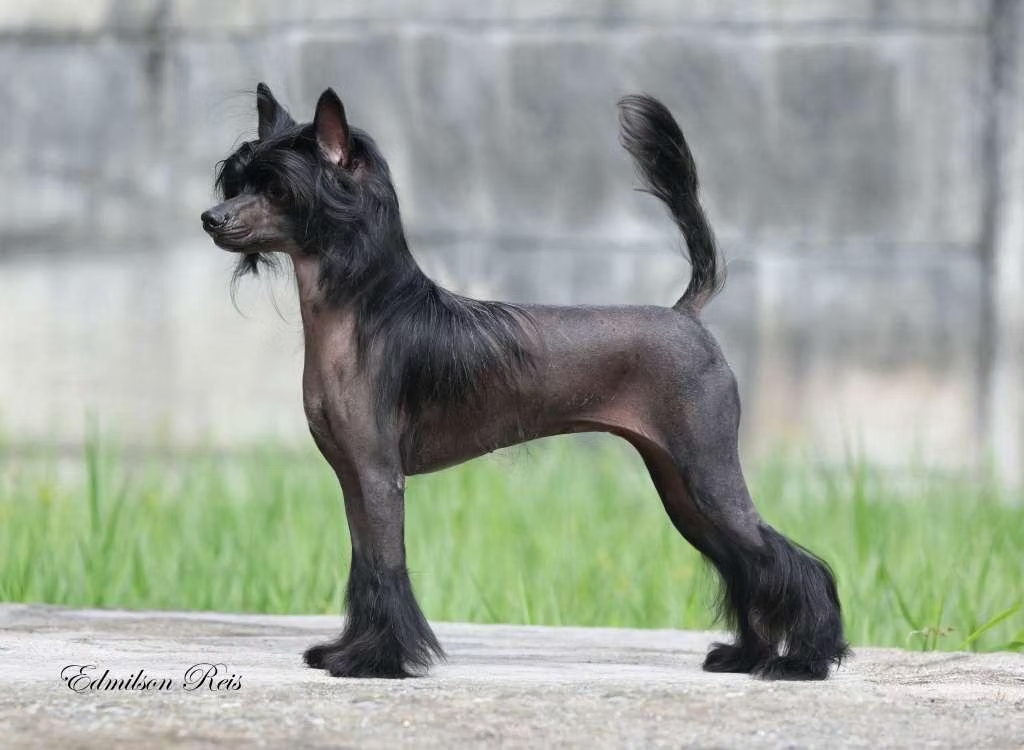
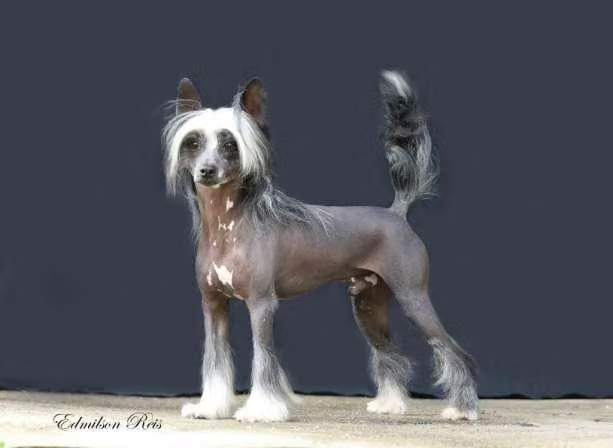
The Chinese Crested is a small companion dog from the toy group, weighing around 3.5 to 5.5 kg and standing roughly 28 to 33 cm at the shoulder. Two coat types can appear within the same litter. The Hairless has smooth skin over most of the body, with hair left on the head (the crest), feet (socks), and tail (plume). The Powderpuff carries a full, soft double coat over its entire body.
The breed's name does not fully reflect its documented past. Its development is tied to Chinese trading ports rather than to a single region of origin, and small hairless dogs travelled long distances aboard trading ships as they moved along these routes. In New Zealand today, the Chinese Crested is bred and kept almost exclusively as a house companion, and it is recognised by Dogs New Zealand in the Toy group.
The breed is affectionate, playful, and forms a tight bond with the household it lives in. It tends to fix on one family and can be wary of strangers at first. It stays alert and will let you know when someone is at the door, but it was never built for guarding work or hard physical labour.
| Attribute | Detail |
|---|---|
| Origin | China |
| Size | Toy (about 3.5 to 5.5 kg) |
| Lifespan | 13 to 18 years |
| Group/role | Toy group, companion dog |
| Good with | Families, older children, other pets when socialised |
The Chinese Crested does best in a home where someone is around for most of the day, since it wants close contact and can find long stretches alone hard going. It suits flats and smaller homes well, as its exercise needs are modest. The Hairless variety needs skin care and protection from sun and cold, so owners need to be willing to manage bathing, sunscreen, and a coat or jumper for walks in cooler weather. A household with very young or boisterous children is a poorer match, since the breed is fine boned and sensitive to rough handling.
Hairless dogs were linked to Chinese trading ships and ports by the 1800s; British and American breeders fixed the modern Chinese Crested's type and coat varieties during the 20th century.
Hairlessness is an old, naturally occurring trait that turns up in dog populations across several parts of the world. Exactly how it produced the Chinese Crested is not fully recorded, but small hairless dogs became associated with Chinese trading ships and were noted in port cities during the 1800s. Sailors kept the dogs aboard, which helped carry them along established trade routes.
By the late 1800s, hairless dogs were being exhibited in Europe and North America, often shown under a mix of names that lumped together hairless types from different parts of the world. Written records and illustrations from this period label some of these dogs as Chinese, though the naming of the day was inconsistent.
Much of the breed's modern form was set during the 20th century by breeders in the United States and the United Kingdom, who standardised the two coat varieties and fixed the breed's proportions. Their work also managed the genetics behind the Hairless and Powderpuff coats.
National kennel clubs granted the breed formal recognition through the second half of the 20th century. Dogs New Zealand now registers the Chinese Crested in the Toy group, and in New Zealand, as elsewhere, it is kept purely as a companion rather than for any working role.
The Chinese Crested is a fine-boned toy dog around 28 to 33 cm tall, bred in a Hairless variety with crest, socks, and plume, and a fully coated Powderpuff variety.
The Chinese Crested is small, fine boned, and graceful, with a body that runs slightly longer than it is tall. The head is wedge shaped, the eyes range from dark to medium in tone, and the ears stand large and erect in the Hairless variety. The tail is long and carries up or out on the move, and the gait is light and free.
Coat is what defines the breed. Both varieties can turn up in a single litter, and apart from coat, the two share the same body structure and standard.
| Trait | Detail |
|---|---|
| Height | About 28 to 33 cm at the shoulder |
| Weight | About 3.5 to 5.5 kg |
| Coat | Hairless (crest, socks, plume) or Powderpuff (full soft double coat) |
| Colours | Any colour or combination, including dark, slate, and pink-toned skin in Hairless dogs |
| Eyes | Dark to medium, set wide, almond shaped |
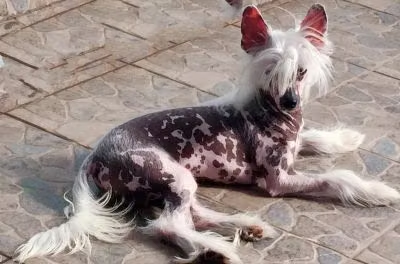
In the Hairless variety, most of the body is smooth, bare skin, with soft hair left on the head, lower legs, and tail. Skin colour can be anything and is often spotted or mottled. The Powderpuff carries a long, soft double coat over its whole body and needs regular brushing to stay free of mats. Both varieties come in a wide range of colours and patterns, and the standard does not favour one colour over another. Hairless dogs can carry varying amounts of body hair, which breeders factor into grooming.
The Chinese Crested is affectionate, playful, and devoted, forming a close bond with its household, reserved around strangers, and generally good with other pets once socialised.
At heart, the Chinese Crested is a companion breed. It looks for close contact and often wants to sit on or right beside its people. Indoors it is playful and lively, and it enjoys gentle games. The breed forms a strong attachment to its household and can pick up on changes in routine or mood.
With family it is warm and demonstrative. Around strangers it is usually reserved and can take a while to come round, though it is not an aggressive breed. Calm socialisation from an early age helps keep shyness in check. It stays alert and will bark at visitors or unfamiliar sounds, though how vocal it is varies between individual dogs.
The breed generally gets on with other pets, especially dogs of a similar size and cats it has grown up alongside. Because it is small and light boned, keep an eye on things around larger, boisterous dogs. The Chinese Crested is sensitive to harsh handling and does not respond well to rough correction, so a gentle household suits it best.
| Trait | Rating |
|---|---|
| Affection | 5 |
| Energy | 3 |
| Trainability | 3 |
| Vocalness | 3 |
| Shedding | 1 |
Care centres on skin and coat upkeep, modest daily exercise, and a warm indoor home; the Hairless variety needs sun protection and warmth, and the Powderpuff needs regular brushing.
Grooming needs differ a good deal between the two coat varieties, though both call for routine attention. The Hairless variety needs skin care; the Powderpuff needs coat care.
The Chinese Crested is an indoor dog and suits flats and smaller homes well. It feels the cold and heat more than most breeds: the Hairless variety chills quickly and sunburns easily, so it needs a warm, draught-free spot and cover when outdoors. Older New Zealand homes can run cold in winter, so extra bedding or a jumper indoors is worth considering. The breed wants company and does not do well left alone for long stretches.
The Chinese Crested needs a complete diet made for small or toy breeds, fed in measured portions across two or three meals a day, with amounts adjusted for age, weight, and activity.
Feed a complete and balanced diet formulated for small or toy breeds. Because the dog is small, portions are modest, and even small measuring errors can add weight quickly. Split the daily amount into two or three meals to keep energy steady, since very small dogs, especially as puppies, can be prone to low blood sugar if meals are spaced too far apart.
| Life stage | Amount per day | Meals |
|---|---|---|
| Puppy (2 to 6 months) | About 30 to 60 g, depending on the product and the puppy's weight | 3 to 4 |
| Adult (1 year and up) | About 30 to 90 g, depending on the product | 2 |
| Senior / less active | Adjusted down to hold a healthy weight | 2 |
Keep treats to a small share of daily calories so the dog stays lean. A diet labelled complete and balanced usually covers all the nutrients a healthy dog needs, so routine supplements are not necessary on top of that. Keep fresh water available at all times. Talk to a vet before adding any supplement, such as a joint or skin product, particularly given the Hairless variety's specific skin needs.
The Chinese Crested is generally healthy and often lives 13 to 18 years, though it can be prone to dental disease, eye conditions, patellar luxation, and skin issues in the Hairless variety.
The Chinese Crested is a long-lived toy breed, typically reaching 13 to 18 years of age. Most dogs live full lives with routine veterinary care, good dental hygiene, and weight control. A handful of conditions show up more often in the breed and are worth keeping an eye on.
| Condition | Signs | Note |
|---|---|---|
| Dental disease | Tartar, bad breath, loose or missing teeth | Common in toy breeds; Hairless dogs often have incomplete dentition |
| Patellar luxation | Skipping or limping on a hind leg | The kneecap slips out of place; ranges from mild to needing surgery |
| Progressive retinal atrophy | Night blindness, declining vision | Inherited; testing of breeding stock helps reduce it |
| Skin problems (Hairless) | Dryness, acne, sunburn, irritation | Managed with bathing, moisturising, and sun protection |
The Chinese Crested is bright and willing but sensitive, so it learns best through short, gentle, reward-based sessions alongside early socialisation.
The Chinese Crested is quick to learn and keen to please, which makes it trainable, though it is also sensitive and can shut down under harsh handling. Keep sessions short, calm, and upbeat. The breed responds well to food rewards, praise, and play. House-training can take patience, as with most small breeds, so a steady routine and consistency matter. Early socialisation with people, places, and other animals helps ease the natural wariness around strangers.
The Chinese Crested reaches maturity at one to two years and has small litters; the Hairless coat gene calls for careful pairing, since both coat types can appear within a single litter.
Breeding the Chinese Crested is usually best left to experienced, responsible breeders, given the breed's small size and the genetics behind its coat. Dogs generally reach physical and behavioural maturity between one and two years of age, and responsible breeders wait until a dog is mature and health-tested before using it for breeding. Pre-breeding checks commonly cover the eyes and knees.
Gestation in dogs runs to about 63 days. Litters are small, often two to four puppies, in keeping with the breed's toy size. The Hairless trait is carried on a single dominant gene that also affects the embryo, so planned pairings often include a Powderpuff parent, and both coat types can turn up in the same litter. Newborn puppies are tiny and need a warm, clean whelping area with close monitoring through the first weeks. Hairless puppies need extra attention to skin and warmth as they grow.
| Metric | Value |
|---|---|
| Sexual maturity | About 6 to 12 months (breeding held off until fully mature) |
| Full maturity | 1 to 2 years |
| Gestation | About 63 days |
| Litter size | Typically 2 to 4 puppies |
| Weaning | About 6 to 8 weeks |
Alongside council registration, a free United Pet Club record keeps a live phone number behind your Chinese Crested and its chip.
Adding your Chinese Crested to the registry is a ten-minute job at most: name, date of birth, photo, contact details, save. The profile is free for life and works whether the chip is already in or booked for the next vet visit. Dog registration is the place to start.
Getting the chip implanted was the vet's job; giving the number somewhere to point is yours. Registering the microchip with United Pet Club costs nothing on the lifetime plan, suits any brand a Kiwi vet reaches for, and keeps the record searchable at any hour from anywhere. Creating a free account ties the profile and the chip together.
Setting up a free United Pet Club account, adding your Chinese Crested's details and a photo, and saving is all it takes. The record stays free for the dog's whole life, chip or no chip.
Just add the fifteen digit number to your free account along with your current address and phone. Under the lifetime plan there is nothing to pay for the registration or any later update.
Dogs registered for the first time since 2006 need one under the National Dog Database rules, working farm dogs aside. The council record and your United Pet Club profile do different jobs, and the second one is free.
Nothing. The free lifetime plan carries the profile, the chip record, and every update, and no renewal notice ever arrives.
Common questions New Zealand owners ask about the Chinese Crested cover its size, temperament, how much care it needs, lifespan, suitability, and where to find one.
It is a toy breed, standing about 28 to 33 cm at the shoulder and weighing roughly 3.5 to 5.5 kg.
It is affectionate, playful, and devoted to its household. It bonds closely with its people, stays reserved around strangers, and is alert without being a guard dog.
Care is moderate. The Hairless variety needs regular skin care plus protection from sun and cold, and the Powderpuff needs frequent brushing. Both need dental care and modest daily exercise.
Typically 13 to 18 years with good care, which is a long run even for a small dog.
Yes. It suits flats and homes where someone is around often. It does well with older, gentle children and with other pets once socialised, but it is light boned and not suited to rough handling.
Shedding is low. The Hairless variety has little hair to lose, and the Powderpuff sheds modestly but needs regular brushing to stop mats forming.
They are a recognised, registered breed available through dedicated breeders and breed-specific rescues, though numbers are smaller than for mainstream breeds, so finding a puppy can take patience and time on a waiting list.