

Ca de Bou
The Ca de Bou is a powerful, protective Mallorcan mastiff that is calm and devoted with family while standing as a confident guardian.
- Size
- Large
- Lifespan
- 10–12 years
- Origin
- Spain
- Temperament
- Protective
- Standard colors
- Black and Fawn
Characteristics
Coat and grooming
How the Ca de Bou coat is built, and what that means when you groom it.
- Coat layers
- Single coat
- Coat texture
- Smooth
- Coat length
- Short
- Shedding
- Moderate shedding
Ca de Bou colors and patterns
What each club's breed standard says about every Ca de Bou color and pattern. Point at a ruling to see the club's own wording.
Breed standards describe the Ca de Bou in Black and Fawn. Standard patterns: Brindle and Reverse brindle.
| Color or pattern | FCI | UKC |
|---|---|---|
| Black | Standard (“black”) | Standard (“black”) |
| Fawn | Standard (“fawn”) | Standard (“fawn”) |
| Patterns | ||
| Brindle | Standard (“Brindle, fawn and black, preference in this order”) | Standard (“Brindle, fawn and black, in that order of preference”) |
| Reverse brindle | Standard (“Brindle, fawn and black, preference in this order”) | Standard (“Brindle, fawn and black, in that order of preference”) |


| Color or pattern | FCI | UKC |
|---|---|---|
| Dark brown | Standard (“as dark as possible and according to coat colour”) | Standard (“as dark as possible depending on the color of the coat”) |
| Light brown | Disqualifying (“Light or yellow eyes”) | No ruling |
| Yellow | Disqualifying (“Light or yellow eyes”) | Disqualifying (“Yellow eyes”) |
| Color or pattern | FCI | UKC |
|---|---|---|
| Black | Standard (“Black and broad”) | Standard (“Black and broad”) |
What the rulings mean
- Standard
- Described by the club's breed standard.
- Disqualifying
- The club's breed standard disqualifies an animal of this colour or pattern.
Color changes
How a Ca de Bou's colors can change over its life.
Blackchanges toRust
Coat · With body condition · can change back
Blackchanges toGrey
Coat · Progressive
Blackchanges toBrown
Coat · In the sun · can change back
Blackchanges toSnow nose
Nose · With the season · can change back
Blackchanges toPink
Nose · With the season · can change back

Sources
Each ruling comes from the club's published breed standard or color list.
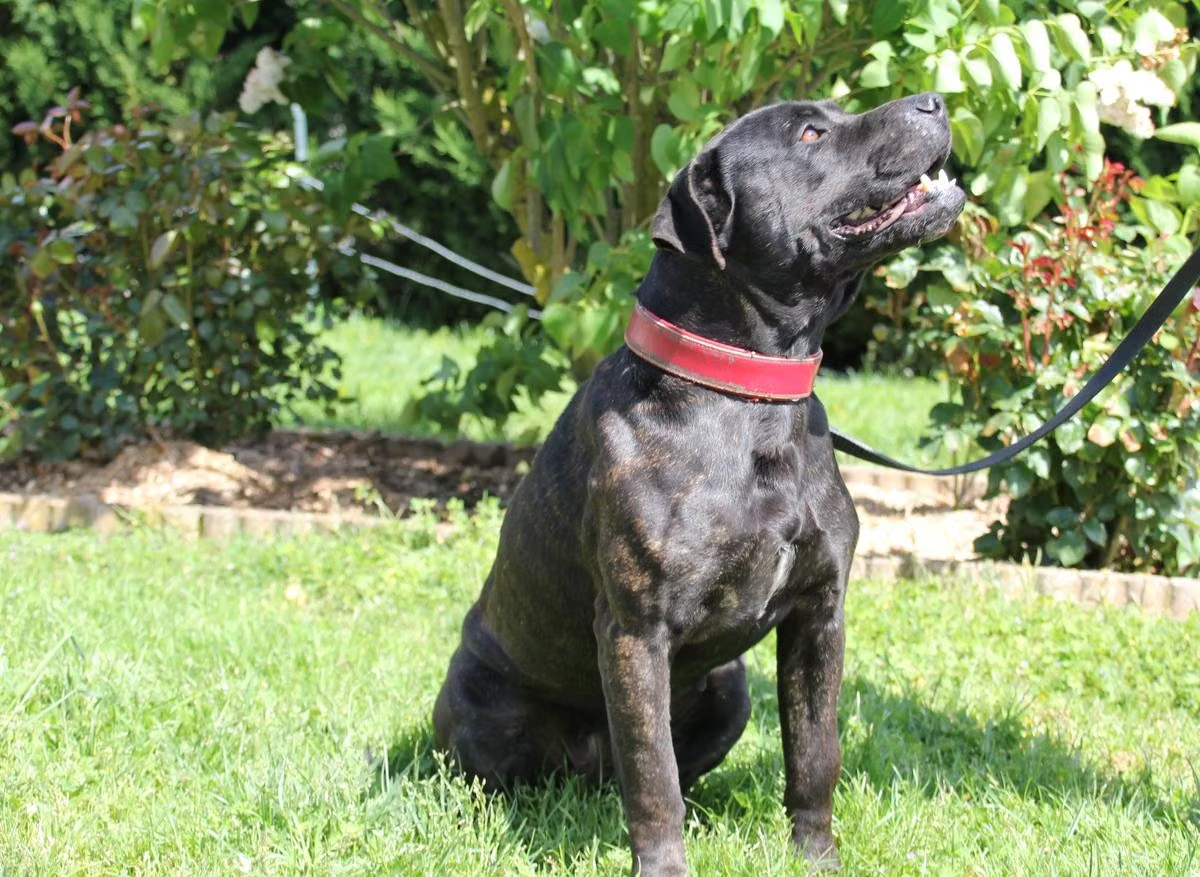
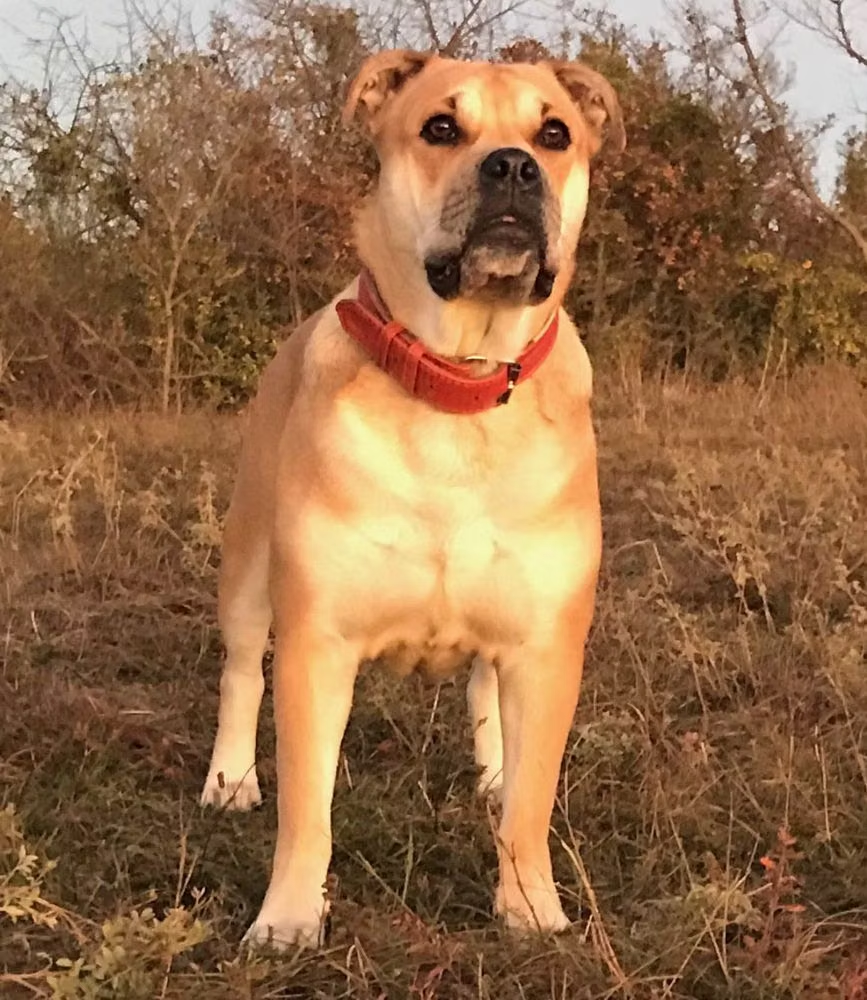
Meet some of our Ca de Bou
A few of the Ca de Bou profiles members have added to United Pet Club.



About the Ca de Bou
The Ca de Bou is a large Mallorcan mastiff-type dog, a calm, protective family guardian that Kiwi owners bring in through strict MPI biosecurity clearance.
The Ca de Bou is a big molosser-type dog that comes from the Spanish island of Mallorca. The name is Catalan for something close to "bulldog", a nod to the work these dogs once did handling cattle and taking part in baiting contests. You will also see the breed listed as the Perro de Presa Mallorquin or the Mallorquin Mastiff.
It carries a heavy, muscular frame with a broad head, strong jaws, and a body slightly longer than it is tall. For all that bulk, a well-raised adult is typically steady and quiet indoors. Kiwi owners who have one describe a dog that is calm, loyal, protective, courageous, and sure of itself, the sort that watches a situation rather than jumping straight in.
The Ca de Bou attaches firmly to its own family and is usually patient with children it has grown up alongside. Around people it does not know, it stays reserved and watchful. That guarding streak is instinctive rather than taught, so early socialisation and steady handling from puppyhood matter a great deal.
| Attribute | Detail |
|---|---|
| Origin | Mallorca, Spain |
| Size | Large |
| Lifespan | 10 to 12 years |
| Group / role | Molosser, guardian and family companion |
| Good with | Family and familiar children; reserved around strangers |
Who the breed suits
The Ca de Bou suits an owner with time for daily training and socialisation who is comfortable managing a strong, protective dog. A section with secure fencing and people around for much of the day works well; a small flat in the city centre does not. Because the breed is rare in New Zealand, most buyers end up talking to Dogs New Zealand affiliated clubs or importing a puppy under MPI biosecurity import health standards, which is worth planning for well ahead of bringing a dog home. First-time dog owners often find the breed a handful, since its size and natural guarding call for confident, consistent handling from day one.
History and origin
The Ca de Bou took shape on Mallorca from old molosser and bulldog stock, once used with cattle and in baiting, before Spanish breeders rebuilt the type through the twentieth century.
The Ca de Bou hails from Mallorca, one of Spain's Balearic Islands off the country's eastern coast. Its ancestors are old Iberian molosser and mastiff-type dogs, crossed over generations with bulldog stock. The type developed as a working animal, used to manage cattle and to guard farms and livestock.
During the era when animal baiting was still practised, dogs of this build were pitted against bulls in contests, and that is where the name Ca de Bou comes from. Breeders of the day prized the strong jaws, broad chest, and dogged character this work demanded. Once baiting was banned, numbers of these dogs fell away sharply and the type nearly vanished altogether.
Spanish breeders spent much of the twentieth century recovering and stabilising the breed from the dogs still left on Mallorca. The standard that emerged fixed the molosser build, the brindle and fawn coats, and the calm guarding temperament the breed is known for today. It is recognised internationally under three names: Ca de Bou, Perro de Presa Mallorquin, and Mallorquin Mastiff.
These days the Ca de Bou works mainly as a guardian and family companion rather than in any baiting role, which has not existed for well over a century. It remains scarce outside Spain, and New Zealand is no exception. Any puppy here almost certainly traces back to a handful of imported lines, yet a small, dedicated group of owners keeps the breed going, drawn to its size and its steady, protective nature.
Appearance and breed standard
The Ca de Bou is a large, powerfully built molosser with a broad head, a short coat, and colouring in brindle, fawn, or black.
The Ca de Bou has a compact, muscular body that runs a touch longer than it stands tall. The head is large and broad, with a deep, strong muzzle and well-developed jaws. The skin around the neck and head sits a little loose, and males typically carry noticeably heavier cheek and head development than females. The overall picture is one of strength and balance, not bulk piled on for its own sake.
| Trait | Standard |
|---|---|
| Height | Males about 55 to 58 cm; females about 52 to 55 cm at the withers |
| Weight | Males about 35 to 38 kg; females about 30 to 34 kg |
| Coat | Short, harsh, close-lying single coat |
| Colours | Brindle, fawn, and black |
| Eyes | Oval, dark, set wide and a touch deep |
Coat and colours
The coat is short and harsh under the hand, lying flat against the body, so grooming stays simple. Accepted colours are brindle, fawn, and black, with brindle turning up most often. A small white patch on the chest and front feet is allowed within the standard. That short coat gives little protection against the cold, so the breed copes better in the milder parts of the country, think Auckland or Northland rather than a Central Otago winter, or needs to come inside once the temperature drops.
Temperament and personality
The Ca de Bou is calm and devoted with its family, reserved around strangers, and a confident natural guardian that rarely acts without good reason.
The Ca de Bou carries a steady, self-assured temperament. Indoors it tends to be quiet and undemanding, happy to settle near its people rather than pace about. The breed forms tight bonds with its own family and is usually gentle and patient with children it has grown up alongside, though its size means an adult should keep an eye on things around younger kids.
Around people it does not know, the dog stays reserved and watchful. It is not the nervous, quick-to-bark type, but it clocks anything out of the ordinary and tends to place itself between its family and whatever is unfamiliar. That guarding behaviour is instinctive rather than taught, which is exactly why early and ongoing socialisation with people, places, and other animals counts for so much while the dog is young.
How it gets on with other pets comes down largely to upbringing. A Ca de Bou raised alongside other dogs and animals from puppyhood can settle in well with them, but same-sex aggression and a strong prey drive toward smaller animals can surface without careful, gradual introductions. The breed does best with a confident owner who keeps rules clear and consistent without resorting to harsh handling.
| Trait | Rating |
|---|---|
| Affection | 4 |
| Energy | 3 |
| Trainability | 3 |
| Vocalness | 2 |
| Shedding | 2 |
Care and grooming
The Ca de Bou needs only basic coat care but wants daily moderate exercise, a secure section, and steady company to stay settled.
Day-to-day care of a Ca de Bou is fairly light on the grooming side and heavier on exercise and management. The short coat looks after itself with minimal fuss, but the breed's size and guarding streak mean it needs structure, activity, and plenty of time with its people to stay settled.
Grooming
- Brush the coat once a week with a rubber curry comb or short-bristle brush to lift out loose hair.
- Bathe only when needed, roughly every two to three months or whenever the dog gets properly dirty.
- Check and clean any skin folds around the face and neck to keep them dry.
- Trim nails every three to four weeks and check ears for wax or an unpleasant smell.
- Brush teeth several times a week to keep on top of dental health.
Exercise
- Get out for two walks a day, plus time to range around a securely fenced section.
- Aim for about 45 to 60 minutes of activity daily.
- Add training games and scent work to give the mind something to do.
- Skip hard running or jumping in pups while their joints are still forming.
- Ease off strenuous exercise on hot days, since the heavy build raises the risk of overheating.
Environment
The Ca de Bou is suited to a house with a securely fenced section rather than a small flat. It handles New Zealand's temperate climate better than it would a genuinely hot or bitterly cold one, though it still needs shelter and warmth over winter. The breed wants to be near its family and can turn frustrated if it is left outside alone or shut away for long stretches.
Nutrition and feeding
The Ca de Bou needs a balanced large-breed diet fed in measured meals, with controlled growth in puppies and care taken to avoid bloat and toxic foods.
A Ca de Bou does well on a complete diet formulated for large breeds, with protein and fat levels matched to its age and activity level. Because the breed carries a lot of weight and is prone to joint strain, keeping it lean matters more than feeding it up to maximum size. Puppies should grow at a steady, controlled rate on a large-breed puppy food rather than being pushed along quickly.
| Life stage | Amount per day | Meals |
|---|---|---|
| Puppy (2 to 6 months) | About 300 to 500 g, depending on growth and food type | 3 to 4 |
| Junior (6 to 12 months) | About 400 to 550 g | 2 to 3 |
| Adult (1 year and older) | About 350 to 500 g | 2 |
| Senior (8 years and older) | Adjusted down for lower activity | 2 |
Treats and supplements
Keep treats to around 10 percent of daily calories and factor them into what you measure out at mealtimes. Joint supplements with glucosamine and chondroitin can help a large dog as it gets older, and omega-3 fatty acids support skin and coat condition. Always have clean water on hand. Feeding two smaller meals rather than one big one, and holding off on hard exercise straight after eating, lowers the risk of bloat, a real concern in deep-chested breeds like this one. Check with a vet before adding any supplements.
Health and common conditions
The Ca de Bou typically lives 10 to 12 years and is generally a hardy breed, though it can face joint, eye, and heat-related problems common to large molossers.
The Ca de Bou is generally a robust breed with a typical lifespan of 10 to 12 years. As with most large molossers, the main health concerns sit around the joints, the heart, and heat tolerance. Buying from a breeder who screens their breeding dogs cuts the odds of inherited problems turning up later.
| Condition | Signs | Note |
|---|---|---|
| Hip dysplasia | Stiffness, limping, trouble getting up | Common in large breeds; screen breeding stock |
| Elbow dysplasia | Front-leg lameness, reduced movement | Linked to growth and genetics |
| Entropion | Eyelid rolling inward, eye irritation | May need surgical correction |
| Bloat (gastric torsion) | Swollen abdomen, retching, distress | A medical emergency; act straight away |
| Heat sensitivity | Heavy panting, weakness in warm weather | Limit exertion when it's hot |
Preventive care
- Keep vaccinations and parasite control up to date.
- Book annual vet checks, more often once the dog is a senior.
- Keep body weight lean to protect the joints.
- Ask breeders for hip and elbow screening results before you commit.
- Watch for early signs of joint or eye trouble and act on them early.
Training and socialisation
The Ca de Bou is intelligent and capable but independent, so it does best with early socialisation and calm, consistent positive training.
The Ca de Bou is intelligent and picks things up well, but it has an independent streak and will push at the boundaries with an inconsistent handler. It responds to a calm, confident owner who sets clear rules and sticks to them the same way every day. Harsh or forceful methods tend to backfire with this breed and can wreck the trust you are trying to build. Because the guarding instinct runs strong, socialisation matters just as much as obedience: a dog that has met plenty of people, dogs, and situations while young is far easier to manage once it reaches full size.
Basics
- Start socialisation and handling in the first weeks at home.
- Teach name response and a reliable recall early on.
- Work on loose-lead walking before the dog reaches full size and strength.
- Build a solid sit, down, and stay for control out in public.
- Practise calm greetings so the guarding instinct does not tip over into reactivity.
- Keep sessions short, positive, and consistent across everyone in the household.
Breeding and raising pups
The Ca de Bou reaches breeding maturity around two years, carries an average litter of six to eight pups after a nine-week pregnancy, and needs health-tested parents.
Responsible breeding of the Ca de Bou rests on health-tested parents and a stable temperament. Dogs are usually bred once they are physically and mentally mature, generally from around two years old, by which point hip and elbow screening results are available. Mating follows the usual canine cycle, with females coming into season roughly twice a year.
Pregnancy runs about 63 days. Litters average six to eight pups, though bigger litters do happen. The mother needs a quiet, warm whelping space and extra nutrition through the later weeks of pregnancy and while she is nursing. Given the breed's broad heads, some litters need veterinary support at whelping, so planning the birth with a vet involved is a sensible move.
Pups should stay with their mother and littermates until at least eight weeks old. Early handling, gentle exposure to household sights and sounds, and the first stages of socialisation during this window shape the calm, confident adult the breed is known for.
| Metric | Value |
|---|---|
| Breeding maturity | About 2 years |
| Cycle frequency | Roughly twice a year |
| Gestation | About 63 days |
| Average litter size | 6 to 8 pups |
| Weaning age | About 6 to 8 weeks |
| Leave for new home | 8 weeks or older |
Registering a Ca de Bou in New Zealand, microchip and all
Alongside council registration, a free United Pet Club record keeps a live phone number behind your Ca de Bou and its chip.
Ca de Bou registration and microchip registration in New Zealand
Keeping a Ca de Bou findable is mostly paperwork: a profile carrying your phone number, a photo, and the dog's details, sitting where a scan can reach it. Registering your dog with United Pet Club sets that up free, and the record never lapses or bills you.
Getting the chip implanted was the vet's job; giving the number somewhere to point is yours. Registering the microchip with United Pet Club costs nothing on the lifetime plan, suits any brand a Kiwi vet reaches for, and keeps the record searchable at any hour from anywhere. Creating a free account ties the profile and the chip together.
How do I register my Ca de Bou in New Zealand?
Setting up a free United Pet Club account, adding your Ca de Bou's details and a photo, and saving is all it takes. The record stays free for the dog's whole life, chip or no chip.
How do I register my Ca de Bou's microchip?
Just add the fifteen digit number to your free account along with your current address and phone. Under the lifetime plan there is nothing to pay for the registration or any later update.
Does my Ca de Bou need a microchip in New Zealand?
Dogs registered for the first time since 2006 need one under the National Dog Database rules, working farm dogs aside. The council record and your United Pet Club profile do different jobs, and the second one is free.
What does registering a Ca de Bou cost?
Nothing. The free lifetime plan carries the profile, the chip record, and every update, and no renewal notice ever arrives.
Frequently asked questions
Common questions about the Ca de Bou cover its size, temperament, care needs, lifespan, suitability for families, and how easy it is to find in New Zealand.
How big does a Ca de Bou get?
It's a large breed. Males stand about 55 to 58 cm at the withers and weigh around 35 to 38 kg, while females run a little smaller at about 52 to 55 cm and 30 to 34 kg.
What's the Ca de Bou's temperament like?
Calm, loyal, and confident. The breed is devoted and usually quiet with its family, reserved around strangers, and a natural guardian that watches before it acts.
Is a Ca de Bou hard work to look after?
Grooming is straightforward thanks to the short coat, but the breed needs daily exercise, a secure section, early socialisation, and consistent training. Its size and guarding streak add up to a fair bit of work for the owner.
How long do Ca de Bou dogs live?
Typically 10 to 12 years. Keeping the dog lean, screening for joint problems, and regular vet checks all support a long, healthy life.
Are Ca de Bou good with families and kids?
Yes, with the right upbringing. They are generally patient and gentle with children they have grown up with, though their size means young kids should always be supervised around them.
Is a Ca de Bou a good choice for a first dog?
Usually better suited to owners with some experience already. A strong, protective guardian needs confident, consistent handling, which can be a lot for someone new to dogs.
Is it easy to find a Ca de Bou in New Zealand?
Not really. The breed is scarce outside Spain and the Balearic Islands, and getting a puppy here usually means contacting specialist overseas breeders and working through MPI's biosecurity import process, which takes planning and time.
From the community
Ask about the Ca de BouNo questions about the Ca de Bou yet. Be the first to ask.
Browse Dog breeds