

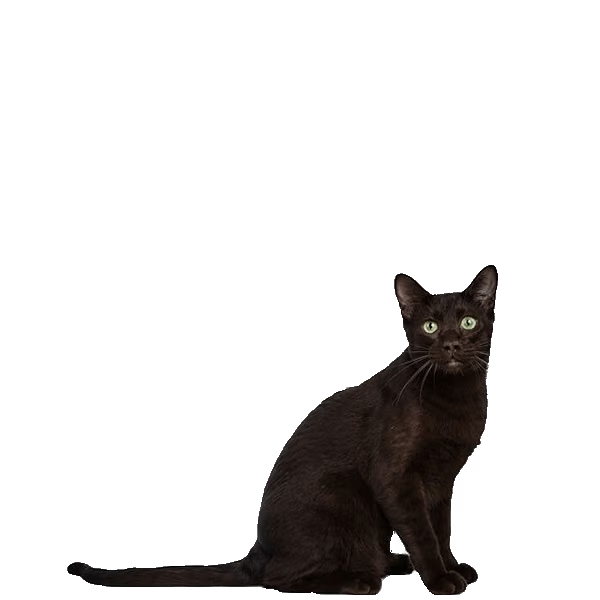
Suphalak
The Suphalak is a rare solid-copper Thai breed treasured for its affectionate, intelligent nature and devotion to its people.
- Size
- Medium
- Lifespan
- 12–16 years
- Origin
- Thailand
- Temperament
- Affectionate
- Standard colours
- Chocolate
Characteristics
Coat and grooming
How the Suphalak coat is built, and what that means when you groom it.
- Coat layers
- Single coat
- Coat texture
- Smooth
- Coat length
- Short
- Shedding
- Low shedding
Suphalak colours and patterns
What each club's breed standard says about every Suphalak colour and pattern. Point at a ruling to see the club's own wording.
Breed standards describe the Suphalak in Chocolate.
| Colour or pattern | WCF |
|---|---|
| Chocolate | Standard (“Chocolate”) |
| Colour or pattern | WCF |
|---|---|
| Yellow | Standard (“light yellow / Golden yellow”) |
| Gold | Standard (“rich golden / intense gold”) |
| Green | Standard (“slightly green shade”) |
| Colour or pattern | WCF |
|---|---|
| Chocolate | Standard (“chocolate brown”) |
| Colour or pattern | WCF |
|---|---|
| Cinnamon | Standard (“cinnamon”) |
What the rulings mean
- Standard
- Described by the club's breed standard.
Sources
Each ruling comes from the club's published breed standard or colour list.
Suphalak breed standard
What each club's standard asks of the Suphalak: size, build and forms. A club speaks only for itself, and a figure no club published is left out.
Conformation
Head shape
Wedge
“wedge-shaped, with a distinct head structure and gently rounded contours”
Eye size
Large
“The eyes are large, dominant in the face”
Ear size
Large
“The ears are moderately large with rounded tips.”
Ear tip
Rounded
“The ears are moderately large with rounded tips.”
Leg length
Long
“The legs are long, slender and muscular.”
Body type
Semi-foreign
“The body is of semi-foreign type”
Feet
Oval
“The paws are oval.”
Tail length
Medium
“The tail is medium to moderately long”
Tail shape
Tapering
“tapers slightly to a blunt tip”
Tail shape
KinkedDisqualifying
“Disqualification ... kinked tail”


Markings


Parts of the body


About the Suphalak
The Suphalak is a natural Thai cat of exceptional rarity, offering New Zealand's growing pedigree cat community a genuinely extraordinary breed with an ancient history.
New Zealand's pedigree cat scene has grown steadily in sophistication, with the New Zealand Cat Fancy (NZCF) supporting an increasingly diverse range of breeds. The Suphalak sits at the outermost edge of that diversity: widely regarded as one of the rarest pedigree cats in the world, this natural breed from Thailand carries an even, solid copper-to-brown coat with no markings, no shading, and no pattern at all.
The name translates roughly as "good fortune" or "of golden complexion," reflecting the cat's auspicious status in the Tamra Maew, an ancient body of illustrated Thai cat-poem manuscripts. Most adults weigh between 3.5 and 5.5 kilograms, with a muscular, athletic build. Population numbers worldwide remain very small, and New Zealand sees very few individuals.
For New Zealand families, the breed's character matters most: Suphalaks are warm, deeply attached to their people, and genuinely interactive companions that thrive on daily involvement in household life.
| Attribute | Detail |
|---|---|
| Origin | Thailand |
| Size | Medium (3.5-5.5 kg) |
| Lifespan | 12-16 years |
| Group/role | Natural Thai companion breed |
| Good with | Families, attentive owners, other cats |
Who it suits
The Suphalak fits homes where someone is around for much of the day and wants an interactive, loyal companion. In keeping with NZCF guidance and many local council recommendations around responsible cat keeping, the Suphalak thrives as a full-time indoor cat with adequate space, enrichment, and company. It does well with families, including those with older, gentle children, and usually accepts other cats and calm dogs. It is a poor match for households that are frequently empty.
History and origin
The Suphalak is a native Thai cat documented in ancient manuscript traditions and revived in modern times through small dedicated breeding efforts in Thailand.
The Suphalak belongs to the group of native Thai cats recorded in the Tamra Maew, illustrated cat-poem manuscripts that catalogued Thailand's prized cats and associated auspicious qualities with certain coat colours and types. A uniform copper-brown cat matching the Suphalak description appears in these works, which is the historical foundation for the breed's long claimed place in Thai culture.
For much of the modern era the solid copper cat was not formally distinguished from other Thai cats in Western breeding programmes. Cats of similar appearance sometimes arose from Burmese and related Thai lines, which complicated efforts to identify a distinct population.
In recent decades, breeders in Thailand worked deliberately to re-establish the solid copper cat as a recognised native breed, selecting for deep single colour and the traditional moderate body type. Numbers remained small.
The Suphalak's scarcity and ancient roots make it one of the most compelling prospects for New Zealand's pedigree enthusiasts seeking to expand the country's collection of natural breeds.
Appearance
The Suphalak is a medium, muscular cat with a short, glossy coat in an even solid copper-to-brown colour and no markings.
The Suphalak has a balanced, moderately muscular body of medium size, neither cobby nor extreme in any direction. The head is rounded with a gentle profile, medium-large ears, and expressive eyes. The legs are in proportion to the body, and the tail tapers slightly to the tip. The overall impression is of an athletic, well-knit cat.
The coat is short, fine, and lies close to the body with a smooth shine. The single most important feature is colour: an even, solid copper-brown across the entire coat, without tabby markings, shading, ticking, or white patches.
| Feature | Description |
|---|---|
| Height | Approx. 23-28 cm at shoulder |
| Weight | 3.5-5.5 kg |
| Coat | Short, fine, close-lying, glossy |
| Colours | Solid copper to brown, no markings |
| Eyes | Rounded, amber to golden |
Coat and colours
The defining trait is a uniform copper-brown coat with no pattern. Colour should run evenly from root to tip, and the same shade should carry across the body, legs, and tail. Any tabby ghost markings, paler shading, or white spotting is considered a fault against the breed's solid-colour standard. The short coat shows the underlying muscle and gives the cat a sleek outline.
What the Suphalak standard says, club by club
What the breed standards say about the build of the Suphalak. Clubs compared: WCF.
Clubs set their own figures for the Suphalak. These come from each club's published standard: WCF.
Build and forms
At least one club accepts each of these:
- Head shape: Wedge
- Eye size: Large
- Ear size: Large
- Ear tip: Rounded
- Leg length: Long
- Body type: Semi-foreign
- Feet: Oval
- Tail length: Medium
- Tail shape: Tapering
Forms the clubs penalise
A fault or a disqualification is a judgment under a show standard. It can affect placings and, at some clubs, registration.
- Disqualifying: Tail shape: Kinked (WCF)
Markings
Each club's ruling on the breed's named marks:
- Locket: Disqualifying (WCF)
See every point side by side: compare the clubs.
Rulings come from each club's published breed standard, and clubs revise their standards. Before a show or a registration, check the current text with the club.
Which forms do clubs penalise in the Suphalak?
Disqualifying: Tail shape: Kinked (WCF).
Which Suphalak colours the clubs accept
WCF lists Chocolate as standard for the Suphalak.
We track one club's ruling for the Suphalak so far. WCF accepts Chocolate.
Beyond the main colour
Standards rule on more than the main colour. These are listed as standard:
- Eyes: Yellow, Gold, Green
- Nose: Chocolate
- Paw pads: Cinnamon
Rulings come from each club's published breed standard, and clubs revise their standards. Before a show or a registration, check the current text with the club.
Temperament
The Suphalak is affectionate, playful, and loyal, staying close to its people and engaging readily with family members and other pets.
The Suphalak is a people-oriented cat that forms strong bonds with its household. It tends to stay near its owners, join in daily activity, and ask for attention through following, vocalising, and seeking laps. Many owners describe it as a cat that wants to be part of whatever is going on.
With family the breed is gentle and affectionate, and it usually tolerates handling well, making it suitable for households with considerate children. With strangers it is generally friendly but may take a short while to warm up. With other pets it commonly accepts other cats and calm dogs, especially when introduced gradually.
The Suphalak is intelligent and playful into adulthood. It enjoys interactive toys, puzzle feeders, and games that involve its owner. Without enough stimulation or company it can grow bored, so steady interaction matters more for this breed than for more independent cats.
| Trait | Rating |
|---|---|
| Affection | 5 |
| Energy | 4 |
| Trainability | 4 |
| Vocalness | 3 |
| Shedding | 2 |
Care and grooming
The Suphalak is low-maintenance to groom but needs daily interaction, play, and an enriched indoor environment to stay content.
Grooming
- Brush the short coat once a week to remove loose hair and keep the copper shine.
- Check and clean the ears as needed, and watch for wax buildup.
- Trim claws every few weeks.
- Brush the teeth regularly and provide dental care to reduce tartar.
- Bathing is rarely needed because the coat stays clean on its own.
Exercise
- Schedule one or two daily play sessions with wand or chase toys.
- Offer puzzle feeders and rotating toys to keep the mind engaged.
- Provide a cat tree or wall shelves for climbing and elevated resting spots.
- Use short training games to channel the breed's intelligence productively.
Environment
The Suphalak does well as a full-time indoor cat, which also aligns with NZCF recommendations and many New Zealand council requirements around keeping cats contained. It needs vertical space, scratching surfaces, and reliable access to its people. A second compatible pet can help when the household is away during the working day.
Grooming a Suphalak
The Suphalak coat: Single coat, Smooth, Short, Low shedding.
Most of what a Suphalak needs from grooming follows from its coat.
- Coat layers: Single coat
- Coat texture: Smooth
- Coat length: Short
- Shedding: Low shedding
What this coat asks of you
- A single coat has no dense undercoat, so there is less to brush out and less insulation against the cold.
- A smooth coat lies flat and is the easiest kind to keep. A soft brush or a grooming mitt lifts dust and loose hair.
- Short hair rarely tangles but it still sheds, so regular brushing keeps the loose hair down.
- Low shedding does not mean low upkeep. Hair that stays in the coat can still tangle unless it is brushed out.
A groomer who knows the breed can adapt all of this to the individual animal. Sore skin, mats pressed against the skin or a sudden change in the coat are worth showing to a vet.
What kind of coat does a Suphalak have?
On our records: Coat layers: Single coat; Coat texture: Smooth; Coat length: Short; Shedding: Low shedding.
How much does a Suphalak shed?
Low shedding does not mean low upkeep. Hair that stays in the coat can still tangle unless it is brushed out.
Nutrition and feeding
The Suphalak needs a complete, protein-forward cat diet portioned to its activity level, with measured meals and fresh water always available.
The Suphalak should eat a complete and balanced cat food appropriate to its life stage. As an obligate carnivore, it does best on diets where animal protein is the main ingredient. Portion to maintain a lean body where the ribs can be felt but not seen, since the breed can gain weight if overfed and underexercised. Fresh water should always be available, and a mix of wet and dry food can help with hydration.
| Life stage | Amount per day | Meals |
|---|---|---|
| Kitten (2-6 months) | Per package, free-fed or 3-4 portions | 3-4 |
| Junior (6-12 months) | Approx. 60-80 g dry equivalent | 3 |
| Adult (1-7 years) | Approx. 50-70 g dry equivalent | 2 |
| Senior (8+ years) | Adjust to weight and activity | 2 |
Treats and supplements
Keep treats to roughly ten percent of daily calories and account for them in the overall ration. A cat on a complete commercial diet usually needs no extra supplements. Discuss any supplement, such as joint or coat support for older cats, with a veterinarian before adding it.
Health
The Suphalak is generally a healthy natural breed with a 12 to 16 year lifespan, helped by routine veterinary care and weight management.
As a natural breed from a broad native population, the Suphalak is generally robust and not associated with a long list of breed-specific disorders. Typical lifespan is 12 to 16 years with good care. Day-to-day risks are the same as for most domestic cats: dental disease, obesity, and the urinary and kidney problems common in ageing cats. New Zealand owners should keep detailed health records and share findings with breeders, given the small global population and limited data available.
| Condition | Signs | Note |
|---|---|---|
| Dental disease | Bad breath, drooling, reduced eating | Regular brushing and checkups help |
| Obesity | Weight gain, low activity | Measure food and keep play routine |
| Chronic kidney disease | Increased thirst, weight loss | More common in senior cats |
| Lower urinary tract issues | Straining, blood in urine | Seek prompt care; can be urgent |
Preventive care
- Annual veterinary exam, more often for senior cats.
- Keep core vaccinations and parasite prevention current.
- Maintain dental hygiene with brushing and checks.
- Monitor weight and adjust food before excess accumulates.
- Provide fresh water and a clean litter tray to support urinary health.
Training
The Suphalak is intelligent and trainable, responding well to short, reward-based sessions for litter use, handling, and simple tricks.
The Suphalak is an intelligent, people-focused cat that takes well to training. Its desire to interact with its owner makes it responsive to games that reward cooperation. Keep sessions short, end on a success, and use food rewards or play the cat values. The breed can learn to come when called, accept handling and grooming, use a scratching post, and perform simple tricks such as sit or target touch.
Basics
- Introduce a clean litter tray early and keep it in a quiet, accessible spot.
- Reward calm handling of paws, ears, and mouth to make grooming and vet visits easier.
- Redirect scratching to a post and reward its use.
- Teach a recall by pairing a sound or word with a treat.
- Add target or trick training in short daily sessions to use the cat's intelligence.
Breeding
The Suphalak is a rare breed bred to preserve its even solid copper colour and friendly type, with typical feline maturity, gestation, and litter size.
Suphalak breeding centres on preserving the even solid copper-brown coat and the friendly, balanced type while keeping the small population healthy. For New Zealand breeders, biosecurity import requirements add a layer of planning to any breeding programme that involves sourcing stock from Thailand or Europe. Genetic diversity is a primary concern given the very small global population.
Cats reach sexual maturity in the same range as other domestic cats, though responsible breeders wait until a queen is fully mature before her first litter. Mating, pregnancy, and the raising of kittens follow normal feline patterns. Gestation runs about nine weeks, and litters are typically small to moderate in size.
Kittens stay with the mother and littermates through weaning and early socialisation, which is important for a breed prized for its sociable nature. Early gentle handling produces the confident, people-oriented adult the Suphalak is known for. Kittens should not go to new homes until they are weaned, litter-trained, and well socialised.
| Metric | Value |
|---|---|
| Sexual maturity | Around 5-10 months |
| Recommended first breeding | After full maturity (12+ months) |
| Gestation | Approx. 63-67 days |
| Average litter size | 3-5 kittens |
| Weaning age | Approx. 8-10 weeks |
| Earliest rehoming | 12+ weeks, fully socialised |
A registered Suphalak: sorted for life, chip included
Cats sit outside the National Dog Database, so a free United Pet Club record is what stands behind your Suphalak's chip.
Registering a Suphalak and its chip in New Zealand
Keeping an indoor Suphalak safe is partly latches and partly paperwork. The paperwork half is a free profile carrying your contact details and her photo, ready for the day a door swings wider than it should. Cat registration with United Pet Club never costs anything.
Pop the fifteen digit number from the vet paperwork into your free United Pet Club account, check your phone number is current, and your Suphalak's chip finally points somewhere. Every brand is accepted, every update free, and the record answers scans at any hour. Microchip registration is the link in the middle.
How do I register my Suphalak in New Zealand?
It's a matter of creating a free United Pet Club account, adding her name, colouring, and a photo, and saving. The record is free for her whole life, indoors or out.
How do I register my Suphalak's microchip?
Adding the fifteen digit number to your free account with your current details is the whole job. The lifetime plan never charges for the record or its updates, whatever the chip brand.
Do cats have to be microchipped in New Zealand?
There's no national requirement the way the dog database works, though some councils encourage it and shelters chip on rehoming. Requirement or not, a registered chip is what turns a found Suphalak into a phone call.
How much does it cost to register a Suphalak?
Nothing at all. Profile, chip registration, and every later update are free under the lifetime plan.
Frequently asked questions
Common questions about the Suphalak cover its size, temperament, care needs, lifespan, suitability, and availability in New Zealand.
How big does a Suphalak get?
It is a medium-sized cat, with most adults weighing about 3.5 to 5.5 kilograms. Males are usually heavier than females, and the body is muscular and athletic rather than large.
What is the Suphalak's temperament like?
It is affectionate, playful, loyal, and people-oriented. Suphalaks tend to follow their owners, seek attention, and stay engaged with family activity, and they generally get along with other cats and calm dogs.
Is the Suphalak hard to care for?
Grooming is easy because of the short coat, which needs only weekly brushing. The bigger commitment is social: the breed wants daily interaction and play, so it is best for homes where it is not left alone for long stretches.
How long do Suphalaks live?
Typical lifespan is 12 to 16 years with good nutrition, weight management, and routine veterinary care.
Is the Suphalak good for families?
Yes. Its gentle, affectionate nature suits families, including those with older, considerate children, provided someone is home enough to give it the company it wants.
Can I find a Suphalak in New Zealand?
They are extremely rare outside Thailand. Importing one into New Zealand involves biosecurity compliance in addition to the normal challenge of locating a breeder, so it is a long-term project requiring specialist contacts and patience.
What colour is a Suphalak?
A solid, even copper-to-brown coat with no tabby markings, shading, or white patches. The depth and uniformity of this single colour is the breed's defining feature.
From the community
Ask about the SuphalakNo questions about the Suphalak yet. Be the first to ask.
Browse Cat breeds