

Labrador Retriever
The Labrador Retriever is a friendly, outgoing breed beloved as a family companion and devoted working dog.
- Size
- Large
- Lifespan
- 11–13 years
- Origin
- Canada
- Temperament
- Friendly
- Standard colors
- Black, Chocolate, Fox red and Yellow
Characteristics
Coat and grooming
How the Labrador Retriever coat is built, and what that means when you groom it.
- Coat layers
- Double coat
- Coat texture
- Smooth
- Coat length
- Short
- Shedding
- Seasonal shedding
Grooming guidance
Critical: A Labrador Retriever should not be shaved.
The undercoat keeps heat out as well as in, and the outer coat shields the skin from sun and insect bites. Clipping the whole coat off removes both. It often grows back patchy, soft or a different colour, and in some animals the guard hairs never return properly. Brush the undercoat out instead of cutting it off.
Information: A Labrador Retriever drops its undercoat in heavy bursts.
The undercoat comes out in heavy bursts over a few weeks. An undercoat rake, or a bath followed by a proper blow-dry, clears it far faster than daily brushing. Clipping the coat down is not a shortcut for this.
Labrador Retriever colors and patterns
What each club's breed standard says about every Labrador Retriever color and pattern. Point at a ruling to see the club's own wording.
Breed standards describe the Labrador Retriever in Black, Chocolate, Fox red and Yellow. Standard patterns: Solid.
| Color or pattern | FCI | AKC | UKC | KC | KUSA |
|---|---|---|---|---|---|
| Black | Standard (“wholly black”) | Standard (“Black”) | Standard (“solid black”) | Standard (“wholly black”) | Standard (“whole black”) |
| Chocolate | Standard (“liver/chocolate”) | Standard (“Chocolate”) | Standard (“any solid shade of chocolate”) | Standard (“liver/chocolate”) | Standard (“liver/chocolate”) |
| Fox red | Standard (“Yellows range from light cream to red fox”) | Standard (“Yellows may range in color from fox-red to light cream”) | Standard (“any solid shade of yellow from red to pale cream”) | No ruling | No ruling |
| Yellow | Standard (“yellow”) | Standard (“Yellow”) | Standard (“any solid shade of yellow from red to pale cream”) | Standard (“yellow”) | Standard (“yellow”) |
| Albino | Disqualifying | Disqualifying | Disqualifying (“albinism”) | Not recognised | Not recognised |
| Silver | Disqualifying | Disqualifying | Disqualifying | Not recognised (“Silver”) | Not recognised |
| Charcoal | Disqualifying | Disqualifying | Disqualifying | Not recognised (“Charcoal”) | Not recognised |
| Champagne | Disqualifying | Disqualifying | Disqualifying | Not recognised (“Champagne”) | Not recognised |
| Patterns | |||||
| Solid | Standard (“wholly”) | Standard (“blacks are all black”) | Standard (“solid”) | Standard (“wholly”) | Standard (“whole”) |
| Brindle | Disqualifying | Disqualifying (“brindle markings”) | Disqualifying | Not recognised | Not recognised |
| Tan point | Disqualifying | Disqualifying (“tan markings”) | Disqualifying | Not recognised | Not recognised |
| Reverse brindle | Disqualifying | Disqualifying (“brindle markings”) | Disqualifying | Not recognised | Not recognised |

%22%3E%3Cg%20fill%3D%22%231C1C1C%22%3E%3Cpath%20d%3D%22M-3.7%20-4L-4.5%200.5L-5.6%205L-5.7%209.5L-6.7%2014L-8.2%2018.5L-8.6%2023L-9.1%2027.5L-10.7%2032L-10.5%2036.5L-10.7%2041L-11%2045.5L-11%2050L-11.4%2054.5L-11.4%2059L-12.6%2063.5L-13.3%2068L-11.5%2068L-10.1%2063.5L-9.9%2059L-9.2%2054.5L-9%2050L-9.6%2045.5L-9%2041L-8.8%2036.5L-9.1%2032L-6.9%2027.5L-7%2023L-6.2%2018.5L-4.6%2014L-3.1%209.5L-3%205L-3.3%200.5L-1.3%20-4ZM1.6%20-4L0.1%200.5L0.6%205L-1.5%209.5L-2.6%2014L-4%2018.5L-4.3%2023L-5.6%2027.5L-4.7%2032L-4.2%2036.5L-4.7%2041L-4.9%2045.5L-5%2050L-6.1%2054.5L-6.5%2059L-7.8%2063.5L-8.5%2068L-6.9%2068L-5.7%2063.5L-4.8%2059L-3.3%2054.5L-2.1%2050L-2.9%2045.5L-3.1%2041L-3.1%2036.5L-2.3%2032L-2.5%2027.5L-1.6%2023L-1.9%2018.5L-0.6%2014L1%209.5L1.7%205L2.6%200.5L3%20-4ZM7.6%20-4L6.6%200.5L5.6%205L5.2%209.5L3.7%2014L3.4%2018.5L3.5%2023L2.5%2027.5L3%2032L3%2036.5L1.9%2041L2.7%2045.5L1.8%2050L0.3%2054.5L-1.7%2059L-1%2063.5L-3.7%2068L-1.6%2068L0.3%2063.5L0.8%2059L2.7%2054.5L3.2%2050L4.2%2045.5L4.2%2041L4.4%2036.5L4.7%2032L3.8%2027.5L4.8%2023L5.3%2018.5L4.9%2014L6.6%209.5L7.9%205L7.6%200.5L9.7%20-4ZM11.3%20-4L10.8%200.5L11.7%205L11.3%209.5L11.2%2014L10.3%2018.5L10%2023L10.6%2027.5L9.2%2032L8.2%2036.5L7.6%2041L6%2045.5L4.7%2050L5.1%2054.5L3.6%2059L3.8%2063.5L3.7%2068L6.2%2068L5.8%2063.5L5.6%2059L7.4%2054.5L7.3%2050L8.3%2045.5L10%2041L11.1%2036.5L10.8%2032L12.8%2027.5L12.6%2023L13.1%2018.5L12.7%2014L13%209.5L13.6%205L13%200.5L12.9%20-4ZM19.6%20-4L19.4%200.5L18.1%205L18.4%209.5L17.8%2014L16.7%2018.5L15%2023L13.8%2027.5L13.2%2032L13.3%2036.5L11.7%2041L10.9%2045.5L11.9%2050L12.2%2054.5L12.5%2059L11.6%2063.5L11%2068L12.8%2068L13.4%2063.5L14.2%2059L14.8%2054.5L13.3%2050L13.7%2045.5L14.5%2041L14.8%2036.5L14.8%2032L16%2027.5L16.6%2023L18.5%2018.5L19.2%2014L19.3%209.5L20.7%205L21.3%200.5L22.1%20-4ZM23.6%20-4L24.4%200.5L23.9%205L22.2%209.5L21.1%2014L20.3%2018.5L19.2%2023L17.6%2027.5L17.9%2032L18.3%2036.5L17.7%2041L18.3%2045.5L17.9%2050L17.9%2054.5L16.4%2059L15.3%2063.5L14.5%2068L16.5%2068L18.3%2063.5L19.5%2059L19.5%2054.5L20%2050L19.9%2045.5L19.8%2041L19.6%2036.5L21.1%2032L19.9%2027.5L20.6%2023L21.8%2018.5L22.9%2014L24.2%209.5L25.5%205L26.4%200.5L26.7%20-4Z%22%2F%3E%3Cpath%20d%3D%22M28%20-4L27.5%200.5L26.9%205L28.2%209.5L27.2%2014L26.3%2018.5L26.3%2023L25.6%2027.5L25.5%2032L23.2%2036.5L22.1%2041L22.2%2045.5L20.1%2050L20.8%2054.5L19.2%2059L20.6%2063.5L20.3%2068L21.2%2068L22.7%2063.5L22%2059L22.4%2054.5L22.7%2050L23.4%2045.5L25.1%2041L25.7%2036.5L26.9%2032L27.8%2027.5L28.9%2023L29.1%2018.5L28.5%2014L29.9%209.5L29.8%205L29.3%200.5L30.5%20-4ZM36.6%20-4L35.8%20-1.1L35.9%201.7L35.2%204.6L34.6%207.5L33.8%2010.3L32.3%2013.2L33%2016.1L31.7%2018.9L32.1%2018.9L33.8%2016.1L35.3%2013.2L35%2010.3L36.6%207.5L36.6%204.6L37%201.7L37.9%20-1.1L36.8%20-4ZM32.2%2025.4L30.7%2030.7L29.8%2036.1L29.6%2041.4L28.4%2046.7L28.6%2052L28.3%2057.4L29.5%2062.7L28.3%2068L29.2%2068L30.3%2062.7L30.8%2057.4L29.9%2052L30.1%2046.7L30.7%2041.4L31.5%2036.1L32.3%2030.7L32.8%2025.4ZM39%20-4L39.4%200.5L39.3%205L39.2%209.5L40.1%2014L38.4%2018.5L38.6%2023L37.8%2027.5L35.7%2032L35.6%2036.5L34.1%2041L33.6%2045.5L32.8%2050L31.9%2054.5L32.5%2059L32.7%2063.5L32.1%2068L34.9%2068L34.1%2063.5L34.7%2059L35%2054.5L34.9%2050L35%2045.5L37%2041L38.1%2036.5L38.7%2032L39.8%2027.5L39.6%2023L40.8%2018.5L41.2%2014L41.7%209.5L42.1%205L40.6%200.5L42.3%20-4ZM45.7%20-4L43.6%200.1L42.2%204.1L42.7%208.2L40.7%2012.3L41%2016.4L39.5%2020.4L39.9%2024.5L41.2%2028.6L42.1%2028.6L42.7%2024.5L42.5%2020.4L42.8%2016.4L42.6%2012.3L43.4%208.2L45.5%204.1L45.2%200.1L45.8%20-4ZM41.4%2033.9L39%2038.1L39.6%2042.4L37.5%2046.7L37.2%2050.9L36.1%2055.2L35.8%2059.5L35.7%2063.7L36.6%2068L37.1%2068L37.8%2063.7L38.1%2059.5L38.4%2055.2L39%2050.9L39.2%2046.7L40.8%2042.4L41.7%2038.1L42.1%2033.9ZM48.6%20-4L48.4%200.5L48.1%205L47.5%209.5L48%2014L47.5%2018.5L47%2023L47.1%2027.5L47%2032L46.1%2036.5L44.4%2041L43.8%2045.5L42.8%2050L41.1%2054.5L41.2%2059L41.1%2063.5L40.5%2068L41.5%2068L42.4%2063.5L42.8%2059L42.7%2054.5L45%2050L46.3%2045.5L46.2%2041L47.4%2036.5L49%2032L49.8%2027.5L48.9%2023L48.7%2018.5L49.6%2014L49.6%209.5L50%205L49.9%200.5L49.8%20-4ZM57.8%20-4L56.6%200.5L56.8%205.1L55%209.6L53.2%2014.1L52.3%2018.6L51.2%2023.2L51.5%2027.7L52.6%2032.2L53%2032.2L53.7%2027.7L54.3%2023.2L54.7%2018.6L55.7%2014.1L56.4%209.6L58.1%205.1L58.9%200.5L58.7%20-4ZM53.1%2035.2L52.1%2039.3L51.5%2043.4L52%2047.5L51.3%2051.6L50.8%2055.7L50%2059.8L48.8%2063.9L49.2%2068L49.6%2068L50.6%2063.9L51.8%2059.8L52.8%2055.7L53.4%2051.6L53.2%2047.5L53.7%2043.4L54.3%2039.3L53.1%2035.2Z%22%2F%3E%3Cpath%20d%3D%22M61.6%20-4L61.1%200.5L60.4%205L59.9%209.5L58.6%2014L58.3%2018.5L56.8%2023L55.6%2027.5L55.6%2032L54%2036.5L54.7%2041L54.9%2045.5L54.2%2050L54.7%2054.5L54%2059L52.9%2063.5L52.2%2068L55.2%2068L54.9%2063.5L56.9%2059L56.8%2054.5L56.5%2050L56.9%2045.5L57.6%2041L56.9%2036.5L57.3%2032L57.3%2027.5L58.9%2023L59.8%2018.5L60.3%2014L62.3%209.5L62.7%205L63.8%200.5L63.9%20-4ZM67.3%20-4L66.1%201.5L66.8%207L66.3%2012.5L64.8%2018L64%2023.5L62.7%2029L62.2%2034.4L61.4%2039.9L61.8%2039.9L63.8%2034.4L64.9%2029L66.7%2023.5L67.2%2018L67.6%2012.5L68.6%207L68%201.5L67.4%20-4ZM60.6%2044.4L59%2047.3L57.4%2050.3L57.4%2053.2L58%2056.2L57.2%2059.1L57.5%2062.1L57.8%2065L58.1%2068L58.3%2068L59.6%2065L58.8%2062.1L59.5%2059.1L59.8%2056.2L60.2%2053.2L60.3%2050.3L61.6%2047.3L61.2%2044.4Z%22%2F%3E%3C%2Fg%3E%3C%2Fg%3E%3Cuse%20href%3D%22%23s%22%20fill%3D%22none%22%20stroke%3D%22%233B2A20%22%20stroke-opacity%3D%220.6%22%20stroke-width%3D%221%22%20stroke-linejoin%3D%22round%22%2F%3E%3Cellipse%20cx%3D%223.2%22%20cy%3D%2221.7%22%20rx%3D%221.3%22%20ry%3D%221.2%22%20fill%3D%22%231C1C1C%22%2F%3E%3Ccircle%20cx%3D%2210.8%22%20cy%3D%2219.3%22%20r%3D%221.1%22%20fill%3D%22%231C1C1C%22%2F%3E%3C%2Fsvg%3E)
%22%3E%3Ccircle%20cx%3D%2212%22%20cy%3D%2217.2%22%20r%3D%221.25%22%20fill%3D%22%23C4996A%22%2F%3E%3Cpath%20d%3D%22M1.5%2021.2L9%2018.6L12.6%2021L12.2%2026.2L3.5%2024.4Z%22%20fill%3D%22%23C4996A%22%2F%3E%3Cpath%20d%3D%22M10%2026L14.5%2026.4L18.2%2029.2L13.5%2029.8Z%22%20fill%3D%22%23C4996A%22%2F%3E%3Cellipse%20cx%3D%2221.2%22%20cy%3D%2230.6%22%20rx%3D%221.6%22%20ry%3D%222.3%22%20fill%3D%22%23C4996A%22%2F%3E%3Crect%20x%3D%220%22%20y%3D%2247%22%20width%3D%2264%22%20height%3D%2217%22%20fill%3D%22%23C4996A%22%2F%3E%3Cpath%20d%3D%22M51.5%2024.5L55%2027L54.2%2032L50.5%2028.5Z%22%20fill%3D%22%23C4996A%22%2F%3E%3Cpath%20d%3D%22M45%2038.5L48%2039L48.5%2047L45.5%2047Z%22%20fill%3D%22%23C4996A%22%2F%3E%3C%2Fg%3E%3Cuse%20href%3D%22%23s%22%20fill%3D%22none%22%20stroke%3D%22%233B2A20%22%20stroke-opacity%3D%220.6%22%20stroke-width%3D%221%22%20stroke-linejoin%3D%22round%22%2F%3E%3Cellipse%20cx%3D%223.2%22%20cy%3D%2221.7%22%20rx%3D%221.3%22%20ry%3D%221.2%22%20fill%3D%22%231C1C1C%22%2F%3E%3Ccircle%20cx%3D%2210.8%22%20cy%3D%2219.3%22%20r%3D%221.1%22%20fill%3D%22%231C1C1C%22%2F%3E%3C%2Fsvg%3E)
%22%3E%3Crect%20x%3D%220%22%20y%3D%220%22%20width%3D%2264%22%20height%3D%2264%22%20fill%3D%22%231C1C1C%22%2F%3E%3Cg%20fill%3D%22%23D9C3A0%22%3E%3Cpath%20d%3D%22M-3.5%20-4L-5.3%200.5L-5.4%205L-7.4%209.5L-8.2%2014L-8.2%2018.5L-8.6%2023L-9.2%2027.5L-8.4%2032L-8.7%2036.5L-8.3%2041L-9.6%2045.5L-10.2%2050L-10.4%2054.5L-12.6%2059L-13.2%2063.5L-14.8%2068L-13.3%2068L-12.2%2063.5L-11.7%2059L-9.2%2054.5L-9%2050L-8.1%2045.5L-7.6%2041L-8%2036.5L-7.4%2032L-8.6%2027.5L-7.3%2023L-6.9%2018.5L-6.8%2014L-6.1%209.5L-3.9%205L-3.8%200.5L-1.9%20-4ZM2.9%20-4L1.1%20-0.7L0.7%202.5L0%205.8L-0.3%209.1L-0.8%2012.4L-1.6%2015.6L-1.6%2018.9L-0.9%2022.2L-0.7%2022.2L-0.6%2018.9L-0.4%2015.6L0.2%2012.4L0.3%209.1L0.8%205.8L1.6%202.5L2.1%20-0.7L3.2%20-4ZM-2%2025.6L-3.4%2030.9L-3%2036.2L-2.9%2041.5L-3.8%2046.8L-5.3%2052.1L-5.8%2057.4L-7.5%2062.7L-8.1%2068L-8%2068L-6.4%2062.7L-4.8%2057.4L-4.4%2052.1L-2.4%2046.8L-1.3%2041.5L-1.3%2036.2L-2%2030.9L-2.2%2025.6ZM5.6%20-4L4.9%201.6L4.1%207.2L5%2012.8L3.9%2018.4L2.6%2024L1.2%2029.6L-0.9%2035.1L-0.8%2040.7L-0.1%2040.7L0.5%2035.1L2.3%2029.6L3.9%2024L5.1%2018.4L6.2%2012.8L6%207.2L5.6%201.6L6.2%20-4ZM1.8%2045.7L0.8%2048.5L0.6%2051.3L0.9%2054.1L0.1%2056.9L-1.2%2059.7L-1.5%2062.4L-1.7%2065.2L-2.9%2068L-2.5%2068L-0.9%2065.2L0%2062.4L0.2%2059.7L0.6%2056.9L1.6%2054.1L1.3%2051.3L1.8%2048.5L1.8%2045.7ZM9%20-4L7.6%201L7.1%206L6.9%2011L7.7%2016L6.7%2021L6.9%2026L6.3%2031L5.2%2036L5.4%2036L8.7%2031L8.5%2026L8.9%2021L9%2016L8.1%2011L8%206L9.2%201L9.5%20-4ZM2.8%2039.3L2%2042.9L1.7%2046.5L1%2050L2.2%2053.6L1.7%2057.2L2.3%2060.8L0.5%2064.4L1.9%2068L2.3%2068L2.5%2064.4L3%2060.8L2.8%2057.2L3.3%2053.6L2.8%2050L3.7%2046.5L3.2%2042.9L2.7%2039.3ZM17.8%20-4L16%20-1.4L16.1%201.2L16.3%203.8L15.7%206.4L16.3%209L14.8%2011.6L14.2%2014.2L14.4%2016.7L14.8%2016.7L15.5%2014.2L16.4%2011.6L16.7%209L16.4%206.4L16.9%203.8L17.4%201.2L17.2%20-1.4L18%20-4ZM12%2021.8L11.4%2027.6L10.7%2033.4L11%2039.1L10.9%2044.9L10.8%2050.7L10.4%2056.5L8.2%2062.2L7.1%2068L7.3%2068L9.1%2062.2L11.3%2056.5L12.7%2050.7L12.3%2044.9L12.5%2039.1L12.3%2033.4L12.5%2027.6L12%2021.8ZM19.6%20-4L18.6%200.1L18.3%204.3L18.5%208.4L18%2012.6L18.9%2016.7L17.8%2020.8L18%2025L17.9%2029.1L17.9%2029.1L19%2025L19%2020.8L20.2%2016.7L20%2012.6L19.5%208.4L20.2%204.3L19.5%200.1L19.9%20-4ZM14.1%2035.3L13.3%2039.4L13.2%2043.5L12.2%2047.5L11.6%2051.6L12.4%2055.7L12.2%2059.8L11.4%2063.9L11.9%2068L12.1%2068L13.3%2063.9L14.5%2059.8L13.4%2055.7L13.3%2051.6L13%2047.5L13.8%2043.5L14.6%2039.4L14.1%2035.3Z%22%2F%3E%3Cpath%20d%3D%22M23%20-4L24.5%200.5L23.9%205L23.2%209.5L23.4%2014L23.2%2018.5L23.8%2023L22.4%2027.5L21.3%2032L19.2%2036.5L19.5%2041L17.4%2045.5L17.9%2050L17.6%2054.5L17.3%2059L17.2%2063.5L16.7%2068L17.8%2068L18%2063.5L18.6%2059L18.8%2054.5L18.5%2050L19.1%2045.5L20.6%2041L21%2036.5L22.8%2032L23.1%2027.5L24.7%2023L24.4%2018.5L24.3%2014L24.6%209.5L24.5%205L25.5%200.5L24.9%20-4ZM29.3%20-4L29.2%200.5L28.4%205L28%209.5L26.6%2014L25%2018.5L25.1%2023L23.9%2027.5L23.4%2032L22.7%2036.5L22.4%2041L23.8%2045.5L23.4%2050L22.3%2054.5L22.2%2059L21.7%2063.5L20.1%2068L21.3%2068L23%2063.5L23.6%2059L23.9%2054.5L24.8%2050L24.3%2045.5L24.1%2041L24.5%2036.5L24.3%2032L25%2027.5L25.7%2023L26.6%2018.5L28.2%2014L30%209.5L29.6%205L30.8%200.5L30.8%20-4ZM35%20-4L34.2%200.5L32.7%205L32.6%209.5L31.8%2014L31.8%2018.5L31.3%2023L29.9%2027.5L31%2032L30.1%2036.5L30.7%2041L29.2%2045.5L29.4%2050L27.7%2054.5L26.9%2059L24.7%2063.5L24.5%2068L25.2%2068L26.6%2063.5L28%2059L28.9%2054.5L30.1%2050L30.8%2045.5L31.9%2041L31.5%2036.5L32.5%2032L31.6%2027.5L32.7%2023L32.4%2018.5L32.4%2014L33.9%209.5L33.8%205L35.8%200.5L36%20-4ZM40%20-4L39.1%200.5L38.4%205L36.2%209.5L35.7%2014L34.7%2018.5L34.1%2023L33.8%2027.5L33.6%2032L34%2036.5L34.4%2041L33.8%2045.5L32.9%2050L31.9%2054.5L31.9%2059L30.8%2063.5L29.2%2068L30.5%2068L32.2%2063.5L33.2%2059L33.7%2054.5L34.5%2050L35%2045.5L35.3%2041L35.6%2036.5L35.6%2032L35%2027.5L35.2%2023L36.2%2018.5L36.6%2014L38.2%209.5L39.3%205L40.7%200.5L41.8%20-4ZM44.8%20-4L44.7%200.5L44.1%205L43.7%209.5L41.6%2014L41.4%2018.5L39.1%2023L39.8%2027.5L38.4%2032L37.8%2036.5L37.7%2041L38.1%2045.5L37.3%2050L37.7%2054.5L37.2%2059L37.2%2063.5L36.5%2068L37.1%2068L38.4%2063.5L39%2059L38.2%2054.5L39%2050L38.5%2045.5L39.1%2041L39.4%2036.5L40.6%2032L40.6%2027.5L41.3%2023L43%2018.5L43.3%2014L44.9%209.5L44.8%205L46.4%200.5L46.6%20-4ZM48.8%20-4L48.9%200.5L48.5%205L48%209.5L47.9%2014L47.3%2018.5L46.7%2023L45.8%2027.5L43.6%2032L43.1%2036.5L41.7%2041L41.4%2045.5L40.8%2050L41.1%2054.5L40.6%2059L40.7%2063.5L41.1%2068L43%2068L42.1%2063.5L42.2%2059L42.8%2054.5L42.3%2050L42.5%2045.5L43.3%2041L44.4%2036.5L45.4%2032L47.1%2027.5L47.6%2023L48.7%2018.5L49.3%2014L49%209.5L49.9%205L50%200.5L49.5%20-4Z%22%2F%3E%3Cpath%20d%3D%22M51%20-4L51.2%200.5L50.7%205L50.6%209.5L51.6%2014L50.7%2018.5L49.9%2023L49.3%2027.5L47.4%2032L46.8%2036.5L46.1%2041L45.3%2045.5L44.8%2050L44.6%2054.5L44%2059L44.8%2063.5L44.4%2068L45.6%2068L46.5%2063.5L45.3%2059L45.4%2054.5L45.8%2050L46.6%2045.5L46.9%2041L48%2036.5L48.9%2032L50.5%2027.5L50.8%2023L51.4%2018.5L52.9%2014L52.4%209.5L52.8%205L51.9%200.5L52.4%20-4ZM60.5%20-4L58.8%20-0.6L58.7%202.8L57.3%206.3L56.5%209.7L55%2013.1L55.4%2016.5L53.9%2019.9L54.6%2023.3L54.9%2023.3L55.5%2019.9L56.3%2016.5L56.5%2013.1L57.3%209.7L57.5%206.3L59.1%202.8L60.3%20-0.6L60.9%20-4ZM54.6%2028.7L54.1%2033.6L54%2038.5L53.9%2043.4L52.3%2048.3L52.3%2053.3L50.9%2058.2L49.6%2063.1L49.3%2068L49.8%2068L50.6%2063.1L51.9%2058.2L53.4%2053.3L53.9%2048.3L55.7%2043.4L55.2%2038.5L56.2%2033.6L54.7%2028.7ZM64.2%20-4L63.8%200.5L62.1%205L60.6%209.5L60.1%2014L59.6%2018.5L58.6%2023L57.7%2027.5L57.2%2032L56.8%2036.5L57.4%2041L57.3%2045.5L57.8%2050L56.6%2054.5L55.7%2059L54.9%2063.5L53.3%2068L54.3%2068L56.7%2063.5L57.3%2059L58.2%2054.5L59.2%2050L58.4%2045.5L58%2041L58.4%2036.5L59.3%2032L59.4%2027.5L59.9%2023L60.5%2018.5L60.4%2014L62.3%209.5L63.5%205L65.4%200.5L65.6%20-4ZM65.5%20-4L65.6%200.5L65.1%205L65.1%209.5L65%2014L65.4%2018.5L64.5%2023L64.2%2027.5L63.2%2032L62.1%2036.5L60.8%2041L60%2045.5L58.2%2050L58%2054.5L58%2059L57.9%2063.5L58.5%2068L59.8%2068L58.6%2063.5L58.8%2059L59.4%2054.5L59.8%2050L61.1%2045.5L62.6%2041L63.5%2036.5L63.9%2032L65.6%2027.5L65.2%2023L66.5%2018.5L66.2%2014L66.6%209.5L66%205L66.3%200.5L66.1%20-4Z%22%2F%3E%3C%2Fg%3E%3C%2Fg%3E%3Cuse%20href%3D%22%23s%22%20fill%3D%22none%22%20stroke%3D%22%233B2A20%22%20stroke-opacity%3D%220.6%22%20stroke-width%3D%221%22%20stroke-linejoin%3D%22round%22%2F%3E%3Cellipse%20cx%3D%223.2%22%20cy%3D%2221.7%22%20rx%3D%221.3%22%20ry%3D%221.2%22%20fill%3D%22%231C1C1C%22%2F%3E%3Ccircle%20cx%3D%2210.8%22%20cy%3D%2219.3%22%20r%3D%221.1%22%20fill%3D%22%231C1C1C%22%2F%3E%3C%2Fsvg%3E)
| Color or pattern | FCI | AKC | UKC | KC | KUSA |
|---|---|---|---|---|---|
| Brown | Standard (“brown”) | Standard (“brown”) | Standard (“brown”) | Standard (“brown”) | Standard (“brown”) |
| Hazel | Standard (“hazel”) | Standard (“brown or hazel in chocolates”) | Standard (“brown or hazel in chocolates”) | Standard (“hazel”) | Standard (“hazel”) |
| Black | No ruling | Fault (“Black, or yellow eyes give a harsh expression and are undesirable”) | Fault (“eyes too dark”) | No ruling | No ruling |
| Yellow | No ruling | Fault (“yellow eyes”) | Fault (“yellow eyes”) | No ruling | No ruling |
| Color or pattern | AKC | UKC |
|---|---|---|
| Black | Standard (“black on black or yellow dogs”) | Standard (“black on black and yellow dogs”) |
| Liver | Standard (“brown on chocolates”) | Standard (“liver on chocolate dogs”) |
| Pink | Disqualifying (“a thoroughly pink nose or one lacking in any pigment”) | Disqualifying (“nose completely unpigmented”) |
| Patterns | ||
| Snow nose | Standard (“nose color fading to a lighter shade is not a fault”) | Standard (“a slight fading of nose pigment is not a fault”) |
%22%3E%3Crect%20x%3D%2217%22%20y%3D%2210%22%20width%3D%2230%22%20height%3D%2242%22%20fill%3D%22url(%23g)%22%2F%3E%3C%2Fg%3E%3Cuse%20href%3D%22%23s%22%20fill%3D%22none%22%20stroke%3D%22%233B2A20%22%20stroke-opacity%3D%220.6%22%20stroke-width%3D%221%22%20stroke-linejoin%3D%22round%22%2F%3E%3Cpath%20d%3D%22M12.5%2037Q13%2032%2018.5%2032Q23.5%2032.5%2023.5%2036.5Q20.5%2035.5%2018.8%2037Q17.4%2038.6%2018%2041.5Q13.6%2040.4%2012.5%2037Z%22%20fill%3D%22%231C1C1C%22%20fill-opacity%3D%220.8%22%20stroke%3D%22%23F5F5F0%22%20stroke-opacity%3D%220.4%22%20stroke-width%3D%220.9%22%2F%3E%3Cpath%20d%3D%22M51.5%2037Q51%2032%2045.5%2032Q40.5%2032.5%2040.5%2036.5Q43.5%2035.5%2045.2%2037Q46.6%2038.6%2046%2041.5Q50.4%2040.4%2051.5%2037Z%22%20fill%3D%22%231C1C1C%22%20fill-opacity%3D%220.8%22%20stroke%3D%22%23F5F5F0%22%20stroke-opacity%3D%220.4%22%20stroke-width%3D%220.9%22%2F%3E%3Cpath%20d%3D%22M32%2040V50%22%20fill%3D%22none%22%20stroke%3D%22%231C1C1C%22%20stroke-width%3D%221.3%22%20stroke-opacity%3D%220.5%22%20stroke-linecap%3D%22round%22%20stroke-linejoin%3D%22round%22%2F%3E%3Cellipse%20cx%3D%2232%22%20cy%3D%2221%22%20rx%3D%2212%22%20ry%3D%223.5%22%20fill%3D%22%23F5F5F0%22%20fill-opacity%3D%220.18%22%2F%3E%3C%2Fsvg%3E)
What the rulings mean
- Standard
- Described by the club's breed standard.
- Fault
- Named by the club's breed standard as a fault: the animal can be shown but is penalised.
- Disqualifying
- The club's breed standard disqualifies an animal of this colour or pattern.
- Not recognised
- The club does not accept this colour or pattern for the breed.
Color changes
How a Labrador Retriever's colors can change over its life.
Blackchanges toRust
Coat · With body condition · can change back
Blackchanges toGrey
Coat · Progressive
Blackchanges toBrown
Coat · In the sun · can change back
Blackchanges toSnow nose
Nose · With the season · can change back
Blackchanges toPink
Nose · With the season · can change back
Blackchanges toSnow nose
Nose · With the season · can change back
Sources
Each ruling comes from the club's published breed standard or color list.
Meet some of our Labrador Retriever
A few of the Labrador Retriever profiles members have added to United Pet Club.
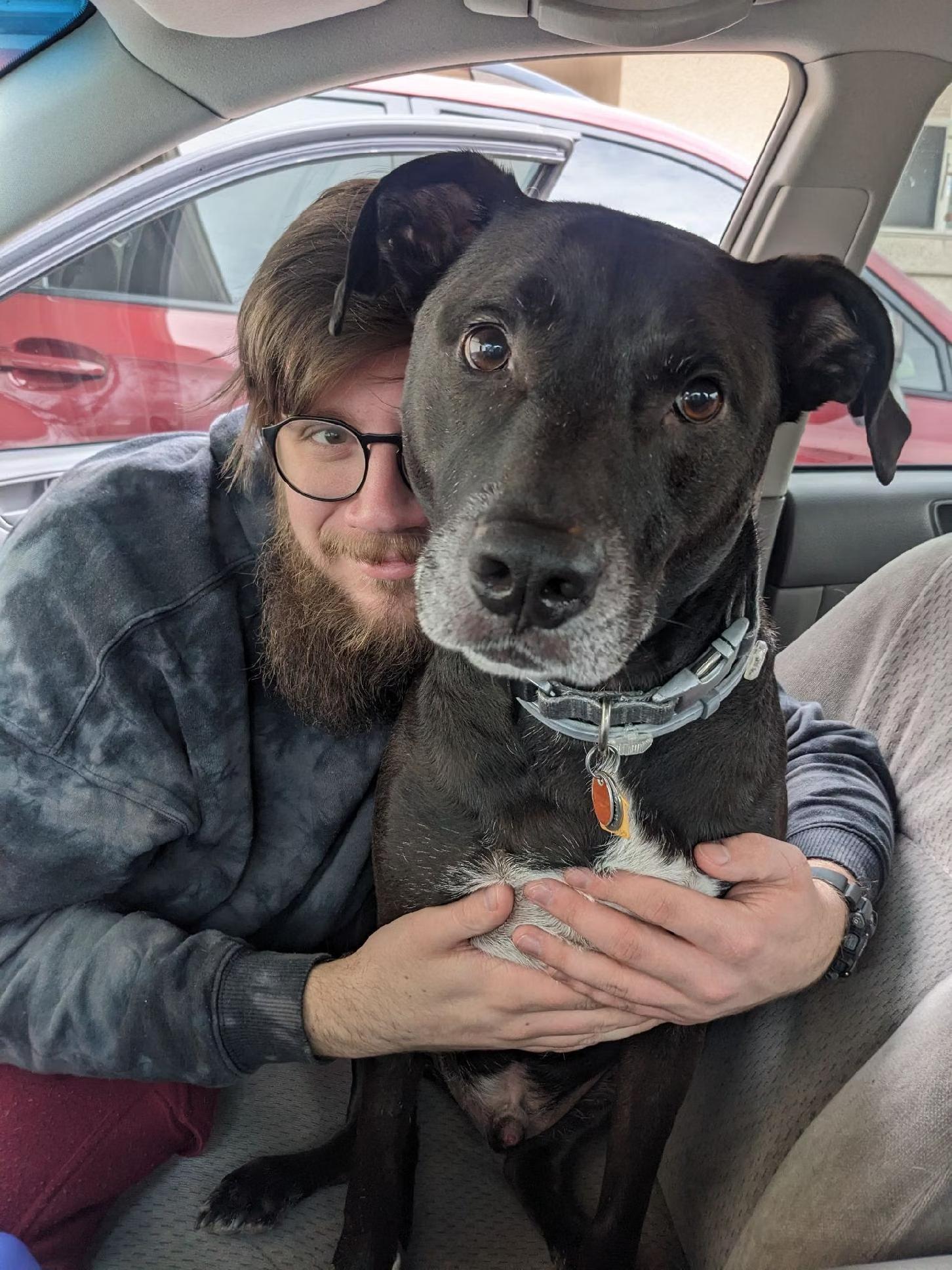

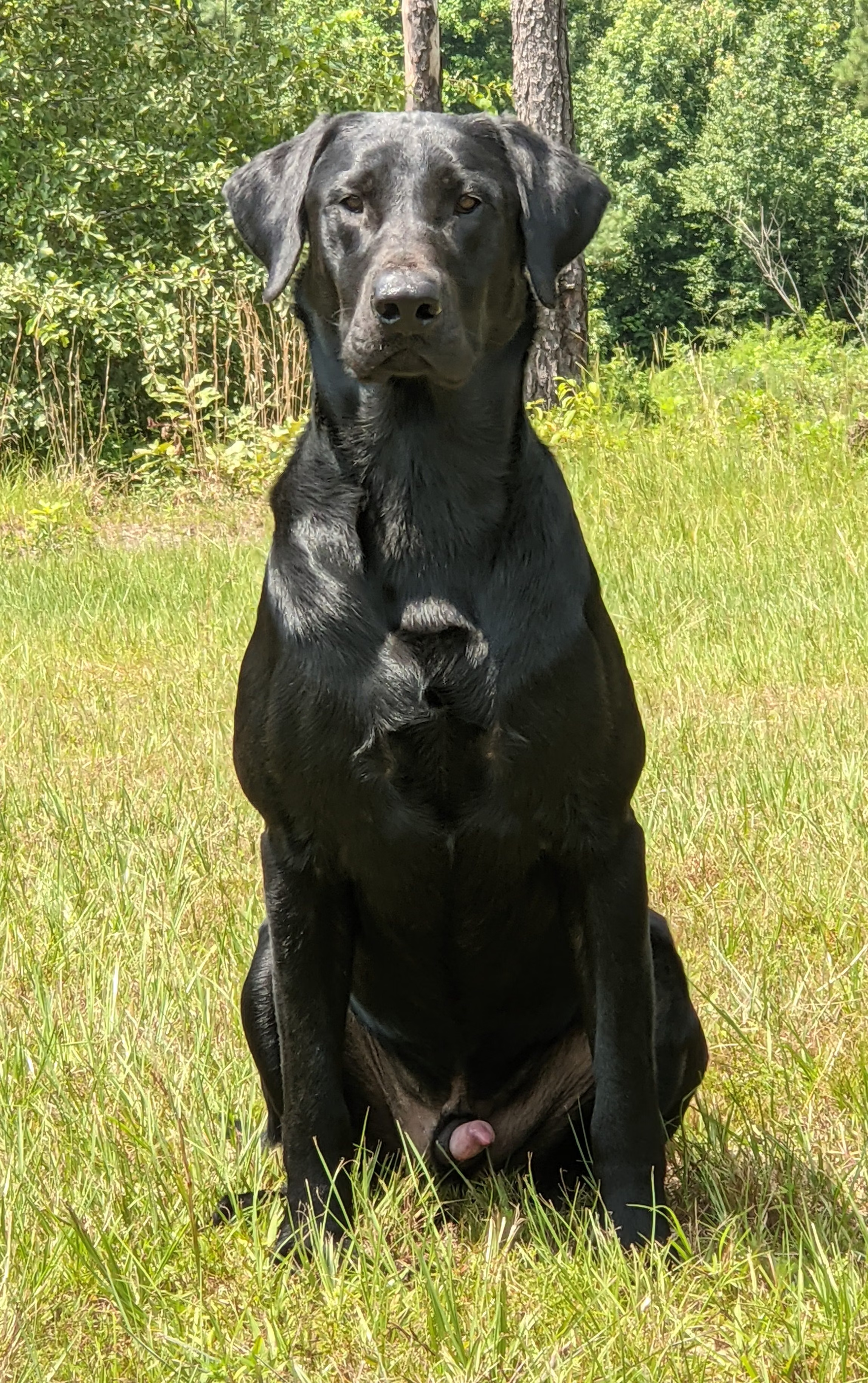


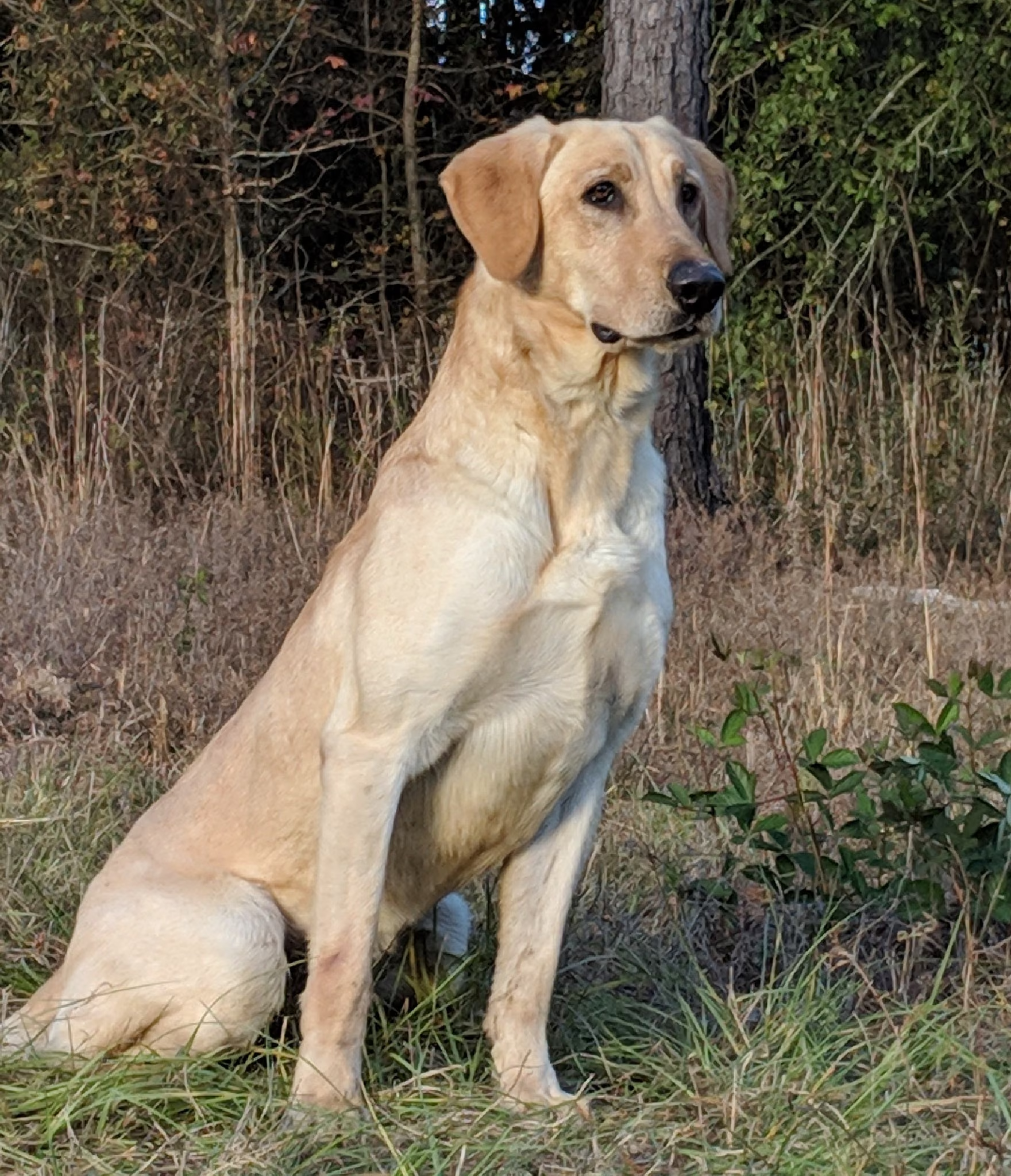


About the Labrador Retriever
The Labrador Retriever is a medium to large gundog from Newfoundland, well established across New Zealand as a family dog, working retriever, and assistance dog. Adults weigh 25 to 36 kg and typically live 11 to 13 years.
The Labrador Retriever arrived in New Zealand alongside the British gundog tradition and has become one of the most commonly seen breeds in the country, from suburban backyards to rural paddocks. Originally bred to retrieve fish and game from cold Atlantic water, the Lab carries a short, water-resistant double coat and the physical capacity for sustained outdoor work.
The breed's temperament, steady and sociable without being nervy, has made it useful well beyond the hunting field. Labs work as guide dogs through Blind Low Vision NZ, as search and rescue dogs, and as detection dogs for customs and biosecurity. They are also among the more common choices for families with children.
Three coat colours are recognised: black, yellow, and chocolate. The coat sheds year-round and more heavily during seasonal changes.
| Attribute | Detail |
|---|---|
| Origin | Newfoundland (now Canada), developed further in the United Kingdom |
| Size | Medium to large; 25 to 36 kg |
| Lifespan | About 11 to 13 years |
| Group/role | Gundog; retrieving, assistance, and detection work |
| Good with | Children, families, other dogs; generally sociable with strangers |
Who this breed suits
Labradors suit active households that can commit to daily exercise and consistent training. The breed is a reasonable fit for first-time owners willing to put in effort, and copes well in families with children of all ages. A Labrador is not a good match for someone wanting a low-energy or low-shedding dog, or for people who are away from home for long stretches without making alternative arrangements. Left without activity and company, Labs become bored and destructive.
History and origin
The Labrador Retriever descends from the St. John's water dog of Newfoundland, was shaped into its modern form by British shooting estates in the 1800s, and was formally recognised by The Kennel Club in 1903.
Newfoundland fishermen in the 1700s and early 1800s relied on a working dog known as the St. John's dog or lesser Newfoundland. These dogs retrieved fish that slipped off hooks, hauled lines, and worked alongside nets in the cold North Atlantic. They were compact, short-coated, and built for water.
British traders and visitors brought some of these dogs back to England in the early nineteenth century. Estates including those of the Earl of Malmesbury and the Duke of Buccleuch kept and selectively bred them for upland game retrieving. The name "Labrador" attached to the breed during this period in Britain, even though the dogs' actual origin was the island of Newfoundland rather than the mainland Labrador coast.
Over time, quarantine legislation and a Newfoundland tax on female dogs cut off the supply of fresh working stock from Canada. The British lines became self-sustaining and were refined into the type recognised today. The Kennel Club in the United Kingdom formally recognised the Labrador Retriever in 1903. The American Kennel Club followed in 1917.
All three standard colours, black, yellow, and chocolate, appear in the breed's early records. Black was most common in the founding stock, with yellow and chocolate recorded as the gene pool widened.
Appearance and breed standard
Labradors are solidly built, with a broad head, a distinctive thick otter-like tail, and a short dense double coat in black, yellow, or chocolate. Males stand 57 to 62 cm and females 55 to 60 cm at the shoulder.
The Labrador is a broad-headed dog with a deep chest, level topline, and legs that suggest stamina rather than speed. The defining external trait is the tail: thick at the base, evenly rounded, and densely coated, it moves continuously when the dog is alert. Ears hang close to the head. The short double coat is straight and noticeably water-resistant to the touch, a feature apparent after a swim in any New Zealand river or estuary.
| Trait | Detail |
|---|---|
| Height | Males 57 to 62 cm; females 55 to 60 cm |
| Weight | Males 29 to 36 kg; females 25 to 32 kg |
| Coat | Short, dense, straight double coat; water-resistant |
| Colours | Black, yellow, chocolate |
| Eyes | Brown or hazel; alert, kind expression |
Coat and colours
Yellow Labradors range from pale cream through to a deep fox-red. Small white markings on the chest are permissible under most standards but not preferred. The double coat produces substantial shedding throughout the year and more heavily twice a year during seasonal coat changes. Some Labradors are advertised as "silver," which is a dilute form of chocolate and is not accepted as a separate colour by Dogs New Zealand or The Kennel Club.
Temperament and behaviour
Labradors are sociable, affectionate, and high-energy dogs that get on well with most people and animals. Without adequate exercise and mental engagement, their drive channels into unwanted behaviour.
Outdoors is where a Labrador genuinely comes into its own. A day on the water, a run alongside a bike, or a long tramp through the bush suits the breed far better than sitting inside. Within the family, Labs are affectionate and people-oriented, staying close and actively seeking interaction. With children they are generally patient, though the combination of size and energy means supervised play is sensible for younger kids.
Most Labradors treat strangers as friends, so they offer little as guard dogs. They are sociable with other dogs and usually with cats when introduced carefully. The breed has a strong instinct to retrieve and carry things, which can be channelled into games but can also mean shoes and remote controls disappear regularly.
When a Labrador does not get enough physical and mental work, the results are predictable: chewing, digging, barking, or restless behaviour around the house. The breed responds well to training and adapts to routines, but those routines need to be consistent.
| Trait | Rating |
|---|---|
| Affection | 5 |
| Energy | 5 |
| Trainability | 5 |
| Vocalness | 3 |
| Shedding | 4 |
Care and grooming
Labradors need at least an hour of exercise daily, weekly brushing with more frequent grooming during shedding periods, and regular ear checks. They are outdoor-capable dogs but do poorly when left alone for long stretches.
Grooming
- Brush at least once a week, stepping this up to every few days during heavy shedding periods.
- Bathing every few months is usually sufficient unless the dog has been in muddy paddocks or saltwater. Over-bathing strips the coat's natural oils.
- Drop ears trap warmth and moisture, so check and clean them every couple of weeks to reduce the risk of infection.
- Trim nails every three to four weeks and brush teeth several times a week.
Exercise
- A minimum of 60 minutes of activity each day, split across walks, runs, or active play.
- Swimming suits the breed well and is easy to arrange near most New Zealand beaches, rivers, and lakes. Check local bylaws, as some areas restrict dogs seasonally.
- Retrieving games on land or in water use the breed's natural drive productively.
- Keep puppy exercise moderate and low-impact to protect developing joints. Avoid forced distance running until the dog is fully grown, usually around 12 to 18 months.
Environment
Labradors adapt to different living situations as long as exercise needs are met. They can manage in a smaller home or townhouse provided they get outside daily. Access to a securely fenced yard is helpful since the breed will follow its nose if given the chance. Under New Zealand law, dogs must be registered with the local council, microchipped, and kept under control in public. On or near farmland, livestock-worrying laws apply: a Labrador chasing stock can carry serious legal consequences for the owner.
Nutrition and feeding
Labradors thrive on a complete, balanced diet matched to their life stage and activity level, fed in measured portions twice a day. Adults typically need around 2.5 to 3 cups of dry food daily, though exact amounts depend on the food's energy density.
Obesity is one of the main health risks for Labradors, and it shortens lives and worsens joint problems. The breed has a genetic tendency toward overeating, so portion control matters more here than for many other breeds. Free feeding, where a bowl is kept full and topped up, is not appropriate. Measure every meal, account for treats in the daily total, and adjust portions as body condition changes over time.
Choose a complete and balanced commercial food suited to the dog's age and activity level. Puppies need a formula designed for large-breed growth. Active working or hunting dogs need more energy than a suburban Lab spending most of the day at rest. Fresh water should always be available.
| Life stage | Amount per day | Meals per day |
|---|---|---|
| Puppy (2 to 6 months) | About 2 to 3 cups | 3 to 4 |
| Puppy (6 to 12 months) | About 2.5 to 3.5 cups | 2 to 3 |
| Adult | About 2.5 to 3 cups | 2 |
| Senior/less active | About 2 to 2.5 cups | 2 |
Treats and supplements
Treats should make up no more than roughly 10 per cent of daily calories. Many owners use a portion of the dog's measured daily kibble as training rewards, which avoids overfeeding. Supplements such as fish oil or joint support products are sometimes used, but a complete commercial diet covers a healthy dog's nutritional needs. Ask a vet before adding anything.
Health and common conditions
Labradors generally live 11 to 13 years and are a robust breed, but they carry inherited risks for hip and elbow dysplasia, obesity, and certain eye and genetic conditions. Buying from health-tested parents reduces these risks.
Hip and elbow dysplasia are the conditions breeders and buyers should ask about first. Both are heritable and can significantly affect quality of life, but responsible breeders screen parent dogs before mating and can provide documentation of results. Hip and elbow scores from recognised evaluation schemes give an objective measure to compare across breeding pairs.
Obesity is the other major concern and the one most within an owner's control. Excess weight puts additional strain on joints already at risk and shortens lifespan. A Labrador that stays at a healthy weight throughout its life faces considerably better long-term odds.
| Condition | Signs | Note |
|---|---|---|
| Hip dysplasia | Limping, stiffness, reluctance to rise | Heritable; breeders should provide hip scores for parents |
| Elbow dysplasia | Front-leg lameness, pain on extension | Heritable; elbow screening recommended |
| Obesity | Excess body weight, reduced stamina | Largely preventable through diet and exercise |
| Progressive retinal atrophy | Night blindness, declining vision | Inherited; DNA tests are available |
| Exercise-induced collapse | Weakness or collapse after intense exertion | Linked to a known gene variant; DNA test available |
| Ear infections | Head shaking, odour, scratching at ears | Drop ears hold moisture; regular cleaning reduces risk |
Preventive care
- Keep vaccinations current and maintain a regular parasite control programme covering fleas, ticks, and intestinal worms.
- Schedule annual vet checks, with more frequent visits for older dogs.
- Clean ears routinely and check the skin after outings in long grass or dense bush.
- When buying a puppy, ask for documentation of hip, elbow, eye, and relevant genetic health testing on both parents.
Training
Labradors rank among the easiest breeds to train, combining intelligence, food motivation, and a willingness to work with people. Consistent reward-based training from puppyhood produces reliable, well-mannered dogs.
A Labrador's eagerness to work with people is the trait that put the breed in guide dog harnesses and detection roles. Blind Low Vision NZ and similar organisations rely heavily on Labs because the combination of tractability and drive is hard to match. For the average owner, that same quality makes training relatively straightforward, as long as sessions are consistent and positively reinforced.
The challenges are energy management and the breed's strong oral fixation. Young Labs mouth everything and pull hard on the lead. Both improve steadily with training but require patient, repetitive work across the first year.
Basics
- Start socialisation early, from the first weeks in the new home, exposing the puppy to people, children, other animals, vehicles, and different environments.
- Teach the core cues, sit, stay, recall, and leave it, using small food rewards. A reliable recall is particularly important if the dog will be off-lead in parks or at the beach.
- Loose-leash walking takes consistent work. Begin while the puppy is still small enough to manage, since an adult Labrador is a strong puller.
- Redirect mouthing onto appropriate chew toys from the start and reward calm, settled behaviour.
- Add retrieving, scent games, or other structured tasks to give the dog's drive a productive outlet.
- Practise cues in different places, including busier environments, to build reliable responses around distractions.
Breeding and raising puppies
Female Labradors usually reach sexual maturity between 6 and 12 months, but responsible breeders wait until health screening is complete before mating. Gestation is around 63 days and litters typically number 6 to 8 puppies.
Responsible breeders register their litters with Dogs New Zealand and provide documentation of health testing completed on both parents. Mating rarely happens at the female's first season, which arrives somewhere between 6 and 12 months of age. Most breeders wait until the dog is physically mature, typically around two years, and cleared through hip, elbow, eye, and relevant genetic evaluations. Females cycle roughly twice a year.
Gestation runs approximately 63 days from conception. Litters of 6 to 8 puppies are typical, though the range varies considerably. Puppies are born unable to see or hear and depend entirely on the dam during the first two weeks.
Weaning onto solid food starts around three to four weeks of age. Handling and early socialisation by the breeder during weeks three to seven shapes how puppies respond to people and new situations later. Puppies are ready to go to new homes at around eight weeks, once they are eating independently and have started their vaccination programme.
| Metric | Value |
|---|---|
| Sexual maturity | About 6 to 12 months |
| Heat cycles | Roughly twice per year |
| Gestation | About 63 days |
| Average litter size | 6 to 8 puppies |
| Weaning age | About 6 to 8 weeks |
| Age to new home | About 8 weeks |
Registering a Labrador Retriever in New Zealand, microchip and all
Alongside council registration, a free United Pet Club record keeps a live phone number behind your Labrador Retriever and its chip.
Labrador Retriever registration and microchip registration in New Zealand
The National Dog Database has required chipping of newly registered dogs since 2006, and council registration sits alongside that rather than replacing a proper contact record. Holding one with United Pet Club is free for your Labrador Retriever's whole life. Registering your dog takes a few minutes, with nothing to renew afterwards.
A scanned chip is only ever as useful as its record. Pop your Labrador Retriever's fifteen digit number into a free United Pet Club account and the record does the rest: free updates after every move, every brand accepted, searchable day and night. Microchip registration first, account alongside.
How do I register my Labrador Retriever in New Zealand?
Setting up a free United Pet Club account, adding your Labrador Retriever's details and a photo, and saving is all it takes. The record stays free for the dog's whole life, chip or no chip.
How do I register my Labrador Retriever's microchip?
Just add the fifteen digit number to your free account along with your current address and phone. Under the lifetime plan there is nothing to pay for the registration or any later update.
Does my Labrador Retriever need a microchip in New Zealand?
Dogs registered for the first time since 2006 need one under the National Dog Database rules, working farm dogs aside. The council record and your United Pet Club profile do different jobs, and the second one is free.
What does registering a Labrador Retriever cost?
Nothing. The free lifetime plan carries the profile, the chip record, and every update, and no renewal notice ever arrives.
Frequently asked questions
Answers to common questions about Labrador Retrievers, covering size, shedding, compatibility with children, lifespan, cost in New Zealand, and general care demands.
How big does a Labrador get?
Adult Labradors stand 55 to 62 cm at the shoulder and weigh roughly 25 to 36 kg, with males generally at the taller and heavier end of the range.
Do Labradors shed a lot?
Yes. They have a dense double coat that sheds throughout the year, with heavier shedding during seasonal coat changes, typically twice a year. Weekly brushing reduces the amount of loose hair around the house, and more frequent grooming is needed during peak shed periods.
Are Labradors good with children?
Labradors are generally patient and friendly with children. Their size and exuberance mean young children should be supervised during play, but the breed is one of the more reliable family options.
How long do Labradors live?
Most Labradors live 11 to 13 years. Maintaining a healthy weight and keeping up with regular vet care are the two most practical things an owner can do to support a longer life.
How much does a Labrador puppy cost in New Zealand?
Prices vary depending on the breeder, the pedigree, and the extent of health testing done. Puppies from health-screened, Dogs New Zealand registered breeders cost more than unregistered litters. Rescue organisations also rehome Labradors and Labrador crosses at lower cost.
Are Labradors easy to care for?
Grooming and training are manageable, and the breed is generally good-natured. The main commitments are daily exercise, measured feeding to keep weight in check, and regular company, since Labs do not cope well when left alone for long stretches.
Are Labradors good guard dogs?
No. Labradors tend to welcome strangers warmly, which makes them unreliable guard dogs. Their value is as companions and working dogs rather than as deterrents.