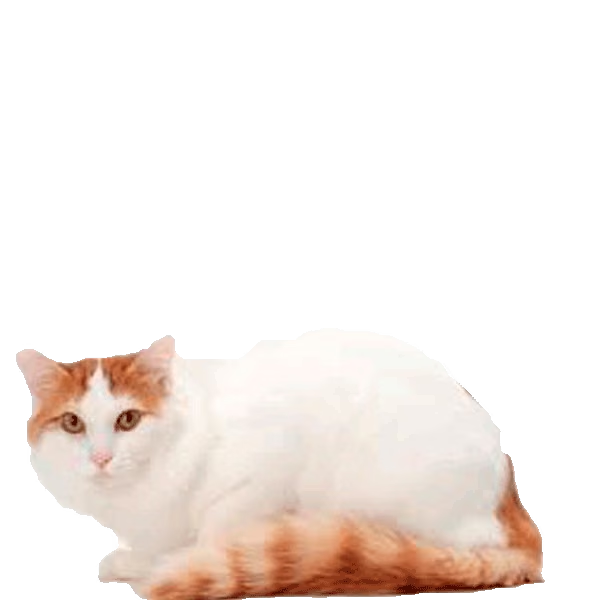
The Turkish Van is a powerful, water-loving breed known for its active, playful nature and famously affectionate devotion to family.
How the Turkish Van coat is built, and what that means when you groom it.
Caution: A Turkish Van coat mats easily.
Fine or long hair tangles at the base of the coat, out of sight, where the mats tighten and pull on the skin. Brushing has to reach right down to the roots in sections, not just skim the surface.
Information: A Turkish Van drops its undercoat in heavy bursts.
The undercoat comes out in heavy bursts over a few weeks. An undercoat rake, or a bath followed by a proper blow-dry, clears it far faster than daily brushing. Clipping the coat down is not a shortcut for this.
The Turkish Van is a large, semi-longhaired cat from eastern Turkey with a well-documented fascination with water. In New Zealand, the breed enters through MPI-regulated import channels and fits well into active Kiwi households that can give it room to move and things to explore.
New Zealand's Ministry for Primary Industries (MPI) applies some of the stricter cat import rules in the Pacific. Anyone bringing a Turkish Van from Turkey, or from any country without an approved feline disease status, must obtain an MPI Import Health Standard (IHS) clearance, arrange a microchipped and vaccinated cat with a rabies titre test, and book space at an approved MPI-managed transitional facility on arrival. The paperwork is not lightweight, but breeders and importers who have navigated it describe the process as manageable with enough lead time.
The Turkish Van originates from the highlands around Lake Van in eastern Anatolia, a region of big temperature swings, summer heat, and long winters. The breed's coat is a single semi-longhaired layer with no dense undercoat, and it is water-resistant in a way that suits the breed's well-known affinity for water. For a nation surrounded by ocean, dotted with rivers, and populated by people who spend a lot of time in or near water, there is something fitting about a cat breed that genuinely seems to enjoy it.
In New Zealand, the New Zealand Cat Fancy (NZCF) is the governing body for pedigreed cat registration. The Turkish Van is recognised through NZCF's affiliated clubs, and breeders operating under NZCF codes are expected to maintain health records, provide pedigree documentation, and observe ethical rehoming practices. The TICA New Zealand chapter provides an alternative pathway for breeders aligned with international show systems.
| Characteristic | Detail |
|---|---|
| Origin | Lake Van region, eastern Turkey |
| Coat | Semi-longhaired, single layer, water-resistant |
| Colour pattern | White body with colour on head and tail only (van pattern) |
| Weight range | 4.5-9 kg (males larger) |
| Lifespan | 13-17 years |
The Turkish Van suits New Zealand households that value an active, curious companion over a purely decorative or passive pet. The breed's size, intelligence, and energy level mean it needs space and interaction. Families in larger homes with gardens, or owners who can provide a well-equipped indoor environment, tend to get the most out of the breed. The cat's water curiosity can be an advantage in NZ's coastal and river-centric lifestyle, though owners near large ponds or deep water features should take sensible precautions. Source kittens from NZCF-registered breeders who can supply pedigree certificates and health records.
The Turkish Van's arrival in New Zealand was shaped by MPI quarantine requirements and the dedication of early importers. NZCF recognition anchored the breed within the New Zealand cat fancy.
The Turkish Van became known in Western cat fancy circles after British visitors documented cats near Lake Van in the 1950s. The breed gained formal recognition through the Governing Council of the Cat Fancy in the United Kingdom in 1969, and from there spread gradually to Continental Europe, North America, and eventually the Southern Hemisphere.
New Zealand's path to Turkish Vans ran through the country's biosecurity framework, which prioritises protecting the island ecosystem from exotic animal diseases. Historically, live cat imports into NZ required meeting strict MPI health standards, including mandatory time at a transitional facility on arrival. The paperwork burden and quarantine cost meant that only committed breeders made the investment, and the first foundation animals brought into the country came primarily from Australian or British bloodlines that had already cleared those countries' import systems.
The NZCF recognised the Turkish Van as a championship breed, giving it formal standing in conformation shows and title competitions across affiliated clubs on both the North Island and the South Island. This recognition gave NZ breeders a framework for presenting the breed to the public, recording pedigrees accurately, and ensuring that buyers purchasing Turkish Van kittens in New Zealand had access to documented breed history.
The NZ Turkish Van population has remained modest in size. Most kittens available each year come from a small number of active breeders, and demand typically exceeds supply. Buyers often find themselves on a waiting list, and some arrange imports directly from Australian, UK, or North American breeders who meet MPI import requirements. This keeps the gene pool from stagnating but requires each importer to navigate the MPI process afresh.
The Turkish Van is a large, long-bodied cat with a distinctive white coat, colour confined to the head and tail, and a silky water-resistant single-layer coat.
The Turkish Van is one of the physically larger domestic breeds. The body is long, with a broad chest, substantial bone structure, and notably strong hindquarters. Males are considerably heavier than females and develop slowly, sometimes not reaching full muscular bulk until they are four or five years old. Despite the size, the cat is quick and agile, capable of impressive vertical leaps.
The coat is immediately distinctive. It is semi-longhaired with a single layer and no woolly undercoat, giving it a smooth, light feel quite different from breeds like the Maine Coon or Norwegian Forest Cat. The texture is silky and has a natural water resistance; water tends to bead and run off rather than soaking through. The classic van colour pattern confines pigment to the top of the head, around the ears, and to the tail. The rest of the body is chalk white. The tail is often more deeply coloured than the head markings and may display faint banding.
| Feature | Description |
|---|---|
| Body type | Long, muscular, broad-chested; slow to reach full size |
| Coat length | Semi-long, single layer, no undercoat; water-resistant texture |
| Accepted colours | Red, cream, black, blue, tabby, tortoiseshell restricted to head and tail |
| Eye colours | Amber, blue, or odd-eyed (one of each) |
| Tail | Plumed, full, brush-like; frequently ringed or banded in colour |
The head is a broad modified wedge, with prominent cheekbones, a medium-length straight nose, and large oval eyes. Eye colour is one of the breed's most talked-about features: solid amber, solid blue, and odd-eyed (one of each colour) are all found in the breed, and odd-eyed cats are particularly prized. Ears are large, high-set, and only lightly tufted inside. The overall impression is of a confident, substantial cat that carries itself with awareness rather than delicacy.
The Turkish Van is energetic, loyal, and intellectually curious. It forms deep bonds with its chosen people and is far more active than most semi-longhaired breeds.
The Turkish Van is often described as a cat with a dog's disposition, and there is something to that. It follows its favourite people from room to room, engages enthusiastically with games and puzzles, and can be trained to respond to commands and cues in a way that surprises owners used to more aloof breeds. This is not a cat that will spend most of the day asleep; it is alert, investigative, and prone to getting into things if not given appropriate outlets.
The water behaviour is real and fairly consistent across the breed. Some Turkish Vans will deliberately enter a bathtub with a shallow puddle in it, interrupt someone washing dishes, or spend time batting at a running tap. This is not distress or a problem behaviour; it is characteristic curiosity. Owners near coastal or river areas in New Zealand sometimes find the breed attempts to investigate outdoor water sources, so ponds, rain barrels, and fish tanks should be covered or secured.
Socially, the Turkish Van tends to be selective rather than universally friendly. It usually bonds most closely with one or two people and shows that bond through proximity, following, and initiating play rather than through sustained cuddling. The breed generally tolerates children and dogs well when introductions are handled gradually, and it is usually less timid around strangers than some pedigreed breeds.
| Trait | Description |
|---|---|
| Energy level | High; needs daily engagement and active play |
| Affection style | Close-bonded to chosen humans; not a lap cat by preference |
| Compatibility with children | Good with older children; needs calm introductions with young ones |
| Compatibility with dogs | Generally adaptable with patient introductions |
| Vocalisation | Moderate; not as loud as Oriental or Siamese breeds |
The Turkish Van's single-layer coat and active nature shape a care routine that is manageable but requires consistency. NZ's climate and outdoor environment introduce specific considerations.
New Zealand's climate varies considerably from the subtropical north of the North Island to the cool, wet conditions of Fiordland and the South Island interior. Turkish Vans adapt reasonably well across this range, but owners in warmer northern regions should monitor for heat discomfort during summer peaks, while those in cooler southern areas need to ensure the cat has warm indoor spaces available. The single-layer coat does not provide the same cold-weather insulation as a double-coated breed, so indoor warmth in winter is important.
New Zealand's native wildlife is highly vulnerable to cat predation, and local councils in many regions enforce rules about cat containment or curfews. The Turkish Van's prey drive and athleticism make it an effective hunter if given free outdoor access, which poses a risk both to native birds and to the cat itself near roads. A fully enclosed outdoor cat run or a catio gives the cat access to fresh air and outdoor stimulation without the risks of unrestricted roaming. Ensure the enclosure has a shaded corner for summer days and is secured against the persistent problem-solving of a determined Turkish Van.
The Turkish Van's large frame and slow growth rate shape its nutritional needs from kittenhood through to its senior years. High-protein, moisture-rich food is the foundation of good long-term health.
Turkish Van kittens grow for longer than average, and males in particular may not reach their full body weight until they are three to five years old. This extended growth period means a kitten-appropriate diet should continue for at least twelve months, and the transition to adult food should be gradual. High-protein wet food or a balanced raw diet provides the amino acids needed for sustained muscle development without promoting excessive fat deposition.
New Zealand has a strong market for premium and raw pet food, with several local producers offering refrigerated or frozen cat food made from NZ-sourced proteins. These are worth considering: NZ-origin proteins like green-lipped mussel, venison, and lamb are sometimes included in specialty cat diets and can add variety. When evaluating any commercial food, check that a named protein is the leading ingredient and that the product meets AAFCO nutrient profiles for the relevant life stage.
| Life stage | Recommended diet | Frequency and notes |
|---|---|---|
| Kitten (under 12 months) | High-protein wet or raw; kitten formula | 3-4 meals daily; follow weight-based guidelines on packaging |
| Young adult (1-3 years) | Wet food or mixed wet and dry | 2 meals daily; adjust quantity to maintain lean body condition |
| Adult (4-9 years) | Wet preferred; dry as supplement only | 2 meals daily; weigh monthly and adjust if condition changes |
| Senior (10+ years) | Easily digestible wet or veterinary prescription diet | 2 meals daily; consider smaller more frequent servings if appetite decreases |
Portion discipline matters for this breed. The Turkish Van is enthusiastic about food and will overeat if given the opportunity. An overweight Turkish Van puts unnecessary pressure on its joints and heart, both of which are worth protecting in a breed that can live well into its mid-teens. Use a kitchen scale to measure portions rather than relying on visual estimates, and treat calories count toward the daily total. Consult a New Zealand veterinarian if you intend to feed a home-prepared diet; taurine, calcium, and phosphorus balance require careful formulation.
The Turkish Van is generally a healthy breed, but regular cardiac monitoring and attention to weight and dental health give it the best chance of a long life in New Zealand.
As a breed that was not intensively selected for exaggerated physical traits, the Turkish Van is relatively free of the structural health problems that affect some pedigreed cats. The breed does not have the flat-faced issues of Persians, the folded-ear cartilage concerns of Scottish Folds, or the skeletal conditions associated with very dwarf lines. That said, hypertrophic cardiomyopathy (HCM) is a condition that warrants regular monitoring in any large domestic breed. HCM causes the walls of the heart to thicken, reducing its pumping efficiency over time. The condition can be present without obvious symptoms in early stages, which is why routine cardiac checks are important.
| Health area | Risk for Turkish Van | What to do |
|---|---|---|
| Hypertrophic cardiomyopathy (HCM) | Moderate in large breeds; screen from age 3 | Annual cardiac auscultation; echocardiogram every 2-3 years |
| Obesity and joint stress | Moderate; breed has strong appetite | Monthly weight checks; wet food diet; daily exercise |
| Dental disease | Moderate; large-breed cats often overlooked | Annual dental check; consider raw meaty bones under supervision |
Core vaccinations in New Zealand follow the WSAVA guidelines: feline herpesvirus, calicivirus, and panleukopenia are the primary trivalent vaccine given to all cats. Cats with any outdoor access should also be assessed for FIV risk, as FIV is present in the NZ feral cat population. Flea prevention is relevant across most of New Zealand year-round, and owners in rural areas should discuss lungworm and other parasite risks with their vet. NZ does not have the paralysis tick problem found in eastern Australia, but regular health checks remain important. Dental disease is often underestimated in large-breed cats: the Turkish Van's jaw size can conceal early periodontal changes, so annual dental assessments are a worthwhile habit.
The Turkish Van takes well to positive reinforcement training. Its intelligence and food drive make it one of the more trainable cat breeds, and early training pays dividends for the rest of the cat's life.
Turkish Vans respond to training in a way that many cat owners find genuinely surprising. The breed's alertness and food motivation create a productive training environment when sessions are kept short and rewards are immediate. Freeze-dried meat treats, small pieces of cooked chicken, or any high-value food not included in the regular diet work well as reinforcers. Clicker training, where a click sound marks the exact moment the cat performs the desired behaviour, is particularly effective because it bridges the gap between the action and the food reward with precision.
Recall training is the most practically useful skill to establish first. A Turkish Van that reliably comes when called is easier to manage in a NZ home where internal doors lead to cat runs, gardens, or areas where the cat should not roam freely. Introduce a consistent audio cue, pair it with an immediate food reward for approach, and practise ten to fifteen repetitions per session. Within a few weeks most Turkish Vans reliably respond to recall across multiple rooms.
Carrier habituation is another training investment that pays off throughout the cat's life. Turkish Vans are not typically anxious cats, but an unfamiliar carrier used only for stressful vet visits creates negative associations over time. Leave the carrier out with comfortable bedding inside, feed meals inside it occasionally, and use target training to encourage the cat to enter voluntarily. A cat that enters the carrier calmly is much easier to manage during a vet visit, an emergency evacuation, or interstate travel.
Harness and lead training is genuinely feasible with the Turkish Van and suits NZ owners who want to give their cat some outdoor exploration time beyond a fixed enclosure. The process takes patience: start with harness desensitisation over days or weeks, then short indoor sessions with the lead attached, then supervised outdoor outings in a quiet area. The Turkish Van's confidence and adaptability make it one of the breeds most likely to eventually walk comfortably on a lead, which can be a practical alternative to building a full catio in a rented home.
NZCF governs registered Turkish Van breeding in New Zealand. The small gene pool requires thoughtful pairing decisions and occasional imports to maintain genetic health.
Turkish Van breeders in New Zealand operate under NZCF codes of ethics, which cover health testing, kitten socialisation standards, and pedigree record accuracy. The registered NZ population is small, which creates both a challenge and an opportunity: breeders must plan pairings with care to avoid increasing the coefficient of inbreeding within an already limited gene pool, but the tight-knit community of Turkish Van breeders in Australasia generally knows each other and can collaborate on pairing decisions.
Importing new bloodlines into NZ requires navigating the MPI Import Health Standard process, which adds cost and lead time to a breeding programme. Breeders who have made this investment typically source cats from Australia, the UK, or TICA-registered catteries in North America. All imported cats must complete the required MPI transitional facility stay before entering the breeding programme or the general population.
Queens should not be bred before 18 months of age. Litter sizes typically range from three to five kittens. Responsible breeders limit lifetime litter numbers per queen and provide kittens with age-appropriate vaccinations and a thorough veterinary check before rehoming. Kittens leave for their new homes no earlier than 12 weeks of age.
| Parameter | Typical range |
|---|---|
| Litter size | 3-5 kittens |
| Minimum breeding age (queen) | 18 months |
| Gestation period | 63-67 days |
| Weaning age | 8-10 weeks |
| Kitten rehoming age | 12-14 weeks minimum |
| Price range (New Zealand) | NZD 2,000-4,000 per kitten from registered breeder |
Cats sit outside the National Dog Database, so a free United Pet Club record is what stands behind your Turkish Van's chip.
Keeping an indoor Turkish Van safe is partly latches and partly paperwork. The paperwork half is a free profile carrying your contact details and her photo, ready for the day a door swings wider than it should. Cat registration with United Pet Club never costs anything.
Pop the fifteen digit number from the vet paperwork into your free United Pet Club account, check your phone number is current, and your Turkish Van's chip finally points somewhere. Every brand is accepted, every update free, and the record answers scans at any hour. Microchip registration is the link in the middle.
It's a matter of creating a free United Pet Club account, adding her name, colouring, and a photo, and saving. The record is free for her whole life, indoors or out.
Adding the fifteen digit number to your free account with your current details is the whole job. The lifetime plan never charges for the record or its updates, whatever the chip brand.
There's no national requirement the way the dog database works, though some councils encourage it and shelters chip on rehoming. Requirement or not, a registered chip is what turns a found Turkish Van into a phone call.
Nothing at all. Profile, chip registration, and every later update are free under the lifetime plan.
Questions NZ residents commonly ask about importing, registering, and caring for Turkish Van cats, with answers grounded in NZ-specific rules and conditions.
You must comply with the MPI Import Health Standard for cats, which requires an import permit, a microchipped and vaccinated cat, a rabies-free health certificate from an accredited vet in the country of export, and a rabies neutralising antibody titre test result above the MPI threshold. On arrival in New Zealand, the cat must spend the required period at an MPI-approved transitional facility. The exact requirements depend on the cat's country of origin; check the MPI Biosecurity Import website or engage a licensed import agent for the current version of the IHS applicable to cats from Turkey or the transit country.
The time at an MPI transitional facility varies depending on the country of origin and the completeness of the documentation. Cats arriving from Australia under the established bilateral arrangement may have a shorter pathway. Cats originating from or transiting through countries with higher biosecurity risk profiles face longer stays. Contact MPI directly or work with an import agent to get the current timeline for your specific cat's origin before making travel arrangements.
Registration is handled through your nearest NZCF-affiliated club. You will need the pedigree certificate provided by your breeder, proof of microchipping, and the completed registration application. The breeder should have already recorded the litter with the NZCF; your registration as the new owner is the next step in that chain. For imported cats, you will also need the overseas registration paperwork and the MPI import documentation. Contact the NZCF through their website to identify the affiliated club nearest you.
Prices from NZCF-registered breeders generally fall between NZD 2,000 and NZD 4,000. The range reflects the breeder's standing, whether the kitten has show or breeding potential, and whether any imported bloodlines are involved. Desexed pet-quality kittens are usually at the lower end of the range. Given the small number of active Turkish Van breeders in New Zealand, it is normal to spend several months on a waitlist before a kitten becomes available.
Water fascination is a well-documented Turkish Van characteristic, not a sign of anything wrong. Most cats express it through tapping at dripping taps, investigating puddles, or stepping into shallow containers. For a cat near coastal NZ water, the main practical concern is deep water, strong currents, or tidal areas where the cat could get into difficulty. The breed can swim but should not have unsupervised access to deep or fast-moving water. Cover garden ponds and rain barrels with mesh, and let the cat satisfy its curiosity through a cat water fountain or supervised shallow-water play.
Free roaming is not advisable for several reasons specific to New Zealand. NZ's native birds are highly vulnerable to cat predation, and many councils have introduced containment bylaws or night curfews. A Turkish Van's prey drive and athleticism make it an effective hunter if given outdoor access. The safer approach is a fully enclosed outdoor run or catio, which gives the cat fresh air and outdoor stimulation without the ecological risk or the road-safety hazard. Harness walking on lead is another option that many Turkish Van owners pursue successfully.
The Turkish Van can adapt to smaller living spaces if enrichment is consistently provided. Key elements include: a tall cat tree or wall-mounted shelving for vertical movement, two daily structured play sessions with interactive toys, food puzzles that slow mealtimes and occupy the mind, and if possible a second cat for company. Window perches with outdoor views add low-effort stimulation. A catio attached to a window or balcony is achievable even in a flat and can transform the cat's quality of life without requiring a garden.
