
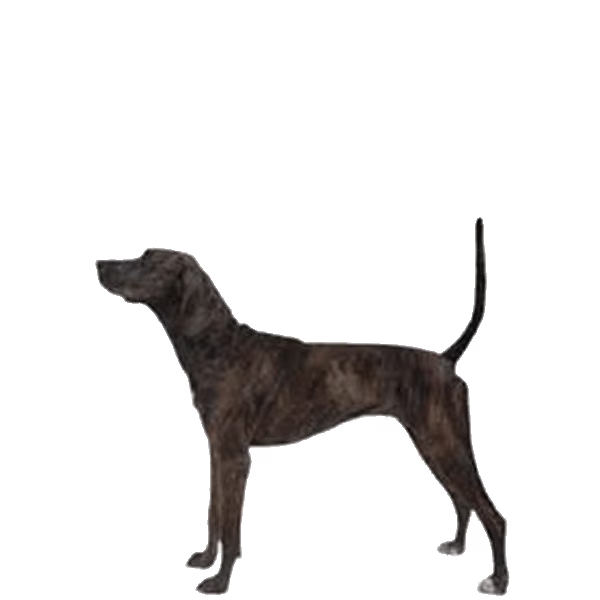
Xoloitzcuintli
The Xoloitzcuintli is an ancient, loyal Mexican hairless breed prized for its calm devotion and watchful, attentive nature.
- Size
- Medium
- Lifespan
- 13–18 years
- Origin
- Mexico
- Temperament
- Loyal
- Standard colors
- Black, White and Grey and 12 more
Characteristics
Coat and grooming
How the Xoloitzcuintli coat is built, and what that means when you groom it.
- Coat layers
- Hairless
- Coat length
- Short
- Shedding
- Low shedding
Grooming guidance
Caution: A Xoloitzcuintli needs protection from the sun.
Bare skin burns quickly and offers no insulation against cold either. Time outdoors needs shade, a coat in cool weather, or a sunscreen a vet has approved for animals.
Xoloitzcuintli colors and patterns
What each club's breed standard says about every Xoloitzcuintli color and pattern. Point at a ruling to see the club's own wording.
Breed standards describe the Xoloitzcuintli in Black, White, Grey, Blue, Lilac, Slate, Liver, Tan, Red, Copper, Yellow, Palomino, Cream, Fawn and Isabella. Standard patterns: Solid, Bicolour, Tricolour, Brindle, Merle, Sable, Spotted, Tan point and Reverse brindle.
| Color or pattern | FCI | AKC | UKC | KC | KUSA |
|---|---|---|---|---|---|
| Black | Standard (“black”) | Standard (“Black”) | Standard (“Any color combination is allowed”) | Standard (“black”) | Standard (“black”) |
| White | Standard (“spots of any colour, including white markings (white: disqualifying)”) | Standard (“white spots and markings are permitted”) | Standard (“Any color combination is allowed”) | Standard (“spots of any colour, including white markings”) | Standard (“spots of any colour, including white markings (white: disqualifying)”) |
| Grey | Standard (“blackish grey, slate grey, dark grey”) | Standard (“Gray”) | Standard (“Any color combination is allowed”) | Standard (“grey in any shade”) | Standard (“blackish grey, slate grey, dark grey”) |
| Blue | Disqualifying | No ruling | Standard (“Any color combination is allowed”) | Standard (“Blue”) | Disqualifying |
| Lilac | Disqualifying | No ruling | Standard (“Any color combination is allowed”) | Standard (“Lilac”) | Disqualifying |
| Slate | Standard (“slate grey”) | Standard (“Slate”) | Standard (“Any color combination is allowed”) | Standard (“grey in any shade”) | Standard (“slate grey”) |
| Liver | Standard (“liver”) | Standard (“Liver”) | Standard (“Any color combination is allowed”) | Standard (“liver”) | Standard (“liver”) |
| Tan | Disqualifying (“black and tan”) | Standard (“Tan Markings”) | Standard (“Any color combination is allowed”) | Standard (“Black & Tan”) | Disqualifying (“black and tan”) |
| Red | Standard (“reddish”) | Standard (“Red”) | Standard (“Any color combination is allowed”) | Standard (“red”) | Standard (“reddish”) |
| Copper | Disqualifying | No ruling | Standard (“Any color combination is allowed”) | Standard (“Copper”) | Disqualifying |
| Yellow | Disqualifying | No ruling | Standard (“Any color combination is allowed”) | Standard (“White & Yellow”) | Disqualifying |
| Palomino | Disqualifying | Standard (“Palomino”) | Standard (“Any color combination is allowed”) | No ruling | Disqualifying |
| Cream | Standard (“blond”) | No ruling | Standard (“Any color combination is allowed”) | Standard (“blonde”) | Standard (“blonde”) |
| Fawn | Disqualifying | Standard (“Fawn”) | Standard (“Any color combination is allowed”) | Standard (“Fawn”) | Disqualifying |
| Isabella | Disqualifying | No ruling | Standard (“Any color combination is allowed”) | Standard (“Isabella”) | Disqualifying |
| Albino | Disqualifying (“Albinism”) | No ruling | Disqualifying (“Albinism”) | No ruling | Disqualifying (“Albinism”) |
| Patterns | |||||
| Solid | Standard (“Solid, uniform, dark colours are preferred”) | Standard (“A dark, uniform color is preferred”) | Standard (“Any color combination is allowed”) | Standard (“Solid, uniform and dark colours are preferable”) | Standard (“Solid, uniform, dark-coloured skin is preferred”) |
| Bicolour | Standard (“spots of any colour, including white markings”) | Alternate (“Black & White”) | Standard (“Any color combination is allowed”) | Standard (“Black & White”) | Standard (“spots of any colour, including white markings”) |
| Tricolour | Disqualifying | Alternate (“Black White & Tan”) | Standard (“Any color combination is allowed”) | Standard (“Tricolour”) | Disqualifying |
| Brindle | Disqualifying (“brindle”) | Standard (“Brindle”) | Standard (“Any color combination is allowed”) | Standard (“Black Brindle”) | Disqualifying (“brindle”) |
| Merle | Disqualifying (“Merle colour”) | Alternate (“Merle”) | Standard (“Any color combination is allowed”) | Not recognised (“Merle unacceptable”) | Disqualifying (“Merle colour”) |
| Sable | Disqualifying (“sable”) | Standard (“Sable”) | Standard (“Any color combination is allowed”) | Standard (“Sable”) | Disqualifying (“sable”) |
| Spotted | Standard (“There may also be spots of any colour”) | Standard (“Spotted”) | Standard (“Any color combination is allowed”) | Standard (“There may also be spots of any colour”) | Standard (“There may also be spots of any colour”) |
| Tan point | Disqualifying (“black and tan”) | Standard (“Tan Markings”) | Standard (“Any color combination is allowed”) | Standard (“Black & Tan”) | Disqualifying (“black and tan”) |
| Reverse brindle | Disqualifying (“brindle”) | Standard (“Brindle”) | Standard (“Any color combination is allowed”) | Standard (“Black Brindle”) | Disqualifying (“brindle”) |
| Double merle | Disqualifying | No ruling | No ruling | No ruling | Disqualifying |


| Color or pattern | FCI | AKC | UKC | KC | KUSA |
|---|---|---|---|---|---|
| Black | Standard (“black”) | Standard (“Black”) | Standard (“Any color combination is allowed”) | Standard (“black”) | Standard (“black”) |
| Grey | Standard (“blackish grey, slate grey, dark grey”) | Standard (“Gray”) | Standard (“Any color combination is allowed”) | Standard (“grey in any shade”) | Standard (“blackish grey, slate grey, dark grey”) |
| Slate | Standard (“slate grey”) | Standard (“Slate”) | Standard (“Any color combination is allowed”) | Standard (“grey in any shade”) | Standard (“slate grey”) |
| Liver | Standard (“liver”) | Standard (“Liver”) | Standard (“Any color combination is allowed”) | Standard (“liver”) | Standard (“liver”) |
| Bronze | Standard (“bronze”) | Standard (“Bronze”) | Standard (“Any color combination is allowed”) | Standard (“bronze”) | Standard (“bronze”) |
| Red | Standard (“reddish”) | Standard (“Red”) | Standard (“Any color combination is allowed”) | Standard (“red”) | Standard (“reddish”) |
| Cream | Standard (“blond”) | No ruling | Standard (“Any color combination is allowed”) | Standard (“blonde”) | Standard (“blonde”) |
| Patterns | |||||
| Solid | Standard (“Solid, uniform, dark coloured skin is preferred”) | Standard (“A dark, uniform color is preferred”) | Standard (“Any color combination is allowed”) | Standard (“Solid, uniform and dark colours are preferable”) | Standard (“Solid, uniform, dark-coloured skin is preferred”) |
| Spotted | Standard (“There may also be spots of any colour, including white markings”) | Standard (“white spots and markings are permitted”) | Standard (“Any color combination is allowed”) | Standard (“There may also be spots of any colour, including white markings”) | Standard (“There may also be spots of any colour, including white markings”) |
| Color or pattern | FCI | AKC | UKC | KC | KUSA |
|---|---|---|---|---|---|
| Black | Standard (“black, brown, hazel, amber or yellow tones”) | Standard (“The color varies from yellow to black”) | No ruling | Standard (“black, brown, hazel, amber or yellow tones”) | Standard (“black, brown, hazel, amber, or yellow tones”) |
| Brown | Standard (“black, brown, hazel, amber or yellow tones”) | No ruling | No ruling | Standard (“black, brown, hazel, amber or yellow tones”) | Standard (“black, brown, hazel, amber, or yellow tones”) |
| Dark brown | No ruling | No ruling | Standard (“ranges from yellow to a very dark brown”) | No ruling | No ruling |
| Hazel | Standard (“black, brown, hazel, amber or yellow tones”) | No ruling | No ruling | Standard (“black, brown, hazel, amber or yellow tones”) | Standard (“black, brown, hazel, amber, or yellow tones”) |
| Amber | Standard (“black, brown, hazel, amber or yellow tones”) | No ruling | No ruling | Standard (“black, brown, hazel, amber or yellow tones”) | Standard (“black, brown, hazel, amber, or yellow tones”) |
| Yellow | Standard (“black, brown, hazel, amber or yellow tones”) | Standard (“The color varies from yellow to black”) | Standard (“ranges from yellow to a very dark brown”) | Standard (“black, brown, hazel, amber or yellow tones”) | Standard (“black, brown, hazel, amber, or yellow tones”) |
| Light brown | Fault (“Light coloured ... eyes”) | No ruling | No ruling | No ruling | Fault (“Light-coloured ... eyes”) |
| Blue | Disqualifying (“Blue eyes”) | No ruling | Disqualifying (“Blue eyes or flecks of blue in the eyes”) | Not recognised (“Blue or wall eyes unacceptable”) | Disqualifying (“Blue eyes”) |
| Patterns | |||||
| Odd-eyed | Disqualifying (“different coloured eyes (Heterocromia)”) | Not recognised (“Both eyes must be of the same color”) | Not recognised (“Both eyes are to be of the same color”) | No ruling | Disqualifying (“different-coloured eyes (Heterocromia)”) |
| Sectoral | No ruling | No ruling | Disqualifying (“flecks of blue in the eyes”) | No ruling | No ruling |


| Color or pattern | FCI | UKC | KUSA |
|---|---|---|---|
| Liver | Standard (“It can be brown or pinkish in bronze-coloured dogs”) | Standard (“brown or pink in bronze and blond dogs”) | Standard (“It can be brown or pinkish in bronze-coloured dogs”) |
| Pink | Standard (“It can be brown or pinkish in bronze-coloured dogs”) | Standard (“brown or pink in bronze and blond dogs”) | Standard (“It can be brown or pinkish in bronze-coloured dogs”) |
| Patterns | |||
| Butterfly nose | Standard (“spotted in spotted dogs”) | Standard (“spotted as the rest of the body only in spotted dogs”) | Standard (“spotted in spotted dogs”) |

| Color or pattern | FCI | UKC | KUSA |
|---|---|---|---|
| Pink | Standard (“The tongue is generally pink”) | No ruling | Standard (“The tongue is generally pink”) |
| Patterns | |||
| Spotted | Standard (“may have black markings, spots or marks”) | Standard (“The tongue may have black markings, spots or stripes”) | Standard (“may have black markings, spots, or marks”) |

Coated
| Color or pattern | FCI | AKC | UKC | KC | KUSA |
|---|---|---|---|---|---|
| Black | Standard (“black”) | Standard (“Black”) | Standard (“Any color combination is allowed”) | Standard (“black”) | Standard (“black”) |
| White | Standard (“spots of any colour, including white markings (white: disqualifying)”) | Standard (“white spots and markings are permitted”) | Standard (“Any color combination is allowed”) | Standard (“spots of any colour, including white markings”) | Standard (“spots of any colour, including white markings (white: disqualifying)”) |
| Grey | Standard (“blackish grey, slate grey, dark grey”) | Standard (“Gray”) | Standard (“Any color combination is allowed”) | Standard (“grey in any shade”) | Standard (“blackish grey, slate grey, dark grey”) |
| Blue | Disqualifying | No ruling | Standard (“Any color combination is allowed”) | Standard (“Blue”) | Disqualifying |
| Lilac | Disqualifying | No ruling | Standard (“Any color combination is allowed”) | Standard (“Lilac”) | Disqualifying |
| Slate | Standard (“slate grey”) | Standard (“Slate”) | Standard (“Any color combination is allowed”) | Standard (“grey in any shade”) | Standard (“slate grey”) |
| Liver | Standard (“liver”) | Standard (“Liver”) | Standard (“Any color combination is allowed”) | Standard (“liver”) | Standard (“liver”) |
| Tan | Disqualifying (“black and tan”) | Standard (“Tan Markings”) | Standard (“Any color combination is allowed”) | Standard (“Black & Tan”) | Disqualifying (“black and tan”) |
| Red | Standard (“reddish”) | Standard (“Red”) | Standard (“Any color combination is allowed”) | Standard (“red”) | Standard (“reddish”) |
| Copper | Disqualifying | No ruling | Standard (“Any color combination is allowed”) | Standard (“Copper”) | Disqualifying |
| Yellow | Disqualifying | No ruling | Standard (“Any color combination is allowed”) | Standard (“White & Yellow”) | Disqualifying |
| Palomino | Disqualifying | Standard (“Palomino”) | Standard (“Any color combination is allowed”) | No ruling | Disqualifying |
| Cream | Standard (“blond”) | No ruling | Standard (“Any color combination is allowed”) | Standard (“blonde”) | Standard (“blonde”) |
| Fawn | Disqualifying | Standard (“Fawn”) | Standard (“Any color combination is allowed”) | Standard (“Fawn”) | Disqualifying |
| Isabella | Disqualifying | No ruling | Standard (“Any color combination is allowed”) | Standard (“Isabella”) | Disqualifying |
| Albino | Disqualifying (“Albinism”) | No ruling | Disqualifying (“Albinism”) | No ruling | Disqualifying (“Albinism”) |
| Patterns | |||||
| Solid | Standard (“Solid, uniform, dark colours are preferred”) | Standard (“A dark, uniform color is preferred”) | Standard (“Any color combination is allowed”) | Standard (“Solid, uniform and dark colours are preferable”) | Standard (“Solid, uniform, dark-coloured skin is preferred”) |
| Bicolour | Standard (“spots of any colour, including white markings”) | Alternate (“Black & White”) | Standard (“Any color combination is allowed”) | Standard (“Black & White”) | Standard (“spots of any colour, including white markings”) |
| Tricolour | Disqualifying | Alternate (“Black White & Tan”) | Standard (“Any color combination is allowed”) | Standard (“Tricolour”) | Disqualifying |
| Brindle | Disqualifying (“brindle”) | Standard (“Brindle”) | Standard (“Any color combination is allowed”) | Standard (“Black Brindle”) | Disqualifying (“brindle”) |
| Merle | Disqualifying (“Merle colour”) | Alternate (“Merle”) | Standard (“Any color combination is allowed”) | Not recognised (“Merle unacceptable”) | Disqualifying (“Merle colour”) |
| Sable | Disqualifying (“sable”) | Standard (“Sable”) | Standard (“Any color combination is allowed”) | Standard (“Sable”) | Disqualifying (“sable”) |
| Spotted | Standard (“There may also be spots of any colour”) | Standard (“Spotted”) | Standard (“Any color combination is allowed”) | Standard (“There may also be spots of any colour”) | Standard (“There may also be spots of any colour”) |
| Tan point | Disqualifying (“black and tan”) | Standard (“Tan Markings”) | Standard (“Any color combination is allowed”) | Standard (“Black & Tan”) | Disqualifying (“black and tan”) |
| Reverse brindle | Disqualifying (“brindle”) | Standard (“Brindle”) | Standard (“Any color combination is allowed”) | Standard (“Black Brindle”) | Disqualifying (“brindle”) |
| Double merle | Disqualifying | No ruling | No ruling | No ruling | Disqualifying |
Hairless
| Color or pattern | FCI | AKC | UKC | KC | KUSA |
|---|---|---|---|---|---|
| Black | Standard (“black”) | Standard (“Black”) | Standard (“Any color combination is allowed”) | Standard (“black”) | Standard (“black”) |
| Grey | Standard (“blackish grey, slate grey, dark grey”) | Standard (“Gray”) | Standard (“Any color combination is allowed”) | Standard (“grey in any shade”) | Standard (“blackish grey, slate grey, dark grey”) |
| Slate | Standard (“slate grey”) | Standard (“Slate”) | Standard (“Any color combination is allowed”) | Standard (“grey in any shade”) | Standard (“slate grey”) |
| Liver | Standard (“liver”) | Standard (“Liver”) | Standard (“Any color combination is allowed”) | Standard (“liver”) | Standard (“liver”) |
| Bronze | Standard (“bronze”) | Standard (“Bronze”) | Standard (“Any color combination is allowed”) | Standard (“bronze”) | Standard (“bronze”) |
| Red | Standard (“reddish”) | Standard (“Red”) | Standard (“Any color combination is allowed”) | Standard (“red”) | Standard (“reddish”) |
| Cream | Standard (“blond”) | No ruling | Standard (“Any color combination is allowed”) | Standard (“blonde”) | Standard (“blonde”) |
| Patterns | |||||
| Solid | Standard (“Solid, uniform, dark coloured skin is preferred”) | Standard (“A dark, uniform color is preferred”) | Standard (“Any color combination is allowed”) | Standard (“Solid, uniform and dark colours are preferable”) | Standard (“Solid, uniform, dark-coloured skin is preferred”) |
| Spotted | Standard (“There may also be spots of any colour, including white markings”) | Standard (“white spots and markings are permitted”) | Standard (“Any color combination is allowed”) | Standard (“There may also be spots of any colour, including white markings”) | Standard (“There may also be spots of any colour, including white markings”) |
What the rulings mean
- Standard
- Described by the club's breed standard.
- Alternate
- Registrable with the club but not described by its breed standard, such as an AKC alternate colour.
- Fault
- Named by the club's breed standard as a fault: the animal can be shown but is penalised.
- Disqualifying
- The club's breed standard disqualifies an animal of this colour or pattern.
- Not recognised
- The club does not accept this colour or pattern for the breed.
Color changes
How a Xoloitzcuintli's colors can change over its life.
Blackchanges toRust
Coat · With body condition · can change back
Blackchanges toGrey
Coat · Progressive
Blackchanges toBrown
Coat · In the sun · can change back
Whitechanges toRoan
Coat · With age · from 2 weeks
Tan pointchanges toSaddle
Coat · With age · from 6 to 156 weeks


Sources
Each ruling comes from the club's published breed standard or color list.
About the Xoloitzcuintli
The Xoloitzcuintli is an ancient hairless dog from Mexico, a devoted, watchful medium-sized companion that needs proper skin care in Ireland's damp climate.
The Xoloitzcuintli, pronounced show-low-eats-KEENT-lee and known to most simply as the Xolo, ranks among the oldest dog breeds kept anywhere in the Americas. It hails from Mexico, where people have kept the breed for thousands of years. Two coat types exist: a hairless dog with tough, smooth skin, and a coated dog with a short, flat coat.
This is a medium dog with a level, easy-going temperament. Xolos form tight bonds with their own family and are naturally watchful, quick to notice a visitor at the gate or a change about the house, though they are not dogs that bark for the sake of it. Strangers get a reserved, weighing-up look rather than anything hostile.
Sizes run from toy through to standard, though the medium build is what most owners here will come across. Litters can, and often do, mix hairless and coated pups, and both are equally true to the breed. What draws owners in is the loyalty, the quiet manner indoors, and a lifespan that runs well into old age for a dog this size.
| Attribute | Detail |
|---|---|
| Origin | Mexico |
| Size | Medium |
| Lifespan | 13 to 18 years |
| Group / role | Companion and watchdog |
| Good with | Family members, with early socialisation for children and other pets |
Who it suits
This breed suits an owner who wants a loyal, settled companion and is willing to keep up steady socialisation and a daily walk regardless of the weather. The hairless variety needs its skin minded, with protection from the sun in summer and proper cover against Ireland's damp cold for the rest of the year. Anyone after an alert dog without the constant barking will find the Xolo a good match, and Irish Kennel Club breed contacts are a sound starting point for anyone serious about taking one on.
History and origin
The Xoloitzcuintli is a native Mexican breed reaching back thousands of years, bound up with Aztec and earlier Mesoamerican culture and belief.
The Xoloitzcuintli is one of the oldest breeds found anywhere in the Americas. Pottery and other remains dug up across ancient Mexico show hairless dogs of this same type, and most accounts place the breed's origins several thousand years back.
Its name comes down from Nahuatl, the language of the Aztecs. It joins Xolotl, an Aztec god tied to the underworld, with itzcuintli, simply the word for dog. The Aztecs held that the dog guided souls on their journey after death, and the Xolo had a settled place in both religious life and the ordinary household.
The breed lived on across central and southern Mexico for centuries, much as native breeds here in Ireland held on in rural pockets, but numbers fell away sharply during the twentieth century and the Xolo came close to disappearing altogether. A recovery drive in Mexico from the mid-1900s tracked down the dogs that remained and rebuilt the population from there.
The Xolo was later named a national dog of Mexico and picked up formal recognition from the major kennel bodies worldwide. It remains closely tied to Mexican identity today, and it is kept both at home in Mexico and, in smaller numbers, here and across Europe.
Appearance and breed standard
The Xoloitzcuintli is a lean, well-balanced dog in hairless and coated varieties, with dark skin or coat and a watchful, thoughtful look about it.
The Xoloitzcuintli has a lean, athletic frame, a touch longer than it is tall at the shoulder. The body carries good muscle without any bulk, giving an overall look of quiet strength rather than showiness. The head is wedge-shaped, the ears stand large and erect, and the expression is alert and thoughtful.
The hairless variety is the one most people picture: smooth, tough skin, sometimes with a few coarse hairs on the crown of the head, the feet, and the tip of the tail. The coated variety carries a short, flat coat over the whole body. Both types can turn up in the one litter, so a breeder cannot promise which a buyer will get.
| Trait | Standard |
|---|---|
| Height | Roughly 36 to 45 cm at the shoulder (medium) |
| Weight | Roughly 7 to 14 kg (medium) |
| Coat | Hairless with smooth skin, or short flat coat |
| Colours | Dark slate, black, grey, bronze, liver, and red tones |
| Eyes | Almond-shaped, ranging from amber to dark brown |
Coat and colours
Hairless Xolos usually show a dark, solid skin tone, though lighter shades and patches of spotting do turn up. The skin itself is firm and warm to the touch. Coated Xolos carry the same range of colours in a short, close coat. Both varieties tend toward dark, even colouring, with bronze and red at the lighter end of the scale.
Temperament and personality
The Xoloitzcuintli is calm, loyal, and watchful, devoted to its own family while staying reserved around strangers.
The Xoloitzcuintli is a calm, devoted dog that settles quickly into family life. It bonds tightly with its people and will often pick out one or two favourites to stay close to. Indoors it is generally quiet and content, happy to lie near whoever it trusts most.
With strangers the Xolo holds back rather than making a fuss, watching before deciding what to make of a visitor. That wariness makes it a useful alert dog, since it picks up on new arrivals and anything out of the ordinary about the house. Early, ongoing socialisation keeps that reserve from tipping into shyness and helps the dog stay confident.
Around children the breed generally does well when raised together and interactions are supervised, particularly with younger children. It usually settles alongside other pets too, provided introductions happen early and are managed with a bit of care given the dog's watchful streak. The Xolo reads its household closely and does best where the routine stays steady.
| Trait | Rating |
|---|---|
| Affection | 5 |
| Energy | 3 |
| Trainability | 4 |
| Vocalness | 2 |
| Shedding | 1 |
Care and grooming
The Xoloitzcuintli needs skin or coat care, a daily walk, and protection from sun and Ireland's damp cold, particularly the hairless variety.
Grooming
- Hairless variety: wipe the skin down regularly and bathe as needed to keep the pores clear, then keep the skin moisturised on your vet's advice
- Put pet-safe sunscreen on before time outdoors to guard exposed skin
- Coated variety: give the short coat an occasional brush to lift loose hair
- Trim the nails regularly and check the ears for any buildup
- Brush the teeth several times a week to keep on top of dental health
Exercise
- Give one or two walks a day plus some active play
- Allow time in a secure garden or open space to move about and explore
- Add light training or scent games for mental stimulation
- Skip strenuous exercise during the hottest or coldest stretches of the day for hairless dogs
Environment
The Xolo settles well into home life, apartments included, provided it gets its daily exercise. The hairless variety feels the cold and the sun more than most. It needs shade and sun protection when the weather turns warm, and a coat or jumper for Ireland's cooler, damper months, which cover most of the year. Indoors it looks for a warm, comfortable spot to settle.
Nutrition and feeding
The Xoloitzcuintli does well on a complete, balanced diet portioned to its size and activity, split into measured daily meals.
The Xoloitzcuintli does well on a complete and balanced diet suited to its life stage and size. A good quality food with enough protein backs up its lean, muscled build. The breed can run to weight gain if overfed, so portion control matters, and any treats should count toward the daily total rather than sit outside it.
Fresh water should be available at all times. How much to feed depends on the individual dog's weight, age, and activity level, so treat the figures below as a starting point and adjust to keep the dog at a healthy weight.
| Life stage | Amount per day | Meals |
|---|---|---|
| Puppy (2 to 6 months) | Per food label, divided | 3 to 4 |
| Junior (6 to 12 months) | Per food label, divided | 2 to 3 |
| Adult | Roughly 1 to 1.5 cups of quality dry food | 2 |
| Senior | Adjusted lower for activity | 2 |
Treats and supplements
Keep treats to a minimum, no more than about ten percent of daily calories. Most Xolos on a good complete commercial diet need no supplements. Run any additions, such as joint or skin support, past a vet first, since hairless dogs can have particular skin needs.
Health and lifespan
The Xoloitzcuintli is generally hardy and long-lived, with a lifespan of 13 to 18 years, and skin and dental care are the main concerns.
The Xoloitzcuintli is generally regarded as a hardy, healthy breed, and plenty of dogs live long lives, typically 13 to 18 years. The hairless variety has particular skin needs, and the breed as a whole is known for incomplete dentition, meaning some teeth may be missing, which shows up most often in hairless dogs.
Responsible breeding and regular veterinary care go a long way toward keeping the breed sound. As with any dog, routine checkups help catch problems early.
| Condition | Signs | Note |
|---|---|---|
| Skin irritation (hairless) | Redness, dryness, acne-like bumps | Linked to exposed skin; managed with a care routine and sun protection |
| Dental issues | Missing teeth, tartar buildup | Hairless dogs often have fewer teeth; brush regularly |
| Sunburn | Reddened or sore skin after sun | Use pet-safe sunscreen and shade |
| Joint problems | Stiffness, reluctance to move | Keep a healthy weight to ease the strain |
Preventive care
- Keep vaccinations and parasite prevention current
- Book an annual vet check, more often for seniors
- Keep up skin and dental routines suited to the variety
- Manage weight with measured feeding and daily exercise
- Shield the dog from extremes of heat and cold
Training
The Xoloitzcuintli is intelligent and trainable, and responds best to calm, consistent, reward-based methods along with early socialisation.
The Xoloitzcuintli is a sharp dog and picks things up quickly. It reads its handler's tone closely and responds best to patient, consistent training. Harsh handling can make a Xolo pull back into itself, so a calm, steady approach works far better.
Early socialisation matters. Introducing the dog to a range of people, places, and other animals while young helps it grow into a confident adult and takes the edge off its natural wariness around strangers. Keeping expectations consistent across the household matters too.
Basics
- Start socialisation early with gentle, varied experiences
- Teach name recognition and a basic recall first
- Build up core commands such as sit, stay, and come
- Keep sessions short and upbeat to hold attention
- Practise calm greetings to manage reserve around strangers
- Reinforce house manners and crate or settle routines
Breeding
Xoloitzcuintli breeding calls for care with the genetics behind the hairless trait, since pairing two hairless dogs affects the litter.
Breeding the Xoloitzcuintli takes a working knowledge of the breed's genetics. The hairless trait is dominant, and the gene behind it means puppies that inherit two copies do not survive. For that reason, hairless dogs are usually paired so the litter comes out with both hairless and coated puppies. Coated dogs matter to the breed and have their place in any responsible breeding programme.
Dogs should be fully mature before breeding, and both parents ought to be health-screened and sound in temperament. Bitches are typically bred once physically mature. Gestation runs to about 63 days. Newborn pups rely entirely on the dam for warmth and feeding in the first weeks, and the hairless variety feels the cold especially keenly, so the whelping area needs to be kept properly warm, no small thing in an Irish winter. Puppies are weaned gradually and do better for early handling and socialisation.
| Metric | Value |
|---|---|
| Sexual maturity | Around 1 to 2 years |
| Gestation | About 63 days |
| Average litter size | Roughly 3 to 7 puppies |
| Weaning age | About 6 to 8 weeks |
| Hairless genetics | Two-copy hairless gene is not viable; coated dogs occur in litters |
Registering your Xoloitzcuintli in Ireland, chip and record both
Irish law wants every dog chipped and recorded; United Pet Club keeps your Xoloitzcuintli's record free, current, and there for life.
How to register a Xoloitzcuintli in Ireland
Irish law has required every dog to be chipped and registered since the 2015 Regulations came in, and it expects the details behind the chip to stay current, not gather dust. A free United Pet Club profile does that for your Xoloitzcuintli, for life. Registering your dog is a few minutes' work and costs nothing at all.
Lodge your Xoloitzcuintli's fifteen digit number with United Pet Club and the chip finally earns its keep: free registration for life, every brand accepted, and a record the ISPCA or any warden can turn into a phone call. Microchip registration takes minutes, and the free account covers the profile while you're at it.
How do I register my Xoloitzcuintli in Ireland?
Set yourself up with a free United Pet Club account, key in your Xoloitzcuintli's details and a photo, and save. The profile holds for the whole of his life without charge, and the chip number can be lodged whenever you have it.
How do I register my Xoloitzcuintli's microchip?
Lodge the fifteen digit chip number in your free account along with your address and phone number. The lifetime plan covers the registration and every update after it, free, whatever brand the vet used.
Is microchipping a Xoloitzcuintli required in Ireland?
It is. The 2015 Regulations require every dog to be chipped and registered, pup or rescue alike. Keeping the record current is the part that falls to you, and United Pet Club makes that part free.
What does it cost to register a Xoloitzcuintli in Ireland?
Not a penny. Profile, chip record, and every amendment are covered for life, with no renewal ever.
Frequently asked questions
Common questions about the Xoloitzcuintli, covering size, temperament, care needs, lifespan, suitability, and availability.
How big does a Xoloitzcuintli get?
The breed comes in toy, miniature, and standard sizes. The medium build most owners here see stands roughly 36 to 45 cm at the shoulder and weighs about 7 to 14 kg.
What's the Xolo's temperament like?
Xolos are calm, loyal, and devoted. They bond tightly with their family, stay quiet indoors, and are watchful and reserved around strangers.
Is the Xoloitzcuintli hard work to keep?
Not especially. The main jobs are skin protection and routine care for hairless dogs, a daily walk, and early socialisation. Coated dogs need only the odd brush.
How long do Xoloitzcuintlis live?
They are a long-lived breed, usually living 13 to 18 years with good care.
Is the Xolo good with a family?
Yes, once socialised early. It is loyal and gentle with its own household and generally does well with children and other pets when introductions are managed and interactions supervised.
Does the Xoloitzcuintli need much grooming?
The hairless variety needs skin cleaning, moisturising as advised, and sun protection rather than brushing. The coated variety needs only an occasional brush, and both shed very little.
Are Xoloitzcuintlis easy to get hold of in Ireland?
They are less common than most breeds here. Finding one usually means going through responsible breeders or breed-specific rescue, and a waiting list is likely. The Irish Kennel Club is a reasonable place to start looking for contacts.
From the community
Ask about the XoloitzcuintliNo questions about the Xoloitzcuintli yet. Be the first to ask.
Browse Dog breeds