
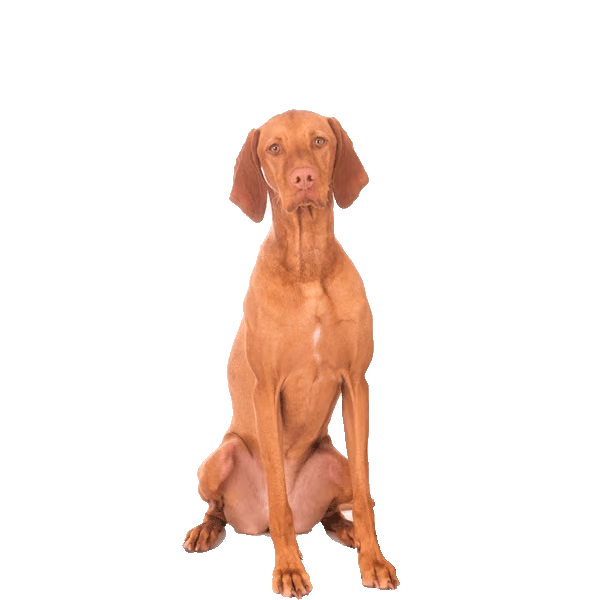
Wirehaired Vizsla
The Wirehaired Vizsla is a gentle, hardworking pointer with a dense wiry coat suited to rugged terrain and cold water.
- Size
- Medium
- Lifespan
- 12–14 years
- Origin
- Hungary
- Temperament
- Gentle
- Standard colors
- Rust, Gold and Sandy
Characteristics
Coat and grooming
How the Wirehaired Vizsla coat is built, and what that means when you groom it.
- Coat layers
- Double coat
- Coat texture
- Wire
- Coat length
- Medium
- Shedding
- Moderate shedding
Grooming guidance
Critical: A Wirehaired Vizsla should not be shaved.
The undercoat keeps heat out as well as in, and the outer coat shields the skin from sun and insect bites. Clipping the whole coat off removes both. It often grows back patchy, soft or a different colour, and in some animals the guard hairs never return properly. Brush the undercoat out instead of cutting it off.
Caution: A Wirehaired Vizsla coat should be hand-stripped rather than clipped.
A wire coat is meant to be pulled out at the root once the hair is ready to release. Clippers cut it off part way instead, leaving the soft undercoat behind. The result is a coat that grows back limp and faded, and the weatherproof texture only returns after the hair is stripped out again.
Wirehaired Vizsla colors and patterns
What each club's breed standard says about every Wirehaired Vizsla color and pattern. Point at a ruling to see the club's own wording.
Breed standards describe the Wirehaired Vizsla in Rust, Gold and Sandy. Standard patterns: Solid.
| Color or pattern | FCI | AKC | KC | KUSA |
|---|---|---|---|---|
| Rust | Standard (“Various shades of russet gold”) | Standard (“Golden Rust”) | Standard (“Golden sand to russet”) | Standard (“Various shades of russet-gold”) |
| Gold | Standard (“Various shades of russet gold”) | Standard (“Golden Rust”) | Standard (“Russet Gold”) | Standard (“Various shades of russet-gold”) |
| Sandy | Standard (“dark sandy gold (semmelgelb)”) | Not recognised | Standard (“Golden sand to russet”) | Standard (“dark sandy-gold (semmelgelb)”) |
| Brown | Fault (“Red, brownish, light yellow or lightened colour shadings are undesirable”) | Fault (“Red, brown or yellow colors are faulty”) | Fault (“Dark brown or pale yellow undesirable”) | Fault (“Red, brownish, light yellow, or lightened colour shadings are undesirable”) |
| Red | Fault (“Red, brownish, light yellow or lightened colour shadings are undesirable”) | Fault (“Red”) | Not recognised | Fault (“Red, brownish, light yellow, or lightened colour shadings are undesirable”) |
| Yellow | Fault (“Red, brownish, light yellow or lightened colour shadings are undesirable”) | Fault (“Sandy Yellow”) | Fault (“Dark brown or pale yellow undesirable”) | Fault (“Red, brownish, light yellow, or lightened colour shadings are undesirable”) |
| Patterns | ||||
| Solid | Standard (“uniform in colour”) | Standard (“self-colored”) | Standard | Standard (“uniform in colour”) |
| Parti-colour | Disqualifying (“Particoloured, not uniformly coloured”) | No ruling | Not recognised | Disqualifying (“Parti-coloured, not uniformly coloured”) |

%22%3E%3Cpath%20d%3D%22M0%200H19.5L19.5%2026.5L14%2027.5L0%2027.5Z%22%20fill%3D%22%23D9C3A0%22%2F%3E%3Cpath%20d%3D%22M1.5%2021.2L9%2018.6L12.6%2021L12.2%2026.2L3.5%2024.4Z%22%20fill%3D%22%23F5F5F0%22%2F%3E%3Cpath%20d%3D%22M8.6%2018L12%2015.8L5.8%2021.8L3.2%2021.4Z%22%20fill%3D%22%23F5F5F0%22%2F%3E%3Cpath%20d%3D%22M27.4%2030.8C25.6%2029.9%2025.2%2028.9%2025.3%2027.7C25.4%2026.4%2026.2%2024.3%2028.1%2023.1C29.9%2022%2034.2%2020.6%2036.5%2020.7C38.8%2020.8%2040.8%2022.8%2042%2023.9C43.2%2024.9%2043.9%2025.8%2043.6%2027.1C43.4%2028.5%2041.7%2031%2040.4%2032C39.1%2033%2038.1%2033.4%2035.9%2033.2C33.7%2033%2029.2%2031.7%2027.4%2030.8Z%22%20fill%3D%22%23D9C3A0%22%2F%3E%3Cpath%20d%3D%22M55.1%2031.3C54.9%2032.4%2054%2033.6%2053%2034.2C52%2034.8%2050.3%2034.9%2049.2%2034.7C48.1%2034.5%2047%2034.2%2046.3%2033.2C45.6%2032.2%2044.9%2029.9%2045.1%2028.7C45.3%2027.5%2046.4%2026.5%2047.4%2026C48.4%2025.5%2050.1%2025.5%2051.2%2025.7C52.4%2026%2053.5%2026.5%2054.1%2027.4C54.8%2028.3%2055.3%2030.2%2055.1%2031.3Z%22%20fill%3D%22%23D9C3A0%22%2F%3E%3C%2Fg%3E%3Cuse%20href%3D%22%23s%22%20fill%3D%22none%22%20stroke%3D%22%233B2A20%22%20stroke-opacity%3D%220.6%22%20stroke-width%3D%221%22%20stroke-linejoin%3D%22round%22%2F%3E%3Cellipse%20cx%3D%223.2%22%20cy%3D%2221.7%22%20rx%3D%221.3%22%20ry%3D%221.2%22%20fill%3D%22%231C1C1C%22%2F%3E%3Ccircle%20cx%3D%2210.8%22%20cy%3D%2219.3%22%20r%3D%221.1%22%20fill%3D%22%231C1C1C%22%2F%3E%3C%2Fsvg%3E)
| Color or pattern | FCI | AKC | KC | KUSA |
|---|---|---|---|---|
| Brown | Standard (“The brown eye colour harmonising with the coat colour”) | No ruling | No ruling | Standard (“The brown eye colour harmonising with the coat colour”) |
| Dark brown | Standard (“as dark as possible preferred”) | Standard (“Iris color is as dark as possible”) | No ruling | Standard (“as dark as possible preferred”) |
| Black | No ruling | No ruling | Fault (“Yellow or black eye undesirable”) | No ruling |
| Yellow | Disqualifying (“Light yellow eyes”) | Fault (“Yellow eyes are a serious fault”) | Fault (“Yellow or black eye undesirable”) | Disqualifying (“Light yellow eyes”) |
| Color or pattern | FCI | AKC | KC | KUSA |
|---|---|---|---|---|
| Liver | Standard (“The colour of the nose harmonises in a dark shading with the coat colour”) | Standard (“The nose color should blend with the coat color”) | Standard (“The colour of the nose is harmonious with the coat colour”) | Standard (“The colour of the nose harmonises in a dark shading with the coat colour”) |
| Black | No ruling | Disqualifying (“Any black on the nose is a disqualification”) | No ruling | No ruling |
| Patterns | ||||
| Butterfly nose | Disqualifying (“Spotted (butterfly) nose”) | No ruling | No ruling | Disqualifying (“Spotted (butterfly) nose”) |
%22%3E%3Cpath%20d%3D%22M28.4%2019.1C29.9%2017.7%2032.2%2016.4%2034%2016C35.8%2015.6%2037.4%2016%2039.2%2016.6C41.1%2017.2%2044.4%2018.5%2045.1%2019.5C45.8%2020.6%2044.3%2021.9%2043.3%2023.1C42.2%2024.3%2040.9%2025.9%2039%2026.6C37.1%2027.2%2034.3%2027.3%2032%2026.9C29.6%2026.4%2025.6%2025.3%2025%2024C24.4%2022.7%2026.9%2020.4%2028.4%2019.1Z%22%20fill%3D%22%23E8A0B4%22%2F%3E%3Cpath%20d%3D%22M23.8%2037.7C24.6%2037.5%2026.2%2037.9%2027.4%2038.1C28.5%2038.2%2030.2%2037.9%2030.8%2038.4C31.4%2039%2031.2%2040.7%2030.9%2041.5C30.7%2042.3%2029.9%2042.9%2029.1%2043.3C28.4%2043.8%2027.4%2044.6%2026.4%2044.4C25.4%2044.2%2023.8%2042.9%2023.1%2042.1C22.4%2041.3%2022.2%2040.2%2022.3%2039.5C22.4%2038.8%2022.9%2038%2023.8%2037.7Z%22%20fill%3D%22%23E8A0B4%22%2F%3E%3Cpath%20d%3D%22M10.5%2027.2C10.4%2026.7%2010.4%2025.4%2011%2025C11.5%2024.6%2013%2024.6%2013.9%2024.6C14.8%2024.6%2015.6%2024.5%2016.1%2024.9C16.6%2025.3%2017%2026.2%2017%2026.9C17.1%2027.7%2016.8%2028.8%2016.4%2029.4C15.9%2029.9%2014.9%2030.4%2014.2%2030.3C13.4%2030.1%2012.3%2028.8%2011.7%2028.3C11.1%2027.8%2010.6%2027.8%2010.5%2027.2Z%22%20fill%3D%22%23E8A0B4%22%2F%3E%3C%2Fg%3E%3Cuse%20href%3D%22%23s%22%20fill%3D%22none%22%20stroke%3D%22%233B2A20%22%20stroke-opacity%3D%220.6%22%20stroke-width%3D%221%22%20stroke-linejoin%3D%22round%22%2F%3E%3Cpath%20d%3D%22M12.5%2037Q13%2032%2018.5%2032Q23.5%2032.5%2023.5%2036.5Q20.5%2035.5%2018.8%2037Q17.4%2038.6%2018%2041.5Q13.6%2040.4%2012.5%2037Z%22%20fill%3D%22%231C1C1C%22%20fill-opacity%3D%220.8%22%20stroke%3D%22%23F5F5F0%22%20stroke-opacity%3D%220.4%22%20stroke-width%3D%220.9%22%2F%3E%3Cpath%20d%3D%22M51.5%2037Q51%2032%2045.5%2032Q40.5%2032.5%2040.5%2036.5Q43.5%2035.5%2045.2%2037Q46.6%2038.6%2046%2041.5Q50.4%2040.4%2051.5%2037Z%22%20fill%3D%22%231C1C1C%22%20fill-opacity%3D%220.8%22%20stroke%3D%22%23F5F5F0%22%20stroke-opacity%3D%220.4%22%20stroke-width%3D%220.9%22%2F%3E%3Cpath%20d%3D%22M32%2040V50%22%20fill%3D%22none%22%20stroke%3D%22%231C1C1C%22%20stroke-width%3D%221.3%22%20stroke-opacity%3D%220.5%22%20stroke-linecap%3D%22round%22%20stroke-linejoin%3D%22round%22%2F%3E%3Cellipse%20cx%3D%2232%22%20cy%3D%2221%22%20rx%3D%2212%22%20ry%3D%223.5%22%20fill%3D%22%23F5F5F0%22%20fill-opacity%3D%220.18%22%2F%3E%3C%2Fsvg%3E)
What the rulings mean
- Standard
- Described by the club's breed standard.
- Fault
- Named by the club's breed standard as a fault: the animal can be shown but is penalised.
- Disqualifying
- The club's breed standard disqualifies an animal of this colour or pattern.
- Not recognised
- The club does not accept this colour or pattern for the breed.
Sources
Each ruling comes from the club's published breed standard or color list.
Meet some of our Wirehaired Vizsla
A few of the Wirehaired Vizsla profiles members have added to United Pet Club.


About the Wirehaired Vizsla
The Wirehaired Vizsla is a medium Hungarian gundog with a dense wiry coat, bred to point and retrieve on rough ground and in cold water.
The Wirehaired Vizsla is a versatile hunting dog developed in Hungary. It works as a pointer and retriever, and its harsh wiry coat lets it work in heavy cover and cold water that would test a smooth-coated dog. The breed shares much of its character with the Vizsla but stands as a separate breed with its own coat and a slightly heavier, more rugged build.
This is an athletic dog with stamina to spare. It was bred to hunt all day and then settle quietly indoors with its family, so it carries both a strong drive in the field and a gentle, affectionate manner at home. Owners often describe it as a close companion that prefers to stay near its people.
A Wirehaired Vizsla needs daily physical work and mental engagement. Without an outlet it can become restless. Given enough exercise and contact, it is calm, loyal, and easy to live with.
| Attribute | Detail |
|---|---|
| Origin | Hungary |
| Size | Medium |
| Lifespan | 12 to 14 years |
| Group / role | Sporting / pointing and retrieving gundog |
| Good with | Active families, other dogs, older children |
Who it suits
The breed fits an active household that can give it one to two hours of real exercise a day. It is a good match for people who hunt, run, hike, or train dog sports. It is less suited to long hours alone or to a sedentary home, where its energy and need for company can turn into problem behaviour.
History and origin
The Wirehaired Vizsla was created in 1930s Hungary by crossing the smooth Vizsla with wirehaired breeds to produce a tougher coat for harsh conditions.
The breed comes from Hungary and traces directly to the smooth-coated Vizsla, a Hungarian pointing dog with a long history in the region. Hungarian sportsmen valued the Vizsla for its nose and biddable nature, but its short coat offered little protection in cold weather, dense cover, and icy water.
In the 1930s a group of Hungarian breeders set out to fix that. They wanted a dog with the Vizsla's hunting ability and temperament but a denser, weather-resistant coat. The most widely cited founders are sportsmen who crossed Vizslas with wirehaired pointing stock, including the German Wirehaired Pointer, to bring in the harsh coat and a sturdier frame.
The resulting dog kept the golden-rust colour and pointing style of the Vizsla while gaining a wiry double coat, a beard, and pronounced eyebrows. Breeders selected for these traits over successive generations until the type bred true.
The Wirehaired Vizsla is recognised as a distinct breed separate from the smooth Vizsla. Numbers remain modest compared with many sporting breeds, and most dogs still come from working or dual-purpose lines.
Appearance and breed standard
A medium, well-muscled gundog with a harsh wiry golden-rust coat, a distinct beard and eyebrows, and a lean athletic outline.
The Wirehaired Vizsla is a medium-sized, well-proportioned dog built for endurance rather than bulk. The outline is lean and athletic, with a deep chest and a level topline. The most recognisable features are the harsh wiry coat, the beard on the muzzle, and the bushy eyebrows that give the face an alert, slightly serious look. Colouring is a solid golden rust across the whole dog, including the nose and eye rims, which blend with the coat rather than contrast against it.
| Trait | Standard |
|---|---|
| Height | Around 54 to 62 cm (21 to 24 in) at the shoulder |
| Weight | Around 20 to 30 kg (45 to 65 lb) |
| Coat | Dense, harsh, wiry double coat with beard and eyebrows |
| Colours | Solid golden rust, in shades from sandy to russet |
| Eyes | Oval, in a shade that harmonises with the coat |
Coat and colours
The coat is the defining feature. A harsh outer layer two to three centimetres long sits over a softer insulating undercoat. The texture sheds water and resists thorns and brush. The face carries a beard and prominent eyebrows. Colour is a uniform golden rust; small white marks on the chest or toes occur but large white patches are a fault under most standards. The nose and eye rims match the coat colour, and a black nose is not correct for the breed.
Temperament and personality
Gentle and loyal at home, the Wirehaired Vizsla is an energetic, trainable dog that bonds closely with its family and dislikes being left alone.
The Wirehaired Vizsla is gentle, loyal, and strongly attached to its people. It tends to follow its family from room to room and is sometimes called a velcro dog for how closely it stays near its owners. With family it is affectionate and tolerant, and it usually does well with respectful older children.
With strangers the breed is typically reserved at first rather than aggressive, warming up once it takes its cue from its owner. Early, ongoing socialisation keeps this reserve from sliding into shyness. With other dogs it is generally sociable, and many live happily alongside other dogs. Its strong prey drive means small pets and free-roaming cats can be a problem unless the dog is reared with them and managed carefully.
This is a sensitive, intelligent breed that responds to its handler's mood. It does not cope well with harsh handling or long stretches of isolation, and separation distress is a common issue in dogs left alone too much. Given company, exercise, and a job to do, it is calm and steady indoors.
| Trait | Rating |
|---|---|
| Affection | 5 |
| Energy | 5 |
| Trainability | 4 |
| Vocalness | 2 |
| Shedding | 2 |
Care and grooming
The wiry coat needs only modest grooming, but the breed's high exercise needs and strong wish for company are the real daily commitments.
Grooming
- Brush the coat once a week with a firm bristle brush or slicker to remove loose hair and debris.
- Hand-strip or have the coat tidied a few times a year to keep the harsh texture; avoid clipping, which softens the coat over time.
- Check and clean the ears regularly, since drop ears can trap moisture after swimming.
- Trim nails every few weeks and brush teeth several times a week.
- Wipe the beard after meals to keep it clean and dry.
Exercise
- Provide one to two hours of vigorous exercise daily, such as running, hiking, swimming, or field work.
- Add mental work through training, scent games, or dog sports; physical exercise alone is rarely enough.
- Use a secure area or long line for off-lead work, as prey drive can pull the dog after game.
- Build up stamina gradually in young dogs to protect growing joints.
Environment
The breed suits a home with a securely fenced garden and an active routine. It can adapt to smaller homes if exercise needs are met, but it is not a dog for long hours alone. The wiry double coat handles cold and wet better than the smooth Vizsla, which suits the damp Irish weather, though no gundog should live outdoors away from its family.
Nutrition and feeding
An active medium dog, the Wirehaired Vizsla needs a complete diet matched to its workload, fed in two daily meals to lower bloat risk.
The Wirehaired Vizsla does well on a complete, balanced diet formulated for active medium-sized dogs. Working dogs and those in heavy training burn more energy and may need a higher-fat, higher-protein food or larger portions during the season. Adjust amounts to the individual dog and keep it lean; you should be able to feel the ribs without pressing hard. Fresh water should always be available, especially around exercise.
| Life stage | Amount per day | Meals |
|---|---|---|
| Puppy (2 to 6 months) | Per puppy-food label, divided | 3 to 4 |
| Junior (6 to 12 months) | Per label, growth formula | 2 to 3 |
| Adult | About 2 to 3 cups of quality dry food | 2 |
| Working adult (in season) | Increase to match workload | 2 |
| Senior | Slightly reduced, watch weight | 2 |
Treats and supplements
Keep treats to about ten percent of daily calories and use them in training. Most dogs on a complete diet need no extra supplements; ask a vet before adding joint or skin supplements. Because deep-chested dogs carry some bloat risk, avoid heavy exercise in the hour before and after meals and feed two smaller meals rather than one large one.
Health and lifespan
Generally a hardy breed with a 12 to 14 year lifespan, the Wirehaired Vizsla can face hip dysplasia, eye conditions, epilepsy, and ear infections.
The Wirehaired Vizsla is generally a healthy, hardy breed with a typical lifespan of 12 to 14 years. As with most purebred dogs, certain inherited conditions appear in some lines, and responsible breeders screen their stock for them. Buying from a breeder who tests hips, eyes, and known concerns lowers the risk.
| Condition | Signs | Note |
|---|---|---|
| Hip dysplasia | Stiffness, limping, trouble rising | Screened by hip scoring in breeding dogs |
| Eye disorders | Cloudiness, redness, vision changes | Includes cataracts and entropion |
| Epilepsy | Seizures, collapse, disorientation | Managed long term with veterinary care |
| Ear infections | Head shaking, odour, scratching | Drop ears trap moisture after swimming |
| Hypothyroidism | Weight gain, coat changes, lethargy | Diagnosed by blood test, treatable |
Preventive care
- Keep core vaccinations and parasite control up to date.
- Schedule a vet check at least once a year, more often for seniors.
- Dry and check the ears after swimming to prevent infection.
- Keep the dog at a lean weight to protect joints.
- Maintain dental care with regular brushing and checks.
Training
Intelligent and eager to please, the Wirehaired Vizsla learns quickly with reward-based methods but needs gentle, consistent handling and early socialisation.
The Wirehaired Vizsla is intelligent and eager to work with its handler, which makes it highly trainable. It learns quickly and enjoys having tasks to do, so it does well in obedience, field work, and dog sports. The breed is sensitive, though, and responds poorly to harsh corrections; shouting or rough handling tends to shut it down rather than improve it. Patience and consistency get far better results.
Start socialisation and basic training early. Expose the puppy to varied people, places, dogs, and sounds in the first months to build a confident adult. Because the breed bonds so closely, short daily sessions woven into ordinary life work better than long, formal drills.
Basics
- Begin name recognition and basic cues at eight to twelve weeks.
- Reward calm behaviour and contact to build focus on the handler.
- Teach a reliable recall early, before prey drive strengthens.
- Introduce crate and alone-time training to reduce separation distress.
- Add structured outlets such as field work, scent games, or agility as the dog matures.
Breeding
The Wirehaired Vizsla matures around 18 to 24 months, carries an average of six to eight puppies per litter, and benefits from health screening of both parents.
Breeding the Wirehaired Vizsla should be approached carefully, with both parents health tested and of sound temperament before mating. The breed reaches physical maturity later than its size suggests, and breeders generally wait until a bitch is fully grown and screened before her first litter. Gestation runs about 63 days from mating, in line with dogs in general.
Litters average six to eight puppies, though size varies. The dam typically raises the litter well, but the breeder should monitor the early weeks closely, ensure the puppies nurse and gain weight, and begin gentle socialisation as the puppies' senses develop. Because the breed is sensitive and people-oriented, early handling and exposure shape much of the adult temperament. Responsible breeders place puppies in active homes prepared for the breed's exercise and company needs.
| Metric | Value |
|---|---|
| Sexual maturity | Around 6 to 12 months (not ready to breed) |
| Recommended breeding age | Around 18 to 24 months, after screening |
| Gestation | About 63 days |
| Average litter size | 6 to 8 puppies |
| Weaning | Around 6 to 8 weeks |
| Recommended health tests | Hips, eyes, thyroid, plus line-specific concerns |
Registering your Wirehaired Vizsla in Ireland, chip and record both
Irish law wants every dog chipped and recorded; United Pet Club keeps your Wirehaired Vizsla's record free, current, and there for life.
How to register a Wirehaired Vizsla in Ireland
Get the profile sorted first: your Wirehaired Vizsla's name, his date of birth, a photo, and your phone number, saved in a couple of minutes. The record is free for the whole of his life, and the chip number slots in whenever the vet has done his part. Dog registration is where it starts.
The implant is the vet's job; the record is down to you, and the 2015 rules assume you'll keep it current. Register the microchip free on the lifetime plan: whatever brand the vet reached for is grand, a house move costs nothing to record, and the number stays searchable day and night. Create your free account and have the pair of jobs done before the tea goes cold.
How do I register my Wirehaired Vizsla in Ireland?
Set yourself up with a free United Pet Club account, key in your Wirehaired Vizsla's details and a photo, and save. The profile holds for the whole of his life without charge, and the chip number can be lodged whenever you have it.
How do I register my Wirehaired Vizsla's microchip?
Lodge the fifteen digit chip number in your free account along with your address and phone number. The lifetime plan covers the registration and every update after it, free, whatever brand the vet used.
Is microchipping a Wirehaired Vizsla required in Ireland?
It is. The 2015 Regulations require every dog to be chipped and registered, pup or rescue alike. Keeping the record current is the part that falls to you, and United Pet Club makes that part free.
What does it cost to register a Wirehaired Vizsla in Ireland?
Not a penny. Profile, chip record, and every amendment are covered for life, with no renewal ever.
Frequently asked questions
Common questions about the Wirehaired Vizsla's size, temperament, care needs, lifespan, suitability, and availability.
How big does a Wirehaired Vizsla get?
It is a medium-sized dog, usually around 54 to 62 cm (21 to 24 in) at the shoulder and roughly 20 to 30 kg (45 to 65 lb), with males a little larger than females.
What is the breed's temperament like?
Gentle, loyal, and energetic. It bonds closely with its family, is usually reserved with strangers at first, and generally gets on well with other dogs. It dislikes being left alone for long periods.
Is the Wirehaired Vizsla hard to care for?
Grooming is easy thanks to the low-shedding wiry coat, but the breed's high exercise needs and strong wish for company make it a demanding dog overall. It needs one to two hours of activity a day plus mental work.
How long do Wirehaired Vizslas live?
Typically 12 to 14 years. Good nutrition, regular veterinary care, and a healthy weight help a dog reach the upper end of that range.
Is this breed good for first-time owners?
It can be, for an active first-time owner committed to training, exercise, and company. It is a poor fit for a sedentary home or one where the dog would be alone for long hours.
Are Wirehaired Vizslas easy to find?
They are less common than the smooth Vizsla and many other sporting breeds. Expect to contact breeders directly and possibly join a waiting list; most dogs come from working or dual-purpose lines.
Does the Wirehaired Vizsla shed a lot?
No. The harsh wiry coat sheds modestly. Weekly brushing and occasional hand-stripping keep it in good condition.
From the community
Ask about the Wirehaired VizslaNo questions about the Wirehaired Vizsla yet. Be the first to ask.
Browse Dog breeds