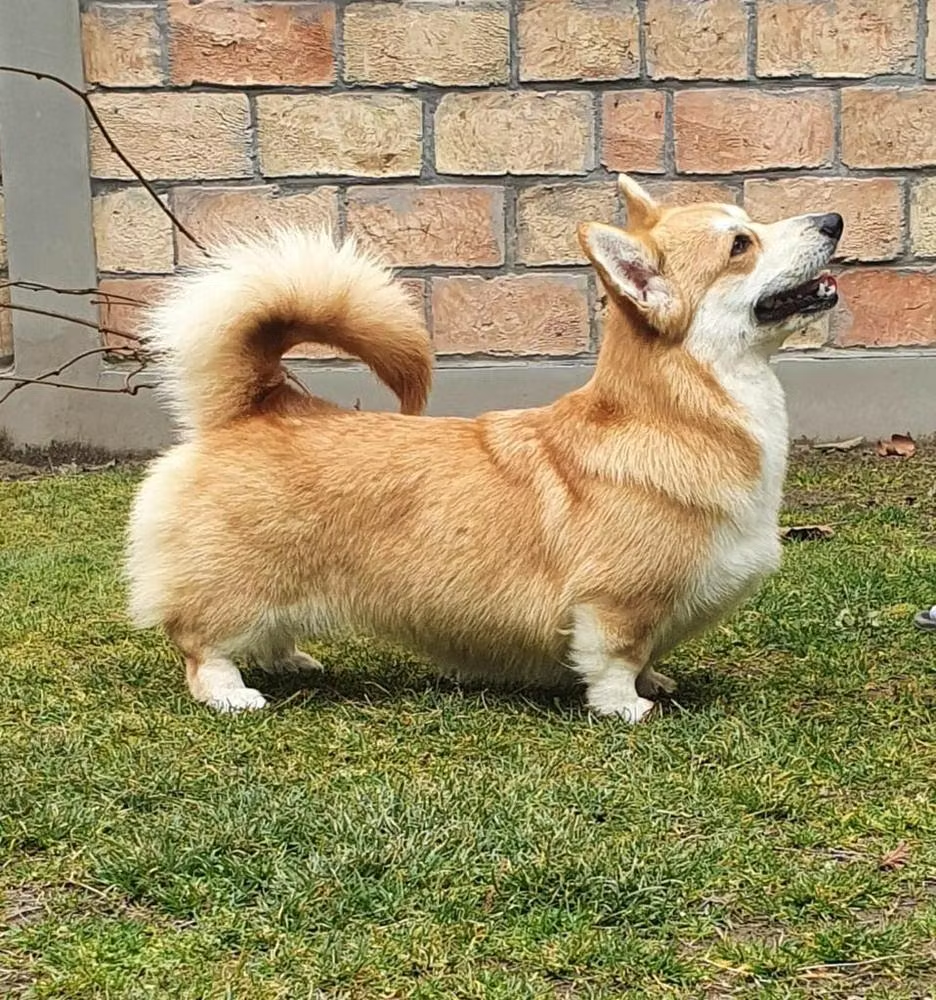
The Welsh Sheepdog is a hardy, intelligent herder known for its strong work drive and natural ability with livestock.
How the Welsh Sheepdog coat is built, and what that means when you groom it.
Critical: A Welsh Sheepdog should not be shaved.
The undercoat keeps heat out as well as in, and the outer coat shields the skin from sun and insect bites. Clipping the whole coat off removes both. It often grows back patchy, soft or a different colour, and in some animals the guard hairs never return properly. Brush the undercoat out instead of cutting it off.
Caution: A Welsh Sheepdog coat mats easily.
Fine or long hair tangles at the base of the coat, out of sight, where the mats tighten and pull on the skin. Brushing has to reach right down to the roots in sections, not just skim the surface.
Information: A Welsh Sheepdog drops its undercoat in heavy bursts.
The undercoat comes out in heavy bursts over a few weeks. An undercoat rake, or a bath followed by a proper blow-dry, clears it far faster than daily brushing. Clipping the coat down is not a shortcut for this.
A few of the Welsh Sheepdog profiles members have added to United Pet Club.
The Welsh Sheepdog is a medium-sized working dog from Wales, bred for stamina and independent thinking on the land rather than for the show ring.
The Welsh Sheepdog is a farm dog from Wales, developed over generations of practical breeding rather than pedigree showing. Hardy Welsh hill farmers bred for one thing above all: a dog able to move cattle, sheep and other stock across rough ground and enclosed fields, day in, day out. The result is a medium-sized, athletic dog built for a full day's graft in wet, changeable weather, the sort familiar to anyone who has farmed in Ireland too.
Where the Border Collie works low to the ground and fixes stock with a hard stare, the Welsh Sheepdog tends to work more upright and loose-eyed, gathering and driving with movement and presence rather than intensity alone. Plenty will turn their hand to cattle as readily as sheep. That versatility comes from the breed's roots on mixed Welsh farms, where a dog had to think for itself and cover serious distances without constant direction.
The breed is recognised and registered by the Welsh Sheepdog Society, which keeps a working register rather than a closed conformation standard, an approach that will feel familiar to Irish farmers who keep working collies of their own. Because ability comes first, the Welsh Sheepdog shows a good deal more variation in coat and looks than breeds bred mainly for the show ring.
| Attribute | Detail |
|---|---|
| Origin | Wales |
| Size | Medium |
| Lifespan | 12 to 15 years |
| Group / role | Herding and farm working dog |
| Good with | Active families, experienced owners, livestock work |
The Welsh Sheepdog suits people who can give it a job and a proper daily programme of activity, whether that's a working farm, a smallholding, or an owner committed to herding training, dog sports, or long structured exercise. It doesn't suit a quiet household or a first-time owner who can't meet its physical and mental needs, since a Welsh Sheepdog left without enough to do can turn restless and pick up unwanted habits fast.
The Welsh Sheepdog comes down from the working farm collies of Wales and got a formal breed register only in the late twentieth century, set up to protect its traditional working type.
The Welsh Sheepdog belongs to the broader family of British herding collies that worked the hills and farms of these islands for centuries, the same stock that gave rise to working types still found on Irish farms today. In Wales, these dogs were bred locally for the demands of mixed upland farming, where a single dog might be expected to handle sheep, cattle, ponies and poultry across rough, often boggy terrain.
For most of its history the breed existed as a regional working type rather than a registered pedigree. Farmers picked their dogs on ability alone, on how well they herded and managed stock, with little thought given to a fixed look. That produced a varied population held together by working temperament rather than uniform appearance.
As the Border Collie came to dominate trials and farm work through the twentieth century, the older Welsh working type fell in numbers. Worry that it would be absorbed into the wider collie population, or lost altogether, led to the founding of the Welsh Sheepdog Society in 1997, which began keeping a register of dogs from recognised Welsh working lines.
The Society still registers dogs mainly on working ability and parentage rather than a closed conformation standard. The breed isn't recognised by the major kennel clubs, including the Irish Kennel Club, as a show breed, and that has helped keep its identity as a functional herding dog intact.
The Welsh Sheepdog is a medium-sized, athletic herding dog with a weatherproof coat that varies a good deal in length and colour from dog to dog.
The Welsh Sheepdog is a medium-sized dog of balanced, athletic build, longer in the body than tall, clearly made for stamina and agility rather than raw power. The head is moderate with a defined stop, and the ears are usually semi-erect or carried tipped forward. The tail is well furnished and generally held low at rest. Because the breed register puts working ability ahead of a fixed standard, individual dogs vary noticeably in size, coat and markings.
| Trait | Typical range |
|---|---|
| Height | Approx. 43 to 53 cm (17 to 21 in) at the shoulder |
| Weight | Approx. 14 to 20 kg (30 to 45 lb) |
| Coat | Short to medium, dense and weather-resistant, smooth or wavy |
| Colours | Black and white, red and white, tricolour, blue or red merle |
| Eyes | Brown, amber, or blue; one of each colour occurs in merles |
The coat is practical, built to shed rain and dirt rather than to look decorative, ranging from short and smooth to medium with a slight wave. Many dogs carry feathering on the legs and tail. White markings on the face, chest, legs and tail tip are common over a darker base. Merle patterning turns up in the breed, and as with all merle dogs, breeders avoid mating two merles together because of the health risks that come with double merle offspring.
The Welsh Sheepdog is intelligent, energetic and strongly driven to work, generally loyal to its handler and wary of strangers.
The Welsh Sheepdog is a sharp, alert and highly motivated working dog. Its defining trait is a strong herding drive paired with the independence to make its own decisions at a distance from the handler. With its own family it is loyal and affectionate, and it forms a close bond with whoever actually works it day to day.
With strangers the Welsh Sheepdog tends to be reserved or watchful rather than outgoing, and plenty make naturally alert farm dogs that clock anything out of place. Early and ongoing socialisation helps keep that reserve from tipping over into nervousness or suspicion.
Around other animals, instinct shapes a lot of the Welsh Sheepdog's behaviour. It can live well alongside other dogs and the livestock it's trained to work, but its herding drive may lead it to chase or gather smaller pets, children or cyclists if that energy isn't given a proper outlet. Supervision and training around young children and small animals are sensible precautions.
| Trait | Rating |
|---|---|
| Affection (with family) | 4 |
| Energy | 5 |
| Trainability | 5 |
| Vocalness | 3 |
| Shedding | 3 |
The Welsh Sheepdog needs a good deal of daily exercise and mental work, though its coat itself is fairly low maintenance.
Caring for a Welsh Sheepdog comes down mostly to meeting its high activity and mental needs. Coat care is straightforward for most dogs, but the exercise and stimulation requirements are considerable, and that's the main reason the breed suits active or working homes best.
The Welsh Sheepdog does best with space and a job to do, on a farm, a smallholding, or an active rural home. Ireland's cool, damp climate suits the breed's weatherproof coat well, though it can adapt to other settings as long as its handler reliably provides daily exercise and mental engagement. Secure fencing matters, since a bored or under-exercised dog of this type is well able to find a way out of a yard.
The Welsh Sheepdog needs a complete, balanced diet with enough energy to support an active working life, adjusted for age and workload.
As an active medium-sized breed, the Welsh Sheepdog does well on a complete and balanced diet formulated for its life stage and activity level. Working dogs and those getting heavy daily exercise need more calories than a pet kept at a lighter pace, so portions are best set by body condition rather than a fixed figure. Keep fresh water available at all times, particularly after work.
| Life stage | Amount per day | Meals |
|---|---|---|
| Puppy (2 to 6 months) | Per product guide for projected adult weight | 3 to 4 |
| Junior (6 to 12 months) | Slightly above adult portion | 2 to 3 |
| Adult (active) | Approx. 200 to 350 g of quality dry food | 2 |
| Working / high activity | Increased to match energy output | 2 |
| Senior | Reduced calories, maintained protein | 2 |
Keep treats to roughly 10 percent of daily calories and put them to use in training, where the breed's food motivation makes them effective rewards. Most Welsh Sheepdogs on a complete diet need no supplements. Discuss joint, skin or performance supplements with a vet before adding them, particularly for hard-working or older dogs.
The Welsh Sheepdog is a generally hardy breed with a typical lifespan of 12 to 15 years, though a few conditions are worth keeping an eye on.
The Welsh Sheepdog is regarded as a hardy, functional breed, helped by a working gene pool that hasn't been narrowed by intensive show breeding. Most dogs live 12 to 15 years given good care. As with all dogs, certain inherited and lifestyle related conditions can turn up, and responsible breeders screen their stock where suitable tests exist.
| Condition | Signs | Note |
|---|---|---|
| Hip dysplasia | Stiffness, limping, reluctance to jump | Reduce risk with screened parents and healthy weight |
| Eye disorders | Cloudiness, vision changes, bumping into objects | Includes inherited conditions seen in collie types |
| Merle-related issues | Deafness or eye defects in double-merle dogs | Avoided by never mating two merle dogs |
| Injuries and strains | Lameness after hard work | Common in active herding dogs; rest and assess |
The Welsh Sheepdog is highly trainable and eager to work, responding best to consistent, reward-based training that channels its herding drive.
The Welsh Sheepdog ranks among the more trainable breeds, combining high intelligence with a strong wish to work alongside its handler. It picks things up quickly and holds on to training well, but its independent streak means it does best with a handler who is clear, consistent and fair. Without enough mental challenge it will find its own occupation, so training needs to be a regular part of daily life rather than an occasional class.
The Welsh Sheepdog is typically bred from proven working lines, with medium-sized litters and a strong emphasis on temperament and herding ability.
Breeding the Welsh Sheepdog has traditionally centred on working ability, with the Welsh Sheepdog Society registering dogs from recognised Welsh lines. Bitches usually reach sexual maturity by around 6 to 12 months, though responsible breeders wait until physical and mental maturity before a first mating, generally around the second season. Gestation in dogs runs to about 63 days.
Litters are typically medium sized for the breed. Rearing the pups centres on early socialisation and gentle exposure to handling, household sounds and other animals, since these early weeks shape the adult dog's confidence and suitability for work more than almost anything else. Because merle patterning occurs in the breed, two merle dogs are never mated together, to avoid double merle puppies that can be born deaf or with eye defects. Health screening of parents, particularly for hips and eyes where relevant, supports the breed's long-term soundness.
| Metric | Value |
|---|---|
| Sexual maturity | Approx. 6 to 12 months |
| Recommended first breeding | After physical maturity, often around 2 years |
| Gestation | Approx. 63 days |
| Average litter size | Approx. 4 to 8 puppies |
| Weaning age | Approx. 6 to 8 weeks |
Irish law wants every dog chipped and recorded; United Pet Club keeps your Welsh Sheepdog's record free, current, and there for life.
A dog warden with a scanner can only follow the record, and a Welsh Sheepdog whose record is current is home the same day. Register your dog free with United Pet Club: your contact details, his photo, and his chip number together on one profile that never lapses and never bills you.
Lodge your Welsh Sheepdog's fifteen digit number with United Pet Club and the chip finally earns its keep: free registration for life, every brand accepted, and a record the ISPCA or any warden can turn into a phone call. Microchip registration takes minutes, and the free account covers the profile while you're at it.
Set yourself up with a free United Pet Club account, key in your Welsh Sheepdog's details and a photo, and save. The profile holds for the whole of his life without charge, and the chip number can be lodged whenever you have it.
Lodge the fifteen digit chip number in your free account along with your address and phone number. The lifetime plan covers the registration and every update after it, free, whatever brand the vet used.
It is. The 2015 Regulations require every dog to be chipped and registered, pup or rescue alike. Keeping the record current is the part that falls to you, and United Pet Club makes that part free.
Not a penny. Profile, chip record, and every amendment are covered for life, with no renewal ever.
Common questions about the Welsh Sheepdog's size, temperament, care needs, lifespan, suitability and availability.
It's a medium-sized breed, standing roughly 43 to 53 cm (17 to 21 in) at the shoulder and weighing about 14 to 20 kg (30 to 45 lb), with some variation between individual dogs.
It's intelligent, energetic and hardworking, loyal to its family and often reserved around strangers. A strong herding drive shapes a good deal of its behaviour.
Grooming is fairly low maintenance, but the breed is demanding when it comes to exercise and mental stimulation. It suits active or working homes far better than a first-time or sedentary owner.
The typical lifespan is 12 to 15 years with good care, exercise and routine veterinary attention.
It can be a devoted family dog for an active household, though its herding instinct means it may try to gather up children or small pets. Supervision, training and plenty of activity all matter.
They're less common than the Border Collie and are bred mainly from working lines. The Welsh Sheepdog Society keeps a register, and prospective owners typically source puppies through working breeders in Wales and the surrounding regions, since the breed isn't yet well established here.
Yes. The breed historically worked mixed livestock on Welsh farms, and plenty of individuals handle cattle as readily as sheep, using an upright, loose-eyed style rather than the crouching stare of a Border Collie.