
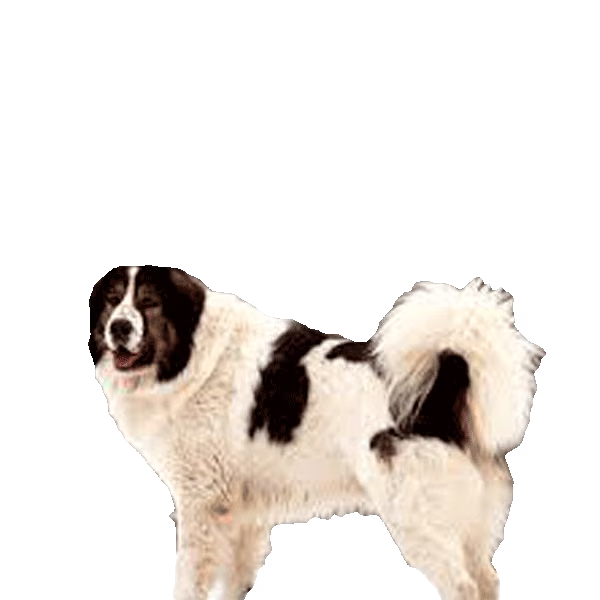
Tornjak
The Tornjak is a calm, devoted mountain livestock guardian from the Balkans known for its steady courage and loyalty.
- Size
- Large
- Lifespan
- 12–14 years
- Origin
- Bosnia and Herzegovina
- Temperament
- Protective
- Standard colors
- Black and White
Characteristics
Coat and grooming
How the Tornjak coat is built, and what that means when you groom it.
- Coat layers
- Double coat
- Coat texture
- Rough
- Coat length
- Long
- Shedding
- Seasonal shedding
Grooming guidance
Critical: A Tornjak should not be shaved.
The undercoat keeps heat out as well as in, and the outer coat shields the skin from sun and insect bites. Clipping the whole coat off removes both. It often grows back patchy, soft or a different colour, and in some animals the guard hairs never return properly. Brush the undercoat out instead of cutting it off.
Caution: A Tornjak coat mats easily.
Fine or long hair tangles at the base of the coat, out of sight, where the mats tighten and pull on the skin. Brushing has to reach right down to the roots in sections, not just skim the surface.
Information: A Tornjak drops its undercoat in heavy bursts.
The undercoat comes out in heavy bursts over a few weeks. An undercoat rake, or a bath followed by a proper blow-dry, clears it far faster than daily brushing. Clipping the coat down is not a shortcut for this.
Tornjak colors and patterns
What each club's breed standard says about every Tornjak color and pattern. Point at a ruling to see the club's own wording.
Breed standards describe the Tornjak in Black and White. Standard patterns: Parti-colour, Mantle and Tan point.
| Color or pattern | FCI | AKC | UKC |
|---|---|---|---|
| Black | Standard (“dogs with a black mantle”) | Standard (“dogs with a black mantle”) | Standard (“dogs with a black mantle (all over the body)”) |
| White | Standard (“Usually the dominant ground colour is white”) | Standard (“White”) | Standard (“Usually the dominant ground/base color is white”) |
| Albino | Disqualifying (“Albinism”) | Disqualifying (“Albinism”) | Disqualifying (“Albinism”) |
| Patterns | |||
| Parti-colour | Standard (“parti-coloured with distinct markings of various solid colours”) | Standard (“parti-coloured with distinct markings of various solid colours”) | Standard (“parti-colored, with distinct markings of various solid colors”) |
| Mantle | Standard (“a black mantle and with white markings”) | Standard (“a black mantle and with white markings”) | Standard (“a black mantle (all over the body), and with white markings”) |
| Tan point | No ruling | Standard (“Black & Tan Markings”) | No ruling |
| Solid | Disqualifying (“Solid coloured dogs”) | Disqualifying (“Solid coloured dogs”) | Disqualifying (“Solid colored dog”) |
%22%3E%3Cpath%20d%3D%22M0%200H19.5L19.5%2026.5L14%2027.5L0%2027.5Z%22%20fill%3D%22%23D9C3A0%22%2F%3E%3Cpath%20d%3D%22M1.5%2021.2L9%2018.6L12.6%2021L12.2%2026.2L3.5%2024.4Z%22%20fill%3D%22%23F5F5F0%22%2F%3E%3Cpath%20d%3D%22M8.6%2018L12%2015.8L5.8%2021.8L3.2%2021.4Z%22%20fill%3D%22%23F5F5F0%22%2F%3E%3Cpath%20d%3D%22M27.4%2030.8C25.6%2029.9%2025.2%2028.9%2025.3%2027.7C25.4%2026.4%2026.2%2024.3%2028.1%2023.1C29.9%2022%2034.2%2020.6%2036.5%2020.7C38.8%2020.8%2040.8%2022.8%2042%2023.9C43.2%2024.9%2043.9%2025.8%2043.6%2027.1C43.4%2028.5%2041.7%2031%2040.4%2032C39.1%2033%2038.1%2033.4%2035.9%2033.2C33.7%2033%2029.2%2031.7%2027.4%2030.8Z%22%20fill%3D%22%23D9C3A0%22%2F%3E%3Cpath%20d%3D%22M55.1%2031.3C54.9%2032.4%2054%2033.6%2053%2034.2C52%2034.8%2050.3%2034.9%2049.2%2034.7C48.1%2034.5%2047%2034.2%2046.3%2033.2C45.6%2032.2%2044.9%2029.9%2045.1%2028.7C45.3%2027.5%2046.4%2026.5%2047.4%2026C48.4%2025.5%2050.1%2025.5%2051.2%2025.7C52.4%2026%2053.5%2026.5%2054.1%2027.4C54.8%2028.3%2055.3%2030.2%2055.1%2031.3Z%22%20fill%3D%22%23D9C3A0%22%2F%3E%3C%2Fg%3E%3Cuse%20href%3D%22%23s%22%20fill%3D%22none%22%20stroke%3D%22%233B2A20%22%20stroke-opacity%3D%220.6%22%20stroke-width%3D%221%22%20stroke-linejoin%3D%22round%22%2F%3E%3Cellipse%20cx%3D%223.2%22%20cy%3D%2221.7%22%20rx%3D%221.3%22%20ry%3D%221.2%22%20fill%3D%22%231C1C1C%22%2F%3E%3Ccircle%20cx%3D%2210.8%22%20cy%3D%2219.3%22%20r%3D%221.1%22%20fill%3D%22%231C1C1C%22%2F%3E%3C%2Fsvg%3E)
%22%3E%3Cpath%20d%3D%22M0%200H19L19.5%2019Q15%2021%2012.5%2023L9.5%2019.5L2%2022L0%2021Z%22%20fill%3D%22%231C1C1C%22%2F%3E%3Cpath%20d%3D%22M22.5%2018H52L55%2028Q53%2036%2047%2037Q36%2034%2026%2036L22%2032Z%22%20fill%3D%22%231C1C1C%22%2F%3E%3Cpath%20d%3D%22M51%2024L56%209L63%209L61%2019L54.5%2028Z%22%20fill%3D%22%231C1C1C%22%2F%3E%3Ccircle%20cx%3D%2258.4%22%20cy%3D%2212.8%22%20r%3D%222.6%22%20fill%3D%22%23F5F5F0%22%2F%3E%3C%2Fg%3E%3Cuse%20href%3D%22%23s%22%20fill%3D%22none%22%20stroke%3D%22%233B2A20%22%20stroke-opacity%3D%220.6%22%20stroke-width%3D%221%22%20stroke-linejoin%3D%22round%22%2F%3E%3Cellipse%20cx%3D%223.2%22%20cy%3D%2221.7%22%20rx%3D%221.3%22%20ry%3D%221.2%22%20fill%3D%22%231C1C1C%22%2F%3E%3Ccircle%20cx%3D%2210.8%22%20cy%3D%2219.3%22%20r%3D%221.1%22%20fill%3D%22%231C1C1C%22%2F%3E%3C%2Fsvg%3E)
%22%3E%3Ccircle%20cx%3D%2212%22%20cy%3D%2217.2%22%20r%3D%221.25%22%20fill%3D%22%23C4996A%22%2F%3E%3Cpath%20d%3D%22M1.5%2021.2L9%2018.6L12.6%2021L12.2%2026.2L3.5%2024.4Z%22%20fill%3D%22%23C4996A%22%2F%3E%3Cpath%20d%3D%22M10%2026L14.5%2026.4L18.2%2029.2L13.5%2029.8Z%22%20fill%3D%22%23C4996A%22%2F%3E%3Cellipse%20cx%3D%2221.2%22%20cy%3D%2230.6%22%20rx%3D%221.6%22%20ry%3D%222.3%22%20fill%3D%22%23C4996A%22%2F%3E%3Crect%20x%3D%220%22%20y%3D%2247%22%20width%3D%2264%22%20height%3D%2217%22%20fill%3D%22%23C4996A%22%2F%3E%3Cpath%20d%3D%22M51.5%2024.5L55%2027L54.2%2032L50.5%2028.5Z%22%20fill%3D%22%23C4996A%22%2F%3E%3Cpath%20d%3D%22M45%2038.5L48%2039L48.5%2047L45.5%2047Z%22%20fill%3D%22%23C4996A%22%2F%3E%3C%2Fg%3E%3Cuse%20href%3D%22%23s%22%20fill%3D%22none%22%20stroke%3D%22%233B2A20%22%20stroke-opacity%3D%220.6%22%20stroke-width%3D%221%22%20stroke-linejoin%3D%22round%22%2F%3E%3Cellipse%20cx%3D%223.2%22%20cy%3D%2221.7%22%20rx%3D%221.3%22%20ry%3D%221.2%22%20fill%3D%22%231C1C1C%22%2F%3E%3Ccircle%20cx%3D%2210.8%22%20cy%3D%2219.3%22%20r%3D%221.1%22%20fill%3D%22%231C1C1C%22%2F%3E%3C%2Fsvg%3E)

| Color or pattern | FCI | AKC | UKC |
|---|---|---|---|
| Dark brown | Standard (“dark colour”) | Standard (“dark colour”) | Standard (“dark”) |
| Blue | Disqualifying (“wall eyes”) | Disqualifying (“wall eyes”) | Disqualifying (“wall eyes”) |
| Patterns | |||
| Odd-eyed | Disqualifying (“different colour of eyes”) | Disqualifying (“different colour of eyes”) | Disqualifying (“eyes of different colors”) |
%22%3E%3Ccircle%20cx%3D%2216%22%20cy%3D%2232%22%20r%3D%228%22%20fill%3D%22%23D9C3A0%22%2F%3E%3Ccircle%20cx%3D%2216%22%20cy%3D%2232%22%20r%3D%223.4%22%20fill%3D%22%231C1C1C%22%2F%3E%3Ccircle%20cx%3D%2213.6%22%20cy%3D%2229.6%22%20r%3D%221.3%22%20fill%3D%22%23F5F5F0%22%2F%3E%3C%2Fg%3E%3Cpath%20d%3D%22M3%2032Q16%2017%2029%2032Q16%2047%203%2032Z%22%20fill%3D%22none%22%20stroke%3D%22%233B2A20%22%20stroke-opacity%3D%220.75%22%20stroke-width%3D%221.4%22%20stroke-linejoin%3D%22round%22%2F%3E%3Cpath%20d%3D%22M35%2032Q48%2017%2061%2032Q48%2047%2035%2032Z%22%20fill%3D%22%23F5F5F0%22%2F%3E%3Cg%20clip-path%3D%22url(%23e1)%22%3E%3Ccircle%20cx%3D%2248%22%20cy%3D%2232%22%20r%3D%228%22%20fill%3D%22%23847865%22%2F%3E%3Ccircle%20cx%3D%2248%22%20cy%3D%2232%22%20r%3D%223.4%22%20fill%3D%22%231C1C1C%22%2F%3E%3Ccircle%20cx%3D%2245.6%22%20cy%3D%2229.6%22%20r%3D%221.3%22%20fill%3D%22%23F5F5F0%22%2F%3E%3C%2Fg%3E%3Cpath%20d%3D%22M35%2032Q48%2017%2061%2032Q48%2047%2035%2032Z%22%20fill%3D%22none%22%20stroke%3D%22%233B2A20%22%20stroke-opacity%3D%220.75%22%20stroke-width%3D%221.4%22%20stroke-linejoin%3D%22round%22%2F%3E%3C%2Fsvg%3E)
What the rulings mean
- Standard
- Described by the club's breed standard.
- Disqualifying
- The club's breed standard disqualifies an animal of this colour or pattern.
- Not recognised
- The club does not accept this colour or pattern for the breed.
Color changes
How a Tornjak's colors can change over its life.
Blackchanges toRust
Coat · With body condition · can change back
Blackchanges toGrey
Coat · Progressive
Blackchanges toBrown
Coat · In the sun · can change back
Whitechanges toRoan
Coat · With age · from 2 weeks
Tan pointchanges toSaddle
Coat · With age · from 6 to 156 weeks
%22%3E%3Cg%20fill%3D%22none%22%20stroke%3D%22%23F5F5F0%22%20stroke-width%3D%221.15%22%20stroke-linecap%3D%22round%22%20stroke-linejoin%3D%22round%22%3E%3Cpath%20d%3D%22M28.6%2025h.1M51.3%2028.8h.1M34.7%2024.3h.1M34.2%2041.6h.1M51%2044.2h.1M55.9%2024.7h.1M27.5%2026.3h.1M18.5%2028.6h.1M25.2%2028.9h.1M24.2%2019.3h.1M20.6%2017.6h.1M34.1%2030.6h.1M57.3%2023.3h.1M23.5%2030.7h.1M26.5%2023.1h.1M40%2031.5h.1M51.7%2038.6h.1M20.2%2022.1h.1M40.4%2037.8h.1M35%2043.1h.1M20.6%2031.7h.1M27.8%2031.9h.1M17.2%2021.1h.1M38.1%2037.7h.1M25.3%2040.5h.1M32%2029.3h.1M41.6%2039.5h.1M23.6%2024h.1M26.4%2018.6h.1M30.3%2031.9h.1M31.2%2035.2h.1M36.5%2043.7h.1M35.2%2026.3h.1M55.6%2019.1h.1M22.4%2036.8h.1M39.2%2020h.1M49.5%2039.1h.1M33.6%2033.5h.1M36.4%2032.4h.1M56.3%2042.4h.1M54.8%2031.2h.1M36.9%2023.2h.1M52.7%2019.1h.1M21.5%2033.8h.1M48.6%2028h.1M36.6%2017.5h.1M45.6%2031.3h.1M37.9%2030.5h.1M17%2031.8h.1M21.1%2043.1h.1M55.7%2021.1h.1M30.8%2041.9h.1M57.4%2038.4h.1M54.8%2026.9h.1M29.1%2017.5h.1M24.3%2037.7h.1M26%2032h.1M39.3%2022.8h.1M53.5%2029h.1M53.3%2023.3h.1M20%2038.4h.1M28.3%2044.7h.1M28.6%2039.8h.1M51.9%2041.1h.1M52.3%2033.7h.1M19.6%2042.2h.1M19%2033h.1M47.8%2021.7h.1M45.7%2024.8h.1M24.6%2035.5h.1M29.8%2036.8h.1M50.7%2032h.1M29.5%2043.5h.1M28.2%2041.5h.1M47.4%2034.8h.1M25.4%2033.7h.1M50.2%2041.2h.1M27.7%2029.5h.1M21.5%2024.8h.1M55.5%2017.5h.1M41.2%2044.3h.1M39.2%2018.4h.1M41.1%2042.5h.1M54.7%2035.3h.1M42.8%2034.5h.1M30.1%2023h.1M42.6%2025.1h.1M32.9%2024.4h.1M42.4%2032.4h.1M49.7%2022.2h.1M49.1%2043.1h.1M38%2035.2h.1M47.7%2043.8h.1M43.1%2022.4h.1M22.4%2040.4h.1M44.4%2019.8h.1M53.3%2040.1h.1M20.7%2029.3h.1M55.6%2043.9h.1M17.6%2039.2h.1M41.7%2028.9h.1M44.1%2036.3h.1M24.3%2043.6h.1M26.4%2038.1h.1M30.3%2029.2h.1M31.5%2030.8h.1M32.1%2023h.1M18.3%2040.9h.1M48%2033.4h.1M36.4%2038.7h.1M31.9%2020.8h.1M32.6%2026.2h.1M22%2031.2h.1M53.4%2021.7h.1M41.9%2017.7h.1M53.3%2037.3h.1M47.7%2040.3h.1M54.4%2033.7h.1M33.6%2037.5h.1M25.3%2017.2h.1M37.6%2019.7h.1M31.6%2019h.1M29.2%2019.6h.1M50.7%2027.3h.1M22%2022.1h.1M31%2037.8h.1M56.5%2026.6h.1M34.7%2039.5h.1M56.5%2040.8h.1M47.6%2038h.1M48.6%2026.1h.1M49.7%2034.2h.1M45.4%2027.4h.1M22.6%2038.9h.1M56.5%2035.3h.1M35.1%2021h.1M41.9%2020.1h.1M37.6%2040h.1M32.6%2044.4h.1M37.9%2025.2h.1M26.6%2043h.1M18.9%2036.7h.1M47.2%2028.9h.1M30.5%2026.2h.1M17.4%2027.3h.1M47.1%2017.2h.1M22.3%2044.3h.1M32.5%2042.4h.1M23.6%2025.7h.1M31.4%2024.9h.1%22%2F%3E%3Cpath%20d%3D%22M26%2020.9h.1M41.2%2023.8h.1M39.9%2026.4h.1M28.5%2033.4h.1M42.8%2043.8h.1M17.6%2034.3h.1M34%2017.1h.1M31.2%2017.2h.1M46.5%2036.1h.1M25.1%2022.1h.1M50.3%2023.7h.1M20.2%2026.6h.1M20.8%2020.4h.1M50.9%2017.3h.1M49.5%2020.2h.1M52.9%2044.1h.1M23.9%2017.8h.1M43.2%2028.1h.1M57.6%2030h.1M52%2025.6h.1M19.2%2019.1h.1M19.5%2024.4h.1M32.8%2040.1h.1M36.1%2027.7h.1M39.6%2029.5h.1M38.4%2041.5h.1M47.9%2019.4h.1M49.1%2031.7h.1M55.9%2036.9h.1M29.2%2027.2h.1M46%2043.5h.1M44.6%2028.8h.1M47.5%2031.5h.1M22.8%2020h.1M27.6%2017.1h.1M43.1%2018.6h.1M54.3%2020h.1M57.2%2033.8h.1M44.5%2043.8h.1M27.1%2035.5h.1M45.3%2041.8h.1M56.7%2028.8h.1M36.7%2021.4h.1M43.3%2042.3h.1M17.3%2022.9h.1M32.7%2035.5h.1M30.5%2039.8h.1M29.1%2021.2h.1M34.5%2018.8h.1M25.8%2027h.1%22%2F%3E%3C%2Fg%3E%3Cpath%20d%3D%22M56.3%2038.4l0%201.2M40%2027.2l-0.3%201.3M32.6%2043.6l-0.4%201.5M29%2023.3l0.8%201.5M55.1%2044l0.4%201.1M47.5%2022.5l-0.2%201.6M42.9%2038.6l0.7%201.2M35.2%2041.8l-0.5%201.7M26.9%2040l-0.1%201.2M41%2042.8l-0.1%201.6M18.4%2021.2l0.7%201.3M49.4%2019.3l-0.5%201.4M50.1%2041.7l0%201.8M28.2%2041.8l-0.6%201.2M55.5%2027.1l0.2%201.2M44.7%2019.3l0.5%201.7M48.6%2020.5l-0.8%201.4M43.7%2039.6l0.3%201.1M22.1%2033.8l-0.6%201.6M50.1%2038.1l-0.5%201.3M51.8%2044.1l-0.1%201.8M39%2017.5l0%201.4M30.2%2026.7l0.2%201.4M25.8%2031.2l0.2%201.6M29.6%2043.5l0.1%201M43.7%2018.3l0.1%201.5M29.6%2018.2l0.3%201.6M24.4%2017.6l0.3%201.1M22%2028.2l-0.6%201.6M25.9%2043.3l-0.3%201.4M22.2%2024.3l0.3%201.3M47.3%2029.2l-0.2%201.4M21.8%2033.2l0.5%200.9M32.9%2037l0.4%201M40%2029.9l0.8%201.4M17.4%2038.3l0.2%201.3M31%2039.2l0%201.2M37.3%2033.7l0.3%201.5M48.1%2040.5l0%201.6M33.9%2031.2l0.1%201.2M29.8%2035.2l-0.4%201M25.1%2037.3l-0.2%201.5M30.2%2039.8l0.5%201M44.6%2034.8l0.4%200.9M55.3%2034.2l0%201.7M50.6%2017.9l0.4%201M30.2%2034.9l-0.4%201.4M19.5%2035.7l-0.5%201.7M40.7%2028.7l0.8%201.4M23.3%2029l-0.4%201.4M17%2040.5l-0.2%201M48.4%2023.2l-0.3%201M37.3%2025.1l-0.4%201.3M23%2021.4l-0.4%201.3M20.4%2017.2l-0.1%201.3M42.3%2020.4l0.6%201.4M41%2031.8l0.6%201.2M45.4%2034.3l-0.1%201.2M32.5%2018l0%201.3M46.2%2021.6l0.1%201.4M30.5%2022.3l0.5%201.1M58%2044.6l0.3%201.5M57.1%2033.9l0.8%201.4M18.3%2042.6l0.3%201M40.5%2035.1l-0.6%201.4M38.8%2044.3l-0.3%201.1%22%20fill%3D%22none%22%20stroke%3D%22%23F5F5F0%22%20stroke-width%3D%220.8%22%20stroke-linecap%3D%22round%22%20stroke-linejoin%3D%22round%22%2F%3E%3C%2Fg%3E%3Cuse%20href%3D%22%23s%22%20fill%3D%22none%22%20stroke%3D%22%233B2A20%22%20stroke-opacity%3D%220.6%22%20stroke-width%3D%221%22%20stroke-linejoin%3D%22round%22%2F%3E%3Crect%20x%3D%2220%22%20y%3D%2258%22%20width%3D%223.6%22%20height%3D%222%22%20fill%3D%22%234A4038%22%2F%3E%3Crect%20x%3D%2226%22%20y%3D%2258%22%20width%3D%223.6%22%20height%3D%222%22%20fill%3D%22%234A4038%22%2F%3E%3Crect%20x%3D%2244%22%20y%3D%2258%22%20width%3D%223.6%22%20height%3D%222%22%20fill%3D%22%234A4038%22%2F%3E%3Crect%20x%3D%2250%22%20y%3D%2258%22%20width%3D%223.6%22%20height%3D%222%22%20fill%3D%22%234A4038%22%2F%3E%3Ccircle%20cx%3D%229.5%22%20cy%3D%2211.5%22%20r%3D%221.1%22%20fill%3D%22%231C1C1C%22%2F%3E%3C%2Fsvg%3E)
%22%3E%3Cpath%20d%3D%22M22.5%2018.5Q24%2021%2025%2021.5L47%2022.5Q50%2022.5%2051.5%2023.5L54%2026Q55%2032%2053%2034Q46%2031.5%2038%2033Q30%2034.5%2025.5%2032Q22.5%2026%2022.5%2018.5Z%22%20fill%3D%22%231C1C1C%22%2F%3E%3Cpath%20d%3D%22M51%2024L56%209L63%209L61%2019L54.5%2028Z%22%20fill%3D%22%231C1C1C%22%2F%3E%3Cpath%20d%3D%22M2%2021.2L7.5%2019.2L8.5%2023.6L3.5%2024.2Z%22%20fill%3D%22%231C1C1C%22%20fill-opacity%3D%220.85%22%2F%3E%3C%2Fg%3E%3Cuse%20href%3D%22%23s%22%20fill%3D%22none%22%20stroke%3D%22%233B2A20%22%20stroke-opacity%3D%220.6%22%20stroke-width%3D%221%22%20stroke-linejoin%3D%22round%22%2F%3E%3Cellipse%20cx%3D%223.2%22%20cy%3D%2221.7%22%20rx%3D%221.3%22%20ry%3D%221.2%22%20fill%3D%22%231C1C1C%22%2F%3E%3Ccircle%20cx%3D%2210.8%22%20cy%3D%2219.3%22%20r%3D%221.1%22%20fill%3D%22%231C1C1C%22%2F%3E%3C%2Fsvg%3E)
Sources
Each ruling comes from the club's published breed standard or color list.
About the Tornjak
The Tornjak is a large livestock guardian dog from Bosnia and Herzegovina, known for a calm nature, deep loyalty, and steady courage in protecting flocks.
The Tornjak is a big mountain dog that grew up doing a serious job in the highlands of Bosnia and Herzegovina and nearby parts of Croatia, guarding sheep and cattle against wolves, bears, and thieves for centuries. The name itself comes from the word for a sheep pen, so the job is baked right into what the breed is called.
This isn't a herding dog, it's a guardian. A Tornjak stays with the flock, moves as it moves, and makes its own call the moment it senses trouble. Day to day it's easygoing and in no rush about anything, but it switches to decisive and brave the second it judges protection is needed. Devotion to its own people and animals runs right through the breed.
Grown dogs are heavy and powerfully built, carrying a thick double coat made for tough winters up in the hills, the kind of coat that would stand up well to an Irish winter. Owners find the breed steady, watchful, and quietly sure of itself. It bonds tightly with family and whatever animals it lives alongside, while staying standoffish with strangers.
| Attribute | Detail |
|---|---|
| Origin | Bosnia and Herzegovina |
| Size | Large |
| Lifespan | 12 to 14 years |
| Group / role | Livestock guardian dog |
| Good with | Its own family and the animals it's reared to protect |
Who the Tornjak suits
The Tornjak suits people with room to spare, a proper job for the dog, and some experience handling independent, large-breed dogs. It thrives on farms, smallholdings, and rural places where it can guard stock or patrol the yard. It's a poor match for apartments, small gardens, or anyone wanting a dog that does as it's told without question. First-time owners should go in expecting a strong-willed, self-directed animal that needs firm, fair handling and plenty of early socialising.
History and origins
The Tornjak developed over centuries as a livestock guardian in the mountains of Bosnia and Herzegovina and Croatia, then was brought back through organised breeding programmes in the late twentieth century.
The Tornjak hails from the mountain country of Bosnia and Herzegovina and the neighbouring highlands of Croatia. Dogs of this type worked the Dinaric Alps and the pastures around them for a very long stretch of history, guarding sheep and cattle on seasonal grazing routes, not unlike the old booleying tradition of moving cattle up to summer pasture that once existed in parts of Ireland. Church and administrative records from the medieval period mention large guardian dogs in these regions, which suggests the working type is far older than the modern breed name.
For most of its history the Tornjak was simply a working dog kept by shepherds, not a formally registered breed. Selection was practical and unsentimental: dogs that guarded well, held up in the climate, and could be trusted around stock were the ones kept for breeding. There were no written standards, just the demands of the job.
Through the twentieth century numbers fell away as traditional shepherding declined and predator populations dropped. From the 1970s and 1980s onward, cynologists in Bosnia and Herzegovina and Croatia went looking through the mountains for dogs that still matched the old type, and set up organised breeding to bring the breed back. These programmes recorded pedigrees, drew up a standard, and steadied the population.
Today the Tornjak is recognised as a national breed at home and still works as a livestock guardian as well as being kept as a companion. It remains a rare sight in Ireland and across most of Europe outside the Balkans.
Appearance and breed standard
The Tornjak is a large, square-built mountain dog with a long, dense double coat, most often white with large patches of colour.
The Tornjak is a large, strong, roughly square dog, meaning its body length sits close to its height at the shoulder. It's powerfully built without looking heavy or slow, with a deep chest, a level back, and a well-furred tail carried up over the back when the dog is alert. Dogs are noticeably bigger and heavier than bitches. The overall picture is of a sturdy, balanced working animal built for long days out in cold, wet mountains, weather an Irish owner will find familiar enough.
| Trait | Standard |
|---|---|
| Height | Males about 65 to 70 cm, females about 60 to 65 cm at the shoulder |
| Weight | Males about 35 to 50 kg, females about 28 to 42 kg |
| Coat | Long, thick double coat with a dense undercoat and a mane around the neck |
| Colours | Usually white as the base with large patches; black, tan, and red markings are common |
| Eyes | Medium, almond shaped, dark, with a calm expression |
Coat and colours
The coat is the breed's standout feature. It's long, plentiful, and weatherproof, with a soft undercoat sitting under a coarser top layer, well suited to a damp climate. The hair grows longest around the neck, down the back of the legs, and along the tail. Most Tornjaks are mainly white with large patches of another colour, though dogs carrying more colour turn up too. Black, grey, tan, and red markings are all common. That thick coat keeps the dog going in deep snow and biting wind, and it sheds heavily once or twice a year, so be ready for drifts of hair on wet evenings.
Temperament and personality
The Tornjak is calm, devoted, and watchful, deeply loyal to its family and wary of strangers, with an independent guarding instinct.
The Tornjak is calm and steady around the house and dead serious about its work. With its own family it's affectionate, loyal, and gentle, forming strong bonds with the people and animals it lives among. It notices what's going on around it without ever seeming jumpy or highly strung. A well-reared Tornjak is confident and level-headed.
With strangers the breed is reserved and cautious. It doesn't warm to new people quickly and tends to size someone up before it accepts them. That wariness is part of its guardian nature and should be worked with through steady, early socialising rather than treated as a flaw. The dog is protective and will act on its own judgement to defend what's in its care, so owners need to stay in clear control of introductions and who gets access to the place.
Around other animals the Tornjak is usually solid with livestock it was reared alongside, since protecting them is the whole point of the breed. It can live with other dogs, though two assertive dogs of the same sex might well clash. It guards through presence and warning, using its deep bark to see off intruders before things ever escalate. This is an independent thinker, not a dog waiting on instructions in a crisis.
| Trait | Rating |
|---|---|
| Affection (with family) | 4 |
| Energy | 3 |
| Trainability | 3 |
| Vocalness | 4 |
| Shedding | 5 |
Care and grooming
The Tornjak needs regular coat care, moderate daily exercise, and room to patrol, and does best in a cool, damp climate with a clear job to do.
Grooming
- Brush the coat once or twice a week to clear loose hair and stop mats forming, paying particular attention to the mane, legs, and tail.
- Brush daily during the big seasonal shed, when the undercoat comes out in clumps.
- Bathe only when needed; the weatherproof coat is better off without frequent washing.
- Check and trim nails regularly, and keep to a routine for ears and teeth.
Exercise
- Give moderate daily exercise, such as long walks or free movement around a secured property.
- Let the dog have room to patrol; a large fenced area suits this breed far better than short walks on a lead.
- Go easy on hard, repetitive exercise in young dogs while the joints are still developing.
- Where you can, give the dog a real task, such as minding stock, since having a purpose keeps the breed content.
Environment
The Tornjak is built for cool, cold weather, and Ireland's climate suits it well enough, though it copes poorly with heat because of its dense coat. It needs secure, tall fencing, since it patrols its territory and will challenge anyone who shouldn't be there. It's at its happiest with space and a job, and it isn't suited to flats or small gardens. Provide shade, fresh water, and shelter, and go easy on activity during any spell of hot weather.
Nutrition and feeding
The Tornjak needs a balanced large-breed diet sized to its weight and activity, with controlled growth in pups to protect developing joints.
The Tornjak does well on a complete, balanced diet formulated for large breeds. Because it's a big dog that matures slowly, controlled growth as a pup matters a great deal; overfeeding a young Tornjak can put real stress on developing bones and joints. Adults are fairly efficient feeders for their size and should be kept lean, since extra weight strains the joints over a long working life. Match the amount to the individual dog's weight, age, and activity rather than sticking to a fixed number on a bag.
| Life stage | Amount per day | Meals |
|---|---|---|
| Puppy (2 to 6 months) | Per large-breed puppy food guidelines for target adult weight | 3 to 4 |
| Adolescent (6 to 18 months) | Roughly 3 to 5 cups of quality food, by size and activity | 2 |
| Adult | Roughly 3 to 5 cups, kept to maintain a lean body | 2 |
| Senior | Reduced calories to match lower activity | 2 |
Treats and supplements
Keep treats to roughly ten percent of daily calories so they don't throw the diet out of balance. Use small, healthy treats for training and cut back meal portions to allow for them. A diet that's already complete and balanced usually doesn't need supplements on top; run any joint or coat supplements past a vet first, especially for a large breed prone to joint wear. Keep fresh water available at all times, particularly after exercise.
Health and common conditions
The Tornjak is generally a hardy, healthy breed with a 12 to 14 year lifespan, though as a large dog it can be prone to joint problems and bloat.
The Tornjak is generally a robust, healthy breed, the result of centuries of selection for working soundness in a hard environment. Typical lifespan runs to 12 to 14 years, which is a good age for a dog of this size. As with all large, deep-chested breeds, the main worries are joint problems and the risk of bloat. Responsible breeders screen for hip and elbow health, so ask to see the screening results before you commit to a puppy.
| Condition | Signs | Note |
|---|---|---|
| Hip dysplasia | Stiffness, limping, trouble rising | Screen breeding dogs; keep the dog lean |
| Elbow dysplasia | Front-limb lameness, reluctance to exercise | More common in fast-growing large breeds |
| Gastric dilatation-volvulus (bloat) | Swollen abdomen, retching without bringing anything up, distress | A medical emergency; get to a vet straight away |
| Obesity-related joint strain | Weight gain, reduced activity | Manage diet and exercise across the dog's life |
Preventive care
- Stay on top of vaccinations, parasite control, and dental care.
- Feed for a lean body and controlled growth, especially in pups.
- Choose a puppy from parents with hip and elbow screening.
- Split daily food into two meals and hold off on hard exercise straight after eating to cut bloat risk.
- Book in routine vet checkups, moving to twice yearly as the dog gets older.
Training and socialisation
The Tornjak is intelligent and capable but independent, so it learns best with early socialising, consistency, and reward-based methods rather than force.
The Tornjak is intelligent and picks things up quickly, but it's an independent guardian bred to make its own calls. It won't work for repetition or pressure the way some companion breeds will, and it may question a command that seems pointless to it. Training goes best when the owner is calm, consistent, and fair, and when the dog understands why it's being asked to do something. Early and ongoing socialising is the most important part of raising this breed, since it shapes how the adult dog handles strangers and new situations.
Start while the dog is still young. Expose the pup to a wide range of people, places, animals, and sounds so its natural wariness grows into sound judgement rather than fear or excessive suspicion. Set clear house rules and stick to them. Secure fencing and controlled introductions are part of training too, because a guardian has to learn what actually counts as a threat and what doesn't.
Basics
- Start socialising in puppyhood, bringing in new people, animals, and places gradually and on a positive note.
- Teach a reliable recall and basic obedience early, before the dog reaches full size and strength.
- Keep sessions short and varied to hold the dog's interest.
- Set calm, consistent leadership so the dog looks to you when it's unsure.
- Practise controlled greetings so the dog learns to accept a welcome visitor.
Breeding and raising young
The Tornjak is a slow-maturing large breed; bitches typically produce moderate to large litters, and pups need early socialising and controlled growth.
The Tornjak matures slowly, as large breeds do, and dogs should be fully grown physically and settled mentally before being bred from. Responsible breeding puts health, sound temperament, and working ability first, with hip and elbow screening carried out on the parents. Mating and whelping follow the usual canine pattern, with a gestation of roughly nine weeks. Litters tend to be moderate to large, and the dam usually rears her pups attentively.
Early handling and socialising of pups matter a great deal for this guardian breed. From a young age, pups do well with gentle exposure to people, household noises, and, where it applies, the livestock they'll later be protecting. Pups reared alongside stock under supervision learn to bond with the animals rather than chase them. Feed for steady, controlled growth to protect developing joints, and go easy on hard exercise while the skeleton is still maturing. Pups generally head to new homes after weaning and the first round of socialising, around eight weeks or a bit later depending on the breeder.
| Metric | Value |
|---|---|
| Sexual maturity | Reached during the first to second year, but it's best to hold off breeding until full maturity |
| Gestation | About 63 days (roughly 9 weeks) |
| Typical litter size | Moderate to large for a large breed |
| Weaning | Around 6 to 8 weeks |
| Recommended health screening | Hip and elbow evaluation of parents |
Registering your Tornjak in Ireland, chip and record both
Irish law wants every dog chipped and recorded; United Pet Club keeps your Tornjak's record free, current, and there for life.
How to register a Tornjak in Ireland
Irish law has required every dog to be chipped and registered since the 2015 Regulations came in, and it expects the details behind the chip to stay current, not gather dust. A free United Pet Club profile does that for your Tornjak, for life. Registering your dog is a few minutes' work and costs nothing at all.
Lodge your Tornjak's fifteen digit number with United Pet Club and the chip finally earns its keep: free registration for life, every brand accepted, and a record the ISPCA or any warden can turn into a phone call. Microchip registration takes minutes, and the free account covers the profile while you're at it.
How do I register my Tornjak in Ireland?
Set yourself up with a free United Pet Club account, key in your Tornjak's details and a photo, and save. The profile holds for the whole of his life without charge, and the chip number can be lodged whenever you have it.
How do I register my Tornjak's microchip?
Lodge the fifteen digit chip number in your free account along with your address and phone number. The lifetime plan covers the registration and every update after it, free, whatever brand the vet used.
Is microchipping a Tornjak required in Ireland?
It is. The 2015 Regulations require every dog to be chipped and registered, pup or rescue alike. Keeping the record current is the part that falls to you, and United Pet Club makes that part free.
What does it cost to register a Tornjak in Ireland?
Not a penny. Profile, chip record, and every amendment are covered for life, with no renewal ever.
Frequently asked questions
Common questions about the Tornjak's size, temperament, care needs, lifespan, suitability, and availability.
How big does a Tornjak get?
It's a large breed. Dogs stand about 65 to 70 cm at the shoulder and weigh roughly 35 to 50 kg, while bitches are smaller, at about 60 to 65 cm and 28 to 42 kg.
What's the Tornjak's temperament like?
Calm and devoted at home, watchful and protective on duty. It's loyal and gentle with its own family, wary of strangers, and independent in how it goes about guarding.
Is the Tornjak hard to look after?
It's moderate to demanding. The thick double coat needs regular brushing and a lot of attention during the seasonal sheds, and the dog needs space, secure fencing, and ideally a job to do. Its independent guardian streak suits experienced owners best.
How long do Tornjaks live?
Typically 12 to 14 years, which is a good innings for a dog of this size.
Is the Tornjak a good family dog?
It can be, in the right home. It bonds closely with family and is gentle with people it trusts, but it needs space, early socialising, and an owner who's comfortable with a large, protective, independent breed. It's not suited to flat living.
Are Tornjaks easy to find in Ireland?
They're rare outside Bosnia and Herzegovina, Croatia, and the wider Balkans, with no established presence here yet. Finding a pup usually means going through specialist breeders abroad and waiting for a litter, and the Irish Kennel Club is a sensible first point of contact for import guidance.
Does the Tornjak need a lot of exercise?
It needs moderate daily exercise rather than anything intense. Long walks and room to patrol a secured property suit it well, and having a guarding role keeps it mentally satisfied.
From the community
Ask about the TornjakNo questions about the Tornjak yet. Be the first to ask.
Browse Dog breeds