The Tibetan Mastiff is an independent, dignified ancient guardian known for its powerful protective instincts and aloof loyalty to its family.
How the Tibetan Mastiff coat is built, and what that means when you groom it.
Critical: A Tibetan Mastiff should not be shaved.
The undercoat keeps heat out as well as in, and the outer coat shields the skin from sun and insect bites. Clipping the whole coat off removes both. It often grows back patchy, soft or a different colour, and in some animals the guard hairs never return properly. Brush the undercoat out instead of cutting it off.
Caution: A Tibetan Mastiff coat mats easily.
Fine or long hair tangles at the base of the coat, out of sight, where the mats tighten and pull on the skin. Brushing has to reach right down to the roots in sections, not just skim the surface.
Information: A Tibetan Mastiff drops its undercoat in heavy bursts.
The undercoat comes out in heavy bursts over a few weeks. An undercoat rake, or a bath followed by a proper blow-dry, clears it far faster than daily brushing. Clipping the coat down is not a shortcut for this.
A few of the Tibetan Mastiff profiles members have added to United Pet Club.
The Tibetan Mastiff is a giant guardian breed from the Himalayas, valued in Ireland for its independence, quiet dignity and firm loyalty to its own family.
The Tibetan Mastiff is a giant working guardian bred to watch over flocks, families and remote settlements on the Himalayan plateau. Males typically weigh 41 to 68 kg and stand 66 cm or more at the shoulder, carrying a heavy double coat and a deep bark that carries for miles. Bred to work alone in cold, isolated terrain, the dog is used to making its own decisions rather than waiting on a handler.
Indoors the temperament is calm and watchful; outdoors it stays alert. A Tibetan Mastiff raised well is affectionate with its own household, wary of strangers, and firmly protective of whatever ground it considers its own. Guarding comes first here, so early socialisation and a secure, well-fenced garden matter more than they would with most companion breeds.
The breed does not suit a first-time owner or anyone hoping for an eager, obedient dog. It is better placed with experienced handlers in Ireland who understand an independent temperament and can give the dog firm, consistent boundaries from the start.
| Attribute | Detail |
|---|---|
| Origin | Tibet |
| Size | Giant |
| Lifespan | 10 to 12 years |
| Group/role | Working guardian, livestock and property protection |
| Good with | Its own family and children raised alongside it; wary of strangers and unfamiliar animals |
The Tibetan Mastiff suits owners with room to spare, a securely fenced garden and patience for a guardian that thinks for itself. It tends to rest through the day and grow more active after dark, which can be a factor for anyone with neighbours close by. People who travel for work, live in a city flat, or want a dog that answers the first command will struggle with this breed. A household that wants a calm, loyal protector and is ready to put in early training and socialisation is the better match.
The Tibetan Mastiff is an ancient Himalayan guardian breed that protected livestock and settlements for centuries before reaching Europe in the 1800s and gaining kennel club recognition.
The Tibetan Mastiff comes down from large guardian dogs kept across the Himalayan plateau and neighbouring parts of Central Asia. For generations these dogs lived alongside nomadic herders and mountain villagers, guarding sheep, goats and yaks from predators and keeping watch over family camps through the night. The cold and isolation of the region shaped a hardy, heavy-coated dog able to work and sleep outdoors through harsh winters.
European travellers' accounts of large Tibetan guardian dogs start turning up in the 1800s. A dog described as a Tibetan Mastiff arrived in England in 1847 and was presented to Queen Victoria, and further imports through the rest of the century built interest in the breed beyond Asia.
British kennel clubs recorded the breed in the late 1800s, and a breed club followed in the early 1930s. Through the second half of the 20th century, breeding programmes across Europe and North America drew on dogs exported from Tibet, Nepal and neighbouring areas. The breed reached Ireland later still, and today it is recognised by the Irish Kennel Club under FCI standards, alongside a small but committed base of Irish breeders and owners.
The American Kennel Club gave the Tibetan Mastiff full recognition in its Working Group in 2007. Breeders often describe two general types: a heavier, broader 'Tsang-khyi' style and a somewhat lighter 'Do-khyi' style, though both trace back to the same guardian working stock.
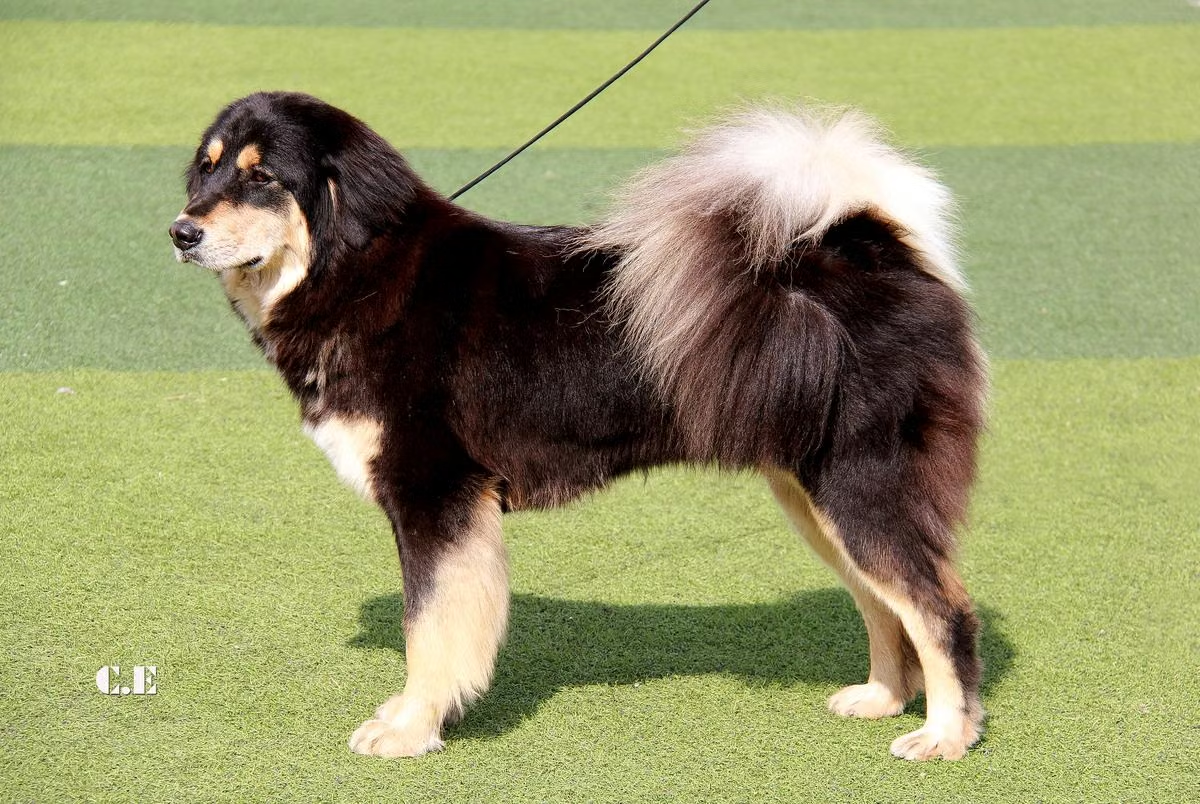
The Tibetan Mastiff is a powerfully built dog with a heavy double coat, a broad head and a thick mane at the neck and shoulders, most pronounced in males.
The Tibetan Mastiff is a large, solid dog, slightly longer than it is tall, with substantial bone and a muscular frame. The head is broad and heavy, with a defined stop, dark expressive eyes and pendant ears. A thick mane of longer hair frames the neck and shoulders, usually heavier in males than females. The tail sits high, carries a full feathering, and curls over the back. The overall picture is one of strength and quiet dignity rather than speed.
| Trait | Standard |
|---|---|
| Height | Males about 66 cm and up; females about 61 cm and up at the shoulder |
| Weight | Roughly 41 to 68 kg depending on sex and build |
| Coat | Double coat with a coarse outer layer and a heavy wool undercoat; longer mane at the neck |
| Colours | Black, brown, blue/grey and gold, with or without tan markings; some lines carry a white chest spot |
| Eyes | Medium, almond-shaped, brown, set well apart with a watchful expression |
The double coat defines the breed. The outer coat is straight and coarse, and the dense undercoat thickens for the Irish winter and sheds heavily during a major seasonal blow-out, usually once a year. Recognised colours include solid black, brown, blue/grey and gold, often carrying tan markings above the eyes, on the lower legs and under the tail. A small white mark on the chest or feet turns up in some lines. Coat length and mane density vary by dog, with males generally carrying more coat than females.
The Tibetan Mastiff is calm, independent and deeply loyal to its own family, staying reserved with strangers and protective of its territory in line with its guardian roots.
The Tibetan Mastiff is a steady, self-contained dog that forms a close bond with its household. Indoors it is usually calm and asks for little, often picking a spot where it can keep an eye on the family. With children it has grown up alongside, it tends to be patient and gentle, though its size means any time with young children needs supervision.
With strangers the breed is naturally standoffish. It takes its time accepting newcomers and will judge visitors on its own terms, which is why early and ongoing socialisation matters so much. The breed is territorial and will challenge anything it reads as an intrusion, particularly after dark, when its guarding instinct is strongest.
Around other animals, a Tibetan Mastiff can settle well with pets it is raised alongside, though it may push back against unfamiliar dogs, especially of the same sex. Its independent streak means it does not look to a handler for direction the way many working breeds do. It weighs things up first and complies second, so owners should expect a partner rather than a follower.
| Trait | Rating |
|---|---|
| Affection (with family) | 4 |
| Energy | 2 |
| Trainability | 2 |
| Vocalness | 4 |
| Shedding | 3 |
The Tibetan Mastiff needs regular brushing, moderate daily exercise and a secure home with outdoor space, plus extra coat care during its annual seasonal shed.
Day-to-day care comes down to coat upkeep, moderate exercise and a secure setting that gives the dog room to patrol and rest. The breed sits at low to moderate energy but high on guarding instinct, so managing space and boundaries matters just as much as physical activity.
The Tibetan Mastiff does best in a house with a fenced garden rather than a flat or apartment. The breed copes well with cold and damp thanks to its coat, but struggles more in heat, so it needs shade, fresh water and lighter activity during any warm spell. A solid, tall fence matters, because the breed is territorial and strong enough to test, or escape, a weak boundary.
The Tibetan Mastiff needs a complete large or giant breed diet fed in measured meals, with portions controlled to protect the joints and avoid excess weight.
A complete and balanced diet formulated for large or giant breeds suits the Tibetan Mastiff at every life stage. Despite its size, the breed is often a moderate eater and can regulate itself, so portions should be measured against body condition rather than left down for free feeding. Keeping the dog lean eases the load on its joints and supports a healthy weight across a lifespan of 10 to 12 years. Fresh water should be available at all times.
| Life stage | Amount per day | Meals |
|---|---|---|
| Puppy (2 to 6 months) | Large/giant breed puppy food per label by weight | 3 to 4 |
| Adolescent (6 to 18 months) | Adjusted to growth and body condition | 2 to 3 |
| Adult (18 months and up) | Roughly 500g to 1kg of quality dry food, split between meals | 2 |
| Senior | Reduced calories with protein maintained; monitor weight | 2 |
Keep treats to about 10 percent of daily calories, since extra weight puts real strain on a frame this size. Small training treats, plain cooked lean meat or pieces of dog-safe vegetable all work well. Large breeds on a complete diet generally do not need supplements, though a vet may suggest joint support such as glucosamine for an older dog. Always talk to a vet before starting any supplement.
The Tibetan Mastiff is generally hardy with a 10 to 12 year lifespan, though as a giant breed it can face joint, eye and thyroid conditions that screening helps manage.
The Tibetan Mastiff is a robust breed for its size and typically lives 10 to 12 years, long for a dog this large. As with other big breeds, it carries some risk of joint and hormonal conditions, and careful breeders screen parent dogs to cut down on inherited problems. Keeping the dog lean, supporting steady growth through puppyhood and keeping up with regular veterinary care all help toward a healthy life.
| Condition | Signs | Note |
|---|---|---|
| Hip dysplasia | Limping, stiffness, reluctance to rise or jump | Screen breeding stock; keep weight controlled |
| Elbow dysplasia | Front-limb lameness, especially after exercise | Joint screening recommended in parents |
| Hypothyroidism | Weight gain, low energy, coat or skin changes | Diagnosed by blood test and managed with medication |
| Canine inherited demyelinative neuropathy (CIDN) | Weakness in young puppies | A known inherited concern; ask breeders about their lines |
| Bloat / gastric torsion | Swollen abdomen, retching without vomiting, distress | Emergency; deep-chested breeds carry a higher risk |
The Tibetan Mastiff is intelligent but independent, so training relies on early socialisation, calm consistency and reward-based methods rather than repetition or force.
Training a Tibetan Mastiff takes patience and a realistic set of expectations. The breed learns readily enough, but its guardian background means it weighs up whether a request is worth doing rather than complying on command. It responds badly to harsh correction and repetitive drilling, both of which tend to make an independent dog dig in further. Short, varied sessions with clear rewards work better than long routines.
Socialisation matters more than anything else in raising this breed. Early, positive exposure to a range of people, places and friendly animals helps a naturally reserved dog learn to tell an ordinary situation from a genuine threat. Without that groundwork, the breed's wariness can become hard to manage once the dog reaches full size.
The Tibetan Mastiff matures slowly and typically comes into season once a year, producing moderate litters that need careful early socialisation given its guardian nature.
The Tibetan Mastiff matures slowly next to many breeds. Females often reach physical and behavioural maturity around two to three years of age, and males can take longer still. Unlike most dogs, females in this breed usually come into season only once a year, typically in autumn, which limits how often a planned litter can happen. Responsible breeders wait until dogs are mature and have cleared health screening before any mating takes place.
Gestation runs the usual canine span of roughly 63 days. Litter size varies and tends to sit in the moderate range, commonly around 5 to 8 puppies, though smaller and larger litters do happen. The dam usually manages whelping and early care herself, but the breeder should keep a close eye on a giant-breed delivery.
Raising the litter is demanding given the breed's temperament. Puppies need controlled, steady growth to protect developing joints, along with broad, positive socialisation from an early age. Early handling and exposure go a long way toward whether a guardian puppy grows into a confident, manageable adult.
| Metric | Value |
|---|---|
| Female maturity for breeding | Around 2 to 3 years |
| Heat frequency | Often once a year, typically autumn |
| Gestation | About 63 days |
| Typical litter size | Around 5 to 8 puppies |
| Weaning | About 6 to 8 weeks |
| Recommended pre-breeding screening | Hip, elbow, eye and thyroid evaluation |
Irish law wants every dog chipped and recorded; United Pet Club keeps your Tibetan Mastiff's record free, current, and there for life.
Irish law has required every dog to be chipped and registered since the 2015 Regulations came in, and it expects the details behind the chip to stay current, not gather dust. A free United Pet Club profile does that for your Tibetan Mastiff, for life. Registering your dog is a few minutes' work and costs nothing at all.
Lodge your Tibetan Mastiff's fifteen digit number with United Pet Club and the chip finally earns its keep: free registration for life, every brand accepted, and a record the ISPCA or any warden can turn into a phone call. Microchip registration takes minutes, and the free account covers the profile while you're at it.
Set yourself up with a free United Pet Club account, key in your Tibetan Mastiff's details and a photo, and save. The profile holds for the whole of his life without charge, and the chip number can be lodged whenever you have it.
Lodge the fifteen digit chip number in your free account along with your address and phone number. The lifetime plan covers the registration and every update after it, free, whatever brand the vet used.
It is. The 2015 Regulations require every dog to be chipped and registered, pup or rescue alike. Keeping the record current is the part that falls to you, and United Pet Club makes that part free.
Not a penny. Profile, chip record, and every amendment are covered for life, with no renewal ever.
Common questions about the Tibetan Mastiff cover its size, temperament, care needs, lifespan, suitability for families and availability in Ireland.
It is a giant breed. Males generally stand 66 cm or more at the shoulder and weigh roughly 50 to 68 kg, while females run somewhat smaller, at about 61 cm and up and lighter in build.
It is calm and affectionate with its own family, thinks independently, and stays reserved with strangers. The breed is territorial and protective by nature, particularly after dark, which reflects its history as a livestock and property guardian.
It takes a moderate amount of work. Exercise needs sit at a moderate level, but the heavy coat wants weekly brushing and daily attention during the annual shed, and the guardian temperament calls for early socialisation, firm structure and a securely fenced home.
Most live about 10 to 12 years, long for a giant breed. Lean body condition, controlled growth as a puppy and regular veterinary care all support a healthy lifespan.
It can be gentle and patient with children it is raised alongside, and it bonds closely with its household. Given its size and protective instinct, time with young children should be supervised, and visiting children should be introduced with care.
Generally not. The Tibetan Mastiff's independence, size, vocal habits and strong guarding drive suit an experienced owner with a house and fenced garden far better than a first-time owner or a city flat.
They are uncommon outside their region of origin, and that holds true in Ireland, where availability through reputable breeders can be limited and waiting lists are common. Anyone considering the breed should look for breeders who health-screen parent dogs and prioritise temperament.