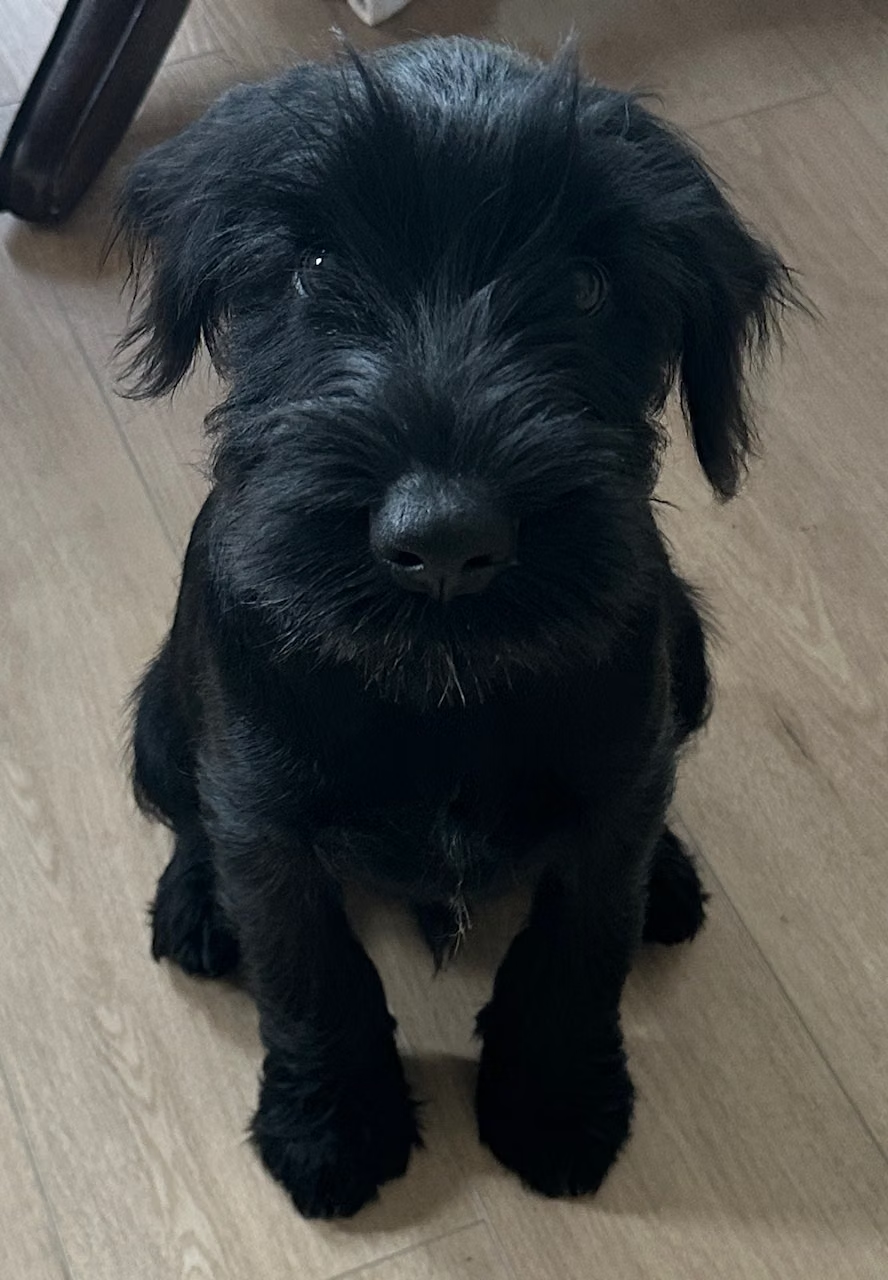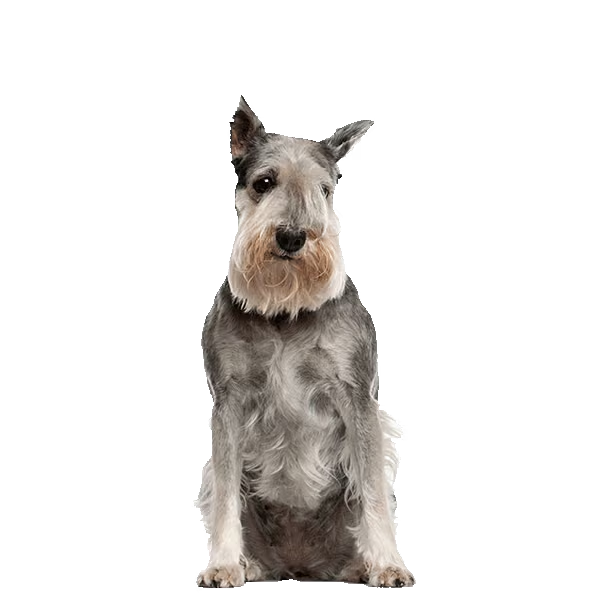
The Standard Schnauzer is an intelligent, spirited all-purpose companion known for its alertness, trainability, and devotion to family.
How the Standard Schnauzer coat is built, and what that means when you groom it.
Caution: A Standard Schnauzer coat should be hand-stripped rather than clipped.
A wire coat is meant to be pulled out at the root once the hair is ready to release. Clippers cut it off part way instead, leaving the soft undercoat behind. The result is a coat that grows back limp and faded, and the weatherproof texture only returns after the hair is stripped out again.
A few of the Standard Schnauzer profiles members have added to United Pet Club.
The Standard Schnauzer is a medium-sized German working breed valued as an intelligent, spirited all-purpose companion that is alert, trainable and devoted to its family.
The Standard Schnauzer is a medium-sized dog from Germany and the original of the three Schnauzer breeds. It sits between the smaller Miniature Schnauzer and the larger Giant Schnauzer in size, though the Standard came first and gave the other two their distinctive look. The breed is built as a square, sturdy working dog with a wiry coat, a bearded muzzle and bushy eyebrows.
For most of its history this was a farm and household dog expected to do several jobs at once: guarding the home, controlling rats and vermin, and accompanying its owner to market. That background shows in the modern dog, which is watchful without being nervous and keeps a strong attachment to the people it lives with.
Owners describe the Standard Schnauzer as bright, busy and full of opinions. It learns quickly, enjoys having a task, and tends to stay close to family members rather than wandering off on its own. Its harsh, weatherproof coat handles the damp Irish climate well, and it sheds very little indoors.
| Attribute | Detail |
|---|---|
| Origin | Germany |
| Size | Medium |
| Lifespan | 13 to 16 years |
| Group/role | Working dog (guard, ratter, companion) |
| Good with | Families, older children, active households |
The Standard Schnauzer fits an owner who wants an involved, trainable dog and can give it daily activity and company. It does well with active families and people who enjoy training. It is less suited to a household that is away for long hours or wants a calm, low-engagement pet, because an under-stimulated Schnauzer can become bored and noisy.
The Standard Schnauzer developed in southern Germany as a farm and market dog, was shown from the late 1800s, and gave rise to both the Miniature and Giant Schnauzer.
The Standard Schnauzer comes from the farming regions of southern Germany, particularly Bavaria and the area around Wuerttemberg. For centuries it worked as a general-purpose farm dog, guarding property, killing rats in barns and stables, and travelling with its owner to market, where it watched over the cart and goods. This is the role that shaped its temperament and its rough, weather-resistant coat.
The breed was originally grouped with rough-coated pinschers and was sometimes called the Wirehaired Pinscher. The name Schnauzer comes from the German word for muzzle or snout, a reference to the breed's prominent bearded face. Over time the wirehaired type was separated from the smooth-coated Pinscher and bred for its own distinct look.
Organised showing and recording of the breed began in Germany in the late nineteenth century. Dogs of this type appeared at German shows in the 1870s, and dedicated breeding to a standard followed in the decades after, which fixed the square build and harsh coat seen today.
The Standard is the parent of the other two Schnauzers. Breeders developed the Miniature Schnauzer by crossing smaller Standards with other small breeds, and the Giant Schnauzer by selecting for larger size for driving and guarding work. The Standard Schnauzer later spread across Europe, including Ireland, where it is kept mainly as a companion and watchdog rather than a farm worker.
The Standard Schnauzer is a square, robust medium dog with a harsh wiry double coat, bushy eyebrows and a full beard, seen in solid black or pepper and salt.
The Standard Schnauzer has a square outline, meaning its height at the shoulder is about equal to its body length. It is solidly built and muscular without being heavy, giving an impression of strength and agility. The head is rectangular with a strong muzzle, and the face carries the breed's trademark arched eyebrows and full beard. Ears are left natural and folded, as ear cropping is not permitted in Ireland.
| Trait | Standard |
|---|---|
| Height | Males 48 to 50 cm; females 45 to 48 cm |
| Weight | Approximately 14 to 20 kg |
| Coat | Harsh, wiry topcoat over a dense, soft undercoat |
| Colours | Solid black, or pepper and salt |
| Eyes | Medium, oval, dark brown |
The breed has a double coat: a tight, harsh outer layer that resists weather and a softer undercoat beneath. The two accepted colours are solid black and pepper and salt, a banded grey produced by individual hairs that carry both light and dark sections. The pepper and salt shade ranges from dark iron grey to a lighter silver grey. Show dogs are traditionally hand-stripped, where dead outer hairs are plucked rather than clipped, which keeps the coat harsh and the colour clear. Clipping is common for pet dogs but softens the texture and lightens the colour over time.
The Standard Schnauzer is devoted, spirited and intelligent, affectionate with its family, naturally watchful with strangers, and generally good with respectful children.
The Standard Schnauzer is lively, confident and closely bonded to its household. It tends to attach to the whole family rather than one person and likes to be part of daily activity. With people it knows, it is affectionate and playful, and it often keeps a sense of humour and mischief well into adulthood.
With strangers the breed is reserved and alert. It was bred to guard, so it watches new arrivals carefully and will bark to announce them. Early socialisation helps it tell a normal visitor from a genuine concern, and a well-raised Schnauzer accepts welcomed guests once introduced. Toward children it is usually patient and tolerant, and it does best with kids who handle it respectfully.
With other dogs the breed can be sociable but may show a same-sex challenge if not socialised young. Its strong prey drive, a leftover from its ratting work, means small pets such as rodents are not a safe match, and cats are best introduced early.
| Trait | Rating |
|---|---|
| Affection | 5 |
| Energy | 4 |
| Trainability | 5 |
| Vocalness | 4 |
| Shedding | 1 |
The Standard Schnauzer needs regular coat maintenance, daily physical and mental exercise, and close involvement with its family to stay balanced.
The wiry double coat sheds very little, but it needs steady upkeep to stay clean and free of mats, and the beard and leg furnishings collect food and debris. The harsh coat also picks up mud on wet Irish walks, so a quick towel-off helps.
The Standard Schnauzer adapts to a house or an apartment as long as its exercise and company needs are met. It wants to live indoors with the family, not isolated in a yard. A bored or lonely Schnauzer is prone to barking and other nuisance behaviour, so it suits a home where someone is around for much of the day.
The Standard Schnauzer does well on a balanced complete diet portioned to its weight and activity, fed in two daily meals, with care taken to avoid weight gain.
The Standard Schnauzer should eat a complete, balanced diet suited to its life stage and activity level. As an active medium breed it needs enough quality protein and fat to support muscle and energy, but it can gain weight if overfed, so portions should be measured rather than free-fed. Always provide fresh water, and adjust the amount to keep the dog lean with a visible waist and easily felt ribs.
| Life stage | Amount per day | Meals |
|---|---|---|
| Puppy (2 to 6 months) | Per label, divided | 3 to 4 |
| Junior (6 to 12 months) | Per label, divided | 2 to 3 |
| Adult | About 150 to 220 g of dry food | 2 |
| Senior | Reduced for lower activity | 2 |
Keep treats to about 10 percent of daily calories and count them toward the daily total, which matters for a breed that puts on weight easily. A dog on a complete commercial diet usually needs no supplements. Discuss joint, skin or coat supplements with a vet before adding them, and use treats as training rewards to make the food work double duty.
The Standard Schnauzer is a generally hardy breed with a typical lifespan of 13 to 16 years, with a few inherited conditions that responsible breeders screen for.
The Standard Schnauzer is one of the sturdier purebred dogs and often lives 13 to 16 years. Good genetics from health-tested parents, a sensible diet, regular exercise and routine vet care all help it reach the upper end of that range. Buyers should ask breeders for evidence of screening for the conditions known in the breed.
| Condition | Signs | Note |
|---|---|---|
| Hip dysplasia | Stiffness, limping, trouble rising | Screened by hip scoring in breeding stock |
| Hereditary eye disease | Cloudiness, reduced or failing vision | Includes cataracts; eye testing recommended |
| Dilated cardiomyopathy | Tiring easily, cough, fainting | Heart screening helps detect early |
| Pancreatitis | Vomiting, abdominal pain, off food | Lower-fat diet reduces risk |
| Skin allergies | Itching, recurring ear or skin infections | Manage with vet-guided care |
The Standard Schnauzer is highly intelligent and trainable, learns fast with consistent positive methods, and needs mental work to stay focused and well behaved.
The Standard Schnauzer is one of the more trainable working breeds. It learns commands quickly, enjoys problem solving, and does well in obedience, agility, scent work and other dog sports. That intelligence comes with independence, so it responds best to a handler who is consistent, fair and clear. Harsh corrections tend to backfire and make the dog resistant, while reward-based methods keep it engaged. Early, broad socialisation is important to temper its watchdog instincts and prevent excessive barking.
Standard Schnauzers reach breeding maturity at around two years, carry an average litter of four to six puppies, and should be bred only from health-tested parents.
Responsible breeding of Standard Schnauzers starts with health-tested parents that show sound temperament and conform to the breed standard. Although dogs reach physical maturity earlier, breeders usually wait until about two years of age so that hip, eye and heart screening can be completed and the adult character is clear. The female's heat cycle occurs roughly twice a year, and mating is timed to her fertile window.
Gestation lasts about 63 days from conception. Litters average four to six puppies, though this varies with the individual female. The dam typically whelps and raises the litter with minimal intervention, but the breeder should monitor the birth and the early weeks for any problems. Puppies are weaned gradually from about three to four weeks and are usually ready to go to new homes at around eight weeks, after early socialisation, first vaccinations and a vet check. In Ireland, look for breeders registered with the Irish Kennel Club.
| Metric | Value |
|---|---|
| Breeding maturity | About 2 years |
| Heat cycle | Roughly twice a year |
| Gestation | About 63 days |
| Average litter size | 4 to 6 puppies |
| Weaning age | 6 to 8 weeks |
| Ready for new homes | About 8 weeks |
Irish law wants every dog chipped and recorded; United Pet Club keeps your Standard Schnauzer's record free, current, and there for life.
Get the profile sorted first: your Standard Schnauzer's name, his date of birth, a photo, and your phone number, saved in a couple of minutes. The record is free for the whole of his life, and the chip number slots in whenever the vet has done his part. Dog registration is where it starts.
The implant is the vet's job; the record is down to you, and the 2015 rules assume you'll keep it current. Register the microchip free on the lifetime plan: whatever brand the vet reached for is grand, a house move costs nothing to record, and the number stays searchable day and night. Create your free account and have the pair of jobs done before the tea goes cold.
Set yourself up with a free United Pet Club account, key in your Standard Schnauzer's details and a photo, and save. The profile holds for the whole of his life without charge, and the chip number can be lodged whenever you have it.
Lodge the fifteen digit chip number in your free account along with your address and phone number. The lifetime plan covers the registration and every update after it, free, whatever brand the vet used.
It is. The 2015 Regulations require every dog to be chipped and registered, pup or rescue alike. Keeping the record current is the part that falls to you, and United Pet Club makes that part free.
Not a penny. Profile, chip record, and every amendment are covered for life, with no renewal ever.
Common questions about the Standard Schnauzer cover its size, temperament, grooming demands, lifespan, suitability for families and how easy it is to find.
It is a medium dog. Males stand about 48 to 50 cm at the shoulder and females about 45 to 48 cm, with most adults weighing roughly 14 to 20 kg.
It is devoted, spirited, intelligent and alert. The breed is affectionate with its family, reserved and watchful toward strangers, and usually good with respectful children.
Care is moderate. The coat needs brushing two to three times a week plus regular stripping or clipping, and the dog needs at least an hour of daily exercise along with mental work. It is not a low-maintenance breed but it sheds very little.
They typically live 13 to 16 years, which is long for a medium dog. Health-tested parents, a lean weight and routine vet care support a long life.
Yes, for active households. They bond closely with the whole family and do well with children who handle them gently. They suit owners who can give them daily activity and company rather than long hours alone.
They are naturally alert and will bark to announce visitors and unusual events. Early socialisation and training to manage barking keep this watchdog trait from becoming a nuisance.
They are less common than the Miniature Schnauzer but are bred by dedicated breeders in Ireland and Britain. Expect to contact a breed club or wait for a litter from a health-testing breeder.