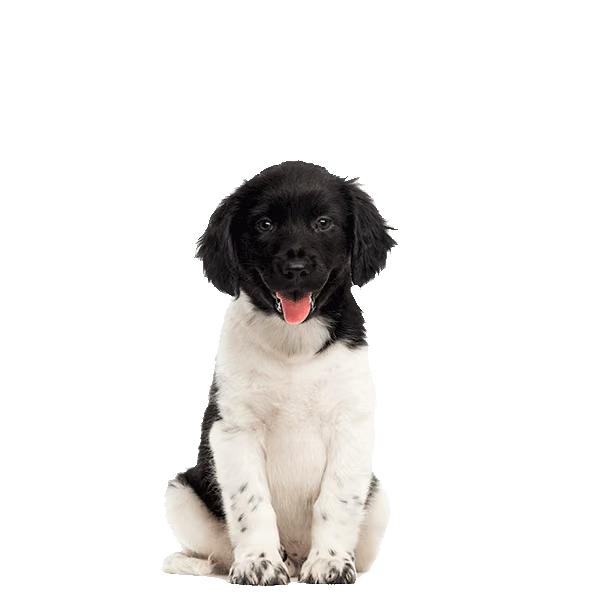
The Stabyhoun is a friendly, gentle Dutch farm dog known for its versatility as a pointer, retriever, and devoted companion.
How the Stabyhoun coat is built, and what that means when you groom it.
Caution: A Stabyhoun coat mats easily.
Fine or long hair tangles at the base of the coat, out of sight, where the mats tighten and pull on the skin. Brushing has to reach right down to the roots in sections, not just skim the surface.
A gentle, biddable working dog from the Frisian countryside, the Stabyhoun suits Irish households with time for daily exercise and steady company.
The Stabyhoun is a medium-sized dog bred on the small farms of Friesland, in the north of the Netherlands. For generations it turned its paw to whatever a farm needed: pointing and retrieving game for the gun, keeping vermin off the smallholding, and minding the house while the family worked the land. Its name comes from a Frisian phrase usually rendered as "stand by me dog," a fair description of how closely it sticks to its people.
Numbers have always been small. The breed is concentrated in the Netherlands, with only a scattered few kept further afield, including a handful in Ireland. It has a reputation for being soft-natured and even-tempered, working alongside people rather than off on its own, which suits it equally to a day in the field or an evening by the range.
Stabyhouns are friendly, affectionate, and gentle by nature. They train readily and settle into most routines, moving happily from an active day outdoors to a quiet night in. Owners who have one tend to mention how adaptable the dog is before anything else.
| Attribute | Detail |
|---|---|
| Origin | Netherlands (Friesland) |
| Size | Medium |
| Lifespan | 13 to 14 years |
| Group / role | Pointing and retrieving farm dog, companion |
| Good with | Families, children, and other dogs when socialised |
The Stabyhoun fits an active household that can offer daily exercise and steady company, rain or shine, which in Ireland usually means rain. It does not settle well if left on its own for long stretches. Owners who enjoy walking, dog sports, or fieldwork tend to get on well with its energy and willingness to work. A first-time owner can manage a Stabyhoun provided they commit to consistent training and socialisation from puppyhood.
The Stabyhoun grew up as an all-purpose farm dog in Friesland and gained formal recognition from the Dutch kennel body in 1942; it remains a rare sight in Ireland.
The Stabyhoun traces back to the Frisian woodland region of the Netherlands, a patchwork of small mixed farms across Friesland and parts of Drenthe. Dutch writing from the nineteenth century already mentions dogs of this type, and the breed is thought to have existed in the area well before that. Farmers wanted one dog that could turn its paw to everything rather than a specialist for a single job.
On the farm the Stabyhoun pointed and retrieved birds and small game, hunted moles and polecats for their pelts, dealt with rats and other vermin, and kept watch over the yard. Families could not stretch to a separate dog for every task, so the breed was chosen for general usefulness and a willingness to cooperate.
For part of its history the Stabyhoun worked and bred alongside the Wetterhoun, another Frisian breed, and the two were sometimes crossed. Dutch enthusiasts later set out to keep the populations separate. The Dutch kennel authority gave the Stabyhoun official recognition in 1942.
The breed has stayed rare throughout its history, and breeding is managed closely to protect what is still a limited gene pool. Breed associations in the Netherlands keep records and coordinate matings to keep the population healthy. Numbers outside the Netherlands remain small, and anyone looking for a Stabyhoun in Ireland should expect a wait. Most pups come from the Netherlands, and owners here typically register an imported dog with the Irish Kennel Club once it arrives.
The Stabyhoun is a sturdy, medium-sized dog with a moderately long, weatherproof coat, most often black and white, and a well-feathered tail.
The Stabyhoun is a well-proportioned, medium-sized dog, built a shade longer than it is tall. The frame is sturdy but not heavy, so the dog has the stamina for a full day's work in the field without carrying extra bulk. The head is dry, with a friendly expression, and the ears sit fairly low, hanging close to the cheeks. The tail is long, reaching about to the hock, and carries plenty of feathering.
| Trait | Standard |
|---|---|
| Height | Males about 53 cm (21 in); females about 50 cm (20 in) |
| Weight | About 18 to 23 kg (40 to 50 lb) |
| Coat | Moderately long, sleek, with feathering on the legs and tail |
| Colours | Black and white most common; brown and white or orange and white also seen |
| Eyes | Round, dark brown in black dogs; a lighter brown in brown dogs |
The coat sits close to the body over most of the dog, smooth rather than shaggy, with longer feathering on the back of the legs, the tail, and the rump. It should not be curly, though a slight wave along the spine is allowed. Black and white is the pattern most people picture. Brown and white turns up too, and orange and white less often. Ticking or roan flecks through the white are common in the breed and no fault. A clear ground colour paired with tidy furnishings gives the Stabyhoun a neat, balanced look rather than a heavily coated one, a practical trait on wet Irish ground.
Friendly, gentle, and devoted to its family, the Stabyhoun gets on well with children and other dogs, and stays polite rather than pushy with strangers.
The Stabyhoun has a soft, level temperament and forms close bonds with its household. It is patient and gentle, which suits family life, and is generally good with children when raised alongside them. The breed wants to be part of whatever the family is doing and does not care much for long stretches on its own.
Around strangers the Stabyhoun tends to be polite but a bit reserved at first, warming up once it has sized someone up. It is not a sharp or aggressive guard dog, though it will let you know when someone is at the gate. With other dogs it is usually sociable, and early socialisation helps it settle into a home with more than one pet. Its hunting background means it may chase smaller animals, so introductions to cats and the like need care and supervision.
An independent streak from its working days can show itself, and the breed is sensitive, so heavy-handed treatment tends to do more harm than good. A patient, steady approach brings out its cooperative side.
| Trait | Rating |
|---|---|
| Affection | 5 |
| Energy | 4 |
| Trainability | 4 |
| Vocalness | 2 |
| Shedding | 3 |
Moderate grooming, daily exercise, and steady company keep a Stabyhoun content, and it adapts to most Irish homes that can offer both.
The Stabyhoun is fairly low-maintenance for its coat type, but it has real needs around exercise and company that owners should plan for before bringing one home.
The Stabyhoun does well in a house with a secure garden and copes with most weather thanks to its weatherproof coat, which stands up to an Irish winter without much bother. It can manage in a smaller home if its exercise needs are met, but it is not suited to being left on its own for a full working day. A household where someone is around for much of the day, or where the dog can tag along to activities, suits the breed best.
Feed a Stabyhoun a balanced complete diet suited to its life stage and activity level, split into two meals a day once it reaches adulthood.
As a medium-sized, active breed, the Stabyhoun does well on a complete and balanced diet formulated for its life stage. A working or sporting dog may need more calories than one kept at a moderate pace. Adjust portions to keep the dog lean, since extra weight puts strain on the joints. Fresh water should be available at all times.
| Life stage | Amount per day | Meals |
|---|---|---|
| Puppy (2 to 6 months) | Per puppy-food label, by weight and age | 3 to 4 |
| Junior (6 to 12 months) | Moving towards adult portions | 2 to 3 |
| Adult (1 to 7 years) | About 200 to 300 g of good-quality dry food | 2 |
| Senior (8 years and older) | Slightly reduced calories, keep an eye on weight | 2 |
Keep treats to around 10 percent of daily calories at most and use them for training rewards. Most Stabyhouns on a complete commercial diet need nothing extra. If you are weighing up joint supplements or considering a home-prepared or raw diet, check with a vet first to keep things balanced for the dog's age and workload.
The Stabyhoun is a generally healthy breed with a lifespan of 13 to 14 years, though careful breeding and routine vet checks help manage the conditions seen in the population.
The Stabyhoun is regarded as a sturdy, generally healthy breed, helped along by careful management of the population within the breed associations. Typical lifespan runs to 13 or 14 years. Because the gene pool is small, breeders screen carefully and plan matings to limit inherited problems. As with any breed, individual dogs can still develop the conditions below.
| Condition | Signs | Note |
|---|---|---|
| Hip dysplasia | Stiffness, limping, reluctance to jump | Screening breeding stock helps cut the risk |
| Epilepsy | Seizures, often starting in young adults | Managed with veterinary care; affected dogs are not bred from |
| Patent ductus arteriosus | Heart murmur, poor growth, tiring easily | A congenital heart defect picked up by a vet |
| Cerebral dysfunction | Neurological signs in puppies | A rare inherited condition breeders keep track of |
Intelligent but sensitive, the Stabyhoun responds best to patient, consistent, reward-based training started early in puppyhood.
The Stabyhoun is intelligent and keen to work alongside its handler, which makes it trainable for obedience, fieldwork, and dog sports alike. It carries an independent streak from its farm-dog past, so it can take its time to mature and may test the boundaries now and again. The breed is sensitive and responds badly to harsh corrections; calm, consistent guidance gets far better results. Keep sessions short, varied, and rewarding to hold the dog's interest.
Stabyhoun breeding is closely coordinated by Dutch breed associations to protect a small gene pool, with litters of around seven puppies raised by attentive dams.
Breeding the Stabyhoun is carefully managed, because the worldwide population is small and the gene pool limited. Breed associations in the Netherlands set guidelines that cover health screening and rules against mating closely related dogs, which helps protect genetic diversity. Anyone thinking of breeding is expected to follow these programmes rather than go it alone.
Dogs should reach physical and behavioural maturity before breeding, generally around two years of age, and pass the relevant health checks first. After a successful mating, gestation runs to about nine weeks. Litter sizes vary, but average around seven puppies. The breed usually makes a calm, attentive mother, and puppies stay with the dam and litter through the early weeks to support healthy social development before moving to new homes, typically at around eight weeks old. Handling and socialisation during this period matter a great deal for the breed's temperament later on.
| Metric | Value |
|---|---|
| Sexual maturity | Around 1 to 2 years; breed once mature |
| Gestation | About 63 days (9 weeks) |
| Average litter size | About 7 puppies |
| Weaning age | About 6 to 8 weeks |
| Go-home age | About 8 weeks |
Irish law wants every dog chipped and recorded; United Pet Club keeps your Stabyhoun's record free, current, and there for life.
Get the profile sorted first: your Stabyhoun's name, his date of birth, a photo, and your phone number, saved in a couple of minutes. The record is free for the whole of his life, and the chip number slots in whenever the vet has done his part. Dog registration is where it starts.
Lodge your Stabyhoun's fifteen digit number with United Pet Club and the chip finally earns its keep: free registration for life, every brand accepted, and a record the ISPCA or any warden can turn into a phone call. Microchip registration takes minutes, and the free account covers the profile while you're at it.
Set yourself up with a free United Pet Club account, key in your Stabyhoun's details and a photo, and save. The profile holds for the whole of his life without charge, and the chip number can be lodged whenever you have it.
Lodge the fifteen digit chip number in your free account along with your address and phone number. The lifetime plan covers the registration and every update after it, free, whatever brand the vet used.
It is. The 2015 Regulations require every dog to be chipped and registered, pup or rescue alike. Keeping the record current is the part that falls to you, and United Pet Club makes that part free.
Not a penny. Profile, chip record, and every amendment are covered for life, with no renewal ever.
Common questions about the Stabyhoun's size, temperament, care needs, lifespan, suitability, and availability in Ireland.
The Stabyhoun is a medium-sized dog. Males stand about 53 cm (21 in) at the shoulder and females about 50 cm (20 in), with weights generally between 18 and 23 kg (40 to 50 lb).
Yes. The breed is friendly, gentle, and affectionate, and it is generally reliable with children when it is raised and socialised with them. It bonds closely with its household and likes to be part of family life.
Care is moderate. The coat needs only a weekly brush, but the dog needs at least an hour of exercise a day, some mental stimulation, and regular company. It does not do well left on its own for long stretches.
Typical lifespan is 13 to 14 years. The breed is generally healthy, and routine vet care along with a healthy weight support a long life.
It can be, for an active owner willing to put in early socialisation and consistent, reward-based training. The breed is sensitive and can take its time to mature, so patience pays off.
No. The Stabyhoun is one of the rarer breeds worldwide, with most dogs in the Netherlands and only a handful elsewhere. Buyers here typically join a waiting list through a recognised breed association and import a puppy.
Shedding is moderate, with heavier seasonal moults usually twice a year. Weekly brushing, stepped up during those spells, keeps loose hair under control.
