
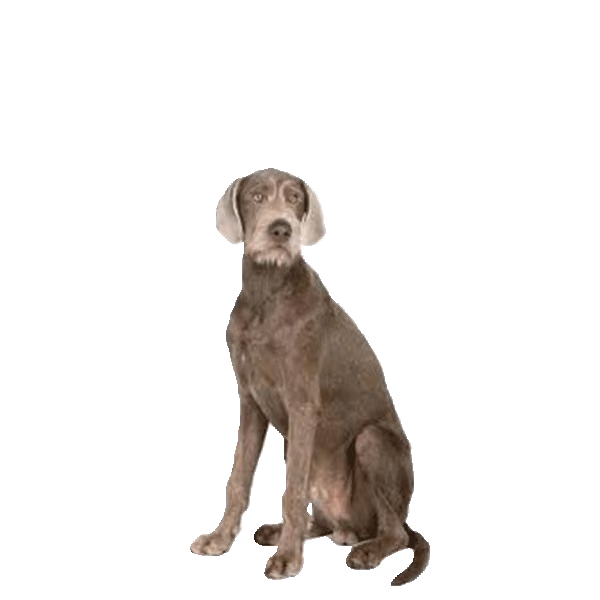
Slovakian Wirehaired Pointer
The Slovakian Wirehaired Pointer is a versatile, intelligent gundog known for its tireless work ethic in field and water.
- Size
- Medium
- Lifespan
- 12–14 years
- Origin
- Slovakia
- Temperament
- Intelligent
- Standard colors
- Grey and Silver
Characteristics
Coat and grooming
How the Slovakian Wirehaired Pointer coat is built, and what that means when you groom it.
- Coat layers
- Double coat
- Coat texture
- Wire
- Coat length
- Medium
- Shedding
- Low shedding
Grooming guidance
Caution: A Slovakian Wirehaired Pointer coat should be hand-stripped rather than clipped.
A wire coat is meant to be pulled out at the root once the hair is ready to release. Clippers cut it off part way instead, leaving the soft undercoat behind. The result is a coat that grows back limp and faded, and the weatherproof texture only returns after the hair is stripped out again.
Slovakian Wirehaired Pointer colors and patterns
What each club's breed standard says about every Slovakian Wirehaired Pointer color and pattern. Point at a ruling to see the club's own wording.
Breed standards describe the Slovakian Wirehaired Pointer in Grey and Silver. Standard patterns: Solid, Roan and Sable.
| Color or pattern | FCI | AKC | KC | KUSA |
|---|---|---|---|---|
| Grey | Standard (“brown shaded sable (said “grey”)”) | Standard (“Gray”) | Standard (“grey of any shade”) | Standard (“brown-shaded sable (said “grey”)”) |
| Silver | Standard (“with varying lighter and darker shadings”) | Standard (“Silver Gray”) | Standard (“grey of any shade”) | Standard (“with varying lighter and darker shadings”) |
| Cream | Fault (“Colour much too light going to nearly white”) | Fault (“Cream”) | Not recognised | Fault (“Colour much too light, going to nearly white”) |
| Patterns | ||||
| Solid | No ruling | Standard (“Gray”) | Standard (“Grey”) | No ruling |
| Roan | Standard (“eventually speckled”) | Standard (“eventually speckled”) | Standard (“Evenly speckled grey roan is acceptable”) | Standard (“eventually speckled”) |
| Sable | Standard (“brown shaded sable”) | Standard (“Gray Sable”) | No ruling | Standard (“brown-shaded sable”) |

%22%3E%3Cg%20fill%3D%22none%22%20stroke%3D%22%23F5F5F0%22%20stroke-width%3D%221.15%22%20stroke-linecap%3D%22round%22%20stroke-linejoin%3D%22round%22%3E%3Cpath%20d%3D%22M28.6%2025h.1M51.3%2028.8h.1M34.7%2024.3h.1M34.2%2041.6h.1M51%2044.2h.1M55.9%2024.7h.1M27.5%2026.3h.1M18.5%2028.6h.1M25.2%2028.9h.1M24.2%2019.3h.1M20.6%2017.6h.1M34.1%2030.6h.1M57.3%2023.3h.1M23.5%2030.7h.1M26.5%2023.1h.1M40%2031.5h.1M51.7%2038.6h.1M20.2%2022.1h.1M40.4%2037.8h.1M35%2043.1h.1M20.6%2031.7h.1M27.8%2031.9h.1M17.2%2021.1h.1M38.1%2037.7h.1M25.3%2040.5h.1M32%2029.3h.1M41.6%2039.5h.1M23.6%2024h.1M26.4%2018.6h.1M30.3%2031.9h.1M31.2%2035.2h.1M36.5%2043.7h.1M35.2%2026.3h.1M55.6%2019.1h.1M22.4%2036.8h.1M39.2%2020h.1M49.5%2039.1h.1M33.6%2033.5h.1M36.4%2032.4h.1M56.3%2042.4h.1M54.8%2031.2h.1M36.9%2023.2h.1M52.7%2019.1h.1M21.5%2033.8h.1M48.6%2028h.1M36.6%2017.5h.1M45.6%2031.3h.1M37.9%2030.5h.1M17%2031.8h.1M21.1%2043.1h.1M55.7%2021.1h.1M30.8%2041.9h.1M57.4%2038.4h.1M54.8%2026.9h.1M29.1%2017.5h.1M24.3%2037.7h.1M26%2032h.1M39.3%2022.8h.1M53.5%2029h.1M53.3%2023.3h.1M20%2038.4h.1M28.3%2044.7h.1M28.6%2039.8h.1M51.9%2041.1h.1M52.3%2033.7h.1M19.6%2042.2h.1M19%2033h.1M47.8%2021.7h.1M45.7%2024.8h.1M24.6%2035.5h.1M29.8%2036.8h.1M50.7%2032h.1M29.5%2043.5h.1M28.2%2041.5h.1M47.4%2034.8h.1M25.4%2033.7h.1M50.2%2041.2h.1M27.7%2029.5h.1M21.5%2024.8h.1M55.5%2017.5h.1M41.2%2044.3h.1M39.2%2018.4h.1M41.1%2042.5h.1M54.7%2035.3h.1M42.8%2034.5h.1M30.1%2023h.1M42.6%2025.1h.1M32.9%2024.4h.1M42.4%2032.4h.1M49.7%2022.2h.1M49.1%2043.1h.1M38%2035.2h.1M47.7%2043.8h.1M43.1%2022.4h.1M22.4%2040.4h.1M44.4%2019.8h.1M53.3%2040.1h.1M20.7%2029.3h.1M55.6%2043.9h.1M17.6%2039.2h.1M41.7%2028.9h.1M44.1%2036.3h.1M24.3%2043.6h.1M26.4%2038.1h.1M30.3%2029.2h.1M31.5%2030.8h.1M32.1%2023h.1M18.3%2040.9h.1M48%2033.4h.1M36.4%2038.7h.1M31.9%2020.8h.1M32.6%2026.2h.1M22%2031.2h.1M53.4%2021.7h.1M41.9%2017.7h.1M53.3%2037.3h.1M47.7%2040.3h.1M54.4%2033.7h.1M33.6%2037.5h.1M25.3%2017.2h.1M37.6%2019.7h.1M31.6%2019h.1M29.2%2019.6h.1M50.7%2027.3h.1M22%2022.1h.1M31%2037.8h.1M56.5%2026.6h.1M34.7%2039.5h.1M56.5%2040.8h.1M47.6%2038h.1M48.6%2026.1h.1M49.7%2034.2h.1M45.4%2027.4h.1M22.6%2038.9h.1M56.5%2035.3h.1M35.1%2021h.1M41.9%2020.1h.1M37.6%2040h.1M32.6%2044.4h.1M37.9%2025.2h.1M26.6%2043h.1M18.9%2036.7h.1M47.2%2028.9h.1M30.5%2026.2h.1M17.4%2027.3h.1M47.1%2017.2h.1M22.3%2044.3h.1M32.5%2042.4h.1M23.6%2025.7h.1M31.4%2024.9h.1%22%2F%3E%3Cpath%20d%3D%22M26%2020.9h.1M41.2%2023.8h.1M39.9%2026.4h.1M28.5%2033.4h.1M42.8%2043.8h.1M17.6%2034.3h.1M34%2017.1h.1M31.2%2017.2h.1M46.5%2036.1h.1M25.1%2022.1h.1M50.3%2023.7h.1M20.2%2026.6h.1M20.8%2020.4h.1M50.9%2017.3h.1M49.5%2020.2h.1M52.9%2044.1h.1M23.9%2017.8h.1M43.2%2028.1h.1M57.6%2030h.1M52%2025.6h.1M19.2%2019.1h.1M19.5%2024.4h.1M32.8%2040.1h.1M36.1%2027.7h.1M39.6%2029.5h.1M38.4%2041.5h.1M47.9%2019.4h.1M49.1%2031.7h.1M55.9%2036.9h.1M29.2%2027.2h.1M46%2043.5h.1M44.6%2028.8h.1M47.5%2031.5h.1M22.8%2020h.1M27.6%2017.1h.1M43.1%2018.6h.1M54.3%2020h.1M57.2%2033.8h.1M44.5%2043.8h.1M27.1%2035.5h.1M45.3%2041.8h.1M56.7%2028.8h.1M36.7%2021.4h.1M43.3%2042.3h.1M17.3%2022.9h.1M32.7%2035.5h.1M30.5%2039.8h.1M29.1%2021.2h.1M34.5%2018.8h.1M25.8%2027h.1%22%2F%3E%3C%2Fg%3E%3Cpath%20d%3D%22M56.3%2038.4l0%201.2M40%2027.2l-0.3%201.3M32.6%2043.6l-0.4%201.5M29%2023.3l0.8%201.5M55.1%2044l0.4%201.1M47.5%2022.5l-0.2%201.6M42.9%2038.6l0.7%201.2M35.2%2041.8l-0.5%201.7M26.9%2040l-0.1%201.2M41%2042.8l-0.1%201.6M18.4%2021.2l0.7%201.3M49.4%2019.3l-0.5%201.4M50.1%2041.7l0%201.8M28.2%2041.8l-0.6%201.2M55.5%2027.1l0.2%201.2M44.7%2019.3l0.5%201.7M48.6%2020.5l-0.8%201.4M43.7%2039.6l0.3%201.1M22.1%2033.8l-0.6%201.6M50.1%2038.1l-0.5%201.3M51.8%2044.1l-0.1%201.8M39%2017.5l0%201.4M30.2%2026.7l0.2%201.4M25.8%2031.2l0.2%201.6M29.6%2043.5l0.1%201M43.7%2018.3l0.1%201.5M29.6%2018.2l0.3%201.6M24.4%2017.6l0.3%201.1M22%2028.2l-0.6%201.6M25.9%2043.3l-0.3%201.4M22.2%2024.3l0.3%201.3M47.3%2029.2l-0.2%201.4M21.8%2033.2l0.5%200.9M32.9%2037l0.4%201M40%2029.9l0.8%201.4M17.4%2038.3l0.2%201.3M31%2039.2l0%201.2M37.3%2033.7l0.3%201.5M48.1%2040.5l0%201.6M33.9%2031.2l0.1%201.2M29.8%2035.2l-0.4%201M25.1%2037.3l-0.2%201.5M30.2%2039.8l0.5%201M44.6%2034.8l0.4%200.9M55.3%2034.2l0%201.7M50.6%2017.9l0.4%201M30.2%2034.9l-0.4%201.4M19.5%2035.7l-0.5%201.7M40.7%2028.7l0.8%201.4M23.3%2029l-0.4%201.4M17%2040.5l-0.2%201M48.4%2023.2l-0.3%201M37.3%2025.1l-0.4%201.3M23%2021.4l-0.4%201.3M20.4%2017.2l-0.1%201.3M42.3%2020.4l0.6%201.4M41%2031.8l0.6%201.2M45.4%2034.3l-0.1%201.2M32.5%2018l0%201.3M46.2%2021.6l0.1%201.4M30.5%2022.3l0.5%201.1M58%2044.6l0.3%201.5M57.1%2033.9l0.8%201.4M18.3%2042.6l0.3%201M40.5%2035.1l-0.6%201.4M38.8%2044.3l-0.3%201.1%22%20fill%3D%22none%22%20stroke%3D%22%23F5F5F0%22%20stroke-width%3D%220.8%22%20stroke-linecap%3D%22round%22%20stroke-linejoin%3D%22round%22%2F%3E%3C%2Fg%3E%3Cuse%20href%3D%22%23s%22%20fill%3D%22none%22%20stroke%3D%22%233B2A20%22%20stroke-opacity%3D%220.6%22%20stroke-width%3D%221%22%20stroke-linejoin%3D%22round%22%2F%3E%3Crect%20x%3D%2220%22%20y%3D%2258%22%20width%3D%223.6%22%20height%3D%222%22%20fill%3D%22%234A4038%22%2F%3E%3Crect%20x%3D%2226%22%20y%3D%2258%22%20width%3D%223.6%22%20height%3D%222%22%20fill%3D%22%234A4038%22%2F%3E%3Crect%20x%3D%2244%22%20y%3D%2258%22%20width%3D%223.6%22%20height%3D%222%22%20fill%3D%22%234A4038%22%2F%3E%3Crect%20x%3D%2250%22%20y%3D%2258%22%20width%3D%223.6%22%20height%3D%222%22%20fill%3D%22%234A4038%22%2F%3E%3Ccircle%20cx%3D%229.5%22%20cy%3D%2211.5%22%20r%3D%221.1%22%20fill%3D%22%231C1C1C%22%2F%3E%3C%2Fsvg%3E)
%22%3E%3Crect%20x%3D%220%22%20y%3D%220%22%20width%3D%2264%22%20height%3D%2264%22%20fill%3D%22url(%23g)%22%2F%3E%3Cg%20fill%3D%22none%22%20stroke%3D%22%231C1C1C%22%20stroke-width%3D%221%22%20stroke-linecap%3D%22round%22%20stroke-linejoin%3D%22round%22%3E%3Cpath%20d%3D%22M15.7%2014.8l1.9%203.6M26.4%2024.1l1.2%204.1M42.7%2029.5l0.1%203.3M35.9%2025l1.6%203.2M31.3%2028.1l0.7%203.7M15.5%2011.1l1.6%203.6M41.1%2023.8l0.6%203.2M12.1%2020.7l1.2%203M15.4%2011.2l0.8%203.8M42.9%2027.3l0.7%202.9M48.2%2033.2l0.5%204.1M23.1%2024.7l1.4%203.4M51.9%2036.1l0.3%204.3M18.7%2023.9l1.2%203.7M50.4%2027.4l0.5%204.1M18.4%2020.4l0.1%203.1M55.6%2021.4l1.1%203.9M18.6%2024.9l1.7%203.8M8.3%2023.2l1.7%202.9M18.7%2024.2l0.2%203.1M46.4%2022.7l0.6%202.6M14.3%207l0.9%203.5M50.5%2024.9l0.5%203.7M23.2%2024.7l1.2%204.3M10.5%2022.3l1.6%203.4M56.9%2018.2l1.1%202.5M20.8%2021.7l1.1%203.5M10.9%2020.2l0.2%203.9M6.6%2023.3l1%202.4M54.5%2021.7l0.9%203.8M13.3%2021l0.4%203M11.7%2019.5l0.3%204M39%2023.2l0.7%202.5M20.8%2016.7l0%202.6M18.4%2016l0.2%202.6M46.4%2038.2l1.4%203.2M12.9%2022.6l0.6%203.3M13%2020.9l0.3%204.3M35.3%2024.9l1.3%202.3M29.5%2022.1l0.5%202.8M36.6%2023.4l0.2%204.3M20.5%2017.6l0.7%204.1M18.3%2020.6l0.6%203M20.5%2025.8l0.5%203.8M23.5%2040.2l1.1%202.9M22.8%2024.9l1.5%203M25.5%2023.1l0.5%203.3M47.7%2024.7l1.5%203.7M12.9%2018.4l1.9%203.8M29.5%2023.7l0.5%204.1M37.7%2026.5l0%202.9M16.8%2016.4l0.1%203.3M49.8%2028l1.7%203.8M29.4%2025.5l0.5%203.6M9.3%2023l1.3%203.1M47.4%2025.6l0.5%203.5M48.1%2023.8l1.6%203.2M9.9%2018.3l1.3%202.5M12.2%2016.6l0.4%203.2M22%2022.1l1.4%202.7M43.9%2024.7l1.4%203.9M14.3%2020l1.8%203.2M46.3%2040.1l0.3%203.6M14.9%207l0.3%204M17.5%2016.7l1.2%202.4M54.6%2040l1%203.5M13.3%2013.9l1.6%204.2M15.3%2016.5l1.2%202.9M23.8%2038.5l0.2%203.8M18.2%2019l0.6%203M11.2%2023.6l0.7%204.1M33.1%2023.2l0.9%204.3M13.6%2019.9l0.4%204.5M19.7%2023.1l1.9%203.7M50.5%2027.1l0.3%204.1M28.2%2028.5l0.2%203.8M29%2028.4l0.1%204M47.7%2024.5l0.6%202.5M10.7%2017.2l1.4%202.7M25.5%2040.3l0.6%204.1M37.6%2022.8l0.7%204.4M57%2018.6l0.2%203.4M16.9%2022.2l1.7%203.8M43.5%2024.7l1.8%203.4M49.2%2026l1.5%203.6M47.7%2032.3l0.4%203.7M35.4%2030.8l0.5%202.7M47%2026.1l1%203.9M24.3%2028.1l1.5%204.2M50.5%2023.8l1.3%203.4M58.1%2014.1l0.3%202.6M13.9%2018.2l0.7%202.5M8.2%2021l0.7%202.9M41.4%2026.4l0.4%202.7M16.3%2020.4l0.5%204.3M43.4%2025.9l1.2%203.2M32.3%2022.4l0.3%203.9M43.6%2025.9l2.1%203.8M33.5%2026.3l1.5%203M48.3%2030.6l1.4%203.4M44.2%2024.7l0.9%203.2M12.3%2017.7l0.9%203.7M46.2%2032l1.9%203.4M51%2028.3l0.1%203.7M30.4%2023.1l1.1%203.2M52.6%2022.6l0.9%204.3M16.6%2015.4l0.9%203.1M58.4%2012.8l0.3%202.8M42.8%2032.5l1.8%203.2%22%2F%3E%3Cpath%20d%3D%22M16.4%2026.1l0.1%204.3M14%2017.1l1.3%202.8M36.9%2027.2l1.3%202.6M38.6%2025.8l0.4%203.6M57.6%2014.3l0.3%203.9M14.7%208.2l1%204.3M53.4%2023l1.9%203.4M51.5%2030.3l0.8%202.7M56.2%2020l1.9%203.5M15.9%2010l0.2%202.8M15.8%2022.6l1.8%203.9%22%2F%3E%3C%2Fg%3E%3C%2Fg%3E%3Cuse%20href%3D%22%23s%22%20fill%3D%22none%22%20stroke%3D%22%233B2A20%22%20stroke-opacity%3D%220.6%22%20stroke-width%3D%221%22%20stroke-linejoin%3D%22round%22%2F%3E%3Cellipse%20cx%3D%223.2%22%20cy%3D%2221.7%22%20rx%3D%221.3%22%20ry%3D%221.2%22%20fill%3D%22%231C1C1C%22%2F%3E%3Ccircle%20cx%3D%2210.8%22%20cy%3D%2219.3%22%20r%3D%221.1%22%20fill%3D%22%231C1C1C%22%2F%3E%3C%2Fsvg%3E)
| Color or pattern | FCI | AKC | KC | KUSA |
|---|---|---|---|---|
| Blue | Standard (“In the puppies and the young dogs, they are bluish (azure)”) | Standard (“In the puppies and the young dogs, they are bluish (azure)”) | Standard (“In young dogs the eyes may be blue”) | Standard (“In puppies and young dogs, they are bluish (azure)”) |
| Amber | Standard (“of amber colour”) | Standard (“of amber colour”) | Standard (“Amber coloured in adults”) | Standard (“of amber colour”) |
What the rulings mean
- Standard
- Described by the club's breed standard.
- Fault
- Named by the club's breed standard as a fault: the animal can be shown but is penalised.
- Not recognised
- The club does not accept this colour or pattern for the breed.
Color changes
How a Slovakian Wirehaired Pointer's colors can change over its life.
Bluechanges toDark brown
Eyes · With age · from 2 weeks
Bluechanges toBrown
Eyes · With age · from 2 weeks
Bluechanges toLight brown
Eyes · With age · from 2 weeks
Bluechanges toAmber
Eyes · With age · from 2 weeks
Bluechanges toHazel
Eyes · With age · from 2 weeks
Bluechanges toYellow
Eyes · With age · from 2 weeks
Sources
Each ruling comes from the club's published breed standard or color list.
About the Slovakian Wirehaired Pointer
The Slovakian Wirehaired Pointer is a medium-sized, all-round gundog from Slovakia, built to point, retrieve and track over land and water, with a steady head and real staying power.
The Slovakian Wirehaired Pointer is a medium-sized hunting dog bred in Slovakia to do everything a gundog is asked to do. It points, it retrieves, and it tracks, and it will work through thick cover, open ground, or cold water without much bother. It isn't built for a short burst of speed; it's built to keep going all day, and the wiry, weatherproof coat is a big part of that.
Dogs of this breed form a close working bond with their handler and pick things up fast, which suits a breed asked to switch between so many jobs in the field. Once the day's exercise is done, most settle well indoors, though they stay switched on and ready to go again.
The breed shares the traits common to the continental versatile pointers: a careful, methodical way of working, a strong nose, and the grit to keep at it in rough conditions. It's rarely seen outside hunting circles and central Europe, and in Ireland most owners who keep one are shooting people or those able to give it serious daily exercise.
| Attribute | Detail |
|---|---|
| Origin | Slovakia |
| Size | Medium |
| Lifespan | 12 to 14 years |
| Group / role | Versatile gundog (pointer, retriever, tracker) |
| Good with | Active families and experienced shooters who provide daily work |
Who it suits
This breed suits an owner who can give it a proper job and several hours of exercise a day. It does best with people who shoot, or who train for field trials, tracking, or other working disciplines. It's a poor fit for a house-bound lifestyle or for owners out at work long hours, since a dog of this type left under-exercised can turn restless and hard to live with.
History and origin
The Slovakian Wirehaired Pointer was developed in Slovakia in the mid-20th century by crossing established versatile pointers to produce one wirehaired gundog equally at home on land and in water.
The breed comes from Slovakia, where it was put together during the middle of the 20th century. Breeders wanted a single versatile gundog that could point game, retrieve from land and water, and follow a blood trail, all in one dog carrying a hard, protective coat.
The foundation stock drew on established continental versatile breeds. Breed records commonly cite the German Wirehaired Pointer, the Wirehaired Vizsla, and the Czesky Fousek (Bohemian Wirehaired Pointing Griffon) among the early crosses. Selection favoured a hard, weatherproof coat alongside a steady, biddable working temperament.
The breeding programme continued through the second half of the 20th century, with selection aimed at consistent type and reliable performance in the field. The breed earned recognition at home and was later accepted by the Fédération Cynologique Internationale, which places it among the continental pointing breeds. The Irish Kennel Club, as Ireland's FCI member body, recognises the breed under this same international framework, though it remains a rare sight at Irish shows and field trials.
The breed stays closely tied to hunting and is a good deal rarer than the better-known continental pointers. Numbers outside central Europe are small; in Ireland it's essentially unknown outside a handful of specialist gundog homes, and most dogs go to working households that value all-round field ability over the breed's profile.
Appearance
The Slovakian Wirehaired Pointer is a medium-sized, lean gundog with a harsh wiry coat in shades of grey, a beard and bushy eyebrows, and a balanced, athletic build.
The Slovakian Wirehaired Pointer is a lean, athletic dog of medium size, built on a rectangular, well-proportioned outline. The build is functional rather than heavy, with just enough bone and muscle to sustain a long day's work without carrying bulk. The head carries a distinct beard and bushy eyebrows, a feature it shares with the other wirehaired continental pointers.
| Trait | Standard |
|---|---|
| Height | Males about 62 to 68 cm; females about 57 to 64 cm at the withers |
| Weight | About 25 to 35 kg, in proportion to height |
| Coat | Harsh, wiry topcoat about 4 cm long with a dense undercoat; beard and eyebrows on the face |
| Colours | Shades of grey, including grey roan and darker grey; white markings may appear |
| Eyes | Almond shaped, amber in colour, with an alert expression |
Coat and colours
The coat is what defines this breed. The topcoat is harsh and wiry, lying close enough to see the dog through thorny cover and cold water, while the undercoat does the insulating work underneath. The face carries a good beard and prominent eyebrows. Colour runs through the shades of grey, often described as grey roan, giving an overall greyish impression. The wiry texture needs regular hand attention to stay functional, and the breed sheds a good deal less than a smooth-coated dog.
Temperament
The Slovakian Wirehaired Pointer is loyal, intelligent, and even-tempered, devoted to its handler, reserved with strangers, and generally good with other dogs once properly socialised.
The breed is even-tempered and forms a strong attachment to its handler. It's intelligent and quick on the uptake, traits rooted in its background as a versatile gundog expected to read a wide range of situations out in the field. At home, a dog that has had its exercise is calm and settled, though it stays alert to what's going on around it.
With its own family the breed is affectionate and easy to work with. It tends towards reserved rather than unfriendly with strangers, and early socialisation helps it meet new people with confidence rather than suspicion. It's usually sociable with other dogs, and its hunting background means it's used to working alongside people and, in some settings, other dogs too.
Prey drive is high, as you'd expect from a pointing and retrieving breed. Households keeping small pets such as rabbits or birds should manage introductions with care. The breed does best with a clear job and consistent handling, and can grow restless or pick up bad habits if it doesn't get enough physical and mental activity.
| Trait | Rating |
|---|---|
| Affection | 4 |
| Energy | 5 |
| Trainability | 5 |
| Vocalness | 2 |
| Shedding | 2 |
Care and grooming
The Slovakian Wirehaired Pointer needs regular hand-stripping of its wiry coat, several hours of exercise a day, and room to work, which suits an active, often rural home best.
Grooming
- Brush the wiry coat once or twice a week to clear out dead hair and stop it matting.
- Hand-strip the coat a few times a year to keep the harsh, weatherproof texture; clipping softens the coat and takes away its protective quality.
- Clean the beard after meals and after water work, since it picks up food and dirt easily.
- Check and clean the ears regularly; the drop ears can hold on to moisture after time in water.
- Trim nails every few weeks and brush teeth several times a week.
Exercise
- Give at least two hours of proper exercise a day, more on working days.
- Combine physical exercise with scent work, retrieving games, or field training to meet the breed's mental needs.
- Allow safe off-lead running in secure areas; this is a high-energy working breed.
- Don't rely on short lead walks alone, as these won't come close to satisfying the breed.
Environment
The breed does best in a home with a large, secure garden and easy access to open ground. Ireland's cool, damp climate suits it well, as the coat is built for cold and wet conditions and outdoor work. It's a poor match for a small flat or for an owner who can't commit to demanding exercise every day.
Nutrition and feeding
The Slovakian Wirehaired Pointer needs a balanced diet with adequate protein matched to its high activity level, with portions increased on working days and split across two meals.
As an active, medium-sized working dog, this breed needs a complete and balanced diet with enough protein and fat to support sustained energy. Daily amounts depend on weight, age, and how hard the dog is working; a dog out shooting all day needs a good deal more than one resting at home. Feed a quality food formulated for active or working dogs and adjust portions to keep the dog lean.
| Life stage | Amount per day | Meals |
|---|---|---|
| Puppy (2 to 6 months) | Per food label, divided through the day | 3 to 4 |
| Junior (6 to 12 months) | Per food label for growing dogs | 2 to 3 |
| Adult (maintenance) | About 300 to 450 g of dry food, by weight and activity | 2 |
| Adult (working days) | Increase above maintenance to match output | 2 |
| Senior | Reduce slightly if activity drops; maintain protein | 2 |
Treats and supplements
Keep treats to roughly ten per cent of daily calories so they don't unbalance the diet. A dog fed a complete commercial food usually needs no supplements on top. As this is a deep-chested breed type, feed measured meals rather than one big feed, and avoid hard exercise straight before or after eating to cut the risk of bloat. Always have fresh water on hand, especially around water work and warm weather.
Health
The Slovakian Wirehaired Pointer is generally robust with a lifespan of 12 to 14 years, though owners should watch for hip dysplasia, ear infections, and bloat common to its build.
The Slovakian Wirehaired Pointer is, on the whole, a hardy and healthy breed, helped along by its working background and its relatively low numbers. Typical lifespan is 12 to 14 years. As with most active medium-to-large dogs, a handful of conditions are worth watching for, and responsible breeders screen their breeding stock for inherited problems.
| Condition | Signs | Note |
|---|---|---|
| Hip dysplasia | Stiffness, limping, reluctance to rise or jump | Choose breeders who hip-score their stock |
| Elbow dysplasia | Foreleg lameness, especially after exercise | Screening is available |
| Ear infections | Head shaking, odour, scratching at the ear | Drop ears can trap moisture after water work |
| Bloat (gastric torsion) | Swollen abdomen, retching without result, distress | Emergency; deep-chested dogs are at higher risk |
Preventive care
- Keep vaccinations and parasite control up to date.
- Maintain a lean body condition to protect the joints.
- Check ears after every session in water or heavy cover.
- Book annual veterinary check-ups and screen breeding dogs for hip and elbow scores.
- Brush teeth regularly to keep dental disease at bay.
Training
The Slovakian Wirehaired Pointer is highly trainable and keen to work alongside its handler, responding best to consistent, reward-based methods that put its energy to structured use.
This is one of the more trainable gundogs going. It's intelligent, tuned in to its handler, and keen to work, which makes it responsive in both obedience and field training. That same intelligence means it needs consistent direction and regular mental challenge; without it, the dog will find its own amusements, and they won't always suit the household. Start training early, keep sessions varied, and build on the breed's natural drive to point and retrieve.
Basics
- Socialise the pup widely with people, places, and other dogs from an early age.
- Teach name response and a reliable recall before introducing distractions in the field.
- Establish sit, stay, and steadiness, which underpin all gundog work.
- Introduce retrieving and scent games to engage the breed's natural instincts.
- Layer in field or tracking work gradually as control becomes reliable.
- Keep sessions short, frequent, and consistent across everyone in the home who handles the dog.
Breeding
Breeding the Slovakian Wirehaired Pointer follows a roughly 63-day canine gestation, with health-screened parents and litters of about six to eight pups raised with early socialisation.
Breeding should only go ahead with health-screened parents that show sound temperament and solid working ability. Females reach physical maturity before they're ready to be bred, and most responsible programmes wait until at least the second season, and after hip and elbow screening. Mating, gestation, and whelping follow the usual canine pattern, with gestation running to around 63 days.
Litters typically run to about six to eight pups, though this varies. The dam usually whelps without much trouble given her medium build. Pups benefit from early neurological stimulation and broad socialisation, since the breed's working role calls for a confident, people-focused adult. Breeders commonly place pups with shooting or otherwise active homes able to meet the breed's exercise and training needs, and good breeders stay in touch to support new owners afterwards.
| Metric | Value |
|---|---|
| Breeding maturity | Typically from the second season for females; after health screening |
| Gestation | About 63 days |
| Average litter size | About 6 to 8 puppies |
| Weaning | Around 6 to 8 weeks |
| Recommended screening | Hip and elbow scores; temperament assessment |
Registering your Slovakian Wirehaired Pointer in Ireland, chip and record both
Irish law wants every dog chipped and recorded; United Pet Club keeps your Slovakian Wirehaired Pointer's record free, current, and there for life.
How to register a Slovakian Wirehaired Pointer in Ireland
Irish law has required every dog to be chipped and registered since the 2015 Regulations came in, and it expects the details behind the chip to stay current, not gather dust. A free United Pet Club profile does that for your Slovakian Wirehaired Pointer, for life. Registering your dog is a few minutes' work and costs nothing at all.
The implant is the vet's job; the record is down to you, and the 2015 rules assume you'll keep it current. Register the microchip free on the lifetime plan: whatever brand the vet reached for is grand, a house move costs nothing to record, and the number stays searchable day and night. Create your free account and have the pair of jobs done before the tea goes cold.
How do I register my Slovakian Wirehaired Pointer in Ireland?
Set yourself up with a free United Pet Club account, key in your Slovakian Wirehaired Pointer's details and a photo, and save. The profile holds for the whole of his life without charge, and the chip number can be lodged whenever you have it.
How do I register my Slovakian Wirehaired Pointer's microchip?
Lodge the fifteen digit chip number in your free account along with your address and phone number. The lifetime plan covers the registration and every update after it, free, whatever brand the vet used.
Is microchipping a Slovakian Wirehaired Pointer required in Ireland?
It is. The 2015 Regulations require every dog to be chipped and registered, pup or rescue alike. Keeping the record current is the part that falls to you, and United Pet Club makes that part free.
What does it cost to register a Slovakian Wirehaired Pointer in Ireland?
Not a penny. Profile, chip record, and every amendment are covered for life, with no renewal ever.
Frequently asked questions
Common questions about the Slovakian Wirehaired Pointer cover its size, temperament, care needs, lifespan, suitability as a pet, and how easy it is to find in Ireland.
How big does a Slovakian Wirehaired Pointer get?
It's a medium-sized breed. Males stand about 62 to 68 cm at the withers and females about 57 to 64 cm, with weight roughly 25 to 35 kg depending on size and condition.
What's its temperament like?
It's loyal, intelligent, and even-tempered. It bonds closely with its family, is reserved rather than unfriendly with strangers, and is generally sociable with other dogs once well socialised. It has a high prey drive, typical of a gundog.
Is it hard work to care for?
It's demanding of time rather than difficult by nature. It needs at least two hours of exercise a day plus mental work, and its wiry coat needs weekly brushing and the odd hand-stripping session. Once those needs are met, it's a manageable, calm companion.
How long do they live?
Typical lifespan is 12 to 14 years. Good nutrition, a lean weight, regular veterinary care, and health-screened parents all support a long, healthy life.
Does it make a good family pet?
It can suit an active, often rural family able to give it a job and daily exercise. It's affectionate with its own people, but it's not suited to a house-bound lifestyle or to owners who are away for long stretches.
Is the breed easy to find in Ireland?
No. It's rare outside central Europe and hunting circles, so there's little chance of finding one locally without a wait, and most pups go to working or very active homes. Expect to look abroad to a specialist breeder.
Does it shed much?
Shedding is relatively light compared with smooth-coated breeds. The wiry coat still needs regular brushing and the occasional hand-stripping session to stay in good condition and keep loose hair under control.
From the community
Ask about the Slovakian Wirehaired PointerNo questions about the Slovakian Wirehaired Pointer yet. Be the first to ask.
Browse Dog breeds