
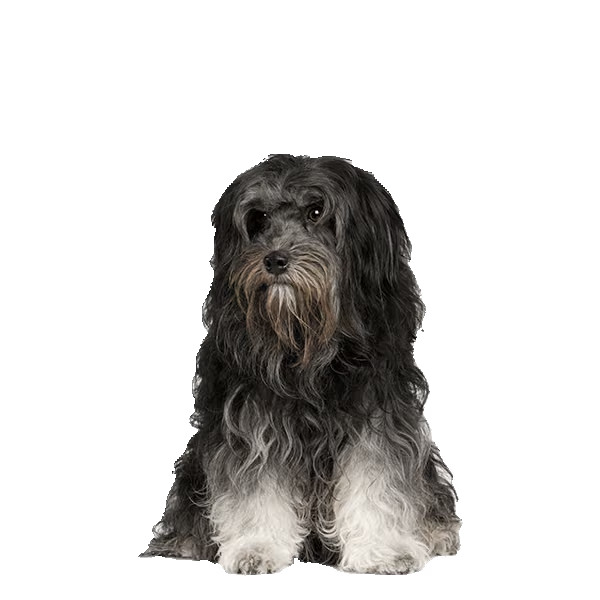
Schapendoes
The Schapendoes is a friendly, agile Dutch herding breed full of cheerful energy and quick, intelligent enthusiasm for work and play.
- Size
- Medium
- Lifespan
- 12–15 years
- Origin
- Netherlands
- Temperament
- Friendly
- Standard colors
- Black, White and Grey and 7 more
Characteristics
Coat and grooming
How the Schapendoes coat is built, and what that means when you groom it.
- Coat layers
- Double coat
- Coat texture
- Wavy
- Coat length
- Long
- Shedding
- Low shedding
Grooming guidance
Caution: A Schapendoes coat mats easily.
Fine or long hair tangles at the base of the coat, out of sight, where the mats tighten and pull on the skin. Brushing has to reach right down to the roots in sections, not just skim the surface.
Information: A Schapendoes needs clipping every few weeks.
This coat keeps growing rather than shedding out, so it has to be trimmed every few weeks. Left to grow it mats down against the skin and traps moisture, dirt and heat.
Schapendoes colors and patterns
What each club's breed standard says about every Schapendoes color and pattern. Point at a ruling to see the club's own wording.
Breed standards describe the Schapendoes in Black, White, Grey, Silver, Brown, Tan, Red, Gold, Apricot and Beige. Standard patterns: Solid, Bicolour, Tricolour, Sable and Tan point.
| Color or pattern | FCI | AKC | UKC |
|---|---|---|---|
| Black | Standard (“Preference is given to blue-grey to black”) | Standard (“Black”) | Standard (“preference is given to blue-grey to black”) |
| White | Standard (“All colours are permitted”) | Standard (“White”) | Standard (“All colors are permitted”) |
| Grey | Standard (“Preference is given to blue-grey to black”) | Standard (“Gray”) | Standard (“preference is given to blue-grey to black”) |
| Silver | Standard (“All colours are permitted”) | Standard (“Black & Silver”) | Standard (“All colors are permitted”) |
| Brown | Standard (“All colours are permitted”) | Standard (“Brown”) | Standard (“All colors are permitted”) |
| Tan | Standard (“All colours are permitted”) | Standard (“Tri-Colored”) | Standard (“All colors are permitted”) |
| Red | Standard (“All colours are permitted”) | Standard (“Red Black & White”) | Standard (“All colors are permitted”) |
| Gold | Standard (“All colours are permitted”) | Standard (“White & Gold”) | Standard (“All colors are permitted”) |
| Apricot | Standard (“All colours are permitted”) | Standard (“White & Apricot”) | Standard (“All colors are permitted”) |
| Beige | Standard (“All colours are permitted”) | Standard (“Beige”) | Standard (“All colors are permitted”) |
| Albino | No ruling | No ruling | Disqualifying (“Albinism”) |
| Patterns | |||
| Solid | Standard (“All colours are permitted”) | Standard (“Black”) | Standard (“All colors are permitted”) |
| Bicolour | Standard (“All colours are permitted”) | Standard (“Black & White”) | Standard (“All colors are permitted”) |
| Tricolour | Standard (“All colours are permitted”) | Standard (“Tri-Colored”) | Standard (“All colors are permitted”) |
| Sable | Standard (“All colours are permitted”) | Standard (“Gray Tips”) | Standard (“All colors are permitted”) |
| Tan point | Standard (“All colours are permitted”) | Standard (“White Gray & Tan”) | Standard (“All colors are permitted”) |


| Color or pattern | FCI | AKC | UKC |
|---|---|---|---|
| Brown | Standard (“Their colour is brown”) | Standard (“Their colour is brown”) | Standard (“They are brown in color”) |
| Black | Fault (“they should not give the impression of being black”) | Fault (“they should not give the impression of being black”) | Fault (“should not give the impression of being black”) |
What the rulings mean
- Standard
- Described by the club's breed standard.
- Fault
- Named by the club's breed standard as a fault: the animal can be shown but is penalised.
- Disqualifying
- The club's breed standard disqualifies an animal of this colour or pattern.
Color changes
How a Schapendoes's colors can change over its life.
Blackchanges toRust
Coat · With body condition · can change back
Blackchanges toGrey
Coat · Progressive
Blackchanges toBrown
Coat · In the sun · can change back
Whitechanges toRoan
Coat · With age · from 2 weeks
Tan pointchanges toSaddle
Coat · With age · from 6 to 156 weeks


Sources
Each ruling comes from the club's published breed standard or color list.
About the Schapendoes
The Schapendoes is a medium Dutch herding dog with a long, wavy coat and a cheerful, energetic nature. It suits active Irish households ready for daily walks and coat care.
The Schapendoes is a medium-sized herding breed that developed in the Netherlands. It was bred to move flocks of sheep across open heathland, so the build favours stamina and quick turns over raw power. The dog is light on its feet and covers ground with an easy, bouncy stride.
The coat is the first thing most people notice: long and slightly wavy, falling forward over the eyes and giving the face a soft, open look. Underneath the hair sits a lean, athletic dog with moderate bone. Adults typically stand 40 to 50 cm at the shoulder and weigh around 12 to 25 kg.
In temperament the Schapendoes is friendly, good-natured, and sharp. It attaches closely to its family and stays cheerful and busy most of the time. The breed likes puzzles and physical activity, which suits it well to dog sports such as agility and obedience, both popular at clubs around Ireland.
| Attribute | Detail |
|---|---|
| Origin | Netherlands |
| Size | Medium (roughly 40 to 50 cm tall, 12 to 25 kg) |
| Lifespan | 12 to 15 years |
| Group/role | Herding dog (sheep droving) |
| Good with | Families, older children, and active owners |
Who it suits
The Schapendoes fits a household that's home often and able to put in an hour or more of activity a day. It's a good match for people who want a partner for walks, hillwalking, or dog sports rather than a dog content to sit by the fire. Ireland's cool, damp climate suits the breed's weatherproof coat, but that coat needs regular brushing, so owners should be ready for a proper grooming routine. Because the breed is so people-focused, it doesn't do well left alone for long stretches during the working day.
History and origin
The Schapendoes is an old Dutch farm dog that herded sheep on the heathlands. It nearly died out during the Second World War and was rebuilt by Dutch breeders from the 1940s.
The Schapendoes took shape in the Netherlands as a working sheepdog on heathland and small farms. For generations, shepherds kept it for its herding ability rather than its looks, so type differed from one region to the next. The name means roughly sheep dog in Dutch, a plain description of the job it did every day.
The breed sits within a wider group of long-haired European herding dogs that also includes the Bearded Collie, the Puli, and the Bergamasco. All of them carry a shaggy coat suited to wet, cold conditions and a frame built for agility over rough ground, much like the working collies still seen at sheepdog trials on Irish hill farms. For most of its history the Schapendoes went undocumented, since it was a regional farm dog handed down by working shepherds rather than bred to a written standard.
Dutch cynologist Pieter van der Sande took an interest in the breed during the 1940s and set about preserving it. Numbers had fallen sharply through the Second World War, when many dogs were lost and breeding all but stopped. A small surviving group formed the basis of the recovery.
The Dutch breed club was founded in 1947, followed by a breed standard. The Schapendoes gained recognition from the Raad van Beheer, the Dutch kennel authority, and later from the Federation Cynologique Internationale. It remains most common in the Netherlands today, though it turns up occasionally in Ireland through IKC-affiliated breed enthusiasts, valued as both a companion and a sport dog.
Appearance and breed standard
The Schapendoes is a light, medium-sized dog with a long, wavy double coat that covers the eyes. Colours range widely, though blue-grey and black are most typical.
The Schapendoes is slightly longer than it is tall, with a lean frame and moderate bone. The overall look is of an agile, light-framed dog rather than a heavy one. The head carries plenty of hair, forming a topknot, moustache, and beard, and the long coat falls forward over the eyes. The tail is long, well covered in hair, carried low at rest and lifted on the move.
| Trait | Standard |
|---|---|
| Height | Females about 40 to 47 cm; males about 43 to 50 cm at the withers |
| Weight | Roughly 12 to 25 kg |
| Coat | Long, wavy, dense double coat with a soft undercoat |
| Colours | All colours permitted; blue-grey to black are most common |
| Eyes | Large, round, set well apart; brown, often hidden by the coat |
Coat and colours
The coat is what defines the breed. It's long, dry to the touch, and slightly wavy, with a thick undercoat that gives real weather protection, useful given Ireland's rain. Hair can reach 7 cm or more on the body and forms the facial furnishings the breed is known for. The texture should be functional rather than silky, and a slight curl is acceptable under the standard.
All colours are allowed, but shades running from blue-grey through to black turn up most often. Some dogs carry white markings. The coat needs regular grooming to stop the wavy hair from matting, particularly behind the ears, under the legs, and around the rear.
Temperament and personality
The Schapendoes is friendly, good-natured, and clever, with plenty of energy and a strong bond to its family. It's watchful with strangers but rarely aggressive.
The Schapendoes is an affectionate, lively dog that wants to be part of family life, not off on its own. It attaches closely to its people and tends to trail them from room to room. The breed is good-natured with children and usually gets on with other dogs when raised and socialised properly.
With strangers it's watchful and may bark to flag a visitor, but it's no guard dog and warms up fast once introduced. Its herding background shows in a habit of staying alert, busy, and quick to react to movement, which can spill over into chasing or circling if it isn't given an outlet.
This is a clever breed that thinks for itself. It picks things up fast but can be independent, so it suits owners who keep training varied and interesting. Boredom and too little exercise bring on barking, restlessness, and chewing. Given enough activity and company, the Schapendoes settles into a cheerful, balanced companion.
| Trait | Rating |
|---|---|
| Affection | 5 |
| Energy | 5 |
| Trainability | 4 |
| Vocalness | 3 |
| Shedding | 3 |
Care and grooming
The Schapendoes needs frequent brushing to keep its long coat free of mats and at least an hour of exercise daily. It thrives with an active family and plenty to think about.
Grooming
- Brush the coat thoroughly two to three times a week to stop mats forming in the wavy hair.
- Pay close attention to behind the ears, under the legs, around the collar, and at the rear, where tangles start first.
- Bathe only when needed, then dry and brush the coat out fully so it doesn't mat as it dries.
- Trim hair around the eyes and check the ears regularly for debris and dampness, which builds up quickly in Irish weather.
- Keep nails short and check the paws after time out on rough ground.
Exercise
- Give at least 60 minutes of activity a day, split between walks and free running.
- Add mental work such as training games, scent work, or puzzle feeders.
- The breed does well at agility, flyball, and obedience, all of which put its energy to good use.
- Allow safe off-lead time in a secure area so it can stretch its legs properly.
Environment
The Schapendoes settles into a house with a garden or an active apartment household, provided it gets daily exercise and isn't left alone for long spells. Ireland's cool, damp climate suits the breed well thanks to its double coat, though it still needs shade and water during a warm spell. Because it's so people-focused, it does best where it can spend real time with the family rather than in a kennel out the back.
Nutrition and feeding
Feed the Schapendoes a complete, balanced diet suited to its age and activity level, split into two meals a day. Watch its weight given the athletic build.
The Schapendoes does well on a complete and balanced diet formulated for active medium breeds. As a working-type dog, its calorie needs rise with exercise and drop off during quieter spells, so portions should be adjusted to keep it lean. Ribs should be easy to feel but not to see. Fresh water should be available at all times.
| Life stage | Amount per day | Meals |
|---|---|---|
| Puppy (2 to 6 months) | Per food label, divided | 3 to 4 |
| Junior (6 to 12 months) | Per food label, divided | 2 to 3 |
| Adult (1 to 7 years) | About 150 to 300 g dry food | 2 |
| Senior (8+ years) | Slightly reduced, watch weight | 2 |
Treats and supplements
Keep treats to no more than about 10 percent of daily calories and factor them into meal portions. Use small, low-fat rewards for training. A healthy dog on a complete diet usually needs no extra supplements, but a vet may suggest omega-3 fatty acids or joint support for older or heavily worked dogs. Bring in any diet change gradually over about a week to avoid an upset stomach.
Health and common conditions
The Schapendoes is generally healthy with a lifespan of 12 to 15 years. The main concerns are hip dysplasia and an inherited eye disease, both reduced through health-tested parents.
The Schapendoes is a hardy breed with relatively few inherited problems compared with many pedigree dogs. With good care, most live 12 to 15 years. The breed relies on a small but actively managed gene pool, and responsible breeders screen for the conditions known to occur. Buying from health-tested parents remains the single best way to cut the risk.
| Condition | Signs | Note |
|---|---|---|
| Hip dysplasia | Stiffness, limping, reluctance to jump | Parents should have hip scores |
| Progressive retinal atrophy | Night blindness, declining vision | DNA test available for breeding stock |
| Ear issues | Head shaking, odour, scratching | More likely in long-coated, hairy ears |
Preventive care
- Keep core and recommended vaccinations up to date.
- Run a year-round parasite plan covering fleas, ticks, and worms.
- Book annual vet check-ups, moving to twice yearly for seniors.
- Brush the teeth regularly and offer dental chews.
- Keep the dog at a lean weight to protect the joints.
Training and socialisation
The Schapendoes is clever and quick to learn but somewhat independent. Short, varied, reward-based sessions work best, alongside early socialisation.
The Schapendoes learns fast and likes having a job to do, which makes training genuinely rewarding. It can also be independent and easily bored, so repetitive drilling tends to backfire. Keep sessions short, varied, and upbeat, and stop while the dog is still keen. The breed responds well to activities that mix thinking with movement, such as agility and trick training. Broad socialisation early on, with people, other animals, and everyday situations, helps this naturally alert dog stay confident and settled.
Basics
- Start name recognition and a reliable recall in a quiet space from a young age.
- Teach sit, down, and stay with food or toy rewards in short bursts.
- Build loose-lead walking before the dog has the strength to pull hard.
- Practise calm settling and time alone to prevent over-attachment.
- Add a release cue and an interrupt cue to manage the herding instinct to chase.
Breeding and raising young
Schapendoes reach breeding maturity at around two years. Litters average four to six puppies after a gestation of about 63 days, and health testing of both parents is essential.
Responsible breeding of the Schapendoes centres on temperament, working ability, and health, with real care taken over the breed's limited gene pool. Both parents should have hip scores and eye tests completed before mating, and breeders typically wait until a dog is physically and mentally mature, at around two years of age. Bitches are mated as part of a planned programme rather than at the first season.
Gestation lasts about 63 days. Litters commonly hold four to six puppies, though numbers vary. The dam raises the litter actively through the first weeks, and gentle human handling should start early to build well-socialised puppies. Pups are usually weaned by seven to eight weeks and shouldn't leave the breeder before that age, with many staying a little longer again. Early exposure to household sights, sounds, and gentle handling lays the foundation for the breed's friendly adult character.
| Metric | Value |
|---|---|
| Breeding maturity | About 2 years |
| Gestation | About 63 days |
| Average litter size | 4 to 6 puppies |
| Weaning age | 7 to 8 weeks |
| Recommended health tests | Hip score, eye test (PRA) |
Registering your Schapendoes in Ireland, chip and record both
Irish law wants every dog chipped and recorded; United Pet Club keeps your Schapendoes's record free, current, and there for life.
How to register a Schapendoes in Ireland
Irish law has required every dog to be chipped and registered since the 2015 Regulations came in, and it expects the details behind the chip to stay current, not gather dust. A free United Pet Club profile does that for your Schapendoes, for life. Registering your dog is a few minutes' work and costs nothing at all.
Lodge your Schapendoes's fifteen digit number with United Pet Club and the chip finally earns its keep: free registration for life, every brand accepted, and a record the ISPCA or any warden can turn into a phone call. Microchip registration takes minutes, and the free account covers the profile while you're at it.
How do I register my Schapendoes in Ireland?
Set yourself up with a free United Pet Club account, key in your Schapendoes's details and a photo, and save. The profile holds for the whole of his life without charge, and the chip number can be lodged whenever you have it.
How do I register my Schapendoes's microchip?
Lodge the fifteen digit chip number in your free account along with your address and phone number. The lifetime plan covers the registration and every update after it, free, whatever brand the vet used.
Is microchipping a Schapendoes required in Ireland?
It is. The 2015 Regulations require every dog to be chipped and registered, pup or rescue alike. Keeping the record current is the part that falls to you, and United Pet Club makes that part free.
What does it cost to register a Schapendoes in Ireland?
Not a penny. Profile, chip record, and every amendment are covered for life, with no renewal ever.
Frequently asked questions
Common questions about the Schapendoes cover its size, temperament, grooming needs, lifespan, suitability for families, and how easy it is to track one down.
How big does a Schapendoes get?
It's a medium breed, standing roughly 40 to 50 cm at the shoulder and weighing about 12 to 25 kg, with a light, athletic build rather than a heavy one.
What's the Schapendoes like to live with?
It's friendly, good-natured, and clever, with plenty of energy and a strong attachment to its family. It's watchful with strangers but rarely aggressive, and usually good with children and other dogs.
Is the Schapendoes hard work to keep?
The main commitments are grooming and exercise. The long, wavy coat needs brushing two to three times a week, and the dog needs at least an hour of activity plus mental work every day.
How long do Schapendoes live?
Most live 12 to 15 years. The breed is generally healthy, and buying from hip-scored and eye-tested parents lowers the risk of inherited problems.
Is the Schapendoes good with kids?
Yes, for active families that are home often. It's affectionate and playful with children but needs daily exercise and company, so it doesn't suit a home where it would be alone for long stretches.
Are Schapendoes easy to find in Ireland?
Not really. They're most common in the Netherlands and thin on the ground elsewhere, including Ireland, so expect a waiting list. Look for breeders who health test their dogs and follow the breed club's guidance.
From the community
Ask about the SchapendoesNo questions about the Schapendoes yet. Be the first to ask.
Browse Dog breeds