
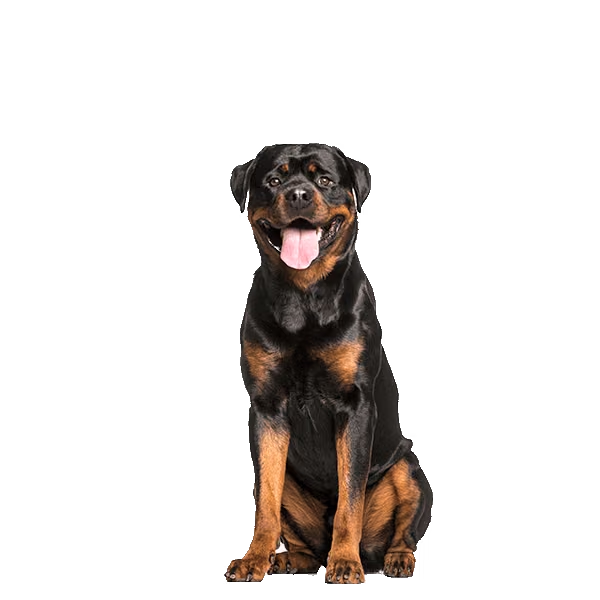
Rottweiler
The Rottweiler is a confident, loyal guardian known for its intelligence, protective devotion, and calm self-assurance.
- Size
- Large
- Lifespan
- 9–10 years
- Origin
- Germany
- Temperament
- Confident
- Standard colors
- Black and Tan
Characteristics
Coat and grooming
How the Rottweiler coat is built, and what that means when you groom it.
- Coat layers
- Double coat
- Coat texture
- Smooth
- Coat length
- Short
- Shedding
- Seasonal shedding
Grooming guidance
Critical: A Rottweiler should not be shaved.
The undercoat keeps heat out as well as in, and the outer coat shields the skin from sun and insect bites. Clipping the whole coat off removes both. It often grows back patchy, soft or a different colour, and in some animals the guard hairs never return properly. Brush the undercoat out instead of cutting it off.
Information: A Rottweiler drops its undercoat in heavy bursts.
The undercoat comes out in heavy bursts over a few weeks. An undercoat rake, or a bath followed by a proper blow-dry, clears it far faster than daily brushing. Clipping the coat down is not a shortcut for this.
Rottweiler colors and patterns
What each club's breed standard says about every Rottweiler color and pattern. Point at a ruling to see the club's own wording.
Breed standards describe the Rottweiler in Black and Tan. Standard patterns: Tan point.
| Color or pattern | FCI | AKC | UKC | KC | KUSA |
|---|---|---|---|---|---|
| Black | Standard (“Black”) | Standard (“Black & Tan”) | Standard (“black”) | Standard (“Black”) | Standard (“Black”) |
| Tan | Standard (“markings of a rich tan”) | Standard (“Black & Tan”) | Standard (“rich tan markings”) | Standard (“Colour of markings from rich tan to mahogany”) | Standard (“markings of a rich tan”) |
| White | Disqualifying (“White markings”) | Fault (“white marking any place on dog”) | Disqualifying (“White markings anywhere on the dog”) | Fault (“White marking is highly undesirable”) | Disqualifying (“White markings”) |
| Albino | Disqualifying | Disqualifying | Disqualifying (“Albinism”) | Not recognised | Disqualifying |
| Blue | Disqualifying | Disqualifying | No ruling | Not recognised | Disqualifying |
| Red | Disqualifying | Disqualifying | No ruling | Not recognised | Disqualifying |
| Patterns | |||||
| Tan point | Standard (“Black with clearly defined markings of a rich tan”) | Standard (“Black & Tan”) | Standard (“black with clearly-defined rich tan markings”) | Standard (“Black & Tan”) | Standard (“Black with clearly defined markings of a rich tan”) |
| Sable | Disqualifying | Fault (“sooty markings”) | Disqualifying | Not recognised | Disqualifying |
| Solid | Disqualifying | Disqualifying (“absence of all markings”) | Disqualifying | Not recognised | Disqualifying |
%22%3E%3Ccircle%20cx%3D%2212%22%20cy%3D%2217.2%22%20r%3D%221.25%22%20fill%3D%22%23C4996A%22%2F%3E%3Cpath%20d%3D%22M1.5%2021.2L9%2018.6L12.6%2021L12.2%2026.2L3.5%2024.4Z%22%20fill%3D%22%23C4996A%22%2F%3E%3Cpath%20d%3D%22M10%2026L14.5%2026.4L18.2%2029.2L13.5%2029.8Z%22%20fill%3D%22%23C4996A%22%2F%3E%3Cellipse%20cx%3D%2221.2%22%20cy%3D%2230.6%22%20rx%3D%221.6%22%20ry%3D%222.3%22%20fill%3D%22%23C4996A%22%2F%3E%3Crect%20x%3D%220%22%20y%3D%2247%22%20width%3D%2264%22%20height%3D%2217%22%20fill%3D%22%23C4996A%22%2F%3E%3Cpath%20d%3D%22M51.5%2024.5L55%2027L54.2%2032L50.5%2028.5Z%22%20fill%3D%22%23C4996A%22%2F%3E%3Cpath%20d%3D%22M45%2038.5L48%2039L48.5%2047L45.5%2047Z%22%20fill%3D%22%23C4996A%22%2F%3E%3C%2Fg%3E%3Cuse%20href%3D%22%23s%22%20fill%3D%22none%22%20stroke%3D%22%233B2A20%22%20stroke-opacity%3D%220.6%22%20stroke-width%3D%221%22%20stroke-linejoin%3D%22round%22%2F%3E%3Cellipse%20cx%3D%223.2%22%20cy%3D%2221.7%22%20rx%3D%221.3%22%20ry%3D%221.2%22%20fill%3D%22%231C1C1C%22%2F%3E%3Ccircle%20cx%3D%2210.8%22%20cy%3D%2219.3%22%20r%3D%221.1%22%20fill%3D%22%231C1C1C%22%2F%3E%3C%2Fsvg%3E)
%22%3E%3Crect%20x%3D%220%22%20y%3D%220%22%20width%3D%2264%22%20height%3D%2264%22%20fill%3D%22url(%23g)%22%2F%3E%3Cg%20fill%3D%22none%22%20stroke%3D%22%231C1C1C%22%20stroke-width%3D%221%22%20stroke-linecap%3D%22round%22%20stroke-linejoin%3D%22round%22%3E%3Cpath%20d%3D%22M15.7%2014.8l1.9%203.6M26.4%2024.1l1.2%204.1M42.7%2029.5l0.1%203.3M35.9%2025l1.6%203.2M31.3%2028.1l0.7%203.7M15.5%2011.1l1.6%203.6M41.1%2023.8l0.6%203.2M12.1%2020.7l1.2%203M15.4%2011.2l0.8%203.8M42.9%2027.3l0.7%202.9M48.2%2033.2l0.5%204.1M23.1%2024.7l1.4%203.4M51.9%2036.1l0.3%204.3M18.7%2023.9l1.2%203.7M50.4%2027.4l0.5%204.1M18.4%2020.4l0.1%203.1M55.6%2021.4l1.1%203.9M18.6%2024.9l1.7%203.8M8.3%2023.2l1.7%202.9M18.7%2024.2l0.2%203.1M46.4%2022.7l0.6%202.6M14.3%207l0.9%203.5M50.5%2024.9l0.5%203.7M23.2%2024.7l1.2%204.3M10.5%2022.3l1.6%203.4M56.9%2018.2l1.1%202.5M20.8%2021.7l1.1%203.5M10.9%2020.2l0.2%203.9M6.6%2023.3l1%202.4M54.5%2021.7l0.9%203.8M13.3%2021l0.4%203M11.7%2019.5l0.3%204M39%2023.2l0.7%202.5M20.8%2016.7l0%202.6M18.4%2016l0.2%202.6M46.4%2038.2l1.4%203.2M12.9%2022.6l0.6%203.3M13%2020.9l0.3%204.3M35.3%2024.9l1.3%202.3M29.5%2022.1l0.5%202.8M36.6%2023.4l0.2%204.3M20.5%2017.6l0.7%204.1M18.3%2020.6l0.6%203M20.5%2025.8l0.5%203.8M23.5%2040.2l1.1%202.9M22.8%2024.9l1.5%203M25.5%2023.1l0.5%203.3M47.7%2024.7l1.5%203.7M12.9%2018.4l1.9%203.8M29.5%2023.7l0.5%204.1M37.7%2026.5l0%202.9M16.8%2016.4l0.1%203.3M49.8%2028l1.7%203.8M29.4%2025.5l0.5%203.6M9.3%2023l1.3%203.1M47.4%2025.6l0.5%203.5M48.1%2023.8l1.6%203.2M9.9%2018.3l1.3%202.5M12.2%2016.6l0.4%203.2M22%2022.1l1.4%202.7M43.9%2024.7l1.4%203.9M14.3%2020l1.8%203.2M46.3%2040.1l0.3%203.6M14.9%207l0.3%204M17.5%2016.7l1.2%202.4M54.6%2040l1%203.5M13.3%2013.9l1.6%204.2M15.3%2016.5l1.2%202.9M23.8%2038.5l0.2%203.8M18.2%2019l0.6%203M11.2%2023.6l0.7%204.1M33.1%2023.2l0.9%204.3M13.6%2019.9l0.4%204.5M19.7%2023.1l1.9%203.7M50.5%2027.1l0.3%204.1M28.2%2028.5l0.2%203.8M29%2028.4l0.1%204M47.7%2024.5l0.6%202.5M10.7%2017.2l1.4%202.7M25.5%2040.3l0.6%204.1M37.6%2022.8l0.7%204.4M57%2018.6l0.2%203.4M16.9%2022.2l1.7%203.8M43.5%2024.7l1.8%203.4M49.2%2026l1.5%203.6M47.7%2032.3l0.4%203.7M35.4%2030.8l0.5%202.7M47%2026.1l1%203.9M24.3%2028.1l1.5%204.2M50.5%2023.8l1.3%203.4M58.1%2014.1l0.3%202.6M13.9%2018.2l0.7%202.5M8.2%2021l0.7%202.9M41.4%2026.4l0.4%202.7M16.3%2020.4l0.5%204.3M43.4%2025.9l1.2%203.2M32.3%2022.4l0.3%203.9M43.6%2025.9l2.1%203.8M33.5%2026.3l1.5%203M48.3%2030.6l1.4%203.4M44.2%2024.7l0.9%203.2M12.3%2017.7l0.9%203.7M46.2%2032l1.9%203.4M51%2028.3l0.1%203.7M30.4%2023.1l1.1%203.2M52.6%2022.6l0.9%204.3M16.6%2015.4l0.9%203.1M58.4%2012.8l0.3%202.8M42.8%2032.5l1.8%203.2%22%2F%3E%3Cpath%20d%3D%22M16.4%2026.1l0.1%204.3M14%2017.1l1.3%202.8M36.9%2027.2l1.3%202.6M38.6%2025.8l0.4%203.6M57.6%2014.3l0.3%203.9M14.7%208.2l1%204.3M53.4%2023l1.9%203.4M51.5%2030.3l0.8%202.7M56.2%2020l1.9%203.5M15.9%2010l0.2%202.8M15.8%2022.6l1.8%203.9%22%2F%3E%3C%2Fg%3E%3C%2Fg%3E%3Cuse%20href%3D%22%23s%22%20fill%3D%22none%22%20stroke%3D%22%233B2A20%22%20stroke-opacity%3D%220.6%22%20stroke-width%3D%221%22%20stroke-linejoin%3D%22round%22%2F%3E%3Cellipse%20cx%3D%223.2%22%20cy%3D%2221.7%22%20rx%3D%221.3%22%20ry%3D%221.2%22%20fill%3D%22%231C1C1C%22%2F%3E%3Ccircle%20cx%3D%2210.8%22%20cy%3D%2219.3%22%20r%3D%221.1%22%20fill%3D%22%231C1C1C%22%2F%3E%3C%2Fsvg%3E)

| Color or pattern | FCI | AKC | UKC | KC | KUSA |
|---|---|---|---|---|---|
| Dark brown | Standard (“dark brown in colour”) | Standard (“The desired color is a uniform dark brown”) | Standard (“dark brown in color”) | Standard (“dark brown in colour”) | Standard (“dark brown in colour”) |
| Light brown | No ruling | No ruling | No ruling | Fault (“light eye undesirable”) | No ruling |
| Yellow | Disqualifying (“yellow eyes”) | Fault (“Yellow (bird of prey) eyes”) | Fault (“Yellow eyes”) | No ruling | Disqualifying (“yellow eyes”) |
| Patterns | |||||
| Odd-eyed | Disqualifying (“different coloured eyes”) | Fault (“eyes of different color or size”) | Fault (“Eyes of different color or size”) | No ruling | Disqualifying (“different-coloured eyes”) |
%22%3E%3Ccircle%20cx%3D%2216%22%20cy%3D%2232%22%20r%3D%228%22%20fill%3D%22%23D9C3A0%22%2F%3E%3Ccircle%20cx%3D%2216%22%20cy%3D%2232%22%20r%3D%223.4%22%20fill%3D%22%231C1C1C%22%2F%3E%3Ccircle%20cx%3D%2213.6%22%20cy%3D%2229.6%22%20r%3D%221.3%22%20fill%3D%22%23F5F5F0%22%2F%3E%3C%2Fg%3E%3Cpath%20d%3D%22M3%2032Q16%2017%2029%2032Q16%2047%203%2032Z%22%20fill%3D%22none%22%20stroke%3D%22%233B2A20%22%20stroke-opacity%3D%220.75%22%20stroke-width%3D%221.4%22%20stroke-linejoin%3D%22round%22%2F%3E%3Cpath%20d%3D%22M35%2032Q48%2017%2061%2032Q48%2047%2035%2032Z%22%20fill%3D%22%23F5F5F0%22%2F%3E%3Cg%20clip-path%3D%22url(%23e1)%22%3E%3Ccircle%20cx%3D%2248%22%20cy%3D%2232%22%20r%3D%228%22%20fill%3D%22%23847865%22%2F%3E%3Ccircle%20cx%3D%2248%22%20cy%3D%2232%22%20r%3D%223.4%22%20fill%3D%22%231C1C1C%22%2F%3E%3Ccircle%20cx%3D%2245.6%22%20cy%3D%2229.6%22%20r%3D%221.3%22%20fill%3D%22%23F5F5F0%22%2F%3E%3C%2Fg%3E%3Cpath%20d%3D%22M35%2032Q48%2017%2061%2032Q48%2047%2035%2032Z%22%20fill%3D%22none%22%20stroke%3D%22%233B2A20%22%20stroke-opacity%3D%220.75%22%20stroke-width%3D%221.4%22%20stroke-linejoin%3D%22round%22%2F%3E%3C%2Fsvg%3E)
| Color or pattern | FCI | AKC | UKC | KC | KUSA |
|---|---|---|---|---|---|
| Black | Standard (“always black”) | Standard (“always black”) | Standard (“The nose is broad and black in color”) | Standard (“always black”) | Standard (“always black”) |
| Pink | Fault (“pale or spotted nose”) | No ruling | No ruling | No ruling | Fault (“pale or spotted nose”) |
| Patterns | |||||
| Butterfly nose | Fault (“spotted nose (butterfly nose)”) | No ruling | No ruling | No ruling | Fault (“spotted nose (butterfly nose)”) |
%22%3E%3Cpath%20d%3D%22M28.4%2019.1C29.9%2017.7%2032.2%2016.4%2034%2016C35.8%2015.6%2037.4%2016%2039.2%2016.6C41.1%2017.2%2044.4%2018.5%2045.1%2019.5C45.8%2020.6%2044.3%2021.9%2043.3%2023.1C42.2%2024.3%2040.9%2025.9%2039%2026.6C37.1%2027.2%2034.3%2027.3%2032%2026.9C29.6%2026.4%2025.6%2025.3%2025%2024C24.4%2022.7%2026.9%2020.4%2028.4%2019.1Z%22%20fill%3D%22%23E8A0B4%22%2F%3E%3Cpath%20d%3D%22M23.8%2037.7C24.6%2037.5%2026.2%2037.9%2027.4%2038.1C28.5%2038.2%2030.2%2037.9%2030.8%2038.4C31.4%2039%2031.2%2040.7%2030.9%2041.5C30.7%2042.3%2029.9%2042.9%2029.1%2043.3C28.4%2043.8%2027.4%2044.6%2026.4%2044.4C25.4%2044.2%2023.8%2042.9%2023.1%2042.1C22.4%2041.3%2022.2%2040.2%2022.3%2039.5C22.4%2038.8%2022.9%2038%2023.8%2037.7Z%22%20fill%3D%22%23E8A0B4%22%2F%3E%3Cpath%20d%3D%22M10.5%2027.2C10.4%2026.7%2010.4%2025.4%2011%2025C11.5%2024.6%2013%2024.6%2013.9%2024.6C14.8%2024.6%2015.6%2024.5%2016.1%2024.9C16.6%2025.3%2017%2026.2%2017%2026.9C17.1%2027.7%2016.8%2028.8%2016.4%2029.4C15.9%2029.9%2014.9%2030.4%2014.2%2030.3C13.4%2030.1%2012.3%2028.8%2011.7%2028.3C11.1%2027.8%2010.6%2027.8%2010.5%2027.2Z%22%20fill%3D%22%23E8A0B4%22%2F%3E%3C%2Fg%3E%3Cuse%20href%3D%22%23s%22%20fill%3D%22none%22%20stroke%3D%22%233B2A20%22%20stroke-opacity%3D%220.6%22%20stroke-width%3D%221%22%20stroke-linejoin%3D%22round%22%2F%3E%3Cpath%20d%3D%22M12.5%2037Q13%2032%2018.5%2032Q23.5%2032.5%2023.5%2036.5Q20.5%2035.5%2018.8%2037Q17.4%2038.6%2018%2041.5Q13.6%2040.4%2012.5%2037Z%22%20fill%3D%22%231C1C1C%22%20fill-opacity%3D%220.8%22%20stroke%3D%22%23F5F5F0%22%20stroke-opacity%3D%220.4%22%20stroke-width%3D%220.9%22%2F%3E%3Cpath%20d%3D%22M51.5%2037Q51%2032%2045.5%2032Q40.5%2032.5%2040.5%2036.5Q43.5%2035.5%2045.2%2037Q46.6%2038.6%2046%2041.5Q50.4%2040.4%2051.5%2037Z%22%20fill%3D%22%231C1C1C%22%20fill-opacity%3D%220.8%22%20stroke%3D%22%23F5F5F0%22%20stroke-opacity%3D%220.4%22%20stroke-width%3D%220.9%22%2F%3E%3Cpath%20d%3D%22M32%2040V50%22%20fill%3D%22none%22%20stroke%3D%22%231C1C1C%22%20stroke-width%3D%221.3%22%20stroke-opacity%3D%220.5%22%20stroke-linecap%3D%22round%22%20stroke-linejoin%3D%22round%22%2F%3E%3Cellipse%20cx%3D%2232%22%20cy%3D%2221%22%20rx%3D%2212%22%20ry%3D%223.5%22%20fill%3D%22%23F5F5F0%22%20fill-opacity%3D%220.18%22%2F%3E%3C%2Fsvg%3E)
What the rulings mean
- Standard
- Described by the club's breed standard.
- Fault
- Named by the club's breed standard as a fault: the animal can be shown but is penalised.
- Disqualifying
- The club's breed standard disqualifies an animal of this colour or pattern.
- Not recognised
- The club does not accept this colour or pattern for the breed.
Color changes
How a Rottweiler's colors can change over its life.
Blackchanges toRust
Coat · With body condition · can change back
Blackchanges toGrey
Coat · Progressive
Blackchanges toBrown
Coat · In the sun · can change back
Whitechanges toRoan
Coat · With age · from 2 weeks
Tan pointchanges toSaddle
Coat · With age · from 6 to 156 weeks
Blackchanges toSnow nose
Nose · With the season · can change back
Blackchanges toPink
Nose · With the season · can change back
%22%3E%3Cg%20fill%3D%22none%22%20stroke%3D%22%23F5F5F0%22%20stroke-width%3D%221.15%22%20stroke-linecap%3D%22round%22%20stroke-linejoin%3D%22round%22%3E%3Cpath%20d%3D%22M28.6%2025h.1M51.3%2028.8h.1M34.7%2024.3h.1M34.2%2041.6h.1M51%2044.2h.1M55.9%2024.7h.1M27.5%2026.3h.1M18.5%2028.6h.1M25.2%2028.9h.1M24.2%2019.3h.1M20.6%2017.6h.1M34.1%2030.6h.1M57.3%2023.3h.1M23.5%2030.7h.1M26.5%2023.1h.1M40%2031.5h.1M51.7%2038.6h.1M20.2%2022.1h.1M40.4%2037.8h.1M35%2043.1h.1M20.6%2031.7h.1M27.8%2031.9h.1M17.2%2021.1h.1M38.1%2037.7h.1M25.3%2040.5h.1M32%2029.3h.1M41.6%2039.5h.1M23.6%2024h.1M26.4%2018.6h.1M30.3%2031.9h.1M31.2%2035.2h.1M36.5%2043.7h.1M35.2%2026.3h.1M55.6%2019.1h.1M22.4%2036.8h.1M39.2%2020h.1M49.5%2039.1h.1M33.6%2033.5h.1M36.4%2032.4h.1M56.3%2042.4h.1M54.8%2031.2h.1M36.9%2023.2h.1M52.7%2019.1h.1M21.5%2033.8h.1M48.6%2028h.1M36.6%2017.5h.1M45.6%2031.3h.1M37.9%2030.5h.1M17%2031.8h.1M21.1%2043.1h.1M55.7%2021.1h.1M30.8%2041.9h.1M57.4%2038.4h.1M54.8%2026.9h.1M29.1%2017.5h.1M24.3%2037.7h.1M26%2032h.1M39.3%2022.8h.1M53.5%2029h.1M53.3%2023.3h.1M20%2038.4h.1M28.3%2044.7h.1M28.6%2039.8h.1M51.9%2041.1h.1M52.3%2033.7h.1M19.6%2042.2h.1M19%2033h.1M47.8%2021.7h.1M45.7%2024.8h.1M24.6%2035.5h.1M29.8%2036.8h.1M50.7%2032h.1M29.5%2043.5h.1M28.2%2041.5h.1M47.4%2034.8h.1M25.4%2033.7h.1M50.2%2041.2h.1M27.7%2029.5h.1M21.5%2024.8h.1M55.5%2017.5h.1M41.2%2044.3h.1M39.2%2018.4h.1M41.1%2042.5h.1M54.7%2035.3h.1M42.8%2034.5h.1M30.1%2023h.1M42.6%2025.1h.1M32.9%2024.4h.1M42.4%2032.4h.1M49.7%2022.2h.1M49.1%2043.1h.1M38%2035.2h.1M47.7%2043.8h.1M43.1%2022.4h.1M22.4%2040.4h.1M44.4%2019.8h.1M53.3%2040.1h.1M20.7%2029.3h.1M55.6%2043.9h.1M17.6%2039.2h.1M41.7%2028.9h.1M44.1%2036.3h.1M24.3%2043.6h.1M26.4%2038.1h.1M30.3%2029.2h.1M31.5%2030.8h.1M32.1%2023h.1M18.3%2040.9h.1M48%2033.4h.1M36.4%2038.7h.1M31.9%2020.8h.1M32.6%2026.2h.1M22%2031.2h.1M53.4%2021.7h.1M41.9%2017.7h.1M53.3%2037.3h.1M47.7%2040.3h.1M54.4%2033.7h.1M33.6%2037.5h.1M25.3%2017.2h.1M37.6%2019.7h.1M31.6%2019h.1M29.2%2019.6h.1M50.7%2027.3h.1M22%2022.1h.1M31%2037.8h.1M56.5%2026.6h.1M34.7%2039.5h.1M56.5%2040.8h.1M47.6%2038h.1M48.6%2026.1h.1M49.7%2034.2h.1M45.4%2027.4h.1M22.6%2038.9h.1M56.5%2035.3h.1M35.1%2021h.1M41.9%2020.1h.1M37.6%2040h.1M32.6%2044.4h.1M37.9%2025.2h.1M26.6%2043h.1M18.9%2036.7h.1M47.2%2028.9h.1M30.5%2026.2h.1M17.4%2027.3h.1M47.1%2017.2h.1M22.3%2044.3h.1M32.5%2042.4h.1M23.6%2025.7h.1M31.4%2024.9h.1%22%2F%3E%3Cpath%20d%3D%22M26%2020.9h.1M41.2%2023.8h.1M39.9%2026.4h.1M28.5%2033.4h.1M42.8%2043.8h.1M17.6%2034.3h.1M34%2017.1h.1M31.2%2017.2h.1M46.5%2036.1h.1M25.1%2022.1h.1M50.3%2023.7h.1M20.2%2026.6h.1M20.8%2020.4h.1M50.9%2017.3h.1M49.5%2020.2h.1M52.9%2044.1h.1M23.9%2017.8h.1M43.2%2028.1h.1M57.6%2030h.1M52%2025.6h.1M19.2%2019.1h.1M19.5%2024.4h.1M32.8%2040.1h.1M36.1%2027.7h.1M39.6%2029.5h.1M38.4%2041.5h.1M47.9%2019.4h.1M49.1%2031.7h.1M55.9%2036.9h.1M29.2%2027.2h.1M46%2043.5h.1M44.6%2028.8h.1M47.5%2031.5h.1M22.8%2020h.1M27.6%2017.1h.1M43.1%2018.6h.1M54.3%2020h.1M57.2%2033.8h.1M44.5%2043.8h.1M27.1%2035.5h.1M45.3%2041.8h.1M56.7%2028.8h.1M36.7%2021.4h.1M43.3%2042.3h.1M17.3%2022.9h.1M32.7%2035.5h.1M30.5%2039.8h.1M29.1%2021.2h.1M34.5%2018.8h.1M25.8%2027h.1%22%2F%3E%3C%2Fg%3E%3Cpath%20d%3D%22M56.3%2038.4l0%201.2M40%2027.2l-0.3%201.3M32.6%2043.6l-0.4%201.5M29%2023.3l0.8%201.5M55.1%2044l0.4%201.1M47.5%2022.5l-0.2%201.6M42.9%2038.6l0.7%201.2M35.2%2041.8l-0.5%201.7M26.9%2040l-0.1%201.2M41%2042.8l-0.1%201.6M18.4%2021.2l0.7%201.3M49.4%2019.3l-0.5%201.4M50.1%2041.7l0%201.8M28.2%2041.8l-0.6%201.2M55.5%2027.1l0.2%201.2M44.7%2019.3l0.5%201.7M48.6%2020.5l-0.8%201.4M43.7%2039.6l0.3%201.1M22.1%2033.8l-0.6%201.6M50.1%2038.1l-0.5%201.3M51.8%2044.1l-0.1%201.8M39%2017.5l0%201.4M30.2%2026.7l0.2%201.4M25.8%2031.2l0.2%201.6M29.6%2043.5l0.1%201M43.7%2018.3l0.1%201.5M29.6%2018.2l0.3%201.6M24.4%2017.6l0.3%201.1M22%2028.2l-0.6%201.6M25.9%2043.3l-0.3%201.4M22.2%2024.3l0.3%201.3M47.3%2029.2l-0.2%201.4M21.8%2033.2l0.5%200.9M32.9%2037l0.4%201M40%2029.9l0.8%201.4M17.4%2038.3l0.2%201.3M31%2039.2l0%201.2M37.3%2033.7l0.3%201.5M48.1%2040.5l0%201.6M33.9%2031.2l0.1%201.2M29.8%2035.2l-0.4%201M25.1%2037.3l-0.2%201.5M30.2%2039.8l0.5%201M44.6%2034.8l0.4%200.9M55.3%2034.2l0%201.7M50.6%2017.9l0.4%201M30.2%2034.9l-0.4%201.4M19.5%2035.7l-0.5%201.7M40.7%2028.7l0.8%201.4M23.3%2029l-0.4%201.4M17%2040.5l-0.2%201M48.4%2023.2l-0.3%201M37.3%2025.1l-0.4%201.3M23%2021.4l-0.4%201.3M20.4%2017.2l-0.1%201.3M42.3%2020.4l0.6%201.4M41%2031.8l0.6%201.2M45.4%2034.3l-0.1%201.2M32.5%2018l0%201.3M46.2%2021.6l0.1%201.4M30.5%2022.3l0.5%201.1M58%2044.6l0.3%201.5M57.1%2033.9l0.8%201.4M18.3%2042.6l0.3%201M40.5%2035.1l-0.6%201.4M38.8%2044.3l-0.3%201.1%22%20fill%3D%22none%22%20stroke%3D%22%23F5F5F0%22%20stroke-width%3D%220.8%22%20stroke-linecap%3D%22round%22%20stroke-linejoin%3D%22round%22%2F%3E%3C%2Fg%3E%3Cuse%20href%3D%22%23s%22%20fill%3D%22none%22%20stroke%3D%22%233B2A20%22%20stroke-opacity%3D%220.6%22%20stroke-width%3D%221%22%20stroke-linejoin%3D%22round%22%2F%3E%3Crect%20x%3D%2220%22%20y%3D%2258%22%20width%3D%223.6%22%20height%3D%222%22%20fill%3D%22%234A4038%22%2F%3E%3Crect%20x%3D%2226%22%20y%3D%2258%22%20width%3D%223.6%22%20height%3D%222%22%20fill%3D%22%234A4038%22%2F%3E%3Crect%20x%3D%2244%22%20y%3D%2258%22%20width%3D%223.6%22%20height%3D%222%22%20fill%3D%22%234A4038%22%2F%3E%3Crect%20x%3D%2250%22%20y%3D%2258%22%20width%3D%223.6%22%20height%3D%222%22%20fill%3D%22%234A4038%22%2F%3E%3Ccircle%20cx%3D%229.5%22%20cy%3D%2211.5%22%20r%3D%221.1%22%20fill%3D%22%231C1C1C%22%2F%3E%3C%2Fsvg%3E)
%22%3E%3Cpath%20d%3D%22M22.5%2018.5Q24%2021%2025%2021.5L47%2022.5Q50%2022.5%2051.5%2023.5L54%2026Q55%2032%2053%2034Q46%2031.5%2038%2033Q30%2034.5%2025.5%2032Q22.5%2026%2022.5%2018.5Z%22%20fill%3D%22%231C1C1C%22%2F%3E%3Cpath%20d%3D%22M51%2024L56%209L63%209L61%2019L54.5%2028Z%22%20fill%3D%22%231C1C1C%22%2F%3E%3Cpath%20d%3D%22M2%2021.2L7.5%2019.2L8.5%2023.6L3.5%2024.2Z%22%20fill%3D%22%231C1C1C%22%20fill-opacity%3D%220.85%22%2F%3E%3C%2Fg%3E%3Cuse%20href%3D%22%23s%22%20fill%3D%22none%22%20stroke%3D%22%233B2A20%22%20stroke-opacity%3D%220.6%22%20stroke-width%3D%221%22%20stroke-linejoin%3D%22round%22%2F%3E%3Cellipse%20cx%3D%223.2%22%20cy%3D%2221.7%22%20rx%3D%221.3%22%20ry%3D%221.2%22%20fill%3D%22%231C1C1C%22%2F%3E%3Ccircle%20cx%3D%2210.8%22%20cy%3D%2219.3%22%20r%3D%221.1%22%20fill%3D%22%231C1C1C%22%2F%3E%3C%2Fsvg%3E)
%22%3E%3Crect%20x%3D%2217%22%20y%3D%2210%22%20width%3D%2230%22%20height%3D%2242%22%20fill%3D%22url(%23g)%22%2F%3E%3C%2Fg%3E%3Cuse%20href%3D%22%23s%22%20fill%3D%22none%22%20stroke%3D%22%233B2A20%22%20stroke-opacity%3D%220.6%22%20stroke-width%3D%221%22%20stroke-linejoin%3D%22round%22%2F%3E%3Cpath%20d%3D%22M12.5%2037Q13%2032%2018.5%2032Q23.5%2032.5%2023.5%2036.5Q20.5%2035.5%2018.8%2037Q17.4%2038.6%2018%2041.5Q13.6%2040.4%2012.5%2037Z%22%20fill%3D%22%231C1C1C%22%20fill-opacity%3D%220.8%22%20stroke%3D%22%23F5F5F0%22%20stroke-opacity%3D%220.4%22%20stroke-width%3D%220.9%22%2F%3E%3Cpath%20d%3D%22M51.5%2037Q51%2032%2045.5%2032Q40.5%2032.5%2040.5%2036.5Q43.5%2035.5%2045.2%2037Q46.6%2038.6%2046%2041.5Q50.4%2040.4%2051.5%2037Z%22%20fill%3D%22%231C1C1C%22%20fill-opacity%3D%220.8%22%20stroke%3D%22%23F5F5F0%22%20stroke-opacity%3D%220.4%22%20stroke-width%3D%220.9%22%2F%3E%3Cpath%20d%3D%22M32%2040V50%22%20fill%3D%22none%22%20stroke%3D%22%231C1C1C%22%20stroke-width%3D%221.3%22%20stroke-opacity%3D%220.5%22%20stroke-linecap%3D%22round%22%20stroke-linejoin%3D%22round%22%2F%3E%3Cellipse%20cx%3D%2232%22%20cy%3D%2221%22%20rx%3D%2212%22%20ry%3D%223.5%22%20fill%3D%22%23F5F5F0%22%20fill-opacity%3D%220.18%22%2F%3E%3C%2Fsvg%3E)
Sources
Each ruling comes from the club's published breed standard or color list.
Health
Conditions recorded as more common in the Rottweiler than in its species as a whole. A higher risk is not a diagnosis: many never develop any of them, and your vet can say which screening tests are worth doing.
High risk
- Musculoskeletal system
Canine elbow dysplasia
Strong evidenceHereditaryInheritance: Polygenic - Musculoskeletal system
Canine hip dysplasia
Strong evidenceHereditaryInheritance: Polygenic - Skeletal
Osteosarcoma
Strong evidence - Musculoskeletal system
Cranial cruciate ligament disease
Moderate evidence
This content is for educational purposes and is not a substitute for professional veterinary advice. If you are worried about your pet, contact your veterinarian.
All health conditionsMeet some of our Rottweiler
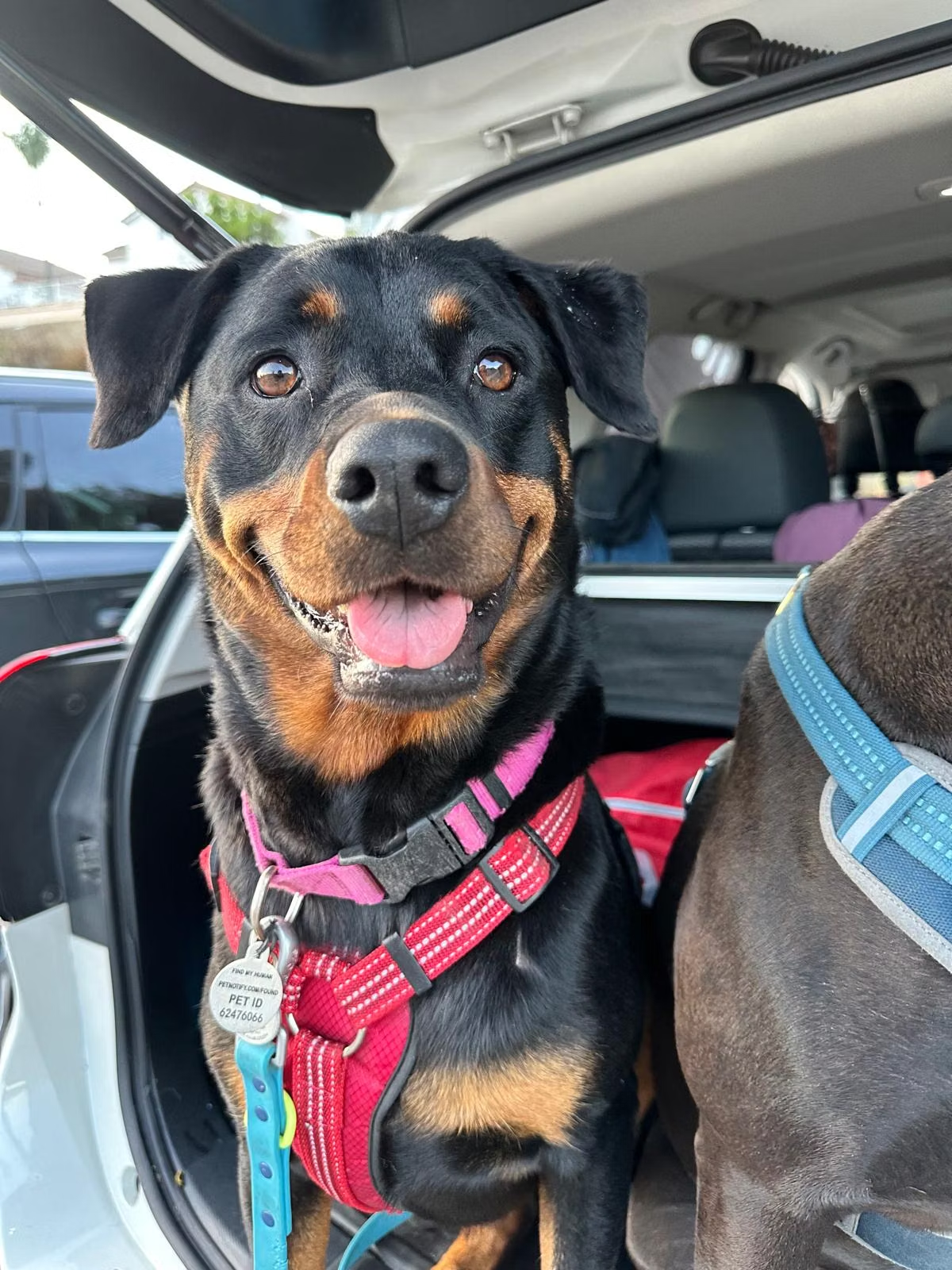
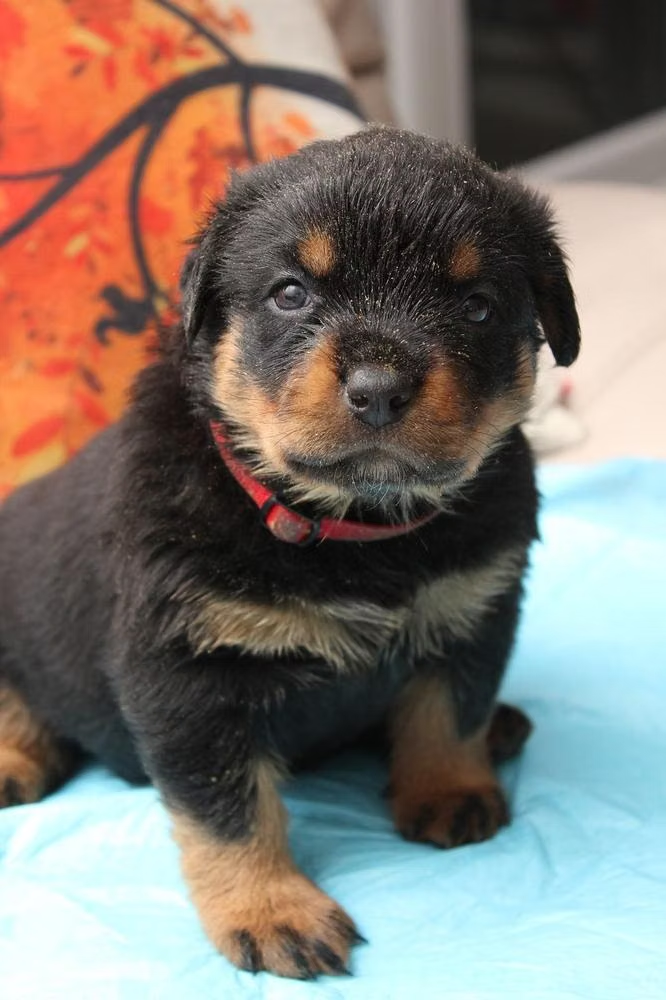
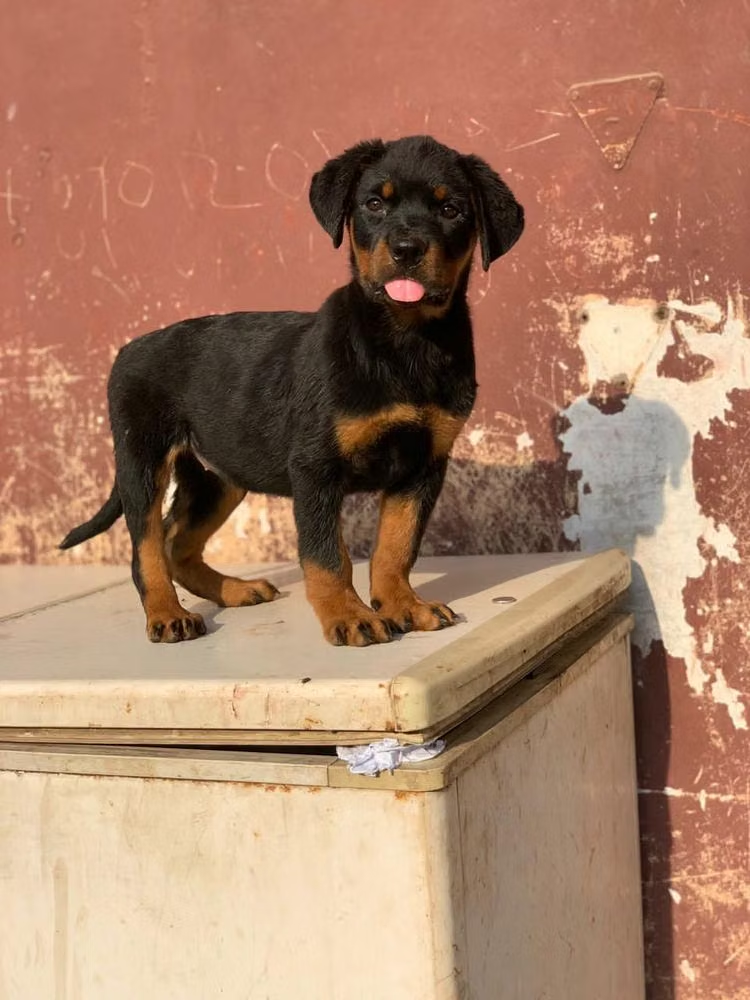
A few of the Rottweiler profiles members have added to United Pet Club.




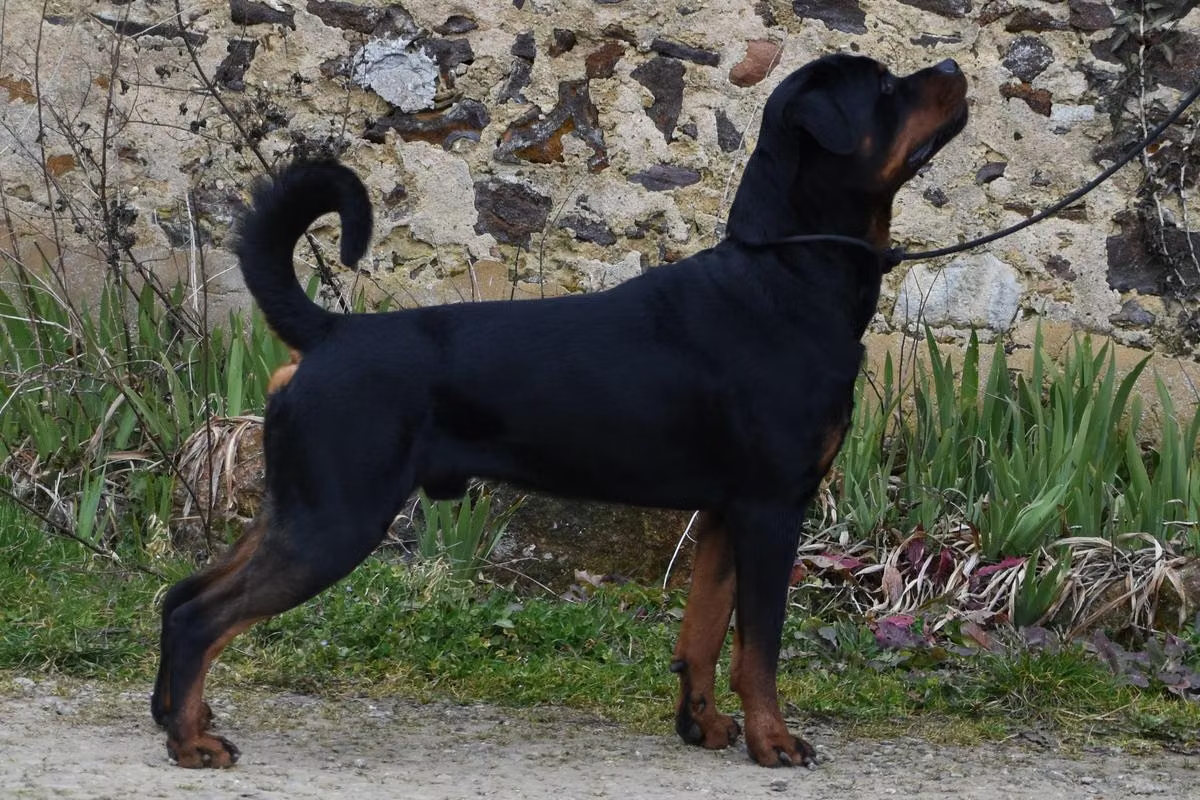
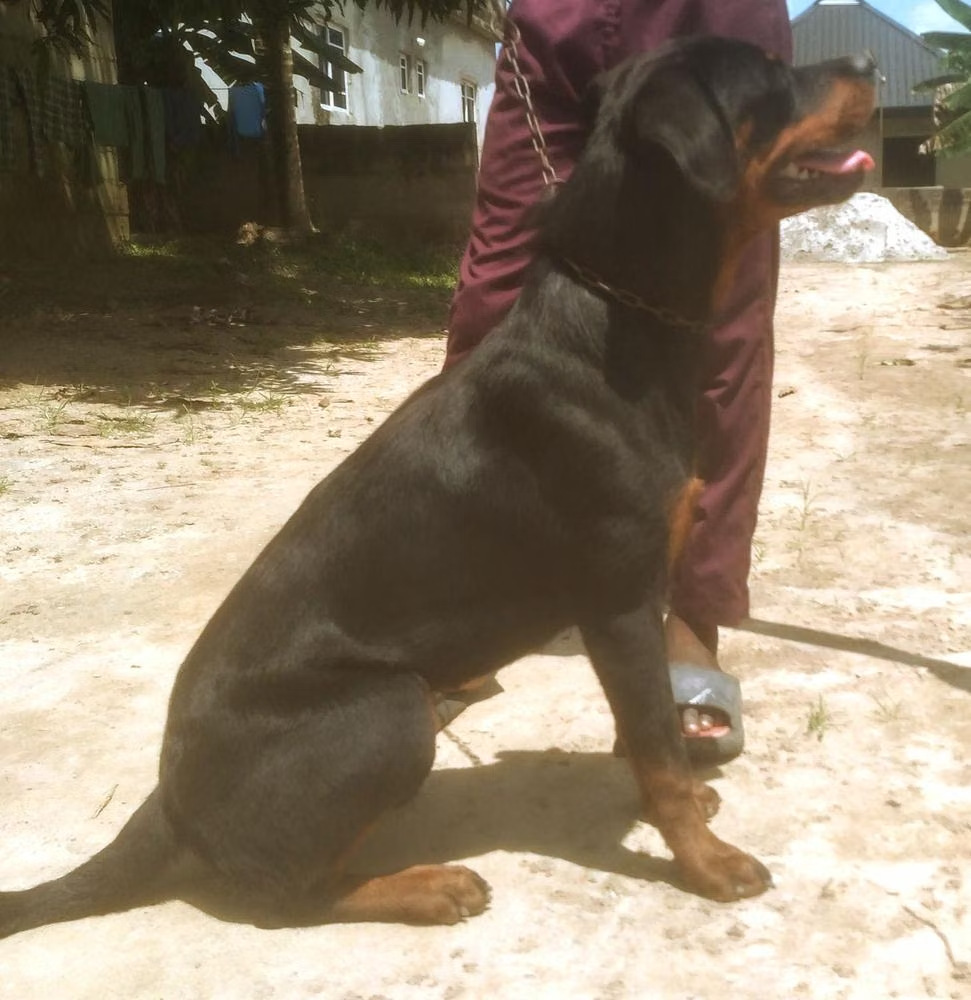

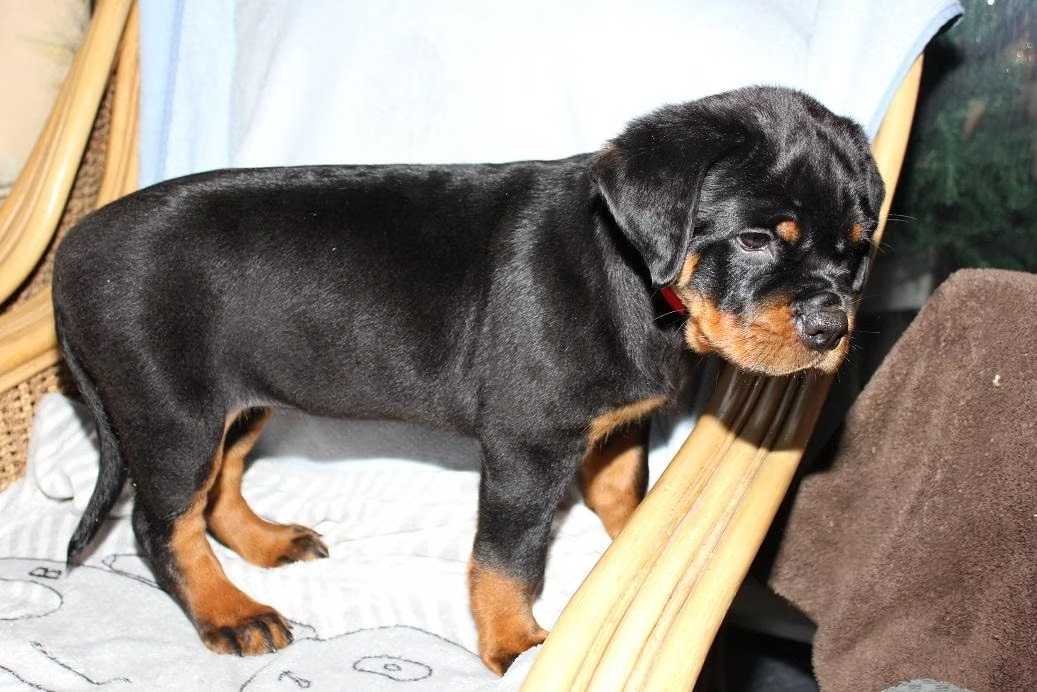
About the Rottweiler
The Rottweiler is a large German working dog, registered with the Irish Kennel Club, known for calm confidence, loyalty, and a strong protective instinct.
The Rottweiler is a large, powerfully built breed that originated in Germany and has worked alongside people in a range of demanding roles for centuries. In Ireland the breed is registered with the Irish Kennel Club (IKC) and is also classified as a restricted breed under the Control of Dogs (Restriction of Certain Dogs) Regulations 1998, which requires the dog to be muzzled and kept on a short lead in public places.
Adults stand 56 to 69 cm at the shoulder and weigh between 36 and 61 kg, with males considerably heavier than females. The coat is black with clearly defined rust to mahogany markings, short and flat-lying. For a dog of this frame, a well-bred Rottweiler moves with efficiency and surprising agility.
Temperamentally the breed is calm and self-assured. It tends to be quiet and settled around the household, watchful when strangers are present, and closely bonded with the people it lives with. That working background persists in the dog today: it needs daily activity, a sense of purpose, and an owner who provides consistent structure.
| Attribute | Detail |
|---|---|
| Origin | Germany |
| Size | Large (36 to 61 kg) |
| Lifespan | 9 to 10 years |
| Group / role | Working dog, guardian and herder |
| Good with | Family and children when socialised and supervised |
Who the Rottweiler suits
The Rottweiler suits an active, experienced owner who can commit to early socialisation, consistent training, and daily exercise. The dog does best in a home where someone is present for a significant part of the day and where the household follows through on the same rules every time. It is a poor match for someone looking for a low-maintenance pet or for a first-time owner without ready access to training support. Given the right home and handling, it is a steady and reliable animal.
History and origin
The Rottweiler takes its name from the German cattle-trading town of Rottweil, where it worked as a drover and cart dog, descending from mastiff-type dogs brought north by Roman legions.
During the Middle Ages, the German town of Rottweil developed into a significant cattle-trading centre. The dogs used there to drive livestock to market and guard both the herds and their owners along the road became known as the Rottweiler Metzgerhund, which translates roughly as the butcher's dog of Rottweil. Butchers in the town also put the dogs to work pulling carts loaded with meat.
These dogs descended from mastiff-type animals that Roman legions had brought north through Europe to herd the cattle that fed their troops. As the Romans settled, the dogs they left behind crossed with native herding breeds in the regions that would later become southern Germany.
The spread of the railway network in the 19th century ended the practice of driving cattle over long distances on foot. Demand for drover dogs collapsed, and the breed's numbers fell sharply. By the late 1800s the Rottweiler was close to disappearing. Organised interest in preservation came in the early 20th century, partly because the dog's qualities suited police and military work. Breed clubs formed in Germany and a unified standard was drawn up.
Through the 20th century the Rottweiler spread internationally and gained recognition as both a working dog and a household guardian. It remains active today in police and military roles, search and rescue, and service work.
Appearance and breed standard
The Rottweiler is a large, compact dog with a black coat and defined rust to mahogany markings, a broad head, and a short dense double coat.
The Rottweiler's coat is the breed's most immediately recognisable feature. It is short, dense, and flat-lying, black with sharply defined markings ranging from rust to deep mahogany. These markings appear in a consistent pattern: above each eye, on the cheeks and muzzle, on the chest and forelegs, and beneath the tail. Faded or poorly defined markings are a fault under the IKC breed standard.
The body is compact and muscular, slightly longer than it is tall. The chest is deep and broad, the back straight and firm, and the overall outline suggests strength and endurance. The head is large, with a broad skull, well-developed muzzle, and dark almond-shaped eyes that give a calm, attentive expression. Ears are medium in size, triangular, and carried forward against the sides of the head.
| Trait | Standard |
|---|---|
| Height | Males 61 to 69 cm, females 56 to 64 cm |
| Weight | Males 43 to 61 kg, females 36 to 45 kg |
| Coat | Short, dense double coat with a flat outer coat |
| Colours | Black with rust to mahogany markings |
| Eyes | Dark brown, almond-shaped |
Coat, colour, and tail
The outer coat is straight, short, and dense, lying flat over a softer undercoat. The undercoat is thickest around the neck and thighs and varies with the season. The coat sheds moderately throughout the year and picks up mud readily in wet ground, which is a practical consideration in most parts of Ireland.
Tail docking is prohibited in the Republic of Ireland under the Animal Health and Welfare Act 2013 except for certified working dogs. Most Rottweilers in Ireland carry a natural undocked tail, held level with the topline when the dog is moving at a trot.
Temperament and personality
The Rottweiler is confident, loyal, and protective, calm at home and naturally reserved with strangers, and needs early socialisation to develop into a balanced adult.
The Rottweiler's instinct to assess strangers before accepting them is one of the breed's defining characteristics. When it encounters someone unfamiliar, it typically pauses, watches, and forms its own judgement before deciding how to respond. This is not shyness or hostility: it is the guarding instinct working as it was developed to. Broad, early socialisation is what shapes this instinct into something predictable and manageable over time.
Around its own family the picture is different. The Rottweiler is deeply loyal and often physically affectionate, leaning against or following the people it is closest to. At home it is generally calm and quiet, content to settle near its people without demanding constant attention. Its alertness becomes visible when something in the environment changes.
With children in its own household, the breed is generally patient and tolerant, though size and strength make adult supervision sensible at all times. Results with other dogs vary. Same-sex aggression can occur, particularly between intact males. A Rottweiler raised alongside other animals from puppyhood usually manages better, but introductions between adult dogs should always be handled carefully.
| Trait | Rating |
|---|---|
| Affection | 4 |
| Energy | 3 |
| Trainability | 5 |
| Vocalness | 2 |
| Shedding | 3 |
Care and grooming
The Rottweiler needs daily exercise, consistent training, and modest grooming, with particular attention to coat drying and mud management in Ireland's wet climate.
In Ireland's wet climate, a large working dog like the Rottweiler will come in muddy from most walks for a good part of the year. The short coat is easy to wipe down and dries relatively quickly, but the dog's large paws and low-hanging chest will collect mud and moisture even on moderate ground. A mat by the door and a couple of dedicated towels become part of the daily routine. The coat does not require professional grooming, but it does shed, with heavier periods at the change of seasons.
Grooming
- Brush once or twice a week with a firm bristle brush or rubber curry mitt to pull out loose coat. During seasonal moults, increase to daily brushing.
- Bathe every two to three months, or when the dog is notably dirty after outdoor work.
- Trim nails every three to four weeks if walking on soft ground is not wearing them down naturally.
- Check and clean the ears weekly and look for signs of redness or odour.
- Brush the teeth several times a week to reduce tartar build-up.
Exercise
- The breed needs at least one to two hours of activity each day, combining walks with structured training sessions or play.
- Mental work matters as much as physical. Obedience training, scent games, and puzzle feeders help keep the mind occupied.
- Avoid sustained, repetitive exercise on hard surfaces with puppies while their joints are still developing.
- The Rottweiler tolerates cool, wet weather well. In warm spells, exercise in the early morning or evening to avoid overheating.
Environment
The Rottweiler needs secure fencing and enough space to move. Solid fencing is preferable to open wire, as the breed's territorial instinct means it will be alert to anything passing on the footpath or road outside. The dog should live indoors with the household rather than being kept outside or in an outbuilding. Left alone for long periods without adequate stimulation, it tends to develop problem behaviours.
Nutrition and feeding
Rottweilers need a balanced large-breed diet with careful portion control to protect their joints and prevent the weight gain the breed is prone to.
Because the Rottweiler carries a heavy frame, overfeeding has real consequences for the joints. The breed gains weight readily, and even a few extra kilograms add measurable strain to the hips and elbows, which are already among the more susceptible areas. Feeding measured portions twice daily and avoiding ad-lib access to food is the most straightforward way to manage condition.
Choose a complete food formulated for large breeds. For puppies, a large-breed puppy formula controls the calcium-to-phosphorus ratio and energy density to support steady, controlled growth. Rapid growth in large-breed dogs increases the risk of developmental joint problems, so the puppy diet matters from the start.
| Life stage | Amount per day (approx.) | Meals |
|---|---|---|
| Puppy (2 to 6 months) | 300 to 500 g, split | 3 to 4 |
| Puppy (6 to 12 months) | 400 to 600 g, split | 2 to 3 |
| Adult | 400 to 800 g | 2 |
| Senior | 300 to 600 g, adjusted for activity | 2 |
Treats and supplements
Treats should account for no more than about 10 per cent of daily calories to avoid gradual weight gain. Some owners add glucosamine and chondroitin for joint support and omega-3 fatty acids for coat and joint condition, though any supplementation should be discussed with a vet before starting. Fresh water should always be available.
The Rottweiler has a deep chest, which puts it at risk of gastric dilatation-volvulus. Feeding two smaller meals rather than one large one and keeping the dog quiet for at least an hour after eating are sensible precautions.
Health and common conditions
The Rottweiler lives about 9 to 10 years and is prone to joint dysplasia, bone cancer, heart conditions, and bloat.
The Rottweiler is a generally sound breed for its size, but as a large dog it has a shorter average lifespan of about 9 to 10 years and several conditions that appear at higher rates than in smaller breeds. Responsible breeders carry out hip and elbow evaluations and cardiac screening before breeding, which reduces the likelihood of passing these problems to the next generation. Keeping the dog at a healthy weight throughout its life is one of the most effective measures an owner can take.
| Condition | Signs | Note |
|---|---|---|
| Hip and elbow dysplasia | Limping, stiffness, reluctance to rise | Screen breeding stock, manage weight |
| Osteosarcoma (bone cancer) | Sudden lameness, swelling on a limb | The breed has elevated susceptibility |
| Aortic stenosis | Fatigue, fainting, heart murmur | Detected on cardiac screening |
| Gastric dilatation-volvulus (bloat) | Swollen abdomen, retching, distress | A veterinary emergency |
| Hypothyroidism | Weight gain, low energy, coat changes | Managed with daily medication |
Preventive care
- Annual veterinary checks, with more frequent visits from around seven years of age.
- Keep vaccinations and parasite treatments up to date.
- Maintain a lean body condition throughout life. Your vet can assess condition score at each visit and advise on adjustments.
- Provide regular dental care, including brushing and professional descaling when needed.
- Purchase from breeders who supply hip, elbow, and cardiac screening certificates.
Training
Rottweilers are highly trainable but strong-willed, and as a restricted breed in Ireland they require early, consistent, reward-based training from a confident owner.
In Ireland, the Rottweiler is classified as a restricted breed under the Control of Dogs Act. Reliable, consistent training is a legal as well as a practical requirement. A dog that pulls uncontrollably on the lead, reacts badly to other dogs, or cannot be managed in public creates real difficulties for its owner under Irish law. Training and socialisation are the means by which the breed's size and guarding instinct are directed rather than left unmanaged.
The Rottweiler is an intelligent and cooperative worker with the right owner. It learns quickly, is capable of reaching a high standard of obedience, and responds well to consistent reward-based methods. The strong will the breed carries means that inconsistent handling or overly harsh corrections tend to produce stubbornness rather than compliance. Calm, patient, and clear instruction works far better.
Basics
- Socialise broadly from puppyhood by exposing the dog to many people, environments, sounds, and other animals.
- Teach core cues early: sit, down, stay, come, and loose-lead walking.
- Keep training sessions short, varied, and positive. The breed loses interest in repetitive drills quickly.
- Set consistent household rules that every person in the home applies the same way.
- Progress to more demanding activities such as tracking, carting, or protection sports to satisfy the dog's working drive.
- Continue training and reinforcement throughout the dog's life. Skills that are not practised regularly tend to degrade.
Breeding
Rottweilers reach breeding maturity around two years, carry litters of about 6 to 12 puppies, and require health screening before breeding, with IKC registration for responsible breeders in Ireland.
In Ireland, responsible Rottweiler breeding takes place under IKC registration and with health screening completed before any mating. The accepted minimum is hip and elbow evaluation and cardiac screening, as the breed carries elevated risk in all three areas. Most breeders wait until the dog is around two years old before breeding, by which point these assessments can be completed and the adult temperament is established.
Females come into season roughly twice a year. Gestation runs about 63 days. Litters are typically large, often in the range of 6 to 12 puppies, and whelping a large-breed litter can involve complications. Breeders generally have veterinary support arranged in advance.
Newborn pups depend entirely on the dam for warmth and feeding through the first weeks. The breeder's role during this time is to keep the whelping area clean, warm, and quiet while monitoring each pup's weight daily. Socialisation begins within the litter, with gentle handling and exposure to everyday household sounds and movements from the earliest weeks.
Given the breed's status as restricted under Irish law, placing puppies with suitable owners is a significant responsibility. Puppies are typically weaned by about seven to eight weeks.
| Metric | Value |
|---|---|
| Breeding maturity | Around 2 years |
| Heat cycle | About twice per year |
| Gestation | About 63 days |
| Average litter size | 6 to 12 puppies |
| Weaning age | About 7 to 8 weeks |
Registering your Rottweiler in Ireland, chip and record both
Irish law wants every dog chipped and recorded; United Pet Club keeps your Rottweiler's record free, current, and there for life.
How to register a Rottweiler in Ireland
A dog warden with a scanner can only follow the record, and a Rottweiler whose record is current is home the same day. Register your dog free with United Pet Club: your contact details, his photo, and his chip number together on one profile that never lapses and never bills you.
Lodge your Rottweiler's fifteen digit number with United Pet Club and the chip finally earns its keep: free registration for life, every brand accepted, and a record the ISPCA or any warden can turn into a phone call. Microchip registration takes minutes, and the free account covers the profile while you're at it.
How do I register my Rottweiler in Ireland?
Set yourself up with a free United Pet Club account, key in your Rottweiler's details and a photo, and save. The profile holds for the whole of his life without charge, and the chip number can be lodged whenever you have it.
How do I register my Rottweiler's microchip?
Lodge the fifteen digit chip number in your free account along with your address and phone number. The lifetime plan covers the registration and every update after it, free, whatever brand the vet used.
Is microchipping a Rottweiler required in Ireland?
It is. The 2015 Regulations require every dog to be chipped and registered, pup or rescue alike. Keeping the record current is the part that falls to you, and United Pet Club makes that part free.
What does it cost to register a Rottweiler in Ireland?
Not a penny. Profile, chip record, and every amendment are covered for life, with no renewal ever.
Frequently asked questions
Common questions about the Rottweiler's size, temperament, care needs, lifespan, legal status in Ireland, and suitability as a family dog.
How big does a Rottweiler get?
Males generally stand 61 to 69 cm at the shoulder and weigh 43 to 61 kg. Females stand 56 to 64 cm and weigh 36 to 45 kg. These are substantial dogs, and owners need to be physically capable of managing their size and strength on the lead.
Are Rottweilers good family dogs?
Yes, when raised and trained properly. A well-socialised Rottweiler is loyal, calm, and protective of its family and is generally patient with children in its own household. Supervision is sensible at all times given the dog's size and strength.
Are Rottweilers hard to care for?
The short coat is easy to maintain, but the breed is demanding in other respects. It needs daily exercise, mental stimulation, early socialisation, and consistent training. In Ireland's wet weather, drying and cleaning the dog after muddy walks also becomes a regular part of the routine.
How long do Rottweilers live?
The average lifespan is about 9 to 10 years, which is typical for a large breed. Keeping the dog at a healthy weight, providing regular veterinary care, and buying from health-screened lines all support a longer, healthier life.
Are Rottweilers suitable for first-time owners?
The Rottweiler is better suited to experienced or well-supported owners than to those with no background in dogs. Its size, guarding instinct, and strong will require calm, consistent handling. A first-time owner who commits to professional training support can manage, but this is not a low-effort breed.
Is the Rottweiler a restricted breed in Ireland?
Yes. Under the Control of Dogs (Restriction of Certain Dogs) Regulations 1998, Rottweilers must be muzzled and kept on a lead of no more than 2 metres when in a public place. The lead must be held by a person aged 16 or over who is capable of controlling the dog. Microchipping is also a legal requirement for all dogs in Ireland.
Are Rottweilers aggressive?
The breed is naturally protective and reserved with strangers, which is not the same as aggression. A Rottweiler that has been properly socialised and trained is typically stable and predictable in its responses. Behaviour problems in the breed usually result from poor breeding, inadequate socialisation, or inconsistent handling rather than from the breed's nature.
From the community
Ask about the RottweilerNo questions about the Rottweiler yet. Be the first to ask.
Browse Dog breeds