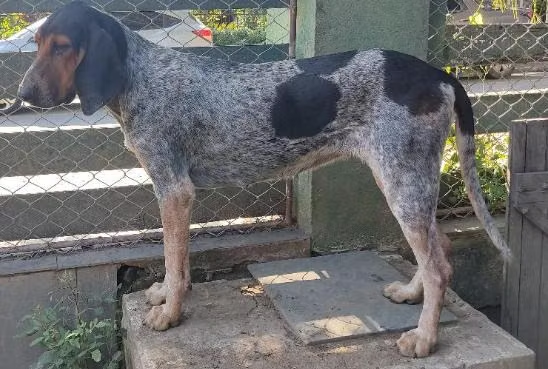
The Rastreador Brasileiro is a determined Brazilian scenthound known for its tireless tracking ability and athletic stamina.
How the Rastreador Brasileiro coat is built, and what that means when you groom it.
A few of the Rastreador Brasileiro profiles members have added to United Pet Club.
The Rastreador Brasileiro is a large Brazilian scenthound bred for tracking game over long distances, valued for its stamina, focus, and steady working drive.
The Rastreador Brasileiro is a large scenthound developed in Brazil to track and trail game across rough country. The name translates from Portuguese as "Brazilian Tracker," and the breed was shaped around one job: following scent for hours without losing concentration. Dogs of this type are athletic, alert, and built for endurance rather than speed bursts.
In temperament the breed is hardworking and focused. It tends to be even-tempered with its handler and family while staying attentive to its surroundings. The strong nose and high activity level mean this is a dog that wants a task and space to use its body. Owners describe it as determined once it picks up a trail.
This is a working hound first, so it suits homes that can meet a real exercise commitment. It is not a low-energy companion that settles for short walks. Given enough physical and mental work, it is a steady, cooperative partner.
| Attribute | Detail |
|---|---|
| Origin | Brazil |
| Size | Large |
| Lifespan | 11 to 13 years |
| Group / role | Scenthound, tracking and trailing |
| Good with | Families and handlers who provide daily exercise; supervise around small pets given the hunting drive |
The Rastreador Brasileiro fits active owners, rural households, and people who hike, run, or work their dogs. It does best with a fenced area and a job to do. Apartment living and long hours alone are poor matches for a hound with this much drive and stamina.
The Rastreador Brasileiro was developed in Brazil during the twentieth century by crossing imported hounds to create a tracker suited to local hunting conditions.
The Rastreador Brasileiro comes from Brazil, where it was bred to hunt and track game over the country's varied terrain. The breeding work is associated with Oswaldo Aranha Filho, who set out to produce a hound with the nose, voice, and stamina to trail game such as jaguar and peccary across difficult ground.
The program combined several imported scenthound types, including American foxhound stock and other trailing hounds, with local dogs. The aim was a tracker that could handle heat, distance, and rough cover better than the parent breeds alone. Selection focused on scenting ability and working endurance rather than appearance.
The breed gained recognition within Brazil through the Confederação Brasileira de Cinofilia, and it was for a period acknowledged internationally. A severe setback came when disease and a tick-borne outbreak, together with the effects of pesticide exposure, killed a large share of the breeding population. Numbers fell so far that the breed was treated as effectively lost for years.
Later efforts located surviving dogs and dogs of the original type, allowing breeders to rebuild the population. The Rastreador Brasileiro remains uncommon and is rarely seen outside Brazil, kept mainly by hunters and enthusiasts working to maintain the line.
The Rastreador Brasileiro is a large, athletic scenthound with a short coat, lean muscular build, and a tricolor or patched coat typical of trailing hounds.
The Rastreador Brasileiro has the lean, athletic frame of a working scenthound. The body is longer than it is tall, with a deep chest for lung capacity and strong, straight legs built for covering ground. The head carries long, drop ears typical of trailing hounds, and the expression is alert and attentive. Overall the dog looks functional and balanced rather than heavy.
| Trait | Description |
|---|---|
| Height | Roughly 62 to 72 cm (24 to 28 in) at the shoulder, males larger than females |
| Weight | About 25 to 35 kg (55 to 77 lb) |
| Coat | Short, smooth, and close-lying |
| Colors | White base with black and tan markings; ticked, patched, or tricolor patterns |
| Eyes | Medium, dark, with an alert expression |
The coat is short and easy to maintain, which suits a dog that works in heat and dense cover. Common patterns include a white ground broken by black and tan patches, often with ticking across the body. The close coat offers little protection against cold, so the breed is better adapted to warm climates than to harsh winters.
The Rastreador Brasileiro is a focused, hardworking hound that is steady with its family but driven by a strong nose and high energy.
The Rastreador Brasileiro is even-tempered and cooperative with the people it knows. It bonds with its handler and is generally calm in the home once its exercise needs are met. With strangers it tends to be alert and watchful rather than aggressive, and many dogs will give voice when something is unfamiliar.
The defining trait is drive. This is a hound bred to lock onto a scent and follow it for hours, so it can become single-minded once it picks up a trail. That focus makes recall harder when a dog is tracking, and it is the main reason secure fencing matters. With other dogs the breed is usually social, having been bred to work in groups.
The hunting instinct affects life with small pets. Cats, rabbits, and similar animals may trigger chase behavior, so introductions should be careful and supervised. Around children the breed is typically patient, though its size and energy call for sensible supervision with young kids.
| Trait | Rating |
|---|---|
| Affection | 4 |
| Energy | 5 |
| Trainability | 3 |
| Vocalness | 4 |
| Shedding | 2 |
The Rastreador Brasileiro is low-maintenance to groom but needs substantial daily exercise and space, making it best suited to active rural homes.
This breed does best with room to move and a securely fenced yard. It tolerates warm climates well thanks to its short coat but needs shade and water in heat. Cold weather is harder on it, so provide shelter and limit exposure in winter. The breed is not suited to apartments or to being left alone for long stretches.
As a large, high-energy working hound, the Rastreador Brasileiro needs a quality diet with enough protein and calories to match its activity level.
The Rastreador Brasileiro needs a complete, balanced diet built for a large, active dog. Working or hard-exercising dogs burn substantial energy, so calorie intake should track real activity. Choose a food with quality animal protein to support muscle, and adjust portions to keep the dog lean rather than heavy, since extra weight strains joints. Always provide fresh water, especially after work in heat.
| Life stage | Amount per day | Meals |
|---|---|---|
| Puppy (2 to 6 months) | Per growth formula, divided across the day | 3 to 4 |
| Adolescent (6 to 12 months) | Adjusted as growth slows | 2 to 3 |
| Adult | About 3 to 4.5 cups of quality dry food, by weight and activity | 2 |
| Active or working adult | Increased to match energy use | 2 |
| Senior | Reduced calories, maintained protein | 2 |
Keep treats to about ten percent of daily calories so the diet stays balanced. A food formulated for large breeds usually supplies what the dog needs, so add supplements only on a veterinarian's advice. Deep-chested dogs can be at risk of bloat, so avoid heavy meals immediately before or after intense exercise.
The Rastreador Brasileiro is a generally hardy working hound with a lifespan of 11 to 13 years, though it can face issues common to large, active breeds.
The Rastreador Brasileiro is a robust, athletic breed with a typical lifespan of 11 to 13 years. Because the population is small and was rebuilt from limited stock, responsible breeding and health screening matter for keeping the line sound. As with most large, deep-chested working dogs, the main concerns relate to joints, the digestive system, and the ears.
| Condition | Signs | Note |
|---|---|---|
| Hip dysplasia | Stiffness, limping, trouble rising | Common in large breeds; screen breeding stock |
| Bloat (gastric torsion) | Swollen abdomen, retching, distress | Emergency; avoid heavy meals near hard exercise |
| Ear infections | Head shaking, odor, discharge | Drop ears trap moisture; clean and dry regularly |
| Tick-borne disease | Fever, lethargy, joint pain | A historic threat to the breed; maintain parasite control |
The Rastreador Brasileiro is intelligent and willing but independent on a scent, so it responds best to consistent, reward-based training started early.
The Rastreador Brasileiro is a capable learner with a strong work ethic, which helps in training. The challenge is its independence: once the nose engages, the dog can tune out commands and follow the trail. Training works best when it starts in puppyhood, stays consistent, and gives the dog a clear job. Recall in particular needs steady reinforcement, since a fresh scent competes hard with the handler. Early socialization with people, dogs, and other animals helps balance the strong hunting drive.
The Rastreador Brasileiro is rare and rebuilt from limited stock, so breeding centers on careful selection, health screening, and preserving the working line.
Breeding the Rastreador Brasileiro carries added responsibility because the population is small and was reconstructed after a near collapse. Breeders work to keep genetic diversity while holding to the breed's scenting ability and working soundness. Females reach physical maturity at around 18 to 24 months, and responsible programs wait for full maturity before breeding rather than mating at the first season.
Gestation in dogs runs roughly 63 days. Litters in large breeds vary widely, and the dam needs increased nutrition through late pregnancy and nursing. Whelping should be planned with veterinary support, especially given the breed's scarcity and the value of each litter.
Raising young centers on early socialization and gentle exposure to handling, sounds, and other animals. Puppies from a working line carry strong instincts, so early scent enrichment and steady human contact help shape balanced adults. Health screening of both parents supports the long-term goal of a sound, sustainable population.
| Metric | Value |
|---|---|
| Sexual maturity | About 6 to 12 months |
| Recommended breeding age | From around 18 to 24 months |
| Gestation | Roughly 63 days |
| Typical litter size | Around 5 to 8 puppies (varies) |
| Weaning | About 7 to 8 weeks |
Irish law wants every dog chipped and recorded; United Pet Club keeps your Rastreador Brasileiro's record free, current, and there for life.
Get the profile sorted first: your Rastreador Brasileiro's name, his date of birth, a photo, and your phone number, saved in a couple of minutes. The record is free for the whole of his life, and the chip number slots in whenever the vet has done his part. Dog registration is where it starts.
Lodge your Rastreador Brasileiro's fifteen digit number with United Pet Club and the chip finally earns its keep: free registration for life, every brand accepted, and a record the ISPCA or any warden can turn into a phone call. Microchip registration takes minutes, and the free account covers the profile while you're at it.
Set yourself up with a free United Pet Club account, key in your Rastreador Brasileiro's details and a photo, and save. The profile holds for the whole of his life without charge, and the chip number can be lodged whenever you have it.
Lodge the fifteen digit chip number in your free account along with your address and phone number. The lifetime plan covers the registration and every update after it, free, whatever brand the vet used.
It is. The 2015 Regulations require every dog to be chipped and registered, pup or rescue alike. Keeping the record current is the part that falls to you, and United Pet Club makes that part free.
Not a penny. Profile, chip record, and every amendment are covered for life, with no renewal ever.
Common questions about the Rastreador Brasileiro cover its size, temperament, care needs, lifespan, suitability, and how rare it is.
It is a large breed, standing roughly 62 to 72 cm (24 to 28 in) at the shoulder and weighing about 25 to 35 kg (55 to 77 lb), with males generally larger than females.
It is hardworking, focused, and athletic. The breed is steady and cooperative with its family, alert toward strangers, and strongly driven by scent once it picks up a trail.
Grooming is easy thanks to the short coat, but exercise needs are high. The breed requires 1 to 2 hours of vigorous activity daily and secure fencing, which makes it demanding for inactive or apartment homes.
The typical lifespan is 11 to 13 years, supported by good nutrition, exercise, tick control, and regular veterinary care.
It can be, in an active household that meets its exercise needs. It is usually patient with children and social with other dogs, though its hunting drive calls for care around small pets.
Yes. The breed nearly disappeared after disease and pesticide losses devastated the population, and although it has been rebuilt, it remains uncommon and is rarely found outside Brazil.
As a scenthound it is fairly vocal and will give voice when alert or on a trail, so it is not the quietest breed for close neighbors.