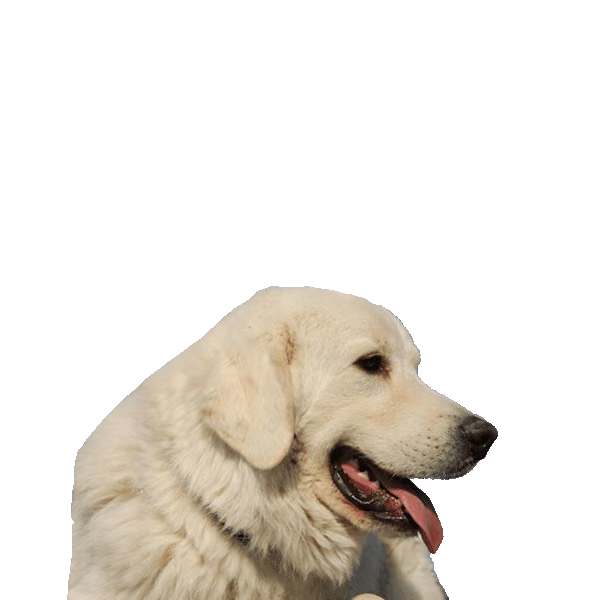
The Pyrenean Mastiff is a calm, gentle giant bred to guard flocks, devoted and protective yet remarkably serene at home.
How the Pyrenean Mastiff coat is built, and what that means when you groom it.
Critical: A Pyrenean Mastiff should not be shaved.
The undercoat keeps heat out as well as in, and the outer coat shields the skin from sun and insect bites. Clipping the whole coat off removes both. It often grows back patchy, soft or a different colour, and in some animals the guard hairs never return properly. Brush the undercoat out instead of cutting it off.
Caution: A Pyrenean Mastiff coat mats easily.
Fine or long hair tangles at the base of the coat, out of sight, where the mats tighten and pull on the skin. Brushing has to reach right down to the roots in sections, not just skim the surface.
Information: A Pyrenean Mastiff drops its undercoat in heavy bursts.
The undercoat comes out in heavy bursts over a few weeks. An undercoat rake, or a bath followed by a proper blow-dry, clears it far faster than daily brushing. Clipping the coat down is not a shortcut for this.
A few of the Pyrenean Mastiff profiles members have added to United Pet Club.
The Pyrenean Mastiff is a giant flock guardian from Spain, steady and loyal at home but alert and protective when it senses a threat to family or livestock.
The Pyrenean Mastiff hails from the Aragonese Pyrenees in northern Spain, where for generations it walked the mountain tracks with shepherds, guarding flocks against wolves and bears on the long seasonal treks between pastures. Everything about the dog's build serves that purpose: heavy bone, a deep chest, and a dense double coat suited to raw mountain weather, not unlike the wind and rain an Irish farmer knows well.
For all its bulk, the temperament stays even. A properly reared Pyrenean Mastiff is quiet in the house, slow to rise to anger, and patient with the people and animals it takes as its own. It observes before it acts, and it rarely barks without good reason.
Owning one is not a decision to take lightly. Adults typically weigh between 70 and 100 kilograms and eat to match, and they need firm, steady handling from the time they are pups. This is a breed for those after a calm guardian rather than a dog for long runs or agility classes.
| Attribute | Detail |
|---|---|
| Origin | Spain (Aragonese Pyrenees) |
| Size | Giant |
| Lifespan | 10 to 12 years |
| Group or role | Livestock guardian, working dog |
| Good with | Family, children, and animals it is reared alongside |
This breed suits a household with room to spare, a secure garden, and the time to socialise a pup properly from the outset. It does best with owners who understand guardian breeds and can offer calm, fair leadership rather than a heavy hand. It is a poor match for flat living, for a first-time dog owner, or for anyone hoping for an energetic exercise partner. Families with children often get on well with the breed, provided a watchful eye is kept around small children given the dog's sheer size.
The Pyrenean Mastiff took shape in the mountains of northern Spain as a flock guardian, then came back from the brink of extinction through a dedicated breed recovery in the 1970s.
The breed traces back to the Pyrenees mountains of Aragon in northern Spain, where large guardian dogs travelled with flocks of sheep. These dogs protected the animals during transhumance, the seasonal movement of herds between high summer grazing and lower winter pasture. Their job was defence rather than herding: face down wolves and bears rather than move the sheep along.
Many guardians of this type wore a carlanca, a spiked iron collar that shielded the throat during a scrap with a predator. The dogs worked in loose groups and lived out among the flock day and night, and that upbringing shaped the calm, self-reliant nature still seen in the breed today.
Fewer large predators and changing farming practice meant less need for guardian dogs as the twentieth century went on. By the years following the Spanish Civil War, numbers had dropped sharply and the breed stood close to disappearing altogether. From the 1970s, a group of Spanish enthusiasts gathered the dogs that remained and set about a structured recovery.
That effort produced a formal breed standard and a studbook, and the Pyrenean Mastiff went on to gain recognition from the Federation Cynologique Internationale. Outside Spain the breed stays a rare sight, including here in Ireland, where it is kept both as a working guardian and as a family dog.
The Pyrenean Mastiff is a large, well-balanced dog with a dense, medium-length coat, most often white with a darker mask and patches of colour.
The Pyrenean Mastiff is large and solidly built without ever looking heavy or awkward on its feet. The body runs slightly longer than it is tall, the chest is broad and deep, and the head is large with a wide skull and a clear stop. The lips hang fairly loose, and the breed usually carries double dewclaws on the hind legs. A dewlap, that loose fold of skin under the throat, is one of its defining features.
| Trait | Standard |
|---|---|
| Height | Males from about 77 cm; females from about 72 cm (taller is preferred) |
| Weight | Roughly 70 to 100 kg, with females on the lighter side |
| Coat | Thick, medium length, double coat |
| Colours | White base with grey, black, brown, golden, or tan markings |
| Eyes | Small, dark, almond shaped, with an alert expression |
The coat is dense and stands up well to poor weather, growing longer around the neck, the backs of the legs, and the tail, handy for a dog that might end up out in an Irish downpour. The base colour is white. Most dogs carry a well-defined mask and ears in a darker shade, along with patches across the body. Accepted patch colours include grey, black, golden, brown, beige, sandy, and marbled tones. Solid white dogs and heavily patched dogs both occur, though a mostly white body with a clear mask is the more usual sight. The tail is thick at the base, carried low when the dog is relaxed and raised in a curve when it is alert.
The Pyrenean Mastiff is calm, affectionate, and devoted to its family, watchful of strangers but not aggressive without good cause.
The Pyrenean Mastiff is known for a level, composed temperament. Around the house it is quiet and affectionate, often happy just to lie near the family and take everything in. It forms close bonds with the people it lives with and is gentle with children, though given its size, supervision around toddlers is only sensible.
With strangers the dog is reserved rather than jumpy or hostile. It sizes up new people calmly and comes around once it decides there is no threat. The protective streak is genuine: it will put itself between the family and anything it reads as danger, and it leads with a deep bark as the first warning. Early socialisation helps the dog tell an ordinary caller at the door from a real threat.
Around other animals the breed is generally tolerant, particularly livestock and pets it has grown up beside, which comes straight from its guardian roots. Independent thinking comes with the territory too, so the dog might weigh up a command before it obeys rather than jump to it straight away.
| Trait | Rating |
|---|---|
| Affection | 4 |
| Energy | 2 |
| Trainability | 3 |
| Vocalness | 3 |
| Shedding | 4 |
The Pyrenean Mastiff needs regular brushing, moderate exercise, and plenty of space, with extra attention to the coat during the seasonal moult.
Day-to-day care comes down to coat upkeep, moderate activity, and a setup that suits a giant dog.
This breed needs room to move. A house with a securely fenced garden suits it far better than a flat. It copes well with the cold, coat and all, but struggles once the weather turns warm, so shade and a cool spot to lie down matter in summer. Given our climate, that is rarely the main worry here, but the dog still prefers to stay close to its family and should not be left on its own for long stretches, independent streak or not.
The Pyrenean Mastiff needs a balanced large-breed diet fed in measured meals, with growth kept steady in puppyhood to protect the joints.
Feed a complete, balanced diet formulated for large or giant breeds. Puppies in particular do better on a large-breed growth formula with controlled calcium and energy, since slow, steady growth cuts the risk of joint trouble later on. Adults do well on a quality diet with decent protein and moderate fat. Because the breed is prone to bloat, meals are usually split across the day rather than served as one big feed.
| Life stage | Amount per day | Meals |
|---|---|---|
| Puppy (2 to 6 months) | Per large-breed puppy formula, by weight | 3 to 4 |
| Adolescent (6 to 18 months) | Gradually adjusted toward the adult amount | 2 to 3 |
| Adult | Roughly 4 to 8 cups depending on size and activity | 2 |
| Senior | Slightly reduced calories, watch the weight | 2 |
Keep treats to about 10 percent of daily calories, since extra weight puts real strain on the joints of a dog this heavy. Fresh water should always be on hand. Some owners give joint supplements such as glucosamine and chondroitin made for large breeds, but check with a vet before starting any supplement.
The Pyrenean Mastiff lives about 10 to 12 years and, like most giant breeds, is prone to joint problems and bloat.
The Pyrenean Mastiff is a sound working breed on the whole, but its size brings the health concerns common to giant dogs. Typical lifespan runs 10 to 12 years. Responsible breeders screen breeding stock for hip and elbow problems, and anyone looking at a puppy should ask to see those results.
| Condition | Signs | Note |
|---|---|---|
| Hip and elbow dysplasia | Stiffness, limping, reluctance to get up | Common in giant breeds; screening helps |
| Gastric dilatation-volvulus (bloat) | Swollen abdomen, retching, restlessness | A medical emergency; split meals and avoid exercise straight after eating |
| Osteochondritis dissecans | Lameness in a young, growing dog | Linked to fast growth; controlled diet helps |
| Entropion (eyelid rolls inward) | Squinting, tearing, eye irritation | May need minor surgery |
| Heart disease | Tiring easily, cough, weakness | Periodic checks in older dogs |
The Pyrenean Mastiff is intelligent but independent, so it does best with early, consistent, reward-based training started while it is still young.
The Pyrenean Mastiff is a clever dog and well able to learn, but it was bred to work alone and make its own calls. That independence means it does not live to please the way some breeds do. It learns well when training stays consistent, calm, and starts early, while the dog is still a manageable size. Heavy-handed methods tend to backfire with a guardian breed and can knock its trust. Socialisation matters more than anything else in raising this dog: introduce it to plenty of people, places, and other animals as a pup so it grows into a stable, level-headed adult.
The Pyrenean Mastiff is a slow-maturing giant breed with large litters that need careful early management to protect developing joints.
Giant breeds mature slowly, and the Pyrenean Mastiff is no different. Females are generally not bred until they are physically mature, usually around two years old, once growth is complete and health screening is done. Responsible breeding pairs dogs cleared for hip and elbow problems with stable, sound temperaments, since both count for a lot in a large guardian.
Gestation runs about 63 days, as with all dogs. Litters tend to be large, and the puppies themselves are big, so whelping should be supervised with a vet on call. Newborns grow fast and need a controlled diet so growth is not pushed too hard, which would strain developing joints. Early handling and socialisation from the breeder lay the groundwork for the calm adult temperament the breed is known for. Since the breed remains rare outside Spain, and in Ireland particularly, finding a litter often means getting in touch with breed clubs and waiting for a planned mating.
| Metric | Value |
|---|---|
| Sexual maturity | Around 1 to 2 years (breeding usually held off until about 2) |
| Gestation | About 63 days |
| Average litter size | Roughly 6 to 8 puppies |
| Weaning age | About 6 to 8 weeks |
| Adult weight reached | Around 18 to 24 months |
Irish law wants every dog chipped and recorded; United Pet Club keeps your Pyrenean Mastiff's record free, current, and there for life.
Get the profile sorted first: your Pyrenean Mastiff's name, his date of birth, a photo, and your phone number, saved in a couple of minutes. The record is free for the whole of his life, and the chip number slots in whenever the vet has done his part. Dog registration is where it starts.
Lodge your Pyrenean Mastiff's fifteen digit number with United Pet Club and the chip finally earns its keep: free registration for life, every brand accepted, and a record the ISPCA or any warden can turn into a phone call. Microchip registration takes minutes, and the free account covers the profile while you're at it.
Set yourself up with a free United Pet Club account, key in your Pyrenean Mastiff's details and a photo, and save. The profile holds for the whole of his life without charge, and the chip number can be lodged whenever you have it.
Lodge the fifteen digit chip number in your free account along with your address and phone number. The lifetime plan covers the registration and every update after it, free, whatever brand the vet used.
It is. The 2015 Regulations require every dog to be chipped and registered, pup or rescue alike. Keeping the record current is the part that falls to you, and United Pet Club makes that part free.
Not a penny. Profile, chip record, and every amendment are covered for life, with no renewal ever.
Common questions about the Pyrenean Mastiff cover its size, temperament, care needs, lifespan, suitability, and where to find one.
It is a giant breed. Males stand from about 77 cm at the shoulder and females from about 72 cm, with adults commonly weighing between 70 and 100 kilograms.
Yes, for the right household. It is calm, affectionate, and gentle with family and children, though its size means supervision around small children is wise. It needs space and early socialisation.
The care itself is moderate, but the scale is not. The thick coat needs regular brushing and daily attention during heavy moults, exercise needs are modest, and feeding a giant dog is a genuine expense. The bigger ask is consistent, early training and socialisation.
Most live about 10 to 12 years, which is typical for a giant breed. Keeping the dog lean and screening for joint and heart issues supports a healthy lifespan.
It is generally not the easiest first dog. Its size, independence, and guardian instinct suit owners who already have experience with large or protective breeds and can offer firm, fair handling.
They are watchful and will bark to flag anything out of the ordinary, but they are not constant barkers. A well-socialised dog uses its deep bark as an alert rather than barking for the sake of it.
The breed is rare outside Spain, and Ireland is no exception. Finding a puppy usually means contacting breed clubs or registered breeders, possibly through the Irish Kennel Club, and being ready to wait for a planned litter.


