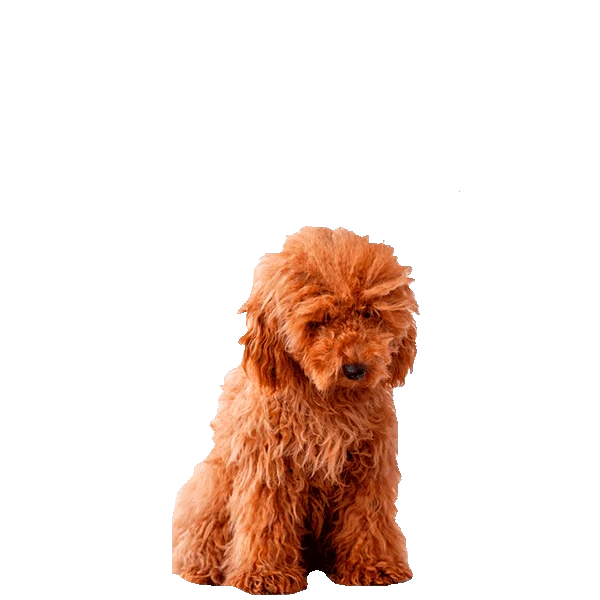
The Polish Lowland Sheepdog is a confident, shaggy herding dog known for its keen intelligence and watchful loyalty.
How the Polish Lowland Sheepdog coat is built, and what that means when you groom it.
Caution: A Polish Lowland Sheepdog coat mats easily.
Fine or long hair tangles at the base of the coat, out of sight, where the mats tighten and pull on the skin. Brushing has to reach right down to the roots in sections, not just skim the surface.
Information: A Polish Lowland Sheepdog needs clipping every few weeks.
This coat keeps growing rather than shedding out, so it has to be trimmed every few weeks. Left to grow it mats down against the skin and traps moisture, dirt and heat.
A few of the Polish Lowland Sheepdog profiles members have added to United Pet Club.
The Polish Lowland Sheepdog is a medium-sized, shaggy-coated herding dog from Poland, valued for its intelligence, alertness, and steady loyalty to its family.
The Polish Lowland Sheepdog is a medium-sized working dog developed in Poland to herd and guard flocks. It is compact and muscular under a long, thick double coat that often falls over the eyes. The breed is known in its home country as the Polski Owczarek Nizinny, which is frequently shortened to PON.
This is a confident, watchful dog with a strong memory and an independent mind. It bonds closely with its household and tends to be reserved with strangers, which makes it an effective watchdog. The PON works at a moderate size, usually standing under 20 inches at the shoulder, so it fits into a wider range of homes than larger herding breeds.
Daily activity and mental work keep this dog settled. Without enough to do it can become bored and noisy. The PON suits owners who want an involved companion and who can commit to regular grooming and consistent training.
| Attribute | Detail |
|---|---|
| Origin | Poland |
| Size | Medium |
| Lifespan | 12 to 14 years |
| Group/role | Herding and guarding |
| Good with | Families and older children with early socialization |
The PON fits active households that can offer daily exercise, training, and company. It does well with owners who are home often, since it dislikes long periods alone. People who enjoy grooming or are willing to learn coat care will find the breed manageable. First-time owners can succeed with this dog if they commit to early, steady training, because the PON is intelligent but can be willful.
The Polish Lowland Sheepdog descends from old corded herding dogs of the Polish lowlands and was rebuilt after near-extinction in the years following the Second World War.
The breed comes from the lowland plains of Poland, where shaggy herding dogs worked sheep for centuries. Its ancestors are linked to corded herding types that spread across Europe, including dogs related to the Puli and other long-coated herders. These dogs were prized for stamina, weather resistance, and the ability to make decisions while moving stock.
A frequently repeated account credits Polish merchant dogs of this type with influencing the early Bearded Collie in Britain, after a small group was reportedly traded in Scotland in the sixteenth century. The detail is part of breed tradition rather than documented record, so it should be read with caution.
The two world wars and the disruption that followed reduced the breed to very low numbers. Recovery is associated with the work of Polish breeder Danuta Hryniewicz and her dog Smok, who became a foundation sire and helped shape the modern standard in the years after 1945. Organized breeding rebuilt the population from a small base.
The breed gained wider international recognition through the second half of the twentieth century and was admitted to several major registries. It is still more common in Poland than elsewhere, though it now has a steady following abroad.
The Polish Lowland Sheepdog is a compact, medium-sized dog with a long, dense double coat in many colors and a hallmark fall of hair over the eyes.
The PON is slightly longer than it is tall, with a strong, muscular body and a level back. The overall impression is of a sturdy, balanced working dog rather than a refined one. The head is medium-sized and carries abundant hair on the forehead, cheeks, and chin. Long hair falls over the eyes, which is a defining feature of the breed. Many PONs are born with a naturally short tail or no tail, while others have a full tail.
| Trait | Standard |
|---|---|
| Height | 17 to 20 inches (43 to 51 cm) at the shoulder |
| Weight | 30 to 50 pounds (14 to 23 kg) |
| Coat | Long, dense double coat with a soft undercoat |
| Colors | All colors permitted, often white with gray, black, or sandy patches |
| Eyes | Medium, oval, hazel to brown, often hidden by hair |
The outer coat is long, dense, and can be straight or slightly wavy, while the undercoat is soft and insulating. This double layer protects the dog in cold and wet weather. Any color or combination is accepted under the standard. Common patterns include white with gray or black markings, solid gray, and shades from cream to brown. Coat color can change as a puppy matures, with many dogs lightening or darkening over the first years.
The Polish Lowland Sheepdog is loyal, intelligent, and alert, devoted to its family while reserved and watchful toward strangers.
The PON is a confident dog with a strong attachment to its people. Within the home it is affectionate and playful, and it likes to be included in daily activity. The breed has an excellent memory, which helps with training but also means it remembers and repeats habits, good or bad.
With strangers the PON is typically cautious and reserved. It is naturally watchful and will alert the household to anything unusual, which makes it a capable watchdog. This same alertness can lead to barking if the dog is under-stimulated or not taught when to stop.
With children the breed is generally patient and protective, and it suits families with older children who understand how to handle a dog. Early socialization helps it accept other dogs and pets. Its herding instinct can show as nudging or circling, so calm guidance is useful around young children and smaller animals. The PON can be independent and slightly stubborn, and it responds best to an owner who is consistent and fair.
| Trait | Rating |
|---|---|
| Affection | 4 |
| Energy | 4 |
| Trainability | 4 |
| Vocalness | 4 |
| Shedding | 2 |
The Polish Lowland Sheepdog needs frequent coat care plus daily exercise and mental work to stay healthy and well-behaved.
The PON is a moderate-maintenance dog overall, but its long double coat demands regular attention. Plan time for grooming and daily activity from the start.
The PON adapts to houses and apartments as long as it gets enough exercise and company. Its weatherproof coat handles cold well, but it needs shade and water in heat. A secure yard suits the breed, though it is content indoors with an active family.
The Polish Lowland Sheepdog does well on a balanced, life-stage-appropriate diet fed in measured meals to maintain a lean, athletic weight.
Feed a complete, balanced dog food matched to the dog's age, weight, and activity level. As an active medium breed, the PON benefits from good-quality protein and controlled fat. Measure food rather than feeding free-choice, because the heavy coat can hide weight gain. Adjust portions to keep the ribs easy to feel under a slight fat cover.
| Life stage | Amount per day | Meals |
|---|---|---|
| Puppy (2 to 6 months) | Per product guide, divided | 3 to 4 |
| Junior (6 to 12 months) | 1.5 to 2 cups | 2 to 3 |
| Adult | 1.5 to 2.5 cups | 2 |
| Senior | 1.25 to 2 cups, adjusted for activity | 2 |
Keep treats to about ten percent of daily calories and use them for training. Fresh water should always be available. Most PONs on a complete diet need no supplements, but discuss joint or skin and coat supplements with a veterinarian if there is a specific reason. Introduce any diet change gradually over about a week to avoid stomach upset.
The Polish Lowland Sheepdog is generally robust with a lifespan of 12 to 14 years, though a few inherited conditions are worth screening for.
The PON is a hardy breed with a typical lifespan of 12 to 14 years. Responsible breeding and routine veterinary care keep most dogs healthy into old age. As with many breeds, a small number of inherited and structural conditions appear more often, so health screening of breeding dogs is valuable.
| Condition | Signs | Note |
|---|---|---|
| Hip dysplasia | Stiffness, limping, trouble rising | Screen breeding stock; keep weight controlled |
| Progressive retinal atrophy | Night blindness, declining vision | Inherited; DNA and eye testing available |
| Hypothyroidism | Weight gain, lethargy, coat changes | Diagnosed by blood test, managed with medication |
| Patellar luxation | Skipping gait, intermittent lameness | Ranges from mild to surgical |
The Polish Lowland Sheepdog is intelligent and quick to learn but independent, so it needs early, consistent, reward-based training.
The PON learns fast and has a strong memory, which makes it capable in obedience, agility, and herding work. The same independence that helped it make decisions with a flock can read as stubbornness, so training works best when it is consistent and engaging. Keep sessions short and varied to hold the dog's interest, and start socialization early so the naturally reserved PON grows up confident with people and other animals.
Breeding Polish Lowland Sheepdogs responsibly means health-tested parents, normal gestation of about nine weeks, and careful raising of a moderate-sized litter.
Breeding should be undertaken only with health-tested adults and a clear plan for placing puppies. Females generally reach physical maturity before being bred, and many breeders wait until at least the second season and full adulthood, around two years of age, so that hip, eye, and thyroid screening can be completed. Mating is planned around the female's fertile window.
Gestation lasts about 63 days from conception. Litters are commonly four to six puppies, though smaller and larger litters occur. Puppies are born after a coat color that may shift with age, and some are naturally born tailless.
Raising young calls for a warm, clean whelping area, attentive monitoring of the mother and litter, and early gentle handling. Weaning begins around three to four weeks, and structured socialization from the breeder lays the foundation for a confident adult. Puppies should stay with the litter until at least eight weeks.
| Metric | Value |
|---|---|
| Sexual maturity | Around 1 year; breeding often delayed to about 2 years |
| Gestation | About 63 days |
| Average litter size | 4 to 6 puppies |
| Weaning age | 3 to 4 weeks, complete by about 7 to 8 weeks |
| Recommended screening | Hips, eyes, thyroid |
Irish law wants every dog chipped and recorded; United Pet Club keeps your Polish Lowland Sheepdog's record free, current, and there for life.
Irish law has required every dog to be chipped and registered since the 2015 Regulations came in, and it expects the details behind the chip to stay current, not gather dust. A free United Pet Club profile does that for your Polish Lowland Sheepdog, for life. Registering your dog is a few minutes' work and costs nothing at all.
The implant is the vet's job; the record is down to you, and the 2015 rules assume you'll keep it current. Register the microchip free on the lifetime plan: whatever brand the vet reached for is grand, a house move costs nothing to record, and the number stays searchable day and night. Create your free account and have the pair of jobs done before the tea goes cold.
Set yourself up with a free United Pet Club account, key in your Polish Lowland Sheepdog's details and a photo, and save. The profile holds for the whole of his life without charge, and the chip number can be lodged whenever you have it.
Lodge the fifteen digit chip number in your free account along with your address and phone number. The lifetime plan covers the registration and every update after it, free, whatever brand the vet used.
It is. The 2015 Regulations require every dog to be chipped and registered, pup or rescue alike. Keeping the record current is the part that falls to you, and United Pet Club makes that part free.
Not a penny. Profile, chip record, and every amendment are covered for life, with no renewal ever.
Common questions about the Polish Lowland Sheepdog cover its size, temperament, grooming needs, lifespan, suitability, and availability.
It is a medium breed, standing about 17 to 20 inches at the shoulder and weighing roughly 30 to 50 pounds. Males are usually a little larger than females.
The PON is loyal, intelligent, and alert. It is affectionate with its family, reserved with strangers, and watchful, which makes it a good watchdog. It can be independent and benefits from consistent training.
Care is moderate. The main commitments are frequent brushing of the long double coat to prevent mats and at least an hour of daily exercise plus mental work. With those in place the breed is straightforward to live with.
The typical lifespan is 12 to 14 years. Good nutrition, weight control, routine veterinary care, and health screening in breeding lines support a long, healthy life.
It suits active families and does well with older children when socialized early. First-time owners can manage the PON if they commit to consistent training and regular grooming.
It is naturally vocal and alert. Without enough exercise and training it can bark frequently. Teaching a quiet cue and meeting its activity needs keep barking in check.
The breed is more common in Poland than elsewhere and is relatively uncommon in many countries. Expect to research reputable breeders and possibly join a waiting list to find a well-bred puppy.

