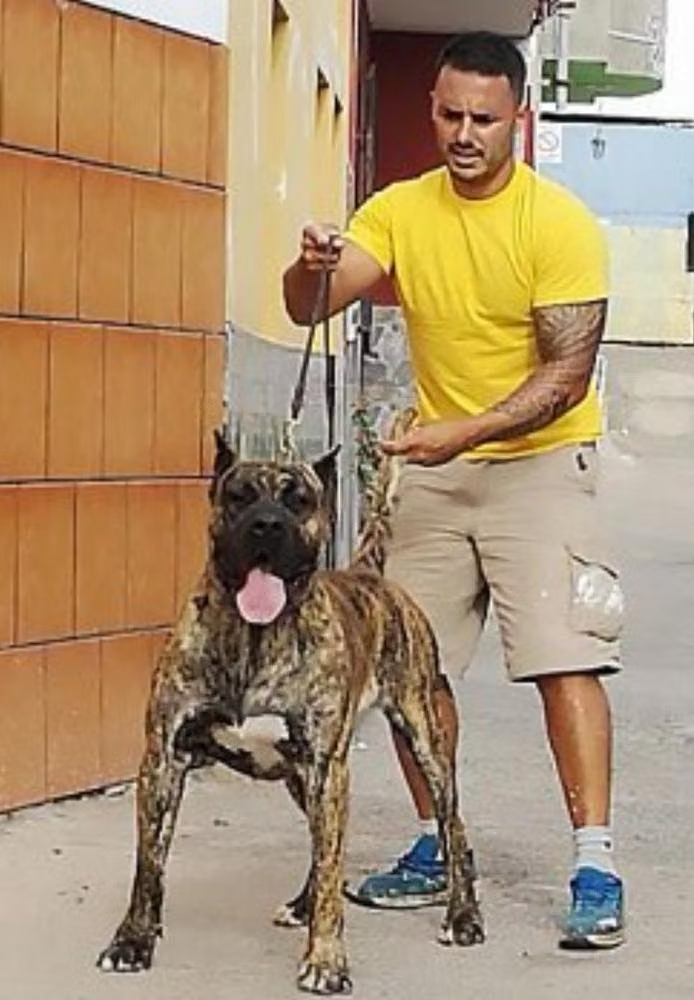
The Perro de Presa Canario is a confident, powerful Canary Islands guardian deeply devoted to its family and protective of its territory.
How the Perro de Presa Canario coat is built, and what that means when you groom it.
A few of the Perro de Presa Canario profiles members have added to United Pet Club.
The Perro de Presa Canario is a big, powerfully built guardian breed from Spain's Canary Islands, loyal to its own but wary of callers, with a lifespan of nine to eleven years.
The Perro de Presa Canario is a large working dog whose story begins on the Canary Islands, a Spanish archipelago off the coast of north-west Africa. The name means roughly "Canary catch dog", a nod to its old job of gripping and holding livestock. It also goes by Dogo Canario or Canary Mastiff. Males typically stand 58 to 66 cm at the shoulder and weigh 45 kg or more, with a broad head, heavy bone, and a short coat that needs little upkeep.
This is a guardian breed through and through. Around people it knows, it settles easily and is steady in temperament, but it stays watchful of anyone unfamiliar and protective of its own patch. Owners tend to describe it as confident and devoted rather than restless. Given its size, strength, and protective streak, this is a dog for a handler with experience, one who can offer consistent rules and get the socialising done early.
The Presa Canario suits someone looking for a property guardian and a close companion rolled into one, who has the time, the space, and the physical strength to manage a large, strong-willed animal. It is not the right choice for a first-time dog owner, a home without secure fencing, or a household that cannot keep training going for the long haul.
| Attribute | Detail |
|---|---|
| Origin | Canary Islands, Spain |
| Size | Large (often 45 kg or more) |
| Lifespan | 9 to 11 years |
| Group / role | Working / guardian, livestock catch dog |
| Good with | Family it knows; needs early socialising with callers and other pets |
This breed fits a confident, hands-on owner who has managed large dogs before and can keep the training consistent for the dog's whole life. Secure, high fencing around the property and a commitment to early socialising are close to essential. It is not suited to flat living or to an owner who travels often and leaves the dog without structure.
The Perro de Presa Canario developed on Spain's Canary Islands as a working catch dog for cattle and a farm guardian, fell into decline through the twentieth century, and was brought back from the 1970s onward.
The breed takes its name, and its homeland, from the Canary Islands, a Spanish archipelago in the Atlantic off the north-west coast of Africa. The Spanish word "presa" means grip or catch, and these dogs were bred to grab and hold cattle and other livestock for their handlers. They also guarded farms and property, a dual role that shaped both the breed's size and its temperament.
The Presa is a molosser type, descended from heavy mastiff-style working dogs brought to the islands and crossed over generations with local farm dogs. Breeders selected for working ability, courage, and physical power rather than a uniform show look, which is why early dogs varied quite a bit in appearance.
Through the twentieth century, the breed's numbers dropped sharply. Changes in farming practice cut demand for cattle catch dogs, and the population fell to the point where the type was at genuine risk. From roughly the 1970s onward, breeders on the islands worked to recover and stabilise the breed from the dogs that remained.
That recovery led to a written breed standard and growing recognition further afield. The Presa Canario was later accepted by major kennel bodies, including recognition under the name Dogo Canario, and the breed is registered with the Irish Kennel Club among other national bodies. It remains a regional symbol of the Canary Islands.
The Perro de Presa Canario is a large, powerfully built molosser with a broad head, heavy bone, and a short, coarse coat in fawn or brindle, often with a dark mask.
The Presa Canario is built for strength. The body is rectangular and substantial, with a deep chest, a thick neck, and heavy bone throughout. The head is large and broad with strong jaws, and the overall impression is one of controlled power rather than speed. Males are noticeably bigger and more heavily built than females.
The coat is short, coarse, and lies flat against the body, well suited to the warm climate of its homeland, though it offers little protection against an Irish winter. Skin around the head and neck is thick. Ears are sometimes seen cropped in countries where that is still permitted, but natural drop ears are the norm where cropping is restricted or banned, as it is in Ireland.
| Trait | Typical range |
|---|---|
| Height | Males about 61 to 66 cm; females about 56 to 61 cm |
| Weight | Males about 45 to 59 kg; females about 39 to 50 kg |
| Coat | Short, coarse, flat-lying, next to no undercoat |
| Colours | Fawn and brindle in various shades, often with white markings |
| Eyes | Oval, medium size, dark to medium brown |
The two main colour families are fawn and brindle, each turning up in lighter and darker shades. Many dogs carry a dark mask on the face. White markings on the chest, feet, or throat are common and accepted within limits. The short coat takes little looking after, but it gives scant insulation against cold and damp, so the breed does better in a mild climate than in an exposed, wet one.
The Perro de Presa Canario is calm and devoted with its family, naturally wary of callers, and territorial, which makes early socialising and an experienced owner essential.
Inside the home with people it knows, the Presa Canario is typically calm, steady, and affectionate. It bonds closely with its family and stays alert to what is going on around it without being noisy or highly strung. Plenty of owners rate how settled the breed is indoors once its needs are met.
Toward strangers, the dog is naturally reserved and watchful. This is a guardian breed, and an unfamiliar caller on the property will get its full attention. Calm introductions handled by the owner help the dog read a situation correctly. With other dogs and pets, the breed can be territorial, and same-sex aggression is possible, so early and ongoing socialising matters.
The Presa is confident and strong-willed. It does best with an owner who is consistent and clearly in charge, and it will test the boundaries of a handler who is unsure or chops and changes the rules. Around children, the breed can be gentle with its own family, but its size alone means any time spent with young children should always be supervised.
| Trait | Rating |
|---|---|
| Affection (with family) | 4 |
| Energy | 3 |
| Trainability | 3 |
| Vocalness | 2 |
| Shedding | 3 |
The Perro de Presa Canario needs little grooming thanks to its short coat, but it needs daily exercise, secure space, and a structured routine to stay settled.
The breed does best in a home with a securely fenced garden and a clear place in the household. It copes well with warm weather given its short coat and origins, but it feels the cold, and Ireland's damp, changeable weather means it should never live outdoors full-time. A bored, under-exercised, or isolated Presa is more likely to develop guarding or behaviour problems.
The Perro de Presa Canario needs a complete large-breed diet with controlled portions and slow, steady growth as a puppy to protect its joints.
Feed a complete, balanced diet formulated for large breeds. As a big, muscular dog, the Presa Canario needs adequate protein and a calorie level matched to its activity, but it should not be overfed. Carrying extra weight puts added strain on the joints of a heavy dog. During puppyhood, controlled, steady growth beats rapid weight gain, so a large-breed puppy formula and measured portions matter.
Deep-chested large breeds carry a risk of bloat (gastric dilatation-volvulus). Feeding two measured meals a day rather than one large one, and avoiding hard activity right around mealtimes, can help lower that risk. Fresh water should always be available.
| Life stage | Amount per day | Meals |
|---|---|---|
| Puppy (2 to 6 months) | Per large-breed puppy formula, divided | 3 to 4 |
| Junior (6 to 12 months) | Per large-breed puppy formula | 2 to 3 |
| Adult | Roughly 500 to 700 g of large-breed kibble, by weight and activity | 2 |
| Senior | Reduced calories, monitor weight | 2 |
Keep treats to a small share of daily calories so they do not tip the dog into putting on weight. Good options include small pieces of plain cooked meat or shop-bought training treats. Joint supplements such as glucosamine are sometimes recommended for large breeds, but check with a vet before adding any supplement.
The Perro de Presa Canario lives about 9 to 11 years and, as a large molosser, is prone to hip and elbow problems, bloat, and heart concerns, so preventive care matters.
The Perro de Presa Canario generally lives about 9 to 11 years, which is typical for a dog of its size; bigger breeds tend to have shorter lives than small ones. Many of the breed's health concerns tie back to its size and build, so weight control, joint protection, and regular vet checks are central to keeping a Presa well. Buying from a breeder who screens breeding dogs for known issues lowers the risk of problems being passed on.
| Condition | Signs | Note |
|---|---|---|
| Hip dysplasia | Stiffness, limping, trouble getting up | Common in large breeds; screen breeding stock |
| Elbow dysplasia | Front-leg lameness, reluctance to exercise | Keep puppy growth slow and steady |
| Bloat (GDV) | Swollen belly, retching, distress | Medical emergency; feed measured meals |
| Heart conditions | Tiring easily, coughing, fainting | Discuss screening with your vet |
| Osteochondrosis / joint issues | Lameness in a young dog | Avoid overexercise while growing |
The Perro de Presa Canario is intelligent and capable but strong-willed, so it needs early, consistent, reward-based training from a confident handler.
The Presa Canario is intelligent and picks things up well, but it is also independent and strong-willed. It looks to a handler who is calm, consistent, and plainly in charge, and it can become a handful for an owner who is hesitant or applies the rules unevenly. Given the breed's size and guarding instinct, training and socialising should start in puppyhood and carry on throughout the dog's life, not just for the length of a short course.
Socialising matters as much as obedience for this breed. Introducing the puppy to plenty of people, places, sounds, and other animals, in calm and positive settings, helps it grow into a level-headed adult that can tell an ordinary situation from a genuine threat. Harsh or punishment-heavy methods tend to backfire with a confident guardian and can damage the trust between dog and owner.
Breeding the Perro de Presa Canario should be done responsibly with health-tested parents, typical litters of large puppies, and careful rearing in the early weeks.
Breeding a guardian breed of this size carries real responsibility. Dogs should reach full physical and mental maturity before being bred, and both parents should be health-screened for conditions common in the breed, including hip and elbow problems and heart issues. Temperament counts for as much as physical soundness; only stable, well-socialised dogs should be bred, since temperament is partly heritable in a powerful guardian.
Gestation in dogs runs about 63 days on average. The Presa Canario produces large puppies, and litters are often sizeable, which can make whelping demanding; veterinary support during pregnancy and birth is well worth having. Rearing the litter well means early gentle handling, careful nutrition for steady growth, and starting socialising during the critical weeks before the puppies go to new homes. Responsible breeders also vet prospective buyers, given the breed's strength and guarding nature.
| Metric | Value |
|---|---|
| Sexual maturity | Around 1 to 2 years; breed at full maturity |
| Gestation | About 63 days |
| Average litter size | Typically large; commonly several to many puppies |
| Weaning | Around 6 to 8 weeks |
| Go-home age | Usually 8 weeks or older, after early socialising |
Irish law wants every dog chipped and recorded; United Pet Club keeps your Perro de Presa Canario's record free, current, and there for life.
Get the profile sorted first: your Perro de Presa Canario's name, his date of birth, a photo, and your phone number, saved in a couple of minutes. The record is free for the whole of his life, and the chip number slots in whenever the vet has done his part. Dog registration is where it starts.
Lodge your Perro de Presa Canario's fifteen digit number with United Pet Club and the chip finally earns its keep: free registration for life, every brand accepted, and a record the ISPCA or any warden can turn into a phone call. Microchip registration takes minutes, and the free account covers the profile while you're at it.
Set yourself up with a free United Pet Club account, key in your Perro de Presa Canario's details and a photo, and save. The profile holds for the whole of his life without charge, and the chip number can be lodged whenever you have it.
Lodge the fifteen digit chip number in your free account along with your address and phone number. The lifetime plan covers the registration and every update after it, free, whatever brand the vet used.
It is. The 2015 Regulations require every dog to be chipped and registered, pup or rescue alike. Keeping the record current is the part that falls to you, and United Pet Club makes that part free.
Not a penny. Profile, chip record, and every amendment are covered for life, with no renewal ever.
Common questions about the Perro de Presa Canario cover its size, temperament, care needs, lifespan, suitability for owners, and where to find one.
It is a large breed. Males commonly stand about 61 to 66 cm at the shoulder and weigh 45 to 59 kg, while females are somewhat smaller. This is a heavy, muscular dog, so plan for the space and strength needed to manage it.
With its family, the Presa Canario is calm, devoted, and affectionate. Toward strangers it is naturally reserved and watchful, and it is territorial by instinct. Early and ongoing socialising is important for raising a level-headed adult.
Grooming is easy thanks to the short coat, but the breed is demanding in other ways. It needs daily exercise, secure fencing, consistent training, and an experienced owner. It is not a good fit for a first-time dog owner.
The typical lifespan is about 9 to 11 years, which is normal for a dog of this size. Keeping the dog at a healthy weight and providing regular veterinary care supports a full life.
It can be a devoted family guardian and is often gentle with its own household. Because of its size and strength, time spent with young children should always be supervised, and the home needs an owner able to handle a powerful dog.
Some countries regulate or restrict large guardian and molosser breeds, and rules on practices such as ear cropping vary by area; cropping is not permitted in Ireland. Check local laws and any insurance or housing requirements before getting one.
The breed is available through dedicated breeders and is sometimes found in rescue. Choose a breeder who health-tests the parents, breeds for stable temperament, and screens prospective owners.