The Norwich Terrier is a spirited, affectionate little dog with prick ears, famed for its fearless heart and sociable companionship.
How the Norwich Terrier coat is built, and what that means when you groom it.
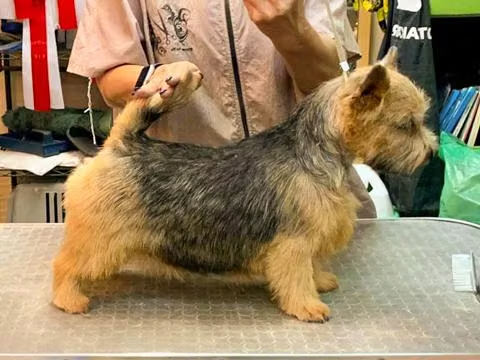
Caution: A Norwich Terrier coat should be hand-stripped rather than clipped.
A wire coat is meant to be pulled out at the root once the hair is ready to release. Clippers cut it off part way instead, leaving the soft undercoat behind. The result is a coat that grows back limp and faded, and the weatherproof texture only returns after the hair is stripped out again.
A few of the Norwich Terrier profiles members have added to United Pet Club.
The Norwich Terrier is a small, affectionate terrier from England with prick ears and a bold, sociable nature, equally suited to a farm in Kerry or a flat in Dublin.
The Norwich Terrier ranks among the smallest working terriers, standing close to 25 cm at the shoulder and weighing around 5 kg. The breed comes from the East Anglia region of England, where it was kept to hunt rats around farm buildings and bolt foxes from their earths. For its size, it carries the same fearless nature found in most working terriers.
It is an affectionate, people-focused dog that settles best close to its family rather than left on its own for long stretches. The prick ears and hard, weatherproof double coat mark the breed out, and it shares much of its ancestry with the Norfolk Terrier, which differs mainly in its folded ears.
Norwich Terriers are curious, spirited, and quick to notice what is going on around them. They cope well with Ireland's cool, damp climate and settle into city apartments and rural houses alike, provided they get exercise and something to occupy the mind each day. Their small frame and sociable nature suit a wide range of households, from a terraced house in Dublin to a farm in Cork.
| Attribute | Detail |
|---|---|
| Origin | England |
| Size | Small (around 25 cm, 5 kg) |
| Lifespan | 12 to 16 years |
| Group/role | Terrier group; ratting and earth work |
| Good with | Families, other dogs, and older children |
The Norwich Terrier suits owners who want a small dog with plenty of personality. It works well for active singles, couples, and families with older children able to keep up with its energy. The breed likes being around people and does best where someone is home for much of the day. Anyone considering one should be ready for a strong prey drive and a habit of digging up the garden and giving chase to anything that moves.
The Norwich Terrier was bred in the East Anglia region of England in the late 1800s as a small ratting terrier, sharing a breed standard with the Norfolk Terrier until ear type split the two apart.
The Norwich Terrier's story starts in the East Anglia region of England in the late nineteenth century. Farmers and stable hands kept small, hardy terriers to keep rats and other vermin down, and these dogs became the foundation stock for the breed we know today. The town of Norwich gave the breed its name.
The breed found early favour among students at Cambridge University, where keeping a small terrier became fashionable. One dog, often named as a key sire in early pedigrees, helped fix the type that breeders worked towards over the following decades.
For much of its early history, the Norwich Terrier covered dogs with both prick ears and dropped ears under one standard. Breeders argued over whether the two ear types belonged together. The drop-eared variety was eventually recognised as the separate Norfolk Terrier, while the prick-eared dogs kept the Norwich name.
The Kennel Club in England recognised the Norwich Terrier in 1932, and the American Kennel Club followed in 1936. The split between the Norwich and Norfolk breeds was made official later still, with the American Kennel Club recognising the Norfolk Terrier as its own breed in 1979. The Irish Kennel Club recognises the Norwich Terrier as a distinct breed today, though it remains a rare sight at Irish shows, in part because litters tend to be small.
The Norwich Terrier is a compact, sturdy small dog with prick ears, a hard wiry double coat built for damp weather, and a foxy expression, standing around 25 cm and weighing about 5 kg.
The Norwich Terrier is a short, stocky dog with a level back and solid bone for its size. The head is slightly rounded with a foxy muzzle, and the small, pointed prick ears are the trait that sets it apart from the drop-eared Norfolk Terrier. The eyes are dark and oval, giving the dog an alert look. The tail may be left natural or docked, depending on regional custom and the rules in force.
| Trait | Standard |
|---|---|
| Height | Around 25 cm (10 in) at the shoulder |
| Weight | About 5 kg (11 to 12 lb) |
| Coat | Hard, wiry, weatherproof double coat with a longer ruff at the neck |
| Colours | Red, wheaten, black and tan, and grizzle |
| Eyes | Small, dark, and oval with an alert expression |
The outer coat is hard and wiry and lies close to the body, with a softer undercoat beneath for warmth, useful through an Irish winter. The hair grows slightly longer around the neck and shoulders, forming a mane, with bushier eyebrows and whiskers on the face. Accepted colours are red in various shades, wheaten, black and tan, and grizzle. The coat is built to shed dirt and shrug off wet weather, which comes from the breed's working background.
The Norwich Terrier is affectionate, curious, and spirited, friendly with people and generally sociable with other dogs, though it keeps a strong prey drive towards small animals.
The Norwich Terrier is known for an affectionate, companionable nature. It bonds closely with its family and is usually friendly towards strangers, which makes it less guarded than some other terriers. With early socialisation it tends to get on with other dogs, and plenty of Norwich Terriers do well in multi-dog households.
The breed is curious and spirited, with the pluck expected of a working terrier. It stays alert and will bark to announce visitors, though it is not usually a constant barker. Its strong prey drive means small pets such as rodents may not be safe around it, and cats are best introduced carefully and early.
Norwich Terriers are intelligent and like being part of whatever is going on in the house. They can be independent and a touch stubborn, but respond well to engaged, consistent handling. They generally get on well with older children who treat them gently.
| Trait | Rating |
|---|---|
| Affection | 5 |
| Energy | 4 |
| Trainability | 3 |
| Vocalness | 3 |
| Shedding | 2 |
The Norwich Terrier needs regular brushing and periodic hand-stripping of its wiry coat, daily exercise to match its energy, and settles well in apartments once its activity needs are met.
The Norwich Terrier is a moderate-maintenance breed. Its wiry coat sheds little but needs routine grooming to stay healthy and hold its correct texture. Most of its care comes down to coat upkeep and daily physical and mental activity, especially through Ireland's damp winters, when a wet coat needs proper drying.
The Norwich Terrier settles into apartments and houses alike. It is small enough for city living but needs a daily outlet for its energy regardless of home size. A secure garden is a bonus but not essential. The breed prefers to be near its people and does not suit long hours left on its own.
The Norwich Terrier does well on a complete diet portioned for a small, active dog, fed in two meals a day, with close attention paid to prevent weight gain.
The Norwich Terrier needs a complete and balanced diet formulated for small breeds and matched to its life stage and activity level. Because it is a small dog with a hearty appetite, portion control matters. Measure meals out rather than leaving food down all day, and adjust amounts based on body condition. A defined waist and ribs that are easy to feel but not visible point to a healthy weight.
| Life stage | Amount per day | Meals |
|---|---|---|
| Puppy (2 to 6 months) | Per puppy-food label, split across meals | 3 to 4 |
| Junior (6 to 12 months) | About 100 to 150 g (roughly 1/2 to 3/4 cup) | 2 to 3 |
| Adult | About 100 to 200 g (roughly 1/2 to 1 cup) | 2 |
| Senior | Adjusted down for lower activity | 2 |
Keep treats to no more than about 10 percent of daily calories, which is easy to go over in a 5 kg dog. Use small training treats or pieces of the dog's usual kibble during sessions. Most Norwich Terriers on a complete diet need no supplements; check with a vet before adding any, especially joint or skin products.
The Norwich Terrier is generally a hardy breed with a lifespan of 12 to 16 years, though it can be affected by an upper airway condition known as upper airway syndrome, along with dental and joint issues.
The Norwich Terrier is generally robust and long-lived, with a typical lifespan of 12 to 16 years. As with all breeds, there are a few conditions owners and breeders keep an eye on. Buying from a breeder who screens breeding stock cuts the risk of inherited problems.
| Condition | Signs | Note |
|---|---|---|
| Upper airway syndrome | Noisy breathing, poor exercise tolerance, gagging | An airway issue documented in the breed; severity varies |
| Patellar luxation | Skipping gait, occasional hind-leg lameness | Common in small breeds; ranges from mild to needing surgery |
| Dental disease | Bad breath, tartar, inflamed gums | Small jaws crowd the teeth; routine dental care helps |
| Hip dysplasia | Stiffness, reluctance to jump | Less common in small dogs but reported |
The Norwich Terrier is intelligent and keen to engage but can be independent, so short, consistent, reward-based sessions and early socialisation get the best results.
The Norwich Terrier is bright and willing to work with an owner it respects, though its terrier independence can come across as stubbornness. It responds best to short, varied sessions that hold its attention and reward good choices. Harsh corrections tend to backfire and can leave the dog less willing to cooperate. Early socialisation with people, other dogs, and everyday situations helps the breed grow into the confident, friendly companion it is known to be.
The Norwich Terrier reaches breeding maturity at one to two years, carries a pregnancy of about 63 days, and typically produces small litters, often delivered by caesarean section.
Responsible breeding of the Norwich Terrier centres on health screening and the breed's small litter size. Females are generally bred once fully mature, at around one to two years old, and once health clearances are in place. Pregnancy lasts about 63 days. Litters are small, commonly one to three pups, which is one reason the breed stays uncommon and puppies can be hard to come by.
Whelping can be difficult relative to litter size, and caesarean delivery is not unusual in the breed. Newborn pups are tiny and need a warm, clean environment along with close monitoring of weight gain in the first few weeks. The dam usually raises the litter, with the breeder helping with feeding, warmth, and early handling.
Puppies should stay with the dam and littermates until at least eight weeks old for proper social development. Early gentle handling and exposure to household sights and sounds lay the groundwork for a well-adjusted adult.
| Metric | Value |
|---|---|
| Breeding maturity | 1 to 2 years |
| Pregnancy | About 63 days |
| Typical litter size | 1 to 3 puppies |
| Delivery | Caesarean section is common |
| Weaning | About 4 to 8 weeks |
| Earliest rehoming | 8 weeks or later |
Irish law wants every dog chipped and recorded; United Pet Club keeps your Norwich Terrier's record free, current, and there for life.
Get the profile sorted first: your Norwich Terrier's name, his date of birth, a photo, and your phone number, saved in a couple of minutes. The record is free for the whole of his life, and the chip number slots in whenever the vet has done his part. Dog registration is where it starts.
Lodge your Norwich Terrier's fifteen digit number with United Pet Club and the chip finally earns its keep: free registration for life, every brand accepted, and a record the ISPCA or any warden can turn into a phone call. Microchip registration takes minutes, and the free account covers the profile while you're at it.
Set yourself up with a free United Pet Club account, key in your Norwich Terrier's details and a photo, and save. The profile holds for the whole of his life without charge, and the chip number can be lodged whenever you have it.
Lodge the fifteen digit chip number in your free account along with your address and phone number. The lifetime plan covers the registration and every update after it, free, whatever brand the vet used.
It is. The 2015 Regulations require every dog to be chipped and registered, pup or rescue alike. Keeping the record current is the part that falls to you, and United Pet Club makes that part free.
Not a penny. Profile, chip record, and every amendment are covered for life, with no renewal ever.
Frequently asked questions about the Norwich Terrier, covering size, temperament, everyday care, lifespan, and how easy the breed is to find in Ireland.
It is one of the smallest terriers, standing around 25 cm at the shoulder and weighing about 5 kg when fully grown.
The breed is affectionate, curious, spirited, and sociable. It bonds closely with its family, is generally friendly with people and other dogs, and stays alert without excessive barking.
Care is moderate. The wiry coat sheds little but needs regular brushing and periodic hand-stripping, and the dog needs daily exercise and something to occupy its mind. Ear and dental care should be part of the routine.
They are long-lived for a dog, with a typical lifespan of 12 to 16 years when kept at a healthy weight and given regular veterinary care.
Yes. Its small size suits apartment living as long as it gets daily activity, and it does well with families and older children. It prefers company and does not like being left alone for long hours.
They are relatively uncommon here, partly because litters are small. Expect a waiting list with reputable breeders, and it is worth checking breed rescues as an alternative.
The two breeds share a common origin and look very alike. The main difference is ear type: the Norwich Terrier has upright prick ears, while the Norfolk Terrier has folded drop ears.