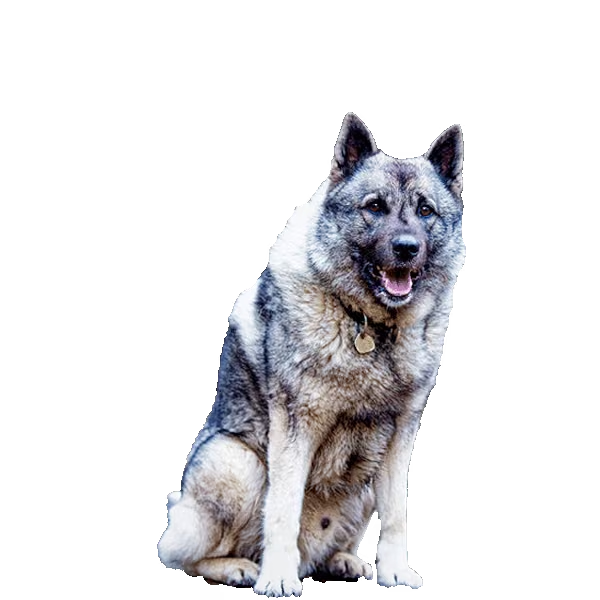
The Norwegian Buhund is a cheerful spitz breed known for its friendly, alert nature and tireless energy as a farm and herding companion.
How the Norwegian Buhund coat is built, and what that means when you groom it.
Critical: A Norwegian Buhund should not be shaved.
The undercoat keeps heat out as well as in, and the outer coat shields the skin from sun and insect bites. Clipping the whole coat off removes both. It often grows back patchy, soft or a different colour, and in some animals the guard hairs never return properly. Brush the undercoat out instead of cutting it off.
Information: A Norwegian Buhund drops its undercoat in heavy bursts.
The undercoat comes out in heavy bursts over a few weeks. An undercoat rake, or a bath followed by a proper blow-dry, clears it far faster than daily brushing. Clipping the coat down is not a shortcut for this.
The Norwegian Buhund is a medium spitz breed from Norway, valued as a cheerful, alert farm dog and herder with a 13 to 15 year lifespan.
The Norwegian Buhund is a medium-sized spitz breed developed in Norway as an all-purpose farm dog. The name joins the Norwegian words for homestead (bu) and dog (hund), which describes the work the breed has done for centuries: guarding the farm, herding livestock and keeping the family company.
A Buhund stands roughly 41 to 47 cm at the shoulder and weighs between 12 and 18 kg. The build is square and light on its feet, with a wedge-shaped head, prick ears and a tail that curls tightly over the back. The double coat is weatherproof and comes in wheaten or black, which serves it well in the damp Irish climate.
The temperament is friendly and energetic. Buhunds bond closely with their people, stay alert to changes around the home and use their voice readily. They were bred to make decisions on their own while working stock, so they are intelligent and willing but also independent.
| Attribute | Detail |
|---|---|
| Origin | Norway |
| Size | Medium (12 to 18 kg) |
| Lifespan | 13 to 15 years |
| Group/role | Herding and farm dog |
| Good with | Families, children and other dogs when socialised |
The Buhund fits an active household that can give it daily exercise and a job to do, whether herding, dog sports or structured play. It does well with families and children and tolerates other pets when raised with them. People who want a quiet dog or who are away from home for long stretches should think carefully, because the breed is vocal and needs company and activity.
The Norwegian Buhund is an old Nordic spitz tied to farm and Viking-era life in Norway, with a breed standard formalised in the early twentieth century.
The Buhund belongs to the family of northern spitz dogs that have lived alongside people in Scandinavia for thousands of years. Dogs of similar type have been found in Viking burial sites in Norway, where they were laid to rest with their owners. This points to a long working partnership on the land that became Norway, a Norse connection that also touched Ireland during the Viking age.
For most of its history the breed was a general farm dog. It moved sheep and cattle, watched the homestead, sounded the alarm at strangers or predators and worked the rough terrain of Norway's coast and fjords. The dogs were selected for usefulness rather than appearance, which produced a hardy, weatherproof and adaptable animal.
Organised interest in the breed grew in the early 1900s. A Norwegian named John Saeland is credited with promoting the Buhund and helping arrange the first breed show, held in Norway in 1920. A breed club followed, which set a written standard and began keeping records.
The Buhund later spread beyond Norway, carried in part by Scandinavian emigrants. It stays relatively uncommon but has steady followings in the United Kingdom and Ireland, where it can be registered through the Irish Kennel Club (IKC) and competes in herding and obedience as well as living as a companion.
The Norwegian Buhund is a square, medium spitz with prick ears, a curled tail and a weatherproof double coat in wheaten or black.
The Buhund is a lightly built, square dog of medium size that looks balanced and quick rather than heavy. The head is wedge-shaped with a clean muzzle, dark eyes and erect pointed ears. The tail is set high and carried in a tight curl over the back, a typical spitz feature. The overall impression is of an agile, alert worker.
| Trait | Standard |
|---|---|
| Height | Males about 43 to 47 cm; females about 41 to 44.5 cm |
| Weight | 12 to 18 kg |
| Coat | Thick double coat: harsh outer coat over a soft dense undercoat |
| Colours | Wheaten (pale cream to yellowish-red) or black |
| Eyes | Oval, dark brown, alert expression |
The double coat is the breed's main protection against cold and wet weather, an asset in Ireland's mild but rainy conditions. A harsh, close outer coat sheds water, while the soft undercoat traps warmth. The hair is shorter on the head and front of the legs and longer on the neck, chest and back of the thighs.
Two colour groups are recognised. Wheaten ranges from a pale cream to a yellowish-red, sometimes with darker tips and a darker mask, and a small amount of white is allowed. Black dogs should be as solid as possible, again with limited white markings permitted. The undercoat in black dogs may be slightly lighter than the outer coat.
The Norwegian Buhund is friendly, affectionate and energetic, alert with strangers, good with family and notably vocal.
The Buhund is a cheerful and people-oriented dog. It forms strong attachments to its household and likes to be involved in daily activity rather than left on its own. With family members, including children, it is affectionate and playful, and its steady energy makes it a good companion for an active home.
With strangers the breed is alert and watchful. It tends to announce arrivals and changes around the property, which makes it a capable watchdog, though it is not an aggressive guard dog. Early and ongoing socialisation helps it greet visitors with confidence rather than suspicion.
With other animals the Buhund is generally sociable, especially with dogs it has grown up around. Its herding background can show as a tendency to chase or nudge moving animals and people, so supervision around small pets and young children is sensible.
The breed is intelligent and quick to learn but also independent, a result of being bred to work stock without constant direction. The most defining trait for daily life is its voice: Buhunds bark readily, and managing that vocalness is part of owning the breed.
| Trait | Rating |
|---|---|
| Affection | 5 |
| Energy | 5 |
| Trainability | 4 |
| Vocalness | 5 |
| Shedding | 4 |
The Norwegian Buhund needs regular brushing, heavy seasonal coat care and at least an hour of daily exercise plus mental work.
The double coat is fairly easy to maintain most of the year but sheds heavily during the seasonal coat changes in spring and autumn.
This is a working breed with high stamina that needs both physical and mental outlets.
The Buhund adapts to different homes as long as its needs are met. A house with a secure garden suits it well, but it can live in smaller spaces given enough daily exercise. The weatherproof coat handles cold and wet with ease, so it copes happily with Irish winters, while care should be taken on the rare hot day to provide shade and water. Because the breed is vocal, owners in terraced or close-neighbour settings should plan for bark training.
The Norwegian Buhund does well on a balanced diet matched to its medium size and high activity, fed in measured meals to prevent weight gain.
The Buhund needs a complete and balanced diet suited to a medium-sized, active dog. Choose a quality food appropriate to the dog's life stage, with enough protein and fat to support its working energy levels. Because the breed is athletic and food-motivated, portion control matters: measure meals rather than free-feeding, and adjust amounts to the individual dog's weight and activity.
| Life stage | Amount per day | Meals |
|---|---|---|
| Puppy (2 to 6 months) | Per product guide for expected adult weight | 3 to 4 |
| Junior (6 to 12 months) | Slightly above adult portion | 2 to 3 |
| Adult (1 to 7 years) | About 165 to 220 g of dry food | 2 |
| Senior (7+ years) | Reduced calories as activity drops | 2 |
Keep treats to no more than about 10 percent of daily calories, and account for any food used in training. Most Buhunds on a complete diet do not need supplements, but a vet may suggest omega fatty acids for coat condition or joint support for older dogs. Provide fresh water at all times and ask your vet before adding any supplement.
The Norwegian Buhund is a generally hardy breed living 13 to 15 years, with hip dysplasia and inherited eye conditions among the issues to watch.
The Buhund is a robust and relatively healthy breed, helped by a working background that favoured sound, functional dogs. With good care most live 13 to 15 years. As with all breeds, certain inherited conditions appear, and buying from a breeder who screens their stock reduces the risk.
| Condition | Signs | Note |
|---|---|---|
| Hip dysplasia | Stiffness, limping, reluctance to jump | Screen breeding dogs; keep weight controlled |
| Hereditary cataracts | Cloudy eye, vision changes | Eye testing of parents helps identify carriers |
| Other inherited eye disorders | Reduced or failing sight | Routine eye exams aid early detection |
The Norwegian Buhund is intelligent and eager to learn but independent, responding best to consistent, reward-based training that includes bark control.
The Buhund is a quick learner that enjoys working with its handler, which makes it well suited to obedience, agility, herding and rally. Its herding heritage also gave it an independent streak, so it may question repetitive drills. Short, varied sessions hold its attention better than long ones. Two priorities for this breed are early socialisation and managing barking, since the dog is naturally vocal and alert.
Norwegian Buhunds reach maturity around one to two years, carry litters of about four to seven pups and benefit from health screening of breeding stock.
Responsible breeding of the Norwegian Buhund starts with health-tested parents and an understanding of the breed standard. Dogs reach physical maturity at roughly one to two years, and many breeders wait until a bitch is at least two years old and has passed hip and eye screening before her first litter. Gestation lasts about 63 days, and litters are typically medium in size.
Whelping is usually straightforward for this well-built breed, though a quiet, prepared whelping area and access to veterinary support are important. The dam normally cares for the puppies in the early weeks. Breeders begin gentle handling and socialisation from a young age, and puppies generally go to new homes at around eight weeks, by which point weaning is complete and early vaccinations and worming are underway.
| Metric | Value |
|---|---|
| Sexual maturity | About 1 to 2 years |
| Gestation | Approximately 63 days |
| Typical litter size | 4 to 7 puppies |
| Weaning age | About 7 to 8 weeks |
| Recommended health screening | Hip and eye testing of both parents |
Irish law wants every dog chipped and recorded; United Pet Club keeps your Norwegian Buhund's record free, current, and there for life.
Irish law has required every dog to be chipped and registered since the 2015 Regulations came in, and it expects the details behind the chip to stay current, not gather dust. A free United Pet Club profile does that for your Norwegian Buhund, for life. Registering your dog is a few minutes' work and costs nothing at all.
Lodge your Norwegian Buhund's fifteen digit number with United Pet Club and the chip finally earns its keep: free registration for life, every brand accepted, and a record the ISPCA or any warden can turn into a phone call. Microchip registration takes minutes, and the free account covers the profile while you're at it.
Set yourself up with a free United Pet Club account, key in your Norwegian Buhund's details and a photo, and save. The profile holds for the whole of his life without charge, and the chip number can be lodged whenever you have it.
Lodge the fifteen digit chip number in your free account along with your address and phone number. The lifetime plan covers the registration and every update after it, free, whatever brand the vet used.
It is. The 2015 Regulations require every dog to be chipped and registered, pup or rescue alike. Keeping the record current is the part that falls to you, and United Pet Club makes that part free.
Not a penny. Profile, chip record, and every amendment are covered for life, with no renewal ever.
Common questions about the Norwegian Buhund's size, temperament, care needs, lifespan, suitability and availability.
It is a medium breed. Adults stand about 41 to 47 cm at the shoulder and weigh roughly 12 to 18 kg, with males generally larger than females.
Yes. The breed is friendly and affectionate and usually does well with children and other dogs, especially when socialised early. Supervision is sensible around very young children because of its herding instinct to nudge or chase.
It is moderate to demanding. Grooming is manageable apart from heavy seasonal shedding, but the breed needs at least an hour of daily exercise plus mental work, and owners must plan for its tendency to bark.
Typically 13 to 15 years with good care, regular veterinary checks and a healthy weight.
Yes. It is a vocal, alert breed that readily announces visitors and changes around the home. Early training of a quiet cue helps keep barking under control.
It can adapt to smaller spaces if it gets enough daily exercise and mental stimulation, but its energy and barking make a home with a secure garden and active owners a better fit.
The breed is relatively uncommon outside Norway, so prospective owners may need to join a waiting list with a reputable IKC-registered breeder. It has established followings in the United Kingdom and Ireland.
