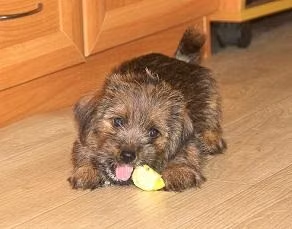
The Norfolk Terrier is a spirited yet affectionate small terrier with drop ears, known for being one of the smallest and most sociable working terriers.
How the Norfolk Terrier coat is built, and what that means when you groom it.
Caution: A Norfolk Terrier coat should be hand-stripped rather than clipped.
A wire coat is meant to be pulled out at the root once the hair is ready to release. Clippers cut it off part way instead, leaving the soft undercoat behind. The result is a coat that grows back limp and faded, and the weatherproof texture only returns after the hair is stripped out again.
A few of the Norfolk Terrier profiles members have added to United Pet Club.
The Norfolk Terrier is a small working terrier from England, recognised by the Irish Kennel Club, known for its folded ears, sociable nature and sturdy build for its size.
The Norfolk Terrier is a small, sturdy terrier. It stands about 23 to 25 cm (9 to 10 in) at the shoulder and weighs roughly 5 to 5.5 kg (11 to 12 lb), one of the smallest of the working terriers. Its most recognisable feature is the pair of small, neatly folded drop ears, quite different from the erect ears of its close relative, the Norwich Terrier.
The breed was developed in the east of England to bolt foxes from their dens and keep vermin down on farms. That working background is still evident in its build and behaviour: a compact body, a weatherproof coat well suited to a cool, damp climate, and a confident, busy temperament. Despite the working roots, the Norfolk is a companionable dog that generally enjoys human company and does well as a household pet.
Norfolks are affectionate, spirited, sociable, alert and fearless. They are usually less quarrelsome than some terrier breeds and often get on well with other dogs, a trait that reflects their history of being worked in packs.
| Attribute | Detail |
|---|---|
| Origin | England |
| Size | Small (about 23 to 25 cm, 5 to 5.5 kg / 9 to 10 in, 11 to 12 lb) |
| Lifespan | 12 to 16 years |
| Group / role | Terrier; originally bred to bolt foxes and control vermin |
| Good with | Families, other dogs, active owners |
The Norfolk Terrier suits owners who want a small dog with genuine terrier character rather than a lap dog. It fits households that can provide daily exercise and company, and it copes well with changeable Irish weather thanks to its weatherproof coat. Its sociable streak suits multi-dog homes and families with children who know how to handle a dog properly. Its strong prey drive means small pets such as rodents are not ideal companions in the same home.
The Norfolk Terrier developed in the east of England in the late 1800s as a small working ratter and fox-bolter, separated from the Norwich Terrier as its own breed in 1964.
The Norfolk Terrier traces back to the East Anglia region of England, particularly the area around Norwich and the county of Norfolk. During the late nineteenth century, farmers and sportsmen there kept small red terriers to kill rats and bolt foxes from their dens. These dogs were valued for being small enough to go to ground yet game enough to face down vermin.
In the early twentieth century, students at Cambridge kept similar small terriers as companions and ratters, and this helped the type spread further afield. Breeders in the region worked with a mixed group of small terriers, and over time two distinct ear forms turned up in the same stock: drop ears and prick ears.
For decades, the drop-eared and prick-eared dogs were registered together as a single breed under the Norwich Terrier name. Breeders found that crossing the two ear types was difficult to manage, and pressure grew to separate them. In 1964 the Kennel Club in England recognised the two as distinct breeds, with the drop-eared dog named the Norfolk Terrier and the prick-eared dog keeping the Norwich Terrier name.
The American Kennel Club followed suit and recognised the Norfolk Terrier as a separate breed in 1979. The breed is registered with the Irish Kennel Club as part of the Terrier group, and since the 1964 split it has been bred and shown on its own, though it remains closely related to the Norwich in size, coat and temperament.
The Norfolk Terrier is a small, compact terrier with a wiry, weatherproof coat, folded drop ears, and colouring typically red, wheaten, or grizzle.
The Norfolk Terrier is a low-set, compact dog with a strong, slightly rounded skull and a wedge-shaped muzzle. The back is short and level, carried on short, sturdy legs, and the small drop ears fold neatly forward against the cheek. The overall picture is of a small dog built for work rather than a delicate toy breed.
| Feature | Standard |
|---|---|
| Height | About 23 to 25 cm (9 to 10 in) at the shoulder |
| Weight | About 5 to 5.5 kg (11 to 12 lb) |
| Coat | Hard, wiry, straight; weatherproof, with a soft undercoat |
| Colour | Red, wheaten, black and tan, or grizzle |
| Eyes | Small, oval, dark, with an alert expression |
The coat is hard and wiry over a softer undercoat, with longer, rougher hair forming a slight ruff at the neck and around the face. This double coat gives good protection against cold, wet conditions, of the sort we get plenty of here. Accepted colours are red, wheaten, black and tan, and grizzle. The wiry texture is kept up by hand-stripping rather than clipping, which preserves the harsh outer coat and its colour. Clipping is an option, but it tends to soften the coat and dull the colour over time.
The Norfolk Terrier is affectionate and people-oriented while keeping a spirited, alert terrier character, and tends to be more sociable with other dogs than many terriers.
The Norfolk Terrier is an active, confident dog that likes to stay close to its people. It is affectionate at home and enjoys being part of family life rather than left to its own devices for long stretches. The breed has a spirited, busy nature and will investigate any noise, scent or movement around the house and garden.
With family, the Norfolk is loyal and friendly, and it usually gets on well with children who treat it with respect. With strangers it tends to be alert and will let you know when someone's at the door, though it is not typically nervous or aggressive. Compared with many terriers, the Norfolk gets on far better with other dogs, a trait that goes back to its history of being worked in packs. Its prey drive remains strong, so small animals such as rodents and rabbits can set off a chase.
Norfolks are alert and fearless for their size and can be vocal when something catches their attention. Early socialisation and consistent boundaries help channel the terrier energy into good house manners.
| Trait | Rating |
|---|---|
| Affection | 5 |
| Energy | 4 |
| Trainability | 3 |
| Vocalness | 3 |
| Shedding | 2 |
The Norfolk Terrier needs regular brushing with periodic hand-stripping, daily exercise, and plenty of company and safe space to explore.
The Norfolk Terrier is a hardy breed that adapts to most homes, but its wiry coat and busy mind both need regular attention.
The Norfolk does well in both houses and apartments, provided it gets daily exercise and company. It is people-oriented and can become bored or noisy if left alone for long periods. A safe garden is useful, but fencing needs to be solid and dug in at the base, because terriers dig and squeeze through gaps.
The Norfolk Terrier does well on a complete diet sized for a small, active dog, split into measured daily meals to guard against weight gain.
The Norfolk Terrier needs a complete and balanced diet formulated for small breeds and matched to its life stage and activity level. Because it is small and food-motivated, portions add up fast, and extra weight puts strain on the joints and back. Measure meals rather than leaving food down all day, and adjust the amount based on body condition rather than the bag guidelines alone.
| Life stage | Amount per day | Meals |
|---|---|---|
| Puppy (2 to 6 months) | About 1/2 to 1 cup | 3 to 4 |
| Puppy (6 to 12 months) | About 1/2 to 3/4 cup | 2 to 3 |
| Adult | About 1/2 to 3/4 cup | 2 |
| Senior | Slightly reduced; adjust to activity | 2 |
Keep treats to about 10 percent of daily calories and subtract them from meal portions. Most Norfolks on a complete commercial diet do not need supplements. Discuss any supplement, including joint or skin products, with a vet before adding it. Fresh water should be available at all times.
The Norfolk Terrier is generally healthy with a lifespan of 12 to 16 years, though it can be affected by mitral valve disease, patellar luxation, and hip conditions.
The Norfolk Terrier is a generally robust small breed with a typical lifespan of 12 to 16 years. Responsible breeders screen breeding stock for heart and joint conditions, which lowers the risk of inherited problems. As with any breed, individual health depends on genetics, diet, weight, dental care, and routine veterinary attention.
| Condition | Signs | Note |
|---|---|---|
| Mitral valve disease | Heart murmur, coughing, reduced stamina | More common with age; detected on exam |
| Patellar luxation | Skipping gait, intermittent hind-leg lameness | Common in small breeds; ranges mild to surgical |
| Hip dysplasia | Stiffness, reluctance to jump, lameness | Screening of breeding dogs reduces risk |
| Dental disease | Tartar, bad breath, sore gums | Small jaws crowd teeth; routine care helps |
| Obesity | Weight gain, low energy | Manageable with measured feeding and exercise |
The Norfolk Terrier is intelligent and willing but has an independent terrier streak, so it responds best to short, reward-based sessions started early.
The Norfolk Terrier is clever and quick to learn, but it also has the independent, self-directed streak common to terriers. It can lose interest in repetitive drilling and may set its own agenda the moment a scent or small animal appears. Training works best when it is consistent, positive, and kept short enough to hold the dog's attention. A strong recall and reliable lead manners matter given the breed's prey drive.
Norfolk Terriers reach maturity by about one to two years, carry small litters, and are bred under health screening because whelping can be difficult in some lines.
Norfolk Terriers reach sexual maturity within the first year, but responsible breeders wait until physical and behavioural maturity, usually around 18 to 24 months, before breeding. Breeding dogs should be screened for heart and joint conditions and assessed for sound temperament before any mating is planned.
Gestation lasts about 63 days. Litters are small, commonly two to four puppies, which is typical for a small terrier. Because of the breed's size, some bitches have difficulty whelping, so pregnancies are monitored closely and veterinary support is arranged well in advance. Caesarean sections are sometimes needed.
Newborn puppies are raised with the dam in a warm, quiet whelping area. They begin weaning at around three to four weeks and are gradually introduced to solid food. Early handling and gentle socialisation from the breeder shape confident adult dogs. Puppies usually go to new homes from about eight weeks, once weaned, vet-checked, and started on a vaccination and worming schedule.
| Metric | Value |
|---|---|
| Sexual maturity | Around 6 to 12 months |
| Recommended breeding age | About 18 to 24 months |
| Gestation | About 63 days |
| Typical litter size | 2 to 4 puppies |
| Weaning | About 6 to 8 weeks |
| Homing age | From about 8 weeks |
Irish law wants every dog chipped and recorded; United Pet Club keeps your Norfolk Terrier's record free, current, and there for life.
A dog warden with a scanner can only follow the record, and a Norfolk Terrier whose record is current is home the same day. Register your dog free with United Pet Club: your contact details, his photo, and his chip number together on one profile that never lapses and never bills you.
Lodge your Norfolk Terrier's fifteen digit number with United Pet Club and the chip finally earns its keep: free registration for life, every brand accepted, and a record the ISPCA or any warden can turn into a phone call. Microchip registration takes minutes, and the free account covers the profile while you're at it.
Set yourself up with a free United Pet Club account, key in your Norfolk Terrier's details and a photo, and save. The profile holds for the whole of his life without charge, and the chip number can be lodged whenever you have it.
Lodge the fifteen digit chip number in your free account along with your address and phone number. The lifetime plan covers the registration and every update after it, free, whatever brand the vet used.
It is. The 2015 Regulations require every dog to be chipped and registered, pup or rescue alike. Keeping the record current is the part that falls to you, and United Pet Club makes that part free.
Not a penny. Profile, chip record, and every amendment are covered for life, with no renewal ever.
Common questions about the Norfolk Terrier cover its size, temperament, grooming needs, lifespan, suitability for families, and availability in Ireland.
It is one of the smallest working terriers, standing about 23 to 25 cm (9 to 10 in) at the shoulder and weighing roughly 5 to 5.5 kg (11 to 12 lb).
It is affectionate and people-oriented while keeping a spirited, alert terrier character. It tends to be more sociable with other dogs than many terriers, a result of its pack-working history.
Care is moderate. The wiry coat needs weekly brushing and hand-stripping a few times a year, and the dog needs daily exercise and company. Otherwise it is a hardy, adaptable breed that copes well with Irish weather.
The typical lifespan is 12 to 16 years, with good care, a healthy weight, and routine veterinary attention supporting the upper end of that range.
Yes. It is loyal and friendly at home and generally gets on well with children who handle dogs respectfully. It also tends to get along with other dogs.
The main difference is the ears. The Norfolk has folded drop ears, while the Norwich has erect prick ears. They were recognised as separate breeds in England in 1964.
They are relatively uncommon here. Because litters are small and the breed is not numerous, finding a puppy from a health-testing breeder registered with the Irish Kennel Club can mean a wait.