
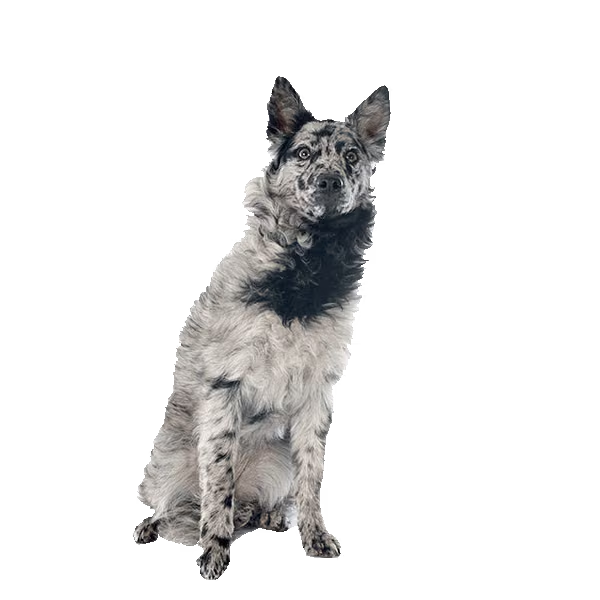
Mudi
The Mudi is a versatile, intelligent Hungarian herding dog with tremendous energy and a keen, alert working spirit.
- Size
- Medium
- Lifespan
- 12–14 years
- Origin
- Hungary
- Temperament
- Intelligent
- Standard colors
- Black, White and Blue and 3 more
Characteristics
Coat and grooming
How the Mudi coat is built, and what that means when you groom it.
- Coat layers
- Single coat
- Coat texture
- Wavy, Curly
- Coat length
- Medium
- Shedding
- Moderate shedding
Grooming guidance
Caution: A Mudi coat mats easily.
Fine or long hair tangles at the base of the coat, out of sight, where the mats tighten and pull on the skin. Brushing has to reach right down to the roots in sections, not just skim the surface.
Mudi colors and patterns
What each club's breed standard says about every Mudi color and pattern. Point at a ruling to see the club's own wording.
Breed standards describe the Mudi in Black, White, Blue, Brown, Fawn and Isabella. Standard patterns: Solid and Merle.
| Color or pattern | FCI | AKC | UKC | KC | KUSA |
|---|---|---|---|---|---|
| Black | Standard (“Black”) | Standard (“Black”) | Standard (“Black”) | Standard (“Black”) | Standard (“Black”) |
| White | Standard (“White”) | Standard (“White”) | Standard (“White”) | Standard (“white”) | Standard (“White”) |
| Blue | Standard (“Ash (blue)”) | Standard (“Gray”) | Standard (“Ash”) | Standard (“blue”) | Standard (“Ash (blue)”) |
| Brown | Standard (“Liver (brown)”) | Standard (“Brown”) | Standard (“Brown”) | Standard (“brown”) | Standard (“Liver (brown)”) |
| Fawn | Standard (“Fawn (from beige to red)”) | Standard (“Yellow”) | Standard (“Yellow”) | Standard (“fawn (from beige to red)”) | Standard (“Fawn (from beige to red)”) |
| Isabella | Standard (“Ash-brown (diluted brown/izabella)”) | Standard (“Graybrown”) | Standard (“Ashbrown”) | Standard (“blue-brown (diluted brown/Isabella)”) | Standard (“Ash-brown (diluted brown/Izabella)”) |
| Albino | Disqualifying | Disqualifying (“albino (pure white with pale pink skin and pink eyes)”) | Disqualifying (“Albinism”) | Not recognised | Disqualifying |
| Patterns | |||||
| Solid | Standard | Standard (“there is no preference of the solid vs. merle pattern”) | Standard (“Solid”) | Standard | Standard |
| Merle | Standard (“Cifra (Merle)”) | Standard (“Merle Markings”) | Standard (“Merle”) | Standard (“merle in these colours”) | Standard (“Cifra (Merle)”) |
| Sable | Disqualifying | Disqualifying | Fault (“color patterns of sable”) | Not recognised | Disqualifying |
| Tan point | Disqualifying | Disqualifying (“black and tan”) | Fault (“Sable or tan points”) | Not recognised | Disqualifying |
| Agouti | Disqualifying | Disqualifying (“Wolf gray (agouti – alternating bands of color along each hair shaft)”) | Not recognised | Not recognised | Disqualifying |
| Double merle | Disqualifying | Disqualifying | Not recognised | Not recognised | Disqualifying |


| Color or pattern | FCI | AKC | UKC | KC | KUSA |
|---|---|---|---|---|---|
| Blue | Standard (“For merle colours partially or solid, blue eye colour is not a fault”) | Standard (“Merle – Brown, blue or partially blue eyes”) | Standard (“Merles may also have blue”) | Standard (“In merle colours, partially or solid blue eye colour (in either or both eyes) permissible”) | Standard (“For merle colours partially or solid, blue eye colour is not a fault”) |
| Brown | No ruling | Standard (“Merle – Brown, blue or partially blue eyes”) | Standard (“other colors may have brow, amber, or yellow eyes”) | No ruling | No ruling |
| Dark brown | Standard (“as dark as possible”) | Standard (“Black Dogs – Dark as possible”) | Standard (“Black and White dogs should have dark brown eyes”) | Standard (“As dark as possible”) | Standard (“as dark as possible”) |
| Light brown | No ruling | Standard (“Brown, gray and gray-brown may have lighter brown eyes”) | No ruling | No ruling | No ruling |
| Amber | No ruling | No ruling | Standard (“other colors may have brow, amber, or yellow eyes”) | No ruling | No ruling |
| Yellow | Disqualifying (“Yellow eyes in black dogs”) | Disqualifying (“yellow eyes in black dogs”) | Standard (“other colors may have brow, amber, or yellow eyes”) | Fault (“Yellow eyes in black dogs highly undesirable”) | Disqualifying (“Yellow eyes in black dogs”) |
| Pink / red | No ruling | Disqualifying (“Pink (Albino) eyes in white dogs”) | No ruling | No ruling | No ruling |
| Patterns | |||||
| Odd-eyed | No ruling | No ruling | Standard (“Heterochromia”) | Standard (“(in either or both eyes)”) | No ruling |
| Sectoral | Standard (“For merle colours partially or solid, blue eye colour is not a fault”) | Standard (“partially blue eyes”) | No ruling | Standard (“partially or solid blue eye colour”) | Standard (“For merle colours partially or solid, blue eye colour is not a fault”) |


| Color or pattern | FCI | AKC | UKC | KC | KUSA |
|---|---|---|---|---|---|
| Black | Standard (“Colour is black”) | Standard (“Black Dogs – Black nose”) | Standard (“Black dogs will have black pigmentation”) | Standard (“Nose colour generally black”) | Standard (“Colour is black”) |
| Blue | Standard (“Ash (blue-grey) and its merle varieties nose colour is blue”) | Standard (“Gray dogs – Gray nose”) | Standard (“Ash dogs will have ash pigmentation”) | Standard (“blue and blue merle where nose colour blue”) | Standard (“Ash (blue-grey) and its merle varieties nose colour is blue”) |
| Liver | Standard (“for liver (brown), ash liver and its merle varieties the colour is brown”) | Standard (“Brown and graybrown dogs – Brown nose”) | Standard (“Brown dogs will have brown pigmentation”) | Standard (“brown and merle where nose colour brown”) | Standard (“for liver (brown), ash liver and its merle varieties the colour is brown”) |
| Isabella | No ruling | No ruling | Standard (“Ashbrown dogs will have ashbrown pigmentation”) | No ruling | No ruling |
| Pink | Disqualifying (“Spotted or flesh-coloured nose leather”) | Disqualifying (“Pink or spotted nose”) | Disqualifying (“Butterfly or pink nose”) | Fault (“Spotted or flesh-coloured nose leather highly undesirable”) | Disqualifying (“Spotted or flesh-coloured nose leather”) |
| Patterns | |||||
| Butterfly nose | Standard (“except for a small amount of spotting in merle colours”) | Disqualifying (“Pink or spotted nose”) | Disqualifying (“Butterfly or pink nose”) | Fault (“Spotted or flesh-coloured nose leather highly undesirable”) | Standard (“except for a small amount of spotting in merle colours”) |

What the rulings mean
- Standard
- Described by the club's breed standard.
- Fault
- Named by the club's breed standard as a fault: the animal can be shown but is penalised.
- Disqualifying
- The club's breed standard disqualifies an animal of this colour or pattern.
- Not recognised
- The club does not accept this colour or pattern for the breed.
Color changes
How a Mudi's colors can change over its life.
Blackchanges toRust
Coat · With body condition · can change back
Blackchanges toGrey
Coat · Progressive
Blackchanges toBrown
Coat · In the sun · can change back
Whitechanges toRoan
Coat · With age · from 2 weeks
Tan pointchanges toSaddle
Coat · With age · from 6 to 156 weeks
Bluechanges toDark brown
Eyes · With age · from 2 weeks
Bluechanges toBrown
Eyes · With age · from 2 weeks
Bluechanges toLight brown
Eyes · With age · from 2 weeks
Bluechanges toAmber
Eyes · With age · from 2 weeks
Bluechanges toHazel
Eyes · With age · from 2 weeks
Bluechanges toYellow
Eyes · With age · from 2 weeks
Blackchanges toSnow nose
Nose · With the season · can change back
Blackchanges toPink
Nose · With the season · can change back


Sources
Each ruling comes from the club's published breed standard or color list.
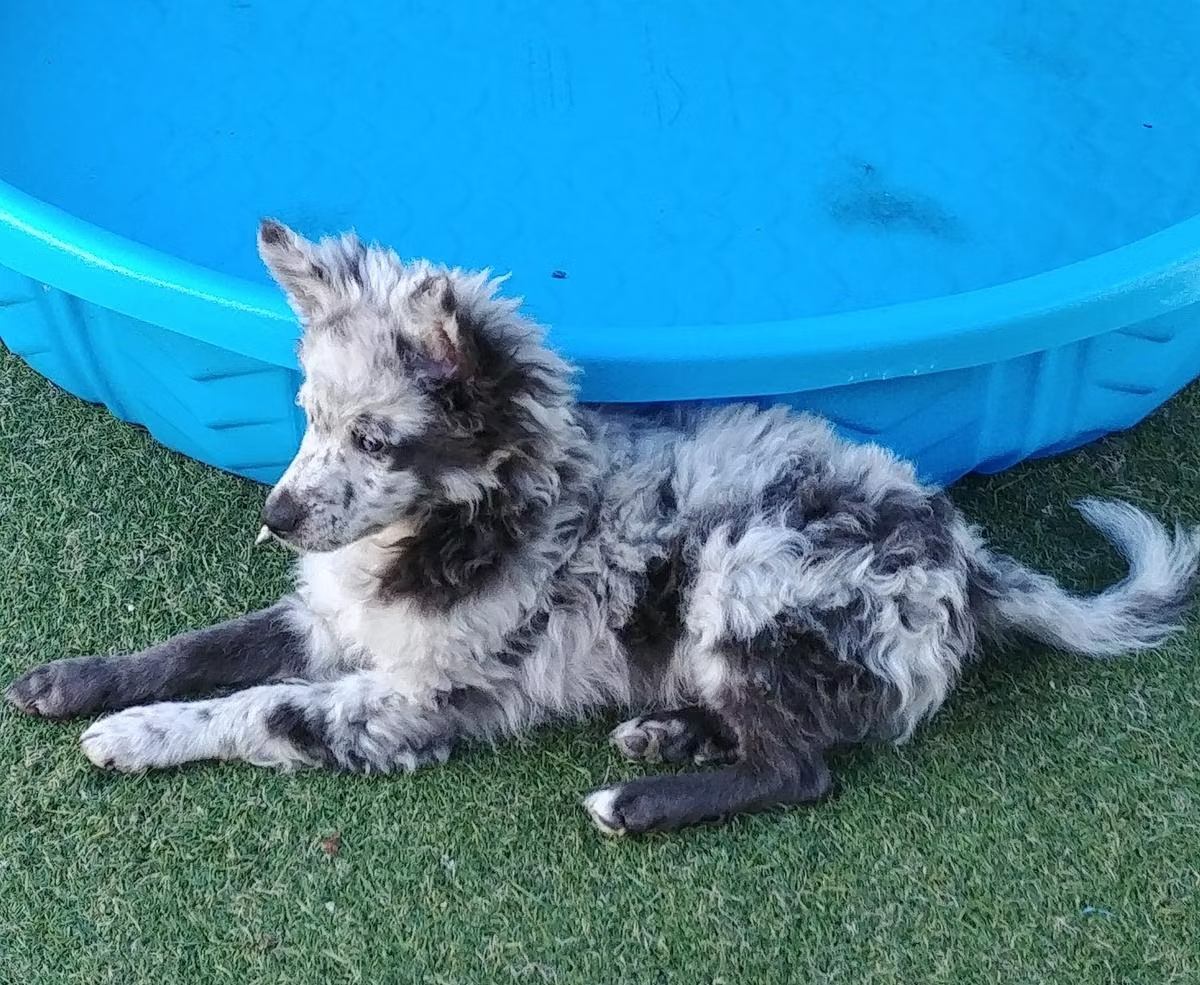
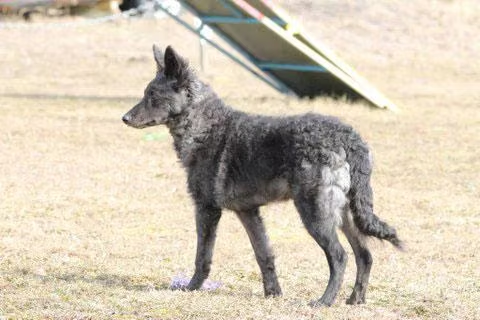
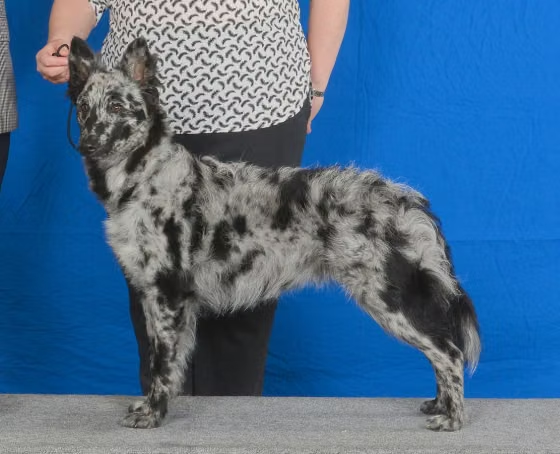
Meet some of our Mudi
A few of the Mudi profiles members have added to United Pet Club.




About the Mudi
The Mudi is a medium-sized Hungarian herding dog, sharp-witted and always on alert, that needs a proper job to do and typically lives 12 to 14 years.
The Mudi is a medium-sized herding breed that came out of Hungary's farm country. It was bred to work livestock and mind the yard, not to sit for rosettes at a show, and it still carries itself like a dog with a job to do. The frame is athletic and squarish, the coat runs wavy to curly over most of the body, and the expression is watchful, the kind of dog that clocks everything going on around it.
Mudis pick things up fast and react faster. They form a tight bond with one handler or household rather than doling out affection evenly, and with people they don't know they tend to hang back and have plenty to say about it, a trait left over from generations spent as a farm watchdog as much as a herder.
Energy is the thing that defines the breed. A Mudi kept indoors without a proper outlet for that energy will find its own amusement, usually noisy amusement. Owners who give it herding work, dog sports, or a solid daily routine of structured exercise generally find it settles well and is straightforward to live with.
| Attribute | Detail |
|---|---|
| Origin | Hungary |
| Size | Medium |
| Lifespan | 12 to 14 years |
| Group/role | Herding and farm dog |
| Good with | Active families, experienced owners, other dogs once properly socialised |
Who the Mudi suits
The Mudi suits a household that can keep it busy with daily work and something to think about. It gets on well with people who enjoy training, dog sports, or life on a smallholding with livestock to mind. It is not a good match for a quiet house or for owners out at work long hours, since a Mudi left understimulated tends to grow restless and vocal about it.
History of the Mudi
The Mudi took shape on Hungarian farms as a herding dog and was first recognised as its own breed in the early twentieth century.
The Mudi comes from Hungary, where it worked farms herding sheep and cattle and keeping an eye on the property besides. For much of its early history it was not kept distinct from other Hungarian herding dogs such as the Puli and Pumi. Farmers cared about working ability rather than a fixed look, so the three types were often bred together without much separation.
The breed was picked out and described as its own type in the 1930s, when efforts got underway to tell it apart from its Hungarian cousins. Dr. Dezso Fenyesi is credited with identifying and naming the Mudi during this period.
The Second World War hit numbers across many European breeds hard, and the Mudi was no exception among Hungarian dogs. Breeders spent the following decades rebuilding the population from what farm stock had survived.
The Mudi remains a rare sight outside Hungary and is still put to work herding there today. International recognition has come gradually, including acceptance from bodies such as the Irish Kennel Club and other major kennel organisations, though it stays a good deal rarer than the mainstream herding breeds most Irish owners would know.
Appearance of the Mudi
The Mudi is a medium-sized, squarely built dog with a wavy to curly coat, a wedge-shaped head, and several coat colours including a distinctive merle.
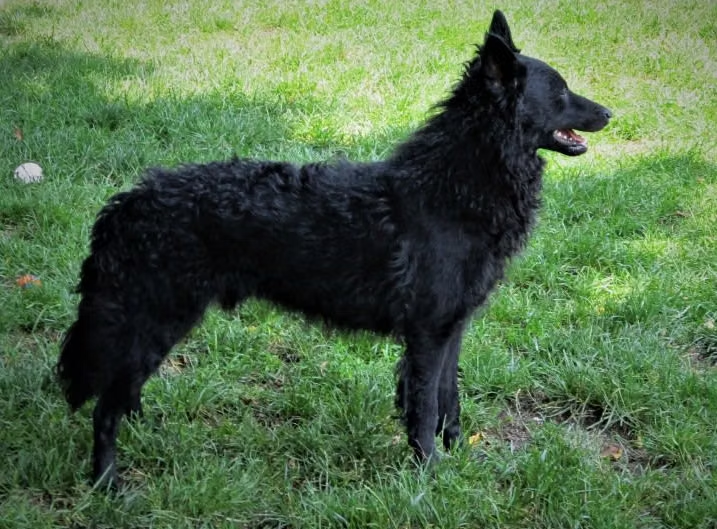
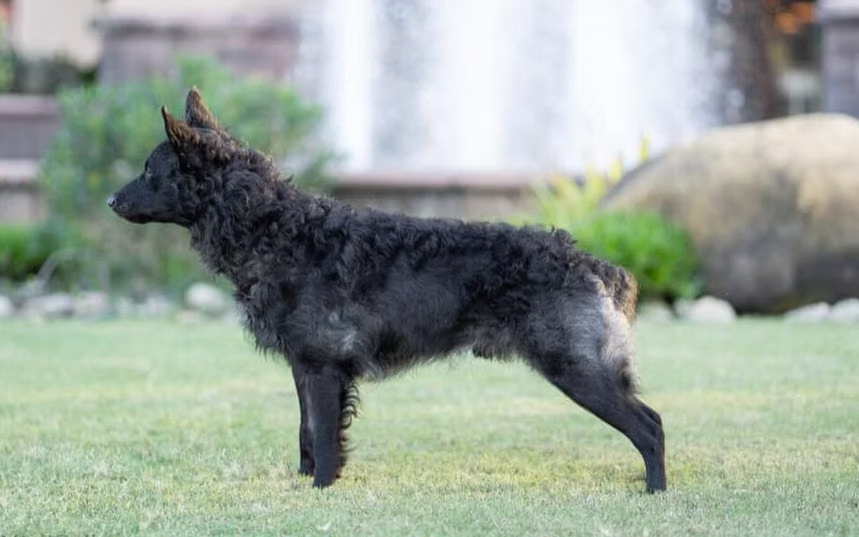
The Mudi is medium in size with a balanced, roughly square outline and a light, agile frame built for work rather than show. The head is wedge-shaped with a pointed muzzle and pricked, V-shaped ears. The whole picture is alert and ready to move at short notice. The coat lies short and smooth on the face and the front of the legs and turns wavy to curly over the rest of the body.
| Trait | Detail |
|---|---|
| Height | Roughly 38 to 47 cm (15 to 18.5 in) at the shoulder |
| Weight | About 8 to 13 kg (18 to 29 lb) |
| Coat | Short and smooth on face and forelegs, wavy to curly elsewhere |
| Colours | Black, brown, grey, white, yellow (fawn), and merle |
| Eyes | Oval and dark brown; lighter eyes can turn up with merle |
Coat and colours
The body coat is dense and wavy or curly, giving some texture without forming the cords you'd see on a Puli. Colour varies quite a bit. Solid black turns up most often, with brown, grey, white, and yellow also seen. The merle pattern, known in Hungary as cifra, gives a marbled mix of darker patches over a lighter base. Breeders avoid pairing two merle dogs together because of the health risks tied to a double merle gene.
Mudi temperament
The Mudi is intelligent, energetic, and devoted to its family, but tends to be reserved and vocal with strangers.
The Mudi is sharp, busy, and bonds tightly with its own people. It tends to attach itself closely to one household and works willingly for a handler it trusts. Around family it is affectionate and playful, and it likes to stay close to the people it knows best rather than working the room.
With strangers the breed is usually wary rather than outgoing. It is alert and quick to bark, which makes it a decent watchdog but also means early socialisation matters a great deal. Without enough exposure to new faces and situations, a Mudi can turn overly suspicious or noisy about it.
With other dogs and pets the Mudi generally does fine when raised alongside them and introduced properly. The herding instinct can show itself as chasing or nudging, so keep an eye on things around small animals and young children. This is a thinking dog that needs an outlet, and boredom tends to come out as barking, digging, or other bad habits.
| Trait | Rating |
|---|---|
| Affection | 4 |
| Energy | 5 |
| Trainability | 5 |
| Vocalness | 5 |
| Shedding | 3 |
Caring for a Mudi
The Mudi needs a good deal of daily exercise and mental work but is light on grooming thanks to its easy-care coat.
Grooming
- Brush the coat about once a week to clear loose hair and stop tangles forming in the wavy patches.
- Brush more often during the seasonal moult.
- Bathe only when the dog is actually dirty; the coat sheds dirt well on its own and needs little washing.
- Trim nails every few weeks and check ears for debris or damp.
- Brush teeth several times a week to keep on top of dental health.
Exercise
- Give at least 1 to 2 hours of activity a day.
- Pair physical exercise with something that uses the mind, such as training drills or scent games.
- Suitable outlets include herding, agility, obedience, flyball, and long walks out on the hills or along the coast.
- A securely fenced garden helps, since the breed is quick off the mark and inclined to chase.
Environment
The Mudi copes well with Ireland's cool, damp climate and is happy doing outdoor work, but it should live as part of the household rather than being left out in a shed or kennel on its own. It suits a rural or suburban home with room to move about, from a smallholding to a house with a decent garden. An apartment can work only if the owner commits to real daily exercise and training, and even then the breed's readiness to bark needs managing, particularly with neighbours close by.
Mudi nutrition and feeding
A working Mudi needs a complete diet with adequate protein scaled to how active it is, fed in measured meals to keep weight in check.
The Mudi does well on a complete and balanced diet formulated for active medium-sized dogs. Because energy needs shift with workload, a Mudi doing herding work or sport may need more food than a companion dog of the same size. Match portions to body condition: the ribs should be easy to feel but not visible, with a clear waist. Fresh water should be available at all times.
| Life stage | Amount per day | Meals |
|---|---|---|
| Puppy (2 to 6 months) | Per product label, divided | 3 to 4 |
| Junior (6 to 12 months) | Roughly 1.5 to 2 cups | 2 to 3 |
| Adult | Roughly 1 to 1.75 cups | 2 |
| Senior | Adjusted down for lower activity | 2 |
Treats and supplements
Keep treats to around 10 percent of daily calories and use them mainly for training. Most Mudis on a complete diet do not need supplements, but a vet may suggest joint support for very active or older dogs. Bring in any change of diet gradually over several days to avoid an upset stomach.
Mudi health and lifespan
The Mudi is a generally hardy breed with a lifespan of 12 to 14 years and relatively few inherited problems, though hip dysplasia and eye conditions do occur.
The Mudi is considered a robust, healthy breed, helped by its background as a working farm dog rather than a breed refined heavily for the show ring. The typical lifespan runs 12 to 14 years. Like any dog it has a few conditions worth keeping an eye on, and responsible breeders screen their breeding stock for known issues.
| Condition | Signs | Note |
|---|---|---|
| Hip dysplasia | Stiffness, limping, reluctance to jump | Screen breeding dogs; keep weight under control |
| Cataracts | Cloudy eyes, changes in vision | Eye exams help catch it early |
| Elbow dysplasia | Lameness in the front legs | Less common but turns up in some lines |
| Epilepsy | Seizures | Manageable with veterinary care where it occurs |
Preventive care
- Keep vaccinations and parasite control up to date.
- Book annual veterinary checkups, with more frequent visits for older dogs.
- Keep the dog at a healthy weight to protect the joints.
- Provide regular dental care.
- Choose a puppy from a breeder who tests for hip and eye conditions.
Training a Mudi
The Mudi is highly trainable and keen to work, and responds best to consistent, reward-based training that keeps its mind occupied.
The Mudi ranks among the more trainable breeds going. It picks things up quickly, likes having a task to do, and keeps a close eye on its handler. That intelligence cuts both ways, though: a Mudi that's bored or under-exercised will find its own outlets, usually barking or some other habit nobody asked for. Short, varied sessions hold its attention better than long repetitive drills. Early socialisation matters for taking the edge off the breed's natural wariness of strangers and its readiness to bark.
Basics
- Start socialisation and handling young, introducing the puppy to new people, places, and sounds.
- Teach the core cues: name, sit, down, stay, recall, and walking on a loose lead.
- Bring in a quiet or enough cue early to keep the barking manageable.
- Introduce a job or sport such as herding, agility, or obedience once the basics are solid.
- Keep sessions short, frequent, and varied to hold interest.
Breeding the Mudi
The Mudi reaches breeding maturity in its second year, carries an average litter of about four to six pups, and both parents benefit from health screening.
Responsible Mudi breeding puts health, temperament, and working ability ahead of looks alone. Both parents should be fully mature and screened for hip and eye conditions before mating. Females are usually bred after their first season or two, once they've reached physical and mental maturity.
Gestation in dogs runs roughly 63 days. Litters tend to be small to moderate in size. Because the breed carries the merle gene, breeders avoid pairing two merle dogs to prevent the health problems that come with double merle pups.
Raising Mudi pups well comes down to early handling and socialisation. Pups that meet a range of people, sounds, and surfaces in their first weeks tend to grow into more confident adults. Pups are normally weaned and ready to go to new homes at around eight weeks old.
| Metric | Value |
|---|---|
| Breeding maturity | Around 18 to 24 months |
| Gestation | About 63 days |
| Average litter size | 4 to 6 puppies |
| Weaning age | About 7 to 8 weeks |
| Health screening | Hips and eyes; avoid merle to merle pairings |
Registering your Mudi in Ireland, chip and record both
Irish law wants every dog chipped and recorded; United Pet Club keeps your Mudi's record free, current, and there for life.
How to register a Mudi in Ireland
Irish law has required every dog to be chipped and registered since the 2015 Regulations came in, and it expects the details behind the chip to stay current, not gather dust. A free United Pet Club profile does that for your Mudi, for life. Registering your dog is a few minutes' work and costs nothing at all.
The implant is the vet's job; the record is down to you, and the 2015 rules assume you'll keep it current. Register the microchip free on the lifetime plan: whatever brand the vet reached for is grand, a house move costs nothing to record, and the number stays searchable day and night. Create your free account and have the pair of jobs done before the tea goes cold.
How do I register my Mudi in Ireland?
Set yourself up with a free United Pet Club account, key in your Mudi's details and a photo, and save. The profile holds for the whole of his life without charge, and the chip number can be lodged whenever you have it.
How do I register my Mudi's microchip?
Lodge the fifteen digit chip number in your free account along with your address and phone number. The lifetime plan covers the registration and every update after it, free, whatever brand the vet used.
Is microchipping a Mudi required in Ireland?
It is. The 2015 Regulations require every dog to be chipped and registered, pup or rescue alike. Keeping the record current is the part that falls to you, and United Pet Club makes that part free.
What does it cost to register a Mudi in Ireland?
Not a penny. Profile, chip record, and every amendment are covered for life, with no renewal ever.
Mudi frequently asked questions
Common questions about the Mudi cover its size, temperament, care needs, lifespan, suitability, and where to find one.
How big does a Mudi get?
The Mudi is a medium-sized dog, standing roughly 38 to 47 cm (15 to 18.5 in) at the shoulder and weighing about 8 to 13 kg (18 to 29 lb).
What's the Mudi's temperament like?
Mudis are intelligent, energetic, and always alert. They bond closely with their families, tend to be reserved around strangers, and bark readily, which makes them decent watchdogs.
Is the Mudi hard to care for?
Grooming is easy enough, with about weekly brushing. The real challenge is meeting the breed's high need for daily exercise and mental work. A Mudi without enough to do can grow restless and noisy.
How long does a Mudi live?
The typical lifespan is 12 to 14 years. The breed is generally healthy, especially with a good diet, plenty of exercise, and routine veterinary care.
Is the Mudi a good family dog?
Yes, for an active family. The breed is affectionate and devoted, but it needs owners who can provide plenty of exercise, training, and early socialisation. It suits experienced, engaged owners best.
Are Mudis easy to find in Ireland?
The Mudi is rare outside Hungary, and Ireland is no exception, so prospective owners often face a wait. Go through a reputable breeder who health-tests the parents rather than an unverified source, and the Irish Kennel Club is a good place to start looking.
Does the Mudi bark a lot?
Yes. The Mudi is naturally vocal and alert. Early training that includes a quiet cue, combined with enough daily activity, helps keep the barking under control.
From the community
Ask about the MudiNo questions about the Mudi yet. Be the first to ask.
Browse Dog breeds