

Miniature Pinscher
The Miniature Pinscher is a spirited little dog known for its fearless, fiery personality and proud, high-stepping gait.
- Size
- Small
- Lifespan
- 12–16 years
- Origin
- Germany
- Temperament
- Spirited
- Standard colors
- Black, White and Blue and 4 more
Characteristics
Coat and grooming
How the Miniature Pinscher coat is built, and what that means when you groom it.
- Coat layers
- Single coat
- Coat texture
- Smooth
- Coat length
- Short
- Shedding
- Low shedding
Miniature Pinscher colors and patterns
What each club's breed standard says about every Miniature Pinscher color and pattern. Point at a ruling to see the club's own wording.
Breed standards describe the Miniature Pinscher in Black, White, Blue, Chocolate, Red, Rust and Isabella. Standard patterns: Solid, Sable and Tan point.
| Color or pattern | FCI | AKC | UKC | KC | KUSA |
|---|---|---|---|---|---|
| Black | Standard (“Lacquer black with red or brown markings”) | Standard (“Black & Rust”) | Standard (“Black, with sharply defined rust-red markings”) | Standard (“Black & Tan”) | Standard (“Black ... with sharply defined tan markings”) |
| White | Not recognised | Alternate (“White Markings”) | Disqualifying (“White on any part of the dog that exceeds one-half inch in its longest dimension”) | Standard (“Slight white on chest tolerated”) | Fault (“Slight white on chest permissible but undesirable”) |
| Blue | Not recognised | Disqualifying (“Blue & Rust”) | Standard (“Blue with rust-red markings”) | Standard (“Blue & Tan”) | Standard (“blue, with sharply defined tan markings”) |
| Chocolate | Not recognised | Standard (“Chocolate & Rust”) | Standard (“Chocolate, with rust-red markings”) | Standard (“Chocolate & Tan”) | Standard (“chocolate, with sharply defined tan markings”) |
| Red | Standard (“Self coloured: Deer red, reddish-brown to dark red brown”) | Standard (“Red”) | Standard (“Solid clear red”) | Standard (“Solid red of various shades”) | Standard (“Solid red of various shades”) |
| Rust | Standard (“red or brown markings”) | Standard (“Black & Rust”) | Standard (“rust-red markings”) | Standard (“sharply defined tan markings”) | Standard (“sharply defined tan markings”) |
| Isabella | Not recognised | Disqualifying (“Fawn (Isabella) & Tan”) | Standard (“Fawn (Isabella) with rust-red markings”) | Not recognised | Not recognised |
| Albino | Not recognised | Disqualifying | Disqualifying (“Albinism”) | Not recognised | Not recognised |
| Patterns | |||||
| Solid | Standard (“Self coloured”) | Standard (“Solid clear red”) | Standard (“Solid clear red”) | Standard (“Solid red of various shades”) | Standard (“Solid red of various shades”) |
| Sable | No ruling | Standard (“Stag Red”) | Standard (“Stag red, which is red with an intermingling of black hairs”) | Not recognised | Not recognised |
| Tan point | Standard (“Black and Tan”) | Standard (“Black & Rust”) | Standard (“Black, with sharply defined rust-red markings”) | Standard (“Black & Tan”) | Standard (“Black, blue, or chocolate, with sharply defined tan markings”) |
| Roan | Fault (“Roans”) | No ruling | No ruling | Not recognised | Not recognised |

%22%3E%3Crect%20x%3D%220%22%20y%3D%220%22%20width%3D%2264%22%20height%3D%2264%22%20fill%3D%22url(%23g)%22%2F%3E%3Cg%20fill%3D%22none%22%20stroke%3D%22%231C1C1C%22%20stroke-width%3D%221%22%20stroke-linecap%3D%22round%22%20stroke-linejoin%3D%22round%22%3E%3Cpath%20d%3D%22M15.7%2014.8l1.9%203.6M26.4%2024.1l1.2%204.1M42.7%2029.5l0.1%203.3M35.9%2025l1.6%203.2M31.3%2028.1l0.7%203.7M15.5%2011.1l1.6%203.6M41.1%2023.8l0.6%203.2M12.1%2020.7l1.2%203M15.4%2011.2l0.8%203.8M42.9%2027.3l0.7%202.9M48.2%2033.2l0.5%204.1M23.1%2024.7l1.4%203.4M51.9%2036.1l0.3%204.3M18.7%2023.9l1.2%203.7M50.4%2027.4l0.5%204.1M18.4%2020.4l0.1%203.1M55.6%2021.4l1.1%203.9M18.6%2024.9l1.7%203.8M8.3%2023.2l1.7%202.9M18.7%2024.2l0.2%203.1M46.4%2022.7l0.6%202.6M14.3%207l0.9%203.5M50.5%2024.9l0.5%203.7M23.2%2024.7l1.2%204.3M10.5%2022.3l1.6%203.4M56.9%2018.2l1.1%202.5M20.8%2021.7l1.1%203.5M10.9%2020.2l0.2%203.9M6.6%2023.3l1%202.4M54.5%2021.7l0.9%203.8M13.3%2021l0.4%203M11.7%2019.5l0.3%204M39%2023.2l0.7%202.5M20.8%2016.7l0%202.6M18.4%2016l0.2%202.6M46.4%2038.2l1.4%203.2M12.9%2022.6l0.6%203.3M13%2020.9l0.3%204.3M35.3%2024.9l1.3%202.3M29.5%2022.1l0.5%202.8M36.6%2023.4l0.2%204.3M20.5%2017.6l0.7%204.1M18.3%2020.6l0.6%203M20.5%2025.8l0.5%203.8M23.5%2040.2l1.1%202.9M22.8%2024.9l1.5%203M25.5%2023.1l0.5%203.3M47.7%2024.7l1.5%203.7M12.9%2018.4l1.9%203.8M29.5%2023.7l0.5%204.1M37.7%2026.5l0%202.9M16.8%2016.4l0.1%203.3M49.8%2028l1.7%203.8M29.4%2025.5l0.5%203.6M9.3%2023l1.3%203.1M47.4%2025.6l0.5%203.5M48.1%2023.8l1.6%203.2M9.9%2018.3l1.3%202.5M12.2%2016.6l0.4%203.2M22%2022.1l1.4%202.7M43.9%2024.7l1.4%203.9M14.3%2020l1.8%203.2M46.3%2040.1l0.3%203.6M14.9%207l0.3%204M17.5%2016.7l1.2%202.4M54.6%2040l1%203.5M13.3%2013.9l1.6%204.2M15.3%2016.5l1.2%202.9M23.8%2038.5l0.2%203.8M18.2%2019l0.6%203M11.2%2023.6l0.7%204.1M33.1%2023.2l0.9%204.3M13.6%2019.9l0.4%204.5M19.7%2023.1l1.9%203.7M50.5%2027.1l0.3%204.1M28.2%2028.5l0.2%203.8M29%2028.4l0.1%204M47.7%2024.5l0.6%202.5M10.7%2017.2l1.4%202.7M25.5%2040.3l0.6%204.1M37.6%2022.8l0.7%204.4M57%2018.6l0.2%203.4M16.9%2022.2l1.7%203.8M43.5%2024.7l1.8%203.4M49.2%2026l1.5%203.6M47.7%2032.3l0.4%203.7M35.4%2030.8l0.5%202.7M47%2026.1l1%203.9M24.3%2028.1l1.5%204.2M50.5%2023.8l1.3%203.4M58.1%2014.1l0.3%202.6M13.9%2018.2l0.7%202.5M8.2%2021l0.7%202.9M41.4%2026.4l0.4%202.7M16.3%2020.4l0.5%204.3M43.4%2025.9l1.2%203.2M32.3%2022.4l0.3%203.9M43.6%2025.9l2.1%203.8M33.5%2026.3l1.5%203M48.3%2030.6l1.4%203.4M44.2%2024.7l0.9%203.2M12.3%2017.7l0.9%203.7M46.2%2032l1.9%203.4M51%2028.3l0.1%203.7M30.4%2023.1l1.1%203.2M52.6%2022.6l0.9%204.3M16.6%2015.4l0.9%203.1M58.4%2012.8l0.3%202.8M42.8%2032.5l1.8%203.2%22%2F%3E%3Cpath%20d%3D%22M16.4%2026.1l0.1%204.3M14%2017.1l1.3%202.8M36.9%2027.2l1.3%202.6M38.6%2025.8l0.4%203.6M57.6%2014.3l0.3%203.9M14.7%208.2l1%204.3M53.4%2023l1.9%203.4M51.5%2030.3l0.8%202.7M56.2%2020l1.9%203.5M15.9%2010l0.2%202.8M15.8%2022.6l1.8%203.9%22%2F%3E%3C%2Fg%3E%3C%2Fg%3E%3Cuse%20href%3D%22%23s%22%20fill%3D%22none%22%20stroke%3D%22%233B2A20%22%20stroke-opacity%3D%220.6%22%20stroke-width%3D%221%22%20stroke-linejoin%3D%22round%22%2F%3E%3Cellipse%20cx%3D%223.2%22%20cy%3D%2221.7%22%20rx%3D%221.3%22%20ry%3D%221.2%22%20fill%3D%22%231C1C1C%22%2F%3E%3Ccircle%20cx%3D%2210.8%22%20cy%3D%2219.3%22%20r%3D%221.1%22%20fill%3D%22%231C1C1C%22%2F%3E%3C%2Fsvg%3E)
%22%3E%3Ccircle%20cx%3D%2212%22%20cy%3D%2217.2%22%20r%3D%221.25%22%20fill%3D%22%23C4996A%22%2F%3E%3Cpath%20d%3D%22M1.5%2021.2L9%2018.6L12.6%2021L12.2%2026.2L3.5%2024.4Z%22%20fill%3D%22%23C4996A%22%2F%3E%3Cpath%20d%3D%22M10%2026L14.5%2026.4L18.2%2029.2L13.5%2029.8Z%22%20fill%3D%22%23C4996A%22%2F%3E%3Cellipse%20cx%3D%2221.2%22%20cy%3D%2230.6%22%20rx%3D%221.6%22%20ry%3D%222.3%22%20fill%3D%22%23C4996A%22%2F%3E%3Crect%20x%3D%220%22%20y%3D%2247%22%20width%3D%2264%22%20height%3D%2217%22%20fill%3D%22%23C4996A%22%2F%3E%3Cpath%20d%3D%22M51.5%2024.5L55%2027L54.2%2032L50.5%2028.5Z%22%20fill%3D%22%23C4996A%22%2F%3E%3Cpath%20d%3D%22M45%2038.5L48%2039L48.5%2047L45.5%2047Z%22%20fill%3D%22%23C4996A%22%2F%3E%3C%2Fg%3E%3Cuse%20href%3D%22%23s%22%20fill%3D%22none%22%20stroke%3D%22%233B2A20%22%20stroke-opacity%3D%220.6%22%20stroke-width%3D%221%22%20stroke-linejoin%3D%22round%22%2F%3E%3Cellipse%20cx%3D%223.2%22%20cy%3D%2221.7%22%20rx%3D%221.3%22%20ry%3D%221.2%22%20fill%3D%22%231C1C1C%22%2F%3E%3Ccircle%20cx%3D%2210.8%22%20cy%3D%2219.3%22%20r%3D%221.1%22%20fill%3D%22%231C1C1C%22%2F%3E%3C%2Fsvg%3E)
%22%3E%3Cg%20fill%3D%22none%22%20stroke%3D%22%23F5F5F0%22%20stroke-width%3D%221.15%22%20stroke-linecap%3D%22round%22%20stroke-linejoin%3D%22round%22%3E%3Cpath%20d%3D%22M28.6%2025h.1M51.3%2028.8h.1M34.7%2024.3h.1M34.2%2041.6h.1M51%2044.2h.1M55.9%2024.7h.1M27.5%2026.3h.1M18.5%2028.6h.1M25.2%2028.9h.1M24.2%2019.3h.1M20.6%2017.6h.1M34.1%2030.6h.1M57.3%2023.3h.1M23.5%2030.7h.1M26.5%2023.1h.1M40%2031.5h.1M51.7%2038.6h.1M20.2%2022.1h.1M40.4%2037.8h.1M35%2043.1h.1M20.6%2031.7h.1M27.8%2031.9h.1M17.2%2021.1h.1M38.1%2037.7h.1M25.3%2040.5h.1M32%2029.3h.1M41.6%2039.5h.1M23.6%2024h.1M26.4%2018.6h.1M30.3%2031.9h.1M31.2%2035.2h.1M36.5%2043.7h.1M35.2%2026.3h.1M55.6%2019.1h.1M22.4%2036.8h.1M39.2%2020h.1M49.5%2039.1h.1M33.6%2033.5h.1M36.4%2032.4h.1M56.3%2042.4h.1M54.8%2031.2h.1M36.9%2023.2h.1M52.7%2019.1h.1M21.5%2033.8h.1M48.6%2028h.1M36.6%2017.5h.1M45.6%2031.3h.1M37.9%2030.5h.1M17%2031.8h.1M21.1%2043.1h.1M55.7%2021.1h.1M30.8%2041.9h.1M57.4%2038.4h.1M54.8%2026.9h.1M29.1%2017.5h.1M24.3%2037.7h.1M26%2032h.1M39.3%2022.8h.1M53.5%2029h.1M53.3%2023.3h.1M20%2038.4h.1M28.3%2044.7h.1M28.6%2039.8h.1M51.9%2041.1h.1M52.3%2033.7h.1M19.6%2042.2h.1M19%2033h.1M47.8%2021.7h.1M45.7%2024.8h.1M24.6%2035.5h.1M29.8%2036.8h.1M50.7%2032h.1M29.5%2043.5h.1M28.2%2041.5h.1M47.4%2034.8h.1M25.4%2033.7h.1M50.2%2041.2h.1M27.7%2029.5h.1M21.5%2024.8h.1M55.5%2017.5h.1M41.2%2044.3h.1M39.2%2018.4h.1M41.1%2042.5h.1M54.7%2035.3h.1M42.8%2034.5h.1M30.1%2023h.1M42.6%2025.1h.1M32.9%2024.4h.1M42.4%2032.4h.1M49.7%2022.2h.1M49.1%2043.1h.1M38%2035.2h.1M47.7%2043.8h.1M43.1%2022.4h.1M22.4%2040.4h.1M44.4%2019.8h.1M53.3%2040.1h.1M20.7%2029.3h.1M55.6%2043.9h.1M17.6%2039.2h.1M41.7%2028.9h.1M44.1%2036.3h.1M24.3%2043.6h.1M26.4%2038.1h.1M30.3%2029.2h.1M31.5%2030.8h.1M32.1%2023h.1M18.3%2040.9h.1M48%2033.4h.1M36.4%2038.7h.1M31.9%2020.8h.1M32.6%2026.2h.1M22%2031.2h.1M53.4%2021.7h.1M41.9%2017.7h.1M53.3%2037.3h.1M47.7%2040.3h.1M54.4%2033.7h.1M33.6%2037.5h.1M25.3%2017.2h.1M37.6%2019.7h.1M31.6%2019h.1M29.2%2019.6h.1M50.7%2027.3h.1M22%2022.1h.1M31%2037.8h.1M56.5%2026.6h.1M34.7%2039.5h.1M56.5%2040.8h.1M47.6%2038h.1M48.6%2026.1h.1M49.7%2034.2h.1M45.4%2027.4h.1M22.6%2038.9h.1M56.5%2035.3h.1M35.1%2021h.1M41.9%2020.1h.1M37.6%2040h.1M32.6%2044.4h.1M37.9%2025.2h.1M26.6%2043h.1M18.9%2036.7h.1M47.2%2028.9h.1M30.5%2026.2h.1M17.4%2027.3h.1M47.1%2017.2h.1M22.3%2044.3h.1M32.5%2042.4h.1M23.6%2025.7h.1M31.4%2024.9h.1%22%2F%3E%3Cpath%20d%3D%22M26%2020.9h.1M41.2%2023.8h.1M39.9%2026.4h.1M28.5%2033.4h.1M42.8%2043.8h.1M17.6%2034.3h.1M34%2017.1h.1M31.2%2017.2h.1M46.5%2036.1h.1M25.1%2022.1h.1M50.3%2023.7h.1M20.2%2026.6h.1M20.8%2020.4h.1M50.9%2017.3h.1M49.5%2020.2h.1M52.9%2044.1h.1M23.9%2017.8h.1M43.2%2028.1h.1M57.6%2030h.1M52%2025.6h.1M19.2%2019.1h.1M19.5%2024.4h.1M32.8%2040.1h.1M36.1%2027.7h.1M39.6%2029.5h.1M38.4%2041.5h.1M47.9%2019.4h.1M49.1%2031.7h.1M55.9%2036.9h.1M29.2%2027.2h.1M46%2043.5h.1M44.6%2028.8h.1M47.5%2031.5h.1M22.8%2020h.1M27.6%2017.1h.1M43.1%2018.6h.1M54.3%2020h.1M57.2%2033.8h.1M44.5%2043.8h.1M27.1%2035.5h.1M45.3%2041.8h.1M56.7%2028.8h.1M36.7%2021.4h.1M43.3%2042.3h.1M17.3%2022.9h.1M32.7%2035.5h.1M30.5%2039.8h.1M29.1%2021.2h.1M34.5%2018.8h.1M25.8%2027h.1%22%2F%3E%3C%2Fg%3E%3Cpath%20d%3D%22M56.3%2038.4l0%201.2M40%2027.2l-0.3%201.3M32.6%2043.6l-0.4%201.5M29%2023.3l0.8%201.5M55.1%2044l0.4%201.1M47.5%2022.5l-0.2%201.6M42.9%2038.6l0.7%201.2M35.2%2041.8l-0.5%201.7M26.9%2040l-0.1%201.2M41%2042.8l-0.1%201.6M18.4%2021.2l0.7%201.3M49.4%2019.3l-0.5%201.4M50.1%2041.7l0%201.8M28.2%2041.8l-0.6%201.2M55.5%2027.1l0.2%201.2M44.7%2019.3l0.5%201.7M48.6%2020.5l-0.8%201.4M43.7%2039.6l0.3%201.1M22.1%2033.8l-0.6%201.6M50.1%2038.1l-0.5%201.3M51.8%2044.1l-0.1%201.8M39%2017.5l0%201.4M30.2%2026.7l0.2%201.4M25.8%2031.2l0.2%201.6M29.6%2043.5l0.1%201M43.7%2018.3l0.1%201.5M29.6%2018.2l0.3%201.6M24.4%2017.6l0.3%201.1M22%2028.2l-0.6%201.6M25.9%2043.3l-0.3%201.4M22.2%2024.3l0.3%201.3M47.3%2029.2l-0.2%201.4M21.8%2033.2l0.5%200.9M32.9%2037l0.4%201M40%2029.9l0.8%201.4M17.4%2038.3l0.2%201.3M31%2039.2l0%201.2M37.3%2033.7l0.3%201.5M48.1%2040.5l0%201.6M33.9%2031.2l0.1%201.2M29.8%2035.2l-0.4%201M25.1%2037.3l-0.2%201.5M30.2%2039.8l0.5%201M44.6%2034.8l0.4%200.9M55.3%2034.2l0%201.7M50.6%2017.9l0.4%201M30.2%2034.9l-0.4%201.4M19.5%2035.7l-0.5%201.7M40.7%2028.7l0.8%201.4M23.3%2029l-0.4%201.4M17%2040.5l-0.2%201M48.4%2023.2l-0.3%201M37.3%2025.1l-0.4%201.3M23%2021.4l-0.4%201.3M20.4%2017.2l-0.1%201.3M42.3%2020.4l0.6%201.4M41%2031.8l0.6%201.2M45.4%2034.3l-0.1%201.2M32.5%2018l0%201.3M46.2%2021.6l0.1%201.4M30.5%2022.3l0.5%201.1M58%2044.6l0.3%201.5M57.1%2033.9l0.8%201.4M18.3%2042.6l0.3%201M40.5%2035.1l-0.6%201.4M38.8%2044.3l-0.3%201.1%22%20fill%3D%22none%22%20stroke%3D%22%23F5F5F0%22%20stroke-width%3D%220.8%22%20stroke-linecap%3D%22round%22%20stroke-linejoin%3D%22round%22%2F%3E%3C%2Fg%3E%3Cuse%20href%3D%22%23s%22%20fill%3D%22none%22%20stroke%3D%22%233B2A20%22%20stroke-opacity%3D%220.6%22%20stroke-width%3D%221%22%20stroke-linejoin%3D%22round%22%2F%3E%3Crect%20x%3D%2220%22%20y%3D%2258%22%20width%3D%223.6%22%20height%3D%222%22%20fill%3D%22%234A4038%22%2F%3E%3Crect%20x%3D%2226%22%20y%3D%2258%22%20width%3D%223.6%22%20height%3D%222%22%20fill%3D%22%234A4038%22%2F%3E%3Crect%20x%3D%2244%22%20y%3D%2258%22%20width%3D%223.6%22%20height%3D%222%22%20fill%3D%22%234A4038%22%2F%3E%3Crect%20x%3D%2250%22%20y%3D%2258%22%20width%3D%223.6%22%20height%3D%222%22%20fill%3D%22%234A4038%22%2F%3E%3Ccircle%20cx%3D%229.5%22%20cy%3D%2211.5%22%20r%3D%221.1%22%20fill%3D%22%231C1C1C%22%2F%3E%3C%2Fsvg%3E)
| Color or pattern | FCI | AKC | UKC | KC | KUSA |
|---|---|---|---|---|---|
| Black | No ruling | Standard (“dark even to a true black”) | Standard (“dark, almost a true black”) | Standard (“Black to dark brown according to coat colour”) | Standard (“Black to dark brown according to coat colour”) |
| Dark brown | Standard (“Dark”) | Standard (“dark even to a true black”) | Standard (“dark, almost a true black”) | Standard (“Black to dark brown according to coat colour”) | Standard (“Black to dark brown according to coat colour”) |
| Light brown | No ruling | No ruling | Standard (“Chocolate, blue & fawn (Isabella) dogs may have a lighter eye pigment”) | Fault (“light eyes undesirable in any coat colour”) | Fault (“light eyes undesirable in any coat colour”) |
| Color or pattern | FCI | AKC | UKC | KC | KUSA |
|---|---|---|---|---|---|
| Black | Standard (“Noseleather well developed and black”) | Standard (“Nose black only”) | Standard (“The nose is black”) | Standard (“Nose black”) | Standard (“Nose black”) |
| Blue | No ruling | No ruling | Standard (“blue ... dogs, which have self-colored noses”) | Standard (“blue in which it may be self-coloured”) | Standard (“blue, in which it may be self-coloured”) |
| Liver | No ruling | Standard (“chocolates which should have a self-colored nose”) | Standard (“chocolate-colored ... dogs, which have self-colored noses”) | Standard (“chocolate ... it may be self-coloured”) | Standard (“chocolate ... it may be self-coloured”) |
| Isabella | No ruling | No ruling | Standard (“fawn dogs, which have self-colored noses”) | No ruling | No ruling |
What the rulings mean
- Standard
- Described by the club's breed standard.
- Alternate
- Registrable with the club but not described by its breed standard, such as an AKC alternate colour.
- Fault
- Named by the club's breed standard as a fault: the animal can be shown but is penalised.
- Disqualifying
- The club's breed standard disqualifies an animal of this colour or pattern.
- Not recognised
- The club does not accept this colour or pattern for the breed.
Color changes
How a Miniature Pinscher's colors can change over its life.
Blackchanges toRust
Coat · With body condition · can change back
Blackchanges toGrey
Coat · Progressive
Blackchanges toBrown
Coat · In the sun · can change back
Whitechanges toRoan
Coat · With age · from 2 weeks
Tan pointchanges toSaddle
Coat · With age · from 6 to 156 weeks
Blackchanges toSnow nose
Nose · With the season · can change back
Blackchanges toPink
Nose · With the season · can change back
%22%3E%3Cpath%20d%3D%22M22.5%2018.5Q24%2021%2025%2021.5L47%2022.5Q50%2022.5%2051.5%2023.5L54%2026Q55%2032%2053%2034Q46%2031.5%2038%2033Q30%2034.5%2025.5%2032Q22.5%2026%2022.5%2018.5Z%22%20fill%3D%22%231C1C1C%22%2F%3E%3Cpath%20d%3D%22M51%2024L56%209L63%209L61%2019L54.5%2028Z%22%20fill%3D%22%231C1C1C%22%2F%3E%3Cpath%20d%3D%22M2%2021.2L7.5%2019.2L8.5%2023.6L3.5%2024.2Z%22%20fill%3D%22%231C1C1C%22%20fill-opacity%3D%220.85%22%2F%3E%3C%2Fg%3E%3Cuse%20href%3D%22%23s%22%20fill%3D%22none%22%20stroke%3D%22%233B2A20%22%20stroke-opacity%3D%220.6%22%20stroke-width%3D%221%22%20stroke-linejoin%3D%22round%22%2F%3E%3Cellipse%20cx%3D%223.2%22%20cy%3D%2221.7%22%20rx%3D%221.3%22%20ry%3D%221.2%22%20fill%3D%22%231C1C1C%22%2F%3E%3Ccircle%20cx%3D%2210.8%22%20cy%3D%2219.3%22%20r%3D%221.1%22%20fill%3D%22%231C1C1C%22%2F%3E%3C%2Fsvg%3E)
%22%3E%3Crect%20x%3D%2217%22%20y%3D%2210%22%20width%3D%2230%22%20height%3D%2242%22%20fill%3D%22url(%23g)%22%2F%3E%3C%2Fg%3E%3Cuse%20href%3D%22%23s%22%20fill%3D%22none%22%20stroke%3D%22%233B2A20%22%20stroke-opacity%3D%220.6%22%20stroke-width%3D%221%22%20stroke-linejoin%3D%22round%22%2F%3E%3Cpath%20d%3D%22M12.5%2037Q13%2032%2018.5%2032Q23.5%2032.5%2023.5%2036.5Q20.5%2035.5%2018.8%2037Q17.4%2038.6%2018%2041.5Q13.6%2040.4%2012.5%2037Z%22%20fill%3D%22%231C1C1C%22%20fill-opacity%3D%220.8%22%20stroke%3D%22%23F5F5F0%22%20stroke-opacity%3D%220.4%22%20stroke-width%3D%220.9%22%2F%3E%3Cpath%20d%3D%22M51.5%2037Q51%2032%2045.5%2032Q40.5%2032.5%2040.5%2036.5Q43.5%2035.5%2045.2%2037Q46.6%2038.6%2046%2041.5Q50.4%2040.4%2051.5%2037Z%22%20fill%3D%22%231C1C1C%22%20fill-opacity%3D%220.8%22%20stroke%3D%22%23F5F5F0%22%20stroke-opacity%3D%220.4%22%20stroke-width%3D%220.9%22%2F%3E%3Cpath%20d%3D%22M32%2040V50%22%20fill%3D%22none%22%20stroke%3D%22%231C1C1C%22%20stroke-width%3D%221.3%22%20stroke-opacity%3D%220.5%22%20stroke-linecap%3D%22round%22%20stroke-linejoin%3D%22round%22%2F%3E%3Cellipse%20cx%3D%2232%22%20cy%3D%2221%22%20rx%3D%2212%22%20ry%3D%223.5%22%20fill%3D%22%23F5F5F0%22%20fill-opacity%3D%220.18%22%2F%3E%3C%2Fsvg%3E)
Sources
Each ruling comes from the club's published breed standard or color list.
Meet some of our Miniature Pinscher
A few of the Miniature Pinscher profiles members have added to United Pet Club.


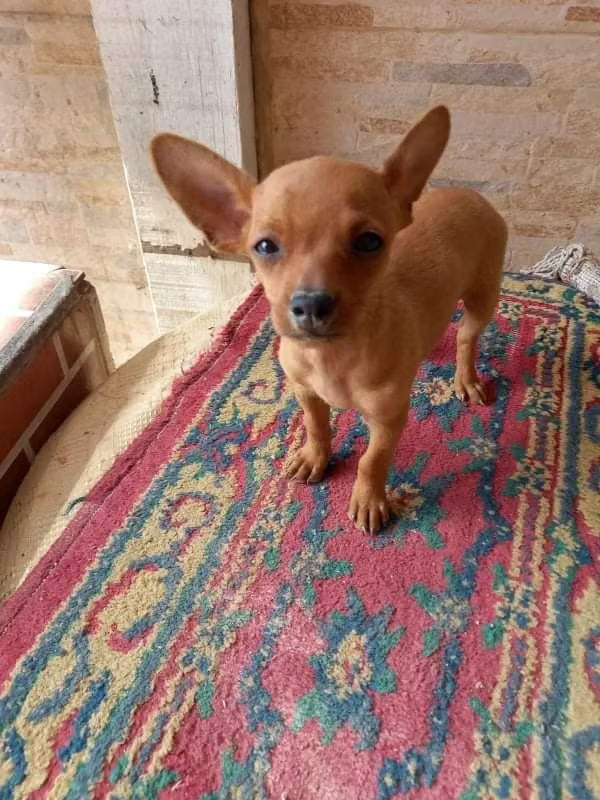

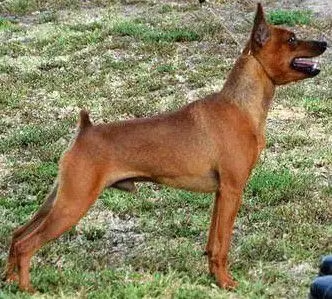


About the Miniature Pinscher
The Miniature Pinscher is a small German breed of about 20 to 32 cm and 3.6 to 4.5 kg, known for a fearless, energetic personality and a distinctive high-stepping hackney gait.
The Miniature Pinscher is a small, compact dog that originated in Germany. Though its body rarely exceeds 32 cm at the shoulder, it carries itself with the bearing of a far larger dog. The breed is sometimes called the King of Toys for its bold, self-assured manner.
The most recognisable trait is the hackney gait, a high-stepping front-leg action that resembles a trotting horse. Together with an alert head carriage and a smooth, short coat, it gives the breed a precise, animated look in motion.
Min Pins are spirited and curious. They form strong bonds with their household, stay watchful around strangers, and need consistent boundaries, because their confidence can tip into stubbornness without structure.
| Attribute | Detail |
|---|---|
| Origin | Germany |
| Size | Small (20 to 32 cm, 3.6 to 4.5 kg) |
| Lifespan | 12 to 16 years |
| Group/role | Toy group, companion and watchdog |
| Good with | Older children and respectful adults; supervise with toddlers |
Who it suits
The Miniature Pinscher fits an owner who is home often and willing to provide daily activity and firm, patient training. It does well in flats and houses alike, provided it gets exercise and company. The breed is less suited to households that leave a dog alone for long stretches, since boredom can lead to barking and escape attempts.
History and origins
The Miniature Pinscher developed in Germany over several centuries as a small farm and stable ratter, and was standardised as a distinct breed in the late 1800s.
The Miniature Pinscher comes from Germany, where small ratting dogs worked in stables, homes, and farms for centuries. Early specimens are believed to descend from a mix that included the German Pinscher along with Dachshund and small Italian Greyhound stock, which would account for the breed's lean build and lively gait.
The breed was developed primarily to control rats and other vermin. Its small size let it pursue rodents into tight spaces, while its quickness and tenacity suited the task. This working background shaped the alert, driven temperament still seen today.
German breeders began to formalise the type in the late nineteenth century. The Pinscher Klub, later the Pinscher-Schnauzer Klub, was founded in Germany in 1895 and helped set early breed standards. The name Pinscher refers to a type of terrier-like working dog rather than a single breed.
The breed later spread across Europe and beyond, and in Ireland it is registered through the Irish Kennel Club (IKC). A common misconception is that it is a scaled-down Dobermann; in fact the Min Pin is the older of the two and developed independently.
Appearance and breed standard
The Miniature Pinscher is a small, sturdy, square-built dog with a smooth short coat, standing 20 to 32 cm tall and weighing 3.6 to 4.5 kg.
The Miniature Pinscher has a compact, square outline, meaning its body length roughly equals its height at the withers. The build is sturdy rather than delicate, with clean lines and a level topline. The head is tapered and in proportion to the body, with dark, slightly oval eyes and a confident expression. The breed is best known for its hackney-like front gait, lifting each forefoot well off the ground.
| Trait | Standard |
|---|---|
| Height | 20 to 32 cm at the shoulder |
| Weight | 3.6 to 4.5 kg |
| Coat | Short, smooth, hard, close-lying |
| Colours | Solid red, stag red, black and rust, chocolate and rust |
| Eyes | Dark, oval, set moderately wide |
Coat and colours
The coat is short, straight, and lustrous, lying flat against the body. It needs little grooming and offers limited insulation, so the breed feels the cold, a real consideration in the damp Irish winter. Accepted colours include solid red, stag red (red with black hairs intermixed), black with rust markings, and chocolate with rust markings. Rust points appear on the muzzle, throat, chest, lower legs, and below the tail. Ears are naturally erect; ear cropping is not practised in Ireland.
Temperament and personality
The Miniature Pinscher is spirited, fearless, and alert, deeply attached to its family while reserved and watchful toward strangers.
The Miniature Pinscher is bold and energetic, with a personality far larger than its frame. It bonds closely with its household and likes to be involved in daily activity. With strangers it tends to be reserved and quick to sound the alarm, which makes it an effective small watchdog.
Around children the breed does best with older kids who handle it gently, since its small size makes it vulnerable to rough play. With other pets, early socialisation matters: a Min Pin may try to assert itself over larger dogs and may chase smaller animals because of its ratting instinct.
The breed is intelligent and curious but also independent and strong-willed. It can be stubborn and will test limits, so consistent rules and early training help channel its drive. Min Pins are escape artists and explorers, so secure fencing and supervision are important.
| Trait | Rating |
|---|---|
| Affection | 4 |
| Energy | 5 |
| Trainability | 3 |
| Vocalness | 4 |
| Shedding | 2 |
Care and grooming
The Miniature Pinscher needs minimal grooming but daily exercise, mental stimulation, and protection from cold, wet weather.
The Miniature Pinscher is low-maintenance on the grooming front but demanding on activity and attention. Its short coat is easy to keep clean, while its high energy and intelligence call for a structured routine of exercise and engagement.
Grooming
- Brush weekly with a soft brush or grooming mitt to remove loose hair and keep the coat glossy
- Bathe only as needed, roughly every few weeks to a couple of months
- Trim nails every two to three weeks, since the breed's nails grow quickly
- Brush teeth several times a week to reduce the dental problems common in small breeds
- Check and wipe ears regularly, especially if ears are erect
Exercise
- Provide at least 30 to 60 minutes of activity daily across walks and play
- Use a securely fenced garden for off-lead running, as the breed will bolt and dig
- Offer puzzle toys and short training games to work the mind
- Keep the dog on lead near roads and open ground because of a strong chase instinct
Environment
The Miniature Pinscher adapts well to flats and houses as long as it gets daily exercise. The short coat gives little protection from cold, so a coat helps on wet, chilly walks and outdoor time should be limited in low temperatures. A dog jacket earns its keep during the long Irish winter. Indoors, the breed climbs and jumps, so block access to high ledges and gaps it could slip through.
Nutrition and feeding
The Miniature Pinscher needs a measured diet of quality small-breed food, fed in two meals a day, with care taken to prevent the obesity small dogs are prone to.
The Miniature Pinscher does well on a complete, balanced diet formulated for small or toy breeds. Because the breed is active and compact, portions should match its energy level and body condition. Small dogs gain weight easily, and excess weight adds strain on joints and the heart, so measured feeding matters more than free access to food.
| Life stage | Amount per day | Meals |
|---|---|---|
| Puppy (2 to 6 months) | About 25 to 55 g | 3 to 4 |
| Adult (1 to 7 years) | About 25 to 55 g | 2 |
| Senior (7+ years) | About 25 to 55 g, adjusted lower | 2 |
Treats and supplements
Keep treats to no more than about 10 percent of daily calories to avoid weight gain. Small, low-calorie training treats suit the breed's size. Most Min Pins on a complete commercial diet need no supplements; discuss any joint, skin, or dental supplement with a vet before adding it. Fresh water should be available at all times.
Health and common conditions
The Miniature Pinscher is generally healthy with a 12 to 16 year lifespan, though it is prone to certain joint, eye, and dental conditions.
The Miniature Pinscher is a hardy breed and typically lives 12 to 16 years. Like many small dogs, it is predisposed to a handful of inherited and structural conditions. Buying from breeders who screen their stock and keeping up with routine veterinary care reduce the risk and severity of most problems.
| Condition | Signs | Note |
|---|---|---|
| Patellar luxation | Skipping, intermittent lameness, hopping on a hind leg | Common in small breeds; ranges from mild to surgical |
| Legg-Calve-Perthes disease | Hind-limb lameness, pain, muscle loss in the thigh | Affects the hip joint in young small dogs |
| Progressive retinal atrophy | Night blindness, gradual vision loss | Inherited; DNA testing available in breeding lines |
| Dental disease | Bad breath, tartar, loose teeth, reluctance to eat | Frequent in toy breeds; home and professional care helps |
Preventive care
- Keep core and recommended vaccinations up to date
- Maintain year-round parasite prevention for fleas, ticks, and lungworm
- Schedule annual veterinary exams, moving to twice yearly for seniors
- Brush teeth regularly and arrange professional dental cleaning as advised
- Keep the dog at a lean, healthy weight to protect joints and the heart
Training and socialisation
The Miniature Pinscher is intelligent and capable but independent and wilful, so it responds best to early, consistent, reward-based training.
The Miniature Pinscher learns quickly when motivated, but its independent streak means it will ignore commands it sees no reason to follow. Short, varied sessions hold its attention better than long drills. Consistency is essential, since the breed is quick to notice and exploit inconsistent rules. Early socialisation with people, other dogs, and everyday situations helps temper the breed's wariness and reduce nuisance barking.
Basics
- Begin house training and crate training from the day the dog arrives
- Teach the name and a reliable recall, rewarding every response at first
- Introduce sit, stay, and leave it in calm, low-distraction settings
- Socialise gradually with new people, dogs, sights, and sounds
- Add controlled distractions and new locations as skills become solid
- Address barking and resource guarding early before habits set in
Breeding and raising puppies
The Miniature Pinscher reaches breeding maturity at around 18 to 24 months, with a roughly 63-day gestation and typical litters of two to four puppies.
Responsible breeding of the Miniature Pinscher starts with health-tested parents and a focus on sound temperament and structure. Although a female may come into season earlier, breeders generally wait until full physical and mental maturity, around 18 to 24 months, before a first mating. Health screening for patellar luxation, eye conditions such as progressive retinal atrophy, and hip-related disease helps reduce inherited problems.
Gestation lasts about 63 days. Litters are usually small, commonly two to four puppies. Because the breed is small, whelping should be monitored and a vet kept on call. Newborn puppies are tiny and need a warm, draught-free area, since they cannot regulate their own temperature well in the first weeks.
Puppies should stay with the dam and littermates until at least eight weeks of age. This period is important for early socialisation, bite inhibition, and learning normal dog behaviour. Gentle handling and exposure to household sights and sounds during this time support a well-adjusted adult.
| Metric | Value |
|---|---|
| Sexual maturity | About 6 to 12 months |
| Recommended breeding age | 18 to 24 months |
| Gestation | About 63 days |
| Average litter size | 2 to 4 puppies |
| Weaning age | About 6 to 8 weeks |
| Leave dam | 8 weeks or later |
Registering your Miniature Pinscher in Ireland, chip and record both
Irish law wants every dog chipped and recorded; United Pet Club keeps your Miniature Pinscher's record free, current, and there for life.
How to register a Miniature Pinscher in Ireland
Irish law has required every dog to be chipped and registered since the 2015 Regulations came in, and it expects the details behind the chip to stay current, not gather dust. A free United Pet Club profile does that for your Miniature Pinscher, for life. Registering your dog is a few minutes' work and costs nothing at all.
Lodge your Miniature Pinscher's fifteen digit number with United Pet Club and the chip finally earns its keep: free registration for life, every brand accepted, and a record the ISPCA or any warden can turn into a phone call. Microchip registration takes minutes, and the free account covers the profile while you're at it.
How do I register my Miniature Pinscher in Ireland?
Set yourself up with a free United Pet Club account, key in your Miniature Pinscher's details and a photo, and save. The profile holds for the whole of his life without charge, and the chip number can be lodged whenever you have it.
How do I register my Miniature Pinscher's microchip?
Lodge the fifteen digit chip number in your free account along with your address and phone number. The lifetime plan covers the registration and every update after it, free, whatever brand the vet used.
Is microchipping a Miniature Pinscher required in Ireland?
It is. The 2015 Regulations require every dog to be chipped and registered, pup or rescue alike. Keeping the record current is the part that falls to you, and United Pet Club makes that part free.
What does it cost to register a Miniature Pinscher in Ireland?
Not a penny. Profile, chip record, and every amendment are covered for life, with no renewal ever.
Frequently asked questions
Common questions about the Miniature Pinscher cover its size, temperament, care needs, lifespan, suitability, and availability.
How big does a Miniature Pinscher get?
It is a small breed, standing about 20 to 32 cm at the shoulder and weighing roughly 3.6 to 4.5 kg when full grown.
Is the Miniature Pinscher a good family dog?
It can be, especially in homes with older children who handle it gently. The breed is affectionate with its family but reserved with strangers, and its small size makes it less suited to households with very young, boisterous toddlers.
Are Miniature Pinschers hard to care for?
Grooming is easy thanks to the short coat, but the breed needs daily exercise, mental stimulation, and consistent training. Its independent, energetic nature makes it a moderate-effort dog overall.
How long do Miniature Pinschers live?
They are long-lived for a dog, typically reaching 12 to 16 years with good care, a healthy weight, and routine veterinary attention.
Do Miniature Pinschers bark a lot?
They are alert and vocal, and will sound off at strangers and unfamiliar noises. Early training and socialisation help keep barking under control.
Is the Miniature Pinscher a small Dobermann?
No. Despite the similar look, the Min Pin is an older, separate German breed developed as a ratter, not a miniaturised Dobermann.
Are Miniature Pinschers easy to find?
They are a well-established and recognised breed available through reputable IKC breeders and breed-specific rescues, though availability varies and waiting lists are common for quality litters.
From the community
Ask about the Miniature PinscherNo questions about the Miniature Pinscher yet. Be the first to ask.
Browse Dog breeds