

Maltese
The Maltese is an affectionate, gentle toy breed known for its silky white coat, playful charm, and devoted companionship.
- Size
- Toy
- Lifespan
- 12–15 years
- Origin
- Malta
- Temperament
- Affectionate
- Standard colors
- White, Lemon and Cream
Characteristics
Coat and grooming
How the Maltese coat is built, and what that means when you groom it.
- Coat layers
- Single coat
- Coat texture
- Silky
- Coat length
- Long
- Shedding
- Low shedding
Grooming guidance
Caution: A Maltese coat mats easily.
Fine or long hair tangles at the base of the coat, out of sight, where the mats tighten and pull on the skin. Brushing has to reach right down to the roots in sections, not just skim the surface.
Information: A Maltese needs clipping every few weeks.
This coat keeps growing rather than shedding out, so it has to be trimmed every few weeks. Left to grow it mats down against the skin and traps moisture, dirt and heat.
Maltese colors and patterns
What each club's breed standard says about every Maltese color and pattern. Point at a ruling to see the club's own wording.
Breed standards describe the Maltese in White, Lemon and Cream. Standard patterns: Solid.
| Color or pattern | FCI | AKC | UKC | KC | KUSA |
|---|---|---|---|---|---|
| White | Standard (“Pure white”) | Standard (“White”) | Standard (“Pure white”) | Standard (“Pure white”) | Standard (“Pure white”) |
| Lemon | Disqualifying | Fault (“White & Lemon”) | Not recognised | Standard (“slight lemon markings permissible”) | Standard (“Slight lemon markings permissible”) |
| Cream | Standard (“a pale ivory tinge is permitted”) | Not recognised | Fault (“An ivory tinge, or traces of orange, are permitted but they are considered an imperfection”) | Not recognised | Not recognised |
| Tan | Disqualifying | Fault (“White & Tan”) | Not recognised | Not recognised | Not recognised |
| Orange | Fault (“Traces of pale orange shades are tolerated but not desirable”) | Not recognised | Fault (“An ivory tinge, or traces of orange, are permitted but they are considered an imperfection”) | Not recognised | Not recognised |
| Patterns | |||||
| Solid | Standard (“Pure white”) | Standard (“pure white”) | Standard (“Pure white”) | Standard (“Pure white”) | Standard (“Pure white”) |

| Color or pattern | FCI | AKC | UKC | KC | KUSA |
|---|---|---|---|---|---|
| Dark brown | Standard (“they are of a dark ochre colour”) | Standard (“very dark”) | Standard (“dark brown”) | Standard (“dark brown”) | Standard (“dark brown”) |
| Blue | No ruling | No ruling | Fault (“Wall eyes”) | No ruling | No ruling |
| Color or pattern | FCI | AKC | UKC | KC | KUSA |
|---|---|---|---|---|---|
| Black | Standard (“absolutely black”) | Standard (“The nose is black”) | Standard (“black”) | Standard (“Nose black”) | Standard (“Nose black”) |
| Pink | Disqualifying (“Total depigmentation of the nose”) | No ruling | Fault | No ruling | No ruling |
| Dudley | Disqualifying | No ruling | Fault (“Dudley nose”) | No ruling | No ruling |
What the rulings mean
- Standard
- Described by the club's breed standard.
- Fault
- Named by the club's breed standard as a fault: the animal can be shown but is penalised.
- Disqualifying
- The club's breed standard disqualifies an animal of this colour or pattern.
- Not recognised
- The club does not accept this colour or pattern for the breed.
Color changes
How a Maltese's colors can change over its life.
Whitechanges toRoan
Coat · With age · from 2 weeks
Bluechanges toDark brown
Eyes · With age · from 2 weeks
Bluechanges toBrown
Eyes · With age · from 2 weeks
Bluechanges toLight brown
Eyes · With age · from 2 weeks
Bluechanges toAmber
Eyes · With age · from 2 weeks
Bluechanges toHazel
Eyes · With age · from 2 weeks
Bluechanges toYellow
Eyes · With age · from 2 weeks
Blackchanges toSnow nose
Nose · With the season · can change back
Blackchanges toPink
Nose · With the season · can change back
%22%3E%3Cg%20fill%3D%22none%22%20stroke%3D%22%23F5F5F0%22%20stroke-width%3D%221.15%22%20stroke-linecap%3D%22round%22%20stroke-linejoin%3D%22round%22%3E%3Cpath%20d%3D%22M28.6%2025h.1M51.3%2028.8h.1M34.7%2024.3h.1M34.2%2041.6h.1M51%2044.2h.1M55.9%2024.7h.1M27.5%2026.3h.1M18.5%2028.6h.1M25.2%2028.9h.1M24.2%2019.3h.1M20.6%2017.6h.1M34.1%2030.6h.1M57.3%2023.3h.1M23.5%2030.7h.1M26.5%2023.1h.1M40%2031.5h.1M51.7%2038.6h.1M20.2%2022.1h.1M40.4%2037.8h.1M35%2043.1h.1M20.6%2031.7h.1M27.8%2031.9h.1M17.2%2021.1h.1M38.1%2037.7h.1M25.3%2040.5h.1M32%2029.3h.1M41.6%2039.5h.1M23.6%2024h.1M26.4%2018.6h.1M30.3%2031.9h.1M31.2%2035.2h.1M36.5%2043.7h.1M35.2%2026.3h.1M55.6%2019.1h.1M22.4%2036.8h.1M39.2%2020h.1M49.5%2039.1h.1M33.6%2033.5h.1M36.4%2032.4h.1M56.3%2042.4h.1M54.8%2031.2h.1M36.9%2023.2h.1M52.7%2019.1h.1M21.5%2033.8h.1M48.6%2028h.1M36.6%2017.5h.1M45.6%2031.3h.1M37.9%2030.5h.1M17%2031.8h.1M21.1%2043.1h.1M55.7%2021.1h.1M30.8%2041.9h.1M57.4%2038.4h.1M54.8%2026.9h.1M29.1%2017.5h.1M24.3%2037.7h.1M26%2032h.1M39.3%2022.8h.1M53.5%2029h.1M53.3%2023.3h.1M20%2038.4h.1M28.3%2044.7h.1M28.6%2039.8h.1M51.9%2041.1h.1M52.3%2033.7h.1M19.6%2042.2h.1M19%2033h.1M47.8%2021.7h.1M45.7%2024.8h.1M24.6%2035.5h.1M29.8%2036.8h.1M50.7%2032h.1M29.5%2043.5h.1M28.2%2041.5h.1M47.4%2034.8h.1M25.4%2033.7h.1M50.2%2041.2h.1M27.7%2029.5h.1M21.5%2024.8h.1M55.5%2017.5h.1M41.2%2044.3h.1M39.2%2018.4h.1M41.1%2042.5h.1M54.7%2035.3h.1M42.8%2034.5h.1M30.1%2023h.1M42.6%2025.1h.1M32.9%2024.4h.1M42.4%2032.4h.1M49.7%2022.2h.1M49.1%2043.1h.1M38%2035.2h.1M47.7%2043.8h.1M43.1%2022.4h.1M22.4%2040.4h.1M44.4%2019.8h.1M53.3%2040.1h.1M20.7%2029.3h.1M55.6%2043.9h.1M17.6%2039.2h.1M41.7%2028.9h.1M44.1%2036.3h.1M24.3%2043.6h.1M26.4%2038.1h.1M30.3%2029.2h.1M31.5%2030.8h.1M32.1%2023h.1M18.3%2040.9h.1M48%2033.4h.1M36.4%2038.7h.1M31.9%2020.8h.1M32.6%2026.2h.1M22%2031.2h.1M53.4%2021.7h.1M41.9%2017.7h.1M53.3%2037.3h.1M47.7%2040.3h.1M54.4%2033.7h.1M33.6%2037.5h.1M25.3%2017.2h.1M37.6%2019.7h.1M31.6%2019h.1M29.2%2019.6h.1M50.7%2027.3h.1M22%2022.1h.1M31%2037.8h.1M56.5%2026.6h.1M34.7%2039.5h.1M56.5%2040.8h.1M47.6%2038h.1M48.6%2026.1h.1M49.7%2034.2h.1M45.4%2027.4h.1M22.6%2038.9h.1M56.5%2035.3h.1M35.1%2021h.1M41.9%2020.1h.1M37.6%2040h.1M32.6%2044.4h.1M37.9%2025.2h.1M26.6%2043h.1M18.9%2036.7h.1M47.2%2028.9h.1M30.5%2026.2h.1M17.4%2027.3h.1M47.1%2017.2h.1M22.3%2044.3h.1M32.5%2042.4h.1M23.6%2025.7h.1M31.4%2024.9h.1%22%2F%3E%3Cpath%20d%3D%22M26%2020.9h.1M41.2%2023.8h.1M39.9%2026.4h.1M28.5%2033.4h.1M42.8%2043.8h.1M17.6%2034.3h.1M34%2017.1h.1M31.2%2017.2h.1M46.5%2036.1h.1M25.1%2022.1h.1M50.3%2023.7h.1M20.2%2026.6h.1M20.8%2020.4h.1M50.9%2017.3h.1M49.5%2020.2h.1M52.9%2044.1h.1M23.9%2017.8h.1M43.2%2028.1h.1M57.6%2030h.1M52%2025.6h.1M19.2%2019.1h.1M19.5%2024.4h.1M32.8%2040.1h.1M36.1%2027.7h.1M39.6%2029.5h.1M38.4%2041.5h.1M47.9%2019.4h.1M49.1%2031.7h.1M55.9%2036.9h.1M29.2%2027.2h.1M46%2043.5h.1M44.6%2028.8h.1M47.5%2031.5h.1M22.8%2020h.1M27.6%2017.1h.1M43.1%2018.6h.1M54.3%2020h.1M57.2%2033.8h.1M44.5%2043.8h.1M27.1%2035.5h.1M45.3%2041.8h.1M56.7%2028.8h.1M36.7%2021.4h.1M43.3%2042.3h.1M17.3%2022.9h.1M32.7%2035.5h.1M30.5%2039.8h.1M29.1%2021.2h.1M34.5%2018.8h.1M25.8%2027h.1%22%2F%3E%3C%2Fg%3E%3Cpath%20d%3D%22M56.3%2038.4l0%201.2M40%2027.2l-0.3%201.3M32.6%2043.6l-0.4%201.5M29%2023.3l0.8%201.5M55.1%2044l0.4%201.1M47.5%2022.5l-0.2%201.6M42.9%2038.6l0.7%201.2M35.2%2041.8l-0.5%201.7M26.9%2040l-0.1%201.2M41%2042.8l-0.1%201.6M18.4%2021.2l0.7%201.3M49.4%2019.3l-0.5%201.4M50.1%2041.7l0%201.8M28.2%2041.8l-0.6%201.2M55.5%2027.1l0.2%201.2M44.7%2019.3l0.5%201.7M48.6%2020.5l-0.8%201.4M43.7%2039.6l0.3%201.1M22.1%2033.8l-0.6%201.6M50.1%2038.1l-0.5%201.3M51.8%2044.1l-0.1%201.8M39%2017.5l0%201.4M30.2%2026.7l0.2%201.4M25.8%2031.2l0.2%201.6M29.6%2043.5l0.1%201M43.7%2018.3l0.1%201.5M29.6%2018.2l0.3%201.6M24.4%2017.6l0.3%201.1M22%2028.2l-0.6%201.6M25.9%2043.3l-0.3%201.4M22.2%2024.3l0.3%201.3M47.3%2029.2l-0.2%201.4M21.8%2033.2l0.5%200.9M32.9%2037l0.4%201M40%2029.9l0.8%201.4M17.4%2038.3l0.2%201.3M31%2039.2l0%201.2M37.3%2033.7l0.3%201.5M48.1%2040.5l0%201.6M33.9%2031.2l0.1%201.2M29.8%2035.2l-0.4%201M25.1%2037.3l-0.2%201.5M30.2%2039.8l0.5%201M44.6%2034.8l0.4%200.9M55.3%2034.2l0%201.7M50.6%2017.9l0.4%201M30.2%2034.9l-0.4%201.4M19.5%2035.7l-0.5%201.7M40.7%2028.7l0.8%201.4M23.3%2029l-0.4%201.4M17%2040.5l-0.2%201M48.4%2023.2l-0.3%201M37.3%2025.1l-0.4%201.3M23%2021.4l-0.4%201.3M20.4%2017.2l-0.1%201.3M42.3%2020.4l0.6%201.4M41%2031.8l0.6%201.2M45.4%2034.3l-0.1%201.2M32.5%2018l0%201.3M46.2%2021.6l0.1%201.4M30.5%2022.3l0.5%201.1M58%2044.6l0.3%201.5M57.1%2033.9l0.8%201.4M18.3%2042.6l0.3%201M40.5%2035.1l-0.6%201.4M38.8%2044.3l-0.3%201.1%22%20fill%3D%22none%22%20stroke%3D%22%23F5F5F0%22%20stroke-width%3D%220.8%22%20stroke-linecap%3D%22round%22%20stroke-linejoin%3D%22round%22%2F%3E%3C%2Fg%3E%3Cuse%20href%3D%22%23s%22%20fill%3D%22none%22%20stroke%3D%22%233B2A20%22%20stroke-opacity%3D%220.6%22%20stroke-width%3D%221%22%20stroke-linejoin%3D%22round%22%2F%3E%3Crect%20x%3D%2220%22%20y%3D%2258%22%20width%3D%223.6%22%20height%3D%222%22%20fill%3D%22%234A4038%22%2F%3E%3Crect%20x%3D%2226%22%20y%3D%2258%22%20width%3D%223.6%22%20height%3D%222%22%20fill%3D%22%234A4038%22%2F%3E%3Crect%20x%3D%2244%22%20y%3D%2258%22%20width%3D%223.6%22%20height%3D%222%22%20fill%3D%22%234A4038%22%2F%3E%3Crect%20x%3D%2250%22%20y%3D%2258%22%20width%3D%223.6%22%20height%3D%222%22%20fill%3D%22%234A4038%22%2F%3E%3Ccircle%20cx%3D%229.5%22%20cy%3D%2211.5%22%20r%3D%221.1%22%20fill%3D%22%231C1C1C%22%2F%3E%3C%2Fsvg%3E)
%22%3E%3Crect%20x%3D%2217%22%20y%3D%2210%22%20width%3D%2230%22%20height%3D%2242%22%20fill%3D%22url(%23g)%22%2F%3E%3C%2Fg%3E%3Cuse%20href%3D%22%23s%22%20fill%3D%22none%22%20stroke%3D%22%233B2A20%22%20stroke-opacity%3D%220.6%22%20stroke-width%3D%221%22%20stroke-linejoin%3D%22round%22%2F%3E%3Cpath%20d%3D%22M12.5%2037Q13%2032%2018.5%2032Q23.5%2032.5%2023.5%2036.5Q20.5%2035.5%2018.8%2037Q17.4%2038.6%2018%2041.5Q13.6%2040.4%2012.5%2037Z%22%20fill%3D%22%231C1C1C%22%20fill-opacity%3D%220.8%22%20stroke%3D%22%23F5F5F0%22%20stroke-opacity%3D%220.4%22%20stroke-width%3D%220.9%22%2F%3E%3Cpath%20d%3D%22M51.5%2037Q51%2032%2045.5%2032Q40.5%2032.5%2040.5%2036.5Q43.5%2035.5%2045.2%2037Q46.6%2038.6%2046%2041.5Q50.4%2040.4%2051.5%2037Z%22%20fill%3D%22%231C1C1C%22%20fill-opacity%3D%220.8%22%20stroke%3D%22%23F5F5F0%22%20stroke-opacity%3D%220.4%22%20stroke-width%3D%220.9%22%2F%3E%3Cpath%20d%3D%22M32%2040V50%22%20fill%3D%22none%22%20stroke%3D%22%231C1C1C%22%20stroke-width%3D%221.3%22%20stroke-opacity%3D%220.5%22%20stroke-linecap%3D%22round%22%20stroke-linejoin%3D%22round%22%2F%3E%3Cellipse%20cx%3D%2232%22%20cy%3D%2221%22%20rx%3D%2212%22%20ry%3D%223.5%22%20fill%3D%22%23F5F5F0%22%20fill-opacity%3D%220.18%22%2F%3E%3C%2Fsvg%3E)
Sources
Each ruling comes from the club's published breed standard or color list.
Meet some of our Maltese
A few of the Maltese profiles members have added to United Pet Club.


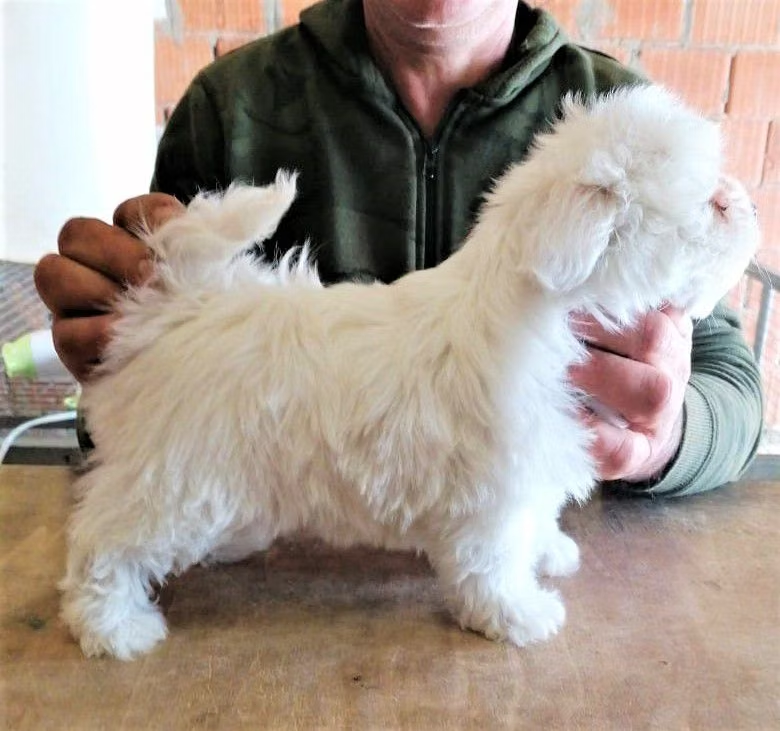
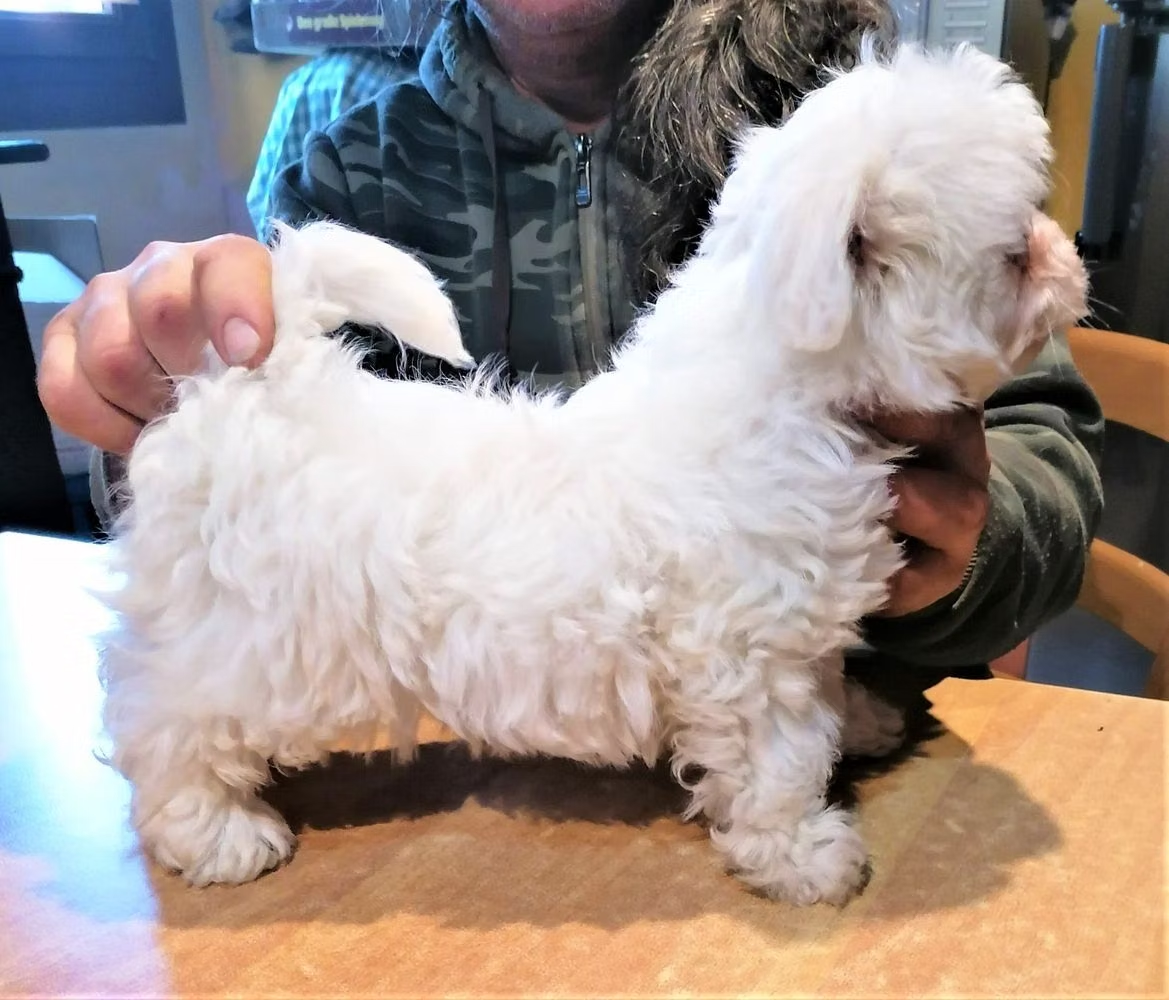
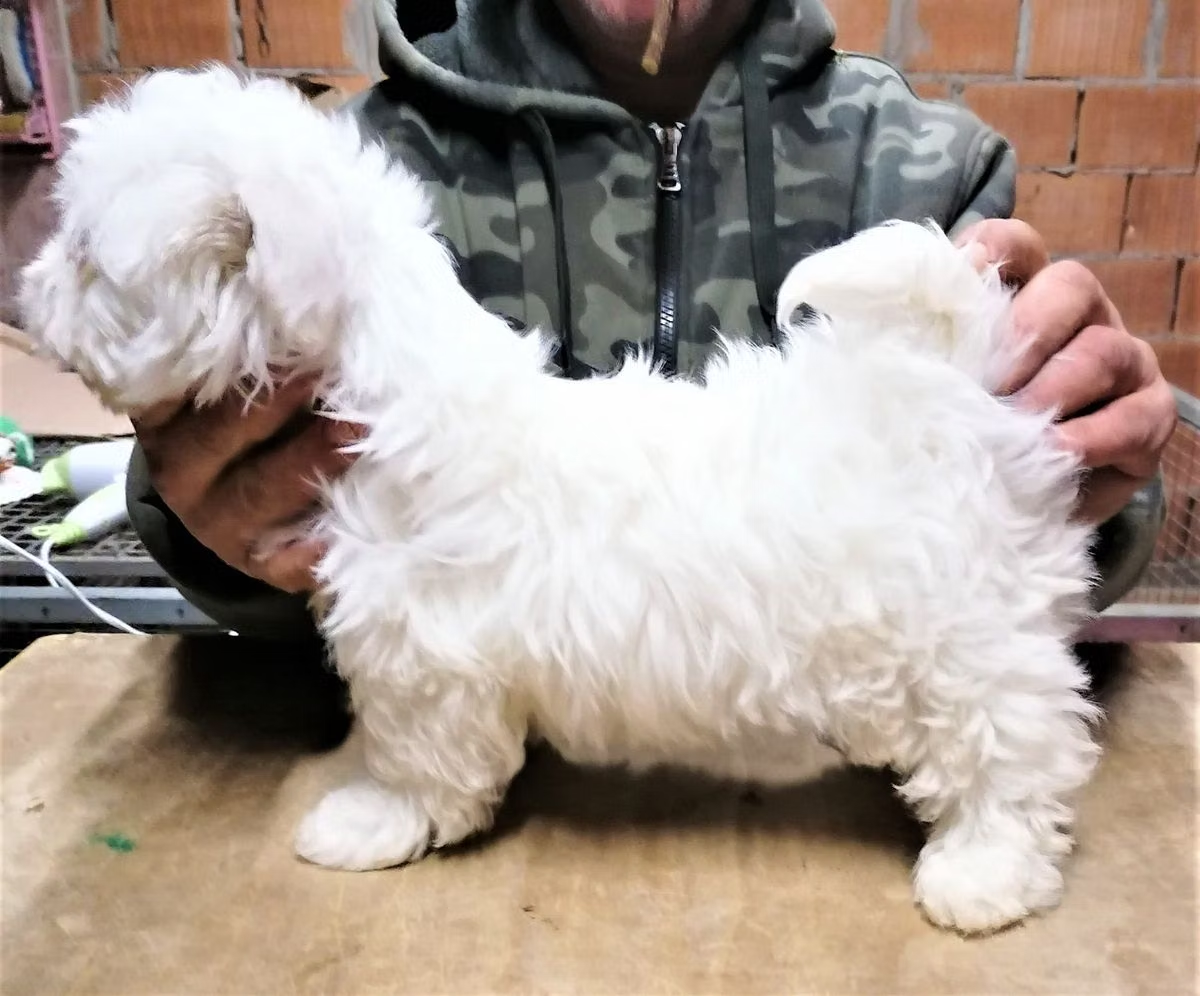


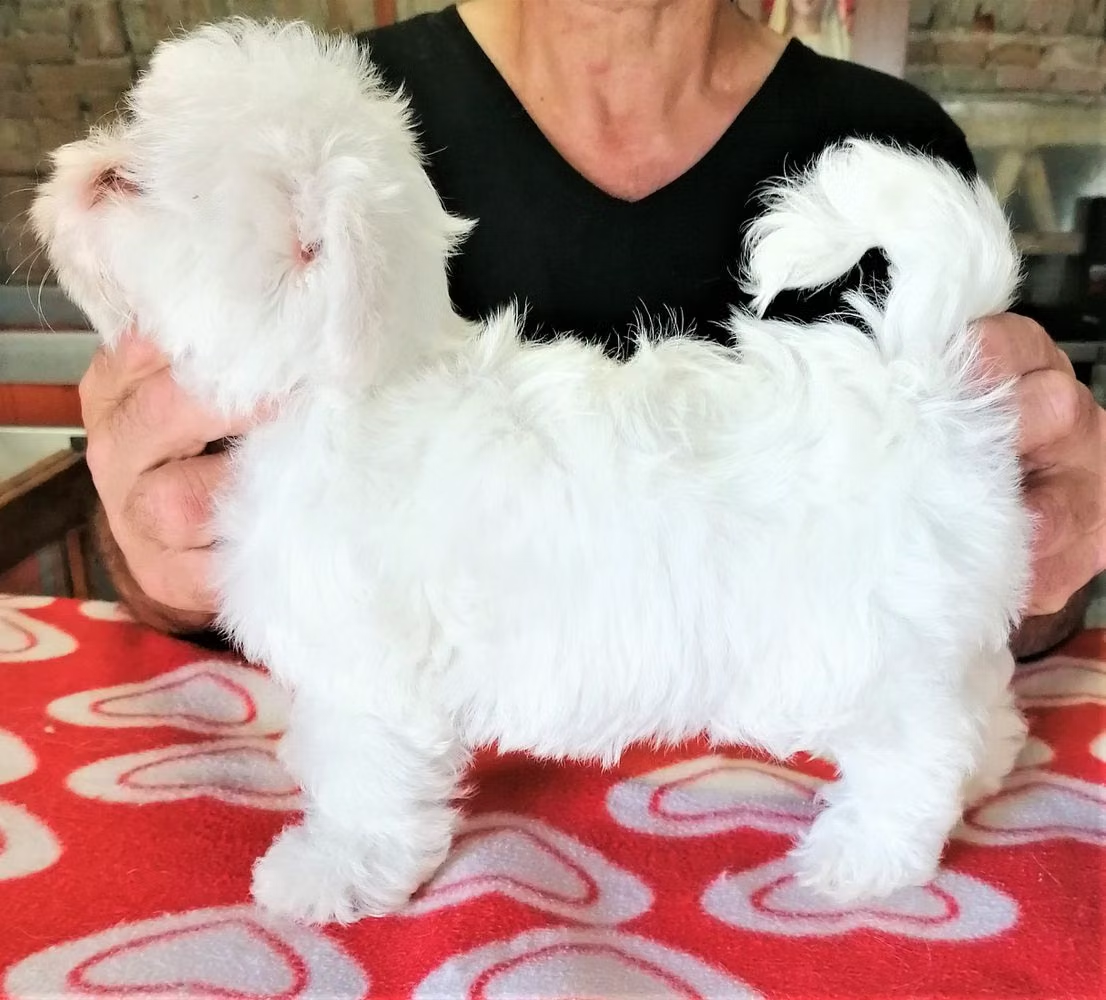
About the Maltese
The Maltese is an affectionate toy breed from the Mediterranean, weighing under 7 lb, known for its long silky white coat and devoted temperament as a companion dog.
The Maltese is a toy companion breed with a single coat of long, straight white hair lying close to the body. Adults weigh under 7 lb and stand roughly 8 to 10 in at the shoulder, placing the breed among the smallest in the toy group. The build looks delicate, but the dog is sturdy on its feet and moves with a light, easy gait.
This breed has been kept as a lap dog for centuries, and its temperament still reflects that history. A Maltese is affectionate, gentle and playful, and it tends to form a close bond with the people it lives with. It stays alert too, so most will bark to announce a visitor, even though guarding is well beyond its size.
Because the coat grows continuously and moults very little, the Maltese suits owners who want a small dog that doesn't leave hair around the house. That same coat demands proper upkeep, though, so it is best matched to owners who can manage daily brushing or keep it in a shorter clip.
| Attribute | Detail |
|---|---|
| Origin | Malta |
| Size | Toy (under 7 lb) |
| Lifespan | 12 to 15 years |
| Group / role | Toy group, companion |
| Good with | Families, older people, apartment living, gentle older children |
Who suits the Maltese
The Maltese suits an owner who wants a small indoor companion and who is around enough to give it proper attention. It gets on well in apartments and smaller homes, since its exercise needs are modest. The breed can suit older people and first-time owners, provided they keep on top of coat care and dental hygiene. In households with very young children, supervise play closely, as the dog's small frame is easily hurt if handled roughly.
History of the Maltese
The Maltese descends from small companion dogs of the central Mediterranean, linked to the island of Malta since antiquity and prized as a lap dog through Greek and Roman times.
The Maltese ranks among the oldest of the toy breeds, with roots in the central Mediterranean. Small white companion dogs from the region turn up in Greek and Roman writing and art, and the island of Malta is traditionally given as the source of the name. What happened before the classical period isn't documented, so claims of a precise founding date are best treated as tradition rather than established fact.
Throughout antiquity these dogs were kept purely as companions rather than for work. Roman writers mention a small Melitaean dog, and the type appears on pottery and in accounts of lap dogs owned by wealthy households. Its role as an indoor companion has held steady across the breed's long history.
By the Renaissance the Maltese was a favourite among European nobility and turns up in portraits of the period, often shown on the lap of an aristocratic owner. That patronage helped keep the small white type going even as fashions in dogs shifted.
The breed reached England, and later North America, in the nineteenth century, where it was exhibited and bred to a written standard. National kennel clubs recognised the Maltese in the late nineteenth and early twentieth centuries; in Ireland the breed is registered with the Irish Kennel Club (IKC), and the modern dog still stays close in size and purpose to its historical ancestors.
What does a Maltese look like?
The Maltese is a compact toy dog under 7 lb with a long, straight, single white coat, dark round eyes and a level topline giving a balanced, square outline.
The Maltese has a balanced, slightly square outline, a level topline, and a tail carried over the back. The head is in proportion to the body, with a moderate stop, a black nose, and dark round eyes that give the dog an alert look. The ears are set low and drop close to the head, covered in long hair that blends into the coat. Overall, the impression is of a small dog that looks refined but is not fragile on the move.
| Trait | Standard |
|---|---|
| Height | 8 to 10 in (20 to 25 cm) at the shoulder |
| Weight | Under 7 lb (about 3.2 kg) |
| Coat | Single, long, straight, silky; no undercoat |
| Colours | White; light tan or lemon on the ears is permitted but not preferred |
| Eyes | Dark, round, with dark rims |
Coat and colour
The defining feature is a single coat of long, straight hair with no undercoat, falling either side of a centre parting and reaching the ground in a show coat. The standard colour is pure white, though a little lemon or light tan on the ears is tolerated under some standards, if not preferred. Because the coat is hair rather than dense fur, the breed moults very little, but it tangles and mats without regular brushing. Many pet owners keep the coat in a shorter, practical clip to cut down on daily upkeep while keeping the soft texture around the face and feet.
Maltese temperament
The Maltese is affectionate, gentle and playful, forming close bonds with its household while staying alert enough to bark at visitors.
The Maltese is a people-focused companion that likes to stay near its owners for most of the day. With family it is affectionate and gentle, often trailing its people from room to room. Many keep a playful streak well into adulthood and enjoy short games with toys.
With strangers the breed is usually friendly once introduced, though it tends to bark at new arrivals and unfamiliar noises. That alertness makes it a decent watchdog by ear, even though its size rules out any actual guarding. Early socialisation helps cut down on nuisance barking and nervousness.
With other pets the Maltese generally gets on fine when raised together, including with cats and other small dogs. Take care around much larger dogs given the size gap. The breed can be prone to separation-related stress, so it does best in a home where it is not left alone for long stretches.
| Trait | Rating |
|---|---|
| Affection | 5 |
| Energy | 3 |
| Trainability | 3 |
| Vocalness | 4 |
| Shedding | 1 |
Caring for a Maltese
The Maltese needs daily coat brushing, modest daily exercise and an indoor home, with particular attention to dental care and tear staining around the eyes.
Grooming
- Brush the coat daily to prevent mats and tangles, especially behind the ears and under the legs.
- Bathe every one to three weeks with a gentle dog shampoo, and dry the coat fully so it stays straight.
- Clean around the eyes daily to limit tear staining on the white hair.
- Trim or tie back the hair above the eyes to keep the dog's vision clear.
- Brush the teeth several times a week, as small breeds are prone to dental disease.
- Trim nails every few weeks and check the ears for wax and debris.
Exercise
- Give the dog about 20 to 30 minutes of activity a day through short walks and play.
- Indoor games and gentle fetch will meet most of its needs.
- Avoid long or strenuous outings, since the breed tires quickly and overheats in warm weather.
- Guard against cold and wet weather, as the single coat gives little insulation, which matters given Ireland's cool, damp climate and rain for much of the year.
Environment
The Maltese is an indoor dog and settles well into apartments and smaller homes. It feels temperature extremes keenly and should live inside with the family rather than out in a garden or kennel. A draught-free spot to rest, a few safe toys, and steps or a ramp up to a favourite armchair or sofa all help protect the small frame from jumping injuries.
Feeding a Maltese
The Maltese needs a complete small-breed diet fed in measured portions across two or three meals, with attention to dental-friendly food and low blood sugar risk in puppies.
A Maltese does best on a complete and balanced diet formulated for small or toy breeds. Small kibble is easier to chew and supports dental health. As the breed is small and prone to putting on weight, portions should be measured rather than left down all day, and treats kept to a small share of daily calories. Fresh water should always be available.
| Life stage | Amount per day | Meals |
|---|---|---|
| Puppy (2 to 6 months) | About 1/4 to 1/2 cup | 3 to 4 |
| Puppy (6 to 12 months) | About 1/4 to 1/2 cup | 2 to 3 |
| Adult | About 1/4 to 1/2 cup | 2 |
| Senior | Adjusted to maintain weight | 2 |
Treats and supplements
Use small, low-calorie treats for training and count them into the daily total. Most Maltese on a complete commercial diet need no supplements, but a vet may suggest dental chews or a joint or coat supplement in particular cases. Toy-breed puppies can develop low blood sugar (hypoglycaemia) if a meal is missed, so feed puppies small meals on a regular schedule.
Maltese health
The Maltese is generally long-lived at 12 to 15 years but is prone to dental disease, patellar luxation and other small-breed conditions that benefit from regular preventive care.
The Maltese is a generally healthy breed with a typical lifespan of 12 to 15 years, and plenty of individuals live longer still with good care. As with most toy breeds, the main concerns tie back to small size: crowded teeth, delicate bones, and joints prone to slipping. Buying from breeders who screen for known conditions, and keeping up with routine vet visits, both help lower the risk.
| Condition | Signs | Note |
|---|---|---|
| Dental disease | Bad breath, tartar, loose teeth | Common in toy breeds; managed with brushing and cleanings |
| Patellar luxation | Skipping gait, intermittent hind-leg lameness | Kneecap slips out of its groove; severity varies |
| Hypoglycaemia (puppies) | Weakness, wobbliness, collapse | Low blood sugar; feed small, regular meals |
| Portosystemic (liver) shunt | Poor growth, disorientation after meals | A blood vessel bypasses the liver; some cases need surgery |
| Collapsing trachea | Honking cough, especially when excited | Use a harness rather than a collar around the neck |
| Tear staining | Reddish-brown marks below the eyes | Cosmetic; daily cleaning helps |
Preventive care
- Book annual vet check-ups, and twice yearly once the dog is a senior.
- Keep vaccinations and parasite prevention up to date.
- Brush the teeth regularly and arrange professional cleans as advised.
- Walk on a harness to protect the windpipe.
- Keep the dog at a lean weight to ease strain on the knees and joints.
- Ask the breeder about patella screening and, where relevant, liver screening in the parents.
Training a Maltese
The Maltese is intelligent and eager to please but can be slow to house-train, so it responds best to short, consistent, reward-based sessions.
The Maltese is intelligent and attentive, and it generally enjoys learning when sessions stay short and upbeat. The breed responds to praise, food rewards and play rather than harsh correction, which can leave a sensitive dog anxious. House-training often calls for patience, since small dogs have small bladders and can be slow to catch on, so a consistent schedule and indoor pad options can help. Early socialisation to people, sounds and handling cuts down on shyness and the tendency to bark at anything new.
Basics
- Start with name recognition and a reliable recall in a quiet room.
- Teach sit, down and stay using small treats and a calm voice.
- Set a fixed toilet schedule and reward the dog straight away for going in the right spot.
- Get the dog used to gentle handling for grooming, including brushing, paws and the face.
- Socialise the puppy to a range of people, surfaces and noises during its first months.
- Keep sessions short and frequent, just a few minutes at a time, rather than long ones.
Breeding Maltese dogs
Maltese bitches typically reach maturity around 12 months, carry small litters of one to four puppies for about 63 days, and may need close monitoring during whelping.
Breeding a Maltese calls for care given the breed's small size. Females are usually bred only once they are physically mature, generally around 18 to 24 months, even though they can come into season earlier than that. Litters are small, often one to four puppies, and gestation runs to about 63 days from conception. As puppies are tiny at birth, whelping carries a higher risk of complications, and some small bitches need veterinary support or a caesarean delivery.
Newborn puppies are vulnerable to chilling and to low blood sugar, so the whelping area needs to be warm, with the puppies checked regularly for steady nursing and weight gain. Weaning usually starts around three to four weeks, and puppies are typically ready to go to new homes at eight to twelve weeks, once they are eating well and have had some early socialisation. Responsible breeders screen their breeding stock for patellar and liver problems and avoid pairing dogs that carry the same faults.
| Metric | Value |
|---|---|
| Sexual maturity | About 6 to 12 months |
| Recommended breeding age (female) | About 18 to 24 months |
| Gestation | About 63 days |
| Typical litter size | 1 to 4 puppies |
| Weaning | About 3 to 4 weeks |
| Ready for new homes | 8 to 12 weeks |
Registering your Maltese in Ireland, chip and record both
Irish law wants every dog chipped and recorded; United Pet Club keeps your Maltese's record free, current, and there for life.
How to register a Maltese in Ireland
A dog warden with a scanner can only follow the record, and a Maltese whose record is current is home the same day. Register your dog free with United Pet Club: your contact details, his photo, and his chip number together on one profile that never lapses and never bills you.
The implant is the vet's job; the record is down to you, and the 2015 rules assume you'll keep it current. Register the microchip free on the lifetime plan: whatever brand the vet reached for is grand, a house move costs nothing to record, and the number stays searchable day and night. Create your free account and have the pair of jobs done before the tea goes cold.
How do I register my Maltese in Ireland?
Set yourself up with a free United Pet Club account, key in your Maltese's details and a photo, and save. The profile holds for the whole of his life without charge, and the chip number can be lodged whenever you have it.
How do I register my Maltese's microchip?
Lodge the fifteen digit chip number in your free account along with your address and phone number. The lifetime plan covers the registration and every update after it, free, whatever brand the vet used.
Is microchipping a Maltese required in Ireland?
It is. The 2015 Regulations require every dog to be chipped and registered, pup or rescue alike. Keeping the record current is the part that falls to you, and United Pet Club makes that part free.
What does it cost to register a Maltese in Ireland?
Not a penny. Profile, chip record, and every amendment are covered for life, with no renewal ever.
Maltese frequently asked questions
Common questions about Maltese size, temperament, grooming, lifespan, suitability and how to find one.
How big does a Maltese get?
The Maltese is a toy breed. Adults weigh under 7 lb and stand about 8 to 10 in at the shoulder, making it one of the smallest companion dogs around.
What is the Maltese's temperament like?
It is affectionate, gentle and playful, and it bonds closely with its household. It is also alert and tends to bark at visitors and unfamiliar sounds.
Is the Maltese hard work to look after?
Exercise needs are modest, but the coat takes real upkeep. Plan on daily brushing or a shorter clip, regular bathing, daily eye cleaning and consistent dental care.
How long do Maltese live?
The typical lifespan is 12 to 15 years, and many dogs live longer still with good veterinary care, dental hygiene and a healthy weight.
Is the Maltese a good dog for a flat or apartment?
Yes. Its small size and modest exercise needs suit apartments and smaller homes well. It does best when it isn't left alone for long stretches.
Does the Maltese moult a lot?
No. The single coat is hair rather than dense fur, so it moults very little. That same coat tangles easily and needs regular brushing to prevent mats.
Where can you find a Maltese?
Maltese puppies are available from breeders who health-screen their stock and through breed-specific rescue groups. Ask about the parents' patella and liver health, and meet the puppy before committing.
From the community
Ask about the MalteseNo questions about the Maltese yet. Be the first to ask.
Browse Dog breeds