
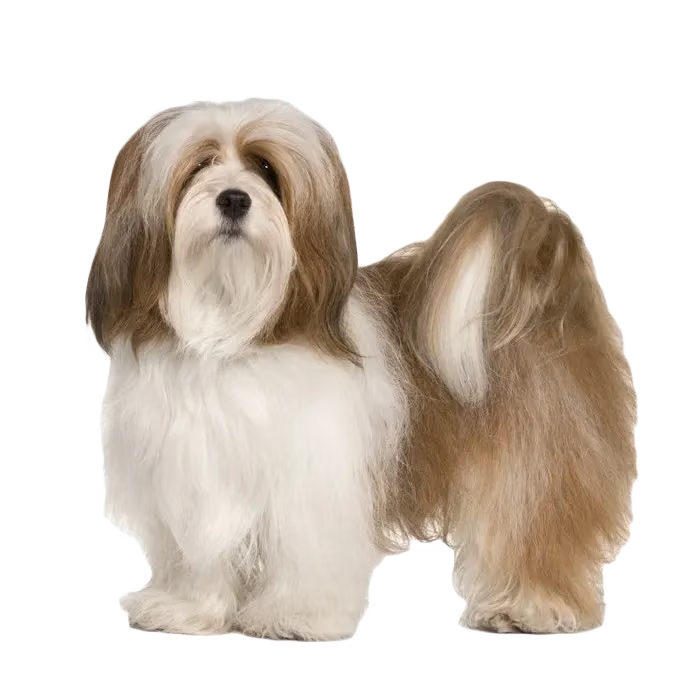
Lhasa Apso
The Lhasa Apso is a confident, dignified companion from Tibet, devoted to its family yet famously watchful as a little sentinel.
- Size
- Small
- Lifespan
- 12–15 years
- Origin
- Tibet
- Temperament
- Independent
- Standard colors
- Black, White and Grey and 10 more
Characteristics
Coat and grooming
How the Lhasa Apso coat is built, and what that means when you groom it.
- Coat layers
- Double coat
- Coat texture
- Silky
- Coat length
- Long
- Shedding
- Low shedding
Grooming guidance
Caution: A Lhasa Apso coat mats easily.
Fine or long hair tangles at the base of the coat, out of sight, where the mats tighten and pull on the skin. Brushing has to reach right down to the roots in sections, not just skim the surface.
Information: A Lhasa Apso needs clipping every few weeks.
This coat keeps growing rather than shedding out, so it has to be trimmed every few weeks. Left to grow it mats down against the skin and traps moisture, dirt and heat.
Lhasa Apso colors and patterns
What each club's breed standard says about every Lhasa Apso color and pattern. Point at a ruling to see the club's own wording.
Breed standards describe the Lhasa Apso in Black, White, Grey, Blue, Silver, Charcoal, Slate, Brown, Tan, Red, Gold, Cream and Sandy. Standard patterns: Solid, Tricolour, Brindle, Parti-colour, Sable, Grizzle, Tan point and Reverse brindle.
| Color or pattern | FCI | AKC | UKC | KC | KUSA |
|---|---|---|---|---|---|
| Black | Standard (“black”) | Standard (“Black”) | Standard (“All colors are acceptable”) | Standard (“black”) | Standard (“black”) |
| White | Standard (“white”) | Standard (“White”) | Standard (“All colors are acceptable”) | Standard (“white”) | Standard (“white”) |
| Grey | Standard (“smoke”) | Standard (“Gray”) | Standard (“All colors are acceptable”) | Standard (“smoke”) | Standard (“smoke”) |
| Blue | Not recognised | Standard (“Blue”) | Standard (“All colors are acceptable”) | Standard (“any colour permissible”) | Not recognised |
| Silver | Not recognised | Standard (“Silver”) | Standard (“All colors are acceptable”) | Standard (“any colour permissible”) | Not recognised |
| Charcoal | Not recognised | Standard (“Charcoal”) | Standard (“All colors are acceptable”) | Standard (“any colour permissible”) | Not recognised |
| Slate | Standard (“slate”) | Standard (“All colors equally acceptable”) | Standard (“All colors are acceptable”) | Standard (“slate”) | Standard (“slate”) |
| Brown | Standard (“brownish”) | Standard (“Liver”) | Standard (“All colors are acceptable”) | Standard (“brown”) | Standard (“brown”) |
| Tan | Not recognised | Standard (“Black & Tan”) | Standard (“All colors are acceptable”) | Standard (“Black & Tan”) | Not recognised |
| Red | Not recognised | Standard (“Red”) | Standard (“All colors are acceptable”) | Standard (“Red”) | Not recognised |
| Gold | Standard (“Golden, ... honey”) | Standard (“Golden”) | Standard (“All colors are acceptable”) | Standard (“Golden, ... honey”) | Standard (“Golden, ... honey”) |
| Cream | Not recognised | Standard (“Cream”) | Standard (“All colors are acceptable”) | Standard (“Cream”) | Not recognised |
| Sandy | Standard (“sandy”) | Standard (“All colors equally acceptable”) | Standard (“All colors are acceptable”) | Standard (“sandy”) | Standard (“sandy”) |
| Patterns | |||||
| Solid | Standard (“All equally acceptable”) | Standard (“All colors equally acceptable”) | Standard (“All colors are acceptable”) | Standard (“all equally acceptable”) | Standard (“All equally acceptable”) |
| Tricolour | Not recognised | Standard (“All colors equally acceptable”) | Standard (“All colors are acceptable”) | Standard (“Tricolour”) | Not recognised |
| Brindle | Not recognised | Standard (“Brindle”) | Standard (“All colors are acceptable”) | Standard (“Brindle”) | Not recognised |
| Parti-colour | Standard (“parti-colour”) | Standard (“Parti-Color”) | Standard (“All colors are acceptable”) | Standard (“parti-colour”) | Standard (“parti-colour”) |
| Sable | Not recognised | Standard (“Sable”) | Standard (“All colors are acceptable”) | Standard (“any colour permissible”) | Not recognised |
| Grizzle | Standard (“dark grizzle”) | Standard (“Grizzle”) | Standard (“All colors are acceptable”) | Standard (“dark grizzle”) | Standard (“dark grizzle”) |
| Tan point | Not recognised | Standard (“Black & Tan”) | Standard (“All colors are acceptable”) | Standard (“Black & Tan”) | Not recognised |
| Reverse brindle | Not recognised | Standard (“Brindle”) | Standard (“All colors are acceptable”) | Standard (“Brindle”) | Not recognised |
| Merle | Not recognised | No ruling | No ruling | Not recognised (“merle, which is unacceptable”) | Not recognised |
| Double merle | Not recognised | No ruling | No ruling | No ruling | Not recognised |


| Color or pattern | FCI | AKC | UKC | KC | KUSA |
|---|---|---|---|---|---|
| Dark brown | Standard (“Dark”) | Standard (“Dark brown”) | Standard (“Dark in color”) | Standard (“Dark”) | Standard (“Dark”) |
| Color or pattern | FCI | AKC | UKC | KC | KUSA |
|---|---|---|---|---|---|
| Black | Standard (“Black”) | Standard (“Black”) | Standard (“black”) | Standard (“Nose black”) | Standard (“Black”) |
What the rulings mean
- Standard
- Described by the club's breed standard.
- Not recognised
- The club does not accept this colour or pattern for the breed.
Color changes
How a Lhasa Apso's colors can change over its life.
Blackchanges toRust
Coat · With body condition · can change back
Blackchanges toGrey
Coat · Progressive
Blackchanges toBrown
Coat · In the sun · can change back
Whitechanges toRoan
Coat · With age · from 2 weeks
Tan pointchanges toSaddle
Coat · With age · from 6 to 156 weeks
Blackchanges toSnow nose
Nose · With the season · can change back
Blackchanges toPink
Nose · With the season · can change back


Sources
Each ruling comes from the club's published breed standard or color list.
Meet some of our Lhasa Apso
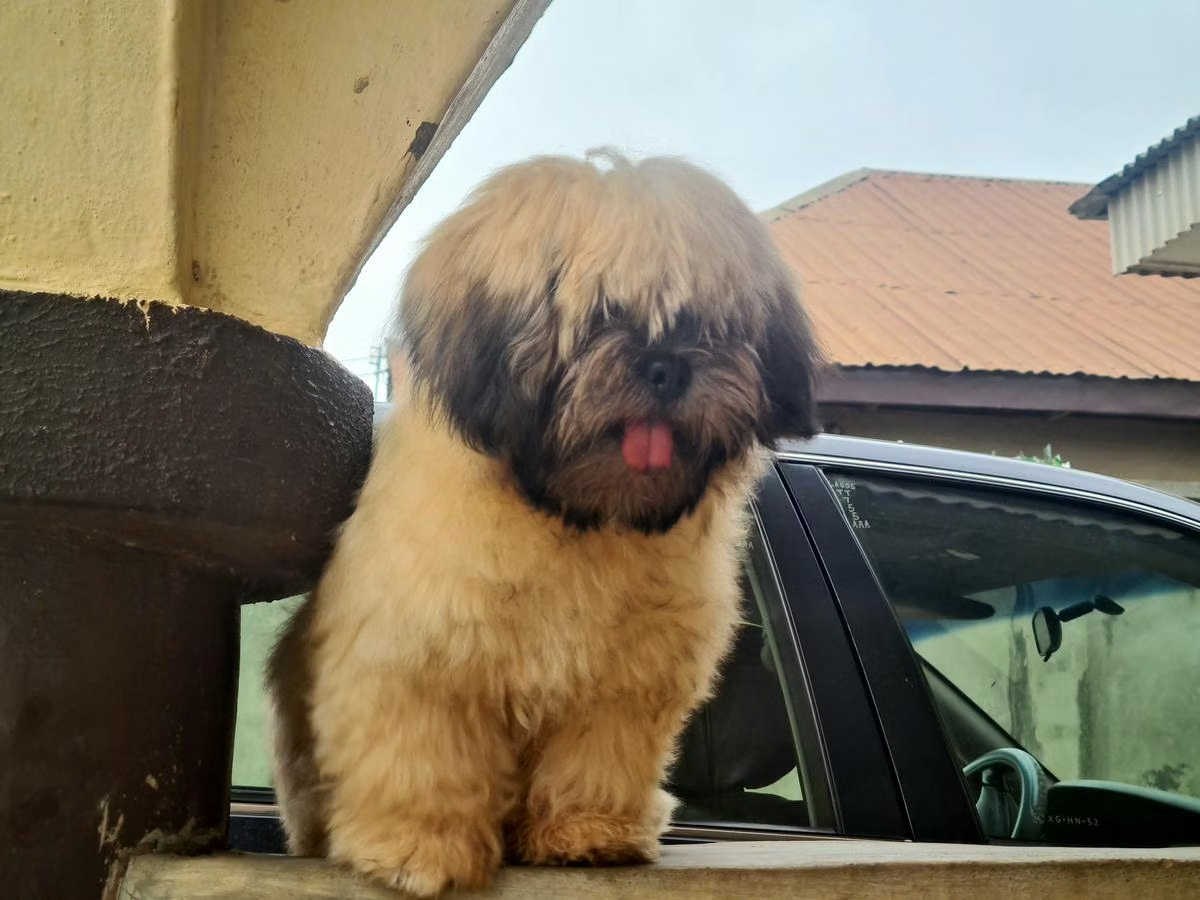
A few of the Lhasa Apso profiles members have added to United Pet Club.






About the Lhasa Apso
A small, long-coated dog from Tibet that stays devoted to its own household while keeping a watchful, standoffish manner around strangers.
The Lhasa Apso is a small dog that started out in Tibet, where it lived indoors in homes and monasteries as a watchdog rather than a working guard. It weighs under 8 kg, yet carries itself with a serious, self-assured air and will bark readily at anything it does not recognise. The breed attaches itself firmly to its own household and tends to keep its warmth for familiar faces rather than handing it out freely.
Under that floor-length coat sits a sturdy, slightly long-bodied dog built to cope with a harsh climate. Lhasa Apsos are independent, and often stubborn with it, which gives them a name for working things out for themselves instead of waiting to be told. They notice change quickly and stay alert, qualities that suited their original job as household sentries.
The long double coat is the breed's biggest commitment. Some owners brush it out to full length; others have it clipped short for easier upkeep, which suits Ireland's damp weather rather well, since a shorter coat dries out faster after a walk in the rain. With steady handling and early socialising, the Lhasa Apso settles into a loyal, affectionate companion that takes well to flats and quieter households.
| Attribute | Detail |
|---|---|
| Origin | Tibet |
| Size | Small (5.5 to 8 kg) |
| Lifespan | 12 to 15 years |
| Group / role | Companion and indoor watchdog |
| Good with | Family members and considerate older children |
Who it suits
The Lhasa Apso suits owners who want a small, alert companion and are ready for either daily coat care or regular trips to a professional groomer. It does well in flats and gardens of any size, since its exercise needs are modest. The breed's independent streak and readiness to bark reward patient, consistent owners more than those expecting instant obedience. Households with very young, boisterous children may find the breed happier with calmer company.
History and origin
The Lhasa Apso took shape in Tibet over centuries as an indoor watchdog in homes and monasteries, later reaching Britain and Ireland in the early twentieth century.
The Lhasa Apso comes from Tibet and ranks among the older companion breeds tied to that region. Its name comes from Lhasa, the Tibetan capital. For generations the breed lived inside homes and Buddhist monasteries, where its task was to alert the household to anyone approaching. Bigger dogs patrolled the grounds outside, while the small Lhasa Apso kept watch from within.
The breed held a respected place in Tibetan life and was kept by monks and nobility. Dogs were rarely sold and were instead given as gifts, which kept the breed from spreading widely for much of its history. That relative isolation helped the type stay consistent over a long stretch of time.
Lhasa Apsos reached the West in the early twentieth century, arriving first in Britain through travellers and gifts sent from Tibet, and filtering through from there to Ireland and across the Atlantic to the United States. The American Kennel Club recognised the breed in 1935. Today the Irish Kennel Club, the state body linked to the Federation Cynologique Internationale, also registers the breed, and those early imports into Britain and Ireland underpin many of the lines seen here now.
The modern Lhasa Apso stays close to its working roots in temperament. The watchful, alert character that once made it useful as a household sentry is still central to the breed, even though most are kept purely as companions today.
Appearance and breed standard
The Lhasa Apso is a small, slightly long-bodied dog with a heavy double coat that can reach the floor and comes in a wide range of colours.
The Lhasa Apso is a small dog, a little longer than it is tall. Under the coat sits a sturdy, well-balanced body, with a level topline and a tail carried up over the back. The head carries a full fall of hair over the eyes, plus a beard and whiskers. The overall look is of a compact, hardy dog rather than a delicate one.
| Feature | Standard |
|---|---|
| Height | About 25 to 28 cm at the shoulder |
| Weight | About 5.5 to 8 kg |
| Coat | Long, heavy, straight double coat |
| Colours | Many, including gold, cream, honey, grey, black, white, and parti-colour |
| Eyes | Dark, medium sized, oval |
Coat and colours
The coat is the breed's most distinctive feature: a dense double coat with a hard, straight outer layer over a softer undercoat. At full length the hair can reach the ground and parts along the back. Many owners keep it trimmed to a shorter puppy clip for practicality, which comes in handy given how often an Irish coat comes home soaked through after a walk. Colours vary widely and include gold, cream, honey, smoke, slate grey, black, white, and parti-colour combinations. Coat colour can shift somewhat as a dog matures.
Temperament and personality
The Lhasa Apso is devoted to its family, independent by nature, and naturally reserved and watchful around strangers.
The Lhasa Apso is devoted to the people it knows and bonds closely with its own household. It carries an independent, dignified air, with a confidence that belies its size. Many owners describe the breed as a small dog that takes itself rather seriously.
With strangers the Lhasa Apso tends to stay aloof and takes its time warming up. That caution, paired with sharp senses, makes the breed a dependable alarm dog that barks to announce visitors and unfamiliar sounds. Early and ongoing socialising helps keep that wariness from tipping into excessive suspicion.
With other pets the Lhasa Apso can live peacefully when raised together, though its independent streak means it does not always go looking for canine company. It generally suits households with adults or calm older children rather than homes with very young, energetic kids, since it can lose patience with rough handling.
| Trait | Rating |
|---|---|
| Affection (with family) | 4 |
| Energy | 2 |
| Trainability | 2 |
| Vocalness | 4 |
| Shedding | 2 |
Care and grooming
The Lhasa Apso needs regular coat care and modest daily exercise, and settles well into flat living, especially in Ireland's cool, damp climate.
Grooming
- Brush the full coat thoroughly several times a week, or daily if it is kept at floor length, to stop mats forming
- Consider a shorter clip every few weeks for easier upkeep
- Clean the face and beard regularly, since food and other debris collect there
- Check around the eyes and clean gently to manage tear staining
- Trim nails roughly every three to four weeks and check the ears for buildup
Exercise
- Provide one or two short walks a day
- Allow indoor play and brief active sessions
- Go easy on exertion during any spell of warm weather, since the heavy coat holds heat
- Use simple games and scent activities for mental stimulation
Environment
The Lhasa Apso suits flats and houses without gardens equally well. Its exercise needs are modest, and it is content indoors so long as it gets company and attention. Ireland's cool, damp climate suits the breed better than a hot one, since the dense coat is built to hold heat in rather than let it out; even so, a towel by the door earns its keep after a walk in the rain.
Nutrition and feeding
The Lhasa Apso needs a measured diet of quality small-breed food split across two meals a day, with care taken to avoid excess weight.
The Lhasa Apso does well on a complete, balanced dog food formulated for small breeds. Because the breed is small and only moderately active, keeping portions in check matters, since extra weight puts strain on the joints and back. Adjust amounts to the individual dog's age, activity, and body condition rather than going by the highest amount listed on the bag.
| Life stage | Amount per day | Meals |
|---|---|---|
| Puppy (2 to 6 months) | Per product guidance for weight | 3 to 4 |
| Junior (6 to 12 months) | About 60 to 90 g | 2 to 3 |
| Adult | About 60 to 120 g | 2 |
| Senior | Adjusted down for lower activity | 2 |
Titbits and supplements
Keep titbits to a small share of daily calories to guard against weight gain. Most Lhasa Apsos on a complete diet do not need supplements, though a vet may suggest joint or skin and coat support for individual dogs. Always leave out fresh water.
Health and common conditions
The Lhasa Apso is generally long-lived at 12 to 15 years, with the most common concerns affecting the eyes, kidneys, and joints.
The Lhasa Apso is generally a hardy, long-lived breed, with a typical lifespan of 12 to 15 years. Like many small breeds it carries a handful of inherited conditions worth knowing about, several of which affect the eyes. Responsible breeders screen their breeding stock to cut the risk of passing these on. Routine visits to the vet and steady weight management support a long, comfortable life.
| Condition | Signs | Note |
|---|---|---|
| Progressive retinal atrophy | Night blindness, declining vision | Inherited; screening helps |
| Dry eye (keratoconjunctivitis sicca) | Redness, discharge, squinting | Manageable with treatment |
| Hereditary kidney disease | Increased thirst, poor growth | Screening of breeding lines advised |
| Patellar luxation | Skipping, intermittent lameness | Common in small breeds |
| Cherry eye | Red mass in inner corner of eye | Often corrected surgically |
Preventive care
- Book annual check-ups with the vet, more often for older dogs
- Keep vaccinations and parasite prevention up to date
- Keep on top of dental hygiene with brushing and professional cleans
- Watch eye health and get discharge or squinting looked at promptly
- Keep the dog at a healthy weight to protect the joints and back
Training
The Lhasa Apso is intelligent but independent, so it trains best with patient, consistent, reward-based methods and early socialising.
The Lhasa Apso is intelligent and well able to learn, but its independent, somewhat stubborn nature means it does not always do as it is asked simply because it was told to. The breed responds best to short, positive sessions that hold its interest, and it can lose patience with repetitive drilling. Owners who stay calm and consistent generally see steady progress. Early socialising matters especially, to soften the breed's natural wariness of strangers and to keep excessive barking in check.
Basics
- Start socialising early, introducing new people, sounds, and settings gradually
- Teach house training with a consistent routine and plenty of opportunities to get it right
- Build core cues such as sit, come, and stay in short daily sessions
- Work on quiet and settle cues to manage alarm barking
- Practise calm handling for grooming, including the face, feet, and ears
Breeding
The Lhasa Apso typically has small litters and benefits from health screening of breeding stock, with careful attention given to raising the pups.
Breeding Lhasa Apsos responsibly starts with health-screened parents, since the breed carries several inherited conditions affecting the eyes and kidneys. Females are generally not bred until they are physically mature. As with many small breeds, litters tend to be modest in size, and whelping should be supervised. Puppies need careful early socialising to develop the steady, confident temperament the breed is known for, and they stay with the dam and littermates until weaned and well started on solid food.
| Metric | Value |
|---|---|
| Sexual maturity | Around 8 to 12 months |
| Recommended breeding age (female) | After full maturity, about 2 years |
| Gestation | About 58 to 68 days |
| Average litter size | 4 to 6 puppies |
| Weaning age | About 6 to 8 weeks |
Registering your Lhasa Apso in Ireland, chip and record both
Irish law wants every dog chipped and recorded; United Pet Club keeps your Lhasa Apso's record free, current, and there for life.
How to register a Lhasa Apso in Ireland
Get the profile sorted first: your Lhasa Apso's name, his date of birth, a photo, and your phone number, saved in a couple of minutes. The record is free for the whole of his life, and the chip number slots in whenever the vet has done his part. Dog registration is where it starts.
Lodge your Lhasa Apso's fifteen digit number with United Pet Club and the chip finally earns its keep: free registration for life, every brand accepted, and a record the ISPCA or any warden can turn into a phone call. Microchip registration takes minutes, and the free account covers the profile while you're at it.
How do I register my Lhasa Apso in Ireland?
Set yourself up with a free United Pet Club account, key in your Lhasa Apso's details and a photo, and save. The profile holds for the whole of his life without charge, and the chip number can be lodged whenever you have it.
How do I register my Lhasa Apso's microchip?
Lodge the fifteen digit chip number in your free account along with your address and phone number. The lifetime plan covers the registration and every update after it, free, whatever brand the vet used.
Is microchipping a Lhasa Apso required in Ireland?
It is. The 2015 Regulations require every dog to be chipped and registered, pup or rescue alike. Keeping the record current is the part that falls to you, and United Pet Club makes that part free.
What does it cost to register a Lhasa Apso in Ireland?
Not a penny. Profile, chip record, and every amendment are covered for life, with no renewal ever.
Frequently asked questions
Common questions about the Lhasa Apso cover its size, temperament, grooming demands, lifespan, and suitability for different homes.
How big do Lhasa Apsos get?
The Lhasa Apso is a small breed. Adults stand about 25 to 28 cm at the shoulder and usually weigh between 5.5 and 8 kg.
What is a Lhasa Apso's temperament like?
It is devoted to its own family, independent, and dignified. The breed stays alert and reserved with strangers, which makes it a natural alarm dog that barks to announce visitors.
Are Lhasa Apsos hard to look after?
Care is moderate. Exercise needs are low, but the long double coat needs regular brushing or a shorter clip to stop mats forming. Many owners keep the coat trimmed for easier upkeep.
How long do Lhasa Apsos live?
They are a long-lived breed, with a typical lifespan of 12 to 15 years given good care and weight management.
Are Lhasa Apsos good for flats and families?
Yes. The breed adapts well to flat living thanks to its modest exercise needs. It suits adults and calm older children better than homes with very young, boisterous kids.
Do Lhasa Apsos bark a lot?
They can. Their background as watchdogs makes them quick to bark at unfamiliar people and sounds. Early socialising and quiet cues help keep the barking in check.
From the community
Ask about the Lhasa ApsoNo questions about the Lhasa Apso yet. Be the first to ask.
Browse Dog breeds