
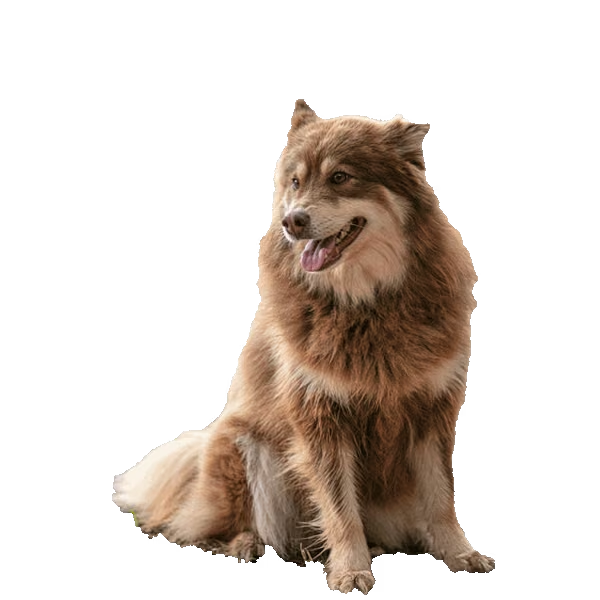
Lapponian Herder
The Lapponian Herder is a friendly, hardworking Finnish herding breed built for tireless work driving reindeer in harsh climates.
- Size
- Medium
- Lifespan
- 11–14 years
- Origin
- Finland
- Temperament
- Friendly
- Standard colors
- Black, White, Grey and Liver
Characteristics
Coat and grooming
How the Lapponian Herder coat is built, and what that means when you groom it.
- Coat layers
- Double coat
- Coat texture
- Plush
- Coat length
- Medium
- Shedding
- Seasonal shedding
Grooming guidance
Critical: A Lapponian Herder should not be shaved.
The undercoat keeps heat out as well as in, and the outer coat shields the skin from sun and insect bites. Clipping the whole coat off removes both. It often grows back patchy, soft or a different colour, and in some animals the guard hairs never return properly. Brush the undercoat out instead of cutting it off.
Information: A Lapponian Herder drops its undercoat in heavy bursts.
The undercoat comes out in heavy bursts over a few weeks. An undercoat rake, or a bath followed by a proper blow-dry, clears it far faster than daily brushing. Clipping the coat down is not a shortcut for this.
Lapponian Herder colors and patterns
What each club's breed standard says about every Lapponian Herder color and pattern. Point at a ruling to see the club's own wording.
Breed standards describe the Lapponian Herder in Black, White, Grey and Liver. Standard patterns: Tan point.
| Color or pattern | FCI | AKC |
|---|---|---|
| Black | Standard (“Black in different shades”) | Standard (“Black”) |
| White | Standard (“White markings may appear on neck, chest and legs”) | Standard (“White Markings”) |
| Grey | Standard (“even greyish”) | Standard (“Gray”) |
| Liver | Standard (“dark brown”) | Standard (“Liver”) |
| Blue | Disqualifying (“Blue, sable and fawn colour”) | Disqualifying (“Blue, sable and fawn colour”) |
| Fawn | Disqualifying (“Blue, sable and fawn colour”) | Disqualifying (“Blue, sable and fawn colour”) |
| Patterns | ||
| Tan point | Standard (“greyish or brownish colour markings often on head, the lower parts of the body and legs”) | Standard (“greyish or brownish colour markings often on head, the lower parts of the body and legs”) |
| Sable | Disqualifying (“Blue, sable and fawn colour”) | Disqualifying (“Blue, sable and fawn colour”) |


| Color or pattern | FCI | AKC |
|---|---|---|
| Dark brown | Standard (“Preferably dark in colour, yet harmonizing with the coat colour”) | Standard (“Preferably dark in colour, yet harmonizing with the coat colour”) |
| Light brown | Fault (“Very light eyes in black dogs”) | Fault (“Very light eyes in black dogs”) |
What the rulings mean
- Standard
- Described by the club's breed standard.
- Fault
- Named by the club's breed standard as a fault: the animal can be shown but is penalised.
- Disqualifying
- The club's breed standard disqualifies an animal of this colour or pattern.
Color changes
How a Lapponian Herder's colors can change over its life.
Blackchanges toRust
Coat · With body condition · can change back
Blackchanges toGrey
Coat · Progressive
Blackchanges toBrown
Coat · In the sun · can change back
Whitechanges toRoan
Coat · With age · from 2 weeks
Tan pointchanges toSaddle
Coat · With age · from 6 to 156 weeks
Blackchanges toSnow nose
Nose · With the season · can change back
Blackchanges toPink
Nose · With the season · can change back


Sources
Each ruling comes from the club's published breed standard or color list.
Meet some of our Lapponian Herder
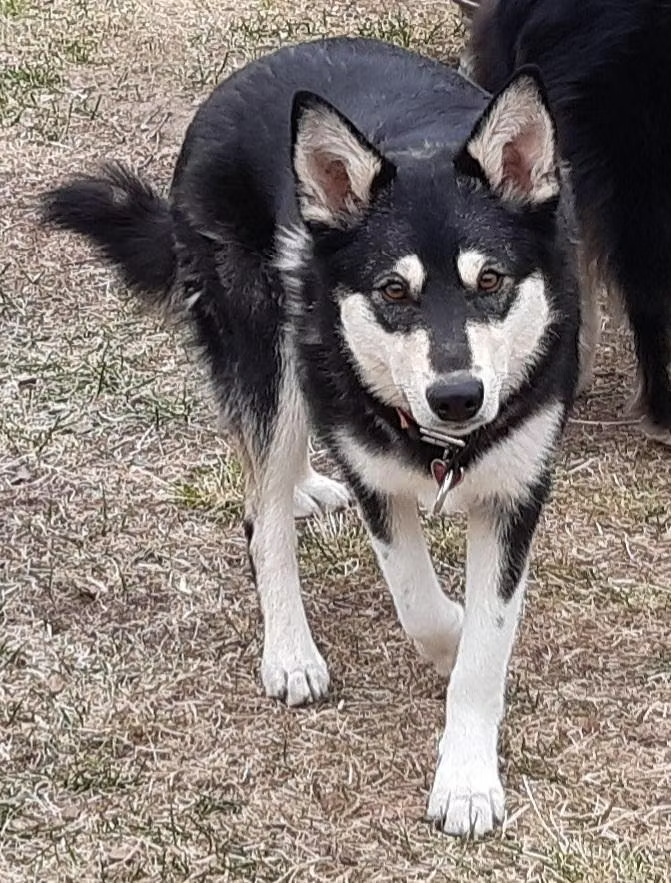
A few of the Lapponian Herder profiles members have added to United Pet Club.



About the Lapponian Herder
The Lapponian Herder is a medium-sized Finnish herding dog bred to drive reindeer through the Arctic, friendly, energetic, and quick to learn.
The Lapponian Herder is a medium-sized working dog out of Finland, developed by the Sami people to herd and drive reindeer across the far north of Lapland. The breed was built for stamina in cold, open ground rather than for a quick burst of speed. It will go for hours without flagging and keeps at the job in weather that would put a stop to plenty of other dogs.
Temperament-wise, the Lapponian Herder is friendly and fond of people, with a strong work drive and no shyness about using its voice while on the job. It forms tight bonds with its own family and stays switched on to what the handler is doing. That mix of willingness to please and raw energy is a big part of why the breed has held its place as a reindeer dog while also settling into active pet and sporting homes.
Adult dogs generally live 11 to 14 years. The breed is still fairly rare outside the Nordic countries, so anyone in Ireland hoping to get one will likely be on a waiting list for a litter from working or show lines abroad.
| Attribute | Detail |
|---|---|
| Origin | Finland |
| Size | Medium |
| Lifespan | 11 to 14 years |
| Group / role | Herding (reindeer driving) |
| Good with | Active families and experienced owners who can give it daily work or exercise |
Who this breed suits
The Lapponian Herder suits a home that can give it a job and a good dose of daily activity. It does well with owners who enjoy training, dog sports, or long days out, and who will not mind a dog that barks while it works. A house looking for a quiet, low-key companion is usually the wrong match. Owners in Ireland's cool, damp climate with room to move, whether that is a big garden or easy access to open ground, tend to suit the breed better than those in a small flat or a warm, sedentary setup.
History and origin
The Lapponian Herder comes from the Sami reindeer-herding communities of northern Finland and was recognised as its own breed in the mid-20th century.
The Lapponian Herder goes back to the spitz-type dogs kept by the Sami people across the northern stretches of Finland, Sweden, and Norway. For generations these dogs worked alongside reindeer herders, helping to gather and move the animals over huge Arctic ranges. Dogs were chosen for working ability and the toughness to get through harsh winters, not for how they looked.
For much of its early history, the breed was not kept separate in the records from the more heavily coated Lapphund. The two types worked the same herding ground and were often lumped together. As organised dog registration took hold across the Nordic countries, breeders started to draw a line between the shorter-coated herding dog and the longer-coated companion type.
The breed got its own recognition in Finland in the mid-20th century, and the Finnish standard set it out as a working reindeer dog under the name now used in English, the Lapponian Herder. Numbers fell away sharply around the same time, as mechanised transport changed how reindeer were managed, and the breed had to be built back up from a small population.
The Lapponian Herder today is still closely tied to its homeland. It is still put to work with reindeer in parts of Lapland, and it also turns up in obedience, agility, and herding trials in Finland and further afield in Europe. It remains rare in Ireland, with only a handful registered through the Irish Kennel Club's import records, so owners here are very much the exception rather than the rule.
Appearance and breed standard
The Lapponian Herder is a medium-sized, slightly rectangular spitz-type dog with a weatherproof double coat, usually dark with lighter markings.
The Lapponian Herder is a medium-sized dog, a touch longer in the body than it is tall, which gives it a balanced, agile outline suited to long days at work. The build is strong without being bulky. The head is moderately broad with ears that stand erect or half-erect, and the expression is alert and friendly. The tail sits low at rest and can curl up over the back when the dog is moving or paying attention to something.
| Trait | Standard |
|---|---|
| Height | Dogs about 51 cm, bitches about 46 cm at the withers |
| Weight | Roughly 25 to 30 kg |
| Coat | Medium-length, straight double coat with a dense undercoat |
| Colours | Usually black or dark grey through to brown, with lighter tan or grey markings on the head, legs, and underside |
| Eyes | Oval, dark, with an alert look |
Coat and colour
The coat is a proper working double coat: a coarser, weatherproof outer layer over a soft, insulating undercoat. It grows longer around the neck and on the back of the legs but stays shorter and closer than the Lapphund's coat. Dark base colours such as black, grey, and brown are the norm, often with paler markings that give the breed its distinctive patterned look. The coat sheds, and it comes out in real handfuls during the seasonal blow when the undercoat turns over.
Temperament and behaviour
Friendly, energetic, and keen to work, the Lapponian Herder bonds closely with its family, is generally good with people, and tends to be vocal on the job.
The Lapponian Herder is a friendly, switched-on dog that likes to stay involved with its people. It is calm and affectionate around the house once its need for activity is met, but it carries real working drive underneath and does best when it has a purpose. The breed is sharp and takes to training well, which is one reason it has moved into obedience and agility beyond its herding roots.
With its own family the breed is loyal and engaged. It is usually polite rather than standoffish with strangers, though it will nearly always let you know someone is at the door. Plenty of Lapponian Herders are vocal by nature, using barking both as a herding tool and as everyday chat, so how much noise a household can live with matters if you are in a terrace or an estate with neighbours close by. With other dogs the breed is generally sociable, and early exposure helps it settle around smaller pets, though its herding instinct can set it chasing anything that moves, cats included.
| Trait | Rating |
|---|---|
| Affection | 4 |
| Energy | 5 |
| Trainability | 5 |
| Vocal tendency | 4 |
| Shedding | 3 |
Care and daily needs
The Lapponian Herder needs plenty of daily exercise and mental work, moderate grooming, and does best in a cooler climate.
Grooming
- Brush the double coat once or twice a week to clear loose hair and stop it matting
- Step up brushing to several times a week during the seasonal coat blow, when the undercoat comes out
- Bathe only when needed, since the coat has natural weatherproofing built in
- Check and trim the nails regularly, and keep the ears clean and dry
Exercise
- Give at least an hour or two of activity a day, split across walks, runs, and free running
- Add mental work too, such as training sessions, scent games, or herding-style tasks
- Use dog sports like agility, obedience, or rally to give the breed's drive somewhere to go
- Do not leave the dog under-exercised, or it tends to bark and pace more than it should
Environment
The Lapponian Herder suits Ireland's cool, damp climate well and copes with the cold with no bother, thanks to its double coat. It can live in all sorts of homes as long as it gets its daily activity, but it is happiest with access to a garden or open ground and room to move about. In warm spells, keep exertion to the cooler parts of the day and make sure there is shade and water on hand. Given the breed's tendency to bark, it suits a household, and neighbours, who can live with a bit of noise.
Nutrition and feeding
An active medium-sized working breed, the Lapponian Herder needs a complete, balanced diet with portions matched to how much work it is doing.
The Lapponian Herder does well on a complete, balanced diet made up for active medium-sized dogs. As a working breed with high energy needs, its calorie requirements go up with the amount of exercise or herding work it is doing, and drop back in quieter spells. Adjust the portions to keep the dog lean, with the ribs easy to feel but not on show. Fresh water should be out at all times, especially after a hard run.
| Life stage | Amount per day | Meals |
|---|---|---|
| Puppy (2 to 6 months) | Per the puppy food label, split across the day | 3 to 4 |
| Junior (6 to 12 months) | Per label, moving towards adult amounts | 2 to 3 |
| Adult (working / active) | Roughly 250 to 350 g of good-quality dry food | 2 |
| Adult (lower activity) | Roughly 200 to 280 g of good-quality dry food | 2 |
| Senior | Fewer calories, maintenance-level protein | 2 |
Treats and extras
Keep treats to around ten percent of the dog's daily calories, and count them when measuring out meals, since this breed piles on weight fast if it is overfed during quieter periods. Most dogs on a complete diet need no extras on top. Talk to a vet before adding joint or skin supplements, particularly for a dog doing hard work or getting on in years.
Health and common conditions
The Lapponian Herder is generally a hardy breed with a lifespan of 11 to 14 years, though there are a few hereditary conditions worth screening for.
The Lapponian Herder is generally healthy and tough, which fits with its background as a working dog picked for endurance in a demanding environment. Most dogs live 11 to 14 years. As with any breed rebuilt from a small population, responsible breeders rely on health screening to manage hereditary conditions and keep enough genetic diversity in the gene pool.
| Condition | Signs | Note |
|---|---|---|
| Hip dysplasia | Stiffness, reluctance to jump, a changed gait | Screen breeding stock; keep dogs lean |
| Elbow dysplasia | Lameness in the front legs, especially after exercise | Hereditary; check the parents' screening results |
| Progressive retinal atrophy | Night blindness that progresses to loss of vision | DNA and eye testing of breeding dogs cuts the risk |
| Cataracts | Cloudy eyes, reduced vision | A vet eye exam can pick this up early |
Preventive care
- Keep core vaccinations and parasite control up to date
- Keep the dog lean to protect the joints
- Book in routine vet checks, including eye exams now and again
- Choose a puppy from parents with documented hip, elbow, and eye screening
- Build up fitness steadily rather than going in hard all at once
Training
The Lapponian Herder is sharp and highly trainable, and responds best to consistent, reward-based training that gives it a job to do.
The Lapponian Herder is one of the more trainable herding breeds going. It picks things up fast, watches its handler closely, and is motivated by activity and reward. That intelligence comes bundled with a streak of independence, bred in for making its own calls out in the field, so training works best kept consistent and interesting rather than repetitive. The breed does well at obedience, agility, rally, and herding work, and giving its drive somewhere structured to go cuts down on nuisance barking.
The basics
- Start socialising early, introducing the puppy to people, dogs, livestock, and different settings
- Teach the core commands (sit, down, stay, recall) in short, frequent sessions
- Add an off-switch cue and reward calm behaviour to help manage the breed's energy
- Bring in a job or sport, such as agility or herding, once the basics are solid
- Work on a settle-and-quiet cue to keep the barking manageable indoors
Breeding
Lapponian Herders reach maturity around one to two years, have moderate-sized litters after roughly nine weeks of pregnancy, and need careful pairing given the breed's limited gene pool.
Lapponian Herders generally reach physical and behavioural maturity between one and two years of age, and responsible breeders usually wait until a dog is fully grown and health-tested before breeding from it. Mating follows the bitch's normal season, and pregnancy runs to about 63 days. Litters tend to be a moderate size for a medium breed.
Raising the pups comes down mostly to early handling and socialisation. Puppies do best with gentle exposure to people, household noises, and different surfaces underfoot during the first weeks, which backs up the breed's friendly, adaptable nature. Because the breed was rebuilt from such a small population, breeders keep an eye on genetic diversity alongside hip, elbow, and eye screening when planning a litter.
| Metric | Value |
|---|---|
| Sexual maturity | About 1 to 2 years |
| Gestation | Roughly 63 days |
| Average litter size | About 4 to 7 puppies |
| Weaning | Around 7 to 8 weeks |
| Health screening | Hip, elbow, and eye testing of breeding stock |
Registering your Lapponian Herder in Ireland, chip and record both
Irish law wants every dog chipped and recorded; United Pet Club keeps your Lapponian Herder's record free, current, and there for life.
How to register a Lapponian Herder in Ireland
Get the profile sorted first: your Lapponian Herder's name, his date of birth, a photo, and your phone number, saved in a couple of minutes. The record is free for the whole of his life, and the chip number slots in whenever the vet has done his part. Dog registration is where it starts.
The implant is the vet's job; the record is down to you, and the 2015 rules assume you'll keep it current. Register the microchip free on the lifetime plan: whatever brand the vet reached for is grand, a house move costs nothing to record, and the number stays searchable day and night. Create your free account and have the pair of jobs done before the tea goes cold.
How do I register my Lapponian Herder in Ireland?
Set yourself up with a free United Pet Club account, key in your Lapponian Herder's details and a photo, and save. The profile holds for the whole of his life without charge, and the chip number can be lodged whenever you have it.
How do I register my Lapponian Herder's microchip?
Lodge the fifteen digit chip number in your free account along with your address and phone number. The lifetime plan covers the registration and every update after it, free, whatever brand the vet used.
Is microchipping a Lapponian Herder required in Ireland?
It is. The 2015 Regulations require every dog to be chipped and registered, pup or rescue alike. Keeping the record current is the part that falls to you, and United Pet Club makes that part free.
What does it cost to register a Lapponian Herder in Ireland?
Not a penny. Profile, chip record, and every amendment are covered for life, with no renewal ever.
Frequently asked questions
Common questions about the Lapponian Herder's size, temperament, care needs, lifespan, suitability, and where to find one.
How big does a Lapponian Herder get?
It is a medium-sized dog. Dogs stand about 51 cm and bitches about 46 cm at the withers, with most weighing somewhere around 25 to 30 kg.
What is the Lapponian Herder's temperament like?
The breed is friendly, energetic, and hardworking. It bonds closely with its family, is generally good with people and other dogs, and tends to be vocal, especially when it is working or letting you know someone is about.
Is the Lapponian Herder hard work to look after?
Grooming is moderate, with a weekly brush and more during the seasonal coat blow. The real commitment is exercise and mental stimulation: this breed needs an hour or two of activity daily plus a job to keep it content.
How long do Lapponian Herders live?
They typically live 11 to 14 years. Keeping the dog lean, well exercised, and up to date with the vet helps it live a long, healthy life.
Is the Lapponian Herder good with kids and family life?
Yes, for an active family. It is affectionate and trainable, but it suits a house that can give it daily exercise and put up with a bit of barking, rather than a quiet, sedentary household.
Are Lapponian Herders easy to find in Ireland?
The breed is still rare outside the Nordic countries, and there is no established base of breeders in Ireland, so getting a puppy usually means contacting breeders in Finland or elsewhere in Europe and going on a waiting list.
Do Lapponian Herders bark a lot?
They can be vocal. Barking is part of the herding job, and a dog that is not getting enough exercise tends to bark more. Teaching a quiet cue and keeping up the daily activity keeps it manageable.
From the community
Ask about the Lapponian HerderNo questions about the Lapponian Herder yet. Be the first to ask.
Browse Dog breeds