
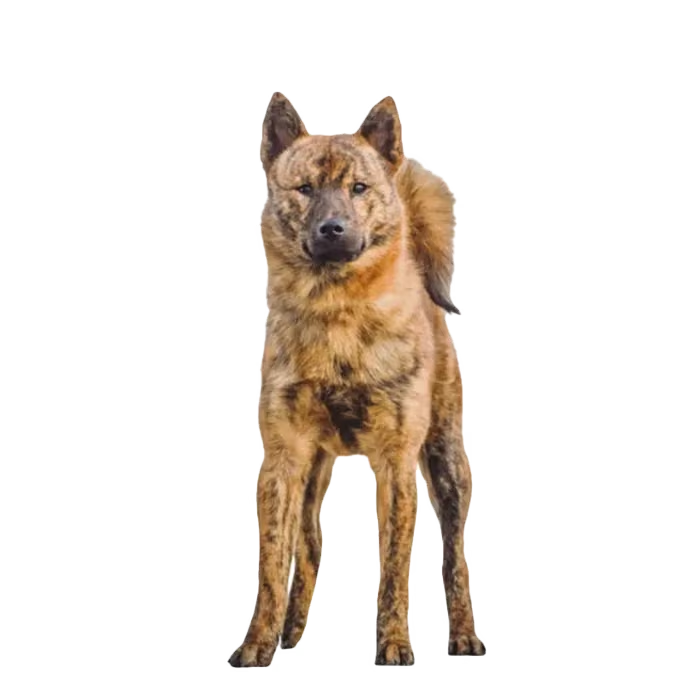
Kai Ken
The Kai Ken is a reserved, intelligent Japanese hunting breed deeply devoted to its owner and a skilled, agile climber.
- Size
- Medium
- Lifespan
- 12–15 years
- Origin
- Japan
- Temperament
- Reserved
- Standard colors
- Black, White and Red
Characteristics
Coat and grooming
How the Kai Ken coat is built, and what that means when you groom it.
- Coat layers
- Double coat
- Coat texture
- Rough
- Coat length
- Medium
- Shedding
- Seasonal shedding
Grooming guidance
Critical: A Kai Ken should not be shaved.
The undercoat keeps heat out as well as in, and the outer coat shields the skin from sun and insect bites. Clipping the whole coat off removes both. It often grows back patchy, soft or a different colour, and in some animals the guard hairs never return properly. Brush the undercoat out instead of cutting it off.
Information: A Kai Ken drops its undercoat in heavy bursts.
The undercoat comes out in heavy bursts over a few weeks. An undercoat rake, or a bath followed by a proper blow-dry, clears it far faster than daily brushing. Clipping the coat down is not a shortcut for this.
Kai Ken colors and patterns
What each club's breed standard says about every Kai Ken color and pattern. Point at a ruling to see the club's own wording.
Breed standards describe the Kai Ken in Black, White and Red. Standard patterns: Solid, Brindle and Reverse brindle.
| Color or pattern | FCI | AKC | UKC |
|---|---|---|---|
| Black | Standard (“Black brindle”) | Standard (“Black Brindle”) | Standard (“All brindle colors are equally acceptable”) |
| White | Disqualifying (“Coat with many white spots”) | Standard (“A small white blaze is allowed on the forechest, between the front legs and on the belly”) | Standard (“Some white is allowed on the legs ... on the forechest, between the front legs and on the belly”) |
| Red | Standard (“red brindle”) | Standard (“Red Brindle”) | Standard (“All brindle colors are equally acceptable”) |
| Albino | Not recognised | Not recognised | Disqualifying (“Albinism”) |
| Cream | Not recognised | Disqualifying (“cream”) | No ruling |
| Patterns | |||
| Solid | Standard (“solid colour in puppyhood may turn brindle as the dog grows”) | Disqualifying | No ruling |
| Brindle | Standard (“Black brindle, red brindle and brindle”) | Standard (“Brindle”) | Standard (“All brindle colors are equally acceptable”) |
| Reverse brindle | Standard (“Black brindle, red brindle and brindle”) | Standard (“Brindle”) | Standard (“All brindle colors are equally acceptable”) |
| Piebald | Disqualifying (“Pinto colour”) | Disqualifying (“Pinto”) | No ruling |


| Color or pattern | FCI | AKC | UKC |
|---|---|---|---|
| Dark brown | Standard (“dark brown in colour”) | Standard (“the iris dark brown”) | Standard (“dark brown”) |
| Light brown | Fault (“Light-coloured eyes”) | Fault (“light colored eyes”) | No ruling |
| Yellow | No ruling | No ruling | Fault (“Yellow or bird-of-prey eyes”) |
| Color or pattern | FCI | AKC | UKC |
|---|---|---|---|
| Black | Standard (“Black”) | Standard (“black”) | Standard (“solid black except in red brindles, where it may be brownish black”) |
| Color or pattern | AKC | UKC |
|---|---|---|
| Blue-black | No ruling | Standard (“may be ... blue black”) |
| Pink | No ruling | Standard (“may be pink”) |
| Patterns | ||
| Spotted | Standard (“The mouth and tongue is generally spotted”) | Standard (“The tongue is generally spotted”) |

What the rulings mean
- Standard
- Described by the club's breed standard.
- Fault
- Named by the club's breed standard as a fault: the animal can be shown but is penalised.
- Disqualifying
- The club's breed standard disqualifies an animal of this colour or pattern.
- Not recognised
- The club does not accept this colour or pattern for the breed.
Color changes
How a Kai Ken's colors can change over its life.
Blackchanges toRust
Coat · With body condition · can change back
Blackchanges toGrey
Coat · Progressive
Blackchanges toBrown
Coat · In the sun · can change back
Whitechanges toRoan
Coat · With age · from 2 weeks
Blackchanges toSnow nose
Nose · With the season · can change back
Blackchanges toPink
Nose · With the season · can change back


Sources
Each ruling comes from the club's published breed standard or color list.
About the Kai Ken
The Kai Ken is a medium-sized Japanese hunting dog, wary of strangers, fiercely loyal to its own, and a surprisingly able climber built for tracking game on steep ground.
The Kai Ken is a medium-sized spitz-type dog that hails from Japan, bred to hunt boar and deer through the steep, forested mountains of the Yamanashi region. It is one of six native Japanese breeds and one of the rarest of the lot. Because of its brindle coat, the breed sometimes goes by the name Tora Inu, or tiger dog.
Kai Ken are sharp and watchful. They form a tight bond with one family and keep their distance from anyone they don't know. Unlike some of the older, more primitive breeds, they are not usually aggressive toward people, but their wariness and strong hunting instinct shape how well they settle into a household.
The breed is athletic and famous for its sure footing. A Kai Ken will climb a tree or scramble over a rock face while after game, and that same knack turns up in pet dogs that think nothing of scaling a fence or a kitchen counter. An owner needs to understand what an independent working dog requires and be ready to give it plenty to do, both physically and mentally.
| Attribute | Detail |
|---|---|
| Origin | Japan (Yamanashi region) |
| Size | Medium |
| Lifespan | 12 to 15 years |
| Group or role | Hunting and companion dog (spitz type) |
| Good with | Devoted to its own family; needs supervision around small pets due to its hunting drive |
Who suits a Kai Ken
This is a breed for an active owner who rates loyalty over friendliness toward every passer-by. Kai Ken get on well with people who can offer secure fencing, regular exercise, and early socialisation. If there are small animals in the house, plan around the breed's hunting instinct from the start. A first-time dog owner might find the independence and reserve tough going without doing their homework first.
History and origin
The Kai Ken developed in the isolated mountains of Kai Province, now Yamanashi, as a hunting dog, and Japan named it a natural monument in 1934.
The Kai Ken traces back to Kai Province, the old name for what is now Yamanashi Prefecture in central Japan. The region's steep mountains and thick forests kept the local dogs cut off from outside bloodlines for generations, which is largely why the breed stayed purer than dogs from more accessible parts of the country.
Local hunters used these dogs to track and hold boar and deer. The work took place on rough ground where the ability to climb and keep going mattered far more than raw speed on the flat. That background is where the breed's strong prey drive and habit of thinking for itself both come from.
Japan recognised the Kai Ken as a protected natural monument in 1934, around the same time several other native Japanese breeds were documented and safeguarded. A breed club, the Kai Ken Aigokai, was set up to keep the type consistent and the records straight.
The breed remains scarce even at home in Japan and rarer again outside it. A small number have made their way to other countries, Ireland included, where committed breeders work to keep the population healthy without losing the original hunting character.
Appearance
The Kai Ken is a medium spitz-type dog with a wedge-shaped head, pricked ears, a curled tail, and a brindle coat running from black to red brindle.
The Kai Ken has a well-balanced, muscular build typical of spitz breeds. The head is wedge-shaped with a moderate stop, the ears stand up and tip slightly forward, and the eyes are dark and set at a bit of an angle. The tail curls or arches over the back. Taken together, the dog looks like what it is: a hardy, agile mountain dog rather than anything heavy or showy.
| Trait | Standard |
|---|---|
| Height | Roughly 47 to 53 cm at the shoulder (males stand taller than females) |
| Weight | About 11 to 18 kg |
| Coat | Double coat: a harsh, straight outer coat over a soft, dense undercoat |
| Colours | Black brindle, red brindle, and a middle brindle shade |
| Eyes | Dark brown, set at a slight angle |
Coat and colours
The brindle pattern is what gives the breed its tiger-dog nickname, and it comes in three recognised shades: black brindle (kuro-tora), red brindle (aka-tora), and a middle brindle (chu-tora). Pups are often born nearly solid in colour and only develop their brindle stripes as they grow, sometimes taking the guts of a year or more to come through fully. The double coat sheds with the seasons and keeps the dog warm through a cold, wet winter.
Temperament
The Kai Ken is devoted and protective of its own, reserved and aloof with strangers, sharp-witted, and driven by a strong hunting instinct.
Kai Ken attach themselves firmly to their owner and household. Around the family they can be affectionate and playful, and plenty are notably gentle with the people they trust. With strangers, they hold back and watch rather than come over looking for a fuss, which keeps them quick to notice anything out of the ordinary.
The breed is clever and observant, and it tends to size up a situation before it acts, a habit left over from its days working alone in the mountains. During training that can come across as stubbornness, but it is really a dog making up its own mind.
Prey drive runs high. Kai Ken were bred to chase down and hold large game, so cats, small dogs, and other small pets can set off a chase. Early and ongoing socialisation helps, but keeping an eye on things around small animals is still sensible. With other dogs, it depends on the individual, and tension between two of the same sex can crop up.
| Trait | Rating |
|---|---|
| Affection (with family) | 4 |
| Energy | 4 |
| Trainability | 3 |
| Vocalness | 2 |
| Shedding | 3 |
Care and grooming
The Kai Ken needs regular brushing for its double coat, a good dose of exercise every day, secure fencing to match its climbing skill, and steady mental stimulation.
Grooming
- Brush once or twice a week to lift loose hair and keep the double coat in good condition
- Step up to several times a week when the coat blows during the seasonal shed
- Bathe only when needed, since the coat is fairly good at cleaning itself
- Trim nails regularly and check ears for dirt or damp after time spent outdoors
Exercise
- Give at least an hour of proper activity every day, whether that is a hike, a run, or off-lead time in a securely enclosed space
- Offer chances to climb and puzzle things out, since the breed enjoys scrambling and having a good explore
- Stick to a long line or a secure area, because the strong prey drive makes off-lead recall unreliable near wildlife
Environment
The Kai Ken settles into a home with an active owner and does best with a securely fenced garden. The fence wants to be tall and hard to climb, since these dogs can get over obstacles that would hold most other breeds without bother. The double coat suits Ireland's cool, damp climate well; on the rare hot day, exercise during the cooler parts of the day and make sure there is shade and water on hand.
Nutrition and feeding
The Kai Ken thrives on a complete, balanced diet suited to its life stage and activity level, fed in measured meals to keep its lean, athletic build.
Feed a complete and balanced diet formulated for the dog's life stage. As an active, working-type breed, the Kai Ken does well on food with enough protein and fat to support muscle and stamina. Keep the dog lean, since carrying extra weight puts strain on the joints and takes the edge off the agility the breed is known for. Adjust the portions to how the dog is actually looking and feeling rather than going by the guideline on the bag alone.
| Life stage | Amount per day | Meals |
|---|---|---|
| Puppy (2 to 6 months) | Per puppy formula on the label, split up | 3 to 4 |
| Puppy (6 to 12 months) | Per label, adjusted for growth | 2 to 3 |
| Adult | About 1.5 to 2.5 cups of quality dry food | 2 |
| Senior | Fewer calories to match lower activity | 2 |
Treats and supplements
Keep treats to around 10 percent of daily calories to protect the breed's lean build. Use small training treats during sessions and cut back the main meal to make up for it. Most Kai Ken on a complete diet need no extra supplements; talk to a vet about joint or coat supplements based on what the individual dog needs. Leave fresh water out at all times, especially around exercise.
Health
The Kai Ken is generally a hardy breed with a lifespan of 12 to 15 years and relatively few problems specific to the breed, though routine preventive care still matters.
The Kai Ken is reckoned to be one of the hardier, healthier dog breeds, largely down to its long isolation and the limited amount of human interference in how it developed. Typical lifespan runs 12 to 15 years. As with any breed, individual dogs can still pick up common canine health issues, and responsible breeders screen their breeding stock.
| Condition | Signs | Note |
|---|---|---|
| Hip dysplasia | Stiffness, limping, trouble getting up | Less common than in many breeds; screening helps |
| Patellar luxation | Skipping gait, hind-leg lameness that comes and goes | Seen in some small to medium breeds |
| Eye conditions | Cloudiness, changes in vision | Routine eye checks are worthwhile |
| Allergies and skin issues | Itching, redness, hair loss | Manage with a vet's guidance |
Preventive care
- Keep vaccinations and parasite prevention up to date
- Book annual vet check-ups, moving to twice a year once the dog is a senior
- Keep a healthy weight to protect the joints
- Brush teeth regularly and keep on top of dental care
- Keep the dog active to support muscle tone and overall condition
Training
The Kai Ken is bright and capable but independent-minded, so it responds best to early, consistent, reward-based training from an owner it trusts.
Kai Ken pick things up fast when they are motivated, but their independent streak means they question a command that seems pointless to them. They cooperate far more readily with an owner they respect and trust. Harsh methods backfire and damage that trust. Short, varied, rewarding sessions hold their attention better than long, repetitive drills. Recall is the hardest thing to make solid, because prey drive can override the training the moment wildlife shows up.
The basics
- Start socialisation early, exposing the pup to a good range of people, places, and sounds
- Build a strong recall on a long line before trusting the dog off-lead
- Teach the core cues (sit, down, stay, come) with food and praise as reward
- Practise calm behaviour around small animals from a young age
- Keep sessions short and finish on a success to hold the dog's motivation
Breeding
Kai Ken reach maturity at around one to two years, have modest-sized litters, and need careful socialisation of pups given how rare and reserved the breed is.
Breeding the Kai Ken calls for close attention to health screening and temperament, given how small the worldwide population is. Females generally reach physical and behavioural maturity before they should be bred, often around or after their second year, and any breeding decision should follow veterinary and breed-club guidance. Gestation in dogs runs about 63 days. Litters tend to be modest in size.
Early socialisation of pups matters more than usual in this breed. Because the adults are naturally reserved with strangers, giving pups gentle handling and a range of experiences in their early weeks helps them grow into confident, settled dogs. Reputable breeders put keeping the breed's hunting character and health first, while steering clear of excessive shyness.
| Metric | Value |
|---|---|
| Sexual maturity | Around 1 to 2 years |
| Gestation | About 63 days |
| Typical litter size | Roughly 3 to 6 puppies |
| Weaning | Around 6 to 8 weeks |
| Population status | Rare worldwide |
Registering your Kai Ken in Ireland, chip and record both
Irish law wants every dog chipped and recorded; United Pet Club keeps your Kai Ken's record free, current, and there for life.
How to register a Kai Ken in Ireland
A dog warden with a scanner can only follow the record, and a Kai Ken whose record is current is home the same day. Register your dog free with United Pet Club: your contact details, his photo, and his chip number together on one profile that never lapses and never bills you.
Lodge your Kai Ken's fifteen digit number with United Pet Club and the chip finally earns its keep: free registration for life, every brand accepted, and a record the ISPCA or any warden can turn into a phone call. Microchip registration takes minutes, and the free account covers the profile while you're at it.
How do I register my Kai Ken in Ireland?
Set yourself up with a free United Pet Club account, key in your Kai Ken's details and a photo, and save. The profile holds for the whole of his life without charge, and the chip number can be lodged whenever you have it.
How do I register my Kai Ken's microchip?
Lodge the fifteen digit chip number in your free account along with your address and phone number. The lifetime plan covers the registration and every update after it, free, whatever brand the vet used.
Is microchipping a Kai Ken required in Ireland?
It is. The 2015 Regulations require every dog to be chipped and registered, pup or rescue alike. Keeping the record current is the part that falls to you, and United Pet Club makes that part free.
What does it cost to register a Kai Ken in Ireland?
Not a penny. Profile, chip record, and every amendment are covered for life, with no renewal ever.
Frequently asked questions
Common questions about the Kai Ken cover its size, temperament, care needs, lifespan, suitability as a pet, and how easy it is to find.
How big does a Kai Ken get?
The Kai Ken is a medium breed, standing roughly 47 to 53 cm at the shoulder and weighing about 11 to 18 kg, with males a bit larger than females.
What is the Kai Ken's temperament like?
It is devoted and protective toward its own family, reserved and aloof with strangers, sharp-witted, and driven by a strong hunting instinct. It watches and waits rather than coming over friendly with people it does not know.
Is the Kai Ken hard to care for?
Care sits at a moderate level. The double coat needs regular brushing, with heavier shedding at certain times of year, and the dog needs proper exercise every day. The bigger challenge is managing the climbing ability, the prey drive, and the independent streak with secure fencing and consistent training.
How long does a Kai Ken live?
Typical lifespan is 12 to 15 years. The breed is generally hardy, with relatively few health problems specific to it.
Is the Kai Ken a good family dog?
It can make an excellent companion for an active, committed household. It bonds closely with its family, though its reserve with strangers and strong prey drive mean it suits owners who can offer socialisation, exercise, and supervision around small pets.
Are Kai Ken easy to find in Ireland?
No. The Kai Ken is rare even in Japan and scarce everywhere else, Ireland included. You will not find many, if any, registered with the Irish Kennel Club, so getting a pup usually means going through a dedicated breeder abroad and joining a waiting list.
Can a Kai Ken really climb?
It can, and well. The breed is well known for its agility and will scramble up rock, scale a fence, and even climb a tree while after game, which is exactly why secure, climb-resistant fencing matters so much.
From the community
Ask about the Kai KenNo questions about the Kai Ken yet. Be the first to ask.
Browse Dog breeds