

Greyhound
The Greyhound is a gentle, elegant sighthound known for its astonishing speed and surprisingly calm, couch-loving nature at home.
- Size
- Large
- Lifespan
- 10–13 years
- Origin
- England
- Temperament
- Gentle
- Standard colors
- Black, White and Blue and 3 more
Characteristics
Coat and grooming
How the Greyhound coat is built, and what that means when you groom it.
- Coat layers
- Single coat
- Coat texture
- Smooth
- Coat length
- Short
- Shedding
- Low shedding
Greyhound colors and patterns
What each club's breed standard says about every Greyhound color and pattern. Point at a ruling to see the club's own wording.
Breed standards describe the Greyhound in Black, White, Blue, Liver, Red and Fawn. Standard patterns: Solid, Brindle, Parti-colour, Roan and Reverse brindle.
| Color or pattern | FCI | AKC | UKC | KC | KUSA |
|---|---|---|---|---|---|
| Black | Standard (“Black”) | Standard (“Black”) | Standard (“Immaterial”) | Standard (“Black”) | Standard (“Black”) |
| White | Standard (“white”) | Standard (“White”) | Standard (“Immaterial”) | Standard (“white”) | Standard (“white”) |
| Blue | Standard (“blue”) | Standard (“Blue”) | Standard (“Immaterial”) | Standard (“blue”) | Standard (“blue”) |
| Liver | Not recognised | Standard (“Liver”) | Standard (“Immaterial”) | Not recognised | Not recognised |
| Red | Standard (“red”) | Standard (“Red”) | Standard (“Immaterial”) | Standard (“red”) | Standard (“red”) |
| Fawn | Standard (“fawn, fallow”) | Standard (“Fawn”) | Standard (“Immaterial”) | Standard (“fawn”) | Standard (“fawn, fallow”) |
| Albino | Not recognised | No ruling | Disqualifying (“Albinism”) | Not recognised | Not recognised |
| Patterns | |||||
| Solid | Standard (“Black, white, red, blue, fawn, fallow”) | Standard (“Solid”) | Standard (“Immaterial”) | Standard (“Black, white, red, blue, fawn”) | Standard (“Black, white, red, blue, fawn, fallow”) |
| Brindle | Standard (“brindle”) | Standard (“Red Brindle”) | Standard (“Immaterial”) | Standard (“brindle”) | Standard (“brindle”) |
| Parti-colour | Standard (“any of these colours broken with white”) | Standard (“Parti-Color”) | Standard (“Immaterial”) | Standard (“any of these colours broken with white”) | Standard (“any of these colours broken with white”) |
| Roan | Not recognised | Standard (“Ticked”) | Standard (“Immaterial”) | Not recognised | Not recognised |
| Reverse brindle | Standard (“brindle”) | Standard (“Red Brindle”) | Standard (“Immaterial”) | Standard (“brindle”) | Standard (“brindle”) |


| Color or pattern | FCI | AKC | UKC | KC | KUSA |
|---|---|---|---|---|---|
| Dark brown | Standard (“Preferably dark”) | Standard (“Dark”) | Standard (“dark in color”) | Standard (“Preferably dark”) | Standard (“Preferably dark”) |
What the rulings mean
- Standard
- Described by the club's breed standard.
- Disqualifying
- The club's breed standard disqualifies an animal of this colour or pattern.
- Not recognised
- The club does not accept this colour or pattern for the breed.
Color changes
How a Greyhound's colors can change over its life.
Blackchanges toRust
Coat · With body condition · can change back
Blackchanges toGrey
Coat · Progressive
Blackchanges toBrown
Coat · In the sun · can change back
Whitechanges toRoan
Coat · With age · from 2 weeks
Sources
Each ruling comes from the club's published breed standard or color list.
Meet some of our Greyhound
A few of the Greyhound profiles members have added to United Pet Club.
About the Greyhound
The Greyhound is a lean, long-legged sighthound capable of short bursts near 45 mph, yet indoors it is famously placid and affectionate.
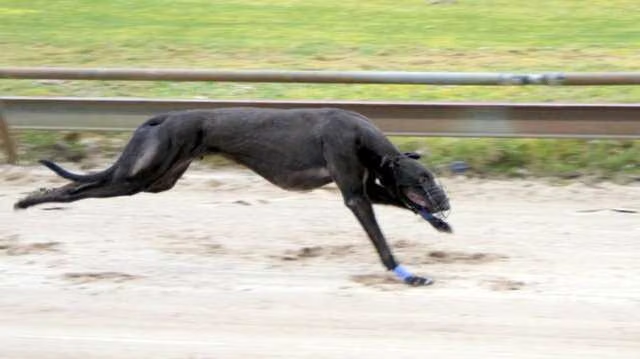
The Greyhound is a tall, fine-boned sighthound, built for a short, explosive gallop rather than endurance. A grown dog usually stands somewhere between 27 and 30 inches at the shoulder and carries about 60 to 70 pounds, with a deep chest, a waist that tucks up sharply, and long legs that give the whole animal its unmistakable racing line. Over open, flat ground a fit Greyhound can touch speeds close to 45 mph, though only for a few seconds at a time.
That athletic build is deceiving, because in the house the breed is anything but highly strung. Greyhounds are gentle, affectionate, and content to doze for most of the day, which is why owners here and further afield often call them couch dogs with an engine. Around the family they are calm and undemanding rather than boisterous, and they rarely make a racket.
The breed suits an owner who wants a big, soft-natured companion without the constant demand for exercise that a working dog brings. A short daily run in a securely fenced field or paddock, plus a walk or two, is usually enough to keep a Greyhound content; after that it will happily settle by the fire. The one thing every new owner needs to plan for is the strong chase instinct that comes with being a sighthound.
| Attribute | Detail |
|---|---|
| Origin | England |
| Size | Large (about 60 to 70 lb) |
| Lifespan | 10 to 13 years |
| Group / role | Sighthound, bred for coursing and racing |
| Good with | Families and other dogs; keep an eye on them around small pets given the chase drive |
Who a Greyhound suits
A Greyhound does well in a home that can offer a secure, fenced garden or field for the odd off-lead sprint and a warm spot to stretch out afterwards. Because the breed sleeps so much and rarely barks, it fits into apartment living or a terraced house in town just as easily as a place in the country. Anyone sharing a home with cats or smaller pets should take the introductions slowly and stay mindful of the sighthound's instinct to chase from day one.
History and origin
An ancient sighthound type shaped in England for coursing, though Ireland has its own long, deep-rooted greyhound racing and coursing tradition.
Dogs built along greyhound lines turn up in carvings, texts, and art from right across the ancient world, and sighthounds of this general shape have been used to hunt by eyesight rather than scent for thousands of years. The breed as it is recognised today, however, took shape in Britain, where breeders developed a dog for coursing hares across open country.
In medieval and early modern England the Greyhound was tied closely to the nobility, and at different points the law restricted who could keep a coursing hound at all. The dog earned its keep through eyesight and a burst of raw speed rather than any talent for scent work.
Formal coursing clubs took root in England through the 1700s and 1800s, and competitive hare coursing did much to fix the breed's build and running style. Pedigree records kept by coursing enthusiasts of the day laid the groundwork for the consistent type bred today, one recognised here by the Irish Kennel Club under the same sighthound standard.
Ireland has long had its own deep attachment to the Greyhound, quite apart from its English origins. Coursing meetings such as the National Coursing Meeting in Clonmel go back generations, and oval track racing became hugely popular through venues like Shelbourne Park in Dublin and Curraheen Park in Cork, run under Rasaiocht Con Eireann, the Irish Greyhound Board. As racing has scaled back in many other countries, Ireland remains one of the places where the sport, and the rehoming of retired racers as pets, is still part of everyday life.
Appearance
A tall, narrow, deep-chested dog with a short, smooth coat and a streamlined head, standing about 27 to 30 inches, built for speed rather than warmth.
There is no mistaking a Greyhound's shape. The body is long and narrow, with a deep chest that drops away sharply to a tightly tucked-up abdomen, an arched loin, and long, muscular legs built for driving forward. The head is long and narrow too, the neck has a slight, elegant curve, and the tail tapers to a fine point. Even standing still, the breed looks ready to run.
| Trait | Description |
|---|---|
| Height | About 27 to 30 inches at the shoulder |
| Weight | About 60 to 70 pounds |
| Coat | Short, smooth, and close-lying |
| Colours | Black, white, fawn, red, blue (grey), brindle, and combinations with white |
| Eyes | Dark, oval, and alert |
Coat and colour
The coat is short, fine, and lies close to the skin, which means it gives very little protection against the cold. Irish weather being what it is, most owners keep a proper coat on hand for winter walks, since a Greyhound feels a damp chill far more than a heavier-coated breed would. Colour varies widely: solid black, fawn, red, and blue (a dilute grey) all occur, along with brindle, and many of these shades appear broken up with white. The thin coat sits tight to the body and shows the muscle underneath rather than hiding it.
Temperament
Greyhounds are gentle, affectionate, and remarkably placid at home, sociable with people and generally easy around other dogs, though the chase drive never fully switches off.
The Greyhound has an even, gentle temperament. Indoors it is quiet and settled, happy to rest for hours at a stretch, and it is not a dog that makes a fuss over much. With its own family the breed is affectionate, often leaning in for contact rather than demanding attention loudly. Around strangers, most Greyhounds are polite enough but stay a little reserved rather than throwing themselves at visitors.
With other dogs, Greyhounds tend to get on well, and plenty enjoy the company of their own kind at the park or on a walk. The real thing to plan for is the chase instinct: a small animal moving quickly can set one off in an instant, so cats and smaller pets need slow, careful introductions and ongoing supervision. Some Greyhounds settle in fine with a resident cat; others never become safe to leave alone with one, no matter how much training goes in.
The breed is sensitive by nature and does not take well to sharp handling or raised voices. A calm, predictable household, with reward-based training and low-key routines, brings out the best in a Greyhound.
| Trait | Rating |
|---|---|
| Affection | 4 |
| Energy | 2 |
| Trainability | 3 |
| Vocalness | 1 |
| Shedding | 2 |
Care and grooming
Grooming is light work for a Greyhound, but the breed needs a secure space for short sprints, extra warmth against damp winters, and soft bedding to protect its lean frame.
Grooming
- Go over the short coat weekly with a soft brush or a grooming mitt to lift out loose hair
- Bathe only now and then, since the coat holds very little odour
- Keep the nails trimmed regularly, as overly long nails throw off the dog's gait
- Check the teeth often and brush them, as the breed is prone to a build-up of tartar
- Look over the thin skin for nicks and grazes after any time spent running outdoors
Exercise
- Aim for a couple of short walks a day, along with the chance for a proper sprint in a securely fenced field or paddock
- Keep the dog on the lead in any open or unfenced space, since a sighthound can be gone after a rabbit or a cat before you have time to react
- Skip long endurance runs; a Greyhound is a sprinter, not a distance dog
- Let the dog rest plenty; most Greyhounds are content with one good burst of activity followed by a long sleep
Environment
Greyhounds settle well into apartments, terraced houses, and quiet homes generally, since they are calm and seldom bark. With so little body fat and such a thin coat, they feel the cold fast, so keep the house warm and put a coat on the dog for anything more than a quick trip out in wet or wintry weather. A soft, padded bed protects bony elbows, hips, and the prominent spine from pressure sores, especially on a hard floor.
Nutrition and feeding
An adult Greyhound generally eats about 3 to 4 cups of good-quality food a day, split into two meals, with feeding habits managed carefully to lower the risk of bloat.
Feed a complete, balanced diet suited to a large, lean, athletic dog. Greyhounds naturally carry very little body fat, so a healthy dog looks slim, with a visible waist and the last couple of ribs faintly showing through; that is normal for the breed rather than a sign of being underweight. Adjust the amount fed to the dog's activity level and body condition rather than sticking rigidly to a fixed measure, and always have fresh water available.
| Life stage | Amount per day | Meals |
|---|---|---|
| Puppy (2 to 6 months) | Per puppy formula label, by weight | 3 to 4 |
| Adolescent (6 to 12 months) | About 3 to 4 cups | 2 to 3 |
| Adult | About 3 to 4 cups | 2 |
| Senior | About 2.5 to 3.5 cups, adjusted for activity | 2 |
Treats should make up no more than about 10 percent of the dog's daily calories, so the overall diet stays balanced. Supplements are generally not needed for a dog eating a complete food, though a vet may recommend joint or skin support for a particular dog. Bring in any change of diet gradually, over several days, to avoid an upset stomach.
Health
Greyhounds are generally sound dogs that live about 10 to 13 years, with breed concerns including bloat, bone cancer, dental disease, and sensitivity to anaesthesia.
The Greyhound is, on the whole, a sound and hardy breed, typically living 10 to 13 years. It does have some distinctive physiology worth knowing about: very low body fat, blood values that differ from many other breeds' normal range, and a notable sensitivity to certain anaesthetics, so it pays to use a vet who knows sighthounds well. The thin skin also tears and bruises more easily than that of a heavier-coated dog.
| Condition | Signs | Note |
|---|---|---|
| Bloat / gastric torsion | A swollen belly, retching without bringing anything up, restlessness | Deep-chested breeds are at risk; treat as a sudden emergency |
| Osteosarcoma (bone cancer) | Lameness, swelling on a limb, pain | Seen more often in large sighthounds |
| Dental disease | Tartar, bad breath, sore gums | Greyhounds build up plaque readily; routine care helps |
| Anaesthesia sensitivity | Slow recovery from sedation | Manage with a sighthound-aware protocol |
| Skin wounds | Cuts, tears, slow-healing grazes | Thin skin injures easily |
Preventive care
- Keep vaccinations and parasite control up to date
- Book routine vet checkups and dental cleans
- Feed smaller, calmer meals to help lower the risk of bloat
- Keep nails trimmed and bedding soft to protect the joints and skin
- Always tell the vet the dog is a Greyhound before any sedation or surgery
Training
Greyhounds are intelligent and willing but sensitive dogs, doing best with short, gentle, reward-based sessions and a solidly built recall to manage the chase instinct.
Greyhounds are intelligent and well able to learn, though they can show the same streak of independence common to many sighthounds. Being sensitive dogs, they respond far better to calm, patient, reward-based methods than to any kind of correction. A retired racing Greyhound often arrives already house-trained and used to a routine, but may never have met stairs, glass doors, or being left alone, so these need a gentle, unhurried introduction.
Recall is the priority above everything else in training. A Greyhound that has locked onto something moving can be nearly impossible to call back, so off-lead freedom should stay limited to securely fenced areas until recall is genuinely reliable, and even then the chase instinct deserves respect rather than blind trust.
Basics
- Start with the dog's name and simple attention exercises somewhere quiet
- Teach sit, down, and a release word using small food rewards
- Build a solid recall on a long line before any off-lead work
- Practise loose-lead walking, since the breed can pull hard once it gets going
- Introduce stairs, slippery floors, and time alone gradually and without fuss
- Keep sessions short and upbeat, then finish with a proper rest
Breeding
A Greyhound bitch typically has a litter of around 6 to 8 pups after a pregnancy of roughly 63 days, and breeding is best left to experienced, health-tested programmes.
Greyhounds reach sexual maturity within the first year, though responsible breeders wait until a dog is fully grown, physically and mentally, usually around two years old, before breeding from it. As with any dog, pregnancy lasts about 63 days on average. Litters tend to run moderate to large, commonly 6 to 8 pups, though this varies from one dam to the next.
Raising a litter calls for a quiet whelping area, close attention to the dam and pups, and early exposure to people, everyday sounds, and gentle handling. Pups should stay with the dam and littermates through the first weeks so they can develop proper social skills before heading off to new homes. Breeding stock ought to be screened for known health concerns and assessed for a sound temperament, and breeding itself is best left to experienced programmes able to support both the dam and the pups fully.
| Metric | Value |
|---|---|
| Sexual maturity | Within the first year |
| Recommended breeding age | Around 2 years |
| Gestation | About 63 days |
| Average litter size | About 6 to 8 puppies |
| Weaning | Around 6 to 8 weeks |
Registering your Greyhound in Ireland, chip and record both
Irish law wants every dog chipped and recorded; United Pet Club keeps your Greyhound's record free, current, and there for life.
How to register a Greyhound in Ireland
Irish law has required every dog to be chipped and registered since the 2015 Regulations came in, and it expects the details behind the chip to stay current, not gather dust. A free United Pet Club profile does that for your Greyhound, for life. Registering your dog is a few minutes' work and costs nothing at all.
The implant is the vet's job; the record is down to you, and the 2015 rules assume you'll keep it current. Register the microchip free on the lifetime plan: whatever brand the vet reached for is grand, a house move costs nothing to record, and the number stays searchable day and night. Create your free account and have the pair of jobs done before the tea goes cold.
How do I register my Greyhound in Ireland?
Set yourself up with a free United Pet Club account, key in your Greyhound's details and a photo, and save. The profile holds for the whole of his life without charge, and the chip number can be lodged whenever you have it.
How do I register my Greyhound's microchip?
Lodge the fifteen digit chip number in your free account along with your address and phone number. The lifetime plan covers the registration and every update after it, free, whatever brand the vet used.
Is microchipping a Greyhound required in Ireland?
It is. The 2015 Regulations require every dog to be chipped and registered, pup or rescue alike. Keeping the record current is the part that falls to you, and United Pet Club makes that part free.
What does it cost to register a Greyhound in Ireland?
Not a penny. Profile, chip record, and every amendment are covered for life, with no renewal ever.
Frequently asked questions
Common questions Irish owners ask about Greyhound size, temperament, care needs, lifespan, suitability, and where to find one.
How big do Greyhounds get?
Greyhounds are a large breed, standing about 27 to 30 inches at the shoulder and weighing roughly 60 to 70 pounds, with a tall, lean, narrow build.
Are Greyhounds calm dogs or are they hyper?
They're calm and easy-going at home. Despite the racing speed, most Greyhounds sleep for much of the day and stay quiet indoors, which is exactly why they're often called couch dogs.
Are Greyhounds easy to look after?
In many ways, yes. The short coat needs very little grooming and the breed doesn't demand hours of exercise. The main things to sort out are a secure spot for sprinting, extra warmth in cold weather, soft bedding, and managing the chase instinct.
How long do Greyhounds live?
A Greyhound typically lives about 10 to 13 years.
Are Greyhounds good for apartments and families?
They suit apartment living well, being quiet, calm, and clean. They're gentle with family. Anyone with cats or small pets should take introductions slowly, given the sighthound's chase drive.
Can Greyhounds live with cats?
Some can, given careful introductions and ongoing management, while others have too strong a chase instinct to ever be safe around a cat. It really comes down to the individual dog.
Where can I get a Greyhound in Ireland?
Plenty of people adopt retired racing Greyhounds through breed rescue and rehoming groups, several of which work closely with Rasaiocht Con Eireann tracks. Puppies are also available from responsible breeders registered with the Irish Kennel Club who health-test their dogs.
From the community
Ask about the GreyhoundNo questions about the Greyhound yet. Be the first to ask.
Browse Dog breeds