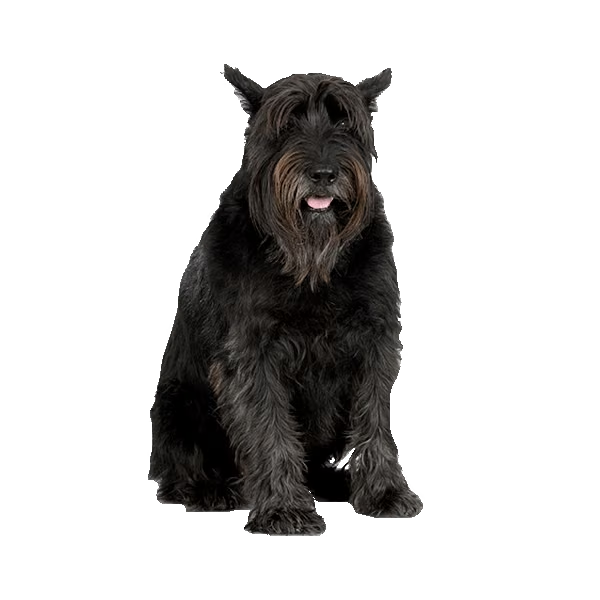
The Giant Schnauzer is a bold, intelligent working dog known for its loyalty, trainability, and powerful protective presence.
How the Giant Schnauzer coat is built, and what that means when you groom it.
Caution: A Giant Schnauzer coat should be hand-stripped rather than clipped.
A wire coat is meant to be pulled out at the root once the hair is ready to release. Clippers cut it off part way instead, leaving the soft undercoat behind. The result is a coat that grows back limp and faded, and the weatherproof texture only returns after the hair is stripped out again.
A few of the Giant Schnauzer profiles members have added to United Pet Club.
The Giant Schnauzer is a large German working dog, loyal and sharp-witted, with a strong protective streak. It suits an active, experienced owner who can meet its exercise and training needs.
The Giant Schnauzer is the biggest of the three Schnauzer breeds, standing taller than the knee on most adults. Bred in Germany as a working dog, it keeps the square build, wiry coat, and unmistakable beard and eyebrows of its smaller cousins, just scaled up onto a powerful frame.
The breed is alert, self-assured, and deeply attached to its own family. It settles into close bonds with the people it lives with and stays wary of anyone it does not know, which suits it naturally to watchdog and guarding duties. A Giant Schnauzer that knows its household well will often place itself between the family and anything unfamiliar.
Sharp intelligence and a strong work ethic mark the breed out. These dogs pick things up fast and want a job to get on with, whether that is obedience work, protection sport, herding, or a properly structured daily routine. Without enough to occupy its mind and body, a Giant Schnauzer can turn bored and hard to manage.
| Attribute | Detail |
|---|---|
| Origin | Germany |
| Size | Large |
| Lifespan | 10 to 12 years |
| Group/role | Working dog, guardian |
| Good with | Familiar family members and children when raised together and supervised |
The Giant Schnauzer suits an experienced, active owner with time for daily training and exercise. It does best in a home with secure space and people who like a dog that stays close and switched on. It is a poor match for first-time owners, quiet households, or homes where the dog would be left alone for long stretches.
The Giant Schnauzer was bred in southern Germany as a bigger version of the Standard Schnauzer, first used to drive cattle and later as a guard and working dog.
The breed comes from the southern German regions of Bavaria and Wurttemberg. Farmers and cattle dealers there wanted something bigger than the Standard Schnauzer, a dog with the size and strength to drive cattle to market and to guard property. What resulted was a powerful, weatherproof working dog built on the Schnauzer pattern.
Early breeders are thought to have crossed the Standard Schnauzer with larger smooth and rough-coated farm dogs, and the breed shares ancestry with the wider family of European drover and guard dogs. For most of its early history it was a regional working animal rather than a show dog, valued for its usefulness on farms and at livestock markets.
Once railways cut the need to drive cattle long distances, the Giant Schnauzer found new work in towns. It stood guard at breweries, stockyards, and butcher shops, and its size and temperament made it a capable protector of property. By the early twentieth century the breed had caught the eye of dog fanciers in Germany.
During and after the World Wars, the Giant Schnauzer was trained for police and military work, which built its name as a dependable working dog. From Germany it spread to other countries, and it remains a working guardian and companion breed there today. It is still an uncommon sight in Ireland, and prospective owners here often look to breeders in Britain or on the Continent, registered through the Irish Kennel Club or an equivalent FCI body.
The Giant Schnauzer is a large, squarely built dog with a harsh, wiry coat, pronounced beard and eyebrows, and a sturdy, muscular frame.
The Giant Schnauzer looks like a bigger, more powerful Standard Schnauzer. The body is square, meaning the length from chest to rump is roughly equal to the height at the shoulder. The build is strong and muscular without being coarse, and the overall impression is one of substance and working ability.
The head is rectangular and strong, set off by the breed's trademark bushy eyebrows and long beard. Ears may be left natural and folded or, where it is permitted, cropped to stand erect; cropping is not practised in Ireland or the UK. The expression is keen and alert.
| Trait | Standard |
|---|---|
| Height | Roughly 60 to 70 cm (23.5 to 27.5 in) at the shoulder |
| Weight | Roughly 25 to 48 kg (55 to 105 lb) |
| Coat | Dense, harsh, wiry double coat with a soft undercoat |
| Colours | Solid black, and pepper-and-salt |
| Eyes | Medium, oval, dark brown |
The outer coat is harsh and wiry, with a softer undercoat underneath. The two accepted colours are solid black and pepper-and-salt, the latter a banded grey produced by individual hairs carrying both light and dark sections. The coat needs regular grooming and is traditionally hand-stripped on show dogs to keep the correct harsh texture, though a lot of companion dogs are clipped instead.
The Giant Schnauzer is loyal, clever, and protective. It is devoted to its family, wary of strangers, and needs early socialisation and steady leadership.
The Giant Schnauzer is a confident, strong-willed dog with a deep bond to its family. It is affectionate and playful with people it trusts and often shadows its owners around the house. With children in its own household it can be gentle and patient, though its size means play with young children needs supervision.
Toward strangers the breed stays naturally reserved and watchful. This protective streak makes it an effective guardian, but it also means early and ongoing socialisation matters, so the dog learns to tell a real threat from an ordinary caller at the door. A well-raised Giant Schnauzer is steady rather than nervy or aggressive.
With other pets, results depend on how the dog was raised. A Giant Schnauzer brought up alongside other dogs and cats can live with them peacefully, but it has a strong prey drive and may chase smaller animals. Aggression between dogs of the same sex can crop up. The breed is highly intelligent and picks up good and bad habits equally fast, so consistent rules from the outset matter.
| Trait | Rating |
|---|---|
| Affection | 4 |
| Energy | 5 |
| Trainability | 5 |
| Vocalness | 3 |
| Shedding | 2 |
The Giant Schnauzer needs regular coat care, a good deal of daily exercise, and a home with enough space and engagement to keep its mind occupied.
Caring for a Giant Schnauzer takes a steady commitment of time. The wiry coat, high energy, and busy mind all need regular attention.
The Giant Schnauzer suits a house with a secure garden better than a small flat, though it can adapt to indoor living if its exercise needs are fully met. It wants to be near its family and does not do well kept apart outdoors, whatever about the mild, damp Irish climate suiting its weatherproof coat.
A Giant Schnauzer needs a complete, balanced diet sized to its large frame and activity level, split across measured meals to support healthy weight and joints.
Feed a complete and balanced diet formulated for large, active dogs. Protein and fat levels should match the dog's workload, and portions should be measured rather than left down all day, to prevent excess weight, which strains the joints. Puppies of large breeds do better on a growth formula balanced for controlled, steady development.
| Life stage | Amount per day | Meals |
|---|---|---|
| Puppy (2 to 6 months) | Per growth-formula label, divided | 3 to 4 |
| Puppy (6 to 12 months) | Per growth-formula label | 2 to 3 |
| Adult | Roughly 3 to 5 cups of quality dry food | 2 |
| Senior | Adjusted down for lower activity | 2 |
Keep treats to a small share of daily calories and use them for training rather than free feeding. Most dogs on a complete diet do not need supplements, but a vet may suggest joint support for a large, active breed. Leave fresh water down at all times, and consider a raised or slow-feeder bowl if the dog bolts its food.
The Giant Schnauzer is generally robust with a lifespan of 10 to 12 years, but the breed is prone to hip dysplasia, bloat, and certain eye and autoimmune conditions.
The Giant Schnauzer is a generally healthy large breed with a typical lifespan of 10 to 12 years. As with most large dogs, the main concerns involve the joints and the risk of bloat, along with a handful of inherited conditions. Buying from breeders who health-test their stock cuts the chance of heritable disease.
| Condition | Signs | Note |
|---|---|---|
| Hip dysplasia | Stiffness, limping, trouble rising | Screen breeding dogs; manage weight and joint load |
| Gastric dilatation-volvulus (bloat) | Swollen abdomen, retching, distress | Medical emergency; act immediately |
| Hypothyroidism | Weight gain, lethargy, coat changes | Managed with daily medication |
| Eye disorders | Cloudiness, vision changes | Regular eye checks help with early detection |
| Autoimmune conditions | Varied, often skin or blood related | Diagnosed and managed by a vet |
The Giant Schnauzer is highly trainable and keen to work, but its intelligence and strong will call for early, consistent, reward-based training from a confident owner.
The Giant Schnauzer ranks among the more trainable breeds. It picks things up quickly, likes having a task, and does well at obedience, tracking, protection sport, and other working disciplines. That same intelligence means the dog will test boundaries and take advantage of any inconsistency, so training works best when it is clear, fair, and started early. A bored or under-led Giant Schnauzer can turn stubborn or pushy.
Responsible Giant Schnauzer breeding pairs health-tested adults, follows a roughly nine-week gestation, and produces moderate to large litters that need careful early socialisation.
Breeding a Giant Schnauzer is a serious undertaking that should centre on health and temperament. Both parents should be physically mature, fully health-tested for conditions such as hip dysplasia and inherited eye disease, and sound in temperament before any mating takes place. Females generally should not be bred on their first season, and a vet can advise on suitable timing.
Gestation in dogs runs about 63 days, or roughly nine weeks. As whelping nears, the dam needs a quiet, clean space and close monitoring, since a large breed can occasionally run into delivery complications. After birth, the puppies depend entirely on the dam for warmth and feeding in the first weeks.
Early socialisation is critical for this guardian breed. From the first weeks, puppies should be handled gently and exposed to everyday sights and sounds so they grow into stable, confident adults. Responsible breeders in Ireland, generally registered with the Irish Kennel Club, keep puppies with the dam and littermates until they are old enough to go to new homes, and they screen prospective owners carefully.
| Metric | Value |
|---|---|
| Sexual maturity | Roughly 1 to 2 years for breeding readiness |
| Gestation | About 63 days (around 9 weeks) |
| Average litter size | Roughly 5 to 8 puppies |
| Weaning age | About 6 to 8 weeks |
| Recommended go-home age | Around 8 weeks or later |
Irish law wants every dog chipped and recorded; United Pet Club keeps your Giant Schnauzer's record free, current, and there for life.
A dog warden with a scanner can only follow the record, and a Giant Schnauzer whose record is current is home the same day. Register your dog free with United Pet Club: your contact details, his photo, and his chip number together on one profile that never lapses and never bills you.
Lodge your Giant Schnauzer's fifteen digit number with United Pet Club and the chip finally earns its keep: free registration for life, every brand accepted, and a record the ISPCA or any warden can turn into a phone call. Microchip registration takes minutes, and the free account covers the profile while you're at it.
Set yourself up with a free United Pet Club account, key in your Giant Schnauzer's details and a photo, and save. The profile holds for the whole of his life without charge, and the chip number can be lodged whenever you have it.
Lodge the fifteen digit chip number in your free account along with your address and phone number. The lifetime plan covers the registration and every update after it, free, whatever brand the vet used.
It is. The 2015 Regulations require every dog to be chipped and registered, pup or rescue alike. Keeping the record current is the part that falls to you, and United Pet Club makes that part free.
Not a penny. Profile, chip record, and every amendment are covered for life, with no renewal ever.
Common questions about the Giant Schnauzer cover its size, temperament, care demands, lifespan, suitability, and availability in Ireland.
It is a large breed, standing roughly 60 to 70 cm (23.5 to 27.5 in) at the shoulder and weighing roughly 25 to 48 kg (55 to 105 lb), with males usually bigger than females.
It is loyal, clever, energetic, and protective. The breed bonds closely with its family, stays reserved around strangers, and makes a natural watchdog once properly socialised.
It is a demanding breed. It needs daily exercise and training, regular coat grooming, and an owner with time and experience. It does not suit first-time or sedentary owners.
The typical lifespan is 10 to 12 years. Good weight management, preventive veterinary care, and buying from health-tested lines all support a long, healthy life.
It can be a devoted family dog, gentle with children in its own household when raised alongside them. Its size means play should be supervised, and it needs early socialisation to be reliable around visitors.
It is a relatively low-shedding breed thanks to its wiry double coat, but it still needs frequent brushing plus periodic clipping or hand-stripping to stay in good condition.
Look for breeders who health-test their dogs and raise puppies with early socialisation, check listings through the Irish Kennel Club, or look at breed-specific rescues. Be ready for a wait, since the breed is far less common here than many popular companion breeds.



