The German Wirehaired Pointer is a devoted, all-purpose hunting companion known for its rugged coat and tireless work ethic.
How the German Wirehaired Pointer coat is built, and what that means when you groom it.
Critical: A German Wirehaired Pointer should not be shaved.
The undercoat keeps heat out as well as in, and the outer coat shields the skin from sun and insect bites. Clipping the whole coat off removes both. It often grows back patchy, soft or a different colour, and in some animals the guard hairs never return properly. Brush the undercoat out instead of cutting it off.
Caution: A German Wirehaired Pointer coat should be hand-stripped rather than clipped.
A wire coat is meant to be pulled out at the root once the hair is ready to release. Clippers cut it off part way instead, leaving the soft undercoat behind. The result is a coat that grows back limp and faded, and the weatherproof texture only returns after the hair is stripped out again.
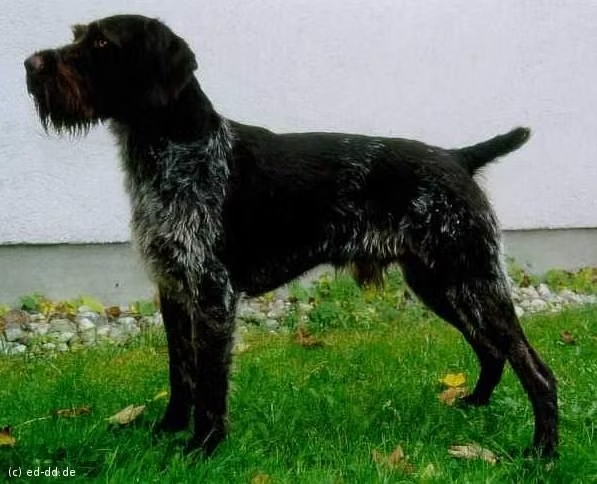
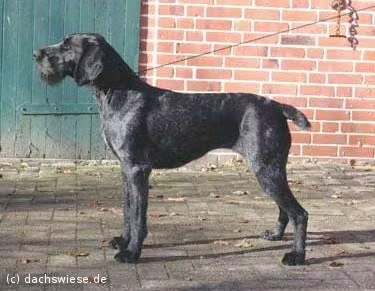
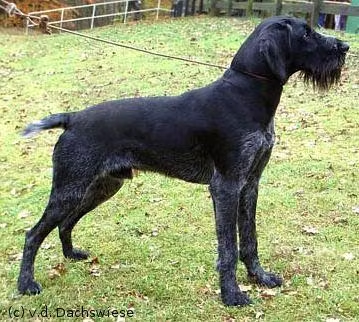
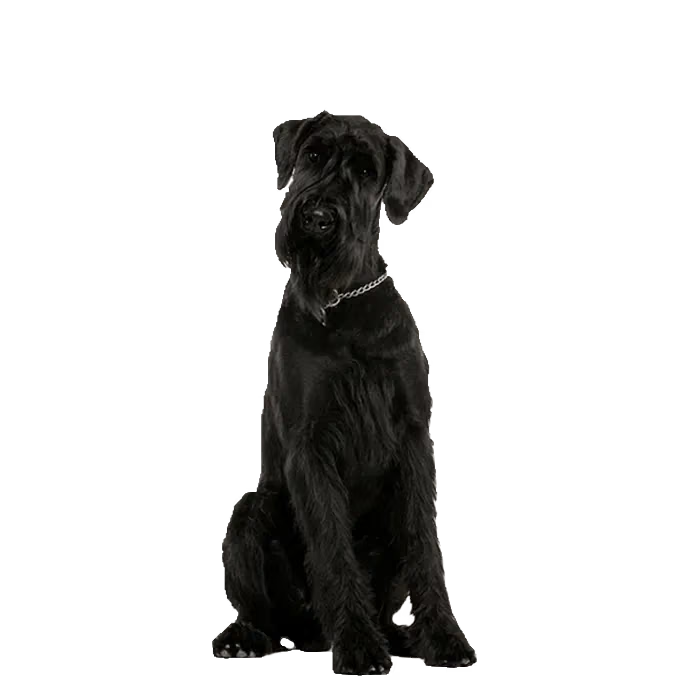
A few of the German Wirehaired Pointer profiles members have added to United Pet Club.
The German Wirehaired Pointer is a large, versatile gun dog from Germany with a harsh, weatherproof coat built for cold and wet conditions, a lifespan of 12 to 14 years, and a strong drive to work closely with its handler.
The German Wirehaired Pointer, known in Germany as the Deutsch Drahthaar, is a large gun dog developed to hunt, point, and retrieve across all terrain and weather. That brief covers the job the breed was made for, but it also explains why the coat is so central to the breed standard. Coarse, wiry, and naturally water-repellent, it was designed for exactly the sort of cold, wet, and heavy-going conditions familiar to anyone who has worked or walked outdoors in Ireland.
The dog forms strong attachments to its own household and is settled and affectionate with people it knows well. Around strangers it stays watchful and reserved, though a well-bred, properly socialised dog does not move from reserve into aggression. Energy levels are high. This was bred to put in a full day afield, and that drive does not switch off when the dog comes indoors.
Adult dogs live 12 to 14 years as a general rule. In Ireland, the breed is registered with the Irish Kennel Club (IKC) in the Gundog Group. It suits active households that can provide daily, genuine exercise and consistent mental engagement. Left without enough activity, it will find its own outlets.
| Item | Detail |
|---|---|
| Origin | Germany |
| Size | Large |
| Lifespan | 12 to 14 years |
| Group/role | IKC Gundog Group; pointing and retrieving gun dog (versatile hunting breed) |
| Good with | Family members it knows well; older, calm children; can live with other dogs when socialised early |
This dog fits owners who hunt, run, hike, or train in dog sports and want a companion for those activities. It does well with people who are home a good deal, or who can bring the dog along rather than leaving it behind. First-time owners can manage one if they are prepared for structured daily exercise and patient, consistent training. It is a poor match for apartment living without very heavy activity, for households where the dog would be alone for long stretches each day, or for anyone wanting a settled, low-demand dog.
Developed in Germany during the latter half of the 1800s, the German Wirehaired Pointer was bred to replace a collection of specialist gun dogs with a single all-purpose working dog, and a German breed club formalised the standard and working requirements in 1902.
By the middle of the nineteenth century, German hunters were keeping several specialist breeds: one to point birds, another to retrieve, perhaps a third suited to thick cover or cold water. The practical push toward a single dog that could manage the whole day's work drove the breeding programme behind the German Wirehaired Pointer.
Breeders combined several established types to produce that all-rounder. The Pudelpointer, the German Shorthaired Pointer, and rough-coated breeds such as the Griffon and the Stichelhaar are all part of the recorded ancestry. What they selected for was a harsh wire coat that could shed water and resist cuts from thorns and bracken, combined with nose, stamina, and a willingness to cooperate with the hunter.
The breed came together around the turn of the twentieth century, and a dedicated German club, the Verein Deutsch Drahthaar, was established in 1902 to set the standard and oversee working performance tests. Crucially, German breeders tied breed registration to proven working ability rather than appearance alone. That principle still shapes how the breed is regarded by serious working-dog enthusiasts.
The Deutsch Drahthaar spread into Britain and Ireland gradually through the mid-twentieth century. The Irish Kennel Club registers the breed as the German Wirehaired Pointer. Within Germany and through a separate North American organisation, dogs may still be registered as Deutsch Drahthaar with performance-testing requirements attached.
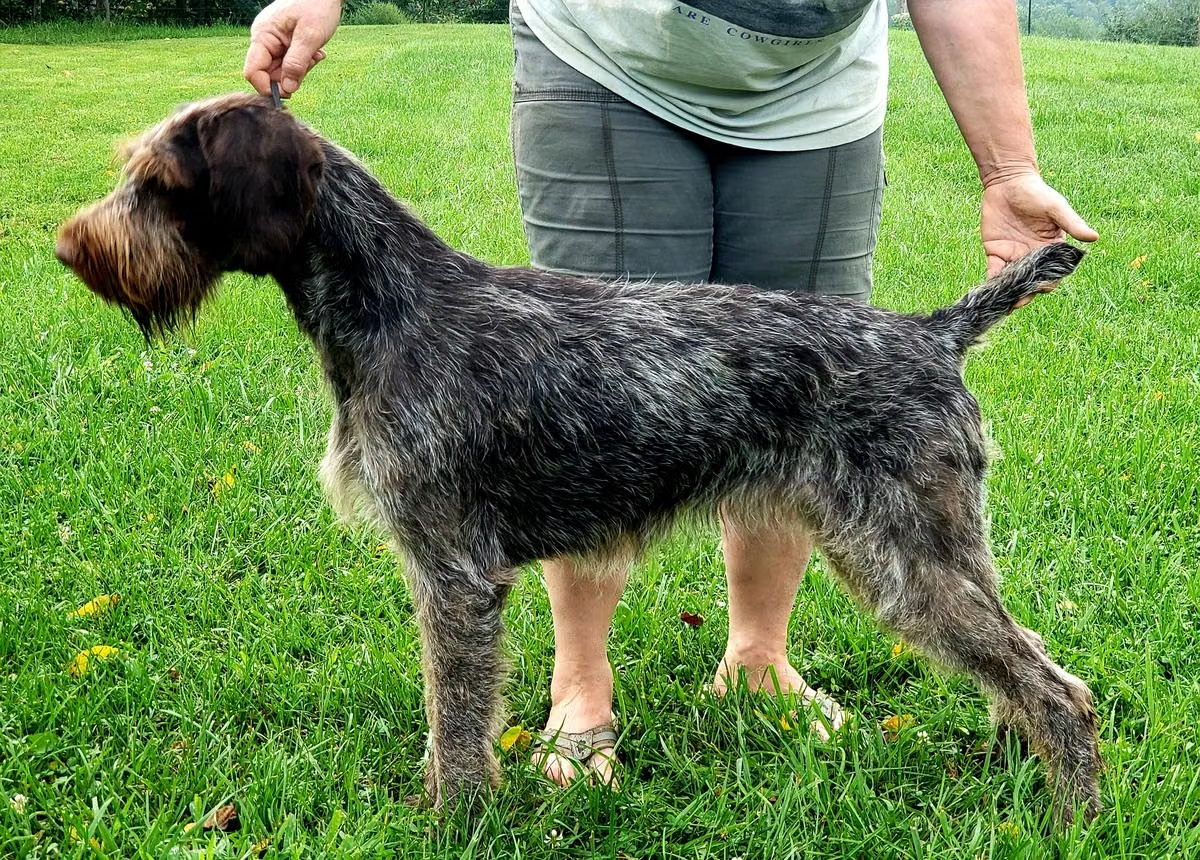
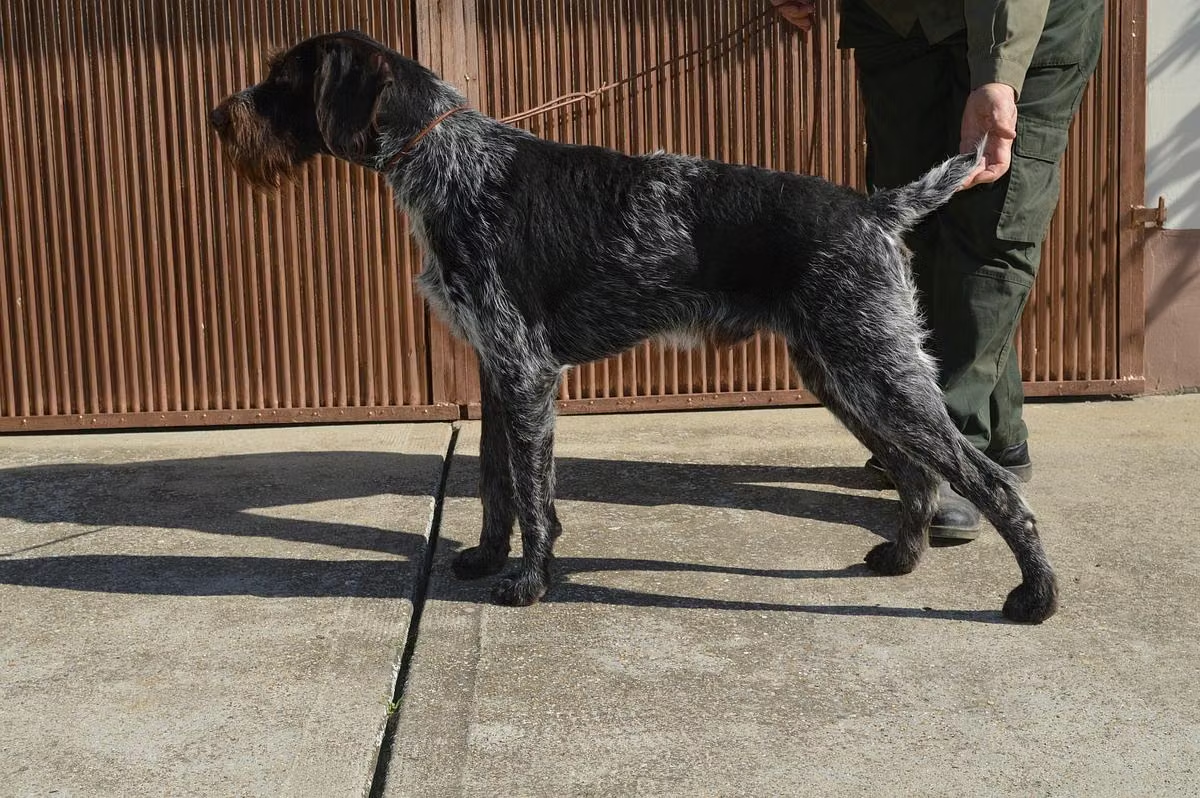
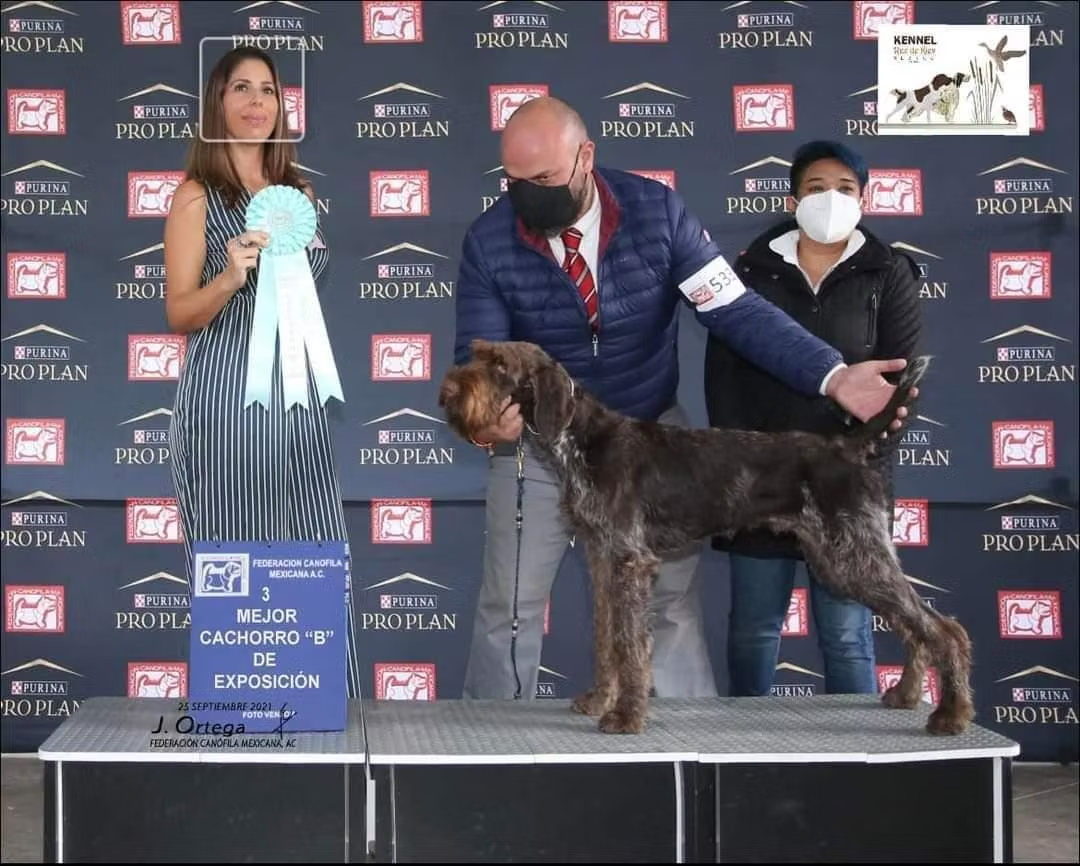
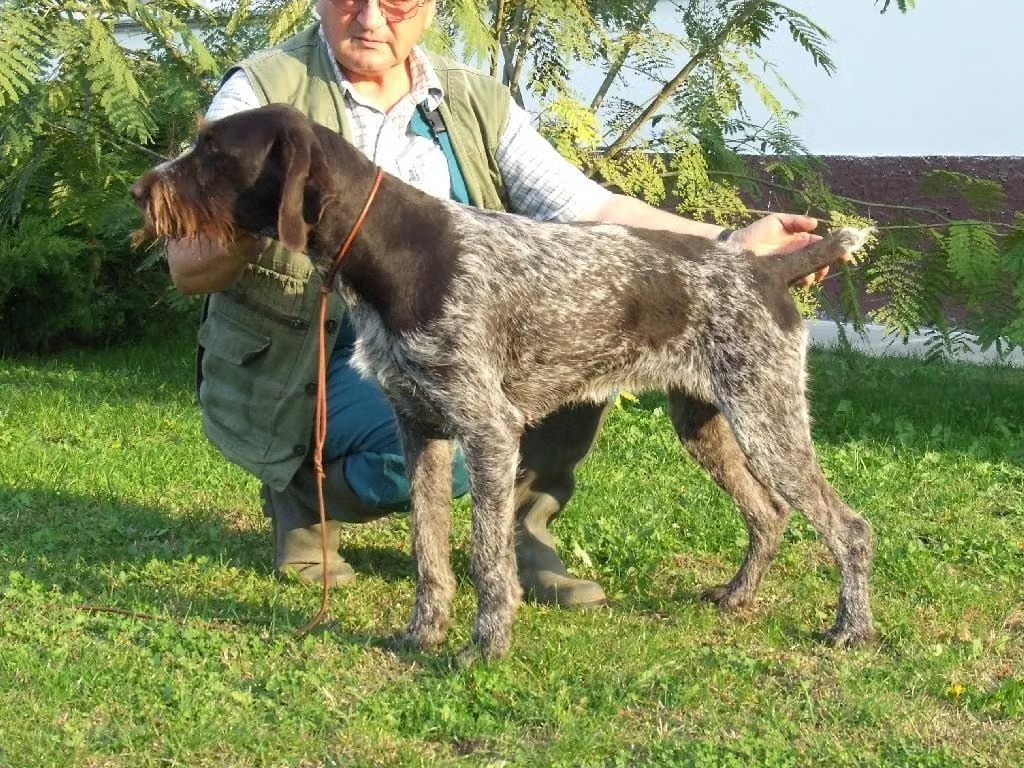
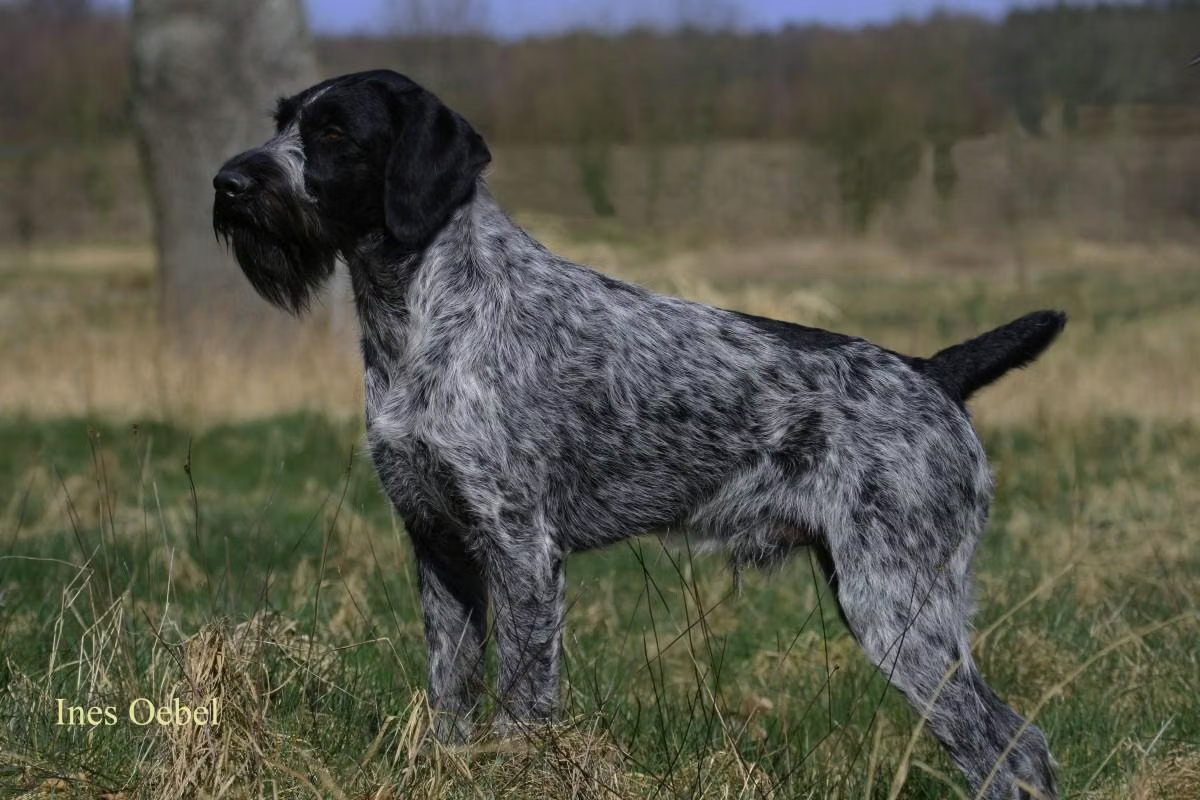
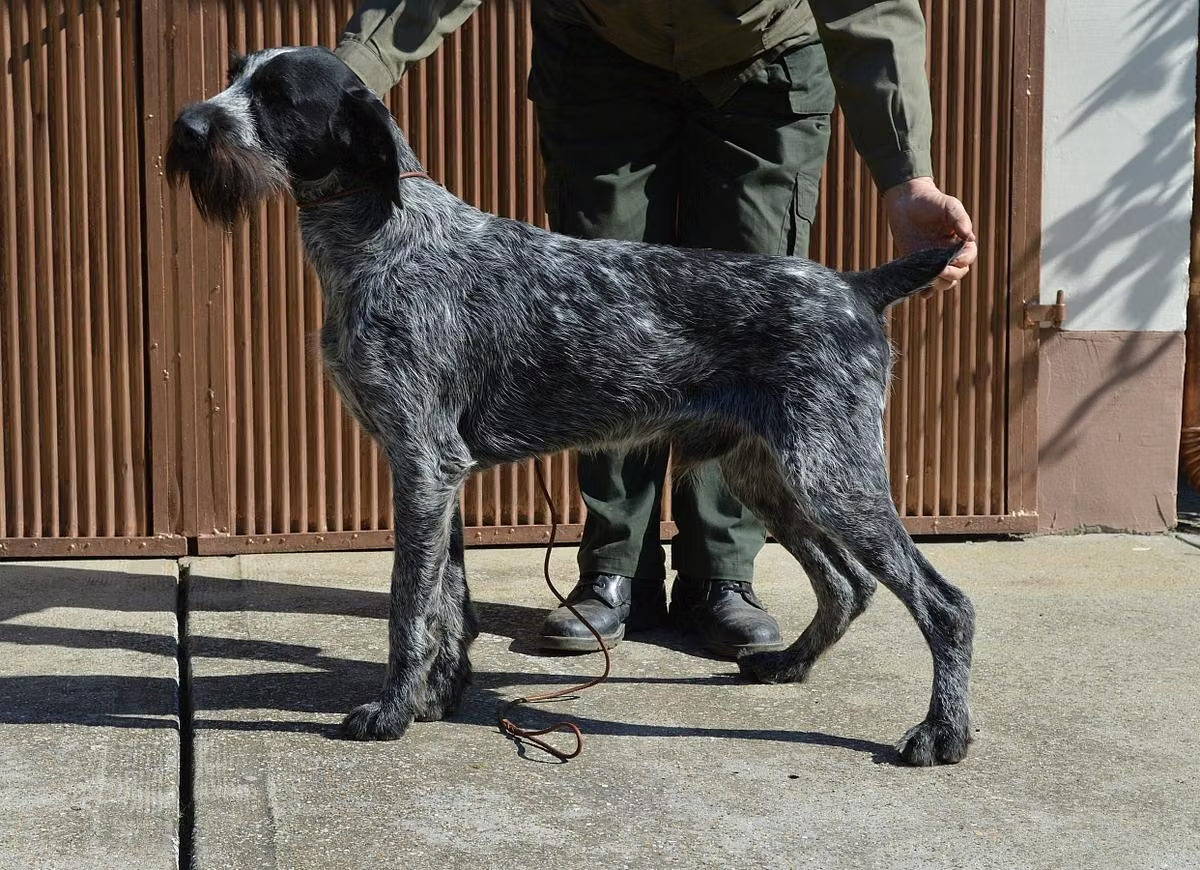
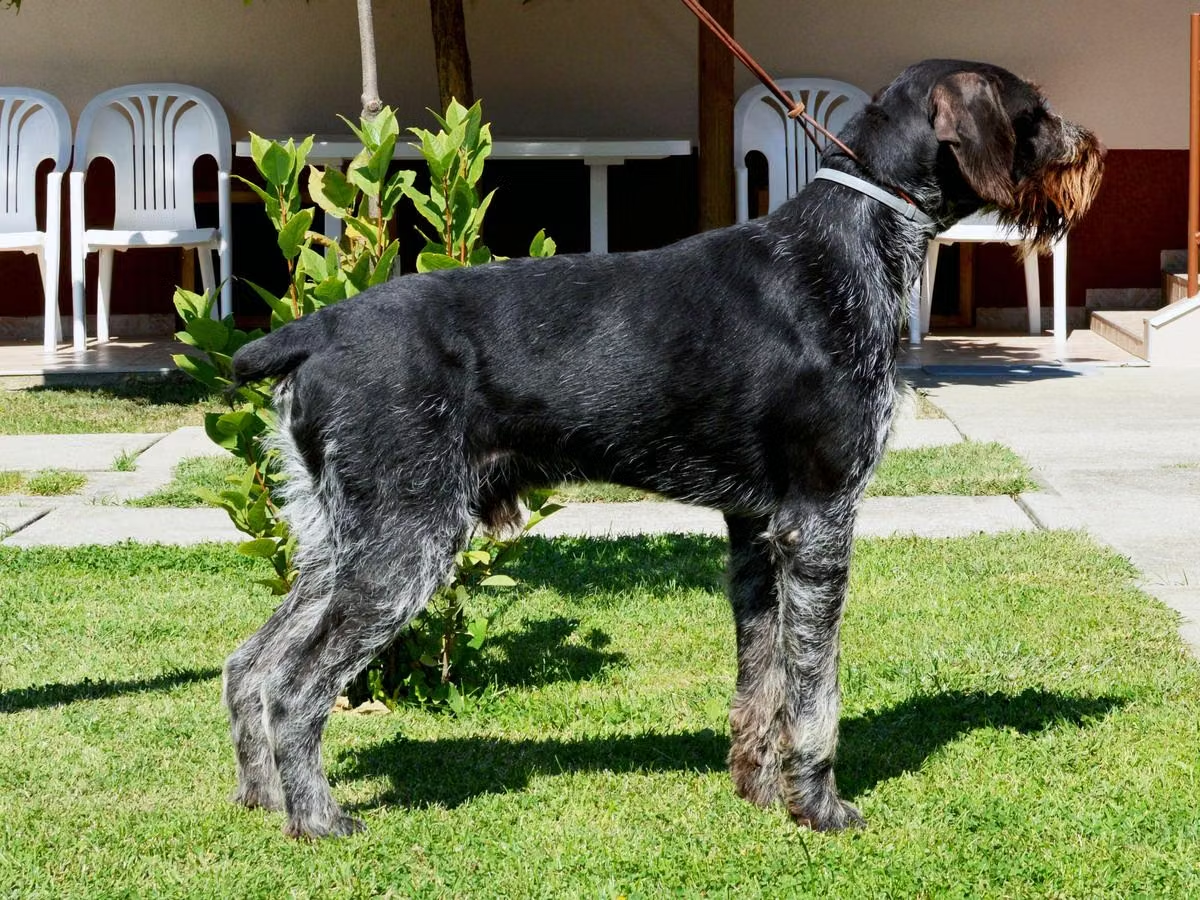
The German Wirehaired Pointer is a large, well-balanced gun dog standing roughly 56 to 66 cm at the shoulder, with bushy eyebrows, a pronounced beard, and the harsh wiry coat that makes it immediately recognisable.
The first things most people notice are the face and the coat. The heavy brow, jutting eyebrows, and full beard on the muzzle give the dog a purposeful, almost stern expression that suits its working character. The body underneath is built for endurance rather than bulk: a deep chest, strong hindquarters, and solid legs capable of carrying the dog through boggy ground or heavy undergrowth for hours. The tail is traditionally docked in countries where that practice remains permitted, though the status of docking varies under national legislation.
| Trait | Detail |
|---|---|
| Height | Males about 61 to 66 cm at the shoulder; females 56 cm and upwards |
| Weight | Approximately 23 to 32 kg, with males heavier than females |
| Coat | Harsh, wiry outer coat roughly 2.5 to 5 cm long over a dense undercoat; heavy eyebrows and a pronounced beard |
| Colours | Liver and white in spotted, ticked, or roan patterns; solid liver also occurs; head typically solid liver, sometimes with a white blaze |
| Eyes | Oval, brown, set beneath pronounced brows, with an alert expression |
The outer coat should feel stiff and bristly to the touch, not soft. It lies close to the body and shields the skin from brambles, cold water, and wind. The undercoat thickens in autumn and winter and thins through the warmer months. Liver and white is the usual colour combination, most often as ticked or roan markings on the body with a solid liver head. A white blaze may appear on the face. The breed standard does not accept black coats.
The German Wirehaired Pointer is devoted and affectionate within its own household, reserved and watchful with strangers, and highly energetic, with a working drive that needs consistent daily outlets and early socialisation around other animals.
Energy and working instinct are the two qualities new owners are most likely to underestimate. This was bred to put in a full day afield, and those hours of sustained drive do not quieten after a half-hour walk on the footpath. The dog wants a job, and if one is not provided it will find its own occupations.
Within the household, the breed is loyal and affectionate. It often attaches most strongly to one person but is generally settled with all familiar family members. With strangers it is watchful and tends to hold back, which makes it a capable watchdog, though sound breeding and thorough early socialisation keep that caution from becoming a problem.
With children it has been raised with, it is generally patient, but its size and enthusiasm suit older children better than very young ones. It can live with other dogs when socialised from an early age. The prey drive is strong, so cats, rabbits, and other small animals are likely to be chased unless they have been introduced carefully and the dog has learned over time to leave them alone.
| Trait | Rating |
|---|---|
| Affection | 5 |
| Energy | 5 |
| Trainability | 4 |
| Vocalness | 3 |
| Shedding | 3 |
The German Wirehaired Pointer needs thorough drying and mud management after wet walks and field work, regular coat maintenance including hand-stripping, and at least one to two hours of vigorous exercise each day.
In Ireland's climate, coat care after outdoor activity matters more than it might elsewhere. Mud works into the beard, the leg furnishings, and around the ears quickly, and a damp, dirty coat that is not attended to will mat and smell. A utility area or hosing-down space near the back door makes day-to-day management more realistic.
This is a demanding breed in terms of daily activity.
A securely fenced garden and an owner who is at home for a good part of the day suit this breed best. The wire coat handles cold, wind, and rain without difficulty and dries faster after a wet outing than longer-coated breeds would. Heat is harder for it to manage, so shade and fresh water matter during warmer spells. Being alone for long hours is hard for a dog built to work alongside a person, and problem behaviours follow fairly quickly without consistent company and activity.
Feed the German Wirehaired Pointer a complete diet formulated for large, active dogs, split across two meals per day, and adjust the amount to the dog's actual workload and body condition throughout the year.
Because this is a deep-chested breed, splitting the daily ration into two meals is a sensible precaution against bloat, which carries real risk for dogs with this build. Avoid vigorous exercise for at least an hour either side of feeding. A complete food formulated for active or sporting large breeds provides the protein and fat levels that suit the working build. A dog doing regular field work will need considerably more calories than one getting only recreational exercise, so adjust the amount to what the dog is actually doing at that time of year.
| Life stage | Amount per day | Meals per day |
|---|---|---|
| Puppy (2 to 6 months) | Per product label for projected adult weight, divided across meals | 3 to 4 |
| Young dog (6 to 12 months) | Per label, reducing toward adult amount | 2 to 3 |
| Adult (1 to 7 years) | Approximately 250 to 350 g of a complete dry food; more for working or very active dogs | 2 |
| Senior (7 years and over) | Reduce slightly if activity has decreased; monitor body condition carefully | 2 |
Keep treats to no more than ten per cent of daily calories so they do not unbalance the diet or contribute to weight gain. Small, low-calorie rewards work well during training. Most dogs eating a complete, balanced food have no need for additional supplements. Speak to your vet before adding fish oil, joint, or skin products, since individual needs vary and over-supplementing can cause problems.
The German Wirehaired Pointer is a hardy working breed with a lifespan of 12 to 14 years. Owners should be aware of hip dysplasia, certain eye conditions, ear infections from swimming, and bloat.
Most German Wirehaired Pointers live 12 to 14 years and are physically robust, which reflects the working-dog selection that has always been part of the breed's history. Responsible breeders in Ireland provide health clearances on both parents, and the IKC can direct prospective owners toward registered breeders who follow those practices. The conditions in the table below are ones seen in the breed. They are not inevitable for any individual dog.
| Condition | Signs | Note |
|---|---|---|
| Hip dysplasia | Stiffness, limping, difficulty rising, reluctance to jump | Inherited joint malformation; responsible breeders screen hips |
| Elbow dysplasia | Lameness in the front legs, especially after exercise | Also screened in breeding dogs |
| Eye conditions (cataracts and retinal disease) | Cloudiness in the eye, bumping into objects, changes in vision | Eye exams as part of pre-breeding checks help catch these early |
| Ear infections | Head shaking, scratching at ears, odour, discharge | Drop ears and frequent swimming increase the risk; dry ears thoroughly after water |
| Bloat (gastric dilatation-volvulus) | Distended abdomen, retching with nothing produced, restlessness, apparent distress | Deep-chested breeds are at elevated risk; this is a veterinary emergency |
The German Wirehaired Pointer is intelligent and keen to work with its handler, though its independence and strong prey drive mean early socialisation and consistent reward-based training are essential from puppyhood.
The independent streak in this breed is real and worth taking seriously from the start. This is a dog that was expected to make decisions in the field without being told what to do at every moment. That initiative is useful when hunting but it means the dog will happily override a command when something more interesting is happening. Training from early on is not optional.
It does learn quickly and genuinely wants to work with a person it trusts, so the response to consistent, reward-based training is good. Long, repetitive sessions lose its attention. Short, varied work ending before the dog switches off holds interest better. Harsh corrections tend to backfire with a sensitive, intelligent dog. Early socialisation, taking the puppy to different places and introducing it to varied people, sounds, and animals, is especially important given the breed's natural wariness of strangers and its drive to chase small animals.
German Wirehaired Pointers reach sexual maturity between 6 and 12 months, carry litters for approximately 63 days, and typically produce 7 to 9 puppies, though responsible breeders wait until the dog is fully mature and health-screened before mating.
Female German Wirehaired Pointers come into season for the first time somewhere between 6 and 12 months, but ethical breeders do not mate a dog at first season. Most wait until the bitch is physically and temperamentally mature, usually around two years of age, and until both parents have passed relevant health assessments for hips, elbows, and eyes. Gestation lasts approximately 63 days from conception. Litters of 7 to 9 puppies are typical, though smaller and larger litters occur.
Newborn puppies are blind and deaf and depend entirely on the dam for warmth and nourishment in the first days. The eyes open between 10 and 14 days. Weaning begins around 3 to 4 weeks and is generally complete by 7 to 8 weeks. Gentle handling and exposure to everyday household sounds and movement during the first weeks help puppies develop into confident, stable adults. Puppies should stay with the litter until at least 8 weeks of age.
In Ireland, all dogs must be microchipped under the Microchipping of Dogs Regulations, and responsible breeders arrange chipping before puppies go to new homes. Buyers should ask for documentation of microchip details, IKC registration papers, and health clearances on both parents. The IKC maintains a list of registered breeders and is the appropriate starting point for prospective owners.
| Metric | Value |
|---|---|
| Sexual maturity | 6 to 12 months (breeding recommended from around 2 years, after health screening) |
| Gestation | Approximately 63 days |
| Average litter size | 7 to 9 puppies |
| Eyes open | Around 10 to 14 days |
| Weaning | Around 7 to 8 weeks |
| Go-home age | 8 weeks or later |
Irish law wants every dog chipped and recorded; United Pet Club keeps your German Wirehaired Pointer's record free, current, and there for life.
Irish law has required every dog to be chipped and registered since the 2015 Regulations came in, and it expects the details behind the chip to stay current, not gather dust. A free United Pet Club profile does that for your German Wirehaired Pointer, for life. Registering your dog is a few minutes' work and costs nothing at all.
Lodge your German Wirehaired Pointer's fifteen digit number with United Pet Club and the chip finally earns its keep: free registration for life, every brand accepted, and a record the ISPCA or any warden can turn into a phone call. Microchip registration takes minutes, and the free account covers the profile while you're at it.
Set yourself up with a free United Pet Club account, key in your German Wirehaired Pointer's details and a photo, and save. The profile holds for the whole of his life without charge, and the chip number can be lodged whenever you have it.
Lodge the fifteen digit chip number in your free account along with your address and phone number. The lifetime plan covers the registration and every update after it, free, whatever brand the vet used.
It is. The 2015 Regulations require every dog to be chipped and registered, pup or rescue alike. Keeping the record current is the part that falls to you, and United Pet Club makes that part free.
Not a penny. Profile, chip record, and every amendment are covered for life, with no renewal ever.
Common questions about the German Wirehaired Pointer in Ireland cover its size, suitability for families, care demands in a wet climate, lifespan, compatibility with other pets, shedding, and how to find one.
Males stand roughly 61 to 66 cm at the shoulder and typically weigh 23 to 32 kg; females are somewhat smaller. It is a large, solidly built dog.
For an active family, yes. It is loyal and affectionate within the household and generally patient with children it has grown up alongside, though its size and energy suit older children better than toddlers. It is reserved with strangers and needs thorough early socialisation.
The wire coat is manageable with weekly brushing and hand-stripping a couple of times a year. The more demanding side is exercise: this dog needs one to two hours of real activity every day, not just a short walk. In Ireland's wet climate, drying the coat and managing mud after walks and field work becomes part of the daily routine.
Most live 12 to 14 years when kept at a healthy weight and given routine veterinary care.
They can live well with other dogs when socialised from an early age. Their prey drive is strong, making cats and small animals a challenge; careful, gradual introductions and ongoing supervision are needed in mixed-pet households.
Shedding is moderate. Seasonal shedding is the heaviest, and a weekly brush keeps loose hair from building up around the house.
They are not a common breed here. The IKC maintains a register of recognised breeders, which is the best starting point. Waiting lists are the norm for puppies from reputable sources, particularly from breeders working with proven hunting lines. Breed-specific rescue is another avenue worth exploring.