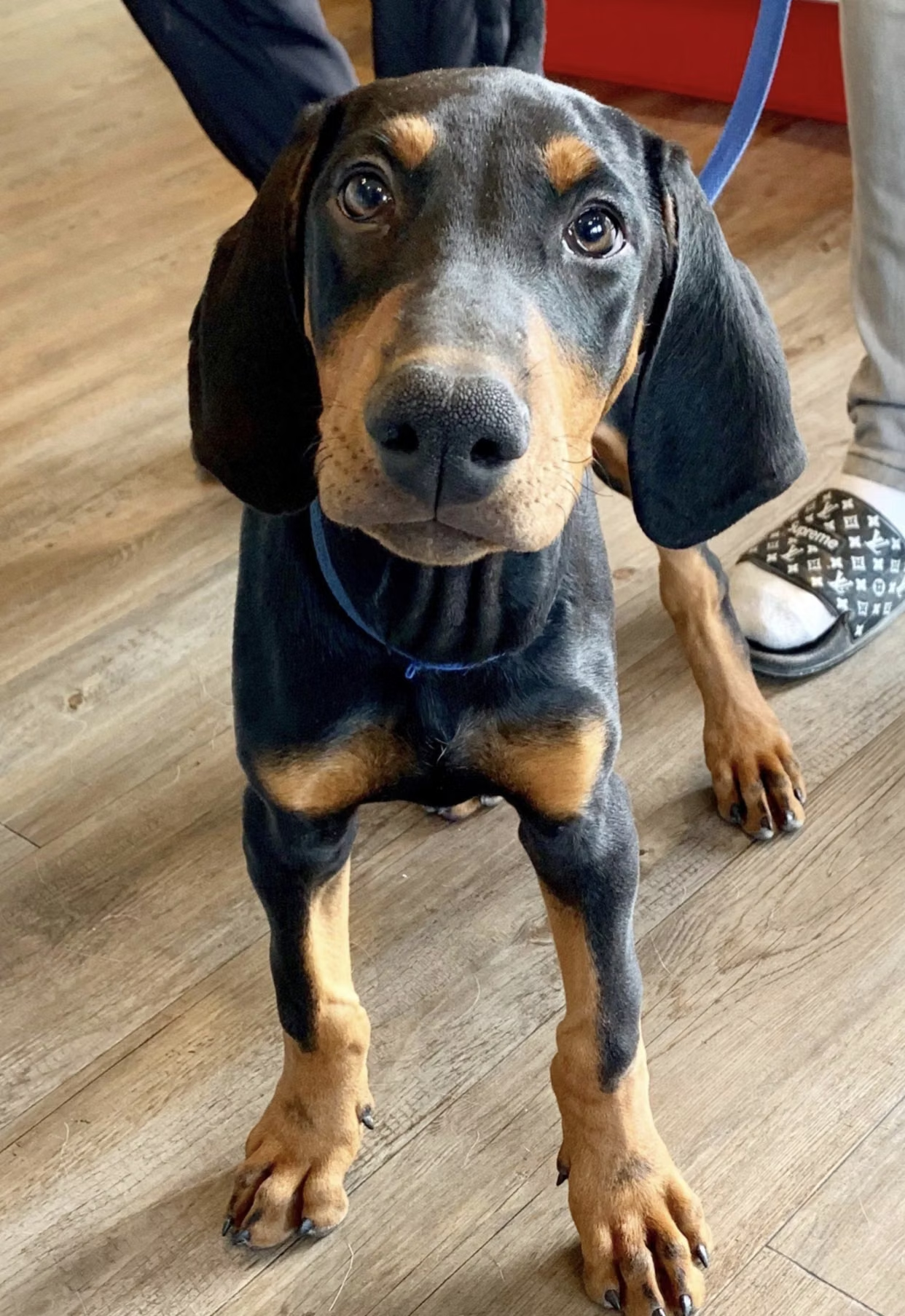
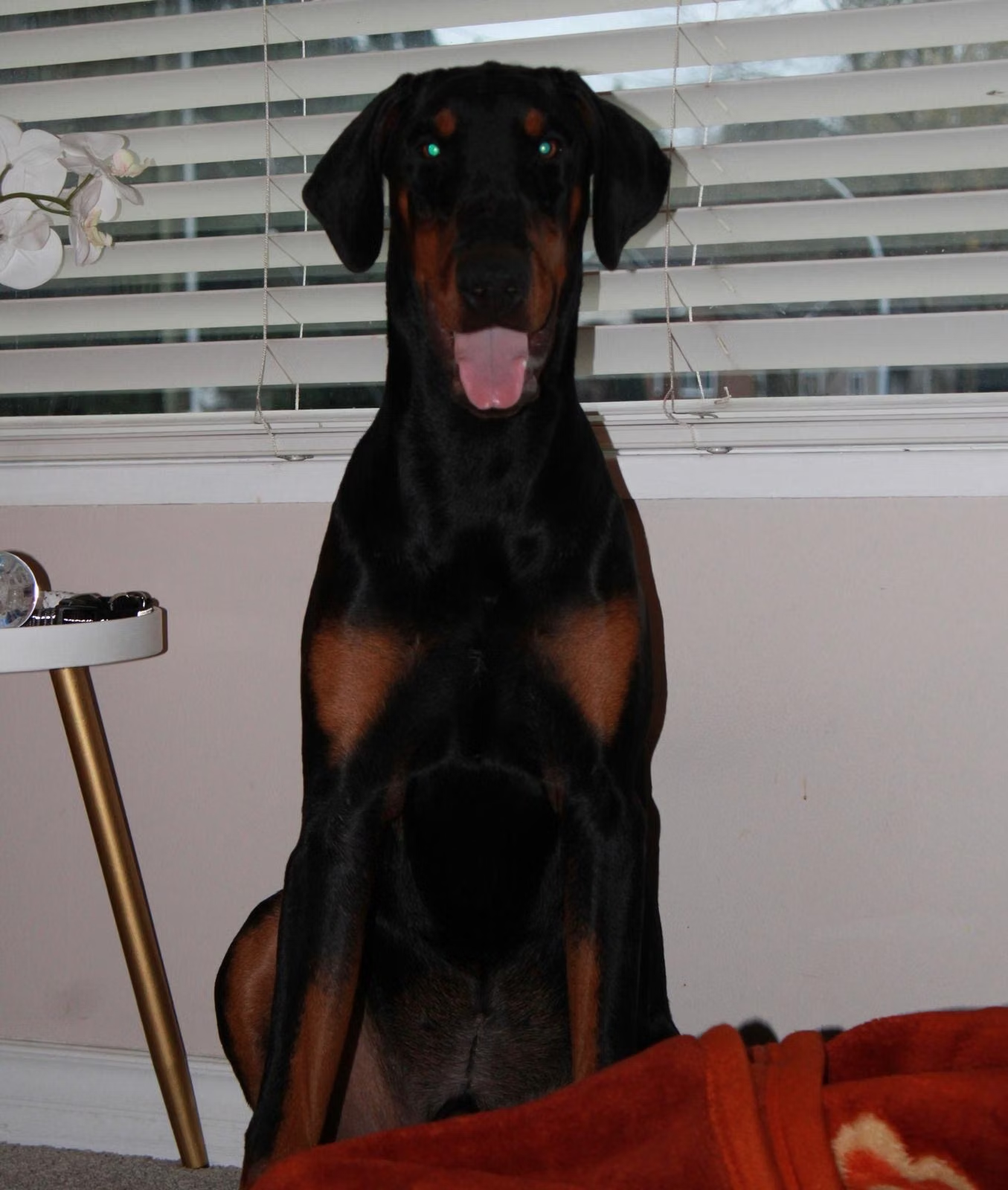
The Doberman Pinscher is a loyal, intelligent breed renowned for its alertness, elegance, and fearless devotion as a guardian.
How the Doberman Pinscher coat is built, and what that means when you groom it.
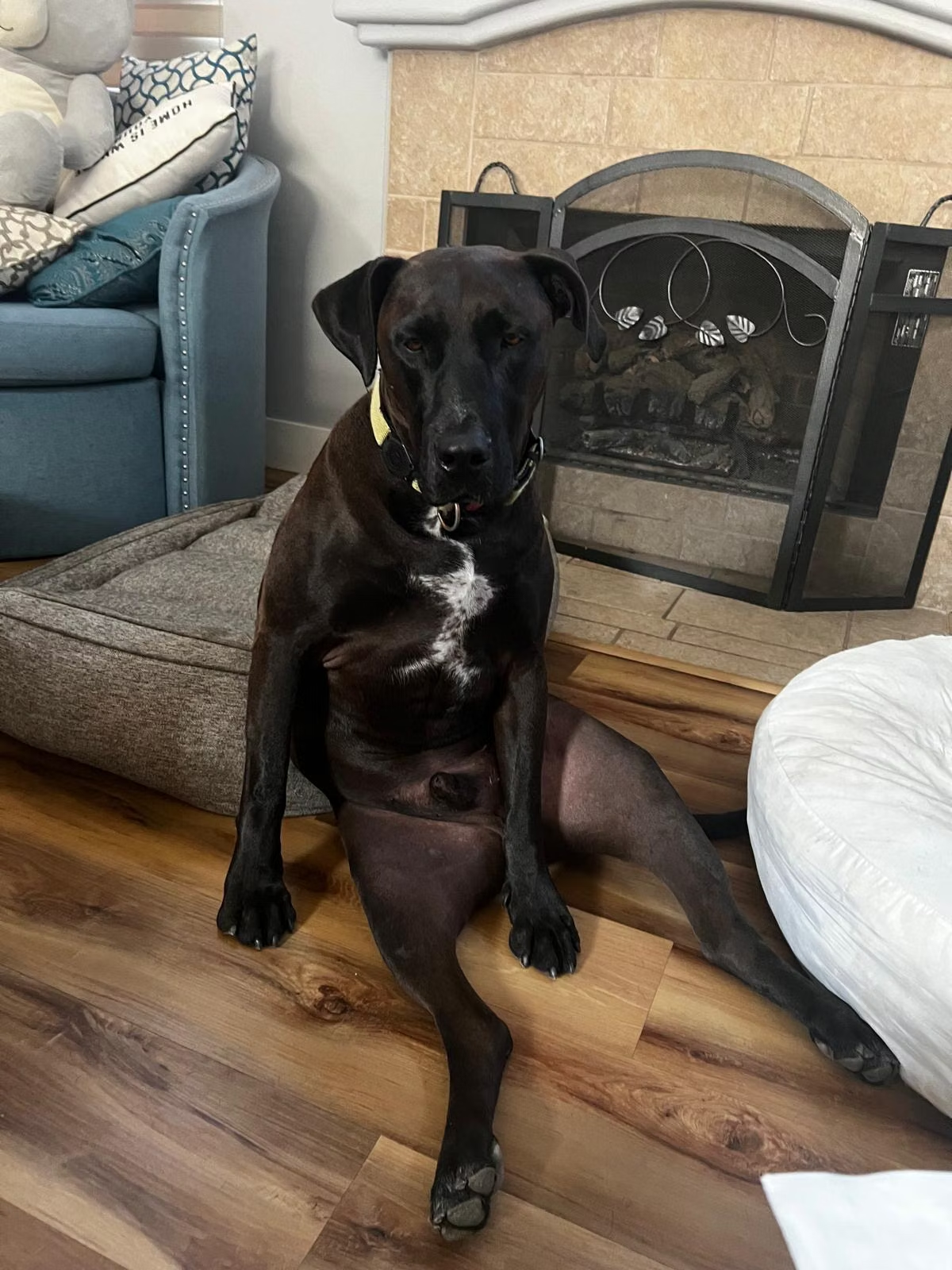
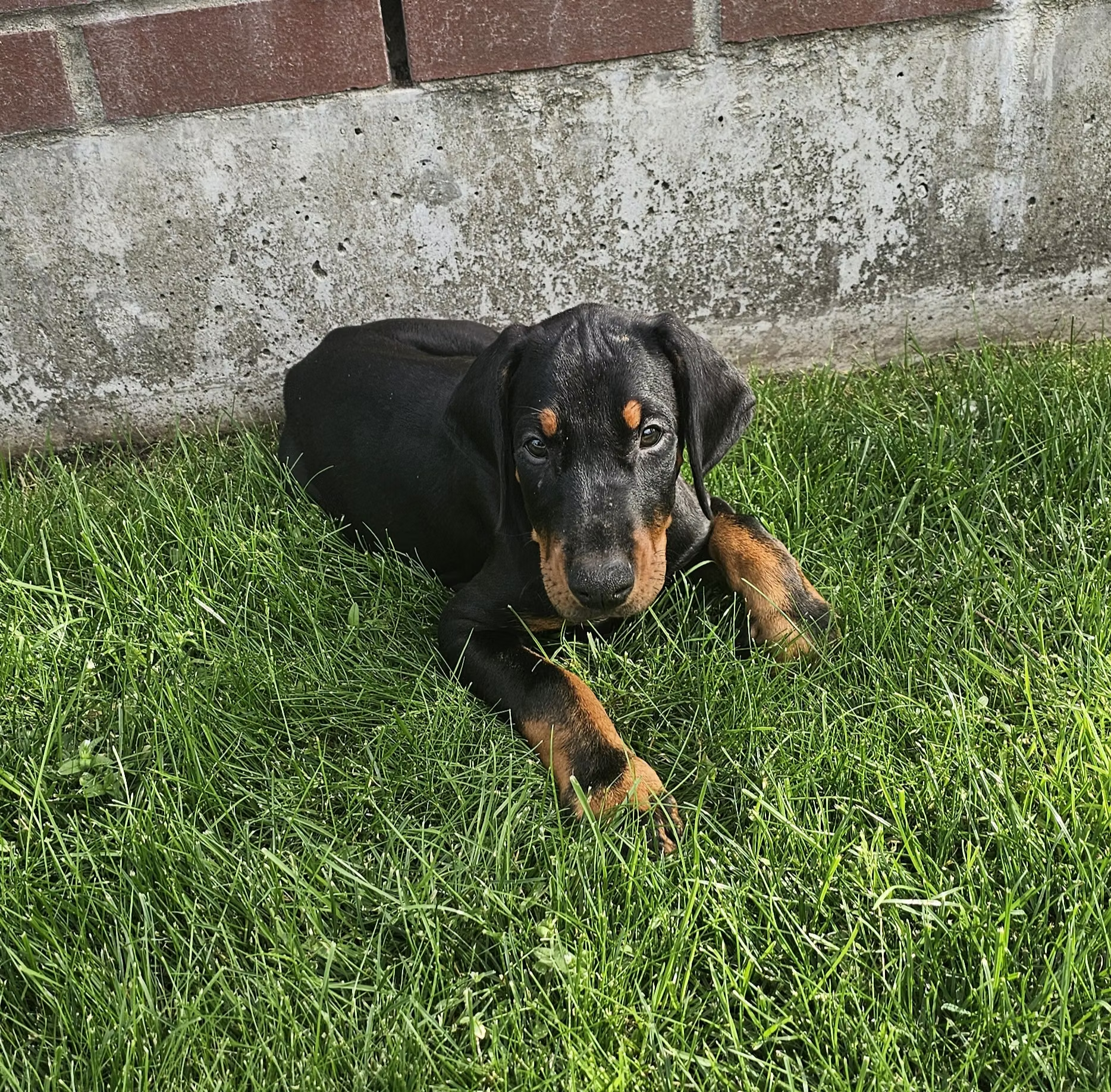
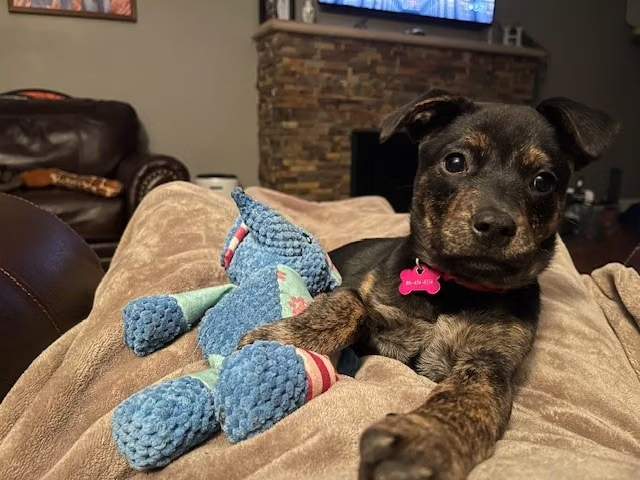
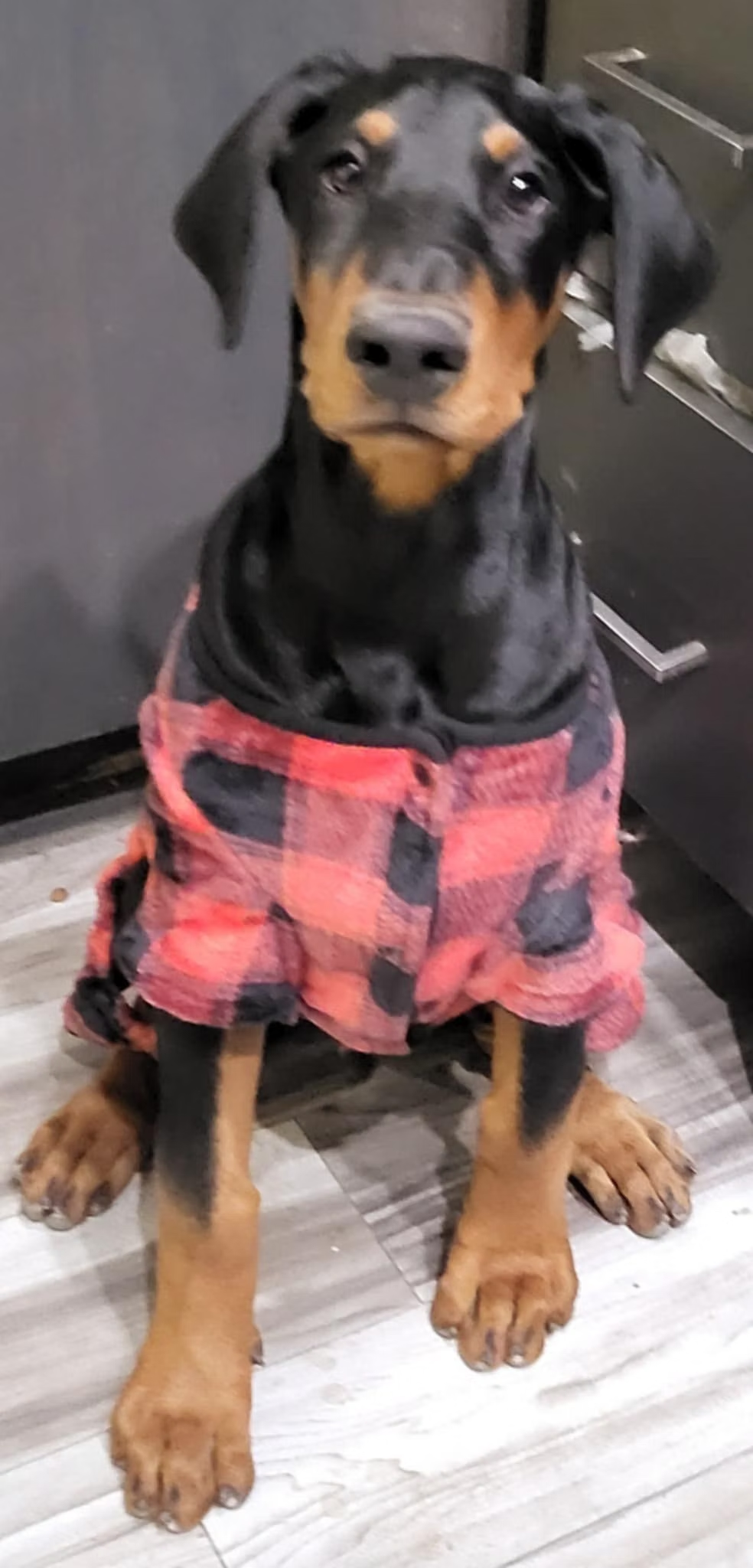
A few of the Doberman Pinscher profiles members have added to United Pet Club.
The Dobermann Pinscher is a large German working dog listed as a restricted breed under Irish law, registered with the Irish Kennel Club in the working group, and suited to experienced, committed owners who can provide daily training and close companionship.
Any prospective owner in Ireland should know from the outset that the Dobermann Pinscher appears on the restricted-breeds list under the Control of Dogs (Restriction of Certain Dogs) Regulations 1998. In public, the dog must be muzzled and kept on a lead no longer than two metres, and it must be microchipped. These are legal requirements, not guidelines, and they define what day-to-day ownership looks like here.
The Dobermann is a large, muscular German working dog with a square build, a deep chest, and a short, smooth coat. The Irish Kennel Club (IKC) classifies it in the working group. Males typically stand between 66 and 71 cm at the shoulder; females between 61 and 66 cm. Weight ranges from approximately 27 to 45 kg, with males at the upper end.
The breed is quick to learn and attaches closely to its household, tending to follow people from room to room rather than settle at a distance. That closeness makes it a genuinely loyal companion, but it also means the dog does not cope well when left alone for long stretches. Without daily physical exercise and mental work, the energy and focus that suit it for working roles become a problem indoors.
| Attribute | Detail |
|---|---|
| Origin | Germany |
| Size | Large (27 to 45 kg) |
| Lifespan | 10 to 13 years |
| Group / role | Working breed; guardian and companion |
| Good with | Committed families, experienced owners, other pets when socialised early |
The breed suits someone who trains consistently, spends a good portion of the day at home, and has access to a securely fenced area for off-lead exercise. It fits active households and people who want to get involved in obedience, tracking, or protection sport through an IKC-affiliated club. Owners who are regularly away from home, or who prefer a low-maintenance dog, will find the Dobermann's demands difficult to meet.
The Dobermann Pinscher was developed in the 1880s in Thuringia, Germany, by tax collector Karl Friedrich Louis Dobermann, who bred a capable protection dog using his access to the local dog pound, with the type refined by Otto Goeller after Dobermann's death in 1894.
The breed began with a practical need: a tax collector wanted a dog that would protect him while he travelled with money. Karl Friedrich Louis Dobermann worked in Apolda, in the German state of Thuringia, during the 1880s. He also ran the local dog pound, which gave him access to a wide variety of dogs and the opportunity to experiment with crosses.
Dobermann kept no detailed breeding records, so the exact mix he used is not known with certainty. Breed historians suggest contributions from the old German Pinscher, the Rottweiler, the Black and Tan Terrier, and regional herding dogs. His priority was a working temperament: alert, physically capable, and willing to travel alongside a person under pressure.
After Dobermann died in 1894, Otto Goeller and other breeders continued the work. Goeller is credited with stabilising the type and securing formal recognition in Germany before the century ended. The breed spread to other European countries in the early 1900s.
Both World Wars made extensive use of the Dobermann as a sentry, messenger, and scout dog. That military history reinforced selection pressure towards trainability, nerve stability, and endurance, qualities that remain central to the breed today.
The Dobermann Pinscher has a square, muscular build, a short smooth coat in black, red, blue, or fawn with rust markings, and stands 61 to 71 cm at the shoulder; in Ireland, dogs are kept in their natural form with uncropped ears and an undocked tail.
The Dobermann's outline is close to square, with a long wedge-shaped head, an arched neck, a level topline, and well-defined muscle throughout. The chest is deep and the overall impression is of a balanced, powerful dog that carries no unnecessary weight.
| Trait | Description |
|---|---|
| Height | Males 66 to 71 cm; females 61 to 66 cm |
| Weight | Approximately 27 to 45 kg |
| Coat | Short, smooth, hard, close-lying |
| Colours | Black, red, blue, or fawn, each with rust markings |
| Eyes | Almond-shaped, dark in black and red dogs |
Ear cropping and tail docking are prohibited under Irish animal welfare legislation, so all Dobermanns bred or kept in Ireland will have their natural floppy ears and a full tail. Dogs imported from countries where cropping is still permitted may look different, but that is the exception in the Irish context.
The coat is short, hard, and smooth, sitting close to the skin and showing the dog's musculature clearly. It dries fairly quickly after wet walks, which is useful in Irish conditions. All four accepted colours carry sharply defined rust markings at the same points: above the eyes, on the muzzle, throat, chest, legs, and feet.
The Dobermann is closely bonded to its household, attentive and affectionate with family, reserved and watchful with strangers, and needs thorough early socialisation to produce the stable adult temperament the breed is capable of.
With the people it lives with, the Dobermann is attentive and affectionate, following its household through the day and staying close rather than keeping to itself. It notices changes in mood and routine and is generally patient with children it has been raised alongside. Its size means common sense applies around very young children.
With strangers, the picture is different. The Dobermann holds back, watches, and waits for a cue from its owner before it relaxes. That reserve is a breed characteristic rather than a training failure, and in a well-bred dog it is steady rather than edgy. It is part of what makes the Dobermann an effective guardian.
Because the breed is classified as restricted in Ireland, temperament stability matters beyond the usual reasons. A dog that is unpredictable or difficult to manage in public creates real legal and practical problems. Thorough socialisation from puppyhood, covering people, environments, other dogs, and everyday situations, is how a steady adult is produced. Without it, the breed's natural wariness can become a liability.
| Trait | Rating |
|---|---|
| Affection | 5 |
| Energy | 5 |
| Trainability | 5 |
| Vocalness | 3 |
| Shedding | 2 |
The Dobermann's short coat means wet walks and muddy ground are part of daily life in Ireland, requiring routine drying and a wipe-down; the breed needs at least one to two hours of exercise daily and must live indoors due to its low cold tolerance.
The Dobermann has a short coat and little body fat, which means it feels the cold and wet. Ireland's mild but persistently damp winters will chill it quickly if it is kept outside for any length of time. The dog should live indoors as part of the household, with a warm, dry bed. A securely fenced garden is practical given the lead restrictions in public, and it allows the dog to move freely on its own property. In cold or wet spells, a well-fitting dog coat makes outdoor sessions more comfortable.
A Dobermann needs a complete food formulated for large, active breeds, fed in at least two meals a day to support muscle and reduce the risk of bloat, with portions adjusted to keep the dog lean.
Choose a complete food formulated for large, active breeds, with a good-quality protein source listed among the first ingredients. Portions depend on the individual dog's weight, age, and activity level; use the manufacturer's guide as a starting point and adjust to maintain a lean body condition. Because the Dobermann is a deep-chested breed with an elevated risk of gastric dilatation-volvulus (bloat), split the daily ration into at least two meals and avoid vigorous exercise in the hour before and after eating. Fresh water must be available at all times.
| Life stage | Amount per day | Meals |
|---|---|---|
| Puppy (2 to 6 months) | Per label, growth formula | 3 to 4 |
| Adolescent (6 to 12 months) | Per label, adjust to body condition | 2 to 3 |
| Adult | Roughly 300 to 500 g dry food, by size and activity | 2 |
| Senior | Reduced calories to prevent weight gain | 2 |
Keep treats to no more than ten per cent of daily calories to avoid unbalancing the main diet. Most Dobermanns eating a complete commercial food do not need supplements. A vet may suggest joint support for an older or working dog. Introduce any new food gradually over about a week to avoid digestive upset.
The Dobermann Pinscher lives approximately 10 to 13 years; dilated cardiomyopathy is the leading inherited condition and the main cause of early death in the breed, making cardiac screening of breeding stock a central part of responsible ownership.
Dilated cardiomyopathy, a progressive disease of the heart muscle, is the condition that most significantly affects the breed. It is the leading cause of early death in Dobermanns, and it affects a notable proportion of the population. The breed is otherwise generally robust, with a typical lifespan of 10 to 13 years. When choosing a puppy from any source in Ireland, ask specifically for cardiac testing records for both parents. IKC-registered breeders who include health testing in their programme offer a more reliable starting point than unregistered or untested sources, though no testing regime eliminates risk entirely.
| Condition | Signs | Note |
|---|---|---|
| Dilated cardiomyopathy | Weakness, fainting, coughing, sudden collapse | Leading cause of death in the breed; screen with cardiac exams |
| Von Willebrand disease | Excess bleeding, slow clotting | Inherited clotting disorder; DNA test available |
| Hip dysplasia | Stiffness, limping, trouble rising | Choose hip-tested parents |
| Hypothyroidism | Weight gain, coat changes, low energy | Managed with daily medication |
| Gastric dilatation-volvulus (bloat) | Swollen belly, retching, distress | Emergency; deep-chested dogs are at risk |
The Dobermann is one of the most trainable breeds, learning quickly and working willingly with its handler, but in Ireland its restricted-breed status means reliable public behaviour is a legal necessity as well as a practical one.
The Dobermann's restricted status in Ireland means that reliable behaviour on lead in public is not optional. A dog that is difficult to manage on the footpath, or unpredictable around strangers, creates problems that have both legal and practical consequences. That alone is reason enough to start training early and take it seriously.
Beyond the legal case, the Dobermann is one of the fastest-learning and most willing working breeds. It picks up commands quickly, retains them well, and actively wants to work with its handler. That intelligence cuts both ways: a bored or inconsistently handled dog applies the same capability to finding its own occupations. Keep sessions short and purposeful, remain consistent, and stay calm. The breed is sensitive to tone and does not respond well to harsh or erratic handling.
Responsible Dobermann breeding in Ireland follows the IKC's code of ethics, includes cardiac screening and von Willebrand disease testing, and involves litters of six to eight puppies after a gestation of about 63 days, with all puppies microchipped before sale.
The IKC's code of ethics for registered breeders sets health testing as a standard expectation, and in a breed with known cardiac and clotting risks, that expectation is important. Buyers should look for evidence of cardiac evaluation for dilated cardiomyopathy, DNA testing for von Willebrand disease, and hip assessment in both parents before agreeing to take a puppy.
Dobermanns reach sexual maturity between 6 and 12 months, but responsible breeders wait until around 2 years before breeding. By that age the dog can complete the relevant health screenings and its physical and temperamental maturity is established. Females cycle roughly twice a year. After a successful mating, gestation runs about 63 days. Most litters contain six to eight puppies, though the range varies. The dam generally whelps without difficulty, but the breeder should be present throughout and have a vet contactable if anything stalls.
Puppies are nursed by the dam for the first weeks, with weaning beginning around 3 to 4 weeks. Early handling and socialisation during the first two months have a lasting effect on adult temperament. Puppies should stay with the litter until at least 8 weeks. Under the Microchipping of Dogs Regulations 2015, all puppies sold in Ireland must be microchipped before leaving the breeder.
| Metric | Value |
|---|---|
| Sexual maturity | 6 to 12 months |
| Recommended breeding age | About 2 years |
| Gestation | About 63 days |
| Average litter size | 6 to 8 puppies |
| Weaning | Around 3 to 7 weeks |
| Leave for new home | 8 weeks or later |
Irish law wants every dog chipped and recorded; United Pet Club keeps your Doberman Pinscher's record free, current, and there for life.
A dog warden with a scanner can only follow the record, and a Doberman Pinscher whose record is current is home the same day. Register your dog free with United Pet Club: your contact details, his photo, and his chip number together on one profile that never lapses and never bills you.
The implant is the vet's job; the record is down to you, and the 2015 rules assume you'll keep it current. Register the microchip free on the lifetime plan: whatever brand the vet reached for is grand, a house move costs nothing to record, and the number stays searchable day and night. Create your free account and have the pair of jobs done before the tea goes cold.
Set yourself up with a free United Pet Club account, key in your Doberman Pinscher's details and a photo, and save. The profile holds for the whole of his life without charge, and the chip number can be lodged whenever you have it.
Lodge the fifteen digit chip number in your free account along with your address and phone number. The lifetime plan covers the registration and every update after it, free, whatever brand the vet used.
It is. The 2015 Regulations require every dog to be chipped and registered, pup or rescue alike. Keeping the record current is the part that falls to you, and United Pet Club makes that part free.
Not a penny. Profile, chip record, and every amendment are covered for life, with no renewal ever.
Common questions about the Dobermann Pinscher in Ireland cover its restricted-breed status and legal requirements, size, suitability for families and rural settings, lifespan, and how to find a health-tested puppy through the IKC.
Yes. The Dobermann Pinscher is listed as a restricted breed under the Control of Dogs (Restriction of Certain Dogs) Regulations 1998. Whenever the dog is in a public place in the Republic of Ireland, it must be muzzled and on a lead no longer than two metres, and it must be microchipped. The handler must be aged 16 or over. These are legal obligations for all owners.
Males typically stand 66 to 71 cm at the shoulder and females 61 to 66 cm, with weight ranging from roughly 27 to 45 kg depending on sex and build. It is a large breed with a muscular, compact frame.
They can be, when well bred, properly socialised, and trained from early on. The breed bonds closely with its household and is generally patient with children it has been raised alongside. Its size means close supervision is sensible around young children.
Grooming is low-effort, but the breed is demanding in other ways. It needs one to two hours of exercise daily, close human company, and regular mental work. Ireland's wet climate means coat drying and mud management become routine tasks. The restricted-breed rules also mean reliable on-lead behaviour in public is essential, so training is not optional.
The typical lifespan is 10 to 13 years. Dilated cardiomyopathy is the main condition that shortens it. Cardiac screening of both parents when choosing a puppy is the most useful step a buyer can take to reduce that risk.
It can do well in a rural setting. The breed's instinct to guard and patrol suits a farmyard, and the space available outside cities makes meeting its exercise needs easier. The restricted-breed rules still apply on public roads and at marts or shows, and the dog needs consistent training regardless of location.
Contact the Irish Kennel Club, which can direct you to registered breeders who follow its code of ethics. A reputable breeder will provide evidence of cardiac testing, von Willebrand disease testing, and hip assessment for both parents. All puppies sold in Ireland must be microchipped before leaving the breeder. Breed-specific rescue organisations are worth considering for those open to an older dog.