
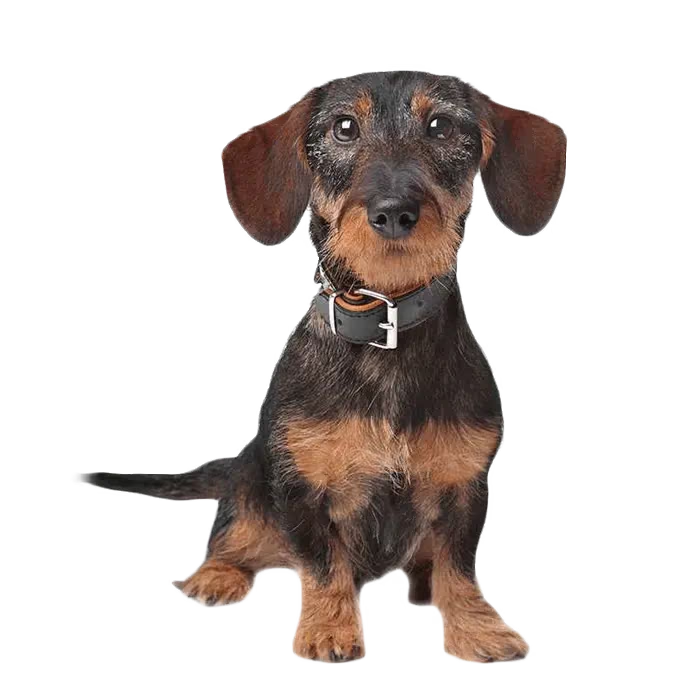
Dachshund
The Dachshund is a spirited, curious little hound known for its long body, big personality, and courageous, devoted nature.
- Size
- Small
- Lifespan
- 12–16 years
- Origin
- Germany
- Temperament
- Curious
- Standard colors
- Black, White and Blue and 8 more
Characteristics
Coat and grooming
How the Dachshund coat is built, and what that means when you groom it.
- Coat layers
- Single coat
- Coat texture
- Smooth
- Coat length
- Short
- Shedding
- Moderate shedding
Dachshund colors and patterns
What each club's breed standard says about every Dachshund color and pattern. Point at a ruling to see the club's own wording.
Breed standards describe the Dachshund in Black, White, Blue, Chocolate, Tan, Red, Yellow, Cream, Fawn, Wheaten and Isabella. Standard patterns: Solid, Brindle, Merle, Piebald, Sable, Agouti, Tan point and Reverse brindle.
| Color or pattern | FCI | AKC | UKC | KC | KUSA |
|---|---|---|---|---|---|
| Black | Standard (“deep black”) | Standard (“Black & Tan”) | Standard (“deep black”) | Standard (“black”) | Standard (“black”) |
| White | Disqualifying | Standard (“Piebald is a pattern (as opposed to a color) with clearly defined areas and/or patches of white”) | Standard (“white (base colour of a two-coloured dog)”) | Not recognised (“white”) | Not recognised |
| Blue | Disqualifying | Standard (“Blue & Tan”) | Standard (“gray”) | Not recognised (“Blue & Tan”) | Not recognised (“blue”) |
| Chocolate | Standard (“brown”) | Standard (“Chocolate & Tan”) | Standard (“chocolate”) | Standard (“chocolate”) | Standard (“chocolate”) |
| Tan | Standard (“tan markings”) | Standard (“Black & Tan”) | Standard (“rust-brown or yellow marks”) | Standard (“tan markings”) | Standard (“tan markings”) |
| Red | Standard (“red”) | Standard (“Red”) | Standard (“red (often called tan)”) | Standard (“red”) | Standard (“red”) |
| Yellow | Disqualifying | Disqualifying | Standard (“red-yellow and yellow”) | Not recognised | Not recognised |
| Cream | Disqualifying | Standard (“Cream”) | No ruling | Standard (“cream (fawn) (miniature smooth-haired and miniature long-haired)”) | Standard (“cream (fawn) (miniature smooth-haired and miniature long-haired)”) |
| Fawn | Disqualifying | Alternate (“Fawn”) | No ruling | Standard (“Fawn (miniature smooth-haired)”) | Standard (“cream (fawn) (miniature smooth-haired and miniature long-haired)”) |
| Wheaten | Disqualifying | Standard (“Wheaten”) | No ruling | Not recognised | Not recognised |
| Isabella | Disqualifying | Standard (“Fawn (Isabella) & Tan”) | No ruling | Not recognised (“Isabella & Tan”) | Not recognised (“Isabella”) |
| Patterns | |||||
| Solid | Standard (“one-coloured”) | Standard (“one-colored”) | Standard (“one-colored”) | Standard (“red”) | Standard (“red”) |
| Brindle | Standard (“red with dark brindle”) | Standard (“Brindle”) | Standard (“striped (brindle)”) | Standard (“brindle (smooth-haired, miniature smooth-haired, miniature long-haired)”) | Standard (“brindle (smooth-haired, miniature smooth-haired, miniature long-haired)”) |
| Merle | Standard (“dapple (merle)”) | Standard (“Dapple”) | Standard (“dappled”) | Standard (“dapple pattern”) | Standard (“dapple pattern”) |
| Piebald | Disqualifying | Standard (“Piebald”) | No ruling | Not recognised (“piebald”) | Not recognised (“piebald”) |
| Sable | Standard (“interspersed black hairs permissible”) | Standard (“Sable”) | Standard (“with or without a shading of interspersed black hairs”) | Standard (“Red – which may be interspersed with black hairs”) | Standard (“Red – may be interspersed with black hairs”) |
| Agouti | Standard (“wild boar, brown wild boar (wire-haired)”) | Standard (“Wild Boar”) | No ruling | Standard (“wild boar of any shade (wire-haired)”) | Standard (“wild boar of any shade (wire-haired)”) |
| Tan point | Standard (“two-coloured”) | Standard (“two-colored”) | Standard (“two-colored”) | Standard (“each with tan markings”) | Standard (“each with tan markings”) |
| Reverse brindle | Standard (“red with dark brindle”) | Standard (“Brindle”) | Standard (“striped (brindle)”) | Standard (“brindle (smooth-haired, miniature smooth-haired, miniature long-haired)”) | Standard (“brindle (smooth-haired, miniature smooth-haired, miniature long-haired)”) |
| Tricolour | Disqualifying | Disqualifying | No ruling | Not recognised (“tricolour”) | Not recognised (“tricolour”) |
| Double merle | Disqualifying | Disqualifying | No ruling | No ruling | No ruling |


| Color or pattern | FCI | AKC | UKC | KC | KUSA |
|---|---|---|---|---|---|
| Blue | Fault (“wall-, fish- or pearl eyes in dapple dogs are not desired but shall be tolerated”) | Standard (“partial or wholly blue (wall) eyes are as acceptable as dark eyes (dapples)”) | Fault (“glass eyes”) | Standard (“in dapples one or both 'wall' eyes permissible”) | Standard (“in dapples one or both 'wall' eyes permissible”) |
| Dark brown | Standard (“bright dark reddish-brown to blackish brown”) | Standard (“very dark”) | Standard (“dark reddish-brown to brownish-black”) | Standard (“dark”) | Standard (“dark”) |
| Light brown | No ruling | No ruling | Fault (“insufficiently dark eyes”) | Standard (“except in chocolates, where they can be lighter”) | Standard (“except in chocolates, where they can be lighter”) |
| Patterns | |||||
| Odd-eyed | No ruling | No ruling | No ruling | Standard (“in dapples one or both 'wall' eyes permissible”) | Standard (“in dapples one or both 'wall' eyes permissible”) |
| Sectoral | No ruling | Standard (“partial or wholly blue (wall) eyes are as acceptable as dark eyes (dapples)”) | No ruling | No ruling | No ruling |


| Color or pattern | FCI | AKC | UKC | KC | KUSA |
|---|---|---|---|---|---|
| Black | Standard (“Nose, nails and pads black”) | Standard (“black”) | Standard (“black”) | Standard (“black”) | Standard (“black”) |
| Slate | No ruling | No ruling | Standard (“gray or flesh for Gray dogs”) | No ruling | No ruling |
| Liver | Standard (“brown, in dogs with brown base colour”) | Standard (“dark brown”) | Standard (“brown or black for chocolate dogs”) | Standard (“brown (chocolate/tan and chocolate dapple)”) | Standard (“brown (chocolate/tan and chocolate dapple)”) |
| Pink | No ruling | No ruling | Fault (“flesh is not desirable”) | No ruling | No ruling |
Longhaired
| Color or pattern | FCI | AKC | UKC | KC | KUSA |
|---|---|---|---|---|---|
| Black | Standard (“deep black”) | Standard (“Black & Tan”) | Standard (“deep black”) | Standard (“black”) | Standard (“black”) |
| White | Disqualifying | Standard (“Piebald is a pattern (as opposed to a color) with clearly defined areas and/or patches of white”) | Standard (“white (base colour of a two-coloured dog)”) | Not recognised (“white”) | Not recognised |
| Blue | Disqualifying | Standard (“Blue & Tan”) | Standard (“gray”) | Not recognised (“Blue & Tan”) | Not recognised (“blue”) |
| Chocolate | Standard (“brown”) | Standard (“Chocolate & Tan”) | Standard (“chocolate”) | Standard (“chocolate”) | Standard (“chocolate”) |
| Tan | Standard (“tan markings”) | Standard (“Black & Tan”) | Standard (“rust-brown or yellow marks”) | Standard (“tan markings”) | Standard (“tan markings”) |
| Red | Standard (“red”) | Standard (“Red”) | Standard (“red (often called tan)”) | Standard (“red”) | Standard (“red”) |
| Yellow | Disqualifying | Disqualifying | Standard (“red-yellow and yellow”) | Not recognised | Not recognised |
| Cream | Disqualifying | Standard (“Cream”) | No ruling | Standard (“cream (fawn) (miniature long-haired)”) | Standard (“cream (fawn) (miniature long-haired)”) |
| Fawn | Disqualifying | Alternate (“Fawn”) | No ruling | Standard (“cream (fawn) (miniature long-haired)”) | Standard (“cream (fawn) (miniature long-haired)”) |
| Wheaten | Disqualifying | Standard (“Wheaten”) | No ruling | Not recognised | Not recognised |
| Isabella | Disqualifying | Standard (“Fawn (Isabella) & Tan”) | No ruling | Not recognised (“Isabella & Tan”) | Not recognised (“Isabella”) |
| Patterns | |||||
| Solid | Standard (“one-coloured”) | Standard (“one-colored”) | Standard (“one-colored”) | Standard (“red”) | Standard (“red”) |
| Brindle | Standard (“red with dark brindle”) | Standard (“Brindle”) | Standard (“striped (brindle)”) | Standard (“brindle (miniature long-haired)”) | Standard (“brindle (miniature long-haired)”) |
| Merle | Standard (“dapple (merle)”) | Standard (“Dapple”) | Standard (“dappled”) | Standard (“dapple pattern”) | Standard (“dapple pattern”) |
| Piebald | Disqualifying | Standard (“Piebald”) | No ruling | Not recognised (“piebald”) | Not recognised (“piebald”) |
| Sable | Standard (“interspersed black hairs permissible”) | Standard (“Sable”) | Standard (“with or without a shading of interspersed black hairs”) | Standard (“Red – which may be interspersed with black hairs”) | Standard (“Red – may be interspersed with black hairs”) |
| Agouti | Disqualifying | Standard (“Wild Boar”) | No ruling | Not recognised | Not recognised |
| Tan point | Standard (“two-coloured”) | Standard (“two-colored”) | Standard (“two-colored”) | Standard (“each with tan markings”) | Standard (“each with tan markings”) |
| Reverse brindle | Standard (“red with dark brindle”) | Standard (“Brindle”) | Standard (“striped (brindle)”) | Standard (“brindle (miniature long-haired)”) | Standard (“brindle (miniature long-haired)”) |
| Tricolour | Disqualifying | Disqualifying | No ruling | Not recognised (“tricolour”) | Not recognised (“tricolour”) |
| Double merle | Disqualifying | Disqualifying | No ruling | Not recognised | Not recognised |
Smooth
| Color or pattern | FCI | AKC | UKC | KC | KUSA |
|---|---|---|---|---|---|
| Black | Standard (“deep black”) | Standard (“Black & Tan”) | Standard (“deep black”) | Standard (“black”) | Standard (“black”) |
| White | Disqualifying | Standard (“Piebald is a pattern (as opposed to a color) with clearly defined areas and/or patches of white”) | Standard (“white (base colour of a two-coloured dog)”) | Not recognised (“white”) | Not recognised |
| Blue | Disqualifying | Standard (“Blue & Tan”) | Standard (“gray”) | Not recognised (“Blue & Tan”) | Not recognised (“blue”) |
| Chocolate | Standard (“brown”) | Standard (“Chocolate & Tan”) | Standard (“chocolate”) | Standard (“chocolate”) | Standard (“chocolate”) |
| Tan | Standard (“tan markings”) | Standard (“Black & Tan”) | Standard (“rust-brown or yellow marks”) | Standard (“tan markings”) | Standard (“tan markings”) |
| Red | Standard (“red”) | Standard (“Red”) | Standard (“red (often called tan)”) | Standard (“red”) | Standard (“red”) |
| Yellow | Disqualifying | Disqualifying | Standard (“red-yellow and yellow”) | Not recognised | Not recognised |
| Cream | Disqualifying | Standard (“Cream”) | No ruling | Standard (“cream (fawn) (miniature smooth-haired)”) | Standard (“cream (fawn) (miniature smooth-haired)”) |
| Fawn | Disqualifying | Alternate (“Fawn”) | No ruling | Standard (“Fawn (miniature smooth-haired)”) | Standard (“cream (fawn) (miniature smooth-haired)”) |
| Wheaten | Disqualifying | Standard (“Wheaten”) | No ruling | Not recognised | Not recognised |
| Isabella | Disqualifying | Standard (“Fawn (Isabella) & Tan”) | No ruling | Not recognised (“Isabella & Tan”) | Not recognised (“Isabella”) |
| Patterns | |||||
| Solid | Standard (“one-coloured”) | Standard (“one-colored”) | Standard (“one-colored”) | Standard (“red”) | Standard (“red”) |
| Brindle | Standard (“red with dark brindle”) | Standard (“Brindle”) | Standard (“striped (brindle)”) | Standard (“brindle”) | Standard (“brindle”) |
| Merle | Standard (“dapple (merle)”) | Standard (“Dapple”) | Standard (“dappled”) | Standard (“dapple pattern”) | Standard (“dapple pattern”) |
| Piebald | Disqualifying | Standard (“Piebald”) | No ruling | Not recognised (“piebald”) | Not recognised (“piebald”) |
| Sable | Standard (“interspersed black hairs permissible”) | Standard (“Sable”) | Standard (“with or without a shading of interspersed black hairs”) | Standard (“Red – which may be interspersed with black hairs”) | Standard (“Red – may be interspersed with black hairs”) |
| Agouti | Disqualifying | Standard (“Wild Boar”) | No ruling | Not recognised | Not recognised |
| Tan point | Standard (“two-coloured”) | Standard (“two-colored”) | Standard (“two-colored”) | Standard (“each with tan markings”) | Standard (“each with tan markings”) |
| Reverse brindle | Standard (“red with dark brindle”) | Standard (“Brindle”) | Standard (“striped (brindle)”) | Standard (“brindle”) | Standard (“brindle”) |
| Tricolour | Disqualifying | Disqualifying | No ruling | Not recognised (“tricolour”) | Not recognised (“tricolour”) |
| Double merle | Disqualifying | Disqualifying | No ruling | Not recognised | Not recognised |
Wirehaired
| Color or pattern | FCI | AKC | UKC | KC | KUSA |
|---|---|---|---|---|---|
| Black | Standard (“deep black”) | Standard (“Black & Tan”) | Standard (“deep black”) | Standard (“black”) | Standard (“black”) |
| White | Disqualifying | Standard (“Piebald is a pattern (as opposed to a color) with clearly defined areas and/or patches of white”) | Standard (“white (base colour of a two-coloured dog)”) | Not recognised (“white”) | Not recognised |
| Blue | Disqualifying | Standard (“Blue & Tan”) | Standard (“gray”) | Not recognised (“Blue & Tan”) | Not recognised (“blue”) |
| Chocolate | Standard (“brown”) | Standard (“Chocolate & Tan”) | Standard (“chocolate”) | Standard (“chocolate”) | Standard (“chocolate”) |
| Tan | Standard (“tan markings”) | Standard (“Black & Tan”) | Standard (“rust-brown or yellow marks”) | Standard (“tan markings”) | Standard (“tan markings”) |
| Red | Standard (“red”) | Standard (“Red”) | Standard (“red (often called tan)”) | Standard (“red”) | Standard (“red”) |
| Yellow | Disqualifying | Disqualifying | Standard (“red-yellow and yellow”) | Not recognised | Not recognised |
| Cream | Disqualifying | Standard (“Cream”) | No ruling | Not recognised | Not recognised |
| Wheaten | Disqualifying | Standard (“Wheaten”) | No ruling | Not recognised | Not recognised |
| Isabella | Disqualifying | Standard (“Fawn (Isabella) & Tan”) | No ruling | Not recognised (“Isabella & Tan”) | Not recognised (“Isabella”) |
| Fawn | Disqualifying | Alternate (“Fawn”) | No ruling | Not recognised | Not recognised |
| Patterns | |||||
| Solid | Standard (“one-coloured”) | Standard (“one-colored”) | Standard (“one-colored”) | Standard (“red”) | Standard (“red”) |
| Brindle | Standard (“red with dark brindle”) | Standard (“Brindle”) | Standard (“striped (brindle)”) | Not recognised | Not recognised |
| Merle | Standard (“dapple (merle)”) | Standard (“Dapple”) | Standard (“dappled”) | Standard (“dapple pattern”) | Standard (“dapple pattern”) |
| Piebald | Disqualifying | Standard (“Piebald”) | No ruling | Not recognised (“piebald”) | Not recognised (“piebald”) |
| Sable | Standard (“interspersed black hairs permissible”) | Standard (“Sable”) | Standard (“with or without a shading of interspersed black hairs”) | Standard (“Red – which may be interspersed with black hairs”) | Standard (“Red – may be interspersed with black hairs”) |
| Agouti | Standard (“wild boar, brown wild boar”) | Standard (“Wild Boar”) | No ruling | Standard (“wild boar of any shade”) | Standard (“wild boar of any shade”) |
| Tan point | Standard (“two-coloured”) | Standard (“two-colored”) | Standard (“two-colored”) | Standard (“each with tan markings”) | Standard (“each with tan markings”) |
| Reverse brindle | Standard (“red with dark brindle”) | Standard (“Brindle”) | Standard (“striped (brindle)”) | Not recognised | Not recognised |
| Tricolour | Disqualifying | Disqualifying | No ruling | Not recognised (“tricolour”) | Not recognised (“tricolour”) |
| Double merle | Disqualifying | Disqualifying | No ruling | Not recognised | Not recognised |
What the rulings mean
- Standard
- Described by the club's breed standard.
- Alternate
- Registrable with the club but not described by its breed standard, such as an AKC alternate colour.
- Fault
- Named by the club's breed standard as a fault: the animal can be shown but is penalised.
- Disqualifying
- The club's breed standard disqualifies an animal of this colour or pattern.
- Not recognised
- The club does not accept this colour or pattern for the breed.
Color changes
How a Dachshund's colors can change over its life.
Blackchanges toRust
Coat · With body condition · can change back
Blackchanges toGrey
Coat · Progressive
Blackchanges toBrown
Coat · In the sun · can change back
Whitechanges toRoan
Coat · With age · from 2 weeks
Tan pointchanges toSaddle
Coat · With age · from 6 to 156 weeks
Bluechanges toDark brown
Eyes · With age · from 2 weeks
Bluechanges toBrown
Eyes · With age · from 2 weeks
Bluechanges toLight brown
Eyes · With age · from 2 weeks
Bluechanges toAmber
Eyes · With age · from 2 weeks
Bluechanges toHazel
Eyes · With age · from 2 weeks
Bluechanges toYellow
Eyes · With age · from 2 weeks
Blackchanges toSnow nose
Nose · With the season · can change back
Blackchanges toPink
Nose · With the season · can change back


Sources
Each ruling comes from the club's published breed standard or color list.
Health
Conditions recorded as more common in the Dachshund than in its species as a whole. A higher risk is not a diagnosis: many never develop any of them, and your vet can say which screening tests are worth doing.
High risk
- Nervous system
Intervertebral disc disease
Strong evidenceHereditaryInheritance: Complex / multifactorial
This content is for educational purposes and is not a substitute for professional veterinary advice. If you are worried about your pet, contact your veterinarian.
All health conditionsMeet some of our Dachshund
A few of the Dachshund profiles members have added to United Pet Club.
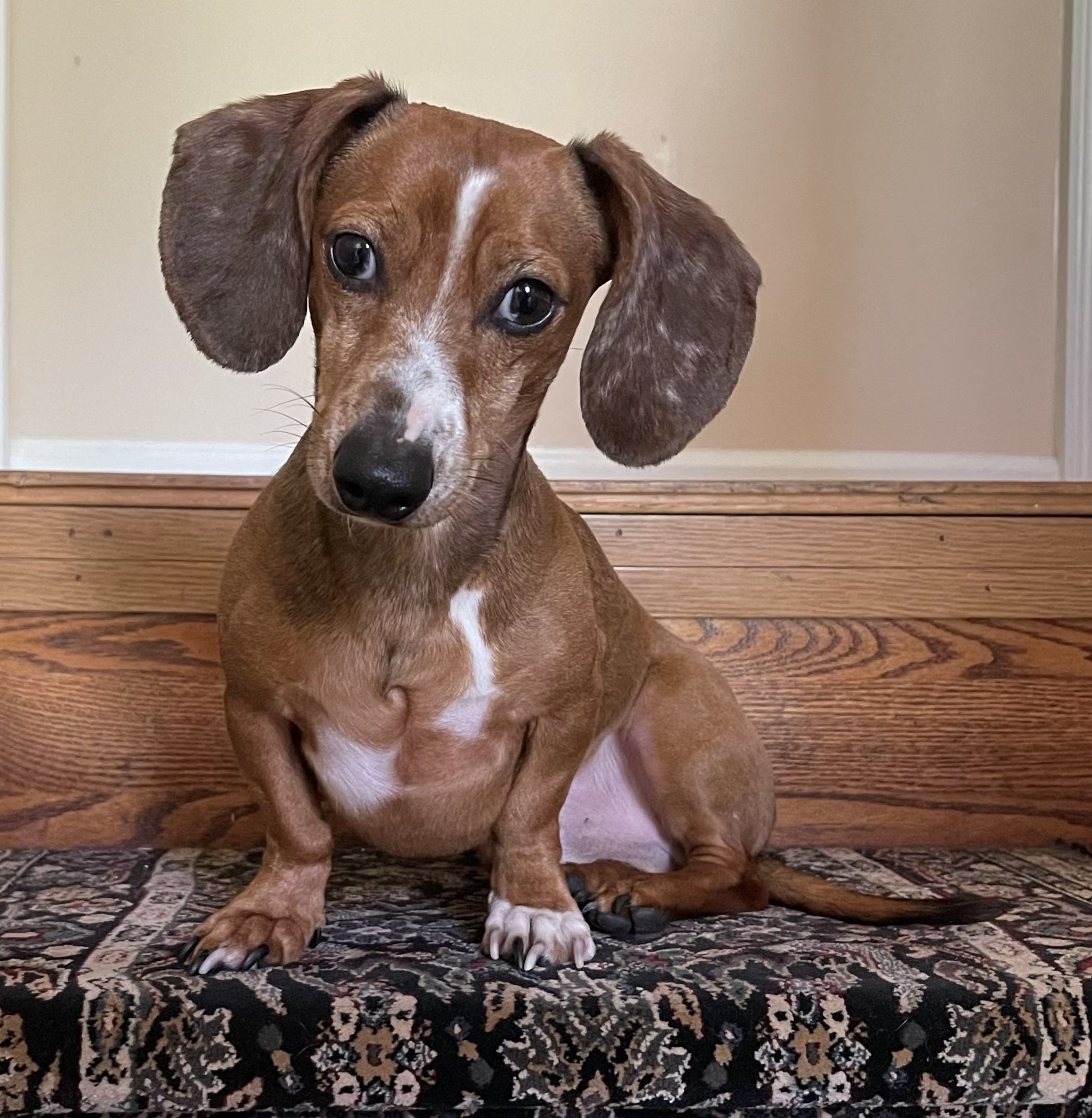


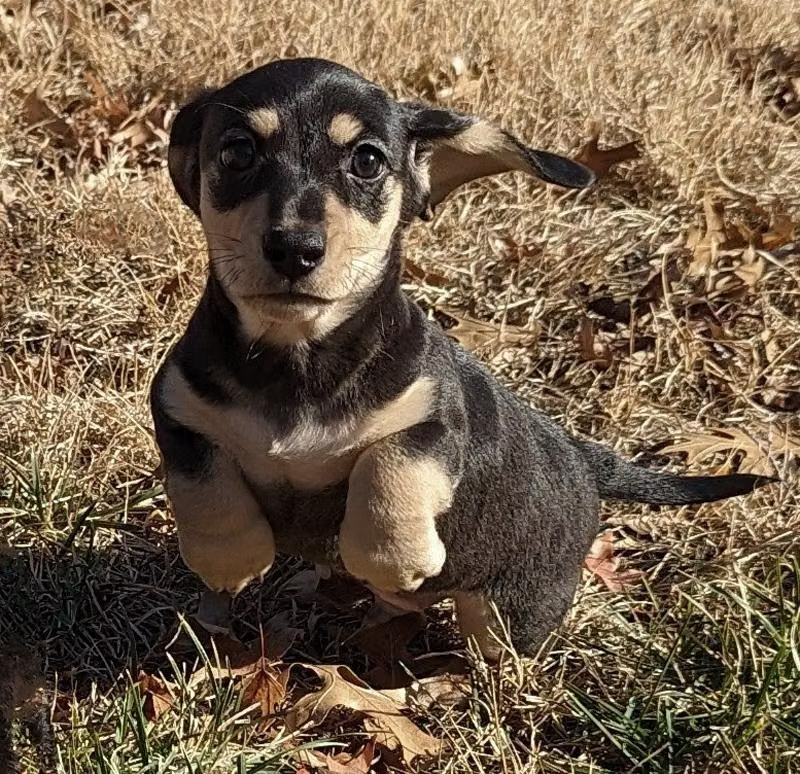


Dachshund breed profile
Long in body and short in leg, the Dachshund is a small German hound bred to hunt badgers underground. Devoted, stubborn and full of nerve for its size.
Long in the body and short in the leg, the Dachshund was built in Germany for one job: chasing a badger down its own tunnel and refusing to back off once it got there. Dachs means badger in German, Hund means dog, so the name is really a job description. That deep chest and low, elongated frame were not chosen for looks. They let the dog fit through a tunnel entrance and still have the lung capacity and grip strength to do something once it got underground.
None of that shows up as timidity in the finished dog. Ask any Dachshund owner and you will hear some version of devoted, stubborn, curious and braver than its size has any right to be. Most pick out one or two people in the house to follow around, and the nose still runs a good part of the show, since scent work and a genuine prey drive never really left the breed, even generations after the hunting stopped being the point.
Two sizes exist, standard and miniature, crossed with three coats: smooth, longhaired and wirehaired. Between them there is a version to suit most households, though whichever one you land on, the character underneath tends to be much the same.
| Attribute | Detail |
|---|---|
| Origin | Germany |
| Size | Small |
| Lifespan | 12 to 16 years |
| Group / role | Hound; originally bred to hunt badgers and burrow game |
| Good with | Families and single owners; supervise around very young children and small pets |
Who it suits
A Dachshund suits someone who wants a small dog with a strong sense of its own opinions and who has the patience to train around that rather than fight it. It is not the breed for a first-time owner expecting quick, eager obedience. It settles fine into a Dublin terrace or a house in the country, as long as it gets out for a walk daily and has something to think about indoors. Given the strain a long back can take, it suits a home where jumping on and off the sofa and racing up and down stairs can be kept in check, which is worth planning for before the puppy arrives rather than after.
The Dachshund's history
The Dachshund was developed in Germany over centuries to hunt badgers and other burrowing animals, taking shape long before formal standards arrived.
Germany is where the Dachshund was put together, piece by piece, by hunters who needed a dog that could go where badgers and other burrowing animals lived and bring the fight to them. The name gives it away: Dachs is badger, Hund is dog. What the job demanded was a dog small enough to fit down a sett yet bold enough to face an animal that would not simply run, and the long, low body is the direct answer to that brief.
References to dogs of similar build appear in German writing from several centuries back, though it was really through the 1700s and 1800s that breeders pinned the type down. Selection favoured a deep chest for lung capacity, short legs suited to digging and working in tunnels, and a voice loud enough to be heard from below ground, so a hunter above could follow the dog by ear.
Three coats developed alongside this, each suited to different terrain and game. The smooth coat is generally reckoned to be the original. The longhaired version is thought to have picked up spaniel blood somewhere along the way, and the wirehaired coat likely gained terrier genes for extra protection in rough undergrowth. Standard and miniature sizes split off too, with the smaller dogs working smaller quarry such as rabbits.
Germany had the breed formally recognised by the late 1800s, and other countries were not far behind with clubs and standards of their own. The Dachshund then travelled well past Europe, doing hunting work in some places and settling straight into family life in others, with the companion role gradually winning out almost everywhere. It is a familiar breed in Ireland today, recognised by the Irish Kennel Club, and it is worth remembering that the animal the breed was named for is still out there: badger setts remain a protected, regular feature of hedgerows and forestry land across the country, which is often exactly why a Dachshund on a lead will suddenly go rigid, nose down, at a scent hole that means nothing to its owner.
Recognising a Dachshund
The Dachshund has a long, low body, a deep chest, short legs and a confident stance, in two sizes and three coat types across many colours and patterns.
You will not mistake a Dachshund for another breed once you have seen one. The body stretches out long, the legs stay short, and the chest drops deep with a keel that pushes the front end forward and down. The skull curves gently to a strong, tapering muzzle, the ears hang high and close to the cheeks, and the eyes sit medium-sized and almond-shaped. It is a small dog that somehow carries itself like it is not.
| Trait | Standard |
|---|---|
| Height | Standard about 20 to 23 cm (8 to 9 in); miniature about 13 to 15 cm (5 to 6 in) at the shoulder |
| Weight | Standard about 7 to 15 kg (16 to 32 lb); miniature about 5 kg (11 lb) or under |
| Coat | Three types: smooth, longhaired, wirehaired |
| Colours | Red, cream, black and tan, chocolate and tan, and others; patterns include dapple, brindle, sable and piebald |
| Eyes | Medium, almond-shaped, dark in most colours |
Coat and colours
The smooth coat is short, tight and glossy and is by far the easiest of the three to keep looking well. The longhaired coat lies sleek with a gentle wave, growing out longest on the ears, chest, underside and tail. The wirehaired coat is dense and rough to the touch over a softer undercoat, finished with a beard and heavy brows that give it a slightly weathered look.
Solid red and cream dogs are common, as are the two-tone black and tan and chocolate and tan patterns. You will also come across dapple (a mottled, marbled coat), brindle, sable and piebald markings. A handful of colour and pattern combinations carry health implications alongside them, so it is worth looking well beyond coat colour before settling on a puppy.
Dachshund temperament explained
The Dachshund is devoted, curious and full of nerve, with a stubborn streak from its hunting past. It bonds closely with family, cooler with strangers.
There is a lot of dog packed into a small Dachshund frame. It fixes on its people with real devotion and will often shadow one favourite around the house without much interest in anyone else. Curiosity never really switches off: a new smell, an odd noise, anything small enough to move will get its full attention, which is the hunting instinct still doing its job long after the job itself disappeared. That same instinct hands it a fair amount of nerve, occasionally more than is sensible around anything it has mentally filed as prey.
At home with family it is warm, playful and happy to be close by, often literally. Strangers get a cooler reception, and a good number of Dachshunds will bark at the door or at an unfamiliar sound without needing much encouragement, which makes them decent watchdogs on the noise front if nothing else. Socialising the dog early and often takes the sharp edges off both the suspicion and the barking.
Life with other pets depends on the individual. A Dachshund raised around other dogs usually does fine, but the prey drive has not gone anywhere, and small animals such as rabbits, rodents or birds can trigger a chase in an instant. Children can get along well with a Dachshund provided things stay calm and supervised, since rough handling puts real strain on that long back and might earn a snap in response. The stubbornness owners talk about is not exaggerated, so go in expecting a dog that argues its case and comes round faster for patience than for force.
| Trait | Rating |
|---|---|
| Affection | 5 |
| Energy | 3 |
| Trainability | 2 |
| Vocalness | 4 |
| Shedding | 2 |
Dachshund care essentials
Dachshund care means coat-appropriate grooming, moderate exercise and protecting the long back from strain, with upkeep varying slightly by coat type.
A Dachshund does not need a great deal of day-to-day upkeep, but its shape does mean a few habits are worth building in from the start. How much grooming it needs depends on the coat, and exercise has to build muscle and fitness without loading up the spine, which matters more here than for most breeds.
Grooming
- Smooth coat: a weekly brush with a soft brush or hound glove lifts out loose hair and keeps the coat glossy.
- Longhaired coat: brush two to three times a week to head off tangles, paying attention to the ears, chest and feathering.
- Wirehaired coat: brush weekly and hand-strip or trim the harsh outer coat a few times a year; keep the beard and eyebrows tidy.
- Bathe only when genuinely dirty, using a shampoo made for dogs.
- Check and clean the long, hanging ears regularly, since Irish weather means a damp walk is rarely far away, and moisture trapped in the ear raises infection risk.
- Trim nails every few weeks and brush teeth several times a week, as the breed is prone to dental trouble.
Exercise
- Two short to moderate walks a day suits the breed well, totalling around 30 to 60 minutes.
- Bring in scent games and puzzle toys to keep the nose and brain occupied.
- Avoid letting the dog jump repeatedly on and off furniture and go easy on stairs to protect the back.
- Keep the dog lean, since carrying extra weight adds real strain to the spine.
Environment
A Dachshund is equally at home in a Dublin terrace or a farmhouse in the country, provided the basics are covered. Irish weather brings more of a damp problem than a heat problem: a smooth-coated dog in particular feels the cold and wet, so a coat for winter walks is worth having, and a good towel-off by the door saves a lot of mud on the carpet. Ramps or steps at the sofa and bed help the dog manage without jumping. Garden fencing has to be secure below ground as well as above it, since this is a breed that digs, and a scent under the hedge, whether badger, rabbit or fox, is not something it will easily ignore.
Feeding guide for a Dachshund
Dachshunds need a complete, portion-controlled diet that keeps them lean, since extra weight strains their long backs. Amounts depend on size, age and activity.
A complete, balanced dog food suited to the Dachshund's size and life stage covers what it needs nutritionally without any add-ons. Portion control matters more here than for a lot of breeds, since this dog puts on weight easily and carries it on a spine that is already working at a disadvantage. Weigh or measure meals rather than leaving a bowl down all day, and adjust the amount so the ribs stay easy to find under a thin layer of fat. Standard and miniature Dachshunds eat different amounts, and individual dogs will vary further with metabolism and activity.
| Life stage | Amount per day | Meals |
|---|---|---|
| Puppy (miniature) | About 1/4 to 1/2 cup | 3 to 4 |
| Puppy (standard) | About 1/2 to 1 cup | 3 to 4 |
| Adult (miniature) | About 1/2 to 3/4 cup | 2 |
| Adult (standard) | About 3/4 to 1 1/2 cups | 2 |
| Senior | Reduce slightly from adult amount; choose lower-calorie food | 2 |
Treats and supplements
Keep treats to roughly 10 percent of daily calories and take that much off the regular meal. Small, low-calorie treats are ideal for training a breed this driven by food. Most Dachshunds on a complete diet need no supplements on top; check with a vet before adding anything for joints, skin or otherwise, particularly for a dog with existing back or weight concerns. Fresh water should always be within reach.
Dachshund health conditions to watch for
Dachshunds typically live 12 to 16 years but are prone to spinal disc disease linked to their long backs, along with dental, eye and weight-related problems.
The Dachshund tends to be a long-lived breed, with 12 to 16 years being typical. What comes with that distinctive shape, though, is a higher risk of back trouble than most breeds carry. The main worry is intervertebral disc disease, where the cushioning discs between the vertebrae bulge or rupture and press on the spinal cord. Keeping the dog lean, limiting jumping and handling it properly all help bring the risk down.
| Condition | Signs | Note |
|---|---|---|
| Intervertebral disc disease (IVDD) | Back pain, reluctance to move, wobbly or dragging hind legs, sudden weakness | The most serious breed concern; seek urgent veterinary care for sudden signs |
| Obesity | Weight gain, difficulty feeling ribs, low energy | Adds strain to the spine and joints; managed by diet and exercise |
| Dental disease | Bad breath, tartar, red gums, tooth loss | Common in small breeds; regular brushing and cleanings help |
| Eye conditions (such as PRA) | Cloudiness, night-vision loss, bumping into objects | Some forms are inherited; breeders can screen parents |
| Patellar luxation | Skipping gait, intermittent hind-leg lameness | Kneecap slips out of place; ranges from mild to surgical |
Preventive care
- Book annual vet checkups, moving to more frequent visits once the dog reaches its senior years.
- Stay current on vaccinations and parasite prevention.
- Keep the dog at a lean weight with a steady, consistent exercise routine.
- Brush teeth regularly and book professional dental cleans as advised.
- Use ramps or steps and discourage jumping to protect the back.
- Buy from breeders who health-test parents for eye and spinal issues.
How to train a Dachshund
Dachshunds are intelligent but independent and stubborn, so training takes longer than with eager-to-please breeds. Short, reward-based sessions work best.
Training a Dachshund is a lesson in patience. It is intelligent enough to learn a long list of commands, but it was bred to work alone underground making its own calls, so it tends to weigh up whether a command is worth its while before acting on it. During training that comes across as stubbornness more than anything else. Food motivation usually runs high, which gives an owner something to work with, but the breed loses interest fast and pushes back against repetition. House training especially can take longer than average and goes more smoothly with a fixed routine and a crate.
Keep sessions short and frequent, and stop while you are ahead rather than pushing for one more repetition. Early exposure to people, other dogs and everyday situations cuts down on wariness and excessive barking down the line. Everyone in the house needs to hold the same line, or the dog will work out fast that the rules bend depending on who is asking.
Basics
- Start house training early with a fixed schedule and a crate that fits the dog properly.
- Teach name recognition and a solid recall, since this breed will follow a scent without a second thought.
- Build the core cues: sit, stay, down and leave it.
- Practise calm greetings so barking at visitors does not turn into a habit.
- Add scent games and puzzle toys so the breed's drive has somewhere useful to go.
Dachshund breeding basics
Dachshund breeding calls for attention to spinal and genetic health, careful colour and pattern pairing, and supervision through pregnancy and whelping.
Responsible Dachshund breeding starts with health and temperament rather than looks. Females generally reach sexual maturity within their first year, but most breeders wait until a bitch is physically mature and has cleared relevant health screening before a first mating. Given the breed's tendency towards spinal disease and certain eye conditions, breeding stock should be checked for both, and any dog with a history of back trouble is better kept out of a breeding programme.
Pregnancy runs about 63 days. Litters stay small, usually somewhere between three and six puppies, with miniatures typically towards the lower end. Whelping needs watching closely, and a vet should be called if labour stalls or the mother seems distressed. In the first weeks the puppies depend entirely on the dam for warmth and feeding, so the breeder's job is keeping the whelping area clean and warm and tracking weight gain.
Weaning starts around three to four weeks, with socialisation continuing through that critical early period. Gentle handling, ordinary household sound and early contact with new people during this stretch all shape how the dog behaves as an adult. Colour and pattern pairing takes particular care: mating two dapple-patterned dogs together can produce serious health defects in the puppies, which is why it is avoided by anyone breeding responsibly.
| Metric | Value |
|---|---|
| Sexual maturity | Around 6 to 12 months (breed later, after health testing) |
| Gestation | About 63 days |
| Average litter size | About 3 to 6 puppies |
| Weaning | Around 3 to 4 weeks, completed by about 7 to 8 weeks |
| Health screening | Spinal and eye evaluations; avoid dapple-to-dapple pairings |
Registering your Dachshund in Ireland, chip and record both
Irish law wants every dog chipped and recorded; United Pet Club keeps your Dachshund's record free, current, and there for life.
How to register a Dachshund in Ireland
Irish law has required every dog to be chipped and registered since the 2015 Regulations came in, and it expects the details behind the chip to stay current, not gather dust. A free United Pet Club profile does that for your Dachshund, for life. Registering your dog is a few minutes' work and costs nothing at all.
Lodge your Dachshund's fifteen digit number with United Pet Club and the chip finally earns its keep: free registration for life, every brand accepted, and a record the ISPCA or any warden can turn into a phone call. Microchip registration takes minutes, and the free account covers the profile while you're at it.
How do I register my Dachshund in Ireland?
Set yourself up with a free United Pet Club account, key in your Dachshund's details and a photo, and save. The profile holds for the whole of his life without charge, and the chip number can be lodged whenever you have it.
How do I register my Dachshund's microchip?
Lodge the fifteen digit chip number in your free account along with your address and phone number. The lifetime plan covers the registration and every update after it, free, whatever brand the vet used.
Is microchipping a Dachshund required in Ireland?
It is. The 2015 Regulations require every dog to be chipped and registered, pup or rescue alike. Keeping the record current is the part that falls to you, and United Pet Club makes that part free.
What does it cost to register a Dachshund in Ireland?
Not a penny. Profile, chip record, and every amendment are covered for life, with no renewal ever.
Dachshund questions and answers
Common questions Irish owners ask about Dachshund size, temperament, care difficulty, lifespan, family suitability and where to find one.
How big does a Dachshund get?
Dachshunds come in two sizes. Standard Dachshunds stand about 20 to 23 cm (8 to 9 in) at the shoulder and weigh roughly 7 to 15 kg (16 to 32 lb). Miniatures stand about 13 to 15 cm (5 to 6 in) and usually weigh 5 kg (11 lb) or under.
What is a Dachshund's temperament like?
Devoted, curious, spirited and courageous, with a well-earned reputation for stubbornness and independence. It bonds closely with its family, can be reserved around strangers, and tends to bark at visitors and unfamiliar sounds.
Is a Dachshund difficult to care for?
Day-to-day care sits at a moderate level. Grooming depends on the coat type, exercise needs are modest, and the main jobs are keeping the dog lean and keeping its long back away from jumping and rough handling. Training takes patience because of how independent the breed is.
How long does a Dachshund live?
Dachshunds typically live between 12 and 16 years. Good weight control, dental care and back protection all support a longer, healthier life.
Are Dachshunds good with children?
They can make good family dogs in households that handle them gently and supervise time with very young children closely. The long back does not take well to rough play, and the prey drive means care is needed around small pets such as rabbits and rodents.
What is the main health problem in Dachshunds?
The breed is most associated with intervertebral disc disease, a spinal condition linked directly to its long body. Keeping the dog lean, limiting jumping, using ramps and lifting it correctly all cut the risk.
Are Dachshunds easy to find in Ireland?
Yes, it is a well-known and reasonably available breed here, with puppies generally available from breeders and adults sometimes turning up through breed rescue. Look for a breeder registered with the Irish Kennel Club who health-tests parents for spinal and eye conditions and avoids dapple-to-dapple pairings. Anyone bringing a dog into Ireland from outside the EU pet travel scheme should also check current rules, since Ireland maintains rabies-free status with specific requirements around vaccination and timing.
From the community
Ask about the DachshundNo questions about the Dachshund yet. Be the first to ask.
Browse Dog breeds