
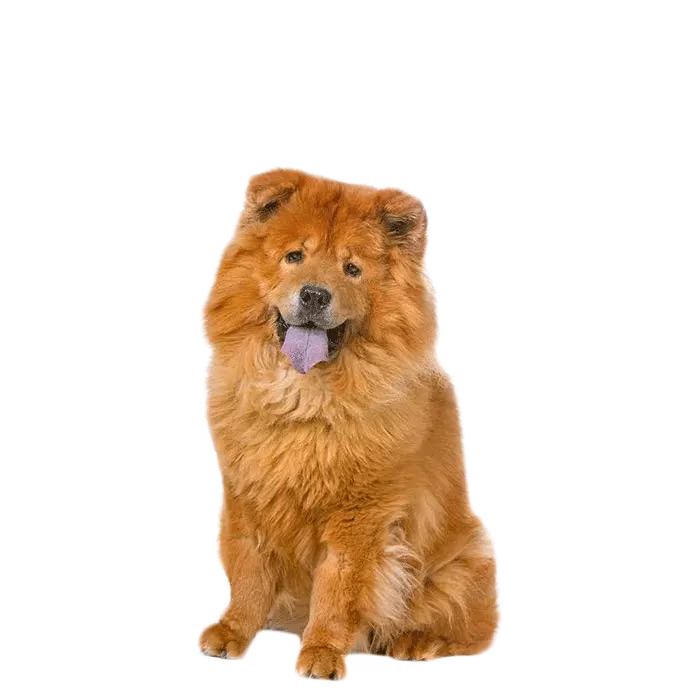
Chow Chow
The Chow Chow is a dignified, lion-maned Chinese breed known for its aloof independence and deep loyalty to its chosen family.
- Size
- Medium
- Lifespan
- 8–12 years
- Origin
- China
- Temperament
- Dignified
- Standard colors
- Black, White and Blue and 3 more
Characteristics
Coat and grooming
How the Chow Chow coat is built, and what that means when you groom it.
- Coat layers
- Double coat
- Coat texture
- Plush
- Coat length
- Long
- Shedding
- Seasonal shedding
Grooming guidance
Critical: A Chow Chow should not be shaved.
The undercoat keeps heat out as well as in, and the outer coat shields the skin from sun and insect bites. Clipping the whole coat off removes both. It often grows back patchy, soft or a different colour, and in some animals the guard hairs never return properly. Brush the undercoat out instead of cutting it off.
Caution: A Chow Chow coat mats easily.
Fine or long hair tangles at the base of the coat, out of sight, where the mats tighten and pull on the skin. Brushing has to reach right down to the roots in sections, not just skim the surface.
Information: A Chow Chow drops its undercoat in heavy bursts.
The undercoat comes out in heavy bursts over a few weeks. An undercoat rake, or a bath followed by a proper blow-dry, clears it far faster than daily brushing. Clipping the coat down is not a shortcut for this.
Chow Chow colors and patterns
What each club's breed standard says about every Chow Chow color and pattern. Point at a ruling to see the club's own wording.
Breed standards describe the Chow Chow in Black, White, Blue, Red, Cream and Fawn. Standard patterns: Solid.
| Color or pattern | FCI | AKC | UKC | KC | KUSA |
|---|---|---|---|---|---|
| Black | Standard (“black”) | Standard (“Black”) | Standard (“black”) | Standard (“black”) | Standard (“black”) |
| White | Standard (“white”) | Not recognised | Not recognised | Standard (“white”) | Standard (“white”) |
| Blue | Standard (“blue”) | Standard (“Blue”) | Standard (“blue”) | Standard (“blue”) | Standard (“blue”) |
| Red | Standard (“red”) | Standard (“Red”) | Standard (“Red (light golden to deep mahogany)”) | Standard (“red”) | Standard (“red”) |
| Cream | Standard (“cream”) | Standard (“Cream”) | Standard (“cream”) | Standard (“cream”) | Standard (“cream”) |
| Fawn | Standard (“fawn”) | Standard (“Cinnamon”) | Standard (“cinnamon (light fawn to deep cinnamon)”) | Standard (“fawn”) | Standard (“fawn”) |
| Albino | Not recognised | Not recognised | Disqualifying (“Albinism”) | Not recognised | Not recognised |
| Lilac | Not recognised | Not recognised | Not recognised | Not recognised (“Lilac”) | Not recognised |
| Chocolate | Not recognised | Not recognised | Not recognised | Not recognised (“Chocolate”) | Not recognised |
| Patterns | |||||
| Solid | Standard (“Whole coloured”) | Standard (“Clear colored, solid or solid with lighter shadings”) | Standard (“Colors are solid but may have lighter shadings”) | Standard (“Whole coloured”) | Standard (“Whole-coloured”) |
| Piebald | Not recognised (“not in patches”) | No ruling | No ruling | Not recognised (“not in patches”) | Not recognised (“not in patches”) |
| Parti-colour | Not recognised (“not ... parti-coloured”) | No ruling | No ruling | Not recognised (“not ... parti-coloured”) | Not recognised (“not ... particoloured”) |


| Color or pattern | FCI | AKC | UKC | KC | KUSA |
|---|---|---|---|---|---|
| Dark brown | Standard (“Dark”) | Standard (“Eyes dark brown”) | Standard (“dark brown”) | Standard (“Dark”) | Standard (“Dark”) |
| Light brown | Standard (“A matching coloured eye permissible in blues and fawns”) | No ruling | No ruling | Standard (“In blues and fawns, lighter colours permissible in keeping with coat colour”) | Standard (“In blues and fawns, lighter colours permissible in keeping with coat colour”) |
| Color or pattern | FCI | AKC | UKC | KC | KUSA |
|---|---|---|---|---|---|
| Black | Standard (“black (... black preferable in all cases)”) | Standard (“Reds, Blacks and Cinnamons must have a solid black nose”) | Standard (“Black nose is preferable in all cases”) | Standard (“black (... black preferable in all cases)”) | Standard (“black (... black preferable in all cases)”) |
| Blue | Standard (“in blues and fawns a self-coloured nose”) | Standard (“Blue chows may have a solid blue or slate nose”) | Standard (“In blues and fawns, self-colored nose is permissible”) | Standard (“in blues and fawns a self-coloured nose”) | Standard (“in blues and fawns, a self-coloured nose”) |
| Slate | No ruling | Standard (“Blue chows may have a solid blue or slate nose”) | Standard (“In blues and fawns, self-colored nose is permissible”) | No ruling | No ruling |
| Liver | Standard (“cream and near white, in which case a lighter coloured nose is permissible”) | Standard (“Cream chows may have a range of nose color, from dark black/brown solid pigment”) | Standard (“cream and near white Chow Chows, in which case a lighter colored nose is permissible”) | Standard (“cream and near white in which case a lighter coloured nose permissible”) | Standard (“cream and near-white, in which case a lighter-coloured nose permissible”) |
| Pink | Standard (“cream and near white, in which case a lighter coloured nose is permissible”) | Standard (“Cream chows may have a range of nose color ... fading to pinkish pigment”) | Standard (“cream and near white Chow Chows, in which case a lighter colored nose is permissible”) | Standard (“cream and near white in which case a lighter coloured nose permissible”) | Standard (“cream and near-white, in which case a lighter-coloured nose permissible”) |
| Patterns | |||||
| Butterfly nose | No ruling | Disqualifying (“Nose spotted”) | Disqualifying (“Nose spotted”) | No ruling | No ruling |

| Color or pattern | FCI | AKC | UKC | KC | KUSA |
|---|---|---|---|---|---|
| Blue-black | Standard (“A bluish-black tongue is characteristic”) | Standard (“The top surface and edges of the tongue a solid blue-black, the darker the better”) | Standard (“The top surface and edges of the tongue are solid blue-black, the darker the better”) | Standard (“bluish-black tongue”) | Standard (“bluish-black tongue”) |
| Pink | No ruling | Disqualifying (“The top surface or edges of the tongue red or pink”) | Disqualifying (“Top surface or edges of the tongue red, pink”) | No ruling | No ruling |
| Patterns | |||||
| Solid | No ruling | Standard (“a solid blue-black”) | Standard (“solid blue-black”) | No ruling | No ruling |
| Spotted | No ruling | Disqualifying (“with one or more spots of red or pink”) | Disqualifying (“spotted with red or pink”) | No ruling | No ruling |


What the rulings mean
- Standard
- Described by the club's breed standard.
- Disqualifying
- The club's breed standard disqualifies an animal of this colour or pattern.
- Not recognised
- The club does not accept this colour or pattern for the breed.
Color changes
How a Chow Chow's colors can change over its life.
Blackchanges toRust
Coat · With body condition · can change back
Blackchanges toGrey
Coat · Progressive
Blackchanges toBrown
Coat · In the sun · can change back
Whitechanges toRoan
Coat · With age · from 2 weeks
Blackchanges toSnow nose
Nose · With the season · can change back
Blackchanges toPink
Nose · With the season · can change back
Solidchanges toSpotted
Tongue · Progressive
Pinkchanges toBlue-black
Tongue · With age · from 8 to 26 weeks


Sources
Each ruling comes from the club's published breed standard or color list.
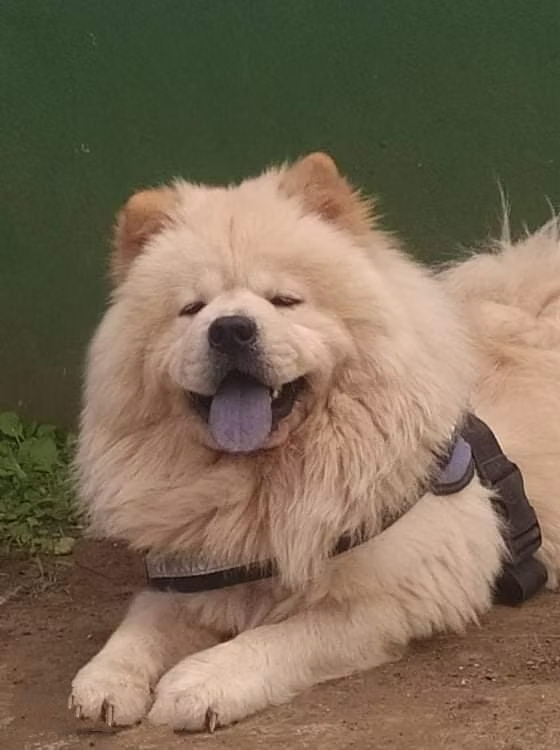
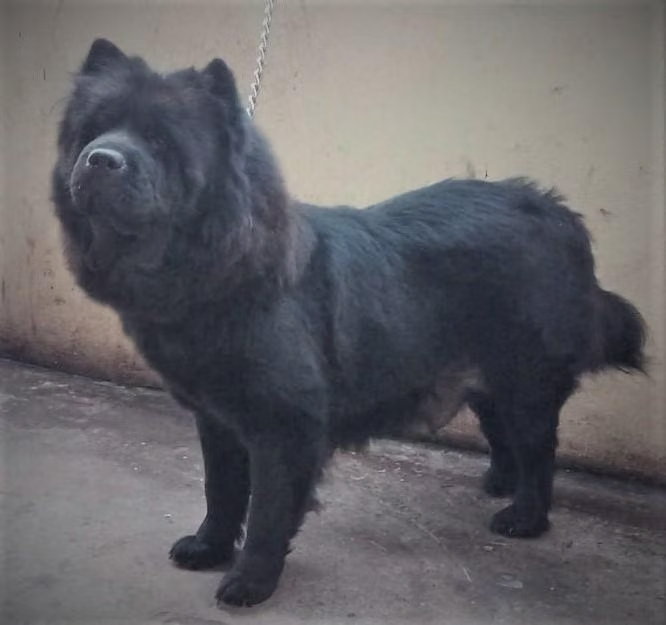
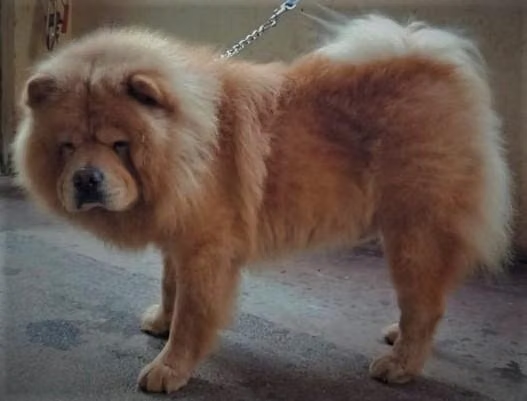
Meet some of our Chow Chow
A few of the Chow Chow profiles members have added to United Pet Club.


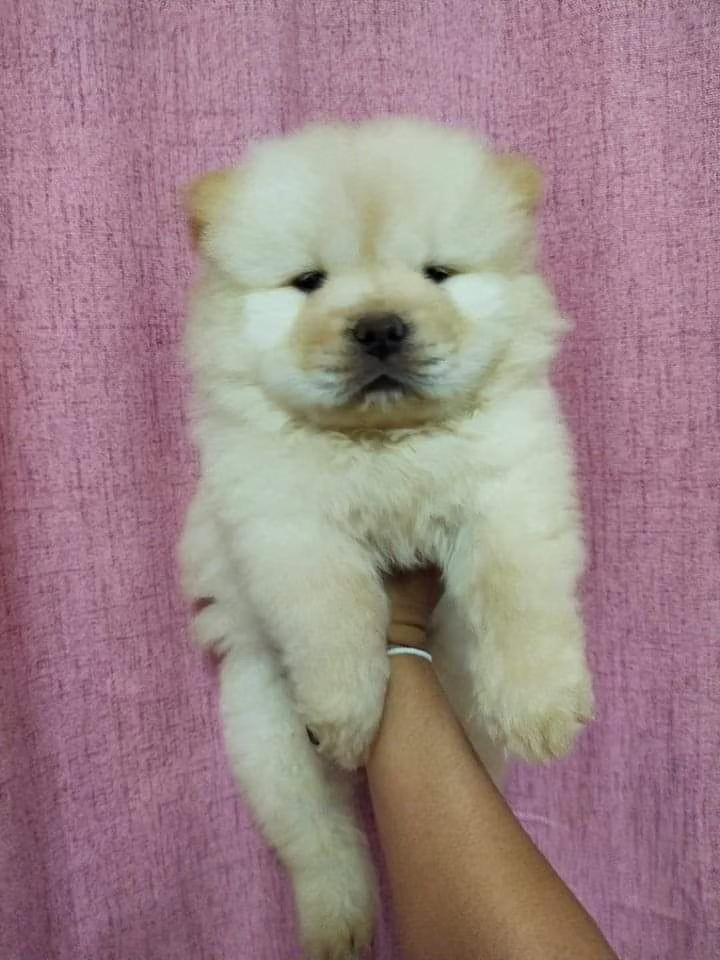
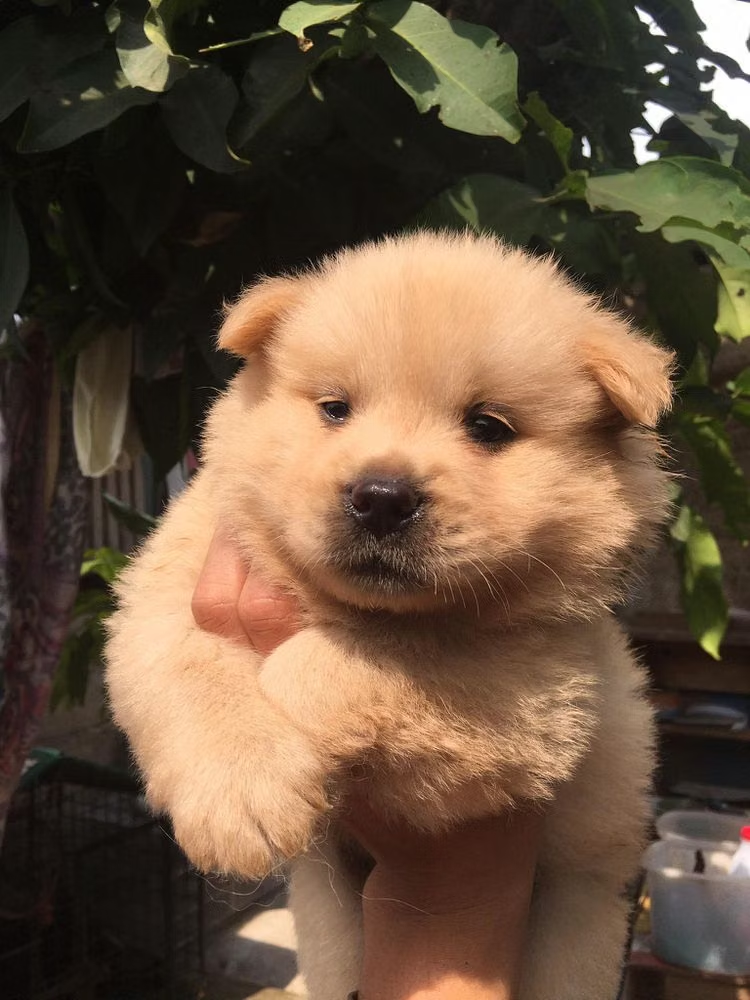


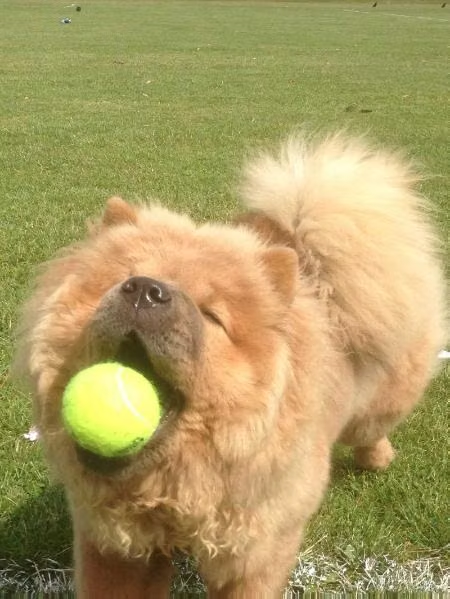
About the Chow Chow
The Chow Chow is a sturdy, medium-sized breed from China with a lion-like ruff, a blue-black tongue, and a quiet, one-family loyalty that suits a calm home.
The Chow Chow is a solid, square-built dog from China, known on sight for the thick ruff around its head and its blue-black tongue. Adults typically stand between 17 and 20 inches at the shoulder and weigh somewhere between 45 and 70 pounds, putting the breed in the medium bracket. The coat comes in two types, rough and smooth, giving the dog a heavy, compact shape.
Temperament marks the Chow Chow out as much as looks. The breed is loyal and reserved, often settling on one or two people as its close companions while staying wary of strangers. It tends to be quiet and self-contained rather than demonstrative, and plenty of owners liken its manner to a cat's.
A Chow Chow settles well in a calm household that respects its independence. It does not look for constant fuss, and it forms its strongest bonds through steady routine rather than boisterous play.
| Attribute | Detail |
|---|---|
| Origin | China |
| Size | Medium (17-20 in, 45-70 lb) |
| Lifespan | 8-12 years |
| Group/role | Companion and former guard dog |
| Good with | One household it knows well; wary of strangers |
Who it suits
The Chow Chow suits an experienced, patient owner who wants a calm, loyal companion rather than an eager-to-please pet. Early, consistent socialisation matters because the breed is naturally reserved. Households with very young children or a constant stream of callers should weigh up the dog's aloof nature before taking one on.
History and origin
The Chow Chow is one of the oldest dog types from China, kept for centuries as a guard, hunter, and general working dog before its move to companion life in the West.
The Chow Chow ranks among the oldest recognisable dog types and traces back to northern China. Depictions of dogs resembling the breed turn up in Chinese art from the Han dynasty period, roughly two thousand years ago, pointing to a long history in the region.
Over the centuries the breed filled several working roles in China. Dogs of this type guarded homes and temples, took part in hunting, and worked alongside people in other practical tasks. The thick double coat suited the cold northern climate, not unlike the coats bred into working dogs here for wet, exposed conditions.
The breed reached Britain in the late 1700s and early 1800s through trade with China, and the name Chow Chow is generally linked to a catch-all term used for mixed cargo shipped from the East. Interest grew through the 1800s, and Queen Victoria's fondness for the breed helped raise its profile.
The Chow Chow arrived in Ireland somewhat later, and today its breeding and showing here fall under the remit of the Irish Kennel Club, which keeps the breed register and organises championship shows. From a working background in China the breed shifted toward life as a companion and show dog, the role it mainly holds today.
Appearance and breed standard
The Chow Chow is a compact, square dog with a dense mane, a broad head, deep-set eyes, and the blue-black tongue that sets the breed apart from almost every other dog.
The Chow Chow has a powerful, square body carried on straight hind legs that give it a stiff, deliberate gait. The broad skull, full ruff, and small rounded ears set close together give it a scowling, lion-like look. The tail sits high and is carried over the back. A defining feature is the blue-black tongue and dark mouth tissue, found in the breed and in barely any other.
| Trait | Standard |
|---|---|
| Height | 17-20 in (43-51 cm) |
| Weight | 45-70 lb (20-32 kg) |
| Coat | Double coat in rough (long) or smooth (short) type |
| Colours | Red, black, blue, cinnamon, cream |
| Eyes | Dark, deep-set, almond-shaped |
Coat and colours
Two coat types are recognised. The rough coat is abundant and dense, with a thick outer layer standing off the body and a soft undercoat, heaviest around the neck. The smooth coat is shorter and harder but still double layered. Accepted solid colours are red, black, blue, cinnamon, and cream, sometimes with lighter shading. The dense undercoat blows out heavily during seasonal coat changes, and owners in our damp climate often find the moult drags on longer than in drier countries.
Temperament and behaviour
The Chow Chow is loyal, independent, and dignified, devoted to its own household while reserved or aloof with people it does not know.
The Chow Chow is independent and sure of itself. It bonds closely with its family but often singles out one or two favoured people, showing quiet devotion rather than open affection. With strangers the breed is reserved and watchful, a trait left over from its guarding past, so early socialisation matters.
With children the Chow Chow can be tolerant of those it has grown up with, though its low patience for rough handling makes supervision sensible. Around other dogs and pets it may be territorial or standoffish, and same-sex aggression can crop up, so introductions need care. The breed is generally quiet and not given to needless barking, but it will raise the alarm at anything out of place.
| Trait | Rating |
|---|---|
| Affection | 2 |
| Energy | 2 |
| Trainability | 2 |
| Vocalness | 2 |
| Shedding | 4 |
Care and grooming
The Chow Chow needs regular brushing of its dense double coat, moderate daily exercise, and a cool, calm environment, well suited to our mild climate.
Grooming
- Brush the rough coat at least two to three times a week, and daily during the seasonal blow-out
- Brush the smooth coat about once a week
- Work through the dense undercoat right down to the skin to stop mats forming, especially around the ruff and hindquarters
- Bathe every four to six weeks or as needed, and dry the coat fully afterwards, which matters more in our damp air than in drier climates
- Check and clean the deep facial folds and ears to keep them dry
- Trim nails regularly and check the eyes, which the heavy coat can obscure
Exercise
- Give two moderate walks a day, totalling around 30 to 60 minutes
- Keep activity light in warm or humid weather
- Offer short play or training sessions for mental stimulation
- Avoid forced or strenuous exercise, which the breed neither enjoys nor needs
Environment
The Chow Chow suits a calm home and copes with apartment life if its exercise needs are met. The heavy coat makes the breed sensitive to heat, so cool, shaded, well-ventilated space matters, even during our short warm spells. A securely fenced garden suits its territorial nature.
Nutrition and feeding
The Chow Chow needs a measured, balanced diet matched to its life stage, with care taken to avoid overfeeding and the joint strain that comes with excess weight.
The Chow Chow does well on a complete, balanced diet formulated for its size and activity level. Because the breed has moderate energy and a heavy coat that hides weight gain, portions should be measured and body condition checked regularly. Diets with controlled fat and adequate protein support a healthy coat and steady weight. Always provide fresh water, particularly given the breed's sensitivity to heat.
| Life stage | Amount per day | Meals |
|---|---|---|
| Puppy (2-6 mo) | Per product guide for growth | 3-4 |
| Puppy (6-12 mo) | Per product guide for growth | 2-3 |
| Adult | 2-3 cups (split) | 2 |
| Senior | Adjusted lower for activity | 2 |
Treats and supplements
Keep treats to a small share of daily calories to avoid weight gain. Joint supplements such as glucosamine may help given the breed's risk of hip and elbow problems, but only introduce a supplement after discussing it with your vet.
Health and lifespan
The Chow Chow lives about 8 to 12 years and is prone to joint, eye, and skin problems linked to its build and heavy coat.
The Chow Chow generally lives 8 to 12 years. Its build and dense coat leave it prone to several conditions, so routine veterinary care and weight control matter. Eye and joint issues are the most common concerns, and the deep coat and facial folds call for regular skin and ear checks.
| Condition | Signs | Note |
|---|---|---|
| Hip dysplasia | Stiffness, limping, reluctance to rise | Worsened by excess weight |
| Elbow dysplasia | Foreleg lameness, swelling | Screen breeding stock |
| Entropion | Eye irritation, tearing, squinting | Eyelid rolls inward; may need surgery |
| Heat intolerance | Heavy panting, lethargy in warmth | Manage with cool, shaded conditions |
| Skin and ear infections | Odour, redness, scratching | Linked to dense coat and folds |
Preventative care
- Annual check-ups with the vet, twice yearly for seniors
- Keep vaccinations and parasite prevention up to date
- Hip, elbow, and eye screening for breeding dogs
- Keep the dog at a lean weight to ease the load on its joints
- Routine dental care along with regular coat and ear checks
Training and socialisation
The Chow Chow is intelligent but independent and stubborn, so it responds best to early, consistent, reward-based training and thorough socialisation.
The Chow Chow is intelligent and capable but strong-willed and not naturally eager to please. It picks things up quickly when it wants to, yet may simply choose not to comply, so training calls for patience, consistency, and a calm, firm handler. Harsh methods tend to backfire and wear away trust. Early, wide-ranging socialisation is essential to soften the breed's reserve with strangers and other animals.
Basics
- Start socialisation in puppyhood with a range of people, places, and dogs
- Teach the core cues (sit, stay, come, lead manners) in short sessions
- Reward compliance straight away with food or praise
- Keep the rules consistent across the household
- Practise calm greetings to manage its reserve with visitors
Breeding and raising young
Chow Chows reach maturity at one to two years, carry litters for about 63 days, and typically produce four to six puppies that need early socialisation.
Chow Chows reach sexual maturity at around 9 to 12 months, but responsible breeders usually wait until physical and mental maturity at one to two years before mating, with health clearances for hips, elbows, and eyes completed beforehand. Gestation runs about 63 days. Litters commonly number four to six puppies. Because of the breed's broad head, some litters need close monitoring at whelping, and having a vet on standby is advisable.
Newborn puppies depend entirely on the dam for warmth and feeding in the early weeks. Early handling and gentle exposure to people and everyday sights from a young age matter, since the breed's reserve makes early socialisation a key part of raising sound, well-adjusted dogs. Puppies generally go to new homes from about eight weeks, and buyers should ask to see health clearances and, where the litter is registered, the Irish Kennel Club paperwork.
| Metric | Value |
|---|---|
| Sexual maturity | 9-12 months |
| Recommended breeding age | 1-2 years |
| Gestation | ~63 days |
| Average litter size | 4-6 puppies |
| Weaning age | ~6-8 weeks |
Registering your Chow Chow in Ireland, chip and record both
Irish law wants every dog chipped and recorded; United Pet Club keeps your Chow Chow's record free, current, and there for life.
How to register a Chow Chow in Ireland
Get the profile sorted first: your Chow Chow's name, his date of birth, a photo, and your phone number, saved in a couple of minutes. The record is free for the whole of his life, and the chip number slots in whenever the vet has done his part. Dog registration is where it starts.
Lodge your Chow Chow's fifteen digit number with United Pet Club and the chip finally earns its keep: free registration for life, every brand accepted, and a record the ISPCA or any warden can turn into a phone call. Microchip registration takes minutes, and the free account covers the profile while you're at it.
How do I register my Chow Chow in Ireland?
Set yourself up with a free United Pet Club account, key in your Chow Chow's details and a photo, and save. The profile holds for the whole of his life without charge, and the chip number can be lodged whenever you have it.
How do I register my Chow Chow's microchip?
Lodge the fifteen digit chip number in your free account along with your address and phone number. The lifetime plan covers the registration and every update after it, free, whatever brand the vet used.
Is microchipping a Chow Chow required in Ireland?
It is. The 2015 Regulations require every dog to be chipped and registered, pup or rescue alike. Keeping the record current is the part that falls to you, and United Pet Club makes that part free.
What does it cost to register a Chow Chow in Ireland?
Not a penny. Profile, chip record, and every amendment are covered for life, with no renewal ever.
Frequently asked questions
Common questions about the Chow Chow cover its size, temperament, care needs, lifespan, suitability, and where to find one in Ireland.
How big does a Chow Chow get?
The Chow Chow is a medium breed, standing about 17 to 20 inches at the shoulder and weighing roughly 45 to 70 pounds when fully grown.
What is the Chow Chow's temperament like?
It is loyal, independent, and dignified, devoted to its own family while reserved or aloof with strangers. Many owners say its manner is more cat than dog.
Is the Chow Chow hard to look after?
It needs regular care. The dense double coat calls for frequent brushing, the breed feels the heat more than most, and its independent streak calls for patient, consistent training.
How long do Chow Chows live?
The typical lifespan is 8 to 12 years, helped along by routine veterinary care, weight control, and screening for joint and eye conditions.
Is the Chow Chow a good choice for a first dog?
It suits experienced owners better. Its stubbornness, reserve with strangers, and grooming demands mean early socialisation and steady handling matter.
Are Chow Chows good with children and other pets?
They can tolerate children they are raised with, under supervision, but their low patience for rough handling and territorial streak mean introductions to children and other pets need care.
Where can I get a Chow Chow in Ireland?
Chow Chows are available through responsible breeders who health-test their dogs and through breed-specific rescue groups. The Irish Kennel Club can point you toward registered breeders, and it is worth choosing sources that screen for hip, elbow, and eye conditions.
From the community
Ask about the Chow ChowNo questions about the Chow Chow yet. Be the first to ask.
Browse Dog breeds