
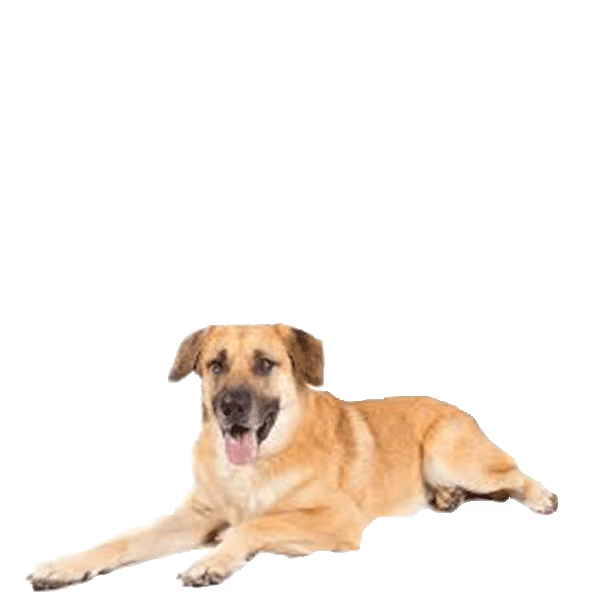
Chinook
The Chinook is a devoted, hardworking American sled dog known for its gentle temperament and steady, willing nature.
- Size
- Medium
- Lifespan
- 12–15 years
- Origin
- United States
- Temperament
- Devoted
- Standard colors
- Red, Gold, Palomino and Fawn
Characteristics
Coat and grooming
How the Chinook coat is built, and what that means when you groom it.
- Coat layers
- Double coat
- Coat texture
- Plush
- Coat length
- Medium
- Shedding
- Seasonal shedding
Grooming guidance
Critical: A Chinook should not be shaved.
The undercoat keeps heat out as well as in, and the outer coat shields the skin from sun and insect bites. Clipping the whole coat off removes both. It often grows back patchy, soft or a different colour, and in some animals the guard hairs never return properly. Brush the undercoat out instead of cutting it off.
Information: A Chinook drops its undercoat in heavy bursts.
The undercoat comes out in heavy bursts over a few weeks. An undercoat rake, or a bath followed by a proper blow-dry, clears it far faster than daily brushing. Clipping the coat down is not a shortcut for this.
Chinook colors and patterns
What each club's breed standard says about every Chinook color and pattern. Point at a ruling to see the club's own wording.
Breed standards describe the Chinook in Red, Gold, Palomino and Fawn. Standard patterns: Solid.
| Color or pattern | AKC | UKC |
|---|---|---|
| Red | Standard (“Gray Red”) | Fault |
| Gold | Standard (“Red Gold”) | Standard (“from light honey color to reddish-gold”) |
| Palomino | Standard (“Palomino”) | Fault |
| Fawn | Standard (“Tawny”) | Standard (“tawny”) |
| Black | Disqualifying (“Black”) | Fault |
| Grey | Disqualifying (“Gray & Tan”) | Fault |
| Tan | Disqualifying (“Black & Tan”) | Fault |
| Buff | Disqualifying (“Buff”) | Fault |
| White | Disqualifying (“White”) | Disqualifying (“white dogs”) |
| Albino | Disqualifying | Disqualifying (“albinism”) |
| Patterns | ||
| Solid | Standard (“Tawny”) | Standard (“tawny in color”) |
| Tan point | Disqualifying (“Black & Tan”) | No ruling |

%22%3E%3Ccircle%20cx%3D%2212%22%20cy%3D%2217.2%22%20r%3D%221.25%22%20fill%3D%22%23C4996A%22%2F%3E%3Cpath%20d%3D%22M1.5%2021.2L9%2018.6L12.6%2021L12.2%2026.2L3.5%2024.4Z%22%20fill%3D%22%23C4996A%22%2F%3E%3Cpath%20d%3D%22M10%2026L14.5%2026.4L18.2%2029.2L13.5%2029.8Z%22%20fill%3D%22%23C4996A%22%2F%3E%3Cellipse%20cx%3D%2221.2%22%20cy%3D%2230.6%22%20rx%3D%221.6%22%20ry%3D%222.3%22%20fill%3D%22%23C4996A%22%2F%3E%3Crect%20x%3D%220%22%20y%3D%2247%22%20width%3D%2264%22%20height%3D%2217%22%20fill%3D%22%23C4996A%22%2F%3E%3Cpath%20d%3D%22M51.5%2024.5L55%2027L54.2%2032L50.5%2028.5Z%22%20fill%3D%22%23C4996A%22%2F%3E%3Cpath%20d%3D%22M45%2038.5L48%2039L48.5%2047L45.5%2047Z%22%20fill%3D%22%23C4996A%22%2F%3E%3C%2Fg%3E%3Cuse%20href%3D%22%23s%22%20fill%3D%22none%22%20stroke%3D%22%233B2A20%22%20stroke-opacity%3D%220.6%22%20stroke-width%3D%221%22%20stroke-linejoin%3D%22round%22%2F%3E%3Cellipse%20cx%3D%223.2%22%20cy%3D%2221.7%22%20rx%3D%221.3%22%20ry%3D%221.2%22%20fill%3D%22%231C1C1C%22%2F%3E%3Ccircle%20cx%3D%2210.8%22%20cy%3D%2219.3%22%20r%3D%221.1%22%20fill%3D%22%231C1C1C%22%2F%3E%3C%2Fsvg%3E)
| Color or pattern | AKC | UKC |
|---|---|---|
| Brown | Standard (“any shade of brown”) | No ruling |
| Dark brown | Standard (“dark brown is preferred”) | Standard (“dark brown eyes are preferred”) |
| Amber | Disqualifying | Standard (“lighter, amber eyes are acceptable”) |
| Color or pattern | AKC | UKC |
|---|---|---|
| Black | Standard (“the leather is solid black”) | Standard (“always solid black”) |
What the rulings mean
- Standard
- Described by the club's breed standard.
- Fault
- Named by the club's breed standard as a fault: the animal can be shown but is penalised.
- Disqualifying
- The club's breed standard disqualifies an animal of this colour or pattern.
Color changes
How a Chinook's colors can change over its life.
Blackchanges toRust
Coat · With body condition · can change back
Blackchanges toGrey
Coat · Progressive
Blackchanges toBrown
Coat · In the sun · can change back
Blackchanges toSnow nose
Nose · With the season · can change back
Blackchanges toPink
Nose · With the season · can change back
%22%3E%3Crect%20x%3D%2217%22%20y%3D%2210%22%20width%3D%2230%22%20height%3D%2242%22%20fill%3D%22url(%23g)%22%2F%3E%3C%2Fg%3E%3Cuse%20href%3D%22%23s%22%20fill%3D%22none%22%20stroke%3D%22%233B2A20%22%20stroke-opacity%3D%220.6%22%20stroke-width%3D%221%22%20stroke-linejoin%3D%22round%22%2F%3E%3Cpath%20d%3D%22M12.5%2037Q13%2032%2018.5%2032Q23.5%2032.5%2023.5%2036.5Q20.5%2035.5%2018.8%2037Q17.4%2038.6%2018%2041.5Q13.6%2040.4%2012.5%2037Z%22%20fill%3D%22%231C1C1C%22%20fill-opacity%3D%220.8%22%20stroke%3D%22%23F5F5F0%22%20stroke-opacity%3D%220.4%22%20stroke-width%3D%220.9%22%2F%3E%3Cpath%20d%3D%22M51.5%2037Q51%2032%2045.5%2032Q40.5%2032.5%2040.5%2036.5Q43.5%2035.5%2045.2%2037Q46.6%2038.6%2046%2041.5Q50.4%2040.4%2051.5%2037Z%22%20fill%3D%22%231C1C1C%22%20fill-opacity%3D%220.8%22%20stroke%3D%22%23F5F5F0%22%20stroke-opacity%3D%220.4%22%20stroke-width%3D%220.9%22%2F%3E%3Cpath%20d%3D%22M32%2040V50%22%20fill%3D%22none%22%20stroke%3D%22%231C1C1C%22%20stroke-width%3D%221.3%22%20stroke-opacity%3D%220.5%22%20stroke-linecap%3D%22round%22%20stroke-linejoin%3D%22round%22%2F%3E%3Cellipse%20cx%3D%2232%22%20cy%3D%2221%22%20rx%3D%2212%22%20ry%3D%223.5%22%20fill%3D%22%23F5F5F0%22%20fill-opacity%3D%220.18%22%2F%3E%3C%2Fsvg%3E)
Sources
Each ruling comes from the club's published breed standard or color list.
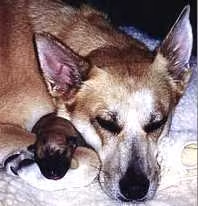
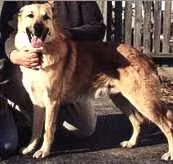
Meet some of our Chinook
A few of the Chinook profiles members have added to United Pet Club.


About the Chinook
The Chinook is a medium-sized American sled dog with a calm, devoted nature, well suited to active families with time for daily exercise.
The Chinook is a medium-sized working dog bred in the United States as a sled dog and family companion. Breeders developed it in New Hampshire in the early 20th century, and it carries a tawny coat, ears that may drop or stand erect, and a sturdy, athletic build. Males typically stand about 58 to 69 cm at the shoulder and weigh 25 to 41 kg, with females somewhat smaller.
The breed pairs pulling power with a gentle disposition. Chinooks were bred to haul loads over long distances, so they have real stamina and a steady work ethic, yet they were also kept close to their handlers and form a strong attachment to people. The temperament is calm, friendly, and people-oriented rather than sharp or independent.
A Chinook suits an active household that can provide daily exercise and steady company. The mild, often damp Irish climate suits the double coat well, and the breed is patient with children and generally sociable with other dogs. It does best as part of family life rather than left on its own for long stretches, and because numbers in Ireland are small, most Chinooks here arrive through imported lines rather than local litters.
| Attribute | Detail |
|---|---|
| Origin | United States (New Hampshire) |
| Size | Medium |
| Lifespan | 12 to 15 years |
| Group / role | Working sled dog and companion |
| Good with | Children, other dogs, active families |
Who the breed suits
The Chinook suits owners who want a steady, affectionate working dog and can commit to daily activity. It rewards consistent training and close contact, and it is not well suited to homes that stand empty for most of the day or cannot offer regular exercise.
History of the Chinook
Arthur Treadwell Walden developed the Chinook in New Hampshire in the early 1900s, breeding an all-purpose sled dog and naming it after his lead dog.
The Chinook traces back to Wonalancet, New Hampshire, where Arthur Treadwell Walden began developing the breed in the early 1900s. Walden worked as a sled driver and freighter, and he wanted a dog that combined the pulling power of heavier freight dogs with speed and an even temperament. The breed takes its name from one of his lead dogs, Chinook, born in 1917.
Walden built the line by crossing a large tawny dog descended from his foundation stock with other working dogs, then selecting for size, coat colour, and a willing, gentle nature over several generations. The resulting dogs pulled sleds, hauled freight, and took part in recreational driving across northern New England.
Chinooks took part in early Antarctic exploration. Dogs from Walden's kennel supported Admiral Richard Byrd's first Antarctic expedition in the late 1920s, and the lead dog Chinook was lost during that expedition, a loss that became part of the breed's story.
Numbers fell sharply in the mid-20th century, and the breed came close to disappearing before a small group of breeders worked to rebuild it. The American Kennel Club recognised the Chinook in the 21st century, and New Hampshire later named it the state dog. Ireland has never had a resident Chinook population of any size, so anyone tracing the breed here is looking at a handful of imported dogs rather than a long local history.
Chinook appearance
The Chinook is a medium, athletic dog with a tawny double coat, a broad head, and ears that may drop, stand erect, or fall somewhere between the two.
The Chinook has a balanced, muscular frame built for endurance rather than bulk. The body is slightly longer than it is tall, the chest runs deep, and the tail curves gently over the back. The head is broad with a clear stop, and the dark eyes give an alert, friendly expression. Ear carriage varies within the breed: some dogs have drop ears, some stand erect, and many sit somewhere in between, and breed standards accept all three forms.
| Trait | Detail |
|---|---|
| Height | Males 61 to 69 cm; females 56 to 64 cm |
| Weight | Males 25 to 41 kg; females 23 to 29 kg |
| Coat | Medium double coat, dense undercoat |
| Colours | Tawny, from pale honey to reddish gold |
| Eyes | Brown to amber, almond shaped |
Coat and colour
The defining shade is tawny, running from light honey through to a deeper reddish gold. Darker shading often appears on the muzzle, ears, and the inner corners of the eyes, and small white or buff markings can show on the chest, toes, and underside. The double coat has a coarser outer layer over a soft, insulating undercoat, which copes well with a cold snap and sheds heavily twice a year.
Chinook temperament
The Chinook is calm, friendly, and devoted. It bonds strongly with its family and gets on well with children and other dogs.
The Chinook has a steady, gentle temperament. It forms a close bond with its family and prefers to stay near its people, which makes it affectionate at home but prone to real distress if left isolated for long periods. With children it is patient and tolerant, and with other dogs it is usually sociable, a trait that goes back to its history as a team sled dog.
Around strangers the breed tends to hold back rather than turn aggressive. Some Chinooks are quietly shy on a first meeting and settle once they have had a chance to take stock of a new person. Early and ongoing socialisation helps a shy pup grow into a confident adult.
The Chinook is intelligent and keen to cooperate, and it works with its handler rather than against them. It does not bark much and tends to communicate through soft sounds instead of persistent barking. Because it is sensitive to tone, it responds best to calm, consistent handling.
| Trait | Rating |
|---|---|
| Affection | 5 |
| Energy | 4 |
| Trainability | 4 |
| Vocalness | 2 |
| Shedding | 4 |
Caring for a Chinook
The Chinook needs daily exercise, weekly brushing that increases during seasonal moults, and close contact with its family.
The Chinook is a moderate-maintenance breed. Its main needs are regular activity, routine coat care, and steady company. It is at its happiest when it has a job to do and a family to do it alongside.
Grooming
- Brush the double coat about once a week to clear loose hair and limit matting
- Brush more often during the two seasonal moults, when the undercoat blows out
- Bathe only as needed, since frequent bathing strips the protective coat
- Trim nails every few weeks and check ears for debris or dampness
- Brush teeth several times a week to support dental health
Exercise
- Give at least 45 to 60 minutes of activity daily
- Combine walks or jogs with pursuits that use the breed's pulling drive, such as hillwalking, sledding, carting, or skijoring
- Add problem-solving games and training to occupy the mind
- Provide a secure space to move, since the breed has stamina and likes to be active outdoors, whatever the weather
Environment
The Chinook copes well with cold, wet conditions thanks to its double coat, and it enjoys outdoor activity even on a grey day, but it is a companion breed and should live indoors with its family. It suits a home with a garden better than a small flat with little chance to exercise, and it needs regular contact rather than being kept apart from the household.
Chinook nutrition
An active Chinook needs a complete diet matched to its life stage and workload, fed in measured meals to keep it lean.
The Chinook does well on a complete and balanced diet formulated for active medium to large dogs. As a working breed, an individual dog's needs shift with its age, size, and how much exercise it gets, so portions should be adjusted to keep the dog lean, with ribs that can be felt but not seen. A working dog in heavy training may need more food, while a less active pet needs less to avoid putting on weight.
| Life stage | Amount per day | Meals |
|---|---|---|
| Puppy (2 to 6 months) | Per puppy formula label, by weight | 3 to 4 |
| Junior (6 to 12 months) | About 300 to 420 g | 2 to 3 |
| Adult | About 300 to 420 g | 2 |
| Working adult | Increase to match workload | 2 to 3 |
| Senior | Adjust down for activity | 2 |
Treats and supplements
Keep treats to no more than about 10 percent of daily calories and use them for training rewards. Fresh water should be available at all times. A dog on a complete commercial diet usually needs no supplements; discuss joint support or other additions with a vet, particularly for working or older dogs.
Chinook health
The Chinook is generally healthy with a lifespan of 12 to 15 years, though it can carry hip dysplasia, eye conditions, and a breed-specific seizure-like episode.
The Chinook is a generally sound, long-lived breed, with a typical lifespan of 12 to 15 years. Responsible breeders screen breeding stock for inherited conditions, which has helped keep the small population healthy. As with any breed, knowing the common problems helps owners spot issues early.
| Condition | Signs | Note |
|---|---|---|
| Hip dysplasia | Stiffness, limping, trouble rising | Screen breeding dogs; keep weight controlled |
| Eye disorders | Cloudiness, changes in vision | Routine eye checks recommended |
| Cryptorchidism | Undescended testicle in males | Found on veterinary exam |
| Chinook seizures | Brief episodes of movement difficulty | Breed-specific; often eases with age |
| Skin or allergy issues | Itching, coat changes | Identify triggers with a vet |
Preventive care
- Keep core vaccinations and parasite prevention up to date
- Book annual wellness checks, with more frequent visits for seniors
- Maintain a lean body condition to protect the joints
- Provide dental care through brushing and checkups
- Choose a breeder who health-tests for hips and eyes
Training a Chinook
The Chinook is intelligent and keen to please, so it trains readily with patient, reward-based methods and early socialisation.
The Chinook is intelligent, attentive, and willing to work with its handler, which makes it a cooperative student. It is also sensitive, so harsh corrections tend to backfire and can push a shy dog to withdraw further. Calm, consistent, reward-based training brings out the best in the breed. Because some Chinooks hold back around strangers, early and ongoing socialisation to new people, places, and other dogs matters for raising a confident adult. The breed's working background means it enjoys having a task, and activities such as carting, sledding, agility, and obedience give it a useful outlet.
Basics
- Start socialisation and gentle handling in puppyhood
- Teach name recognition and a reliable recall first
- Build core cues: sit, down, stay, and leave it
- Practise loose-lead walking before introducing pulling sports
- Keep sessions short, positive, and frequent
- Introduce a job or sport once the basics are solid
Chinook breeding
Chinooks reach breeding maturity at around two years, carry litters for about nine weeks, and produce moderate-sized litters that need careful, well-socialised rearing.
Breeding Chinooks takes care, because the breed has a small population and a narrow gene pool, which makes thoughtful pairing and health screening important. Breeders usually wait until a dog is physically and mentally mature, around two years of age, and confirm clear hip and eye results before mating. Females come into season roughly twice a year.
Gestation lasts about 63 days. Litter size is moderate, and because puppies inherit a sensitive, people-oriented temperament, early handling and socialisation in the first weeks shape how confident the adult dog becomes. Responsible breeders track the breed's limited bloodlines to protect genetic diversity and reduce inherited problems. Anyone looking for a Chinook litter in Ireland should expect a wait, since so few are bred here or imported each year.
| Metric | Value |
|---|---|
| Breeding maturity | About 2 years |
| Heat cycle | Roughly twice a year |
| Gestation | About 63 days |
| Average litter | About 3 to 6 puppies |
| Weaning age | 6 to 8 weeks |
Registering your Chinook in Ireland, chip and record both
Irish law wants every dog chipped and recorded; United Pet Club keeps your Chinook's record free, current, and there for life.
How to register a Chinook in Ireland
Irish law has required every dog to be chipped and registered since the 2015 Regulations came in, and it expects the details behind the chip to stay current, not gather dust. A free United Pet Club profile does that for your Chinook, for life. Registering your dog is a few minutes' work and costs nothing at all.
The implant is the vet's job; the record is down to you, and the 2015 rules assume you'll keep it current. Register the microchip free on the lifetime plan: whatever brand the vet reached for is grand, a house move costs nothing to record, and the number stays searchable day and night. Create your free account and have the pair of jobs done before the tea goes cold.
How do I register my Chinook in Ireland?
Set yourself up with a free United Pet Club account, key in your Chinook's details and a photo, and save. The profile holds for the whole of his life without charge, and the chip number can be lodged whenever you have it.
How do I register my Chinook's microchip?
Lodge the fifteen digit chip number in your free account along with your address and phone number. The lifetime plan covers the registration and every update after it, free, whatever brand the vet used.
Is microchipping a Chinook required in Ireland?
It is. The 2015 Regulations require every dog to be chipped and registered, pup or rescue alike. Keeping the record current is the part that falls to you, and United Pet Club makes that part free.
What does it cost to register a Chinook in Ireland?
Not a penny. Profile, chip record, and every amendment are covered for life, with no renewal ever.
Chinook frequently asked questions
Common questions about the Chinook's size, temperament, care needs, lifespan, suitability, and availability.
How big does a Chinook get?
The Chinook is a medium-sized dog. Males generally stand 61 to 69 cm and weigh 25 to 41 kg, while females are a little smaller at 56 to 64 cm and 23 to 29 kg.
What is the Chinook's temperament like?
Chinooks are calm, friendly, and devoted. They bond closely with their families, are patient with children, and are usually sociable with other dogs, though they can hold back with strangers until they settle in.
Is the Chinook hard to look after?
Care is moderate. The breed needs daily exercise, weekly brushing that increases during seasonal moults, and regular company. It is not demanding to groom but does not do well left on its own for long periods.
How long do Chinooks live?
Chinooks typically live 12 to 15 years. Keeping the dog at a healthy weight and choosing a health-tested breeder support a long, sound life.
Is a Chinook a good family dog?
Yes. The Chinook is gentle, tolerant, and people-oriented, which makes it well suited to active families who can give it exercise and keep it involved in daily life.
Are Chinooks rare in Ireland?
Yes. The Chinook is an uncommon breed worldwide with a small population, and very few are bred or kept in Ireland, so finding a puppy usually means a long wait and contact with breeders abroad.
Do Chinooks bark a lot?
No. The breed is fairly quiet and tends to use soft sounds rather than persistent barking, which makes it a calm housemate.
From the community
Ask about the ChinookNo questions about the Chinook yet. Be the first to ask.
Browse Dog breeds