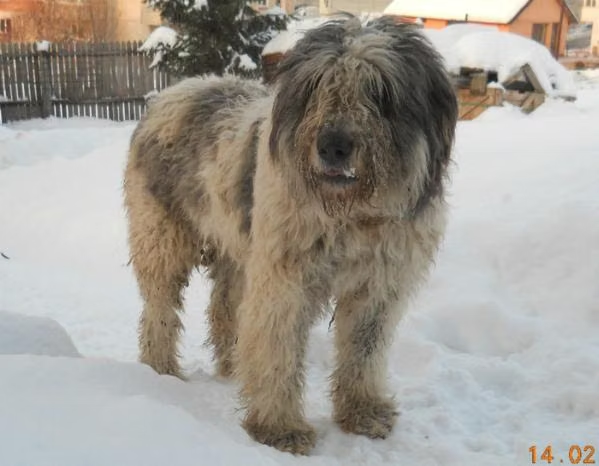
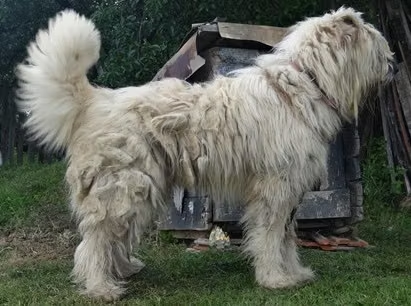
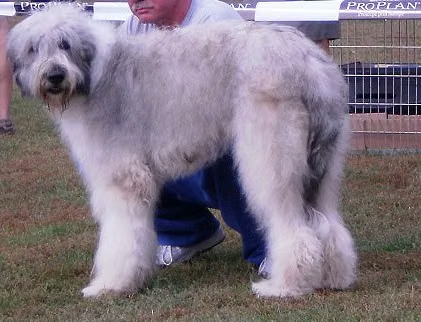
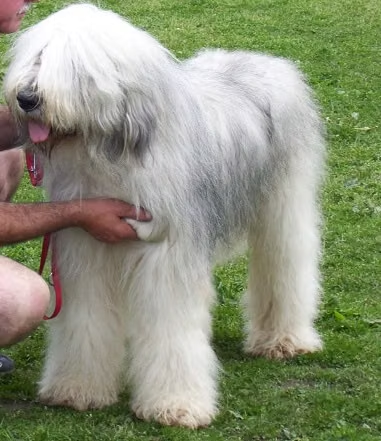
The Carpathian Sheepdog is a powerful Romanian guardian known for its devotion to the flock and fearless defense against predators.
How the Carpathian Sheepdog coat is built, and what that means when you groom it.
Critical: A Carpathian Sheepdog should not be shaved.
The undercoat keeps heat out as well as in, and the outer coat shields the skin from sun and insect bites. Clipping the whole coat off removes both. It often grows back patchy, soft or a different colour, and in some animals the guard hairs never return properly. Brush the undercoat out instead of cutting it off.
Caution: A Carpathian Sheepdog coat mats easily.
Fine or long hair tangles at the base of the coat, out of sight, where the mats tighten and pull on the skin. Brushing has to reach right down to the roots in sections, not just skim the surface.
Information: A Carpathian Sheepdog drops its undercoat in heavy bursts.
The undercoat comes out in heavy bursts over a few weeks. An undercoat rake, or a bath followed by a proper blow-dry, clears it far faster than daily brushing. Clipping the coat down is not a shortcut for this.
A few of the Carpathian Sheepdog profiles members have added to United Pet Club.
The Carpathian Sheepdog is a big Romanian flock guardian, fiercely loyal to its own and fearless when wolves or bears come near.
The Carpathian Sheepdog is a large guardian breed out of Romania, shaped over centuries in the Carpathian Mountains to keep sheep safe from wolves, bears, and lynx. It works well away from its handler, sizing up threats and deciding for itself rather than waiting on commands. That independence is the trait that sets the breed apart.
A grown dog is tall, heavy boned, and carries a dense, weatherproof coat built for cold, exposed hillside pasture. Ireland's climate is milder than the high Carpathians but no less damp, and the coat copes with a wet Irish winter without much bother. The temperament combines deep devotion to family and stock with real wariness of strangers and anything that strays onto its patch. It is settled and steady at home, and switches to alert and courageous the moment it senses trouble.
This is a working guardian first and a pet second. It bonds tightly with the people and animals it lives among, keeps watch over its territory without being told to, and acts on its own judgement rather than looking to a handler for instruction. Owners tend to describe it as serious, loyal, and reserved rather than playful or eager to please.
| Attribute | Detail |
|---|---|
| Origin | Romania (Carpathian Mountains) |
| Size | Large |
| Lifespan | 12 to 14 years |
| Group/role | Livestock guardian dog |
| Good with | Family and the stock it's reared with; wary of strangers |
The Carpathian Sheepdog suits owners with a farm, smallholding, or a large secure garden, and previous experience with strong-minded guardian breeds. It needs space, a proper job, and boundaries that never slip. It is a poor match for flats, first-time owners, or households after a sociable, biddable companion. Early and ongoing socialisation is essential to keep its natural wariness of outsiders in check.
The Carpathian Sheepdog developed in Romania's Carpathian Mountains as a shepherd's guardian, and was given a formal breed standard in the twentieth century.
The breed hails from the Carpathian Mountains, the great arc of high country running through Romania. For generations, shepherds there kept large dogs to guard flocks on summer pasture, where wolves and brown bears were a constant threat. The dogs that lasted and went on to breed were the ones able to face down a predator, stand up to rough weather, and get on with the job with little supervision.
These guardians were shaped by what they did, not by any show ring. Shepherds bred for size, courage, protective instinct, and a thick coat that stood up to mountain cold and rain. The dogs generally lived out among the sheep rather than in the farmhouse, which deepened their bond with the flock and their independence from human direction.
Formal recognition followed in the twentieth century, when Romanian authorities and breed clubs drew up a written standard to describe and hold onto the type. The standard sets down the traditional working dog rather than reinventing it. The Carpathian Sheepdog is one of several Romanian shepherd breeds, and is told apart from its regional cousins by build, coat, and colouring.
The breed still works as a guardian across parts of rural Romania today, while a smaller number are kept as property guardians and companions. Numbers outside Romania, including here in Ireland, remain small.
The Carpathian Sheepdog is a large, powerfully built guardian with a dense double coat, usually wolf-grey, well suited to a cold, wet climate.
The Carpathian Sheepdog is a large, well-proportioned dog built for stamina and strength rather than speed. The body is slightly longer than it is tall, with a deep chest, strong bone, and a broad head held with a watchful expression. Dogs are noticeably bigger and heavier than bitches.
| Trait | Standard |
|---|---|
| Height | Dogs stand about 65 to 73 cm; bitches about 59 to 67 cm at the withers |
| Weight | Roughly 32 to 45 kg, depending on sex and build |
| Coat | Dense double coat: straight, harsh outer hair over a thick undercoat |
| Colours | Wolf-grey (sable), often with lighter and darker shading |
| Eyes | Dark, almond shaped, set slightly oblique |
The coat is the breed's main defence against the weather. A coarse, straight outer layer throws off rain and resists matting, while a soft, dense undercoat holds the warmth on a cold pasture. Hair is shorter on the head and the front of the legs, and longer around the neck, the back of the legs, and the tail. The classic colour is wolf-grey, a sable pattern running from lighter to darker tones across the body. The breed sheds heavily, with a heavier seasonal moult once or twice a year that calls for extra grooming.
The Carpathian Sheepdog is devoted, independent, and protective: settled with family, but reserved and watchful around strangers.
The Carpathian Sheepdog is a serious, even-tempered guardian. With its own family it is devoted and gentle, and it often forms a close bond with the people and animals it lives among. At home it is calm and undemonstrative, content to keep watch over its territory rather than look for constant attention.
Towards strangers the breed is reserved and suspicious. It weighs up unfamiliar people and situations carefully and will act decisively if it judges there's a real threat. This is a deliberate guardian rather than a reactive one, but its protective drive runs deep and it does not back down easily.
With livestock and other household animals it has been reared with, the breed is patient and protective, treating them as its own charge. Take care around unfamiliar dogs, where territorial tension or same-sex friction can arise. Its independence means it thinks for itself, an asset out in the field and a challenge for owners expecting quick obedience.
| Trait | Rating |
|---|---|
| Affection (with family) | 4 |
| Energy | 3 |
| Trainability | 2 |
| Vocalness | 4 |
| Shedding | 4 |
The Carpathian Sheepdog needs space, regular outdoor exercise, and routine coat care, and does best on a farm or smallholding with a clear guardian role.
The double coat needs regular upkeep but no clipping.
This is a working breed that needs daily activity and something to occupy its mind.
The Carpathian Sheepdog is built for cold, open country and is happiest with room to move and a job to do. It suits a farm, a smallholding, or a rural home with a large secure garden, ideally with livestock or property to guard. Ireland's mild, wet climate suits its coat well, and the breed copes with rain and cold far better than with heat, so shade and water matter on the rare warm day. It is not suited to flat living or to being left without space and purpose.
The Carpathian Sheepdog needs a balanced large-breed diet portioned to its weight and activity, with slow, controlled growth as a pup.
As a large, active guardian, the Carpathian Sheepdog does well on a complete, balanced diet formulated for large breeds. Match the amount to the dog's weight, age, and workload. A working dog out on pasture burns more than one kept as a yard guardian, so portions should be adjusted to keep a lean, muscular condition rather than letting the dog run to fat. Large breeds do better with steady, controlled growth as pups, to protect developing joints, so a large-breed puppy formula suits the first stage of life.
| Life stage | Amount per day | Meals |
|---|---|---|
| Puppy (2 to 6 months) | Per large-breed puppy formula, by weight | 3 to 4 |
| Junior (6 to 18 months) | Gradually increasing towards the adult ration | 2 to 3 |
| Adult | Roughly 400 to 600 g of quality dry food, by weight and activity | 2 |
| Senior | Slightly reduced calories, protein maintained | 2 |
Keep treats to roughly ten per cent of daily calories and count them within the total ration. Fresh water should always be to hand, especially for a heavy-coated dog in warm weather. Talk to a vet about joint supplements for a large, working dog, and split daily food into two meals rather than one large sitting, to lower the risk of bloat.
The Carpathian Sheepdog is a generally hardy breed with a lifespan of 12 to 14 years, though large-breed joint issues and bloat are worth watching for.
The Carpathian Sheepdog is a sturdy working breed, shaped by generations of life in a tough environment, and is generally healthy. The typical lifespan is 12 to 14 years, which is long for a dog of this size. As with any large breed, the main concerns are joints, weight, and the risk of bloat. Responsible breeding and a sensible weight go a long way towards keeping the breed sound.
| Condition | Signs | Note |
|---|---|---|
| Hip dysplasia | Stiffness, limping, reluctance to rise or climb | Common in large breeds; screen breeding stock |
| Elbow dysplasia | Front-leg lameness, especially after exercise | Inherited joint malformation |
| Gastric dilatation-volvulus (bloat) | Swollen abdomen, retching without vomiting, distress | A medical emergency; act at once |
| Obesity | Weight gain, low energy, joint strain | Manage with portion control and exercise |
The Carpathian Sheepdog is intelligent but independent, so training leans on early socialisation, consistency, and mutual respect rather than repetition drills.
The Carpathian Sheepdog is intelligent and capable, but it was bred to make its own calls out in the field, so it does not train like a biddable companion breed. It can pick up commands well, yet it weighs whether to obey rather than complying automatically. Training works best with an owner the dog respects, clear and consistent rules, and patience. Harsh methods damage the bond and can leave a guardian defensive.
Socialisation matters more than any single skill. Because the breed is naturally wary of strangers, it needs wide, positive exposure to people, places, and other animals from puppyhood and right through its life, to keep that wariness measured rather than reactive.
The Carpathian Sheepdog matures slowly for a large breed, with a pregnancy of about two months and moderate litters that benefit from early socialisation.
The Carpathian Sheepdog matures slowly, as large guardian breeds do, and is best bred only once fully grown physically and mentally. Responsible breeding pairs dogs that have been health-screened for hip and elbow problems and that show the steady, sound guardian temperament the breed relies on. Pregnancy lasts roughly two months, and litters are moderate in size for a dog of this build.
Newborn pups depend entirely on the dam for the first weeks. Early handling, gentle exposure to household sounds, and broad socialisation from a few weeks of age matter a great deal, because this is the window that shapes how a naturally wary guardian relates to people and animals later on. Pups reared alongside the stock they will one day guard learn that role from the outset. Given the breed's size, controlled growth and large-breed puppy nutrition protect the developing joints.
| Metric | Value |
|---|---|
| Sexual maturity | Around 12 to 24 months; breed only once mature |
| Gestation | About 58 to 65 days |
| Typical litter size | Roughly 4 to 8 puppies |
| Weaning | About 6 to 8 weeks |
| Socialisation window | From about 3 weeks through the early months |
Irish law wants every dog chipped and recorded; United Pet Club keeps your Carpathian Sheepdog's record free, current, and there for life.
Irish law has required every dog to be chipped and registered since the 2015 Regulations came in, and it expects the details behind the chip to stay current, not gather dust. A free United Pet Club profile does that for your Carpathian Sheepdog, for life. Registering your dog is a few minutes' work and costs nothing at all.
Lodge your Carpathian Sheepdog's fifteen digit number with United Pet Club and the chip finally earns its keep: free registration for life, every brand accepted, and a record the ISPCA or any warden can turn into a phone call. Microchip registration takes minutes, and the free account covers the profile while you're at it.
Set yourself up with a free United Pet Club account, key in your Carpathian Sheepdog's details and a photo, and save. The profile holds for the whole of his life without charge, and the chip number can be lodged whenever you have it.
Lodge the fifteen digit chip number in your free account along with your address and phone number. The lifetime plan covers the registration and every update after it, free, whatever brand the vet used.
It is. The 2015 Regulations require every dog to be chipped and registered, pup or rescue alike. Keeping the record current is the part that falls to you, and United Pet Club makes that part free.
Not a penny. Profile, chip record, and every amendment are covered for life, with no renewal ever.
Common questions about the Carpathian Sheepdog's size, temperament, care needs, lifespan, suitability, and availability.
It's a large breed. Dogs stand roughly 65 to 73 cm at the withers and bitches about 59 to 67 cm, with weights commonly between 32 and 45 kg depending on sex and build.
It is devoted, independent, protective, and watchful. With its own family it is calm and loyal, while towards strangers it is reserved and suspicious, acting decisively when it judges there's a real threat.
It's demanding in space and handling more than in grooming. It needs room, daily activity, a guardian role, and an experienced owner, plus regular brushing of its heavy double coat. It doesn't suit flats or first-time owners.
The typical lifespan is 12 to 14 years, which is long for a dog of this size.
With family and the animals it's reared with, it is patient and protective. It needs early, ongoing socialisation, supervision around young children given its size, and care around unfamiliar dogs.
They remain mainly a working guardian in rural Romania, and numbers outside their home region, including in Ireland, are limited. Expect to research carefully through the Irish Kennel Club or specialist contacts, and possibly wait, when looking for a well-bred, health-screened pup.