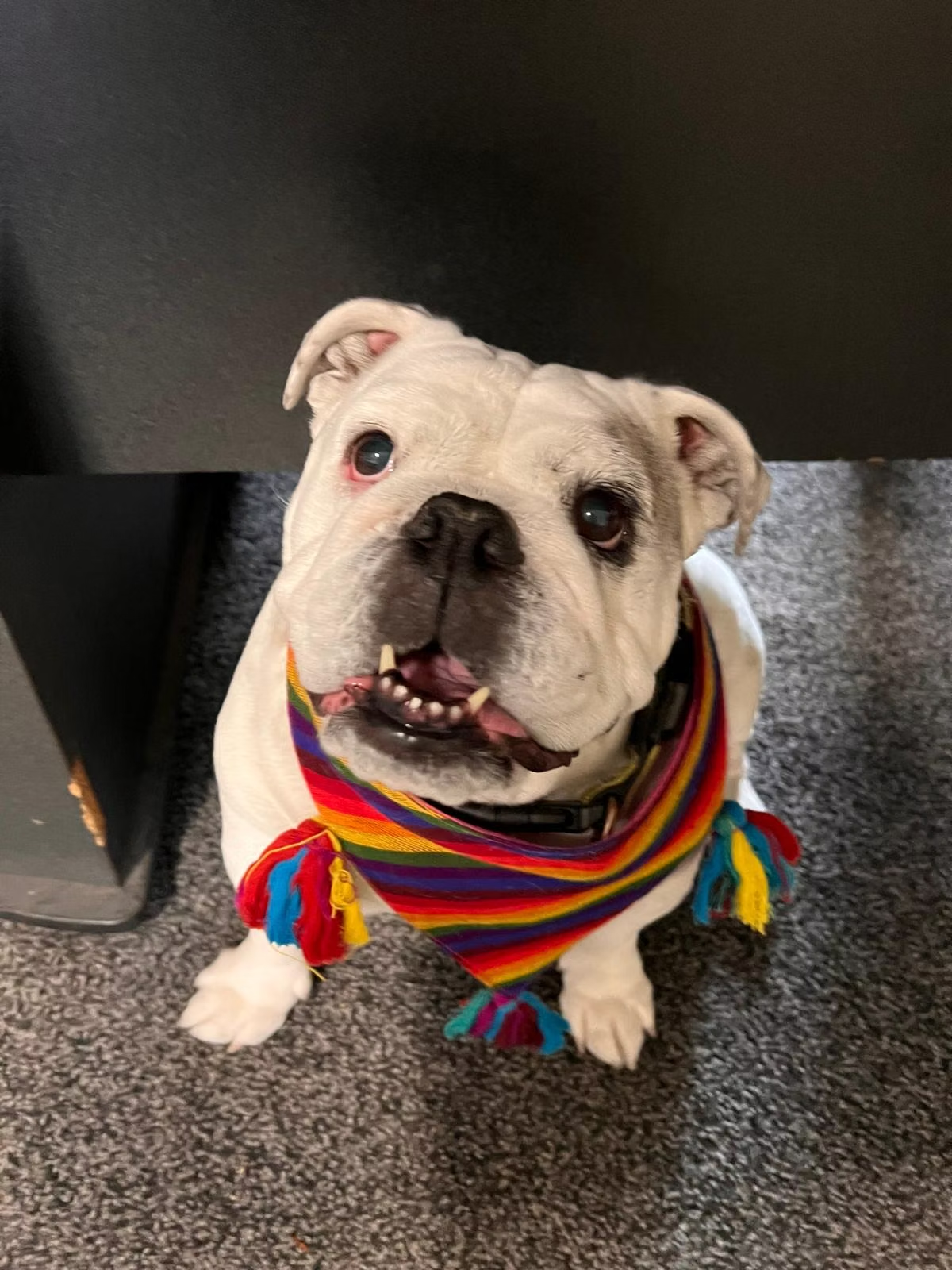
The Bulldog is a calm, courageous English breed with a wrinkled face and gentle, devoted temperament that makes it a steadfast family friend.
How the Bulldog coat is built, and what that means when you groom it.
A few of the Bulldog profiles members have added to United Pet Club.
The Bulldog is a medium-sized English breed with a wrinkled face and a calm, devoted nature, a popular and easygoing family dog in Ireland.
The Bulldog is a medium-sized companion breed that comes from England. It has a broad head, a short muzzle, loose skin that folds into wrinkles across the face, and a wide, muscular body carried low to the ground. The rolling gait and undershot jaw are both features of the recognised type. Adults typically weigh 18 to 23 kg and stand around 31 to 40 cm at the shoulder.
The stern face doesn't match the personality behind it. Bulldogs are affectionate and good-humoured, settle quickly into indoor family life, and are usually patient with children. The breed is steady and not prone to aggression in an ordinary home, and most are content with a short walk and a long stretch on the sofa afterwards.
Ireland's climate actually works in the Bulldog's favour more than many countries, since real heat is rare. The bigger everyday task is keeping the facial folds dry given how often the weather turns damp, and watching the dog's joints and breathing as it ages. A Bulldog does best indoors, out of draughts and off cold tiled floors for long stretches, with a warm bed to retreat to.
| Attribute | Detail |
|---|---|
| Origin | England |
| Size | Medium (18 to 23 kg) |
| Lifespan | 8 to 10 years |
| Group/role | Companion dog |
| Good with | Children, families, and other household pets |
The Bulldog suits an owner who wants an affectionate, low-energy companion and is willing to keep on top of its grooming and health needs. It settles into a semi-d, a bungalow, or an apartment equally well, since it doesn't need much floor space or a big garden. It isn't the right dog for anyone hoping for a running partner, and it needs a dry, warm indoor base rather than a life spent mostly outside in a kennel.
The Bulldog was bred in England for bull-baiting before nineteenth-century breeders turned it into the placid family companion Irish owners recognise now.
The breed's name traces back to bull-baiting, a blood sport practised in England from medieval times until the early nineteenth century. Breeders wanted a dog with a low centre of gravity, a wide jaw, and the tenacity to hold on to a tethered bull without letting go. A short muzzle with a pushed-back nose let the dog carry on breathing while it kept its grip.
England's Cruelty to Animals Act of 1835 banned bull-baiting and similar blood sports outright. With no working role left, the Bulldog's numbers went into decline for some years.
Through the middle and later 1800s, a number of English breeders set about preserving the dog while breeding its temperament away from aggression and toward the calm, affectionate character now associated with the breed. The distinctive head and body shape were kept largely intact. England's first formal Bulldog breed standard dates to 1865.
The Bulldog became a well-established family and show dog over the twentieth century, a position it still holds today, including here in Ireland, where it's recognised by the Irish Kennel Club and remains a familiar face at shows and in family homes around the country. It's also used as a mascot by sports clubs and institutions for its sturdy build and resolute expression.
The Bulldog is a wide, low-built dog with a large wrinkled head, short muzzle, and smooth short coat that comes in several recognised colours.
The Bulldog is thickset and low-slung, noticeably wider than it is tall. The head is large in proportion to the body, with heavy cheeks, pronounced facial folds, and a short, broad muzzle. The lower jaw projects beyond the upper jaw, which produces the undershot bite the breed is defined by. Broad shoulders and a deep chest sit above lighter hindquarters, giving the dog its familiar rolling walk.
The ears are small, set high on the head, and usually carried folded in what's called a rose shape. The tail is short and low-set, either straight or screwed.
| Feature | Standard |
|---|---|
| Height | 31 to 40 cm at the shoulder |
| Weight | 18 to 23 kg |
| Coat | Short, smooth, and close-lying |
| Colours | Brindle, white, red, fawn, fallow, and piebald combinations |
| Eyes | Round, dark, and set wide and low on the skull |
The coat lies flat and close against the skin, is short and fine, and needs very little trimming. Standard colours include brindle, solid white, red, fawn, and fallow, plus piebald patterns that combine white with another colour. Loose skin across the head, neck, and shoulders forms the wrinkles that need regular drying out, particularly after a walk in typical Irish drizzle.
The Bulldog is calm, affectionate, and loyal, usually good with children and tolerant of other household pets, though it can be quietly stubborn.
Calm and good-natured sums up the typical Bulldog. It attaches strongly to its family and will happily potter after them from room to room without being needy about it. Children generally get patient, gentle treatment, which is a large part of why the breed suits family life, though adults should still keep an eye on interactions between any dog and young kids.
The Bulldog tends to greet strangers with mild interest rather than suspicion, so it's not really a watchdog by temperament, even if its solid frame and serious face can look imposing at the door. Introduced properly, it usually gets along fine with other household pets, cats included.
Stubbornness comes with the territory. A Bulldog can plant itself and take a while to be talked round, so training works best with a patient, consistent hand. Most are quiet dogs that bark only occasionally and would rather stretch out by the fire than patrol the garden.
| Trait | Rating |
|---|---|
| Affection | 5 |
| Energy | 2 |
| Trainability | 2 |
| Vocalness | 2 |
| Shedding | 3 |
Bulldog care in Ireland centres on keeping the facial folds dry in damp weather, gentle daily walks, and a warm indoor base away from draughts.
The Bulldog doesn't need intensive grooming or training, but it does need consistency. The task that matters most is keeping the facial wrinkles and tail pocket clean and properly dried, which takes extra effort given how often Irish weather leaves a dog damp.
This is an indoor breed through and through, equally at home in a townhouse, a bungalow, or a flat. Its short muzzle still makes it prone to overheating, so on the occasional warm day or in a stuffy, centrally heated room, keep an eye out and offer somewhere cooler to lie. Its heavy front end makes it a poor swimmer, so keep it well away from rivers, lakes, and open water when unsupervised.
A Bulldog needs a measured, balanced diet suited to its life stage, since it puts on weight easily and extra weight worsens its joint and breathing problems.
A complete, balanced dog food suited to age and activity level works well for the Bulldog. The breed gains weight readily, and extra weight adds pressure to both the joints and the airway, so portions should be measured rather than left down to graze on. Splitting the daily amount across two meals helps digestion and lowers the risk of bloat.
| Life stage | Amount per day | Meals |
|---|---|---|
| Puppy (2 to 6 months) | Per product label for growth | 3 to 4 |
| Puppy (6 to 12 months) | Per product label for growth | 2 to 3 |
| Adult | About 250 to 400 g of dry food, adjusted to weight | 2 |
| Senior | Reduced calories, vet-guided | 2 |
Keep treats to a small portion of daily calories, since this breed puts on weight quickly if overfed. Glucosamine and chondroitin supplements are sometimes given to support the joints, and omega-3s may help the skin and coat. Check with a vet before adding any supplement to the diet.
The Bulldog usually lives 8 to 10 years and is prone to breathing, joint, and skin problems tied to its build, so routine veterinary care is important.
The Bulldog has an average lifespan of 8 to 10 years. Being short-muzzled and heavily built, the breed faces a higher risk of a number of inherited and structural health issues. Many can be managed with attentive care, weight control, and regular veterinary visits, but it's worth understanding them fully before bringing a Bulldog home, and worth asking a vet what ongoing care for a brachycephalic breed tends to cost.
| Condition | Signs | Note |
|---|---|---|
| Brachycephalic airway syndrome | Noisy breathing, snoring, exercise and heat intolerance | Related to the short muzzle; severe cases may need surgery |
| Hip and elbow dysplasia | Stiffness, limping, reluctance to move | Joint malformation worsened by excess weight |
| Skin fold dermatitis | Redness, odour, irritation in the wrinkles | Prevented by routine fold cleaning and drying |
| Cherry eye | Visible red mass in the corner of the eye | Prolapse of the tear gland; usually corrected surgically |
The Bulldog is capable but stubborn, so it responds best to short, patient, reward-based training sessions started when it's still a puppy.
The Bulldog can certainly learn, but its independent streak means progress is rarely quick. Harsh correction sets training back rather than forward, while patient repetition and rewards move it along steadily. Keep sessions short, since the breed both loses focus and tires easily. Introducing the puppy early to different people, animals, and everyday situations makes for a calmer, friendlier adult dog later on.
Bulldog breeding usually needs veterinary support, since natural mating is often difficult and a caesarean birth is common because of the puppies' large heads.
Breeding Bulldogs is demanding work and should only be taken on with veterinary support and thorough health screening of both parents. Both sexes reach sexual maturity by roughly 12 to 18 months, though responsible breeders wait until the dog is fully grown and health-tested before going ahead.
The breed's body shape often makes natural mating difficult, so a good number of litters are conceived with veterinary assistance. Pregnancy lasts about 63 days. Because Bulldog puppies have large heads relative to the mother's pelvis, natural birth is frequently unsafe, and a planned caesarean is common, usually arranged with a vet ahead of the due date rather than left to chance.
Litters tend to be small, generally three to four puppies. The newborns are vulnerable and need a warm, clean space along with close monitoring, since the dam may not manage a litter well without help. Puppies are usually weaned and ready to go to new homes at around eight weeks, once they've had their first health checks.
| Metric | Value |
|---|---|
| Sexual maturity | About 12 to 18 months |
| Gestation | Around 63 days |
| Average litter size | 3 to 4 puppies |
| Delivery | Often by caesarean section |
| Weaning age | About 8 weeks |
Irish law wants every dog chipped and recorded; United Pet Club keeps your Bulldog's record free, current, and there for life.
Irish law has required every dog to be chipped and registered since the 2015 Regulations came in, and it expects the details behind the chip to stay current, not gather dust. A free United Pet Club profile does that for your Bulldog, for life. Registering your dog is a few minutes' work and costs nothing at all.
Lodge your Bulldog's fifteen digit number with United Pet Club and the chip finally earns its keep: free registration for life, every brand accepted, and a record the ISPCA or any warden can turn into a phone call. Microchip registration takes minutes, and the free account covers the profile while you're at it.
Set yourself up with a free United Pet Club account, key in your Bulldog's details and a photo, and save. The profile holds for the whole of his life without charge, and the chip number can be lodged whenever you have it.
Lodge the fifteen digit chip number in your free account along with your address and phone number. The lifetime plan covers the registration and every update after it, free, whatever brand the vet used.
It is. The 2015 Regulations require every dog to be chipped and registered, pup or rescue alike. Keeping the record current is the part that falls to you, and United Pet Club makes that part free.
Not a penny. Profile, chip record, and every amendment are covered for life, with no renewal ever.
Common questions Irish owners ask about the Bulldog's size, temperament, care needs, lifespan, and how well it suits a home here.
The Bulldog is a medium-sized breed. Adults typically weigh 18 to 23 kg and stand about 31 to 40 cm at the shoulder, with a wide, muscular, low-set build.
Generally, yes. Bulldogs are calm, affectionate, and loyal, form close bonds with their families, and are usually gentle with children, though they can be stubborn.
It needs specific rather than heavy care. The main tasks are drying and cleaning the facial folds, keeping weight in check, going easy on exercise in any warm spell, and staying up to date with vet checks for breathing and joints.
The average lifespan is 8 to 10 years. A healthy weight, clean dry folds, and protection from occasional warm weather all support a longer, more comfortable life.
Yes, in most cases. Its low exercise needs and calm nature suit smaller homes and first-time owners well, as long as they can manage its grooming and health requirements.
Not well. The short muzzle makes it hard for the breed to cool down, so even a mild Irish heatwave calls for shade, water, and exercise kept to the cooler parts of the day.