

Brittany
The Brittany is a bright, athletic French pointing breed, beloved for its boundless energy and friendly, eager-to-please nature.
- Size
- Medium
- Lifespan
- 12–14 years
- Origin
- France
- Temperament
- Friendly
- Standard colors
- Black, White and Blue and 3 more
Characteristics
Coat and grooming
How the Brittany coat is built, and what that means when you groom it.
- Coat layers
- Single coat
- Coat texture
- Wavy
- Coat length
- Medium
- Shedding
- Moderate shedding
Grooming guidance
Caution: A Brittany coat mats easily.
Fine or long hair tangles at the base of the coat, out of sight, where the mats tighten and pull on the skin. Brushing has to reach right down to the roots in sections, not just skim the surface.
Brittany colors and patterns
What each club's breed standard says about every Brittany color and pattern. Point at a ruling to see the club's own wording.
Breed standards describe the Brittany in Black, White, Blue, Liver, Tan and Orange. Standard patterns: Bicolour, Tricolour, Piebald, Parti-colour and Roan.
| Color or pattern | FCI | AKC | UKC | KC | KUSA |
|---|---|---|---|---|---|
| Black | Standard (“white and black”) | Disqualifying (“Black & White”) | Standard (“black and white”) | Standard (“black/white”) | Standard (“white and black”) |
| White | Standard (“White and orange, white and black, white and liver”) | Standard (“Orange & White”) | Standard (“Orange and white, liver and white, and black and white”) | Standard (“Orange/white, liver/white, black/white”) | Standard (“White and orange, white and black, white and liver”) |
| Blue | Standard (“Piobald or roan”) | Disqualifying (“Blue Roan”) | Standard (“black and white, in clear or roan patterns”) | Standard (“Black & White Roan”) | Standard (“Piebald or roan”) |
| Liver | Standard (“white and liver”) | Standard (“Liver & White”) | Standard (“liver and white”) | Standard (“liver/white”) | Standard (“white and liver”) |
| Tan | Standard (“tan spotting (orange to dark tan)”) | Not recognised | No ruling | Not recognised | Standard (“tan spotting (orange to dark tan)”) |
| Orange | Standard (“White and orange”) | Standard (“Orange & White”) | Standard (“Orange and white”) | Standard (“Orange/white”) | Standard (“White and orange”) |
| Albino | Not recognised | Not recognised | Disqualifying (“Albinism”) | Not recognised | Not recognised |
| Patterns | |||||
| Bicolour | Standard (“with more or less extensive irregular white patches”) | Standard (“Orange and white or liver and white in either clear or roan patterns”) | Standard (“in clear or roan patterns”) | Standard (“Orange/white, liver/white, black/white”) | Standard (“with more or less extensive irregular white patches”) |
| Tricolour | Standard (“tricolour coats”) | Standard (“Liver White & Orange”) | Fault (“Tri-colors are allowed but not desirable”) | Standard (“tricolour”) | Standard (“tricolour coats”) |
| Piebald | Standard (“Piobald”) | Standard (“the standard parti-color or piebald patterns”) | No ruling | Not recognised | Standard (“Piebald”) |
| Parti-colour | No ruling | Standard (“the standard parti-color or piebald patterns”) | No ruling | Not recognised | No ruling |
| Roan | Standard (“Piobald or roan, sometimes with ticking”) | Standard (“Liver Roan”) | Standard (“in clear or roan patterns. Some ticking is desirable”) | Standard (“roan of any of these colours”) | Standard (“Piebald or roan, sometimes with ticking”) |
| Spotted | No ruling | Alternate (“Spotted”) | No ruling | Not recognised | No ruling |
| Solid | Not recognised (“A self coloured coat is not allowed”) | No ruling | No ruling | Not recognised | Not recognised (“A self-coloured coat is not allowed”) |


| Color or pattern | FCI | AKC | UKC | KC | KUSA |
|---|---|---|---|---|---|
| Brown | No ruling | No ruling | No ruling | Standard (“brown to dark”) | No ruling |
| Dark brown | Standard (“preferably dark”) | Standard (“Preference should be for the darker colored eyes”) | Standard (“Darker colored eyes are preferred”) | Standard (“brown to dark”) | Standard (“preferably dark”) |
| Amber | No ruling | Standard (“lighter shades of amber should not be penalized”) | Standard (“lighter shades of amber are not to be penalized”) | No ruling | No ruling |
| Light brown | Fault (“Eyes: Light, mean look”) | Fault (“Light and mean-looking eyes should be heavily penalized”) | Fault (“Light-colored eyes”) | No ruling | Fault (“Eyes: Light, mean look”) |
| Patterns | |||||
| Odd-eyed | Disqualifying (“heterochromia (eyes of different colours)”) | No ruling | No ruling | No ruling | Disqualifying (“heterochromia (eyes of different colours)”) |

| Color or pattern | FCI | AKC | UKC | KUSA |
|---|---|---|---|---|
| Black | No ruling | Disqualifying (“A black nose is a disqualification”) | Standard (“Accepted colors include black, brown, fawn, tan and deep pink”) | No ruling |
| Liver | No ruling | Standard (“shades of brown”) | Standard (“Accepted colors include black, brown, fawn, tan and deep pink”) | No ruling |
| Isabella | No ruling | Standard (“fawn, tan”) | Standard (“Accepted colors include black, brown, fawn, tan and deep pink”) | No ruling |
| Pink | No ruling | Standard (“deep pink”) | Standard (“Accepted colors include black, brown, fawn, tan and deep pink”) | No ruling |
| Patterns | ||||
| Butterfly nose | Fault (“Very slightly depigmented, interior of the nostrils depigmented”) | Fault (“A two-tone or butterfly nose should be penalized”) | Fault (“Butterfly nose. Two-toned nose.”) | Fault (“Very slightly unpigmented, interior of the nostrils unpigmented”) |

What the rulings mean
- Standard
- Described by the club's breed standard.
- Alternate
- Registrable with the club but not described by its breed standard, such as an AKC alternate colour.
- Fault
- Named by the club's breed standard as a fault: the animal can be shown but is penalised.
- Disqualifying
- The club's breed standard disqualifies an animal of this colour or pattern.
- Not recognised
- The club does not accept this colour or pattern for the breed.
Color changes
How a Brittany's colors can change over its life.
Blackchanges toRust
Coat · With body condition · can change back
Blackchanges toGrey
Coat · Progressive
Blackchanges toBrown
Coat · In the sun · can change back
Whitechanges toRoan
Coat · With age · from 2 weeks
Blackchanges toSnow nose
Nose · With the season · can change back
Blackchanges toPink
Nose · With the season · can change back

Sources
Each ruling comes from the club's published breed standard or color list.
Meet some of our Brittany
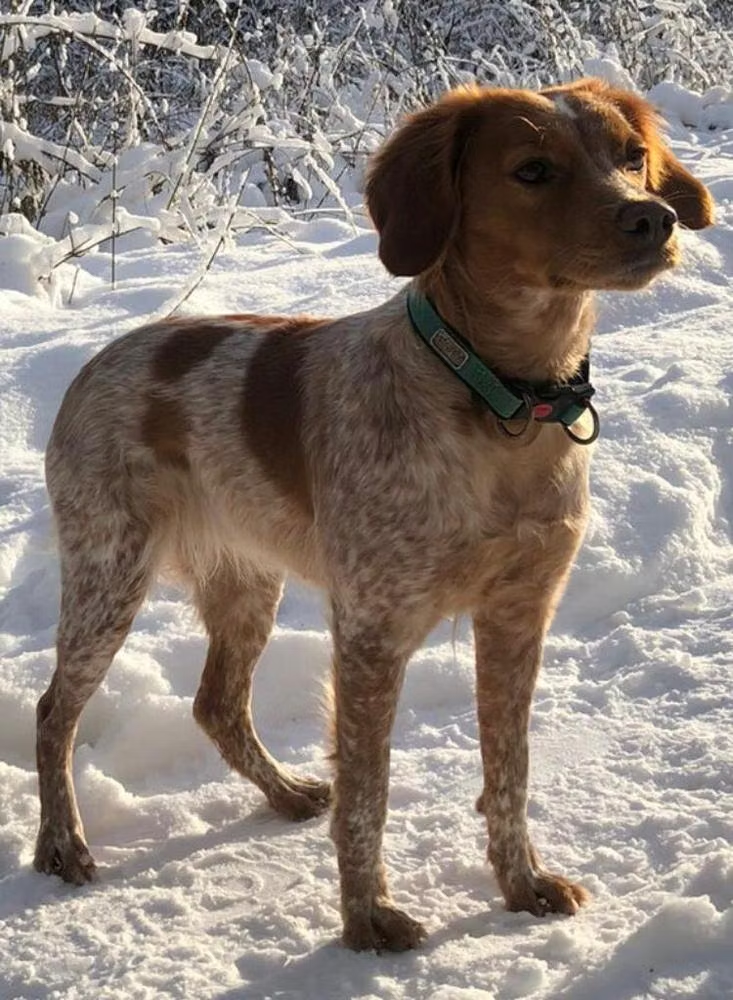
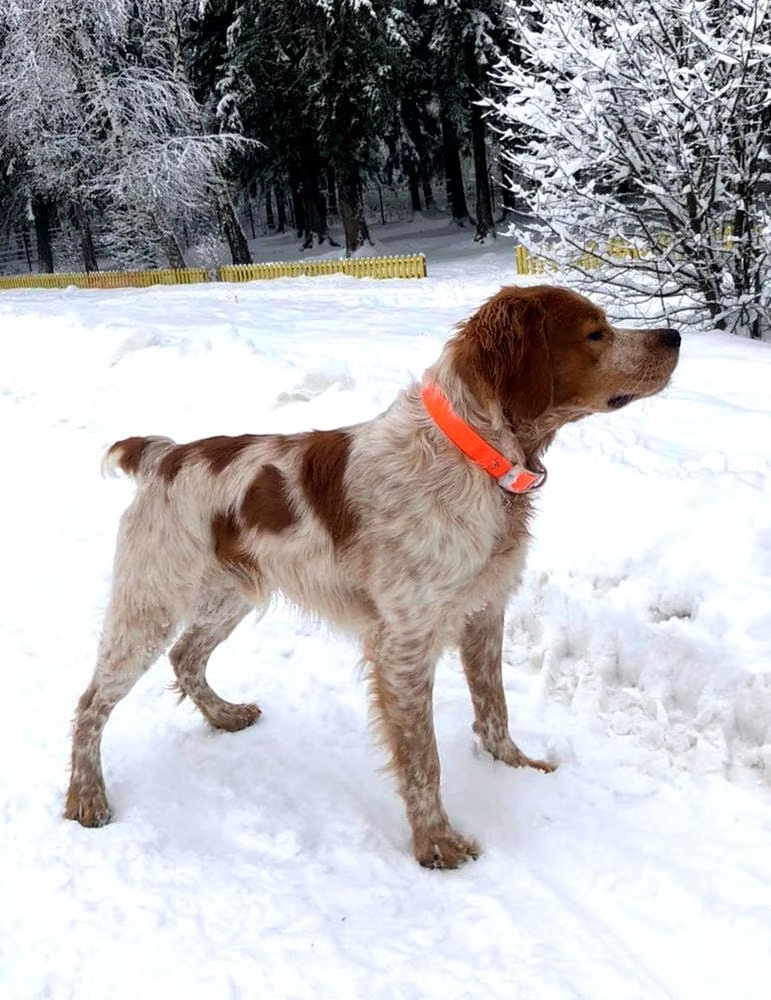
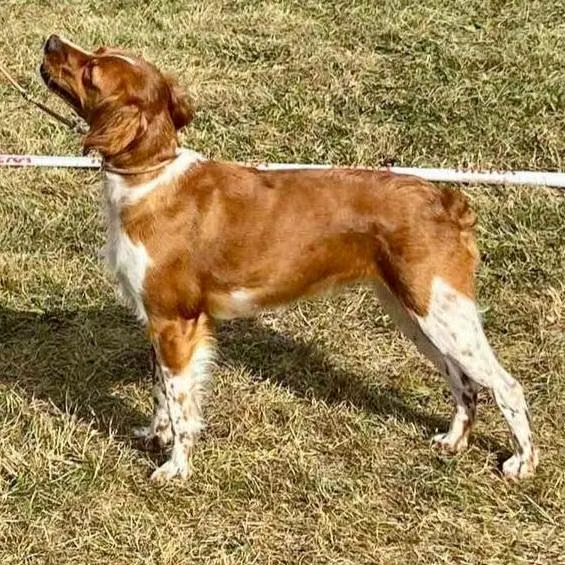
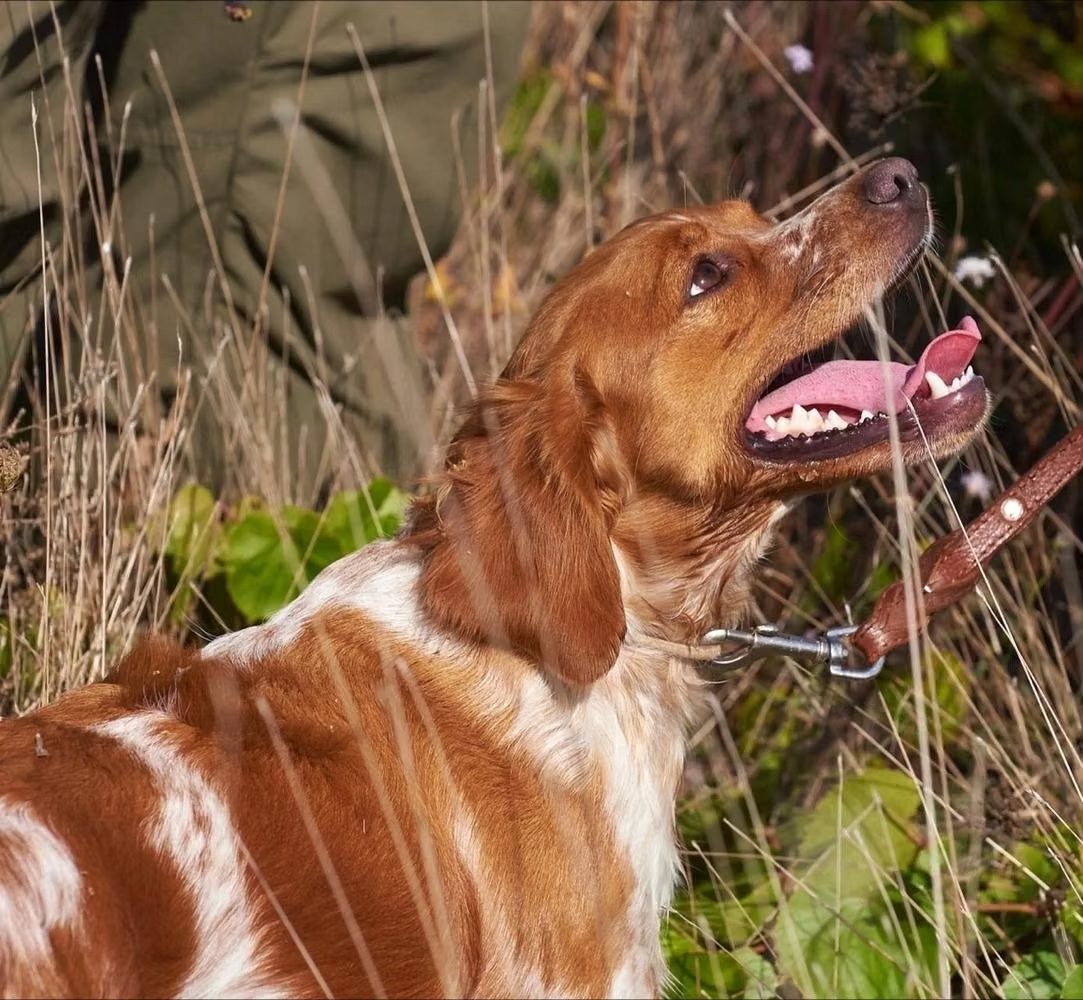
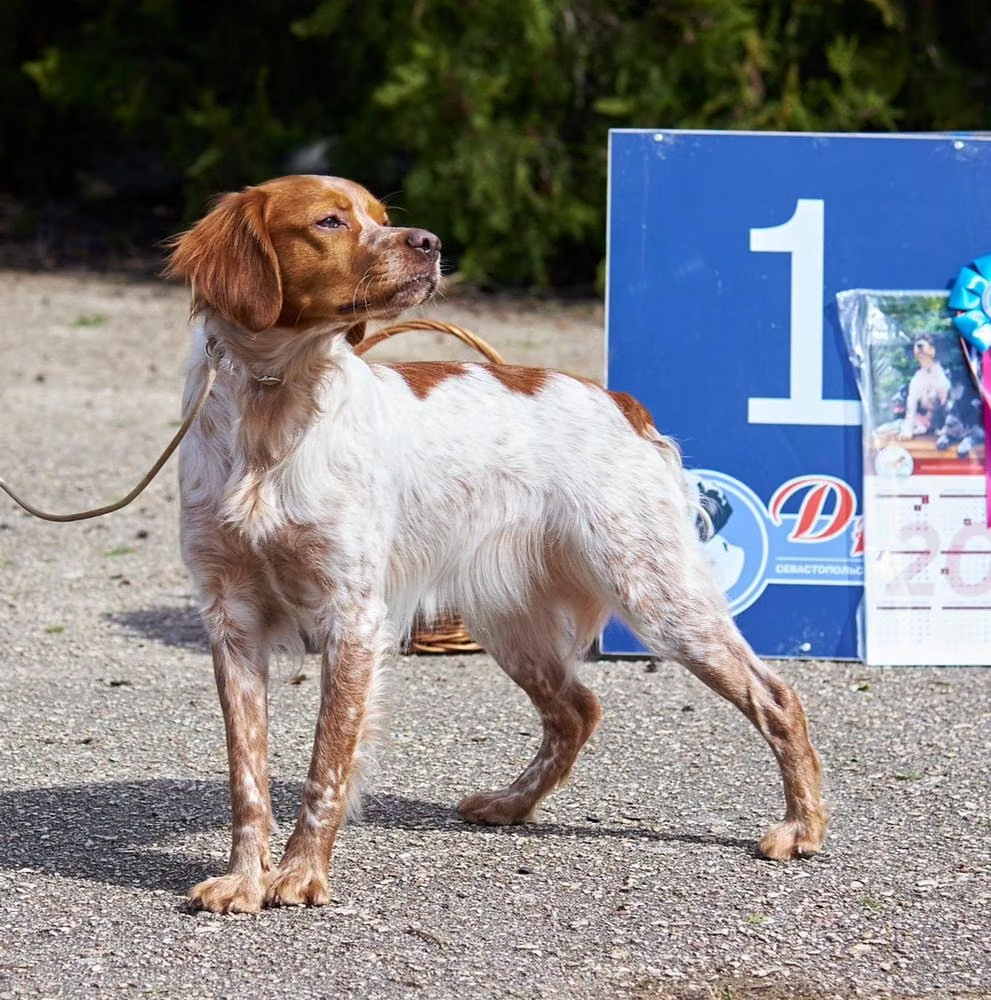
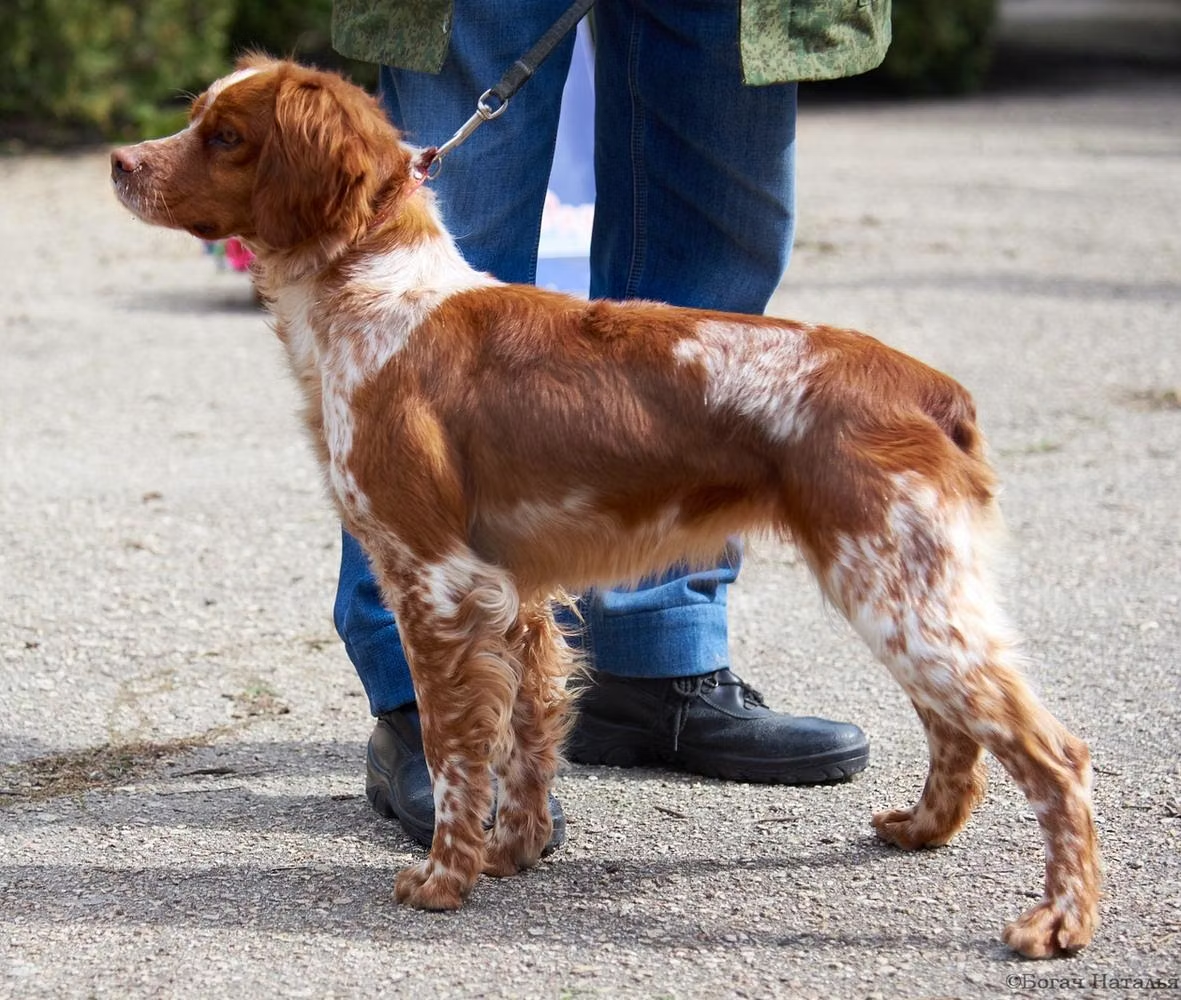
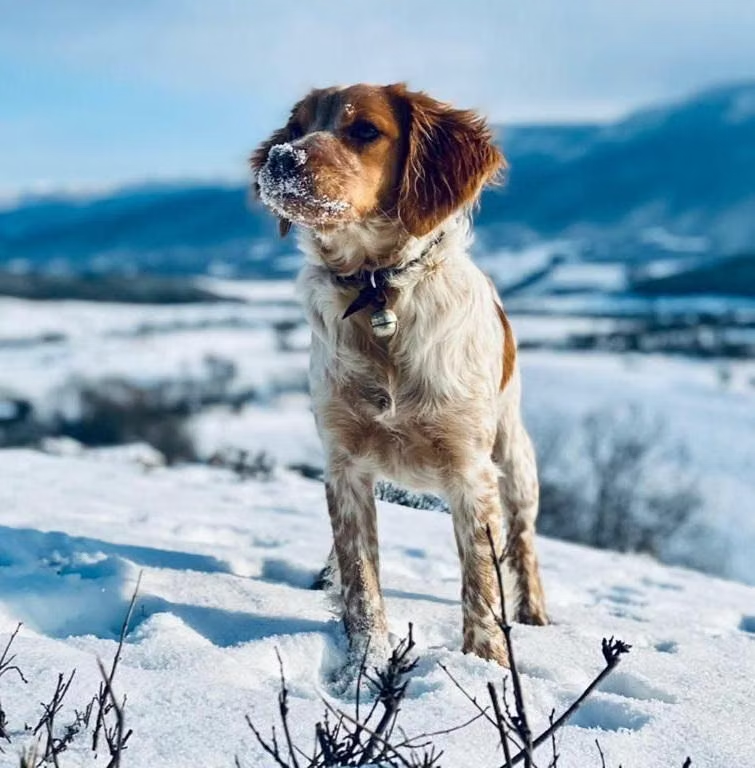
A few of the Brittany profiles members have added to United Pet Club.




About the Brittany
The Brittany is a compact, energetic pointing gundog from France, recognised by the Irish Kennel Club in the Gundog Group and well suited to Irish countryside.
The Brittany is a compact, energetic pointing gundog with a keen nose and a friendly nature. Originally from the Brittany region of France, this breed has found a natural home in the Irish countryside, where its size, drive and adaptability suit the terrain and hunting traditions well. Recognised by the Irish Kennel Club (IKC) in the Gundog Group, the Brittany is a capable field dog and an affectionate family companion.
| Characteristic | Detail |
|---|---|
| Origin | France (Brittany region) |
| Size | Medium |
| Lifespan | 12 to 14 years |
| Group / Role | Gundog / pointing dog (IKC Gundog Group) |
| Good With | Active families, older children, other dogs when socialised |
The Brittany suits active households that can give it purpose and plenty of outdoor time. It is a genuinely dual dog, at home in a field trial or curled up by the fire after a long day out.
History and origin
The Brittany was developed in northwest France in the 19th century as a versatile pointing and flushing gundog, lighter and faster than the setter breeds.
The Brittany developed in the northwest of France during the 19th century, bred by local hunters who wanted a versatile dog that could point and flush game over varied ground. Lighter and faster than the Irish or English Setter, the breed filled a practical niche. By the early 20th century it was established in France under the Société Centrale Canine (SCC), and the American Kennel Club granted recognition in 1934.
In Ireland, the Brittany arrived more quietly, but the wet hillsides, hedgerows and river valleys of the island proved an ideal match for its abilities. Irish gundog enthusiasts have used the breed in IKC-registered field trials, and its reputation as a woodcock and snipe dog has grown steadily. Dogs can be imported from France under the EU Pet Travel Scheme, which requires a microchip, valid rabies vaccination and an EU health certificate, making the process considerably more straightforward than bringing a dog in from outside the EU.
Appearance and breed standard
The Brittany is a square-built, medium-sized dog with a dense flat or slightly wavy coat, feathering on the legs and ears, and a lively, alert expression.
The Brittany is a medium-sized, square-built dog with a light, athletic frame and a lively expression. The coat is dense and flat or slightly wavy, with feathering on the legs and ears. The breed is often born tailless or with a natural bob; formal tail docking is prohibited under the Animal Health and Welfare Act 2013 in Ireland, though this is largely academic given the breed's natural conformation.
| Feature | Detail |
|---|---|
| Height | 44 to 52 cm at the shoulder (males and females) |
| Weight | 14 to 18 kg (30 to 40 lb) |
| Coat | Dense, flat or slightly wavy, with light feathering on legs and ears |
| Colours | Orange and white, liver and white, roan and tricolour patterns |
| Eyes | Amber to brown, set well back, with an alert and gentle expression |
The Brittany moves with a free, ground-covering stride. Its compact build and moderate size make it easy to handle in close cover and well suited to the mixed terrain found across Ireland, from upland bogland to bushy river valleys.
Temperament and personality
The Brittany is an affectionate, high-energy breed that bonds closely with its family and responds well to calm, consistent handling and early socialisation.
The Brittany is an affectionate, high-energy dog that bonds closely with its family. It is eager to please and responds well to calm, consistent handling. Socialised early, it gets on well with children, other dogs and farm animals, which makes it a practical choice for rural Irish households. It can be sensitive, so a patient approach suits it far better than any harsh correction.
| Trait | Rating (1 low, 5 high) |
|---|---|
| Affection | 5 out of 5 |
| Energy | 5 out of 5 |
| Trainability | 5 out of 5 |
| Vocalness | 3 out of 5 |
| Shedding | 3 out of 5 |
Care and grooming
The Brittany needs weekly brushing with attention to feathering, regular ear checks, and at least 60 to 90 minutes of vigorous daily exercise to stay well balanced.
The Brittany's coat is relatively low maintenance but does need attention after a day in rough ground. Brush once a week with a slicker or bristle brush, paying close attention to the feathering on the legs and ears, which can pick up burrs and mats in hedgerow country. Check and clean the drop ears weekly to prevent moisture building up, particularly after water work. Bathe when genuinely dirty, trim the nails every few weeks and brush the teeth regularly.
This breed needs 60 to 90 minutes of vigorous exercise daily. It thrives when given work, whether that is hunting woodcock or snipe across Irish hillsides, competing in IKC field trials, running agility courses or simply covering ground off-lead in a secure field. Scent games and puzzle feeders at home help burn mental energy on days when outdoor time is limited.
The Brittany does best in a home with access to a garden or open space. It can adapt to a smaller property if its exercise needs are fully met, but it is not a dog that copes well with long periods alone. The Atlantic climate suits the breed, and it is no bother in wet or cold conditions. Active families, or anyone involved in Irish field sports, will find it a natural fit.
Nutrition and feeding
Feed the Brittany a complete, balanced diet matched to its age and activity level, splitting daily portions across two to four meals depending on life stage.
Feed a complete, balanced dog food appropriate to the Brittany's age, size and activity level. An active working or trialling dog will need more than a dog exercised at a moderate pace. Use the guidelines on the food packaging as a starting point, weigh portions and adjust based on body condition. Avoid feeding immediately before or after heavy exercise.
| Life Stage | Amount per Day | Meals per Day |
|---|---|---|
| Puppy (2 to 6 months) | Per puppy-food label, divided | 3 to 4 meals |
| Junior (6 to 12 months) | Roughly 1.5 to 2 cups | 2 to 3 meals |
| Adult (1 to 7 years) | Roughly 1.5 to 2 cups | 2 meals |
| Senior (8 years and over) | Slightly reduced, adjusted for activity | 2 meals |
Fresh water should be available at all times, especially after field work or exercise. Treats count toward the daily calorie total, so use them sparingly during training sessions.
Health and common conditions
The Brittany is a generally healthy breed with a lifespan of 12 to 14 years, but hip dysplasia, epilepsy, ear infections and hypothyroidism require awareness.
The Brittany is generally a healthy, long-lived breed. Choosing a puppy from health-tested parents and keeping up with regular vet check-ups gives the best chance of a long, active life. The conditions below are the ones most commonly associated with the breed.
| Condition | Signs | Note |
|---|---|---|
| Hip dysplasia | Stiffness, limping, trouble rising | Hereditary; screen breeding dogs; maintain a lean weight |
| Epilepsy | Seizures, collapse, disorientation | Managed with medication; genetic component suspected |
| Ear infections | Head shaking, odour, scratching at ears | Drop ears trap moisture; clean after water work |
| Hypothyroidism | Weight gain, low energy, coat changes | Managed with daily medication once diagnosed |
Ask any breeder for hip scores and a full health history before committing to a puppy. The IKC breed register can point you toward reputable breeders who health-test their stock.
Training
The Brittany is one of the most trainable sporting breeds, responding quickly to positive reward-based methods and well suited to IKC field trials and gundog work.
The Brittany is one of the most trainable sporting breeds you will find. It responds quickly to positive, reward-based methods and a calm, consistent handler. This is a sensitive dog that reads tone of voice closely, and patience and encouragement get far better results than any form of correction. Early training and socialisation matter a great deal, particularly exposure to farm animals, other dogs and the varied sounds of the Irish countryside.
For anyone involved in Irish gundog sport, the Brittany is an outstanding choice for IKC field trials. It can be introduced to basic obedience and steadiness from a young age, and many handlers have it ready for its first trial by 18 months. Agility, canicross and scent work are all good outlets for the breed's intelligence and energy between hunting seasons.
Breeding and raising young
Brittanys reach maturity at 6 to 12 months; responsible breeders wait until two years and full health screening before mating, with litters of 6 to 8 puppies.
Responsible breeding of the Brittany in Ireland starts with thorough health screening. Both sire and dam should have hip scores, a clear epilepsy history and normal thyroid function confirmed before any mating takes place. The recommended minimum age to breed is two years, when health tests can be properly assessed. Breeders should register litters with the IKC and provide buyers with full documentation and pedigree papers.
| Stage | Detail |
|---|---|
| Sexual maturity | About 6 to 12 months |
| Recommended breeding age | Around 2 years, after full health screening |
| Heat cycle | Roughly twice per year |
| Gestation | About 63 days |
| Average litter size | 6 to 8 puppies |
| Weaning | Begins at 3 to 4 weeks; complete by 7 to 8 weeks |
| Typical age to new home | About 8 weeks |
Registering your Brittany in Ireland, chip and record both
Irish law wants every dog chipped and recorded; United Pet Club keeps your Brittany's record free, current, and there for life.
How to register a Brittany in Ireland
A dog warden with a scanner can only follow the record, and a Brittany whose record is current is home the same day. Register your dog free with United Pet Club: your contact details, his photo, and his chip number together on one profile that never lapses and never bills you.
Lodge your Brittany's fifteen digit number with United Pet Club and the chip finally earns its keep: free registration for life, every brand accepted, and a record the ISPCA or any warden can turn into a phone call. Microchip registration takes minutes, and the free account covers the profile while you're at it.
How do I register my Brittany in Ireland?
Set yourself up with a free United Pet Club account, key in your Brittany's details and a photo, and save. The profile holds for the whole of his life without charge, and the chip number can be lodged whenever you have it.
How do I register my Brittany's microchip?
Lodge the fifteen digit chip number in your free account along with your address and phone number. The lifetime plan covers the registration and every update after it, free, whatever brand the vet used.
Is microchipping a Brittany required in Ireland?
It is. The 2015 Regulations require every dog to be chipped and registered, pup or rescue alike. Keeping the record current is the part that falls to you, and United Pet Club makes that part free.
What does it cost to register a Brittany in Ireland?
Not a penny. Profile, chip record, and every amendment are covered for life, with no renewal ever.
Frequently asked questions
Common questions about the Brittany cover its size, family suitability, exercise needs, lifespan, gundog ability in Ireland, training, and how to find one.
How big does a Brittany get?
The Brittany is a medium-sized breed, standing 44 to 52 cm at the shoulder and weighing 14 to 18 kg. It is compact and well-muscled, easy to handle in the field and practical around the house.
Are Brittanys good family dogs?
Yes. The Brittany is an affectionate, sociable breed that does well with active families and gets on well with older children. Early socialisation with children and other pets is worthwhile, but it is a naturally gentle dog with a lot of energy to share.
Is a Brittany easy to keep?
The coat is low maintenance, but the exercise needs are high, at least 60 to 90 minutes of vigorous activity every day. This is not a breed for someone who is away long hours or cannot commit to daily outdoor time. Given enough exercise, it is a relaxed and easy dog at home.
How long do Brittanys live?
Typically 12 to 14 years. Good vet care, keeping the dog at a healthy weight and sourcing from health-tested parents all support a long, active life.
Are Brittanys good gundogs in Ireland?
Very much so. The Brittany is an excellent woodcock and snipe dog, well suited to the wet, hilly terrain of Ireland. The open season for woodcock runs October to January, and snipe season opens in October. The breed has a keen nose and a range that works well in bushy river valleys and upland bogland, and it is active in Irish gundog trials.
Are Brittanys easy to train?
Yes, the Brittany is one of the most trainable sporting breeds available. It responds well to positive, calm methods and a consistent handler. It is sensitive to harsh handling, so patience is essential. Most owners have a well-mannered dog well within the first year.
How do I find a Brittany in Ireland?
Contact the Irish Kennel Club for their breed register and a list of IKC-registered breeders. Some Irish breeders exist, and importing from France is straightforward under the EU Pet Travel Scheme, which requires a microchip, a valid rabies vaccination and an EU health certificate. Avoid unregistered or online-only listings.
From the community
Ask about the BrittanyNo questions about the Brittany yet. Be the first to ask.
Browse Dog breeds