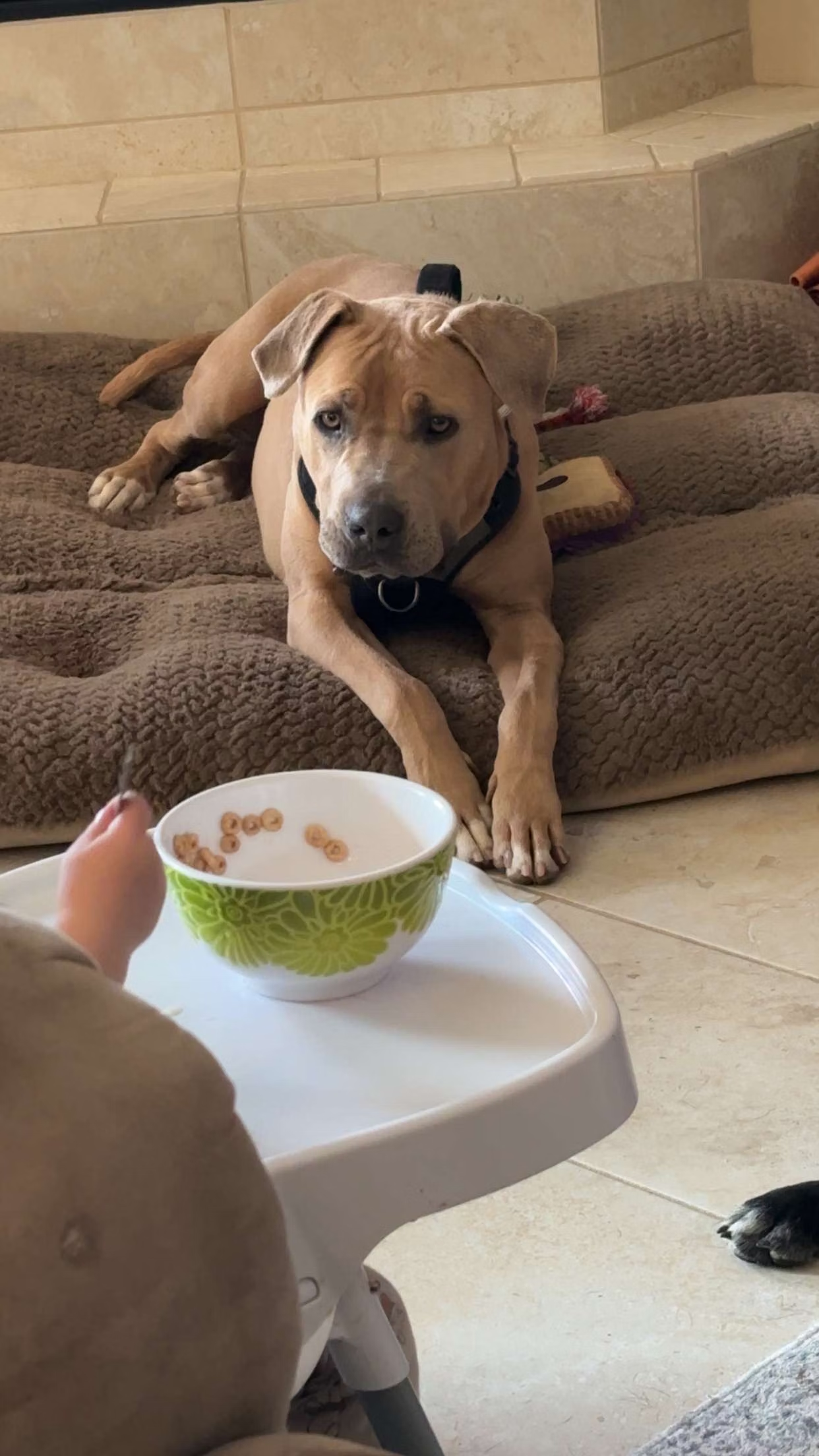
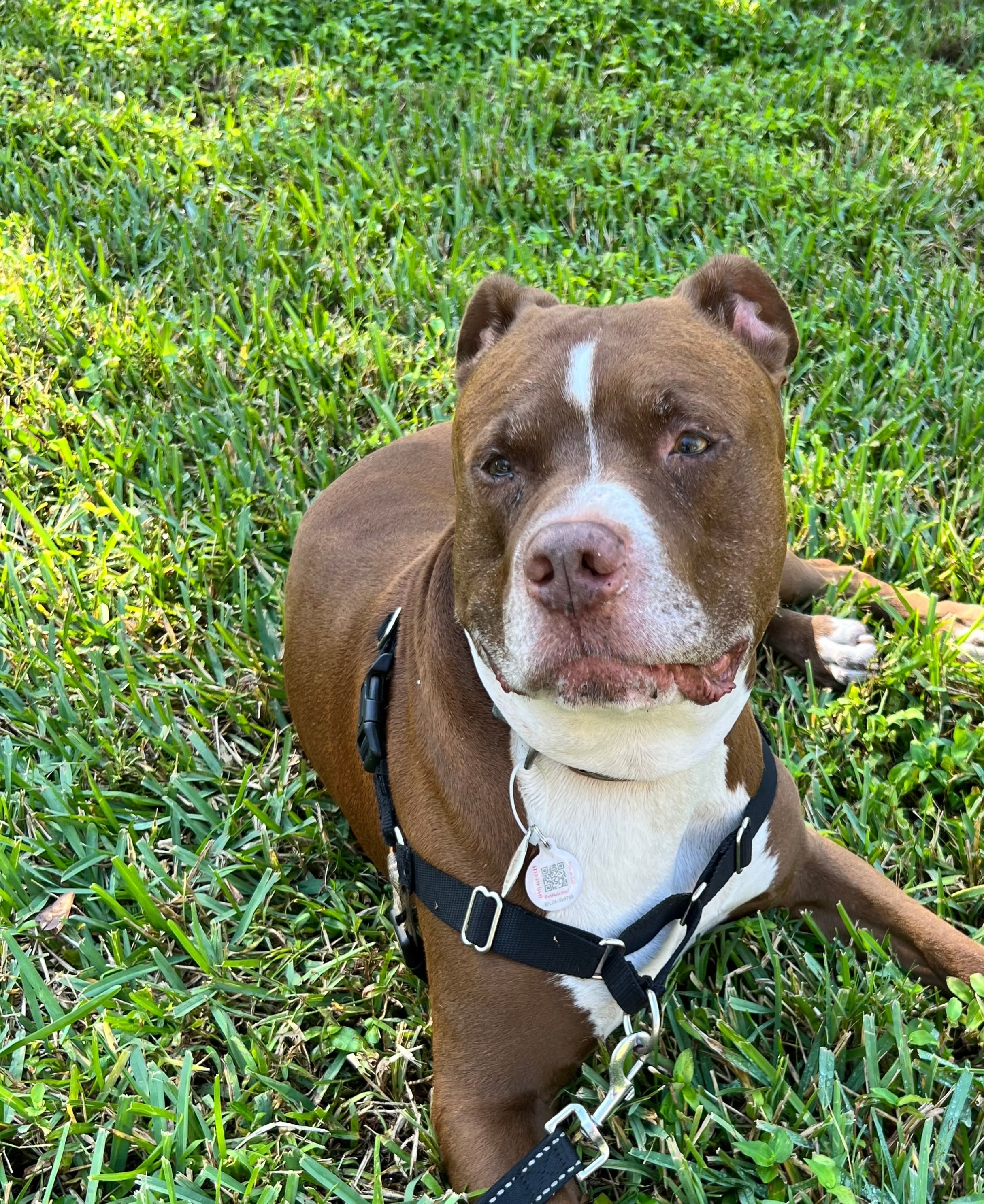
The American Staffordshire Terrier is a confident, loyal breed known for its courage, strength, and deep affection for its family.
How the American Staffordshire Terrier coat is built, and what that means when you groom it.
A few of the American Staffordshire Terrier profiles members have added to United Pet Club.
A medium-sized, muscular dog bred in the United States, the American Staffordshire Terrier is confident, devoted, and firmly attached to its own family.
The American Staffordshire Terrier, known to most as the AmStaff, is a medium-sized dog built for strength and agility, with a broad head, well-defined jaw muscles and a stocky, athletic frame. For all that power, the breed has a reputation as good-natured and deeply attached to the people it lives with.
The AmStaff carries itself with confidence and courage but isn't needlessly aggressive towards people. A dog that has been properly socialised tends to be friendly and easy-going, and many are gentle and patient with children in their own household. The breed forms close bonds and would rather be near its family than left on its own for long spells.
This is an active dog that needs daily physical and mental work. Given consistent training and early socialisation, the AmStaff can settle into a wide range of homes, from busy families to a single owner able to provide regular exercise and routine.
| Attribute | Detail |
|---|---|
| Origin | United States |
| Size | Medium |
| Lifespan | 12 to 16 years |
| Group/role | Terrier, companion and guard dog |
| Good with | Family members and children when socialised early |
The AmStaff suits owners who can commit to early socialisation, firm and consistent training, and daily exercise. It does well with people who want a close, interactive companion and can spend time with the dog each day. First-time owners can get on well with the breed, though guidance from an experienced trainer is a help. Households should also check local rules, since some breeds closely related to the AmStaff fall under Ireland's Control of Dogs Regulations, which require muzzling and lead restrictions in public places.
The American Staffordshire Terrier grew out of English bull-and-terrier crosses, brought to the United States and developed there into its own breed during the twentieth century.
The breed's roots go back to nineteenth-century England, where breeders crossed bulldogs with terriers to produce agile, muscular dogs, a type also seen in the early ancestors of the Staffordshire Bull Terrier. These bull-and-terrier types were brought to North America by emigrants during the 1800s.
In the United States, breeders selected for a larger size and heavier build than the English stock, and over time this produced a distinct American line with different proportions to its English relatives.
The American Kennel Club recognised the breed in 1936, originally under the name Staffordshire Terrier. The name changed to American Staffordshire Terrier in 1972, to separate it clearly from the smaller Staffordshire Bull Terrier, which the AKC recognised as a breed in its own right.
Through the twentieth century the AmStaff moved towards life as a companion and show dog. Modern breeding puts the emphasis on a stable, people-friendly temperament alongside the breed's traditional strength and athletic build.
The American Staffordshire Terrier is a medium-sized, heavily muscled dog with a broad head, short coat and a wide range of accepted colours.
The AmStaff looks powerful for its size. It has a broad skull, well-defined cheek muscles, and a medium-length muzzle with a clear stop. The body is compact and well-muscled, carried on sturdy, straight legs, and the dog moves with noticeable drive and spring in its step.
| Trait | Detail |
|---|---|
| Height | Males 46 to 48 cm (18 to 19 in); females 43 to 46 cm (17 to 18 in) |
| Weight | 18 to 32 kg (40 to 70 lb) |
| Coat | Short, stiff, close, glossy |
| Colours | Many solid and parti-colours, including black, blue, fawn, brown and brindle |
| Eyes | Dark, round, set low and wide apart |
The single coat is short and lies flat against the body, which makes grooming straightforward. A wide variety of colours and patterns is accepted. The breed standard discourages coats that are more than 80 percent white, as well as black-and-tan and liver colouring, though dogs with these patterns still make sound pets. Ears may be cropped or left natural, and natural ears are increasingly the norm, since ear cropping is illegal in Ireland and across the EU.
The American Staffordshire Terrier is confident, loyal and affectionate with its family, friendly towards people once properly socialised, and does best with supervision around dogs it doesn't know.
The AmStaff is known for its loyalty and a strong attachment to its household. Most dogs are outgoing and enjoy company, and many are gentle and patient with children they've grown up with. The breed is confident and courageous, and some dogs show a natural protective streak towards home and family.
With strangers, a well-socialised AmStaff is usually steady and accepting rather than fearful or hostile. Early and ongoing exposure to people and situations helps shape this stable response. The breed is intelligent and keen to please, which makes it responsive to training.
The picture with other animals is more mixed. Some dogs live happily alongside other pets, while others show dog-directed reactivity, a trait that traces back through the breed's history. Careful introductions, supervision, and management around unfamiliar dogs are sensible, especially on busy walking routes or in dog parks. Given its strength and energy, the AmStaff needs an owner who provides clear structure and consistent leadership.
| Trait | Rating |
|---|---|
| Affection | 5 |
| Energy | 4 |
| Trainability | 4 |
| Vocalness | 2 |
| Shedding | 3 |
The American Staffordshire Terrier needs little grooming but a lot of exercise, and does best in a home where it spends real time with its family.
The AmStaff adapts to houses and apartments alike, provided it gets daily exercise and time with people. It feels the cold and damp more than some breeds and should live indoors as part of the family rather than out in a shed or kennel. A secure garden with a solid fence is a help, since the breed is strong and athletic.
The American Staffordshire Terrier needs a balanced diet matched to its life stage and activity level, with portions kept in check to avoid excess weight.
Feed a complete, balanced dog food suited to the AmStaff's age, size and activity level. Active adults do better on food with adequate protein to support muscle, while less active dogs need fewer calories to avoid putting on weight. Split the daily amount into two meals to help steady digestion, and always leave fresh water down.
| Life stage | Amount per day | Meals |
|---|---|---|
| Puppy (2 to 6 months) | Per food label, growth formula | 3 to 4 |
| Junior (6 to 12 months) | Per food label, adjust for growth | 2 to 3 |
| Adult | About 2 to 3 cups of dry food, by weight and activity | 2 |
| Senior | Slightly reduced, watch body condition | 2 |
Keep treats to about 10 percent of daily calories and cut back meal portions on days with heavy treat use. Many adults do fine on standard balanced food without extras. Joint supplements such as glucosamine may help some dogs as they age, but only introduce a supplement after talking to a vet.
The American Staffordshire Terrier is generally a hardy breed that lives 12 to 16 years, though it can be prone to a handful of hereditary conditions worth screening for.
The AmStaff is a sturdy breed with a typical lifespan of 12 to 16 years. Responsible breeders screen breeding stock for known hereditary problems, which lowers the risk in puppies. Regular veterinary care, good nutrition, and weight control all support a long, healthy life.
| Condition | Signs | Note |
|---|---|---|
| Hip dysplasia | Stiffness, limping, trouble rising | Screen breeding dogs; manage weight |
| Cerebellar ataxia (NCL-A) | Loss of coordination, balance problems | Genetic test available for carriers |
| Skin and contact allergies | Itching, redness, recurrent ear issues | Identify triggers with a vet |
| Hypothyroidism | Weight gain, low energy, coat changes | Diagnosed by blood test, managed with medication |
| Heart conditions | Tiring quickly, cough, weakness | Detected on veterinary exam |
The American Staffordshire Terrier is intelligent and keen to please, and responds best to early socialisation and consistent, reward-based training.
The AmStaff is smart, food-motivated, and keen to work with its owner, which makes it a capable pupil. The breed responds far better to calm, consistent guidance than to harsh handling. Early socialisation is the single most important investment, since exposure to people, dogs and everyday situations during puppyhood shapes a stable adult. Because the breed is strong, lead manners and a reliable recall deserve attention from an early age.
The American Staffordshire Terrier reaches breeding maturity in its second year, typically carries five to ten puppies per litter, and benefits from health screening in both parents.
Responsible breeding of the AmStaff puts the focus on temperament and health. Both parents should be physically mature and screened for hereditary conditions, including hip evaluation and the genetic test for cerebellar ataxia. Most breeders wait until a bitch is at least two years old before her first litter, so she's fully developed.
Gestation runs roughly 63 days. Litter size varies, with an average of around five to ten puppies. The dam usually manages whelping well, though a quiet, clean space and a vet on call are sensible precautions.
Puppies should stay with the dam and littermates until about eight weeks old, which supports healthy social development. Early, gentle handling and exposure to household sounds and people give puppies a strong start before they go to their new homes.
| Metric | Value |
|---|---|
| Breeding maturity | About 18 to 24 months |
| Gestation | About 63 days |
| Average litter size | 5 to 10 puppies |
| Weaning age | About 6 to 8 weeks |
| Recommended go-home age | About 8 weeks or later |
Irish law wants every dog chipped and recorded; United Pet Club keeps your American Staffordshire Terrier's record free, current, and there for life.
A dog warden with a scanner can only follow the record, and an American Staffordshire Terrier whose record is current is home the same day. Register your dog free with United Pet Club: your contact details, his photo, and his chip number together on one profile that never lapses and never bills you.
The implant is the vet's job; the record is down to you, and the 2015 rules assume you'll keep it current. Register the microchip free on the lifetime plan: whatever brand the vet reached for is grand, a house move costs nothing to record, and the number stays searchable day and night. Create your free account and have the pair of jobs done before the tea goes cold.
Set yourself up with a free United Pet Club account, key in your American Staffordshire Terrier's details and a photo, and save. The profile holds for the whole of his life without charge, and the chip number can be lodged whenever you have it.
Lodge the fifteen digit chip number in your free account along with your address and phone number. The lifetime plan covers the registration and every update after it, free, whatever brand the vet used.
It is. The 2015 Regulations require every dog to be chipped and registered, pup or rescue alike. Keeping the record current is the part that falls to you, and United Pet Club makes that part free.
Not a penny. Profile, chip record, and every amendment are covered for life, with no renewal ever.
Common questions about the American Staffordshire Terrier cover its size, temperament, care needs, lifespan, suitability, and availability in Ireland.
It's a medium-sized dog. Males stand about 46 to 48 cm at the shoulder and females about 43 to 46 cm, with weights generally between 18 and 32 kg.
Yes, a well-socialised AmStaff is loyal and affectionate and is often gentle and patient with children in its own home. As with any dog, time with young children should be supervised.
Grooming is easy thanks to the short coat, but the breed needs plenty of daily exercise, early socialisation, and consistent training. It's moderate to demanding in effort, mainly down to its energy and strength.
The typical lifespan is 12 to 16 years, supported by good nutrition, regular veterinary care, and a healthy weight.
It depends on the individual dog. Some live happily with other pets, while others show dog-directed reactivity. Careful introductions and supervision around unfamiliar dogs are recommended.
The breed is less common here than in the United States, though it's available through reputable breeders and, occasionally, breed-specific rescues. Check with the Irish Kennel Club and confirm local rules before getting one, since some closely related breeds face restrictions under the Control of Dogs Regulations.