
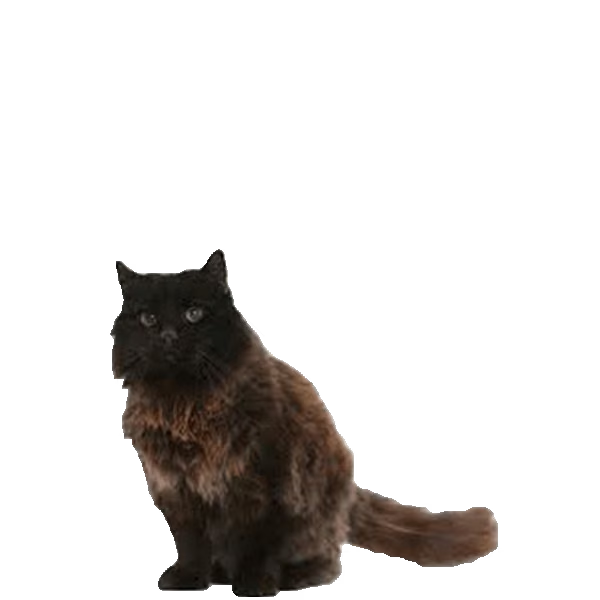
York Chocolate
The York Chocolate is a rich brown American breed known for its affectionate, friendly temperament and loving, lap-loving nature.
- Size
- Medium
- Lifespan
- 13–15 years
- Origin
- United States
- Temperament
- Affectionate
- Standard colors
- White, Lilac and Chocolate
Characteristics
Coat and grooming
How the York Chocolate coat is built, and what that means when you groom it.
- Coat layers
- Single coat
- Coat texture
- Silky
- Coat length
- Long
- Shedding
- Moderate shedding
Grooming guidance
Caution: A York Chocolate coat mats easily.
Fine or long hair tangles at the base of the coat, out of sight, where the mats tighten and pull on the skin. Brushing has to reach right down to the roots in sections, not just skim the surface.
York Chocolate colors and patterns
What each club's breed standard says about every York Chocolate color and pattern. Point at a ruling to see the club's own wording.
Breed standards describe the York Chocolate in White, Lilac and Chocolate. Standard patterns: Solid and Bicolour.
| Color or pattern | CCA | LOOF | WCF |
|---|---|---|---|
| White | Standard (“& White”) | Standard (“blanc”) | No ruling |
| Lilac | Standard (“Lavender”) | Standard (“lilac”) | Standard (“lilac”) |
| Chocolate | Standard (“Chocolate”) | Standard (“chocolat”) | Standard (“chocolate”) |
| Patterns | |||
| Solid | Standard (“solid colour”) | Standard (“solide”) | Standard (“solid”) |
| Bicolour | Standard (“& White”) | Standard (“solide et blanc”) | Standard (“with white”) |

%22%3E%3Cpath%20d%3D%22M0%2023L9.5%2020.4L14%2025.4L19%2029.6Q21%2035%2023.5%2035.5Q36%2033%2050%2036L56%2040V64H0Z%22%20fill%3D%22%23F5F5F0%22%2F%3E%3C%2Fg%3E%3Cuse%20href%3D%22%23s%22%20fill%3D%22none%22%20stroke%3D%22%233B2A20%22%20stroke-opacity%3D%220.6%22%20stroke-width%3D%221%22%20stroke-linejoin%3D%22round%22%2F%3E%3Cellipse%20cx%3D%223.2%22%20cy%3D%2221.7%22%20rx%3D%221.3%22%20ry%3D%221.2%22%20fill%3D%22%231C1C1C%22%2F%3E%3Ccircle%20cx%3D%2210.8%22%20cy%3D%2219.3%22%20r%3D%221.1%22%20fill%3D%22%231C1C1C%22%2F%3E%3C%2Fsvg%3E)
| Color or pattern | CCA | LOOF | WCF |
|---|---|---|---|
| Blue | No ruling | Standard (“bleu”) | No ruling |
| Hazel | Standard (“hazel”) | No ruling | Standard (“hazelnut”) |
| Gold | Standard (“deep gold”) | Standard (“or”) | Standard (“golden”) |
| Green | Standard (“green”) | Standard (“vert”) | Standard (“green”) |
| Patterns | |||
| Odd-eyed | No ruling | Standard (“impairs”) | No ruling |
%22%3E%3Ccircle%20cx%3D%2216%22%20cy%3D%2232%22%20r%3D%228%22%20fill%3D%22%23D9C3A0%22%2F%3E%3Ccircle%20cx%3D%2216%22%20cy%3D%2232%22%20r%3D%223.4%22%20fill%3D%22%231C1C1C%22%2F%3E%3Ccircle%20cx%3D%2213.6%22%20cy%3D%2229.6%22%20r%3D%221.3%22%20fill%3D%22%23F5F5F0%22%2F%3E%3C%2Fg%3E%3Cpath%20d%3D%22M3%2032Q16%2017%2029%2032Q16%2047%203%2032Z%22%20fill%3D%22none%22%20stroke%3D%22%233B2A20%22%20stroke-opacity%3D%220.75%22%20stroke-width%3D%221.4%22%20stroke-linejoin%3D%22round%22%2F%3E%3Cpath%20d%3D%22M35%2032Q48%2017%2061%2032Q48%2047%2035%2032Z%22%20fill%3D%22%23F5F5F0%22%2F%3E%3Cg%20clip-path%3D%22url(%23e1)%22%3E%3Ccircle%20cx%3D%2248%22%20cy%3D%2232%22%20r%3D%228%22%20fill%3D%22%23847865%22%2F%3E%3Ccircle%20cx%3D%2248%22%20cy%3D%2232%22%20r%3D%223.4%22%20fill%3D%22%231C1C1C%22%2F%3E%3Ccircle%20cx%3D%2245.6%22%20cy%3D%2229.6%22%20r%3D%221.3%22%20fill%3D%22%23F5F5F0%22%2F%3E%3C%2Fg%3E%3Cpath%20d%3D%22M35%2032Q48%2017%2061%2032Q48%2047%2035%2032Z%22%20fill%3D%22none%22%20stroke%3D%22%233B2A20%22%20stroke-opacity%3D%220.75%22%20stroke-width%3D%221.4%22%20stroke-linejoin%3D%22round%22%2F%3E%3C%2Fsvg%3E)
What the rulings mean
- Standard
- Described by the club's breed standard.
Color changes
How a York Chocolate's colors can change over its life.
Whitechanges toShaded
Coat · With age
Whitechanges toChinchilla
Coat · With age
Whitechanges toPointed
Coat · With age · from 1 to 52 weeks
Solidchanges toSmoke
Coat · With age · from 3 to 104 weeks
Bluechanges toGreen
Eyes · With age · from 4 to 17 weeks
Bluechanges toYellow
Eyes · With age · from 4 to 17 weeks
Bluechanges toGold
Eyes · With age · from 4 to 17 weeks
Bluechanges toCopper
Eyes · With age · from 4 to 17 weeks
Bluechanges toOrange
Eyes · With age · from 4 to 17 weeks
Bluechanges toHazel
Eyes · With age · from 4 to 17 weeks
Bluechanges toAmber
Eyes · With age · from 4 to 17 weeks
%22%3E%3Crect%20x%3D%220%22%20y%3D%220%22%20width%3D%2264%22%20height%3D%2264%22%20fill%3D%22url(%23g)%22%2F%3E%3Cg%20fill%3D%22none%22%20stroke%3D%22%231C1C1C%22%20stroke-width%3D%221%22%20stroke-opacity%3D%220.85%22%20stroke-linecap%3D%22round%22%20stroke-linejoin%3D%22round%22%3E%3Cpath%20d%3D%22M18.9%2025.7l0.2%202.1M42.7%2033.1l1%202.1M12.6%2020.7l0.9%201.7M17.3%2012.7l1%201.7M25.9%2022.4l0.4%201.6M50.2%2029l0.1%201.6M29.2%2028l0.5%202.1M43.2%2022.9l1%202.2M42.4%2029.9l0.2%202.2M8.4%2023.4l1%202.1M7.8%2018.4l0.4%202M35%2027.9l0.5%202.2M35.9%2038.5l0.6%201.6M29.3%2032.6l0.5%201.4M34.8%2022l0.7%202.2M37.6%2020.6l0.7%202.2M18.2%2037.7l0.4%202.1M9.9%2029l0%201.5M9.9%2014l0.1%202M37%2030.4l0.5%202.3M13%2028.5l0.6%202M38.3%2049.6l0.6%201.9M18.4%2047.4l0.7%201.4M40%2026.9l0.2%201.6M57.5%2010.7l0.4%201.4M39.6%2030.3l0.3%202.1M54.9%2018.7l0.7%201.5M48%2028.3l0.4%202M23%2050.3l0.1%202.3M28.2%2036.1l0.5%202.1M57.9%2014.4l0.6%201.4M10.6%2023.3l1%202.1M17.5%2042.7l0.8%201.4M52.1%2026l0.1%201.6M38.6%2032.2l0.1%202.2M30.9%2037.8l0.7%201.7M56.6%2017l0.9%201.9M42.5%2028.7l1%201.8M24.4%2048.9l0%201.7M8.7%2022.3l0.4%201.4M16.6%2039.9l0.5%201.4M7.1%2021.8l0.8%202.2M34.1%2034.2l0.3%201.7M9.9%2025.5l0%201.6M43.1%2035.1l0%202M37.7%2051.3l0.3%201.7M31.7%2031.3l0.3%202.3M23.8%2036.6l0.9%201.8M16.6%2053.5l0.4%202.3M24.4%2041.2l0.6%201.8M39.9%2046.6l0.4%201.8M10.4%2021.8l0.1%202.1M47.2%2051l0.7%202.3M42.9%2027.4l0.1%202M20.5%2022.8l0.4%202.1M49.2%2032.2l0.6%201.3M15.8%2030.1l0.4%202.1M46.2%2053.6l0.6%201.4M15.1%2020.1l0.7%202M23.4%2043.9l0.4%201.6M38.8%2029.4l0.4%202.1M36.8%2034.7l0.4%201.9M48.3%2028.4l0.6%202M26.9%2029.6l0.4%201.6M28.4%2036.5l0.4%201.4M19.2%2034.3l0.5%202.1M7.2%2028.1l0.1%201.6M15.9%2019.7l0.6%201.3M23.4%2022.8l0.9%201.8M16.3%2019.8l0.2%202.1M21.9%2053l0.4%202M48.5%2028.5l0.7%201.8M16.9%2012.9l0.6%202.3M26.8%2033.1l0%201.7M46.2%2044.1l0.2%202.1M30.5%2025.1l0.1%201.7M42.1%2032.2l0.1%201.6M8.7%2021.9l0.6%202.2M29.2%2024.5l0.6%202M22.1%2040.7l1.1%201.9M24.3%2033.3l0.7%201.8M53.9%2026.4l0.1%202.4M21.4%2026.6l0.9%202M39.2%2025.3l0.1%201.9M32.4%2035.3l1%202M48.9%2031.4l0%201.6M24.8%2022.1l0.4%202.2M46.4%2054.6l0.7%201.8M25.1%2031.7l0.5%202.1M24.7%2043.5l0%201.4M23.1%2033.3l0.9%201.6M37.9%2039.5l0.5%201.3M45.7%2041.2l0.9%201.8M50.1%2029.5l0.4%201.8M46.6%2049.6l0.5%202.2M54%2024.3l0.5%202.3M5.9%2025.6l0.1%201.5M15.5%2022.8l0.9%202M26.3%2027.8l0%202.1M30.1%2020.3l0.1%202.3M18.1%2016.7l0.5%201.8M19.1%2024.1l0.9%201.8M12.7%2018.8l0.7%201.4M20.8%2031.1l0.6%201.5M16.9%2025.9l0.1%201.5M11.6%2014.8l0.1%202.3M10.8%2018.5l0.8%201.8M33.5%2038l0.6%201.4M30.6%2028.8l0.3%202.1M39.1%2031.7l0.9%201.9M34.6%2021.3l0.3%202%22%2F%3E%3Cpath%20d%3D%22M17.6%2040.5l0.7%202.1M46.2%2038.1l0.4%201.7M5.1%2020.5l0.2%201.6M21.8%2022.3l0.3%201.4M26.3%2021l0.9%201.6M32.6%2037.5l0.5%201.4M33.5%2031.6l0.6%201.6M39.2%2039l0.9%201.6M11.4%2022.8l0.7%201.8%22%2F%3E%3C%2Fg%3E%3C%2Fg%3E%3Cuse%20href%3D%22%23s%22%20fill%3D%22none%22%20stroke%3D%22%233B2A20%22%20stroke-opacity%3D%220.6%22%20stroke-width%3D%221%22%20stroke-linejoin%3D%22round%22%2F%3E%3Cpath%20d%3D%22M3.4%2022.3L5.4%2022.5L4.3%2024Z%22%20fill%3D%22%23E8A0B4%22%2F%3E%3Ccircle%20cx%3D%229.6%22%20cy%3D%2221.2%22%20r%3D%221.1%22%20fill%3D%22%231C1C1C%22%2F%3E%3C%2Fsvg%3E)
%22%3E%3Cg%20fill%3D%22none%22%20stroke%3D%22%231C1C1C%22%20stroke-width%3D%221.1%22%20stroke-opacity%3D%220.9%22%20stroke-linecap%3D%22round%22%20stroke-linejoin%3D%22round%22%3E%3Cpath%20d%3D%22M37.4%2030.7l0.7%201.3M18.9%2028.6l0.1%201.1M46.5%2033.6l0.3%201.3M35.8%2023.2l0.1%201.4M19.6%2045.1l0%201.2M34.4%2037.4l0%200.9M48.4%2037.9l0.2%201.2M29.8%2023.5l0.4%201.4M9.3%2013.8l0.2%201.1M45.6%2044.2l0.3%200.8M24.4%2028.2l0.1%200.8M41.2%2035l0.1%200.9M41%2030.9l0.1%201.2M40.9%2025.1l0.3%201.4M28.4%2034.5l0.6%201.1M26.7%2024.1l0.1%200.8M47.3%2050.1l0.3%201.4M17.7%2049.5l0.5%201.3M29%2024.1l0.4%201.1M38.6%2038.1l0%201M33.4%2026.9l0.6%201M25.7%2028.1l0.1%200.9M18.3%2038.1l0.6%201.2M47.5%2028.1l0.4%201.1M25.6%2022l0.1%200.9M29.5%2027l0.5%201.1M39.5%2021.4l0.1%201.2M40.9%2048.2l0.2%201.1M17.8%2013.2l0.5%201.2M27.3%2031.6l0%201M21.3%2023.5l0.2%200.9M40.9%2054.1l0.3%200.9M20.9%2028.2l0.7%201.2M26.2%2022.2l0.1%200.8M40.9%2050.9l0.3%201.4M35.2%2030.2l0.2%200.8M50.4%2031.3l0.1%201.3M43.6%2036l0.3%200.9M33.7%2039.1l0.3%200.9M48.6%2049.9l0.3%201.1M44.4%2021.9l0.2%200.9M40.3%2040.9l0.4%201M51.8%2031.5l0.1%201.4M42%2038l0.3%201M41.3%2027.1l0.6%201.1M27.2%2032.2l0.3%201.3M28%2024.6l0%201.2M29%2038.5l0.1%201.1M56%2014.4l0.6%201.3M51%2031.2l0.3%200.8M49%2024.2l0.6%201.1M39.1%2029l0.5%201.2M38.7%2037.6l0.2%201.4M24.3%2046.6l0.4%200.8M23.1%2037.4l0.2%200.8M43%2035.9l0%201M35.4%2027l0.5%201M29.7%2039.1l0.2%201.4M32.8%2037.2l0%201M7.4%2022.7l0.1%201.1M31.3%2020.3l0.6%201.1M21.7%2033.3l0.5%201.1M16.5%2043.9l0.2%201.1M22.7%2024l0%201.4M41.6%2034.2l0.7%201.3M27.1%2036.9l0.2%201.1M49.4%2029.1l0.4%200.9M34.4%2020.6l0.3%201.1M21.6%2037.3l0%201.4M47.1%2029.2l0.7%201.3M50.6%2024.8l0.3%201M49.7%2029.2l0.7%201.2M19.4%2045.4l0.2%201.5M48.6%2026.5l0.6%201.2M23%2022.5l0.4%201M39.9%2051.5l0.2%201.1M6.7%2020.5l0.2%200.9M44.8%2033l0.2%201.4M37.7%2045.6l0.4%201.2M29.9%2037.9l0.2%200.9M24%2020.8l0.4%201M42.7%2021l0.4%201M42%2030.3l0.4%201.1M21.6%2045l0.4%201.1M18.5%2017l0.1%201M9.6%2016.4l0.1%201.3M19.5%2045.9l0.1%201M46.9%2049.9l0.4%201.3M18.6%2020.1l0.1%200.9M38.5%2038.8l0.1%201.4M46.9%2032.3l0.5%201.1M49.4%2031.7l0.3%200.9M48.5%2040.7l0.2%201.4M30.5%2033.5l0.4%201.3M46.3%2041.6l0.3%200.9M23.1%2044.7l0.2%201.1M16.7%2027.5l0%201M37.8%2029.3l0.1%201.2M42.9%2036.9l0.2%201.1M31%2025.3l0.2%201.1M17.5%2052.8l0.6%201.1M11%2021.5l0.4%201M22.5%2029.1l0.5%201.1M27.5%2032.1l0.4%200.9M39.6%2023.3l0.1%201.2M52.1%2027l0.6%201.3M28.8%2029.6l0%201.5M37.9%2025.5l0.5%200.8M33.2%2022.6l0.1%201.2M15.7%2015.4l0.3%200.8M47.7%2053.4l0.1%200.9%22%2F%3E%3Cpath%20d%3D%22M20.7%2023.3l0.6%201.1M6.7%2027.8l0.5%201.3M17%2012.8l0.2%201.2M21.7%2036.2l0%201.3M12.3%2019.9l0.2%200.8M17.2%2025.6l0.4%201.2M42.3%2022.6l0%201.2M24.7%2028.4l0.3%201.4M44.5%2038.7l0%201.4%22%2F%3E%3C%2Fg%3E%3Cpath%20d%3D%22M3.5%2022.6L5.4%2022.6%22%20fill%3D%22none%22%20stroke%3D%22%231C1C1C%22%20stroke-width%3D%221%22%20stroke-linecap%3D%22round%22%20stroke-linejoin%3D%22round%22%2F%3E%3C%2Fg%3E%3Cuse%20href%3D%22%23s%22%20fill%3D%22none%22%20stroke%3D%22%233B2A20%22%20stroke-opacity%3D%220.6%22%20stroke-width%3D%221%22%20stroke-linejoin%3D%22round%22%2F%3E%3Cpath%20d%3D%22M3.4%2022.3L5.4%2022.5L4.3%2024Z%22%20fill%3D%22%23E8A0B4%22%2F%3E%3Ccircle%20cx%3D%229.6%22%20cy%3D%2221.2%22%20r%3D%221.1%22%20fill%3D%22%231C1C1C%22%2F%3E%3C%2Fsvg%3E)
%22%3E%3Cpath%20d%3D%22M5.5%2017L7.5%207L12%2015ZM14%2015L17.5%207L20%2018.5Z%22%20fill%3D%22%23847865%22%2F%3E%3Cellipse%20cx%3D%227.6%22%20cy%3D%2223.6%22%20rx%3D%225%22%20ry%3D%225.2%22%20fill%3D%22%23847865%22%2F%3E%3Crect%20x%3D%220%22%20y%3D%2244%22%20width%3D%2264%22%20height%3D%2220%22%20fill%3D%22%23847865%22%2F%3E%3Cpath%20d%3D%22M50%2027L53.5%205L64%203L64%2013L59%2024L53%2033Z%22%20fill%3D%22%23847865%22%2F%3E%3C%2Fg%3E%3Cuse%20href%3D%22%23s%22%20fill%3D%22none%22%20stroke%3D%22%233B2A20%22%20stroke-opacity%3D%220.6%22%20stroke-width%3D%221%22%20stroke-linejoin%3D%22round%22%2F%3E%3Cpath%20d%3D%22M3.4%2022.3L5.4%2022.5L4.3%2024Z%22%20fill%3D%22%23E8A0B4%22%2F%3E%3Ccircle%20cx%3D%229.6%22%20cy%3D%2221.2%22%20r%3D%221.1%22%20fill%3D%22%231C1C1C%22%2F%3E%3C%2Fsvg%3E)
%22%3E%3Crect%20x%3D%220%22%20y%3D%220%22%20width%3D%2264%22%20height%3D%2264%22%20fill%3D%22%231C1C1C%22%2F%3E%3Crect%20x%3D%220%22%20y%3D%220%22%20width%3D%2264%22%20height%3D%2264%22%20fill%3D%22url(%23g)%22%2F%3E%3Cpath%20d%3D%22M17.5%2030.4l0.2%203.7M48.5%2036.2l-0.3%203.1M40.1%2038.4l0.7%202.8M21.3%2029.4l0.3%202.9M38.5%2024l-0.7%202.7M19.4%2041l0.9%203.8M47.2%2026.3l0.3%203M28.1%2031.1l-0.4%202.6M21%2027l-0.7%203.4M20.1%2035l0.7%202.8M27.4%2035.9l1.2%203.6M31.5%2032.2l0.5%202.5M43.7%2038.4l0.2%202.9M15.5%2027.6l0.2%203M33.5%2029.7l0%203.8M50%2028l0.5%203.8M50.1%2029.5l-0.2%203.3M39.4%2037.1l0.8%203M31.1%2025l1%203.1M19.5%2028.3l0.3%203.1M29.5%2034.2l-0.3%203.8M50.4%2033.8l-0.5%202.6M39.3%2028.8l1.2%203.8M36.6%2037.2l-0.3%202.8M41.6%2026.3l-0.7%202.7M24.2%2038.3l-0.2%203.3M20.5%2033.1l0.7%203M24%2032.2l-0.7%203.3M42.7%2038.5l-0.6%203.8M20.4%2038.2l0.2%203.3M37.5%2036.9l-0.8%202.4M36%2035.3l-0.7%202.9M46.2%2033.2l-0.8%203.8M38.1%2030.5l-0.6%203.6M29%2038.9l-0.7%203.7M42.8%2031.3l0.1%203.1M22.5%2025.1l0.4%202.9M47.4%2025l0.2%203M24.7%2032l-0.8%203.2M14.8%2024.5l1.1%203.3%22%20fill%3D%22none%22%20stroke%3D%22%23F5F5F0%22%20stroke-width%3D%221%22%20stroke-opacity%3D%220.85%22%20stroke-linecap%3D%22round%22%20stroke-linejoin%3D%22round%22%2F%3E%3C%2Fg%3E%3Cuse%20href%3D%22%23s%22%20fill%3D%22none%22%20stroke%3D%22%233B2A20%22%20stroke-opacity%3D%220.6%22%20stroke-width%3D%221%22%20stroke-linejoin%3D%22round%22%2F%3E%3Cpath%20d%3D%22M3.4%2022.3L5.4%2022.5L4.3%2024Z%22%20fill%3D%22%23E8A0B4%22%2F%3E%3Ccircle%20cx%3D%229.6%22%20cy%3D%2221.2%22%20r%3D%221.1%22%20fill%3D%22%231C1C1C%22%2F%3E%3C%2Fsvg%3E)
Sources
Each ruling comes from the club's published breed standard or color list.
About the York Chocolate
The York Chocolate is a medium-sized American cat with a long brown coat and an affectionate, people-oriented personality. The breed is unknown in Ireland and is considered essentially extinct worldwide.
The York Chocolate is a domestic cat breed that originated in the United States. It takes its name from York County, New York, where the first kittens were bred, and from the deep chocolate colour that defines the original cats. Most individuals were medium in size, with a semi-long coat and a soft, plush feel.
The breed was known for sticking close to people. York Chocolates tended to follow their owners from room to room, settle on a lap when one was offered, and greet visitors rather than hide from them. They were playful into adulthood and stayed interested in toys, games, and household activity.
The York Chocolate is unknown in Ireland. The Irish Cat Fancy has no registration category for it, and the breed is considered essentially extinct globally. Irish interest is therefore purely historical. Those drawn to the breed's traits, particularly its people-oriented nature, will find comparable qualities in many cats available through the ISPCA and local rescue organisations.
| Attribute | Detail |
|---|---|
| Origin | United States |
| Size | Medium |
| Lifespan | 13 to 15 years |
| Group/role | Companion cat |
| Good with | Families, children, and other pets |
Who it suits
When cats of this type were available, the York Chocolate suited households wanting a cat involved in daily life rather than one that kept to itself. It did well with families, with people who were home often, and in homes with calm existing pets. In an Irish context, its preference for indoor company matches the trend towards responsible cat ownership, including keeping cats indoors at night as recommended by local wildlife groups.
History and origin
The York Chocolate began in 1983 on a farm in York County, New York, when two long-haired farm cats produced a solid chocolate kitten that became the foundation of the breed.
The York Chocolate has a documented beginning. It started in 1983 in York County, New York, on the farm of Janet Chiefari. Two long-haired farm cats, one black and one black-and-white, produced a litter that included a solid chocolate-coloured female kitten named Brownie.
Brownie's colour and long coat caught the breeder's attention, and a selective programme began around her offspring. The goal was to fix the chocolate coat together with a friendly, affectionate temperament. Successive generations were chosen for colour, coat length, and disposition.
The breed was named for its county of origin and its signature colour. By the late 1980s the York Chocolate had a small following and was presented to cat fancier groups in North America, though it never reached the registration status of older, more established breeds, and it never gained a presence in Europe, including Ireland.
Numbers remained low throughout the breed's existence, and it is now regarded as essentially extinct. Its farm-cat ancestry is credited with its sturdy build and easy-going nature.
Appearance
The York Chocolate was a medium to large cat with a semi-long brown or lavender coat, a plumed tail, and a balanced, muscular body.
The York Chocolate had a balanced, muscular body of medium to large size. The frame was solid without being heavy, and the legs were sturdy. The tail was long and carried with a full plume. The head was a modified wedge with medium to large ears and large, alert eyes. The overall look was a sleek, semi-long-haired cat built for an active farm-cat past.
| Trait | Description |
|---|---|
| Height | About 23 to 28 cm at the shoulder |
| Weight | 4 to 7 kg, males larger than females |
| Coat | Semi-long, fine, and soft with little undercoat |
| Colours | Solid chocolate or lavender, sometimes with white markings |
| Eyes | Large, ranging from gold to green |
Coat and colours
The defining feature was colour. Classic cats were a solid, even chocolate brown, and a diluted lavender shade also occurred. Some cats carried chocolate-and-white or lavender-and-white patterning. The coat was semi-long, fine, and silky, with little undercoat, so it lay close and showed less matting than heavier double coats. Kittens often started lighter and darkened as they matured.
Temperament
The York Chocolate was friendly, affectionate, and sociable, bonding closely with its family and staying playful well into adulthood.
The York Chocolate was a people-oriented cat. It formed close bonds with its household and preferred to be where the activity was, often following owners around the home and settling on a lap when one was free. With family members it was affectionate and tended to seek attention rather than wait for it.
With strangers the breed was usually curious rather than shy, and many cats would approach visitors. With children it was patient and playful, a reasonable fit for active households when the children handled it gently. With other pets it generally adjusted well, especially with calm cats and dogs that accepted cats.
The breed kept a playful streak into adulthood and enjoyed interactive toys, climbing, and games. It was moderately vocal and would use soft sounds to get attention, but it was not a loud or demanding cat by reputation.
| Trait | Rating |
|---|---|
| Affection | 5 |
| Energy | 4 |
| Trainability | 3 |
| Vocalness | 3 |
| Shedding | 3 |
Care and grooming
The York Chocolate needed weekly brushing, regular play and climbing, and steady company, representing a moderate-effort cat to keep.
Grooming
- Brush the semi-long coat once or twice a week to remove loose hair and prevent tangles
- Brush more often during seasonal shedding
- Check ears weekly and clean them if they look dirty
- Trim nails every two to three weeks
- Introduce tooth brushing early to support dental health
Exercise
- Offer daily interactive play with wand toys or chase toys
- Provide a cat tree or shelves for climbing
- Rotate toys to keep the cat interested
- Use puzzle feeders to add activity at mealtimes
Environment
The York Chocolate was best suited to an indoor home with company for much of the day. It adapted to apartments and houses alike, provided it had vertical space, scratching surfaces, and attention. Because the breed disliked being left alone for long stretches, a second pet or a predictable daily routine helped. This preference for indoor life fits well with responsible ownership practices encouraged in Ireland, particularly in areas near wildlife habitats.
Nutrition and feeding
The York Chocolate did best on a complete cat food matched to its life stage, fed in measured meals to keep its medium frame at a healthy weight.
The York Chocolate had no special dietary needs beyond a complete, balanced cat food suited to its age and activity. As an obligate carnivore, the cat needed a diet built around animal protein with enough fat for energy and taurine for heart and eye health. Fresh water should always be available. Wet food, dry food, or a mix can all work as long as the food is nutritionally complete.
| Life stage | Amount per day | Meals |
|---|---|---|
| Kitten (up to 12 months) | Free-fed or measured per package | 3 to 4 |
| Adult (1 to 7 years) | About 50 to 70 g dry or equivalent wet | 2 |
| Senior (8+ years) | Adjusted to weight and activity | 2 |
Treats and supplements
Keep treats to a small share of daily calories, around ten per cent, to avoid weight gain. A cat on a complete diet usually needs no supplements. Hairball remedies or specific supplements should be given only on a veterinarian's advice.
Health and lifespan
The York Chocolate was generally healthy with a lifespan of 13 to 15 years, and its main risks were the common feline concerns of dental disease and obesity.
The York Chocolate was regarded as a generally healthy breed, helped by a broad farm-cat ancestry and a small, varied gene pool. Typical lifespan was 13 to 15 years, and many cats reached the upper end with good care. The breed had no widely documented inherited disease specific to it, so health planning followed standard feline care available from any Irish veterinary practice.
| Condition | Signs | Note |
|---|---|---|
| Dental disease | Bad breath, drooling, trouble eating | Common in all cats; prevent with dental care |
| Obesity | Weight gain, low activity | Manage with measured meals and play |
| Hairballs | Coughing, retching, vomiting hair | Reduce with regular brushing |
| Upper respiratory infection | Sneezing, runny eyes or nose | Keep vaccinations current |
Preventive care
- Annual veterinary check-ups, twice yearly for seniors
- Keep core vaccinations and parasite prevention up to date
- Brush teeth and schedule dental cleanings as advised
- Weigh the cat regularly and adjust food to keep a healthy body condition
- Neuter or spay unless the cat is part of a planned breeding programme
Training
The York Chocolate was intelligent and people-focused, which made it responsive to litter training, basic cues, and games when reward-based methods were used.
The York Chocolate was intelligent and bonded to its people, which helped with training. Cats learn differently from dogs, so progress depends on short, consistent sessions and rewards the cat values. Because this breed sought attention and play, it often took to interactive training as a game. Litter training was usually straightforward, and many cats could learn simple cues, recall, and harness walking with patience.
Basics
- Set up a clean, accessible litter tray and reward early use
- Pick one cue at a time, such as coming when called
- Reward right after the wanted behaviour with a treat or praise
- Keep sessions short, a few minutes once or twice a day
- Redirect unwanted behaviour to a scratching post or toy rather than punishing it
Breeding
The York Chocolate reached breeding maturity in its first year, carried litters for about nine weeks, and typically produced small to medium litters that depended on attentive early care.
York Chocolate cats reached sexual maturity at around five to ten months, though responsible breeders waited until the cat was physically mature before breeding. Queens came into heat in cycles and signalled readiness with vocalising and rubbing. Mating was followed by a gestation of roughly 63 to 67 days.
Litters were usually small to medium, commonly three to five kittens. Newborns were blind and fully dependent, and the queen handled most early care. Kittens nursed for the first weeks, began weaning around four weeks, and were usually ready for new homes at twelve to fourteen weeks once weaned, litter trained, and socialised.
The Irish Cat Fancy has no breeding standard or registration category for the York Chocolate, and no breeding population is known to exist in Ireland. The breed's global scarcity makes any revival of a breeding programme unlikely.
| Metric | Value |
|---|---|
| Sexual maturity | 5 to 10 months |
| Gestation | 63 to 67 days |
| Average litter | 3 to 5 kittens |
| Weaning | Around 4 to 8 weeks |
| Ready for new homes | 12 to 14 weeks |
Your York Chocolate registered and chipped, sorted for good
No law covers cat chips in Ireland, which makes a free United Pet Club record the only thing standing behind your York Chocolate's number.
Registering a York Chocolate in Ireland
The whole of cat registration is a form: her name, her colouring, a photo, your phone number, save. Free for life with United Pet Club, chip or no chip, indoors or out.
A chip under her skin with no record behind it is a riddle nobody can solve. Lodge the number with United Pet Club instead: free for life, any brand at all, updates that never cost a cent, and a record that answers scans at home or abroad. Register the microchip, then the free account finishes the profile.
How do I register my York Chocolate in Ireland?
Open a free United Pet Club account, put in her name, colouring, and a photo, and save the profile. It stays live for the whole of her life at no cost, and a chip is not needed to begin.
How do I register my York Chocolate's microchip?
Lodge the fifteen digit number from the vet's paperwork in your free account with your current contact details. The lifetime plan never asks for a penny, not for the record and not for updates.
Do cats have to be chipped in Ireland?
No, the 2015 chipping law covers dogs only. That is exactly why a registered chip matters for a York Chocolate: without your record, there is nothing at all connecting her number to your phone.
What does it cost to register a York Chocolate?
Nothing whatsoever. United Pet Club's lifetime plan takes care of the profile, the chip record, and every amendment, free for the whole of her life.
Frequently asked questions
Common questions about the York Chocolate in Ireland cover its status with the Irish Cat Fancy, its temperament, coat care, lifespan, availability, and what Irish rescue alternatives exist.
Is the York Chocolate known in Ireland?
No. The Irish Cat Fancy has no registration category for it, and the breed has no known presence in Ireland. It is considered essentially extinct globally.
Can I get a York Chocolate through an Irish rescue?
No. The breed is not present in Irish rescues. The ISPCA and local rescue organisations do have many affectionate, people-oriented cats that share similar traits, and adoption is a practical option for those drawn to the York Chocolate's personality.
What was the York Chocolate's temperament like?
Friendly, affectionate, and sociable. It bonded closely with its family, followed people around the home, sought laps and attention, and stayed playful well into adulthood.
How much grooming did the York Chocolate need?
The semi-long coat needed brushing once or twice a week, more often during seasonal shedding. Ear checks, nail trims, and tooth brushing rounded out a manageable routine.
How long did York Chocolate cats live?
Typically 13 to 15 years, with good diet, dental care, and regular vet check-ups helping many cats reach the upper end of that range.
Is the York Chocolate good with children and other pets?
Yes. It was patient with gentle children and adjusted well to other cats and cat-friendly dogs, making it suitable for family life when it was available.