
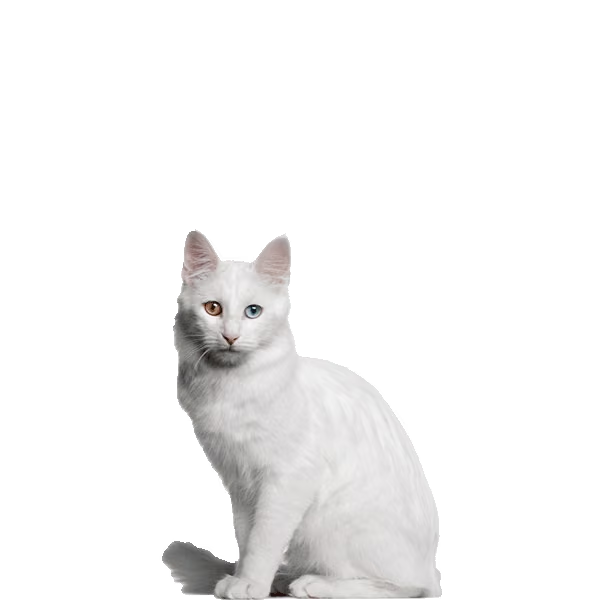
Turkish Vankedisi
The Turkish Vankedisi is the pure-white Van variety, prized for its active, affectionate temperament and loyal bond with its people.
- Size
- Large
- Lifespan
- 12–17 years
- Origin
- Turkey
- Temperament
- Active
- Standard colors
- White
Characteristics
Coat and grooming
How the Turkish Vankedisi coat is built, and what that means when you groom it.
- Coat layers
- Single coat
- Coat texture
- Silky
- Coat length
- Medium
- Shedding
- Seasonal shedding
Grooming guidance
Caution: A Turkish Vankedisi coat mats easily.
Fine or long hair tangles at the base of the coat, out of sight, where the mats tighten and pull on the skin. Brushing has to reach right down to the roots in sections, not just skim the surface.
Information: A Turkish Vankedisi drops its undercoat in heavy bursts.
The undercoat comes out in heavy bursts over a few weeks. An undercoat rake, or a bath followed by a proper blow-dry, clears it far faster than daily brushing. Clipping the coat down is not a shortcut for this.
Turkish Vankedisi colors and patterns
What each club's breed standard says about every Turkish Vankedisi color and pattern. Point at a ruling to see the club's own wording.
Breed standards describe the Turkish Vankedisi in White. Standard patterns: Solid.
| Color or pattern | TICA | GCCF |
|---|---|---|
| White | Standard (“Solid white”) | Standard (“Chalk white”) |
| Patterns | ||
| Solid | Standard (“Solid”) | No ruling |

| Color or pattern | TICA | GCCF |
|---|---|---|
| Blue | Standard (“blue”) | Standard (“Blue-eyed”) |
| Amber | Standard (“amber”) | Standard (“Light to medium amber”) |
| Orange | No ruling | Disqualifying (“Orange”) |
| Copper | No ruling | Disqualifying (“copper”) |
| Patterns | ||
| Odd-eyed | Standard (“odd eyed”) | Standard (“Odd-eyed”) |
%22%3E%3Ccircle%20cx%3D%2216%22%20cy%3D%2232%22%20r%3D%228%22%20fill%3D%22%23D9C3A0%22%2F%3E%3Ccircle%20cx%3D%2216%22%20cy%3D%2232%22%20r%3D%223.4%22%20fill%3D%22%231C1C1C%22%2F%3E%3Ccircle%20cx%3D%2213.6%22%20cy%3D%2229.6%22%20r%3D%221.3%22%20fill%3D%22%23F5F5F0%22%2F%3E%3C%2Fg%3E%3Cpath%20d%3D%22M3%2032Q16%2017%2029%2032Q16%2047%203%2032Z%22%20fill%3D%22none%22%20stroke%3D%22%233B2A20%22%20stroke-opacity%3D%220.75%22%20stroke-width%3D%221.4%22%20stroke-linejoin%3D%22round%22%2F%3E%3Cpath%20d%3D%22M35%2032Q48%2017%2061%2032Q48%2047%2035%2032Z%22%20fill%3D%22%23F5F5F0%22%2F%3E%3Cg%20clip-path%3D%22url(%23e1)%22%3E%3Ccircle%20cx%3D%2248%22%20cy%3D%2232%22%20r%3D%228%22%20fill%3D%22%23847865%22%2F%3E%3Ccircle%20cx%3D%2248%22%20cy%3D%2232%22%20r%3D%223.4%22%20fill%3D%22%231C1C1C%22%2F%3E%3Ccircle%20cx%3D%2245.6%22%20cy%3D%2229.6%22%20r%3D%221.3%22%20fill%3D%22%23F5F5F0%22%2F%3E%3C%2Fg%3E%3Cpath%20d%3D%22M35%2032Q48%2017%2061%2032Q48%2047%2035%2032Z%22%20fill%3D%22none%22%20stroke%3D%22%233B2A20%22%20stroke-opacity%3D%220.75%22%20stroke-width%3D%221.4%22%20stroke-linejoin%3D%22round%22%2F%3E%3C%2Fsvg%3E)
| Color or pattern | TICA | GCCF |
|---|---|---|
| Pink | Standard (“pink”) | Standard (“pink”) |
| Color or pattern | TICA | GCCF |
|---|---|---|
| Pink | Standard (“pink”) | Standard (“pink”) |
What the rulings mean
- Standard
- Described by the club's breed standard.
- Disqualifying
- The club's breed standard disqualifies an animal of this colour or pattern.
Color changes
How a Turkish Vankedisi's colors can change over its life.
Whitechanges toShaded
Coat · With age
Whitechanges toChinchilla
Coat · With age
Whitechanges toPointed
Coat · With age · from 1 to 52 weeks
Solidchanges toSmoke
Coat · With age · from 3 to 104 weeks
Bluechanges toGreen
Eyes · With age · from 4 to 17 weeks
Bluechanges toYellow
Eyes · With age · from 4 to 17 weeks
Bluechanges toGold
Eyes · With age · from 4 to 17 weeks
Bluechanges toCopper
Eyes · With age · from 4 to 17 weeks
Bluechanges toOrange
Eyes · With age · from 4 to 17 weeks
Bluechanges toHazel
Eyes · With age · from 4 to 17 weeks
Bluechanges toAmber
Eyes · With age · from 4 to 17 weeks
Pinkchanges toSeal
Nose · With age · from 1 to 52 weeks
Pinkchanges toBlue
Nose · With age · from 1 to 52 weeks
Pinkchanges toChocolate
Nose · With age · from 1 to 52 weeks
Pinkchanges toLilac
Nose · With age · from 1 to 52 weeks
Pinkchanges toSeal
Paw pads · With age · from 1 to 52 weeks
Pinkchanges toBlue
Paw pads · With age · from 1 to 52 weeks
Pinkchanges toChocolate
Paw pads · With age · from 1 to 52 weeks
Pinkchanges toLilac
Paw pads · With age · from 1 to 52 weeks
%22%3E%3Crect%20x%3D%220%22%20y%3D%220%22%20width%3D%2264%22%20height%3D%2264%22%20fill%3D%22url(%23g)%22%2F%3E%3Cg%20fill%3D%22none%22%20stroke%3D%22%231C1C1C%22%20stroke-width%3D%221%22%20stroke-opacity%3D%220.85%22%20stroke-linecap%3D%22round%22%20stroke-linejoin%3D%22round%22%3E%3Cpath%20d%3D%22M18.9%2025.7l0.2%202.1M42.7%2033.1l1%202.1M12.6%2020.7l0.9%201.7M17.3%2012.7l1%201.7M25.9%2022.4l0.4%201.6M50.2%2029l0.1%201.6M29.2%2028l0.5%202.1M43.2%2022.9l1%202.2M42.4%2029.9l0.2%202.2M8.4%2023.4l1%202.1M7.8%2018.4l0.4%202M35%2027.9l0.5%202.2M35.9%2038.5l0.6%201.6M29.3%2032.6l0.5%201.4M34.8%2022l0.7%202.2M37.6%2020.6l0.7%202.2M18.2%2037.7l0.4%202.1M9.9%2029l0%201.5M9.9%2014l0.1%202M37%2030.4l0.5%202.3M13%2028.5l0.6%202M38.3%2049.6l0.6%201.9M18.4%2047.4l0.7%201.4M40%2026.9l0.2%201.6M57.5%2010.7l0.4%201.4M39.6%2030.3l0.3%202.1M54.9%2018.7l0.7%201.5M48%2028.3l0.4%202M23%2050.3l0.1%202.3M28.2%2036.1l0.5%202.1M57.9%2014.4l0.6%201.4M10.6%2023.3l1%202.1M17.5%2042.7l0.8%201.4M52.1%2026l0.1%201.6M38.6%2032.2l0.1%202.2M30.9%2037.8l0.7%201.7M56.6%2017l0.9%201.9M42.5%2028.7l1%201.8M24.4%2048.9l0%201.7M8.7%2022.3l0.4%201.4M16.6%2039.9l0.5%201.4M7.1%2021.8l0.8%202.2M34.1%2034.2l0.3%201.7M9.9%2025.5l0%201.6M43.1%2035.1l0%202M37.7%2051.3l0.3%201.7M31.7%2031.3l0.3%202.3M23.8%2036.6l0.9%201.8M16.6%2053.5l0.4%202.3M24.4%2041.2l0.6%201.8M39.9%2046.6l0.4%201.8M10.4%2021.8l0.1%202.1M47.2%2051l0.7%202.3M42.9%2027.4l0.1%202M20.5%2022.8l0.4%202.1M49.2%2032.2l0.6%201.3M15.8%2030.1l0.4%202.1M46.2%2053.6l0.6%201.4M15.1%2020.1l0.7%202M23.4%2043.9l0.4%201.6M38.8%2029.4l0.4%202.1M36.8%2034.7l0.4%201.9M48.3%2028.4l0.6%202M26.9%2029.6l0.4%201.6M28.4%2036.5l0.4%201.4M19.2%2034.3l0.5%202.1M7.2%2028.1l0.1%201.6M15.9%2019.7l0.6%201.3M23.4%2022.8l0.9%201.8M16.3%2019.8l0.2%202.1M21.9%2053l0.4%202M48.5%2028.5l0.7%201.8M16.9%2012.9l0.6%202.3M26.8%2033.1l0%201.7M46.2%2044.1l0.2%202.1M30.5%2025.1l0.1%201.7M42.1%2032.2l0.1%201.6M8.7%2021.9l0.6%202.2M29.2%2024.5l0.6%202M22.1%2040.7l1.1%201.9M24.3%2033.3l0.7%201.8M53.9%2026.4l0.1%202.4M21.4%2026.6l0.9%202M39.2%2025.3l0.1%201.9M32.4%2035.3l1%202M48.9%2031.4l0%201.6M24.8%2022.1l0.4%202.2M46.4%2054.6l0.7%201.8M25.1%2031.7l0.5%202.1M24.7%2043.5l0%201.4M23.1%2033.3l0.9%201.6M37.9%2039.5l0.5%201.3M45.7%2041.2l0.9%201.8M50.1%2029.5l0.4%201.8M46.6%2049.6l0.5%202.2M54%2024.3l0.5%202.3M5.9%2025.6l0.1%201.5M15.5%2022.8l0.9%202M26.3%2027.8l0%202.1M30.1%2020.3l0.1%202.3M18.1%2016.7l0.5%201.8M19.1%2024.1l0.9%201.8M12.7%2018.8l0.7%201.4M20.8%2031.1l0.6%201.5M16.9%2025.9l0.1%201.5M11.6%2014.8l0.1%202.3M10.8%2018.5l0.8%201.8M33.5%2038l0.6%201.4M30.6%2028.8l0.3%202.1M39.1%2031.7l0.9%201.9M34.6%2021.3l0.3%202%22%2F%3E%3Cpath%20d%3D%22M17.6%2040.5l0.7%202.1M46.2%2038.1l0.4%201.7M5.1%2020.5l0.2%201.6M21.8%2022.3l0.3%201.4M26.3%2021l0.9%201.6M32.6%2037.5l0.5%201.4M33.5%2031.6l0.6%201.6M39.2%2039l0.9%201.6M11.4%2022.8l0.7%201.8%22%2F%3E%3C%2Fg%3E%3C%2Fg%3E%3Cuse%20href%3D%22%23s%22%20fill%3D%22none%22%20stroke%3D%22%233B2A20%22%20stroke-opacity%3D%220.6%22%20stroke-width%3D%221%22%20stroke-linejoin%3D%22round%22%2F%3E%3Cpath%20d%3D%22M3.4%2022.3L5.4%2022.5L4.3%2024Z%22%20fill%3D%22%23E8A0B4%22%2F%3E%3Ccircle%20cx%3D%229.6%22%20cy%3D%2221.2%22%20r%3D%221.1%22%20fill%3D%22%231C1C1C%22%2F%3E%3C%2Fsvg%3E)
%22%3E%3Cg%20fill%3D%22none%22%20stroke%3D%22%231C1C1C%22%20stroke-width%3D%221.1%22%20stroke-opacity%3D%220.9%22%20stroke-linecap%3D%22round%22%20stroke-linejoin%3D%22round%22%3E%3Cpath%20d%3D%22M37.4%2030.7l0.7%201.3M18.9%2028.6l0.1%201.1M46.5%2033.6l0.3%201.3M35.8%2023.2l0.1%201.4M19.6%2045.1l0%201.2M34.4%2037.4l0%200.9M48.4%2037.9l0.2%201.2M29.8%2023.5l0.4%201.4M9.3%2013.8l0.2%201.1M45.6%2044.2l0.3%200.8M24.4%2028.2l0.1%200.8M41.2%2035l0.1%200.9M41%2030.9l0.1%201.2M40.9%2025.1l0.3%201.4M28.4%2034.5l0.6%201.1M26.7%2024.1l0.1%200.8M47.3%2050.1l0.3%201.4M17.7%2049.5l0.5%201.3M29%2024.1l0.4%201.1M38.6%2038.1l0%201M33.4%2026.9l0.6%201M25.7%2028.1l0.1%200.9M18.3%2038.1l0.6%201.2M47.5%2028.1l0.4%201.1M25.6%2022l0.1%200.9M29.5%2027l0.5%201.1M39.5%2021.4l0.1%201.2M40.9%2048.2l0.2%201.1M17.8%2013.2l0.5%201.2M27.3%2031.6l0%201M21.3%2023.5l0.2%200.9M40.9%2054.1l0.3%200.9M20.9%2028.2l0.7%201.2M26.2%2022.2l0.1%200.8M40.9%2050.9l0.3%201.4M35.2%2030.2l0.2%200.8M50.4%2031.3l0.1%201.3M43.6%2036l0.3%200.9M33.7%2039.1l0.3%200.9M48.6%2049.9l0.3%201.1M44.4%2021.9l0.2%200.9M40.3%2040.9l0.4%201M51.8%2031.5l0.1%201.4M42%2038l0.3%201M41.3%2027.1l0.6%201.1M27.2%2032.2l0.3%201.3M28%2024.6l0%201.2M29%2038.5l0.1%201.1M56%2014.4l0.6%201.3M51%2031.2l0.3%200.8M49%2024.2l0.6%201.1M39.1%2029l0.5%201.2M38.7%2037.6l0.2%201.4M24.3%2046.6l0.4%200.8M23.1%2037.4l0.2%200.8M43%2035.9l0%201M35.4%2027l0.5%201M29.7%2039.1l0.2%201.4M32.8%2037.2l0%201M7.4%2022.7l0.1%201.1M31.3%2020.3l0.6%201.1M21.7%2033.3l0.5%201.1M16.5%2043.9l0.2%201.1M22.7%2024l0%201.4M41.6%2034.2l0.7%201.3M27.1%2036.9l0.2%201.1M49.4%2029.1l0.4%200.9M34.4%2020.6l0.3%201.1M21.6%2037.3l0%201.4M47.1%2029.2l0.7%201.3M50.6%2024.8l0.3%201M49.7%2029.2l0.7%201.2M19.4%2045.4l0.2%201.5M48.6%2026.5l0.6%201.2M23%2022.5l0.4%201M39.9%2051.5l0.2%201.1M6.7%2020.5l0.2%200.9M44.8%2033l0.2%201.4M37.7%2045.6l0.4%201.2M29.9%2037.9l0.2%200.9M24%2020.8l0.4%201M42.7%2021l0.4%201M42%2030.3l0.4%201.1M21.6%2045l0.4%201.1M18.5%2017l0.1%201M9.6%2016.4l0.1%201.3M19.5%2045.9l0.1%201M46.9%2049.9l0.4%201.3M18.6%2020.1l0.1%200.9M38.5%2038.8l0.1%201.4M46.9%2032.3l0.5%201.1M49.4%2031.7l0.3%200.9M48.5%2040.7l0.2%201.4M30.5%2033.5l0.4%201.3M46.3%2041.6l0.3%200.9M23.1%2044.7l0.2%201.1M16.7%2027.5l0%201M37.8%2029.3l0.1%201.2M42.9%2036.9l0.2%201.1M31%2025.3l0.2%201.1M17.5%2052.8l0.6%201.1M11%2021.5l0.4%201M22.5%2029.1l0.5%201.1M27.5%2032.1l0.4%200.9M39.6%2023.3l0.1%201.2M52.1%2027l0.6%201.3M28.8%2029.6l0%201.5M37.9%2025.5l0.5%200.8M33.2%2022.6l0.1%201.2M15.7%2015.4l0.3%200.8M47.7%2053.4l0.1%200.9%22%2F%3E%3Cpath%20d%3D%22M20.7%2023.3l0.6%201.1M6.7%2027.8l0.5%201.3M17%2012.8l0.2%201.2M21.7%2036.2l0%201.3M12.3%2019.9l0.2%200.8M17.2%2025.6l0.4%201.2M42.3%2022.6l0%201.2M24.7%2028.4l0.3%201.4M44.5%2038.7l0%201.4%22%2F%3E%3C%2Fg%3E%3Cpath%20d%3D%22M3.5%2022.6L5.4%2022.6%22%20fill%3D%22none%22%20stroke%3D%22%231C1C1C%22%20stroke-width%3D%221%22%20stroke-linecap%3D%22round%22%20stroke-linejoin%3D%22round%22%2F%3E%3C%2Fg%3E%3Cuse%20href%3D%22%23s%22%20fill%3D%22none%22%20stroke%3D%22%233B2A20%22%20stroke-opacity%3D%220.6%22%20stroke-width%3D%221%22%20stroke-linejoin%3D%22round%22%2F%3E%3Cpath%20d%3D%22M3.4%2022.3L5.4%2022.5L4.3%2024Z%22%20fill%3D%22%23E8A0B4%22%2F%3E%3Ccircle%20cx%3D%229.6%22%20cy%3D%2221.2%22%20r%3D%221.1%22%20fill%3D%22%231C1C1C%22%2F%3E%3C%2Fsvg%3E)
%22%3E%3Cpath%20d%3D%22M5.5%2017L7.5%207L12%2015ZM14%2015L17.5%207L20%2018.5Z%22%20fill%3D%22%23847865%22%2F%3E%3Cellipse%20cx%3D%227.6%22%20cy%3D%2223.6%22%20rx%3D%225%22%20ry%3D%225.2%22%20fill%3D%22%23847865%22%2F%3E%3Crect%20x%3D%220%22%20y%3D%2244%22%20width%3D%2264%22%20height%3D%2220%22%20fill%3D%22%23847865%22%2F%3E%3Cpath%20d%3D%22M50%2027L53.5%205L64%203L64%2013L59%2024L53%2033Z%22%20fill%3D%22%23847865%22%2F%3E%3C%2Fg%3E%3Cuse%20href%3D%22%23s%22%20fill%3D%22none%22%20stroke%3D%22%233B2A20%22%20stroke-opacity%3D%220.6%22%20stroke-width%3D%221%22%20stroke-linejoin%3D%22round%22%2F%3E%3Cpath%20d%3D%22M3.4%2022.3L5.4%2022.5L4.3%2024Z%22%20fill%3D%22%23E8A0B4%22%2F%3E%3Ccircle%20cx%3D%229.6%22%20cy%3D%2221.2%22%20r%3D%221.1%22%20fill%3D%22%231C1C1C%22%2F%3E%3C%2Fsvg%3E)
%22%3E%3Crect%20x%3D%220%22%20y%3D%220%22%20width%3D%2264%22%20height%3D%2264%22%20fill%3D%22%231C1C1C%22%2F%3E%3Crect%20x%3D%220%22%20y%3D%220%22%20width%3D%2264%22%20height%3D%2264%22%20fill%3D%22url(%23g)%22%2F%3E%3Cpath%20d%3D%22M17.5%2030.4l0.2%203.7M48.5%2036.2l-0.3%203.1M40.1%2038.4l0.7%202.8M21.3%2029.4l0.3%202.9M38.5%2024l-0.7%202.7M19.4%2041l0.9%203.8M47.2%2026.3l0.3%203M28.1%2031.1l-0.4%202.6M21%2027l-0.7%203.4M20.1%2035l0.7%202.8M27.4%2035.9l1.2%203.6M31.5%2032.2l0.5%202.5M43.7%2038.4l0.2%202.9M15.5%2027.6l0.2%203M33.5%2029.7l0%203.8M50%2028l0.5%203.8M50.1%2029.5l-0.2%203.3M39.4%2037.1l0.8%203M31.1%2025l1%203.1M19.5%2028.3l0.3%203.1M29.5%2034.2l-0.3%203.8M50.4%2033.8l-0.5%202.6M39.3%2028.8l1.2%203.8M36.6%2037.2l-0.3%202.8M41.6%2026.3l-0.7%202.7M24.2%2038.3l-0.2%203.3M20.5%2033.1l0.7%203M24%2032.2l-0.7%203.3M42.7%2038.5l-0.6%203.8M20.4%2038.2l0.2%203.3M37.5%2036.9l-0.8%202.4M36%2035.3l-0.7%202.9M46.2%2033.2l-0.8%203.8M38.1%2030.5l-0.6%203.6M29%2038.9l-0.7%203.7M42.8%2031.3l0.1%203.1M22.5%2025.1l0.4%202.9M47.4%2025l0.2%203M24.7%2032l-0.8%203.2M14.8%2024.5l1.1%203.3%22%20fill%3D%22none%22%20stroke%3D%22%23F5F5F0%22%20stroke-width%3D%221%22%20stroke-opacity%3D%220.85%22%20stroke-linecap%3D%22round%22%20stroke-linejoin%3D%22round%22%2F%3E%3C%2Fg%3E%3Cuse%20href%3D%22%23s%22%20fill%3D%22none%22%20stroke%3D%22%233B2A20%22%20stroke-opacity%3D%220.6%22%20stroke-width%3D%221%22%20stroke-linejoin%3D%22round%22%2F%3E%3Cpath%20d%3D%22M3.4%2022.3L5.4%2022.5L4.3%2024Z%22%20fill%3D%22%23E8A0B4%22%2F%3E%3Ccircle%20cx%3D%229.6%22%20cy%3D%2221.2%22%20r%3D%221.1%22%20fill%3D%22%231C1C1C%22%2F%3E%3C%2Fsvg%3E)
Sources
Each ruling comes from the club's published breed standard or color list.
About the Turkish Vankedisi
The Turkish Vankedisi is a rare all-white cat originating from the Van region of eastern Turkey, where it holds the status of a national living treasure. Distinguished from the Turkish Van by its pure white coat without any coloured markings, this breed captivates with its striking odd eyes and composed character.
In Celtic tradition, white animals occupied a liminal space. Fairy cats and banshee-white creatures crossed between worlds, and a pure white cat crossing your threshold was never an ordinary event. The Turkish Vankedisi carries that same quality of otherness. It is one of the rarest cat breeds on earth, a living symbol of the Van region in eastern Turkey, and almost entirely unknown to Irish cat fanciers despite its close-sounding cousin, the Turkish Van, having a modest following here.
Irish Cat Association (ICA) members who have encountered the Vankedisi abroad often describe the experience as stopping them cold. The coat is pure white, completely unmarked, with no coloured patches on head or tail. The eyes, frequently one amber and one blue, give the cat an expression of calm intensity that seems to belong to another era entirely.
The Vankedisi is not a colour variant of the Turkish Van. It is a separate, parallel lineage, preserved and studied by Van University and Ankara University as a distinct Turkish national breed. Where the Turkish Van displays its characteristic auburn or cream head and tail markings, the Vankedisi carries none. It is entirely, completely white.
| Characteristic | Detail |
|---|---|
| Origin | Van province, eastern Turkey |
| Coat | Pure white, semi-long, no markings permitted |
| Eye colour | Odd eyes (one blue, one amber) very common; also both blue or both amber |
| Weight | 4–9 kg |
| Lifespan | 12–17 years |
For ICA-registered breeders and serious cat fanciers in Ireland, the Vankedisi represents the kind of breed that appears once in a generation of serious collecting. Numbers outside Turkey remain extremely small, and most European examples trace back to Turkish university conservation programmes rather than commercial breeding lines.
History of the Turkish Vankedisi
The Vankedisi has existed in the Van region of Turkey for centuries, protected and perpetuated by the unique geography and cultural identity of one of the world's oldest continuously inhabited areas.
The Van region of eastern Turkey sits around Lake Van, a high-altitude saline lake rimmed by volcanic mountains. The area has been continuously inhabited for thousands of years and is recognised by UNESCO for its exceptional cultural heritage. The Armenian, Kurdish, and Ottoman histories layered across this landscape produced, among other things, a cat that the local population considered blessed.
The Vankedisi, whose name translates roughly as 'Van cat' in Turkish, was historically distinguished from the patterned Van cats that traders and travellers carried westward. The all-white variety remained more tightly associated with the city of Van itself, where local families kept them as household companions and where their odd eyes were seen as a mark of divine favour rather than a curiosity.
Modern Turkish felinology took the breed seriously from the 1960s onward, when Van University established a breeding and conservation centre specifically for the Vankedisi. The goal was to document, protect, and propagate a genetically distinct population at a time when crossbreeding with imported cats risked diluting the original type. Ankara University later joined this effort, and the two institutions have maintained studbooks and research programmes that give the Vankedisi a more rigorous scientific foundation than most naturally occurring landrace breeds enjoy.
The breed reached Europe in small numbers through diplomatic and academic channels rather than through normal cat fancy commerce. This limited the gene pool available to European breeders and reinforced the Vankedisi's reputation as something genuinely rare rather than simply unfashionable. In Ireland, the breed has never had a registered presence through the ICA, though individual cats have arrived with owners relocating from Turkey or continental Europe.
Appearance of the Turkish Vankedisi
The Vankedisi is a medium-to-large, muscular cat with a pure white semi-long coat, a broad chest, and the striking odd-eyed look that has made the breed famous in Turkey.
The first thing most people notice about a Vankedisi is the eyes. Odd-eyed cats, carrying one blue iris and one amber or gold iris, occur in many breeds, but in the Vankedisi heterochromia is so strongly associated with breed identity that Turkish breeders and universities specifically select for it. Seeing a Vankedisi with matched eyes is entirely normal, but odd eyes are considered the hallmark expression of the type.
The body is substantial without being heavy. Males develop considerable breadth across the chest and shoulders, and the breed overall carries the kind of quiet solidity that comes from centuries of outdoor life in a mountainous region. The coat is semi-long, fine in texture, and carries almost no undercoat compared to cold-climate breeds. This gives it a silky fall rather than a puffed appearance, and reduces matting significantly.
The coat must be pure white. Any coloured patch, however small, disqualifies a cat from the Vankedisi standard and places it in the Turkish Van category instead. This is the single most important physical distinction between the two breeds.
| Feature | Description |
|---|---|
| Body | Medium-large, muscular, broad chest |
| Coat length | Semi-long, minimal undercoat, silky texture |
| Coat colour | Pure white only, no markings permitted |
| Eyes | Odd eyes (blue + amber) most prized; solid blue or solid amber also accepted |
| Tail | Full and plumed, white throughout |
White cats with blue eyes carry a genetic predisposition to deafness, particularly when the blue eye is on the same side as the deaf ear. This is true of the Vankedisi as of any white cat. Reputable Turkish university breeders test hearing as part of their conservation protocols, and any Vankedisi imported to Ireland should arrive with documentation of its hearing status.
Temperament of the Turkish Vankedisi
The Turkish Vankedisi is an intelligent, affectionate, and moderately active cat that bonds closely with its household but retains the independent streak common to Turkish landrace breeds.
Owners who have kept both the Turkish Van and the Vankedisi often describe the Vankedisi as slightly less frenetic and somewhat more measured in its affections. Both breeds are sociable and interactive, but the Vankedisi tends to express itself with a degree of calm self-possession that suits Irish household rhythms well.
The breed is curious and follows activity around the home with interest. It does not typically attach to a single person to the exclusion of others, and it adapts reasonably well to households with older children. It can be territorial with other cats, particularly when space is limited, and early socialisation is advisable if a second cat is already in residence.
The Vankedisi is vocal without being relentless. It communicates needs clearly and responds to conversation, which makes it feel like a genuine household presence rather than a decorative companion. Its play drive remains active well into adulthood.
| Trait | Assessment |
|---|---|
| Affection level | High, directed across the whole household |
| Activity level | Moderate to high, enjoys interactive play |
| Vocalisation | Moderate, communicative but not demanding |
| Sociability with children | Good with older, calm children |
| Independence | Moderate, comfortable when owners are absent during the day |
Caring for a Turkish Vankedisi in Ireland
The Vankedisi is a relatively low-maintenance breed in terms of coat care, but its pure white fur requires particular attention in a damp Irish climate, and its active mind needs consistent engagement.
Grooming the Turkish Vankedisi
Despite its semi-long coat, the Vankedisi is considerably easier to groom than most longhaired breeds. The near-absence of undercoat means tangles and mats form infrequently, and the silky texture sheds dirt more readily than a dense double coat would.
Grooming routine:
- Brush twice weekly with a wide-tooth comb or soft slicker brush
- Check behind the ears and under the armpits, where fine fur can occasionally clump
- Bathe every four to six weeks if the cat is kept indoors in Ireland, where low light and heating can dull white coats
- Trim nails every two to three weeks
- Check ears weekly and wipe gently with a damp cotton pad if wax is visible
- Begin grooming handling as a kitten to establish tolerance
Exercise and activity for the Vankedisi
The Vankedisi is a moderately active cat that requires daily engagement to stay mentally balanced. Boredom in this breed tends to express itself through restlessness or furniture investigation rather than outright destructiveness.
Exercise recommendations:
- Two dedicated play sessions per day, fifteen to twenty minutes each
- Wand toys and feather lures work well as they trigger prey-chase behaviour
- Puzzle feeders at mealtimes extend mental engagement
- A tall cat tree near a window satisfies observation instincts
- Rotate toy sets every two weeks to prevent habituation
- A second cat as a companion can reduce reliance on owner-led play
Living with a Vankedisi in the Irish climate
Ireland presents specific challenges for owners of a pure white cat. The damp Atlantic climate means that outdoor access, even briefly, can bring in mud, grass stains, and moisture that settle into white fur. Most Irish Vankedisi owners choose to keep their cats fully indoors or restrict outdoor access to a secure catio.
If outdoor access is permitted, check the coat on return and wipe paws and underside with a damp cloth. A white coat that is allowed to accumulate environmental staining is difficult to restore without bathing. Indoor humidity is generally not a problem for this breed, as the semi-long coat is adapted to varied conditions, but ensure the cat has access to warm resting spots during Irish winters, as this is not a cold-climate double-coated breed.
Nutrition for the Turkish Vankedisi
The Vankedisi thrives on a high-protein diet appropriate to its size and moderate activity level. There are no breed-specific dietary pathologies, but attention to weight management is worthwhile given the breed's tendency to slow down in middle age.
The Vankedisi is a naturally moderate eater compared to some highly active breeds. Males, which can reach 8–9 kg, should be monitored carefully once neutered, as the combination of reduced hormonal drive and lower activity can lead to gradual weight gain that is easy to miss under a full white coat.
High-quality wet food as the primary diet supports hydration and urinary health. Dry food can be offered as a supplement or used in puzzle feeders, but should not constitute the majority of caloric intake. Fresh water must always be available. Many cats in this line show a preference for running water, and a cat fountain is a worthwhile investment.
| Category | Recommendation | Notes |
|---|---|---|
| Primary diet | High-protein wet food | At least 40% crude protein on dry matter basis |
| Supplemental dry food | Optional, up to 20% of daily calories | Use in puzzle feeders for enrichment |
| Feeding frequency | Two meals per day | Consistent timing supports digestion |
Kittens should be fed a kitten-formulated food until twelve months of age to support skeletal growth. The Vankedisi does not mature as rapidly as some smaller breeds, and some males continue to fill out until age three. Senior dietary adjustments can be introduced from age ten, with a gradual shift toward lower phosphorus content to support kidney function.
Health of the Turkish Vankedisi
The Vankedisi is generally a robust breed without the hereditary conditions that affect many pedigree cats. The primary health concern is congenital deafness linked to white coat and blue eye genetics, which responsible breeders test for as standard.
As a naturally evolved landrace breed rather than a product of selective breeding for extreme features, the Vankedisi carries fewer inherited structural health problems than many pedigree cats. The gene pool maintained by Turkish university programmes has been managed with health as a priority alongside type, and this shows in the breed's general longevity and robust constitution.
The primary concern, and the one every prospective owner must understand, is the W gene that governs the white coat. This gene, when combined with blue eye pigmentation, carries a significant correlation with congenital deafness. In odd-eyed white cats, deafness most commonly affects the ear on the blue-eye side. Cats deaf in one ear can live full and happy lives with appropriate indoor management, but owners must be informed before purchase.
| Condition | Risk level | Notes |
|---|---|---|
| Congenital deafness (BAER-linked) | Moderate, especially in blue-eyed individuals | Request BAER hearing test results from breeder |
| Sunburn on white coat | Low in Ireland, higher if outdoor access given | Ears and nose most vulnerable |
| Obesity (neutered males) | Low to moderate | Monitor weight annually from age three |
| Hypertrophic cardiomyopathy (HCM) | Low, no breed-specific elevation documented | Routine cardiac screening at annual vet visit |
Routine veterinary care follows standard feline schedules. Vaccinations should be kept current, and annual health checks are sufficient for a young adult Vankedisi without known health issues. From age eight, twice-yearly checks allow earlier detection of the kidney and thyroid changes that are common in ageing cats of all breeds.
Training the Turkish Vankedisi
The Vankedisi is an intelligent breed that responds well to consistent positive reinforcement. It can be trained to accept grooming, harness walking, and a range of household routines with patience and appropriate motivation.
The Vankedisi is not a breed that trains out of eagerness to please in the way a dog might. It trains because the activity is engaging and the rewards are worth its time. This distinction matters for setting expectations. A Vankedisi that has decided a session is over will leave. Short, varied, reward-dense sessions produce far better results than long, repetitive ones.
High-value treats are the most reliable motivator. Some individuals also respond to play as a reward, which makes a wand toy a useful training prop. Clicker training works well with this breed once the association between click and reward is established, typically within two or three sessions.
What Irish owners typically train their Vankedisi to do:
- Accept and enjoy brushing and bathing from kittenhood
- Tolerate nail trims without restraint
- Walk on a harness for supervised garden access without the risk of coat staining or road exposure
- Come when called by name
- Use a specific scratching post rather than furniture
- Accept travel in a carrier without distress, important for a cat that may have been imported and will need veterinary travel
Breeding the Turkish Vankedisi in Ireland
Breeding the Vankedisi responsibly requires understanding its conservation status, the genetics of white coat and odd eyes, and the very limited pool of registered individuals outside Turkey.
The Vankedisi is not a breed anyone in Ireland should approach casually from a breeding perspective. The global population outside Turkey is tiny. Most individuals in Europe trace to the Van University or Ankara University programmes, and any breeding effort must be coordinated with awareness of those founding lines to avoid the genetic problems that arise from a very shallow gene pool.
The W (white) gene that defines the breed creates particular challenges. Breeding two odd-eyed or blue-eyed white cats together elevates the statistical risk of deafness in offspring. Turkish university protocols generally pair odd-eyed individuals with amber-eyed ones to manage this risk across generations. European breeders attempting to replicate this approach without the university studbook data are working with incomplete information.
The ICA does not currently list the Vankedisi as a recognised breed in Ireland, which means any kittens produced here would be registered through an overseas body such as TICA or WCF. Prospective ICA breeders interested in establishing this breed in Ireland should contact the ICA directly about the recognition pathway and should expect a multi-year process.
Anyone who imports a Vankedisi with breeding intentions should obtain full documentation of the cat's BAER hearing status, lineage, and health screening history before any pairing is considered.
| Factor | Detail |
|---|---|
| Genetic pool | Extremely limited outside Turkey; coordinate with Van/Ankara University records where possible |
| Deafness risk | Elevated when pairing two blue-eyed or odd-eyed individuals; BAER test all breeding stock |
| Coat standard | Offspring showing any coloured patch are Turkish Van type, not Vankedisi |
| ICA status | Not currently ICA-recognised; register through TICA or WCF internationally |
| Litter size | Typically 3–5 kittens; similar to other semi-longhair Turkish breeds |
Your Turkish Vankedisi registered and chipped, sorted for good
No law covers cat chips in Ireland, which makes a free United Pet Club record the only thing standing behind your Turkish Vankedisi's number.
Registering a Turkish Vankedisi in Ireland
The whole of cat registration is a form: her name, her colouring, a photo, your phone number, save. Free for life with United Pet Club, chip or no chip, indoors or out.
The fifteen digits on your Turkish Vankedisi's vet paperwork want a registry. United Pet Club lodges them free, keeps them current through every move, and leaves the record findable whenever a scanner asks. Microchip registration plus a free account: both sorted in one cup of tea.
How do I register my Turkish Vankedisi in Ireland?
Open a free United Pet Club account, put in her name, colouring, and a photo, and save the profile. It stays live for the whole of her life at no cost, and a chip is not needed to begin.
How do I register my Turkish Vankedisi's microchip?
Lodge the fifteen digit number from the vet's paperwork in your free account with your current contact details. The lifetime plan never asks for a penny, not for the record and not for updates.
Do cats have to be chipped in Ireland?
No, the 2015 chipping law covers dogs only. That is exactly why a registered chip matters for a Turkish Vankedisi: without your record, there is nothing at all connecting her number to your phone.
What does it cost to register a Turkish Vankedisi?
Nothing whatsoever. United Pet Club's lifetime plan takes care of the profile, the chip record, and every amendment, free for the whole of her life.
Turkish Vankedisi: frequently asked questions from Irish cat owners
Answers to the questions most commonly asked by Irish cat fanciers about the Turkish Vankedisi, from ICA registration to import costs and odd-eye genetics.
Is the Turkish Vankedisi the same as the Turkish Van?
No. The Turkish Van has coloured markings on its head and tail on an otherwise white body. The Vankedisi is entirely white with no markings whatsoever. They share a geographic origin in the Van region of Turkey but are considered separate breeds. Turkish universities maintain distinct breeding and studbook programmes for each. Most Irish cat fanciers have heard of the Turkish Van; very few have encountered a Vankedisi.
Can I register a Turkish Vankedisi with the ICA?
The ICA does not currently recognise the Turkish Vankedisi as a breed, so direct ICA registration is not available. International registries that do accept the breed include TICA (The International Cat Association) and WCF (World Cat Federation). If you are importing a Vankedisi to Ireland, ask the exporting breeder which registry the cat is already registered with and continue registration there.
How much does a Turkish Vankedisi cost in Ireland, and where can I find one?
There are no established Vankedisi breeders in Ireland at present. Obtaining one requires importing from Turkey directly or from one of the very small number of European breeders, primarily in Germany, the Netherlands, or Italy. Import costs including the cat itself, health certification, microchipping, vaccinations, BAER testing, and transport typically range from EUR 1,500 to EUR 3,500 depending on source country and logistics.
What does heterochromia mean for a Vankedisi, and does it cause any problems?
Heterochromia means the cat has two differently coloured irises, typically one blue and one amber or gold. In the Vankedisi it is a prized and traditional characteristic, not a defect. The concern associated with odd eyes in white cats is not the heterochromia itself but the link between blue eye pigmentation and congenital deafness. A Vankedisi with one blue eye may be deaf on that side. BAER testing determines hearing status definitively, and a unilaterally deaf cat can live a completely normal life indoors.
What is involved in importing a cat from Turkey to Ireland?
Ireland is an EU member state and applies EU pet travel rules. A cat imported from Turkey, a non-EU country, requires an ISO-standard microchip, a valid rabies vaccination administered after microchipping, a waiting period of 21 days after the rabies vaccination, an EU health certificate issued by an official Turkish veterinarian, and entry through a designated EU point of entry. Your Irish vet can advise on current DAFM (Department of Agriculture, Food and the Marine) requirements, as these can change. Allow at least three months for the full process.
Is the Turkish Vankedisi suited to indoor life in Ireland?
Yes, and most owners of white cats in Ireland choose to keep them fully indoors or provide access only to a secure enclosed space. The damp climate and muddy ground cover mean that outdoor access quickly stains a white coat. The Vankedisi adapts well to indoor life provided it has sufficient enrichment, climbing space, and regular interactive play. It is not a breed that needs outdoor roaming to be content.
Why is the Vankedisi considered a Turkish national treasure?
The Van region of eastern Turkey, where the breed originates, is a UNESCO-recognised cultural landscape with thousands of years of continuous human settlement. The all-white, odd-eyed cat has been associated with the city of Van for centuries and appears in Turkish art, poetry, and local legend. The Turkish government and two universities have invested in formal conservation programmes to protect the breed. This institutional commitment to a domestic cat is highly unusual globally and reflects how central the Vankedisi is to Turkish national and regional identity.
From the community
Ask about the Turkish VankedisiNo questions about the Turkish Vankedisi yet. Be the first to ask.
Browse Cat breeds