
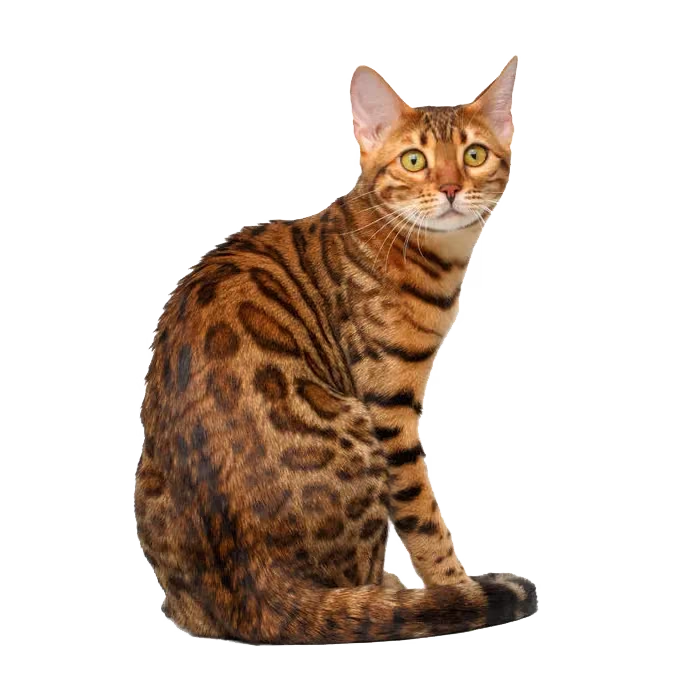
Toyger
The Toyger is a friendly, tiger-striped breed bred for its playful, sociable nature and striking miniature-tiger appearance.
- Size
- Medium
- Lifespan
- 10–15 years
- Origin
- United States
- Temperament
- Friendly
- Standard colors
- Brown
Characteristics
Coat and grooming
How the Toyger coat is built, and what that means when you groom it.
- Coat layers
- Single coat
- Coat texture
- Smooth
- Coat length
- Short
- Shedding
- Moderate shedding
Toyger colors and patterns
What each club's breed standard says about every Toyger color and pattern. Point at a ruling to see the club's own wording.
Breed standards describe the Toyger in Brown. Standard patterns: Mackerel tabby.
| Color or pattern | GCCF | TICA | LOOF |
|---|---|---|---|
| Brown | Standard (“brown”) | Standard (“Brown Mackerel Tabby”) | Standard (“noir”) |
| Lilac | Not recognised (“lilac”) | No ruling | No ruling |
| Chocolate | Not recognised (“chocolate”) | No ruling | No ruling |
| Cinnamon | Not recognised (“cinnamon”) | No ruling | No ruling |
| Fawn | Not recognised (“fawn”) | No ruling | No ruling |
| Patterns | |||
| Mackerel tabby | Standard (“modified mackerel tabby”) | Standard (“Modified mackerel tabby”) | Standard (“mackerel”) |
| Classic tabby | No ruling | Fault (“Classic alignment of mackerel stripes”) | No ruling |
| Solid | Not recognised (“non-agouti pattern”) | No ruling | No ruling |
%22%3E%3Cpath%20d%3D%22M20%2021Q34%2018.8%2048%2022%22%20fill%3D%22none%22%20stroke%3D%22%231C1C1C%22%20stroke-width%3D%222.2%22%20stroke-linecap%3D%22round%22%20stroke-linejoin%3D%22round%22%2F%3E%3Cpath%20d%3D%22M24.5%2021.5q-1.2%208%20.4%2016M28.6%2021q-1.2%208%20.4%2016.6M32.7%2020.7q-1.2%208%20.4%2016.8M36.8%2020.7q-1.2%208%20.4%2016.8M40.9%2021q-1.2%208%20.4%2016.6M45%2021.8q-1%207%20.4%2014%22%20fill%3D%22none%22%20stroke%3D%22%231C1C1C%22%20stroke-width%3D%221.6%22%20stroke-linecap%3D%22round%22%20stroke-linejoin%3D%22round%22%2F%3E%3Cpath%20d%3D%22M15%2044H50M15%2048H50%22%20fill%3D%22none%22%20stroke%3D%22%231C1C1C%22%20stroke-width%3D%221.8%22%20stroke-linecap%3D%22round%22%20stroke-linejoin%3D%22round%22%2F%3E%3Cpath%20d%3D%22M50%2022H62M51%2017H62M52%2012H63%22%20fill%3D%22none%22%20stroke%3D%22%231C1C1C%22%20stroke-width%3D%221.8%22%20stroke-linecap%3D%22round%22%20stroke-linejoin%3D%22round%22%2F%3E%3Ccircle%20cx%3D%2259.8%22%20cy%3D%227.8%22%20r%3D%222%22%20fill%3D%22%231C1C1C%22%2F%3E%3Cpath%20d%3D%22M12.6%2015.5l.6%204.2M15%2015.5l-.2%204.2M9%2025.2l4.6%201M9.6%2027.4l4%20.2%22%20fill%3D%22none%22%20stroke%3D%22%231C1C1C%22%20stroke-width%3D%221.1%22%20stroke-linecap%3D%22round%22%20stroke-linejoin%3D%22round%22%2F%3E%3C%2Fg%3E%3Cuse%20href%3D%22%23s%22%20fill%3D%22none%22%20stroke%3D%22%233B2A20%22%20stroke-opacity%3D%220.6%22%20stroke-width%3D%221%22%20stroke-linejoin%3D%22round%22%2F%3E%3Cpath%20d%3D%22M3.4%2022.3L5.4%2022.5L4.3%2024Z%22%20fill%3D%22%23E8A0B4%22%2F%3E%3Ccircle%20cx%3D%229.6%22%20cy%3D%2221.2%22%20r%3D%221.1%22%20fill%3D%22%231C1C1C%22%2F%3E%3C%2Fsvg%3E)
%22%3E%3Cpath%20d%3D%22M20%2021Q34%2018.8%2048%2022%22%20fill%3D%22none%22%20stroke%3D%22%231C1C1C%22%20stroke-width%3D%222.2%22%20stroke-linecap%3D%22round%22%20stroke-linejoin%3D%22round%22%2F%3E%3Ccircle%20cx%3D%2235%22%20cy%3D%2229.5%22%20r%3D%222.4%22%20fill%3D%22%231C1C1C%22%2F%3E%3Ccircle%20cx%3D%2235%22%20cy%3D%2229.5%22%20r%3D%225.6%22%20fill%3D%22none%22%20stroke%3D%22%231C1C1C%22%20stroke-width%3D%222.2%22%2F%3E%3Ccircle%20cx%3D%2235%22%20cy%3D%2229.5%22%20r%3D%229.4%22%20fill%3D%22none%22%20stroke%3D%22%231C1C1C%22%20stroke-width%3D%222.2%22%2F%3E%3Cpath%20d%3D%22M15%2044H50M15%2048H50%22%20fill%3D%22none%22%20stroke%3D%22%231C1C1C%22%20stroke-width%3D%221.8%22%20stroke-linecap%3D%22round%22%20stroke-linejoin%3D%22round%22%2F%3E%3Cpath%20d%3D%22M50%2022H62M51%2017H62M52%2012H63%22%20fill%3D%22none%22%20stroke%3D%22%231C1C1C%22%20stroke-width%3D%221.8%22%20stroke-linecap%3D%22round%22%20stroke-linejoin%3D%22round%22%2F%3E%3Ccircle%20cx%3D%2259.8%22%20cy%3D%227.8%22%20r%3D%222%22%20fill%3D%22%231C1C1C%22%2F%3E%3Cpath%20d%3D%22M12.6%2015.5l.6%204.2M15%2015.5l-.2%204.2M9%2025.2l4.6%201M9.6%2027.4l4%20.2%22%20fill%3D%22none%22%20stroke%3D%22%231C1C1C%22%20stroke-width%3D%221.1%22%20stroke-linecap%3D%22round%22%20stroke-linejoin%3D%22round%22%2F%3E%3C%2Fg%3E%3Cuse%20href%3D%22%23s%22%20fill%3D%22none%22%20stroke%3D%22%233B2A20%22%20stroke-opacity%3D%220.6%22%20stroke-width%3D%221%22%20stroke-linejoin%3D%22round%22%2F%3E%3Cpath%20d%3D%22M3.4%2022.3L5.4%2022.5L4.3%2024Z%22%20fill%3D%22%23E8A0B4%22%2F%3E%3Ccircle%20cx%3D%229.6%22%20cy%3D%2221.2%22%20r%3D%221.1%22%20fill%3D%22%231C1C1C%22%2F%3E%3C%2Fsvg%3E)

| Color or pattern | GCCF | TICA | LOOF |
|---|---|---|---|
| Hazel | Standard (“hazel”) | No ruling | No ruling |
| Gold | Standard (“gold”) | No ruling | No ruling |
| Green | Standard (“Green”) | No ruling | No ruling |
| Blue | No ruling | Disqualifying (“Blue”) | Disqualifying (“bleu”) |
| Color or pattern | GCCF | TICA | LOOF |
|---|---|---|---|
| Black | Standard (“black”) | Standard (“black”) | Standard (“noir”) |
What the rulings mean
- Standard
- Described by the club's breed standard.
- Fault
- Named by the club's breed standard as a fault: the animal can be shown but is penalised.
- Disqualifying
- The club's breed standard disqualifies an animal of this colour or pattern.
- Not recognised
- The club does not accept this colour or pattern for the breed.
Color changes
How a Toyger's colors can change over its life.
Brownchanges toCopal
Coat · With age · from 0 to 52 weeks
Sources
Each ruling comes from the club's published breed standard or color list.
About the Toyger
The Toyger is a medium-sized domestic cat bred in the United States to carry tiger-like striping -- in Ireland, a country with no wild cats at all, it fills a wild-cat void that Celtic mythology imagined but the island never had.
Ireland has no wild cats. It never had tigers, leopards, or any native felid beyond the domestic cat that arrived with early farmers. The island's fauna is famously spare -- no snakes, no moles, relatively few native mammal species -- the result of island geography and post-glacial isolation. For a country that has historically channelled its feelings about wildness into mythology, sport, and landscape rather than actual wild animals, the idea of a domestic cat with the coat of a Bengal tiger landing in a Dublin sitting room is an oddly satisfying proposition.
The Celtic Tiger -- the economic boom of the 1990s and early 2000s -- made the tiger a symbol of Irish transformation and ambition. That cultural echo has faded somewhat, but the tiger's image retains a particular energy in Ireland that it does not quite carry elsewhere. The Toyger arrived into that context as a cat whose drama is entirely visual: bold orange-and-black vertical stripes on a fully domestic, gentle, trainable animal.
Judy Sugden developed the breed in California from the 1980s, selecting from domestic shorthair cats with mackerel tabby patterns for the branching, vertical stripe structure of a wild tiger. There is no hybrid ancestry. TICA recognised the breed at championship level in 2007. In Ireland, the Toyger is recognised within the framework of the Irish Cat Fancy (ICF), which affiliates with international registries and hosts shows in Dublin and Cork. Breeders in Ireland are very few; most interested buyers will need to contact breeders in the United Kingdom or on the European continent and check current veterinary certificate requirements for movements into Ireland.
| Attribute | Detail |
|---|---|
| Origin | United States |
| Size | Medium (about 3 to 7 kg) |
| Lifespan | 10 to 15 years |
| Group / role | Companion cat |
| Good with | Families, children, other pets, single owners |
Who it suits
The Toyger is a sociable, active cat that needs daily engagement rather than solitude. It fits Irish households that want a cat as a participant in family life rather than a piece of furniture. People who are out for most of the working day should plan for a second compatible pet or some form of daytime enrichment.
Ireland's damp climate suits indoor living for a short-coated cat year round. The Toyger adapts well to apartments and terraced houses, which cover a large share of urban housing in Cork and Dublin. The low-maintenance coat is a practical advantage; the main investment is time for play, not money for grooming.
History and origin
The Toyger was developed in California by Judy Sugden from the 1980s, built from domestic shorthair cats selected across many generations for a coat that recalled wild tiger markings, with conservation awareness as the original motivation.
Judy Sugden started the Toyger project with a conservation argument in mind. She wanted a cat whose markings were dramatic enough that people would stop and ask about the animal, and the answer would lead naturally to wild tigers and the pressures they face. It was an unusual motivation for a breeding programme, and it shaped the work.
Her raw material was domestic shorthair cats with mackerel tabby patterns. Standard tabby stripes flow in parallel lines or dissolve into spots; a wild tiger's markings are broad, irregular, and vertical -- they branch, interrupt, and carry high contrast between stripe and ground. Selecting for that structure in a domestic cat required identifying the closest individuals in each litter across many generations.
A street cat from India with unusual spotting between the ears was introduced to help develop the circular head markings that distinguish a Toyger from an ordinary tabby. TICA accepted the breed as developing in the 1990s and elevated it to championship status in 2007.
In Ireland, the Toyger is a very recent arrival in any meaningful numbers. The ICF works with TICA standards, and prospective buyers should check with both the ICF and TICA for current breeder contacts. Post-Brexit veterinary certificate requirements for movements between Britain and Ireland are worth checking before importing a kitten from a UK breeder, as the paperwork has changed since 2021.
Appearance and breed standard
The Toyger is a medium, muscular shorthair with bold branching vertical stripes on a warm orange ground -- a coat designed to evoke a Bengal tiger at house-cat scale.
The Toyger's body is medium-sized but carries itself with a low, rolling deliberateness that suggests something larger. The build is muscular and somewhat elongated. The head is relatively long with small rounded ears. The coat lies short and close to the body.
The coat is the defining feature: broad, dark stripes branching vertically on a warm orange to tan ground, with the markings broken into segments rather than running as continuous lines. High contrast between stripe and ground is a key standard requirement. Breeders also work toward a circular face pattern -- rings and bands around the eyes -- rather than the conventional tabby forehead marking. Some lines show "glitter," a quality in the individual hairs that gives the coat a slight luminosity in direct light.
| Trait | Standard |
|---|---|
| Height | About 23 to 33 cm at the shoulder |
| Weight | 3 to 7 kg (males larger) |
| Coat | Short, dense, close-lying; some lines carry a glittered sheen |
| Colours | Brown mackerel tabby: warm orange-to-tan ground with dark vertical stripes |
| Eyes | Round to slightly almond; gold to brown, deep colour preferred |
Coat and colours
The recognised colour is the brown mackerel tabby pattern in which the base ranges from warm orange to tan and the stripe markings are as dark as possible. Stripes are vertical on the body and broken into sections. The spine carries a darker dorsal line. Belly and inner legs are lighter. The eye area and whisker pads are paler than the surrounding face. The coat is short, sheds moderately, and needs only weekly maintenance -- a practical feature in a country where indoor dust and damp can be a mild issue.
Temperament and personality
The Toyger is sociable, playful, and more trainable than most cats -- an engaged companion that suits Irish households looking for a cat with character.
The Irish have a warm appreciation for animals with personality, and the Toyger has plenty of it. This is not a cat that takes up a warm spot and disappears into the wallpaper. It tracks its people, stays playful well into adulthood, and communicates with chirps and trills rather than indifference.
With families and children it is tolerant and confident. With other animals it is sociable when introductions are handled gradually. With strangers it tends toward curiosity rather than wariness. The breed's social attentiveness is perhaps its most distinctive quality -- it wants to be part of what is happening rather than observing from a safe distance.
Trainability is a genuine feature. Toygers learn their names quickly, take to fetch and simple commands, and accept harness and lead walking with more willingness than most cats. This is both a form of enrichment and a practical skill for owners who want to give an indoor cat some supervised outdoor time.
| Trait | Rating |
|---|---|
| Affection | 5 |
| Energy | 4 |
| Trainability | 5 |
| Vocalness | 3 |
| Shedding | 2 |
Care and grooming
The Toyger is easy to groom but demands consistent daily engagement -- Ireland's damp climate and short days make indoor enrichment essential.
Grooming
The short coat needs very little maintenance.
- Weekly brush with a soft rubber mitt or bristle brush
- Ear checks every two weeks; clean when needed
- Nail trim every two to three weeks
- Regular teeth brushing; dental disease is common in cats and preventable with consistent home care
Exercise
Two or more structured play sessions daily are the baseline for a healthy Toyger.
- Wand toys, feather teasers, and ball games at consistent times
- Puzzle feeders and food-dispensing toys for mental engagement
- A cat tree or wall shelves for climbing; height matters to a Toyger
- Harness and lead walks in the garden when the weather permits -- which in Ireland means strategic optimism
Environment
The Toyger handles Irish indoor conditions well. It adapts to apartments, terraced houses, and semi-detacheds in Dublin, Cork, Galway, and Limerick without complaint, provided it has activity and company. Ireland's combination of grey skies and damp makes full indoor living practical and sensible for a short-coated cat, and the Toyger does not resent it. The social attentiveness of the breed means the main environmental requirement is people more than space.
Nutrition and feeding
Feed the Toyger a complete, meat-based diet with measured portions; wet food is a good choice for hydration support, and treat intake should stay below 10 per cent of daily calories.
The Toyger does well on a complete commercial cat food built around animal protein. Both wet and dry formats work; wet food contributes to daily fluid intake, which is useful for indoor cats that may not drink as actively as free-roaming animals. Fresh water should be available and changed daily.
Irish pet shops and online retailers stock a wide range of international and European brands, and finding a suitable complete diet for a Toyger is not difficult. What requires discipline is portion control: an indoor cat with the Toyger's sociable energy can still gain weight if fed ad libitum.
| Life stage | Amount per day | Meals |
|---|---|---|
| Kitten (to 12 months) | Per package, fed to appetite | 3 to 4 |
| Adult (1 to 7 years) | About 30 to 40 g dry, or equivalent wet | 2 |
| Senior (7+ years) | Adjusted down for lower activity; vet-guided | 2 |
Treats and supplements
Keep treats below roughly 10 per cent of daily calorie intake. A cat eating a complete commercial diet needs no supplements unless a vet identifies a specific need. Change foods gradually over about a week to avoid stomach upset.
Health and lifespan
The Toyger is generally healthy and lives 10 to 15 years; the manageable concerns are hypertrophic cardiomyopathy, dental disease, and obesity.
The Toyger is generally healthy with a typical lifespan of 10 to 15 years. Because the breed is recent and its gene pool is small, buying from a breeder who health-tests is not a procedural nicety but a practical safeguard. Most health concerns in the breed are those common to domestic cats.
Ireland's veterinary standards are high, and feline medicine is well represented in practices across the country. Breeders in Ireland are subject to the Animal Health and Welfare Act 2013, which sets minimum standards for animal care, and buyers should ensure that any seller is operating within those requirements.
| Condition | Signs | Note |
|---|---|---|
| Hypertrophic cardiomyopathy | Laboured breathing, lethargy, reduced activity | Heart muscle thickening seen across many breeds; breeders should screen |
| Heart murmurs | Often none; found on exam | May be benign or indicate disease; vet assessment needed |
| Obesity | Weight gain, reduced interest in play | Prevented by measured feeding and consistent daily activity |
| Dental disease | Bad breath, drooling, difficulty eating | Routine home brushing and professional cleaning reduce risk |
Preventive care
- Annual wellness exam; twice yearly from age seven
- Core vaccinations and parasite prevention following Irish veterinary guidelines
- Dental brushing at home; professional cleaning when recommended
- Weight and body-condition checks at each visit
- Cardiac screening for any cat being used for breeding
Training
The Toyger is one of the more trainable domestic cat breeds and responds readily to short reward-based sessions for recall, tricks, and harness walking.
Irish cat owners are not typically associated with training their cats, but the Toyger invites a rethink. The breed connects reward and behaviour quickly, stays interested across multiple sessions, and generalises learned behaviours to new situations. Harness and lead training is practical for an island where outdoor cat freedom is increasingly balanced against wildlife concerns. Many Toygers walk on a lead in the garden with less fuss than most cats create about wearing a harness at all.
Sessions of three to five minutes are more productive than longer ones. End while the cat is still engaged.
How to start
- Quiet room, no competing distractions
- A small, high-value food reward the cat does not receive at other times
- Reinforce the behaviour immediately -- the window between action and reward matters
- Add a short verbal cue or a clicker to mark the correct response
- Build one behaviour fully before introducing the next
- For harness work, let the cat wear the harness loose indoors for several days before attaching a lead; start outdoor sessions briefly in a calm enclosed area
Breeding
Toyger breeding in Ireland is rare and involves working with a small local population, compliance with the Animal Health and Welfare Act, and careful attention to international health testing standards.
Breeding Toygers in Ireland means working within a very small local population while maintaining connections with breeders in Britain and Europe. The breed is recent and still being refined toward its standard; the goals are bold, broken vertical stripes, high contrast, a circular face pattern, and a muscular, elongated body type. Achieving all of these simultaneously while maintaining health and temperament requires careful selection across each generation.
Anyone breeding in Ireland is subject to the Animal Health and Welfare Act 2013. Breeding cats should be microchipped and health-tested before breeding. Cardiac screening is a minimum requirement given that hypertrophic cardiomyopathy can be present in clinically normal-appearing cats.
Importing new bloodlines from the UK requires checking current pet movement documentation requirements, which changed after Brexit and continue to be updated. Movements from EU countries follow standard EU pet travel rules. The ICF can provide guidance on registration.
Cats reach sexual maturity at several months but should not be bred until physically mature and health-tested. Gestation is 63 to 67 days. Litters are typically three to five kittens. Markings develop over the first months and cannot be reliably assessed at birth. Kittens should stay with the queen and litter until 12 to 16 weeks.
| Metric | Value |
|---|---|
| Sexual maturity | Around 5 to 10 months |
| Gestation | About 63 to 67 days |
| Average litter | 3 to 5 kittens |
| Weaning age | About 8 weeks |
| Ready for new home | 12 to 16 weeks |
Your Toyger registered and chipped, sorted for good
No law covers cat chips in Ireland, which makes a free United Pet Club record the only thing standing behind your Toyger's number.
Registering a Toyger in Ireland
The whole of cat registration is a form: her name, her colouring, a photo, your phone number, save. Free for life with United Pet Club, chip or no chip, indoors or out.
A chip under her skin with no record behind it is a riddle nobody can solve. Lodge the number with United Pet Club instead: free for life, any brand at all, updates that never cost a cent, and a record that answers scans at home or abroad. Register the microchip, then the free account finishes the profile.
How do I register my Toyger in Ireland?
Open a free United Pet Club account, put in her name, colouring, and a photo, and save the profile. It stays live for the whole of her life at no cost, and a chip is not needed to begin.
How do I register my Toyger's microchip?
Lodge the fifteen digit number from the vet's paperwork in your free account with your current contact details. The lifetime plan never asks for a penny, not for the record and not for updates.
Do cats have to be chipped in Ireland?
No, the 2015 chipping law covers dogs only. That is exactly why a registered chip matters for a Toyger: without your record, there is nothing at all connecting her number to your phone.
What does it cost to register a Toyger?
Nothing whatsoever. United Pet Club's lifetime plan takes care of the profile, the chip record, and every amendment, free for the whole of her life.
Frequently asked questions
Common questions from Irish buyers about the Toyger's availability, temperament, and suitability.
Why did the Toyger catch on in Ireland?
Ireland has no wild cats, which means the Toyger's dramatic striped look fills a visual gap that the country's actual fauna cannot. The Celtic Tiger association gives the striped image a particular cultural resonance here too, even if that is mostly unintentional.
Are Toygers available in Ireland?
The breed is very rare in Ireland. The Irish Cat Fancy can assist in locating breeders, though most buyers will need to source kittens from the UK or Europe. Check current veterinary certificate requirements for pet movements from the UK, as these changed post-Brexit.
What is the Toyger like to live with?
Sociable, playful, and more trainable than most cats. It follows its people, stays interested in play past kittenhood, and communicates actively without being as vocal as breeds like the Siamese. It needs daily engagement and dislikes prolonged isolation.
Is the Toyger good for flat living in Dublin or Cork?
Yes. The breed adapts well to apartment and terraced-house life provided it has activity, climbing space, and company. A second compatible pet helps if the household is out for most of the working day.
Does the Toyger handle Ireland's wet climate?
Comfortably. The short coat is easy to maintain year round in Irish conditions, and the breed's preference for indoor life fits the practical reality of Irish weather.
Does the Toyger have wild cat ancestry?
No. Every generation traces to domestic shorthair cats. The tiger-like coat is entirely the product of selective breeding for pattern. No special licensing is required.
How long does a Toyger live?
Typically 10 to 15 years, with routine veterinary care, proper nutrition, dental attention, and weight control supporting the better end of that range.