
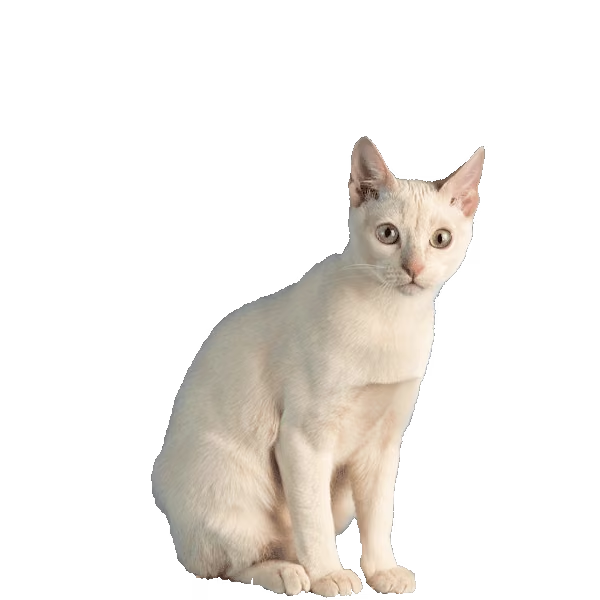
Tonkinese
The Tonkinese is a lively, affectionate breed blending Siamese and Burmese traits into a playful, people-loving companion.
- Size
- Medium
- Lifespan
- 12–16 years
- Origin
- Canada
- Temperament
- Affectionate
- Standard colors
- Blue, Lilac and Platinum and 10 more
Characteristics
Coat and grooming
How the Tonkinese coat is built, and what that means when you groom it.
- Coat layers
- Single coat
- Coat texture
- Smooth, Satin
- Coat length
- Short
- Shedding
- Low shedding
Tonkinese colors and patterns
What each club's breed standard says about every Tonkinese color and pattern. Point at a ruling to see the club's own wording.
Breed standards describe the Tonkinese in Blue, Lilac, Platinum, Chocolate, Seal, Sable, Cinnamon, Caramel, Red, Cream, Fawn, Apricot and Champagne. Standard patterns: Pointed, Tabby, Mackerel tabby, Classic tabby, Spotted tabby, Ticked tabby, Tortoiseshell, Torbie, Mink and Sepia.
| Color or pattern | TICA | CFA | GCCF |
|---|---|---|---|
| Blue | Standard | Standard (“Blue Mink”) | Standard (“Blue”) |
| Lilac | Standard | Standard (“Platinum Point”) | Standard (“Lilac”) |
| Platinum | Standard | Standard (“Platinum Mink”) | Standard (“Lilac”) |
| Chocolate | Standard | Standard (“Champagne Point”) | Standard (“Chocolate”) |
| Seal | Standard | Standard (“Natural Point”) | Standard (“Seal”) |
| Sable | Standard | Standard (“Natural Mink”) | Standard (“Brown”) |
| Cinnamon | Standard | No ruling | Standard (“Cinnamon”) |
| Caramel | No ruling | No ruling | Standard (“Caramel”) |
| Red | Standard | No ruling | Standard (“Red”) |
| Cream | Standard | No ruling | Standard (“Cream”) |
| Fawn | Standard | No ruling | Standard (“Fawn”) |
| Apricot | No ruling | No ruling | Standard (“Apricot”) |
| Champagne | Standard | Standard (“Champagne Mink”) | Standard (“Chocolate”) |
| Silver | Not recognised | No ruling | No ruling |
| Patterns | |||
| Pointed | Standard (“Pointed”) | Standard (“Pointed”) | Standard (“Colourpointed Pattern”) |
| Tabby | Not recognised | No ruling | Standard (“Tabby”) |
| Mackerel tabby | No ruling | No ruling | Standard (“mackerel”) |
| Classic tabby | No ruling | No ruling | Standard (“classic”) |
| Spotted tabby | No ruling | No ruling | Standard (“spotted”) |
| Ticked tabby | No ruling | No ruling | Standard (“ticked”) |
| Tortoiseshell | Standard (“Tortoiseshell”) | No ruling | Standard (“Tortoiseshell”) |
| Torbie | No ruling | No ruling | Standard (“Tortie-Tabby”) |
| Mink | Standard (“Mink”) | Standard (“Mink”) | Standard (“Tonkinese Colour Restriction”) |
| Sepia | Standard (“Sepia”) | Standard (“Solid”) | Standard (“Burmese Colour Restriction”) |
| Bicolour | Not recognised | No ruling | No ruling |
| Smoke | Not recognised | No ruling | No ruling |


| Color or pattern | TICA | CFA | GCCF |
|---|---|---|---|
| Blue | Standard (“blue”) | Standard (“blue”) | Standard (“Clear blue”) |
| Yellow | No ruling | Disqualifying (“yellow eyes in mink colors”) | Standard (“Yellow”) |
| Green | Standard (“Chartreuse”) | Standard (“green to yellow/green”) | No ruling |
| Aqua | Standard (“aqua”) | Standard (“aqua”) | Standard (“Greenish-blue or bluish-green”) |
| Color or pattern | CFA | GCCF |
|---|---|---|
| Blue | Standard (“blue-gray”) | Standard (“blue-grey”) |
| Lilac | Standard (“lavender-pink to lavender-gray”) | Standard (“pinkish-grey”) |
| Brown | Standard (“dark brown”) | Standard (“brown”) |
| Chocolate | No ruling | Standard (“chocolate”) |
| Seal | No ruling | Standard (“seal brown”) |
| Cinnamon | Standard (“cinnamon-brown”) | Standard (“Pink to cinnamon brown”) |
| Fawn | No ruling | Standard (“Pinkish fawn”) |
| Pink | No ruling | Standard (“pink”) |
| Color or pattern | CFA | GCCF |
|---|---|---|
| Blue | Standard (“blue-gray”) | Standard (“blue-grey”) |
| Lilac | Standard (“lavender-pink”) | Standard (“pinkish-grey”) |
| Brown | Standard (“medium to dark brown”) | Standard (“brown”) |
| Chocolate | No ruling | Standard (“chocolate”) |
| Seal | No ruling | Standard (“seal brown”) |
| Cinnamon | Standard (“cinnamon-pink to cinnamon-brown”) | Standard (“Pink to cinnamon brown”) |
| Fawn | No ruling | Standard (“Pinkish fawn”) |
| Pink | No ruling | Standard (“pink”) |
What the rulings mean
- Standard
- Described by the club's breed standard.
- Disqualifying
- The club's breed standard disqualifies an animal of this colour or pattern.
- Not recognised
- The club does not accept this colour or pattern for the breed.
Color changes
How a Tonkinese's colors can change over its life.
Tabbychanges toSolid
Coat · With age · from 0 to 39 weeks
Tabbychanges toShaded
Coat · With age · from 0 to 6 weeks
Tabbychanges toChinchilla
Coat · With age · from 0 to 6 weeks
Bluechanges toTortoiseshell
Coat · With age
Pointedchanges toMink
Coat · With age · from 0 to 69 weeks
Bluechanges toGreen
Eyes · With age · from 4 to 17 weeks
Bluechanges toYellow
Eyes · With age · from 4 to 17 weeks
Bluechanges toGold
Eyes · With age · from 4 to 17 weeks
Bluechanges toCopper
Eyes · With age · from 4 to 17 weeks
Bluechanges toOrange
Eyes · With age · from 4 to 17 weeks
Bluechanges toHazel
Eyes · With age · from 4 to 17 weeks
Bluechanges toAmber
Eyes · With age · from 4 to 17 weeks
Pinkchanges toSeal
Nose · With age · from 1 to 52 weeks
Pinkchanges toBlue
Nose · With age · from 1 to 52 weeks
Pinkchanges toChocolate
Nose · With age · from 1 to 52 weeks
Pinkchanges toLilac
Nose · With age · from 1 to 52 weeks
Pinkchanges toSeal
Paw pads · With age · from 1 to 52 weeks
Pinkchanges toBlue
Paw pads · With age · from 1 to 52 weeks
Pinkchanges toChocolate
Paw pads · With age · from 1 to 52 weeks
Pinkchanges toLilac
Paw pads · With age · from 1 to 52 weeks


Sources
Each ruling comes from the club's published breed standard or color list.
About the Tonkinese
The Tonkinese is a medium-sized cat combining Siamese and Burmese traits into a warm, sociable companion whose affectionate nature matches the welcoming spirit of Irish household life.
The Tonkinese brings a warmth and sociability that sits naturally alongside Irish hospitality. Developed in Canada from Siamese and Burmese parents, this medium-sized cat greets people at the door, joins in with family activity, and seeks out laps with an enthusiasm that makes first-time visitors feel instantly at ease.
These cats form genuine bonds with their people, and their affectionate nature goes well beyond the typical reserved feline demeanour. They are talkative in a conversational way rather than an irritating one, which suits the social, welcoming atmosphere of an Irish home. They do well with children, with other cats, and with dogs that accept cats, and they thrive in households where people are present and engaged.
The Irish Cat Fancy has a modest but growing interest in the Tonkinese, and TICA-registered breeders in Ireland and the UK are the primary sources for those looking to acquire one here.
| Attribute | Detail |
|---|---|
| Origin | Canada |
| Size | Medium |
| Lifespan | 12 to 16 years |
| Group/role | Companion cat |
| Good with | Children, other cats, dogs, and active households |
Who it suits
The Tonkinese fits people who want a cat that interacts rather than observes from a distance. It does best with company, whether from family members at home during the day or another compatible pet. Quiet Irish homes where the cat would spend most of the day alone are a poorer match, because the breed is social and can grow restless and loud without stimulation.
History and origin
The modern Tonkinese was developed in Canada in the 1960s by Margaret Conroy, who crossed a Siamese with a Burmese to blend the best of both breeds.
Cats matching the Tonkinese type appeared in records well before the breed was formalized. The foundation cat of the Burmese breed, a brown female named Wong Mau brought to the United States in the 1930s, is now understood to have been a Siamese and Burmese blend rather than a pure Burmese.
The modern breeding programme began in Canada in the 1960s. Margaret Conroy of New Brunswick crossed a Siamese with a Burmese with the goal of producing a cat that kept the affectionate temperament of both parents along with the intermediate coat colour. American breeders, including Jane Barletta, worked toward the same type around the same period, and the two efforts shaped the breed that exists today.
The name went through several spellings before the current form was settled. The breed reached Ireland through the wider UK and European show circuit, and Irish fanciers drawn to its personality have been importing and breeding it with quiet dedication for some years.
Appearance and breed standard
The Tonkinese is a medium, muscular cat with a short mink-patterned coat and aqua to blue-green eyes in the most recognized variety.
The Tonkinese has a balanced, moderate build that sits between the slim Siamese and the rounder Burmese. The body is medium in length and notably muscular, giving the cat a dense, heavier feel than its size implies. The head is a modified wedge with gently rounded contours, set on a body carried on slim legs with small, oval paws.
| Trait | Standard |
|---|---|
| Height | Around 18 to 25 cm at the shoulder |
| Weight | 2.7 to 5.4 kg (6 to 12 lb) |
| Coat | Short, fine, close-lying with a soft sheen |
| Colours | Natural, champagne, blue, and platinum, in mink, point, and solid patterns |
| Eyes | Aqua (mink), blue (point), or gold to green (solid) |
Coat and colours
The coat is short and lies flat against the body, requiring little maintenance. The breed comes in four base colours: natural (a warm brown), champagne (a soft buff), blue (a cool grey), and platinum (a pale silver-grey). Each colour appears in three patterns. The mink pattern, with its aqua eyes and shaded body colour, is the most iconic variety of the breed.
Temperament and personality
The Tonkinese is affectionate, playful, and highly social, bonding closely with its family and getting along well with children and other pets.
The Tonkinese is one of the more people-focused cat breeds. It seeks out human company, greets family members, and prefers to be involved in whatever is happening in the home. Many learn to fetch, open doors, and solve simple puzzles, reflecting the intelligence inherited from both parent breeds.
With family, the Tonkinese is openly affectionate and often picks a favourite person while staying warm toward everyone. It tends to be confident with strangers rather than shy, frequently approaching visitors with a curiosity and friendliness that Irish households tend to appreciate. The breed generally does well with children who handle it gently and with other cats and dogs, especially when introductions are gradual.
The Tonkinese is vocal, though usually less piercing than the Siamese. It will hold conversations, comment on daily events, and ask for attention when ignored. Because the breed dislikes being alone, a companion animal or a household with people present for much of the day helps prevent boredom and excess vocalising.
| Trait | Rating |
|---|---|
| Affection | 5 |
| Energy | 4 |
| Trainability | 4 |
| Vocalness | 4 |
| Shedding | 2 |
Care and grooming
The Tonkinese needs little coat care but a high amount of interaction and play, and it does best as an indoor cat with company through the day.
The Tonkinese is low-maintenance in grooming but high-maintenance in attention. Its short coat sheds modestly and stays in good condition with minimal effort, while its social nature means daily interaction matters far more than physical care.
Grooming
- Brush weekly with a soft brush or rubber grooming mitt to remove loose hair and spread skin oils.
- Trim the nails every two to three weeks.
- Check the ears for wax or debris and wipe them clean as needed.
- Brush the teeth regularly to reduce dental disease, a common issue in the breed.
- Bathing is rarely needed because the coat stays clean on its own.
Exercise
- Provide two or more interactive play sessions each day with wand toys or fetch.
- Offer puzzle feeders and rotating toys to keep the mind busy.
- Add vertical space such as a cat tree or shelves for climbing.
- Consider a second compatible pet so the cat has a play partner.
Environment
The Tonkinese is best kept as an indoor cat, which protects it from traffic, predators, and disease. It needs a stimulating home with toys, climbing options, and company. Long, regular periods of solitude tend to make the cat bored, lonely, and loud.
Nutrition and feeding
The Tonkinese does well on a complete, protein-forward cat food fed in measured meals, with portions adjusted to its medium size and activity level.
As an obligate carnivore, the Tonkinese needs a diet built on animal protein and fat with limited carbohydrate. A complete commercial food that meets recognised nutritional standards for the cat's life stage covers its core needs. The breed is active and muscular, so it benefits from quality protein, but its appetite combined with an indoor lifestyle means portions should be controlled to prevent weight gain. Fresh water should be available at all times.
| Life stage | Amount per day | Meals |
|---|---|---|
| Kitten (2 to 12 months) | Per package guidance, fed to appetite | 3 to 4 |
| Adult (1 to 7 years) | About 50 to 70 g dry, or equivalent wet | 2 |
| Senior (7 years and older) | Adjusted to maintain healthy weight | 2 |
Treats and supplements
Treats should make up no more than about ten percent of daily calories, with the rest from complete food. A balanced commercial diet usually supplies all required nutrients, so routine supplements are unnecessary unless a veterinarian advises them for a specific condition. Monitor body condition every few weeks and adjust portions rather than relying on free feeding.
Health and lifespan
The Tonkinese is generally healthy with a lifespan of 12 to 16 years, though it can be prone to dental disease, gingivitis, and certain inherited conditions.
The Tonkinese is a robust breed, helped by the genetic diversity of its Siamese and Burmese background. Most cats live 12 to 16 years, and many reach the upper end of that range with good care. Like all breeds it has some conditions to watch for, several of them shared with its parent breeds. Routine veterinary visits and attention to dental and weight health support a long life.
| Condition | Signs | Note |
|---|---|---|
| Gingivitis and dental disease | Red gums, bad breath, drooling, reduced appetite | Common in the breed; home brushing and cleanings help |
| Upper respiratory issues | Sneezing, nasal discharge, watery eyes | Linked to the shortened face of some lines |
| Hereditary corneal problems | Cloudiness or visible eye changes | Reported in some Burmese-derived lines |
| Heart disease | Lethargy, fast breathing, reduced activity | Screening recommended in breeding cats |
| Obesity | Weight gain, low activity | Manage with measured meals and play |
Preventive care
- Schedule annual veterinary checkups, moving to twice yearly for senior cats.
- Keep core vaccinations and parasite control up to date.
- Brush the teeth and arrange professional dental cleanings as advised.
- Feed measured portions and monitor body condition to avoid obesity.
- Buy from breeders who screen breeding cats for known inherited conditions.
Training and enrichment
The Tonkinese is intelligent and eager to engage, learning tricks, fetch, and household routines quickly through reward-based training.
The Tonkinese is among the more trainable cat breeds. Its intelligence and desire to interact with people make it receptive to learning, and many cats pick up fetch, come-when-called, and simple tricks. Training also channels the breed's energy and curiosity, which reduces boredom and unwanted behaviour. Short, positive sessions work better than long ones, and food rewards or play are strong motivators.
Basics
- Start with litter training, which most kittens learn quickly with a clean, accessible tray.
- Introduce a scratching post early and reward its use to protect furniture.
- Teach name recognition by pairing the name with a treat or play.
- Add simple tricks such as sit, fetch, or coming when called, one at a time.
- Use a clicker or a marker word to signal the exact moment of correct behaviour.
Breeding and kittens
Tonkinese cats reach maturity around five to nine months, carry a roughly 63 to 65 day pregnancy, and typically produce litters of four to six kittens.
Tonkinese females usually reach sexual maturity between five and nine months, though responsible breeders wait until a cat is physically and behaviourally mature before mating. Gestation runs about 63 to 65 days, and litters tend to number four to six kittens. Because the breed comes from a Siamese and Burmese cross, breeders sometimes pair Tonkinese with those parent breeds, which keeps the gene pool healthy and influences the coat patterns that appear in a litter.
Kittens are born with lighter coats that gradually develop their adult colour and pattern over the first weeks and months. They should stay with the mother until at least twelve weeks so they are fully weaned, litter trained, and well socialised. Early handling and exposure to household sights and sounds help produce the confident, people-oriented adult the breed is known for.
| Metric | Value |
|---|---|
| Sexual maturity | 5 to 9 months |
| Gestation | 63 to 65 days |
| Average litter size | 4 to 6 kittens |
| Weaning age | Around 8 weeks |
| Recommended rehoming age | 12 weeks or older |
Your Tonkinese registered and chipped, sorted for good
No law covers cat chips in Ireland, which makes a free United Pet Club record the only thing standing behind your Tonkinese's number.
Registering a Tonkinese in Ireland
An ISPCA branch or a vet scanning a found Tonkinese gets exactly as far as her record allows. Give the scan somewhere to land: a free profile with your name, your number, and her photo. Register your cat once and it holds for good.
A chip under her skin with no record behind it is a riddle nobody can solve. Lodge the number with United Pet Club instead: free for life, any brand at all, updates that never cost a cent, and a record that answers scans at home or abroad. Register the microchip, then the free account finishes the profile.
How do I register my Tonkinese in Ireland?
Open a free United Pet Club account, put in her name, colouring, and a photo, and save the profile. It stays live for the whole of her life at no cost, and a chip is not needed to begin.
How do I register my Tonkinese's microchip?
Lodge the fifteen digit number from the vet's paperwork in your free account with your current contact details. The lifetime plan never asks for a penny, not for the record and not for updates.
Do cats have to be chipped in Ireland?
No, the 2015 chipping law covers dogs only. That is exactly why a registered chip matters for a Tonkinese: without your record, there is nothing at all connecting her number to your phone.
What does it cost to register a Tonkinese?
Nothing whatsoever. United Pet Club's lifetime plan takes care of the profile, the chip record, and every amendment, free for the whole of her life.
Frequently asked questions
Common questions about the Tonkinese cover its size, temperament, care needs, lifespan, suitability for families, and availability.
How big does a Tonkinese cat get?
The Tonkinese is a medium-sized cat, typically weighing 2.7 to 5.4 kg (6 to 12 lb). It is muscular and feels heavier than it looks, with males generally larger than females.
What is the Tonkinese temperament like?
Tonkinese cats are affectionate, playful, intelligent, and highly social. They bond closely with their people, stay active into adulthood, and are usually friendly with children, other cats, and dogs.
Is the Tonkinese easy to care for?
Grooming is easy thanks to the short coat, which only needs weekly brushing. The greater demand is social: the breed wants company and daily play, so it is less suited to homes where it would be alone for long periods.
How long do Tonkinese cats live?
The Tonkinese typically lives 12 to 16 years. With good diet, dental care, and regular veterinary checkups, many reach the upper end of that range.
Are Tonkinese cats good for Irish families?
Yes. Their warmth, sociability, and patience with children make them a natural fit for the welcoming, family-centred character of Irish households.
Are Tonkinese cats vocal?
They are talkative and will hold conversations with their owners, though their voice is usually softer than the Siamese. They tend to be most vocal when they want attention or are left alone.
Where can I find a Tonkinese in Ireland?
Tonkinese cats are available from TICA-registered breeders on the island of Ireland and in the UK, and occasionally through breed-specific rescue groups. Choose a breeder who screens cats for inherited conditions and raises kittens in a home setting.
From the community
Ask about the TonkineseNo questions about the Tonkinese yet. Be the first to ask.
Browse Cat breeds