
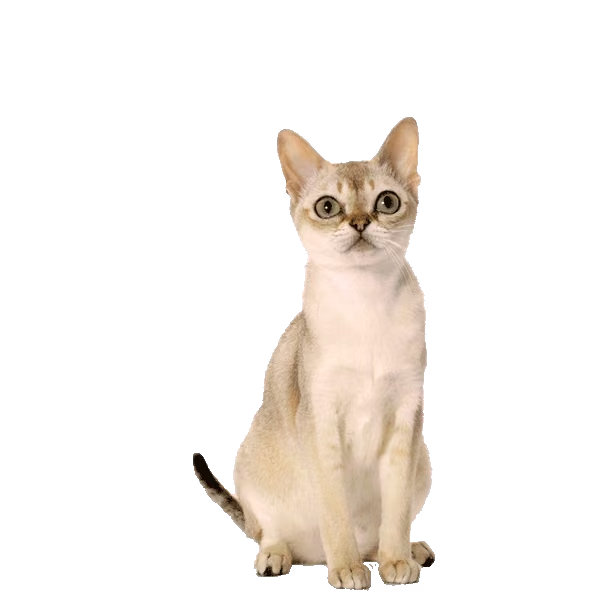
Singapura
The Singapura is one of the smallest cat breeds, prized for its curious, affectionate personality and big-eyed, pixie-like charm.
- Size
- Small
- Lifespan
- 11–15 years
- Origin
- Unknown
- Temperament
- Curious
- Standard colors
- Sable
Characteristics
Coat and grooming
How the Singapura coat is built, and what that means when you groom it.
- Coat layers
- Single coat
- Coat texture
- Smooth
- Coat length
- Short
- Shedding
- Low shedding
Singapura colors and patterns
What each club's breed standard says about every Singapura color and pattern. Point at a ruling to see the club's own wording.
Breed standards describe the Singapura in Sable. Standard patterns: Ticked tabby and Sepia.
| Color or pattern | TICA | CFA | FIFE | GCCF |
|---|---|---|---|---|
| Sable | Standard (“Sable Ticked”) | Standard (“Sepia agouti”) | Standard (“Seal sepia”) | Standard (“sepia brown”) |
| Patterns | ||||
| Ticked tabby | Standard (“Ticked tabby”) | Standard (“agouti”) | Standard (“ticked”) | Standard (“ticked”) |
| Sepia | Standard (“Sepia”) | Standard (“Sepia”) | Standard (“sepia”) | Standard (“sepia”) |
%22%3E%3Cg%20fill%3D%22none%22%20stroke%3D%22%231C1C1C%22%20stroke-width%3D%221.25%22%20stroke-linecap%3D%22round%22%20stroke-linejoin%3D%22round%22%3E%3Cpath%20d%3D%22M55.8%2023.1l-0.3%201.9M7.5%2020.6l0.6%201.7M43.9%2028.2l-0.3%201.7M39.2%2031.8l0.6%201.1M9.8%2028l-0.3%201.8M20.7%2029.6l0.1%202M39.9%2031.8l0.2%201.3M17.1%2022.1l0.7%201.1M38.7%2052.5l0.9%201.4M45.2%2051l0.6%201.2M50.4%2024.5l0.1%201.9M18.8%2054.3l0%202.1M17.3%2036l0.3%201.2M25.9%2029.2l0.2%201.6M49.4%2036.5l0.7%201.3M40.1%2025l-0.6%202.1M27.5%2025.6l0.4%201.2M8.8%2024.9l0.1%201.8M47.9%2022.8l0.5%201.3M32.8%2031.8l0.8%201.9M23.4%2050.6l-0.2%202.2M28.4%2023.9l-0.5%201.6M24.9%2040.6l0.4%201.7M58.1%2015.3l-0.5%201.7M29.6%2021.6l1.1%201.9M49.8%2029.3l0.4%202M5.8%2019.1l0%201.3M13.1%2025.3l0.6%201.5M52%2027l0.6%201.7M8%2022.4l0.5%201.1M18.4%2031.3l-0.1%201.6M24.8%2021.5l-0.6%202.1M53.6%2021.9l0.2%201.5M53.2%2022.7l0.3%201.6M33.5%2028.3l-0.6%201.7M22.9%2020.9l-0.4%201.3M57.4%2010.8l-0.2%202M48%2053.3l-0.6%201.8M17%2015.6l0.6%201.1M25.7%2031.6l0.9%201.1M22.6%2053.7l0.1%201.6M17.5%2017.5l-0.4%201.7M19.4%2046.5l0.1%201.8M27.3%2037.2l-0.6%202M12.9%2024.8l0.5%201.8M28.5%2030.1l0.3%201.5M17.7%2021.4l-0.4%201.2M18%2052.8l-0.3%201.8M9.1%2021.6l1.3%201.8M38.4%2043.5l0.1%201.9M32.1%2021.8l1.1%201.6M32%2034.5l0%201.9M53.8%2022.7l0.1%202M18.2%2028.8l0.4%201.8M19.3%2019.5l-0.2%201.3M40.4%2028.1l0.8%201.1M46.7%2037.8l-0.2%201.3M51.2%2029.1l-0.6%201.8M20.7%2031l0.1%201.9M30.6%2035.4l0.9%201.9M36.3%2021.9l-0.5%201.9M45.9%2039.6l0.1%201.8M35.5%2035.5l-0.3%201.3M43.2%2024.8l-0.2%201.9M42.8%2023.2l0.8%201.8M15.8%2026l0.8%201.5M38.2%2048.8l-0.4%201.3M35.2%2029.3l-0.6%202M42.9%2029.6l-0.1%201.2M30%2034.8l1%201.4M30.1%2027l0.6%202M45.5%2033.7l0.7%201.1M49.1%2028.9l0.5%201.4M52%2029.1l-0.6%202M29.5%2027.2l-0.6%202M55.9%2016.3l-0.5%201.7M29%2022.9l0.6%201.7M34.3%2029.2l0.4%202.1M29.4%2024.1l0.1%201.5M21.6%2040.3l-0.1%201.6M43.5%2034l0.8%201.8M46.1%2048.7l0.4%201.9M40.8%2052.9l0.4%201.5M45.9%2039.5l-0.1%202.1M7.6%2028.3l0.2%201.7M16.7%2054.8l0.7%201.2M24.8%2033.3l-0.3%201.2M25.6%2038.4l-0.1%201.9M24.4%2052.5l0.6%201.4M40.7%2047.1l0.2%202.1M37.8%2047.4l0.6%201.3M10.2%2022l0.2%202.1M7.3%2017.6l0.8%201.9M44.8%2042.9l0.4%201.1M38.2%2029l-0.1%201.9M56.6%2015.8l-0.2%201.5M38.1%2033.9l1.1%201.6M42.9%2027.2l-0.3%201.2M6%2020.9l0.7%201.1M55.5%2013.2l-0.2%201.3M19.6%2028.9l0.3%202M35.9%2034l-0.2%202.1M12.8%2016l0.2%202.1M45.9%2038.9l-0.2%201.2M46.5%2029.8l-0.3%201.7M31.1%2037l0.7%201.6M37.7%2030.8l0.8%201.6M20.5%2024.7l1.2%201.5%22%2F%3E%3Cpath%20d%3D%22M21.8%2031.8l0.7%202M12.1%2027.4l0.1%202.1M6.5%2020.9l-0.3%201.3M37.6%2048l1%201.6M47.8%2039.2l0.7%201.3M47.3%2050l-0.5%201.5M43.9%2033.6l-0.4%202.1M39.8%2032.3l-0.1%201.3M18.2%2018.3l0.1%201.5M25.1%2038.2l0.7%201.4M42.9%2028.2l0.9%201.9M17.3%2029.8l0.9%201.9M50.6%2028.2l0.5%201.9M40.1%2025.6l0%201.2M29.6%2023.7l0%201.8M57.7%2013.6l0.5%201.5M22.7%2030.1l-0.1%202.2M46.8%2049.4l0.6%201.1M47.8%2052.5l-0.4%201.6M31.5%2020.6l0.6%202M20.5%2030.6l0.6%201.6M37.3%2027.1l-0.2%201.8M36.4%2037.5l0.9%201.1M21.7%2042.2l-0.2%201.2M42.8%2022.6l0.4%201.8M37.9%2040.4l0.5%201.5M52.6%2023.4l0.4%202M34.2%2027.8l0.8%201.4M16.1%2023l1.1%201.5M55.6%2021.9l0.4%201.6M17.6%2053.4l0.9%201.5M41.9%2030l1%201.7M16.8%2054.6l0.4%202.2M40.3%2030.9l0.6%201.4M18.9%2034.3l1.3%201.6M34.5%2021.7l0.5%201.8M42.4%2036.5l1%201.8M23.3%2040.2l-0.3%201.7M21.1%2029.8l0.5%201.4M58%2010.8l0%202M41.7%2035.4l0.8%202M10.3%2021.9l-0.2%201.7%22%2F%3E%3C%2Fg%3E%3Cpath%20d%3D%22M15%2047H50M15%2051H50%22%20fill%3D%22none%22%20stroke%3D%22%231C1C1C%22%20stroke-width%3D%221.6%22%20stroke-linecap%3D%22round%22%20stroke-linejoin%3D%22round%22%2F%3E%3Ccircle%20cx%3D%2259.8%22%20cy%3D%227.8%22%20r%3D%222%22%20fill%3D%22%231C1C1C%22%2F%3E%3Cpath%20d%3D%22M12.6%2015.5l.6%204.2M15%2015.5l-.2%204.2%22%20fill%3D%22none%22%20stroke%3D%22%231C1C1C%22%20stroke-width%3D%221%22%20stroke-linecap%3D%22round%22%20stroke-linejoin%3D%22round%22%2F%3E%3C%2Fg%3E%3Cuse%20href%3D%22%23s%22%20fill%3D%22none%22%20stroke%3D%22%233B2A20%22%20stroke-opacity%3D%220.6%22%20stroke-width%3D%221%22%20stroke-linejoin%3D%22round%22%2F%3E%3Cpath%20d%3D%22M3.4%2022.3L5.4%2022.5L4.3%2024Z%22%20fill%3D%22%23E8A0B4%22%2F%3E%3Ccircle%20cx%3D%229.6%22%20cy%3D%2221.2%22%20r%3D%221.1%22%20fill%3D%22%231C1C1C%22%2F%3E%3C%2Fsvg%3E)
%22%3E%3Crect%20x%3D%220%22%20y%3D%220%22%20width%3D%2264%22%20height%3D%2264%22%20fill%3D%22%23847865%22%20fill-opacity%3D%220.7%22%2F%3E%3Cpath%20d%3D%22M5.5%2017L7.5%207L12%2015ZM14%2015L17.5%207L20%2018.5Z%22%20fill%3D%22%23847865%22%2F%3E%3Cellipse%20cx%3D%227.6%22%20cy%3D%2223.6%22%20rx%3D%225%22%20ry%3D%225.2%22%20fill%3D%22%23847865%22%2F%3E%3Crect%20x%3D%220%22%20y%3D%2244%22%20width%3D%2264%22%20height%3D%2220%22%20fill%3D%22%23847865%22%2F%3E%3Cpath%20d%3D%22M50%2027L53.5%205L64%203L64%2013L59%2024L53%2033Z%22%20fill%3D%22%23847865%22%2F%3E%3C%2Fg%3E%3Cuse%20href%3D%22%23s%22%20fill%3D%22none%22%20stroke%3D%22%233B2A20%22%20stroke-opacity%3D%220.6%22%20stroke-width%3D%221%22%20stroke-linejoin%3D%22round%22%2F%3E%3Cpath%20d%3D%22M3.4%2022.3L5.4%2022.5L4.3%2024Z%22%20fill%3D%22%23E8A0B4%22%2F%3E%3Ccircle%20cx%3D%229.6%22%20cy%3D%2221.2%22%20r%3D%221.1%22%20fill%3D%22%231C1C1C%22%2F%3E%3C%2Fsvg%3E)
| Color or pattern | TICA | CFA | FIFE | GCCF |
|---|---|---|---|---|
| Hazel | Standard (“hazel”) | Standard (“hazel”) | Standard (“hazel”) | Standard (“hazel”) |
| Copper | Standard (“copper”) | No ruling | No ruling | No ruling |
| Yellow | No ruling | Standard (“yellow”) | No ruling | Standard (“yellow”) |
| Gold | Standard (“gold”) | No ruling | No ruling | No ruling |
| Green | Standard (“Celadon green, green”) | Standard (“green”) | Standard (“brilliant green”) | Standard (“green”) |
| Blue | Disqualifying (“definite blue”) | Disqualifying (“blue”) | No ruling | No ruling |
| Aqua | Disqualifying (“aqua”) | No ruling | No ruling | No ruling |
| Color or pattern | TICA | CFA | FIFE |
|---|---|---|---|
| Pink | Standard (“pale to dark salmon”) | Standard (“pale to dark salmon”) | Standard (“pale to dark salmon”) |
What the rulings mean
- Standard
- Described by the club's breed standard.
- Disqualifying
- The club's breed standard disqualifies an animal of this colour or pattern.
Color changes
How a Singapura's colors can change over its life.
Pinkchanges toSeal
Nose · With age · from 1 to 52 weeks
Pinkchanges toBlue
Nose · With age · from 1 to 52 weeks
Pinkchanges toChocolate
Nose · With age · from 1 to 52 weeks
Pinkchanges toLilac
Nose · With age · from 1 to 52 weeks
Sources
Each ruling comes from the club's published breed standard or color list.
About the Singapura
Ireland's cat enthusiasts treasure rare breeds, and the Singapura, gentle, small, and affectionate, has earned a quiet but devoted following among Irish owners who appreciate its undemanding nature.
There is something fitting about a rare breed finding a home in a country where people have always had a particular warmth toward animals. The Singapura is one of the least common pedigreed cats in Ireland, and those who have one tend to speak about it with the kind of fond specificity usually reserved for family members.
It is a small cat, one of the smallest in the pedigreed world, typically weighing 4 to 8 pounds fully grown. But small does not mean fragile. Pick one up and you find a firm, well-muscled animal, dense in the hand and alert in every feature. The wide eyes and large ears give it a perpetually interested expression, as if nothing happening in the room can quite be ignored. The coat is short, warm in colour, and ticked with brown over an ivory base.
The Singapura's temperament suits the Irish sensibility. It is companionable without being intrusive, content to sit nearby and observe rather than to demand attention loudly. It keeps its playful energy late into life, and it matches the Atlantic weather by preferring to be indoors, close to warm people and warm rooms, rather than out in the Irish rain.
| Attribute | Detail |
|---|---|
| Origin | Unknown (Singapore origin disputed) |
| Size | Small (4 to 8 pounds) |
| Lifespan | 11 to 15 years |
| Group / role | Shorthaired companion cat |
| Good with | Families, individuals, other cats and calm dogs |
Who it suits
The Singapura suits Irish households of all sizes, from a Dublin apartment to a farmhouse in Clare, as long as the cat receives consistent company and daily interaction. It does particularly well in homes where someone is present for much of the day. It tolerates other cats readily, gets on with calm dogs, and is gentle enough for homes with older children.
History and origin
Named after Singapore's Malay identity, the Singapura was developed in the United States in the 1970s from cats with a disputed connection to Singapore's street cat population.
The Singapura takes its name from Singapura, the Malay word for Singapore, where small, ticked-coat cats have wandered the streets, drains, and alleyways for generations. In the 1970s, American breeders brought cats reportedly collected from Singapore to the United States and began a formal breeding programme from that founding group.
What followed was a prolonged dispute about the actual origins of those founding cats. The original documentation was contested, and evidence surfaced suggesting some of the animals may have lived in North America prior to the Singapore story. The disagreement was never formally resolved, and registries including the bodies affiliated with the Irish Cat Fancy settled on listing the verified origin as unknown, which is the honest position given the conflicting evidence.
The Singapura reached Ireland through importation from established programmes in Britain and continental Europe. The Irish cat fancy community is smaller than its British counterpart, and the number of Singapura breeders active in Ireland at any time is very small. This means kittens are genuinely rare, and prospective Irish owners often need to extend their search to registered breeders in Britain or to contact Irish-based breeders early and accept a waiting period.
Appearance
The Singapura is compact and unexpectedly solid, with a single coat colour in sepia agouti ticking, large eyes, and prominent ears.
The Singapura looks more delicate than it is. The body is genuinely small but well proportioned and distinctly muscular for its size. The head is round, the muzzle short, and the ears notable for their width and depth. The almond-shaped eyes are a defining characteristic, large relative to the face and full of expression. The tail is slender with a gently rounded tip.
| Feature | Standard |
|---|---|
| Height | About 6 to 8 inches at the shoulder |
| Weight | 4 to 8 pounds |
| Coat | Short, fine, close-lying, ticked |
| Colour | Sepia agouti (warm ivory ground with dark brown ticking) |
| Eyes | Large, almond-shaped; hazel, green, or yellow |
Coat and colour
One colour, one pattern. The Singapura's sepia agouti ticking is its trademark: each hair carries alternating light and dark bands producing a warm, earthy overall tone. Faint tabby markings appear on the face, and the underside is lighter than the back and sides. The short coat lies close to the skin, sheds very little, and needs only a weekly brush. For Irish owners living with wool carpets and upholstery, the low shed rate is a practical advantage.
Temperament
Gentle, curious, and quietly sociable, the Singapura forms strong bonds with its people without being vocally demanding.
People who meet a Singapura for the first time are often struck by how settled it is. This is not a cat that bounces off the walls or makes itself known through volume. It communicates in soft, muted sounds. It explores, observes, and participates in household life at its own gentle pace. And then, quite suddenly, it is in your lap, or on your shoulder, or tucked against your side on the sofa.
The breed is genuinely people-fond, and it carries that fondness evenly across a household. It is not the sort of cat that bonds exclusively with one person and ignores everyone else. It is sociable with visitors once its initial curiosity is satisfied, comfortable around other cats, and generally at ease with calm dogs.
What the Singapura does not thrive on is solitude. Long working days without company or stimulation leave it bored and sometimes unsettled. Irish owners who work from home, or who keep the cat in a pair, report the most contented animals.
| Trait | Rating |
|---|---|
| Affection | 5 |
| Energy | 4 |
| Trainability | 4 |
| Vocalness | 2 |
| Shedding | 2 |
Care and grooming
The Singapura is easy to groom and adaptable to Irish homes of various sizes, needing warmth, company, and interactive play to stay content.
Grooming
- Brush the short coat once a week with a soft bristle brush or rubber grooming mitt.
- Trim claws every two to three weeks.
- Check ears weekly; clean with a damp cotton pad if wax is visible.
- Begin brushing teeth early in life and book professional dental cleans as your vet advises.
- Bathing is rarely needed and usually unwelcome.
Exercise
- Offer at least two interactive play sessions daily, using a fishing-rod toy or a thrown ball.
- Provide a tall cat tree or a set of wall-mounted shelves so the cat can climb.
- Rotate the toy basket every week or two to prevent boredom.
- On dark Irish autumn and winter afternoons, indoor enrichment matters more than in summer; puzzle feeders and new play objects help.
Environment
The Singapura is comfortably at home in an Irish house or apartment. Ireland's mild but frequently damp and cool Atlantic climate means outdoor life is uninviting for much of the year, and this cat does not push for outdoor access. It wants warmth, light, and company. A spot near a heat source, or a south-facing windowsill on the rare occasion the sun appears, becomes a reliably occupied perch.
Nutrition and feeding
A high-quality, protein-rich diet fed in carefully weighed portions suits this small cat best, with wet food recommended to support hydration.
The Singapura's modest weight makes it easy to accidentally overfeed. What looks like a small additional helping can represent a significant calorie surplus for a 4-to-6-pound cat. Choose a complete commercial cat food carrying a named animal protein as the lead ingredient, and use the scales rather than your eye when measuring portions.
Wet food is a good default for this breed. It increases daily fluid intake, which supports kidney function and urinary tract health. A water fountain placed at a distance from the food bowl typically increases water consumption further. Where dry food is preferred or used as a supplement, measure quantities carefully.
| Life stage | Amount per day | Meals |
|---|---|---|
| Kitten (to 12 months) | Per label, fed to appetite | 3 to 4 |
| Adult (1 to 7 years) | About 100 to 140 g wet, or label amount dry | 2 |
| Senior (7 years and older) | Adjust to body condition and mobility | 2 |
Treats and supplements
A small number of treats is fine, but keep them within a tenth of the day's total calorie allowance. A cat eating a complete commercial diet does not need supplementary vitamins or minerals unless a veterinarian identifies a specific clinical reason. Discuss any supplements with your vet before adding them, particularly for this small breed.
Health and lifespan
The Singapura is a healthy breed with an average lifespan of 11 to 15 years, though breeders must screen for the conditions associated with its limited gene pool.
The Singapura typically lives 11 to 15 years without significant health problems when it comes from a tested breeding line and receives routine care. Because the founding population was relatively small, certain inherited conditions occur, and reputable breeders screen for them before selecting breeding pairs.
In Ireland, the veterinary infrastructure is solid, and finding a good vet comfortable with pedigreed cats is generally straightforward in cities and towns. Rural owners in more remote areas may need to travel to a larger centre for specialist consultations, which is worth factoring into ownership planning for any pedigreed breed.
| Condition | Signs | Note |
|---|---|---|
| Pyruvate kinase deficiency (PKDef) | Lethargy, pale gums, anaemia-related weakness | Inherited; a DNA test exists; both parents should be tested |
| Uterine inertia | Labour fails to progress in a queen | Linked to small body size; breeders need veterinary support at whelping |
| Dental disease | Odour, drooling, reluctance to eat | Preventable to a significant degree with consistent dental care |
Preventive care
- Follow the core vaccination schedule recommended by your vet, updated annually.
- Keep flea, worm, and where relevant, tick prevention current.
- Book annual check-ups; from age seven, twice-yearly visits are preferable.
- Brush teeth regularly and schedule professional dental work as needed.
- Ask breeders for documented PKDef test results for both parents.
Training
The Singapura is attentive and quick to learn, making it one of the more rewarding cats to train with simple positive methods.
The Singapura takes a genuine interest in its surroundings, and that interest extends to patterns of interaction with people. It learns routines quickly, responds to its name reliably, and can be taught to come when called, use a scratching post on request, and perform simple tricks. The breed's desire for company and food motivation make positive reinforcement work efficiently.
For Irish owners, the practical payoff is a more cooperative cat at the vet, a less stressful experience when using a carrier, and a household where scratched furniture is the exception rather than the rule. Training is also a form of daily engagement that helps an active, curious cat stay stimulated.
Basics
- Place a clean litter tray in a quiet corner before the kitten's first night at home.
- Steer every scratch toward a post and praise the cat warmly each time it uses it.
- Say the cat's name before every enjoyable interaction until the name produces a reliable head-turn.
- Work on one skill at a time in sessions of about five to ten minutes.
- Leave the carrier open with familiar bedding inside between journeys so it becomes a comfortable, unremarkable object.
Breeding
With small litters and a queen prone to whelping difficulty, Singapura breeding demands experience, genetic screening, and reliable veterinary access.
Singapuras reach sexual maturity at 7 to 12 months, but experienced Irish breeders affiliated with the Irish Cat Fancy wait until a female is fully mature, typically around 18 months, before mating her for the first time. Gestation is 63 to 67 days. Litters of two to three kittens are typical.
Because the breed is so rare in Ireland, the practical implications of those small litters are significant: the number of kittens available in any given year is very small, and anyone wanting a Singapura kitten in Ireland should expect either a waiting period with an Irish breeder or a search that extends to registered breeders in Britain.
The queen's small size creates a genuine risk of uterine inertia during labour, and breeders need an accessible veterinary practice with experience in feline obstetrics. DNA testing for pyruvate kinase deficiency is non-negotiable in a responsible programme. Kittens stay with their mother for at least 12 weeks before going to new homes.
| Metric | Value |
|---|---|
| Sexual maturity | About 7 to 12 months |
| Gestation | 63 to 67 days |
| Average litter size | 2 to 3 kittens |
| Weaning age | About 8 weeks |
| Recommended rehoming age | 12 weeks or older |
Your Singapura registered and chipped, sorted for good
No law covers cat chips in Ireland, which makes a free United Pet Club record the only thing standing behind your Singapura's number.
Registering a Singapura in Ireland
The whole of cat registration is a form: her name, her colouring, a photo, your phone number, save. Free for life with United Pet Club, chip or no chip, indoors or out.
The fifteen digits on your Singapura's vet paperwork want a registry. United Pet Club lodges them free, keeps them current through every move, and leaves the record findable whenever a scanner asks. Microchip registration plus a free account: both sorted in one cup of tea.
How do I register my Singapura in Ireland?
Open a free United Pet Club account, put in her name, colouring, and a photo, and save the profile. It stays live for the whole of her life at no cost, and a chip is not needed to begin.
How do I register my Singapura's microchip?
Lodge the fifteen digit number from the vet's paperwork in your free account with your current contact details. The lifetime plan never asks for a penny, not for the record and not for updates.
Do cats have to be chipped in Ireland?
No, the 2015 chipping law covers dogs only. That is exactly why a registered chip matters for a Singapura: without your record, there is nothing at all connecting her number to your phone.
What does it cost to register a Singapura?
Nothing whatsoever. United Pet Club's lifetime plan takes care of the profile, the chip record, and every amendment, free for the whole of her life.
Frequently asked questions
Questions from Irish owners and prospective owners about the Singapura's character, needs, availability, and suitability for Irish households.
How big does a Singapura get?
Adults weigh 4 to 8 pounds and stand about 6 to 8 inches at the shoulder. The body is compact and well-muscled, denser in the hand than the cat's small appearance suggests.
Does the Singapura mind Ireland's wet weather?
Not at all; it minds it in the most positive sense by staying firmly indoors. This cat has no particular desire to be outside, and Ireland's frequently damp, cool conditions only reinforce that preference. It wants warmth and company, which Irish homes generally provide.
Is the Singapura good with children?
Yes, with children who are calm and gentle. Its small size makes it unsuitable for very young or rough-and-tumble toddlers, but older children who handle it carefully will find it an affectionate and engaging companion.
How rare is the Singapura in Ireland?
Very rare. Only a small number of breeders work with the breed in Ireland, and litters produce only two or three kittens at a time. Finding a kitten in Ireland may take a year or more; extending the search to British breeders is worth considering.
Does the Singapura get along with dogs?
Generally yes, with calm, cat-experienced dogs. Introductions should be patient and controlled, but the breed is not particularly reactive and tends to hold its ground with good-natured curiosity rather than panic.
Is the Singapura easy to care for?
The grooming routine is minimal: a weekly brush, regular nail trims, and dental care. The bigger commitment is daily interactive play and consistent company, both of which are important for this sociable breed's wellbeing.
From the community
Ask about the SingapuraNo questions about the Singapura yet. Be the first to ask.
Browse Cat breeds