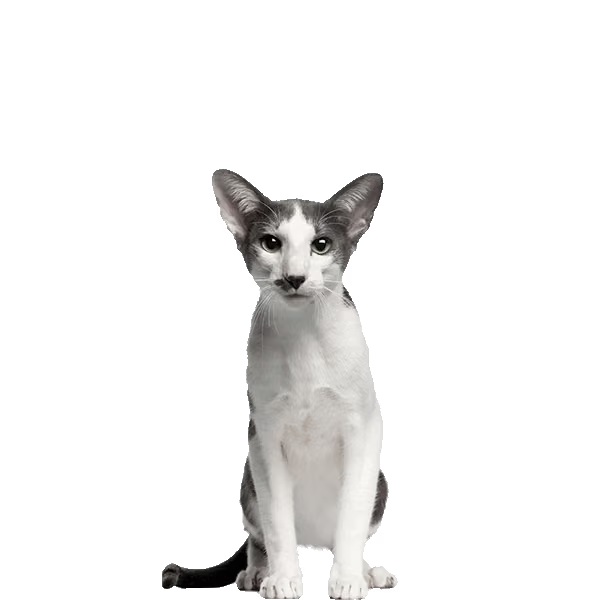
The Oriental Bicolor is a sleek, affectionate cat that is vocal, intelligent, and devoted to being at the center of family life.
How the Oriental Bicolor coat is built, and what that means when you groom it.
The Oriental Bicolour is a medium, sleek cat from the United States that pairs an Oriental body type with bold white-and-colour markings, prized for being affectionate, talkative, and fond of company.
The Oriental Bicolour is a slim, fine-boned cat with a wedge-shaped head, large pointed ears, and a coat that sets white markings against a second colour. It sits within the wider Oriental and Siamese family and carries that group's long lines and busy, chatty character.
This is a cat that likes to be part of things. The Oriental Bicolour trails after its people from room to room, remarks on the day in a clear voice, and looks for a lap or a shoulder any time one is going. It stays playful well into adulthood and holds on to a kitten-like nosiness for years.
You see its cleverness in how fast it picks up household routines and games. Owners tend to describe the breed as a companion that treats human attention as a basic need rather than an odd treat.
The Oriental Bicolour suits a home where someone is about for much of the day, or where a second cat can keep it company. It repays interaction and copes badly with long stretches on its own. People who enjoy a talkative, hands-on cat get on grand with the breed; those after a quiet, self-contained pet usually do not.
| Attribute | Detail |
|---|---|
| Origin | United States |
| Size | Medium |
| Lifespan | 12 to 15 years |
| Group/role | Oriental/Siamese family, companion cat |
| Good with | Families, attentive owners, other sociable cats |
The Oriental Bicolour was developed in the United States by crossing bicolour cats with Oriental and Siamese types to bring white markings to the Oriental body, with breeding programmes forming in the 1980s.
The Oriental Bicolour goes back to the Oriental and Siamese breeds, which supply its long body, fine bone, and wedge head. The bicolour coat arrived through planned crosses with cats that carry white spotting.
Breeders in the United States set out to marry two things: the elegant Oriental conformation and a patterned coat that shows clear white areas beside a solid or patterned colour. The work came together across the 1980s as cat fanciers refined the type.
Because the Bicolour is marked out chiefly by its white patterning rather than a separate body type, many registries treat it as a variety inside the broader Oriental group. The breeding aim has been to hold the Oriental's structure while turning out consistent, well-balanced white markings.
The breed stays less common than its solid-coloured Oriental relatives. Numbers remain modest, and most kittens come from breeders who specialise in Oriental and Siamese lines.
The Oriental Bicolour is a medium, slim cat with a long tubular body, wedge head, large ears, and a short close coat that shows white markings paired with a second colour.
The Oriental Bicolour has the classic Oriental outline: a long, tubular body on slender legs, a fine-boned frame, and a whip-like tail. The head forms a wedge from the nose out to the tips of the large, wide-set ears. The eyes are almond-shaped and usually green, though pointed examples can show blue.
The telltale feature is the bicolour coat. White covers part of the body, often the legs, chest, and face, with the rest in a solid colour or a pattern such as tabby. The idea is an even spread of white against the coloured areas.
| Trait | Standard |
|---|---|
| Height | Around 23 to 25 cm at the shoulder |
| Weight | 3 to 5 kg |
| Coat | Short, fine, close-lying, glossy |
| Colours | White combined with black, blue, red, cream, chocolate, cinnamon, or tabby patterns |
| Eyes | Almond-shaped, usually green; blue in pointed cats |
The coat is short and lies flat to the body, needing little bulk to look tidy. The coloured portion can show as a solid shade or as tabby, tortie, or smoke patterning, always set against white. Each cat wears its own arrangement of white, so no two patterns match exactly. The short coat draws the eye to the breed's long lines and muscle tone.
The Oriental Bicolour is affectionate, playful, and very fond of people, with a loud voice and a strong need for company that keeps it a constant presence about the house.
The Oriental Bicolour is one of the more openly affectionate cats. It bonds tightly with its household and wants a hand in whatever is going on, from cooking to work at a desk. Affection comes freely, and many of these cats sleep pressed up against their owner.
With family, the breed is warm and physical, often meeting people at the door and asking to be lifted. With strangers, most are curious rather than shy and will size up visitors once the first wariness fades. With other pets, the breed usually settles well beside cats and cat-friendly dogs, and a companion animal helps fill the hours when the house is empty.
The voice is a defining trait. The Oriental Bicolour talks often and clearly, drawing on a range of sounds to make its requests plain. It is clever and active too, so it needs toys, climbing options, and regular play to stay content. Boredom can tip into mischief, such as opening presses or knocking things off shelves.
| Trait | Rating |
|---|---|
| Affection | 5 |
| Energy | 4 |
| Trainability | 4 |
| Vocalness | 5 |
| Shedding | 2 |
The Oriental Bicolour asks little in coat care thanks to its short fur, but it needs plenty of daily play, climbing space, and human company to stay healthy and settled.
The Oriental Bicolour suits an indoor home with vertical space and warm resting spots, since the short coat gives little cover against the cold. It does best where it is not left on its own for long. Window perches and safe lookout points help satisfy its nosiness about the world outside.
The Oriental Bicolour needs a balanced, protein-rich cat food given in measured portions, with amounts adjusted for its active build and life stage.
The Oriental Bicolour does well on a complete cat food with animal protein as the main ingredient. Its slim, active body burns through energy readily, but free-feeding can still bring on weight gain, so portions want measuring. Fresh water must be there at all times, and a mix of wet and dry food can help with hydration.
| Life stage | Amount per day | Meals |
|---|---|---|
| Kitten (up to 12 months) | Per product label, fed to appetite | 3 to 4 |
| Adult (1 to 7 years) | 55 to 75 g dry, or equivalent wet | 2 |
| Senior (7+ years) | 50 to 65 g dry, or equivalent wet | 2 |
Treats should stay under about 10 percent of daily calories to protect the breed's lean shape. A balanced commercial diet usually covers all the nutrients a cat needs, so supplements are rarely called for unless a vet recommends them for a particular condition.
The Oriental Bicolour usually lives 12 to 15 years and is mostly healthy, though it shares some inherited risks with the Oriental and Siamese family, including heart and dental trouble.
The Oriental Bicolour is a generally hardy cat with a typical lifespan of 12 to 15 years, and many reach the upper end with good care. As part of the Oriental and Siamese group, it can carry some of the conditions seen in those lines, so screening from responsible breeders and regular vet checks matter.
| Condition | Signs | Note |
|---|---|---|
| Dilated and other cardiomyopathies | Lethargy, fast or laboured breathing, reduced appetite | Heart screening aids early detection |
| Dental disease | Bad breath, drooling, trouble eating | Routine dental care lowers the risk |
| Amyloidosis (liver) | Weight loss, poor appetite, jaundice | Seen in some Oriental lines; ask breeders about history |
| Progressive retinal atrophy | Loss of night vision, dilated pupils | Inherited in some related cats; genetic testing available |
The Oriental Bicolour is clever and keen to engage, which makes it one of the more trainable cats for tricks, recall, and lead work using reward-based methods.
The Oriental Bicolour learns fast and enjoys the attention that training brings. Many can be taught to come when called, fetch, walk on a harness, and use puzzle toys. Because the breed bonds tightly with people, training sessions double as quality time and help burn off mental energy.
The Oriental Bicolour reaches breeding maturity around 9 to 12 months, with a gestation of roughly 63 to 67 days and litters that average four to six kittens.
Oriental-type cats mature early, and queens may come into season from around five months, though responsible breeders hold off until the cat is physically and behaviourally ready, usually after the first year. Mating follows the normal feline pattern, with ovulation set off by mating.
Gestation runs roughly nine weeks. Litters often land on the larger side for the cat world, and Oriental queens tend to be attentive and vocal mothers. Kittens arrive with their adult colour pattern faint or still forming, and the white markings sharpen as the coat sets.
Young kittens should stay with the mother and litter until about 12 to 14 weeks. That window covers weaning, early socialisation, and the first vaccinations. Plenty of early handling and exposure to household sounds help shape the confident, people-focused adult the breed is known for. Breeding pairs should be screened for the heart and inherited conditions seen in the Oriental and Siamese family.
| Metric | Value |
|---|---|
| Breeding maturity | Around 9 to 12 months |
| Gestation | About 63 to 67 days |
| Average litter size | 4 to 6 kittens |
| Weaning | Around 6 to 8 weeks |
| Recommended rehoming age | 12 to 14 weeks |
No law covers cat chips in Ireland, which makes a free United Pet Club record the only thing standing behind your Oriental Bicolor's number.
The whole of cat registration is a form: her name, her colouring, a photo, your phone number, save. Free for life with United Pet Club, chip or no chip, indoors or out.
A chip under her skin with no record behind it is a riddle nobody can solve. Lodge the number with United Pet Club instead: free for life, any brand at all, updates that never cost a cent, and a record that answers scans at home or abroad. Register the microchip, then the free account finishes the profile.
Open a free United Pet Club account, put in her name, colouring, and a photo, and save the profile. It stays live for the whole of her life at no cost, and a chip is not needed to begin.
Lodge the fifteen digit number from the vet's paperwork in your free account with your current contact details. The lifetime plan never asks for a penny, not for the record and not for updates.
No, the 2015 chipping law covers dogs only. That is exactly why a registered chip matters for an Oriental Bicolor: without your record, there is nothing at all connecting her number to your phone.
Nothing whatsoever. United Pet Club's lifetime plan takes care of the profile, the chip record, and every amendment, free for the whole of her life.
Common questions about the Oriental Bicolour cover its size, temperament, care needs, lifespan, suitability, and how easy the breed is to find.
It is a medium-sized cat, usually 3 to 5 kg, with a long, slim, fine-boned body that can make it look bigger than it weighs.
Yes. It is very affectionate and fond of people, trailing its owners around the house and looking for laps and shoulders for much of the day.
Grooming is easy thanks to the short coat, but the breed needs a lot of attention, play, and company. The real challenge is meeting its social and mental needs rather than its physical upkeep.
The typical lifespan is 12 to 15 years, and many cats reach the upper end with a good diet, dental care, and regular veterinary visits.
Very. It talks often and clearly, drawing on a wide range of sounds to make its requests. Anyone after a quiet cat should look at another breed.
Usually yes. It tends to settle well with other sociable cats and cat-friendly dogs, and a companion animal can help when the house is empty.
It is less common than solid-coloured Orientals, so tracking down a kitten may take time. Most come from breeders who specialise in Oriental and Siamese lines.
