
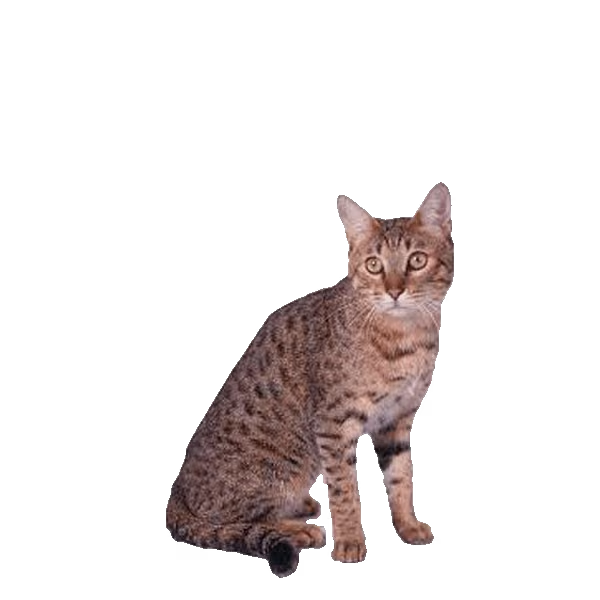
Ocicat
The Ocicat is a confident, outgoing spotted cat with a wild look and a friendly, dog-like devotion to its people.
- Size
- Medium
- Lifespan
- 12–18 years
- Origin
- United States
- Temperament
- Outgoing
- Standard colors
- Black, White and Blue and 6 more
Characteristics
Coat and grooming
How the Ocicat coat is built, and what that means when you groom it.
- Coat layers
- Single coat
- Coat texture
- Smooth, Satin
- Coat length
- Short
- Shedding
- Moderate shedding
Ocicat colors and patterns
What each club's breed standard says about every Ocicat color and pattern. Point at a ruling to see the club's own wording.
Breed standards describe the Ocicat in Black, White, Blue, Lilac, Silver, Brown, Chocolate, Cinnamon and Fawn. Standard patterns: Classic tabby and Spotted tabby.
| Color or pattern | TICA | FIFE | CFA | GCCF |
|---|---|---|---|---|
| Black | Standard | Standard (“Black (Tawny) silver”) | No ruling | No ruling |
| White | Standard | No ruling | No ruling | No ruling |
| Blue | Standard | Standard (“blue”) | Standard (“Blue”) | Standard (“Blue”) |
| Lilac | Standard | Standard (“Lavender”) | Standard (“Lavender”) | Standard (“Lilac”) |
| Silver | Standard (“Silver/Smoke”) | Standard (“silver”) | Standard (“Ebony Silver”) | Standard (“Black Silver”) |
| Brown | Standard | Standard (“Black”) | Standard (“Tawny”) | Standard (“Tawny”) |
| Chocolate | Standard | Standard (“chocolate”) | Standard (“Chocolate”) | Standard (“Chocolate”) |
| Cinnamon | Standard | Standard (“cinnamon”) | Standard (“Cinnamon”) | Standard (“Cinnamon”) |
| Fawn | Standard | Standard (“fawn”) | Standard (“Fawn”) | Standard (“Fawn”) |
| Red | Disqualifying (“phaeomelanistic color”) | No ruling | Disqualifying (“red”) | Disqualifying (“Red”) |
| Cream | Disqualifying (“phaeomelanistic color”) | No ruling | Disqualifying (“cream”) | Disqualifying (“cream”) |
| Patterns | ||||
| Classic tabby | Not recognised | No ruling | Alternate (“classic tabby”) | Standard (“Ocicat Classic”) |
| Spotted tabby | Standard (“Spotted”) | Standard (“spotted”) | Standard (“spotted”) | Standard (“spotted”) |
| Solid | Not recognised | No ruling | Alternate (“solid”) | Not recognised (“Self”) |
| Ticked tabby | Not recognised | No ruling | Alternate (“ticked tabby”) | Not recognised (“Ticked Ocicats”) |
| Smoke | No ruling | No ruling | Alternate (“smoke”) | Not recognised (“smoke”) |
| Tortoiseshell | Disqualifying (“phaeomelanistic color”) | No ruling | No ruling | Disqualifying (“tortoiseshells”) |
| Calico | Disqualifying (“phaeomelanistic color”) | No ruling | No ruling | No ruling |
| Torbie | Disqualifying (“phaeomelanistic color”) | No ruling | Disqualifying (“torbies”) | No ruling |
| Caliby | Disqualifying (“phaeomelanistic color”) | No ruling | No ruling | No ruling |
| Bicolour | Not recognised | No ruling | No ruling | No ruling |
| Pointed | Not recognised | No ruling | No ruling | Not recognised (“Himalayan Colour Restriction”) |
| Mackerel tabby | Not recognised | No ruling | No ruling | No ruling |
| Mink | Not recognised | No ruling | No ruling | Not recognised (“Tonkinese Colour Restriction”) |
| Sepia | Not recognised | No ruling | No ruling | Not recognised (“Burmese Colour Restriction”) |


| Color or pattern | TICA | FIFE | CFA | GCCF |
|---|---|---|---|---|
| Hazel | Standard | No ruling | No ruling | No ruling |
| Orange | Standard | No ruling | No ruling | No ruling |
| Copper | Standard | No ruling | No ruling | No ruling |
| Amber | Standard | No ruling | No ruling | No ruling |
| Yellow | Standard | No ruling | No ruling | No ruling |
| Gold | Standard | No ruling | No ruling | No ruling |
| Green | Standard | No ruling | No ruling | No ruling |
| Blue | Not recognised (“blue”) | Disqualifying (“blue”) | Disqualifying (“blue”) | Disqualifying (“Blue”) |
| Color or pattern | CFA | GCCF |
|---|---|---|
| Brick red | Standard (“brick red rimmed with black”) | Standard (“Brick-red”) |
| Pink | Standard (“pink rimmed with chocolate”) | Standard (“Pink”) |
| Color or pattern | CFA | GCCF |
|---|---|---|
| Black | Standard (“black or seal”) | Standard (“Black”) |
| Blue | Standard (“blue”) | Standard (“Blue”) |
| Lilac | Standard (“lavender-pink”) | Standard (“Lilac-pink”) |
| Brown | No ruling | Standard (“dark brown”) |
| Chocolate | Standard (“chocolate-pink”) | Standard (“Chocolate-pink”) |
| Seal | Standard (“black or seal”) | No ruling |
| Pink | Standard (“pink or rose”) | Standard (“Pink”) |
What the rulings mean
- Standard
- Described by the club's breed standard.
- Alternate
- Registrable with the club but not described by its breed standard, such as an AKC alternate colour.
- Disqualifying
- The club's breed standard disqualifies an animal of this colour or pattern.
- Not recognised
- The club does not accept this colour or pattern for the breed.
Color changes
How a Ocicat's colors can change over its life.
Brownchanges toCopal
Coat · With age · from 0 to 52 weeks
Blackchanges toRusset
Coat · Progressive
Whitechanges toShaded
Coat · With age
Whitechanges toChinchilla
Coat · With age
Bluechanges toTortoiseshell
Coat · With age
Blackchanges toBrown
Coat · With body condition · can change back
Blackchanges toBrown
Coat · In the sun · can change back
Blackchanges toBrown
Coat · Progressive
Whitechanges toPointed
Coat · With age · from 1 to 52 weeks
Solidchanges toSmoke
Coat · With age · from 3 to 104 weeks
Pinkchanges toSeal
Nose · With age · from 1 to 52 weeks
Pinkchanges toBlue
Nose · With age · from 1 to 52 weeks
Pinkchanges toChocolate
Nose · With age · from 1 to 52 weeks
Pinkchanges toLilac
Nose · With age · from 1 to 52 weeks
Pinkchanges toSeal
Paw pads · With age · from 1 to 52 weeks
Pinkchanges toBlue
Paw pads · With age · from 1 to 52 weeks
Pinkchanges toChocolate
Paw pads · With age · from 1 to 52 weeks
Pinkchanges toLilac
Paw pads · With age · from 1 to 52 weeks


Sources
Each ruling comes from the club's published breed standard or color list.
About the Ocicat
The Ocicat is a medium-sized spotted cat bred in the United States. It has the wild look of a small spotted cat with a friendly, outgoing nature and a strong bond with people.
The Ocicat is a medium-sized domestic cat known for a spotted coat that calls to mind a wild cat. In spite of the look, there is no wild blood in the breed. The spots come from careful breeding among domestic cats, and the character is entirely that of a sociable house cat.
The breed pairs an athletic, well-muscled body with large thumbprint-shaped spots set across the sides and back. The face is alert, the ears are large, and the eyes sit wide apart and full of expression. Coat colours cover several recognised shades, each carrying the same spotted pattern.
Ocicats are self-assured and fond of company. They tend to come out and meet callers rather than hide away, trail their owners from room to room, and often learn to answer to their names. Plenty of owners liken the breed to a dog for its loyalty and its readiness to play fetch and pick up tricks.
| Attribute | Detail |
|---|---|
| Origin | United States |
| Size | Medium |
| Lifespan | 12 to 18 years |
| Group/role | Companion cat |
| Good with | Families, children, other pets, callers |
Who it suits
The Ocicat suits busy households that can give it time and play. It gets on grand in family homes, including those with children and other pets, thanks to its sociable, outgoing streak. It is a poor match for anyone after an independent, hands-off cat, since it looks for company and can grow bored when left on its own for long spells.
History and origin
The Ocicat began in the United States in the 1960s as a chance result of crossing Siamese and Abyssinian cats, then was shaped on purpose into a spotted breed.
The Ocicat started in the United States in 1964. Breeder Virginia Daly of Berkley, Michigan, set out to produce an Abyssinian-pointed Siamese by crossing the two breeds. One kitten in a resulting litter turned up with an ivory coat and golden spots, and the breeder's daughter called it an Ocicat for the way it echoed a young ocelot.
The first spotted kitten was named Tonga, neutered, and sold as a pet. Once interest took hold, the original cross was repeated to yield more spotted cats, and a breeding programme grew up around them. American Shorthair was brought in later, which widened the colour range and added to body size and the silver colour.
The Ocicat rests on three foundation breeds: the Siamese, the Abyssinian, and the American Shorthair. Each lent its own traits, from coat colour and pattern to body type and the breed's chatty, people-focused nature.
The breed won formal recognition with North American cat registries over the decades that followed and is now bred and shown across several countries. The spotted pattern remains its calling card.
Appearance and breed standard
The Ocicat is a medium to large, well-muscled cat with a short, close-lying coat marked by clear thumbprint-shaped spots over a lighter ground colour.
The Ocicat is solid and athletic, with a fairly long body, sturdy legs, and oval paws. The build carries more weight than it lets on, and the cat is plainly muscular. The head shapes a modified wedge, the ears are large and may carry tufts, and the eyes are large, almond-shaped, and tilted slightly upward.
The spotted coat is the heart of the look. Spots are large and thumbprint-shaped, scattered along the sides and back, with rows running the length of the spine. The face carries agouti tabby markings, including an M on the forehead. The coat is short, smooth, and close-lying with a satin feel.
| Trait | Standard |
|---|---|
| Height | Roughly 23 to 25 cm at the shoulder |
| Weight | 2.7 to 6.8 kg, males larger than females |
| Coat | Short, smooth, close-lying, satin texture |
| Colours | Tawny, chocolate, cinnamon, blue, lavender, fawn, and silver forms of each |
| Eyes | Large, almond-shaped, all colours bar blue |
Coat and colours
Twelve colours are recognised across the breed: tawny, chocolate, cinnamon, blue, lavender, and fawn, each in a standard and a silver form. Every colour carries the same spotted pattern, with a lighter ground colour and darker spots. Eye colour can be any shade bar blue, and there is no set link between coat colour and eye colour.
Temperament and personality
The Ocicat is confident, lively, and very social, bonding closely with its family and getting on well with children, callers, and other pets.
The Ocicat is outgoing and self-assured. It tends to walk up to guests rather than back away, and it forms strong ties with the people it lives with. Many owners say the breed shadows them round the house, perches on shoulders, and wants a part in whatever is going on.
With children, the Ocicat is usually patient and playful, so long as handling stays gentle. It generally takes to other cats and often dogs, above all when they meet early. The breed dislikes long stretches alone and fares better in homes where someone is often about or where a second pet keeps it company.
The Ocicat is clever and busy. It learns fast, enjoys puzzle feeders and interactive toys, and can be taught to fetch, walk on a harness, and answer to its name. It is fairly chatty, keeping in touch with chirps and trills, though it is less loud than its Siamese forebears.
| Trait | Rating |
|---|---|
| Affection | 5 |
| Energy | 5 |
| Trainability | 5 |
| Vocalness | 3 |
| Shedding | 2 |
Care and grooming
The Ocicat is easy to groom thanks to its short coat, but it needs daily play and mental work to stay content.
Grooming
- Brush or wipe the short coat once a week to lift loose hair and keep it glossy.
- A rubber grooming mitt or a soft brush does the job well, and most cats take to it.
- Trim the claws every two to three weeks.
- Check the ears and clean them gently if any debris shows.
- Brush the teeth regularly to hold off dental disease.
Exercise
- Give at least two play sessions a day with wand toys, balls, or fetch games.
- Offer puzzle feeders and rotate toys to keep the cat interested.
- Set up tall cat trees and shelves for climbing and jumping.
- Think about harness training for supervised time in the garden, which the breed often takes to well.
Environment
The Ocicat suits an indoor home with height to climb and room to run. Because it is social and hates being on its own, it does better with company, whether human or another pet. A steady routine, plenty of interactive toys, and access to high perches help meet its physical and mental needs.
Nutrition and feeding
The Ocicat needs a complete, protein-rich cat food fed in measured portions, with care taken not to overfeed this active but food-driven breed.
The Ocicat does well on a complete and balanced cat food with animal protein as the main ingredient. As an active, well-muscled breed, it gains from good protein to keep up its build. Both wet and dry foods suit it, and a mix of the two can help with hydration and dental health. Fresh water should always be within reach.
| Life stage | Amount per day | Meals |
|---|---|---|
| Kitten (up to 12 months) | Follow label by weight, free or frequent feeding | 3 to 4 |
| Adult (1 to 7 years) | Roughly 55 to 75 g dry, or the wet equivalent | 2 |
| Senior (7 years and older) | Adjust to activity and body condition | 2 |
Treats and supplements
Treats should stay under 10 percent of daily calories to keep weight in check, a real risk in this food-driven breed. A balanced shop-bought diet usually supplies every nutrient the cat needs, so supplements are not called for unless a vet recommends them for a particular condition.
Health and lifespan
The Ocicat is generally healthy with a lifespan of 12 to 18 years, though it can inherit a few conditions from its foundation breeds.
The Ocicat is a generally hardy breed with a lifespan that usually runs 12 to 18 years. Its mixed foundation gives it a wide gene pool, which helps overall health, but a handful of inherited conditions crop up because of its Siamese and Abyssinian ancestry. Responsible breeders screen their cats to bring down these risks.
| Condition | Signs | Note |
|---|---|---|
| Hypertrophic cardiomyopathy | Lethargy, rapid breathing, weakness | Heart muscle disease; screening recommended |
| Progressive retinal atrophy | Night blindness, loss of sight | Inherited from Abyssinian lines |
| Pyruvate kinase deficiency | Anaemia, weakness, pale gums | Genetic test available |
| Renal amyloidosis | Increased thirst, weight loss | Linked to some bloodlines |
| Periodontal disease | Bad breath, red gums, tartar | Eased by dental care |
Preventive care
- Book yearly vet check-ups, moving to twice a year for senior cats.
- Keep vaccinations and parasite control up to date.
- Keep up dental hygiene with brushing and professional cleaning as advised.
- Watch weight and body condition to head off obesity.
- Choose breeders who test for cardiac and genetic conditions.
Training and enrichment
The Ocicat is one of the most trainable cat breeds, picking up tricks, fetch, and harness walking quickly through reward-based methods.
The Ocicat is clever and keen to join in, which makes it unusually trainable for a cat. It picks up cues, retrieves toys, and can learn to walk on a harness. Training also burns off its energy and gives it the mental work it looks for. Short, frequent sessions beat long ones, and the breed answers best to food rewards and praise.
Basics
- Start with name recognition, rewarding the cat each time it looks your way.
- Bring in a clicker or a marker word paired with a treat.
- Teach simple cues such as sit and come with a lure and a reward.
- Build up to fetch by rewarding the cat for lifting and bringing back a toy.
- Introduce a harness indoors first, letting the cat wear it for short spells before any walks outside.
Breeding and kittens
Ocicats reach sexual maturity within their first year, carry litters for about nine weeks, and usually produce litters of four to six kittens.
Ocicats generally reach sexual maturity between five and ten months of age, though responsible breeders hold off until a cat is physically mature and health-tested before breeding. Because the breed draws on Siamese, Abyssinian, and American Shorthair lines, breeders aim to hold the spotted pattern and sound temperament while steering clear of the inherited conditions carried in the foundation breeds.
Gestation runs roughly 63 to 67 days. Litters typically hold four to six kittens. Newborns arrive with their spots already showing, though the pattern sharpens as the coat comes in.
Kittens are weaned at around eight weeks and are usually ready to move to new homes at twelve to fourteen weeks, after early vaccinations and socialisation. Early handling backs up the breed's confident, people-focused character. Genetic testing of breeding cats helps cut the risk of passing on heart and eye conditions.
| Metric | Value |
|---|---|
| Sexual maturity | 5 to 10 months |
| Gestation | 63 to 67 days |
| Average litter size | 4 to 6 kittens |
| Weaning age | About 8 weeks |
| Ready for new home | 12 to 14 weeks |
Your Ocicat registered and chipped, sorted for good
No law covers cat chips in Ireland, which makes a free United Pet Club record the only thing standing behind your Ocicat's number.
Registering an Ocicat in Ireland
The whole of cat registration is a form: her name, her colouring, a photo, your phone number, save. Free for life with United Pet Club, chip or no chip, indoors or out.
The fifteen digits on your Ocicat's vet paperwork want a registry. United Pet Club lodges them free, keeps them current through every move, and leaves the record findable whenever a scanner asks. Microchip registration plus a free account: both sorted in one cup of tea.
How do I register my Ocicat in Ireland?
Open a free United Pet Club account, put in her name, colouring, and a photo, and save the profile. It stays live for the whole of her life at no cost, and a chip is not needed to begin.
How do I register my Ocicat's microchip?
Lodge the fifteen digit number from the vet's paperwork in your free account with your current contact details. The lifetime plan never asks for a penny, not for the record and not for updates.
Do cats have to be chipped in Ireland?
No, the 2015 chipping law covers dogs only. That is exactly why a registered chip matters for an Ocicat: without your record, there is nothing at all connecting her number to your phone.
What does it cost to register an Ocicat?
Nothing whatsoever. United Pet Club's lifetime plan takes care of the profile, the chip record, and every amendment, free for the whole of her life.
Frequently asked questions
Common questions about the Ocicat cover its size, temperament, care needs, lifespan, suitability for families, and how to find one.
How big does an Ocicat get?
The Ocicat is a medium-sized cat. Males generally weigh 3.6 to 6.8 kg and females 2.7 to 4.5 kg. The body is muscular and heavier than it looks.
What is the Ocicat's temperament like?
Ocicats are playful, clever, sociable, and outgoing. They bond closely with their people, often meet callers at the door, and are frequently likened to a dog for their loyalty.
Is the Ocicat hard to care for?
Grooming is easy thanks to the short coat, which needs only a weekly brush. The main demand is attention. The breed is active and social and needs daily play and company to stay content.
How long do Ocicats live?
The typical lifespan is 12 to 18 years. Good nutrition, regular veterinary care, and dental hygiene support a long, healthy life.
Are Ocicats good with children and other pets?
Yes. They are generally patient with gentle children and take to other cats and often dogs, above all when they meet early. Their sociable nature suits a busy family home.
Does the Ocicat have any wild ancestry?
No. In spite of the spotted, wild look, the Ocicat is fully domestic. It was created by crossing Siamese, Abyssinian, and American Shorthair cats.
Where can I find an Ocicat?
Ocicats come from registered breeders who health-test their cats. The breed is less common than many others, so expect a waiting list, and have a look at breed-specific rescues too.
From the community
Ask about the OcicatNo questions about the Ocicat yet. Be the first to ask.
Browse Cat breeds