

Labrador Retriever
The Labrador Retriever is a friendly, outgoing breed beloved as a family companion and devoted working dog.
- Size
- Large
- Lifespan
- 11–13 years
- Origin
- Canada
- Temperament
- Friendly
- Standard colors
- Black, Chocolate, Fox red and Yellow
Characteristics
Coat and grooming
How the Labrador Retriever coat is built, and what that means when you groom it.
- Coat layers
- Double coat
- Coat texture
- Smooth
- Coat length
- Short
- Shedding
- Seasonal shedding
Grooming guidance
Critical: A Labrador Retriever should not be shaved.
The undercoat keeps heat out as well as in, and the outer coat shields the skin from sun and insect bites. Clipping the whole coat off removes both. It often grows back patchy, soft or a different colour, and in some animals the guard hairs never return properly. Brush the undercoat out instead of cutting it off.
Information: A Labrador Retriever drops its undercoat in heavy bursts.
The undercoat comes out in heavy bursts over a few weeks. An undercoat rake, or a bath followed by a proper blow-dry, clears it far faster than daily brushing. Clipping the coat down is not a shortcut for this.
Labrador Retriever colors and patterns
What each club's breed standard says about every Labrador Retriever color and pattern. Point at a ruling to see the club's own wording.
Breed standards describe the Labrador Retriever in Black, Chocolate, Fox red and Yellow. Standard patterns: Solid.
| Color or pattern | FCI | AKC | UKC | KC | KUSA |
|---|---|---|---|---|---|
| Black | Standard (“wholly black”) | Standard (“Black”) | Standard (“solid black”) | Standard (“wholly black”) | Standard (“whole black”) |
| Chocolate | Standard (“liver/chocolate”) | Standard (“Chocolate”) | Standard (“any solid shade of chocolate”) | Standard (“liver/chocolate”) | Standard (“liver/chocolate”) |
| Fox red | Standard (“Yellows range from light cream to red fox”) | Standard (“Yellows may range in color from fox-red to light cream”) | Standard (“any solid shade of yellow from red to pale cream”) | No ruling | No ruling |
| Yellow | Standard (“yellow”) | Standard (“Yellow”) | Standard (“any solid shade of yellow from red to pale cream”) | Standard (“yellow”) | Standard (“yellow”) |
| Albino | Disqualifying | Disqualifying | Disqualifying (“albinism”) | Not recognised | Not recognised |
| Silver | Disqualifying | Disqualifying | Disqualifying | Not recognised (“Silver”) | Not recognised |
| Charcoal | Disqualifying | Disqualifying | Disqualifying | Not recognised (“Charcoal”) | Not recognised |
| Champagne | Disqualifying | Disqualifying | Disqualifying | Not recognised (“Champagne”) | Not recognised |
| Patterns | |||||
| Solid | Standard (“wholly”) | Standard (“blacks are all black”) | Standard (“solid”) | Standard (“wholly”) | Standard (“whole”) |
| Brindle | Disqualifying | Disqualifying (“brindle markings”) | Disqualifying | Not recognised | Not recognised |
| Tan point | Disqualifying | Disqualifying (“tan markings”) | Disqualifying | Not recognised | Not recognised |
| Reverse brindle | Disqualifying | Disqualifying (“brindle markings”) | Disqualifying | Not recognised | Not recognised |

%22%3E%3Cg%20fill%3D%22%231C1C1C%22%3E%3Cpath%20d%3D%22M-3.7%20-4L-4.5%200.5L-5.6%205L-5.7%209.5L-6.7%2014L-8.2%2018.5L-8.6%2023L-9.1%2027.5L-10.7%2032L-10.5%2036.5L-10.7%2041L-11%2045.5L-11%2050L-11.4%2054.5L-11.4%2059L-12.6%2063.5L-13.3%2068L-11.5%2068L-10.1%2063.5L-9.9%2059L-9.2%2054.5L-9%2050L-9.6%2045.5L-9%2041L-8.8%2036.5L-9.1%2032L-6.9%2027.5L-7%2023L-6.2%2018.5L-4.6%2014L-3.1%209.5L-3%205L-3.3%200.5L-1.3%20-4ZM1.6%20-4L0.1%200.5L0.6%205L-1.5%209.5L-2.6%2014L-4%2018.5L-4.3%2023L-5.6%2027.5L-4.7%2032L-4.2%2036.5L-4.7%2041L-4.9%2045.5L-5%2050L-6.1%2054.5L-6.5%2059L-7.8%2063.5L-8.5%2068L-6.9%2068L-5.7%2063.5L-4.8%2059L-3.3%2054.5L-2.1%2050L-2.9%2045.5L-3.1%2041L-3.1%2036.5L-2.3%2032L-2.5%2027.5L-1.6%2023L-1.9%2018.5L-0.6%2014L1%209.5L1.7%205L2.6%200.5L3%20-4ZM7.6%20-4L6.6%200.5L5.6%205L5.2%209.5L3.7%2014L3.4%2018.5L3.5%2023L2.5%2027.5L3%2032L3%2036.5L1.9%2041L2.7%2045.5L1.8%2050L0.3%2054.5L-1.7%2059L-1%2063.5L-3.7%2068L-1.6%2068L0.3%2063.5L0.8%2059L2.7%2054.5L3.2%2050L4.2%2045.5L4.2%2041L4.4%2036.5L4.7%2032L3.8%2027.5L4.8%2023L5.3%2018.5L4.9%2014L6.6%209.5L7.9%205L7.6%200.5L9.7%20-4ZM11.3%20-4L10.8%200.5L11.7%205L11.3%209.5L11.2%2014L10.3%2018.5L10%2023L10.6%2027.5L9.2%2032L8.2%2036.5L7.6%2041L6%2045.5L4.7%2050L5.1%2054.5L3.6%2059L3.8%2063.5L3.7%2068L6.2%2068L5.8%2063.5L5.6%2059L7.4%2054.5L7.3%2050L8.3%2045.5L10%2041L11.1%2036.5L10.8%2032L12.8%2027.5L12.6%2023L13.1%2018.5L12.7%2014L13%209.5L13.6%205L13%200.5L12.9%20-4ZM19.6%20-4L19.4%200.5L18.1%205L18.4%209.5L17.8%2014L16.7%2018.5L15%2023L13.8%2027.5L13.2%2032L13.3%2036.5L11.7%2041L10.9%2045.5L11.9%2050L12.2%2054.5L12.5%2059L11.6%2063.5L11%2068L12.8%2068L13.4%2063.5L14.2%2059L14.8%2054.5L13.3%2050L13.7%2045.5L14.5%2041L14.8%2036.5L14.8%2032L16%2027.5L16.6%2023L18.5%2018.5L19.2%2014L19.3%209.5L20.7%205L21.3%200.5L22.1%20-4ZM23.6%20-4L24.4%200.5L23.9%205L22.2%209.5L21.1%2014L20.3%2018.5L19.2%2023L17.6%2027.5L17.9%2032L18.3%2036.5L17.7%2041L18.3%2045.5L17.9%2050L17.9%2054.5L16.4%2059L15.3%2063.5L14.5%2068L16.5%2068L18.3%2063.5L19.5%2059L19.5%2054.5L20%2050L19.9%2045.5L19.8%2041L19.6%2036.5L21.1%2032L19.9%2027.5L20.6%2023L21.8%2018.5L22.9%2014L24.2%209.5L25.5%205L26.4%200.5L26.7%20-4Z%22%2F%3E%3Cpath%20d%3D%22M28%20-4L27.5%200.5L26.9%205L28.2%209.5L27.2%2014L26.3%2018.5L26.3%2023L25.6%2027.5L25.5%2032L23.2%2036.5L22.1%2041L22.2%2045.5L20.1%2050L20.8%2054.5L19.2%2059L20.6%2063.5L20.3%2068L21.2%2068L22.7%2063.5L22%2059L22.4%2054.5L22.7%2050L23.4%2045.5L25.1%2041L25.7%2036.5L26.9%2032L27.8%2027.5L28.9%2023L29.1%2018.5L28.5%2014L29.9%209.5L29.8%205L29.3%200.5L30.5%20-4ZM36.6%20-4L35.8%20-1.1L35.9%201.7L35.2%204.6L34.6%207.5L33.8%2010.3L32.3%2013.2L33%2016.1L31.7%2018.9L32.1%2018.9L33.8%2016.1L35.3%2013.2L35%2010.3L36.6%207.5L36.6%204.6L37%201.7L37.9%20-1.1L36.8%20-4ZM32.2%2025.4L30.7%2030.7L29.8%2036.1L29.6%2041.4L28.4%2046.7L28.6%2052L28.3%2057.4L29.5%2062.7L28.3%2068L29.2%2068L30.3%2062.7L30.8%2057.4L29.9%2052L30.1%2046.7L30.7%2041.4L31.5%2036.1L32.3%2030.7L32.8%2025.4ZM39%20-4L39.4%200.5L39.3%205L39.2%209.5L40.1%2014L38.4%2018.5L38.6%2023L37.8%2027.5L35.7%2032L35.6%2036.5L34.1%2041L33.6%2045.5L32.8%2050L31.9%2054.5L32.5%2059L32.7%2063.5L32.1%2068L34.9%2068L34.1%2063.5L34.7%2059L35%2054.5L34.9%2050L35%2045.5L37%2041L38.1%2036.5L38.7%2032L39.8%2027.5L39.6%2023L40.8%2018.5L41.2%2014L41.7%209.5L42.1%205L40.6%200.5L42.3%20-4ZM45.7%20-4L43.6%200.1L42.2%204.1L42.7%208.2L40.7%2012.3L41%2016.4L39.5%2020.4L39.9%2024.5L41.2%2028.6L42.1%2028.6L42.7%2024.5L42.5%2020.4L42.8%2016.4L42.6%2012.3L43.4%208.2L45.5%204.1L45.2%200.1L45.8%20-4ZM41.4%2033.9L39%2038.1L39.6%2042.4L37.5%2046.7L37.2%2050.9L36.1%2055.2L35.8%2059.5L35.7%2063.7L36.6%2068L37.1%2068L37.8%2063.7L38.1%2059.5L38.4%2055.2L39%2050.9L39.2%2046.7L40.8%2042.4L41.7%2038.1L42.1%2033.9ZM48.6%20-4L48.4%200.5L48.1%205L47.5%209.5L48%2014L47.5%2018.5L47%2023L47.1%2027.5L47%2032L46.1%2036.5L44.4%2041L43.8%2045.5L42.8%2050L41.1%2054.5L41.2%2059L41.1%2063.5L40.5%2068L41.5%2068L42.4%2063.5L42.8%2059L42.7%2054.5L45%2050L46.3%2045.5L46.2%2041L47.4%2036.5L49%2032L49.8%2027.5L48.9%2023L48.7%2018.5L49.6%2014L49.6%209.5L50%205L49.9%200.5L49.8%20-4ZM57.8%20-4L56.6%200.5L56.8%205.1L55%209.6L53.2%2014.1L52.3%2018.6L51.2%2023.2L51.5%2027.7L52.6%2032.2L53%2032.2L53.7%2027.7L54.3%2023.2L54.7%2018.6L55.7%2014.1L56.4%209.6L58.1%205.1L58.9%200.5L58.7%20-4ZM53.1%2035.2L52.1%2039.3L51.5%2043.4L52%2047.5L51.3%2051.6L50.8%2055.7L50%2059.8L48.8%2063.9L49.2%2068L49.6%2068L50.6%2063.9L51.8%2059.8L52.8%2055.7L53.4%2051.6L53.2%2047.5L53.7%2043.4L54.3%2039.3L53.1%2035.2Z%22%2F%3E%3Cpath%20d%3D%22M61.6%20-4L61.1%200.5L60.4%205L59.9%209.5L58.6%2014L58.3%2018.5L56.8%2023L55.6%2027.5L55.6%2032L54%2036.5L54.7%2041L54.9%2045.5L54.2%2050L54.7%2054.5L54%2059L52.9%2063.5L52.2%2068L55.2%2068L54.9%2063.5L56.9%2059L56.8%2054.5L56.5%2050L56.9%2045.5L57.6%2041L56.9%2036.5L57.3%2032L57.3%2027.5L58.9%2023L59.8%2018.5L60.3%2014L62.3%209.5L62.7%205L63.8%200.5L63.9%20-4ZM67.3%20-4L66.1%201.5L66.8%207L66.3%2012.5L64.8%2018L64%2023.5L62.7%2029L62.2%2034.4L61.4%2039.9L61.8%2039.9L63.8%2034.4L64.9%2029L66.7%2023.5L67.2%2018L67.6%2012.5L68.6%207L68%201.5L67.4%20-4ZM60.6%2044.4L59%2047.3L57.4%2050.3L57.4%2053.2L58%2056.2L57.2%2059.1L57.5%2062.1L57.8%2065L58.1%2068L58.3%2068L59.6%2065L58.8%2062.1L59.5%2059.1L59.8%2056.2L60.2%2053.2L60.3%2050.3L61.6%2047.3L61.2%2044.4Z%22%2F%3E%3C%2Fg%3E%3C%2Fg%3E%3Cuse%20href%3D%22%23s%22%20fill%3D%22none%22%20stroke%3D%22%233B2A20%22%20stroke-opacity%3D%220.6%22%20stroke-width%3D%221%22%20stroke-linejoin%3D%22round%22%2F%3E%3Cellipse%20cx%3D%223.2%22%20cy%3D%2221.7%22%20rx%3D%221.3%22%20ry%3D%221.2%22%20fill%3D%22%231C1C1C%22%2F%3E%3Ccircle%20cx%3D%2210.8%22%20cy%3D%2219.3%22%20r%3D%221.1%22%20fill%3D%22%231C1C1C%22%2F%3E%3C%2Fsvg%3E)
%22%3E%3Ccircle%20cx%3D%2212%22%20cy%3D%2217.2%22%20r%3D%221.25%22%20fill%3D%22%23C4996A%22%2F%3E%3Cpath%20d%3D%22M1.5%2021.2L9%2018.6L12.6%2021L12.2%2026.2L3.5%2024.4Z%22%20fill%3D%22%23C4996A%22%2F%3E%3Cpath%20d%3D%22M10%2026L14.5%2026.4L18.2%2029.2L13.5%2029.8Z%22%20fill%3D%22%23C4996A%22%2F%3E%3Cellipse%20cx%3D%2221.2%22%20cy%3D%2230.6%22%20rx%3D%221.6%22%20ry%3D%222.3%22%20fill%3D%22%23C4996A%22%2F%3E%3Crect%20x%3D%220%22%20y%3D%2247%22%20width%3D%2264%22%20height%3D%2217%22%20fill%3D%22%23C4996A%22%2F%3E%3Cpath%20d%3D%22M51.5%2024.5L55%2027L54.2%2032L50.5%2028.5Z%22%20fill%3D%22%23C4996A%22%2F%3E%3Cpath%20d%3D%22M45%2038.5L48%2039L48.5%2047L45.5%2047Z%22%20fill%3D%22%23C4996A%22%2F%3E%3C%2Fg%3E%3Cuse%20href%3D%22%23s%22%20fill%3D%22none%22%20stroke%3D%22%233B2A20%22%20stroke-opacity%3D%220.6%22%20stroke-width%3D%221%22%20stroke-linejoin%3D%22round%22%2F%3E%3Cellipse%20cx%3D%223.2%22%20cy%3D%2221.7%22%20rx%3D%221.3%22%20ry%3D%221.2%22%20fill%3D%22%231C1C1C%22%2F%3E%3Ccircle%20cx%3D%2210.8%22%20cy%3D%2219.3%22%20r%3D%221.1%22%20fill%3D%22%231C1C1C%22%2F%3E%3C%2Fsvg%3E)
%22%3E%3Crect%20x%3D%220%22%20y%3D%220%22%20width%3D%2264%22%20height%3D%2264%22%20fill%3D%22%231C1C1C%22%2F%3E%3Cg%20fill%3D%22%23D9C3A0%22%3E%3Cpath%20d%3D%22M-3.5%20-4L-5.3%200.5L-5.4%205L-7.4%209.5L-8.2%2014L-8.2%2018.5L-8.6%2023L-9.2%2027.5L-8.4%2032L-8.7%2036.5L-8.3%2041L-9.6%2045.5L-10.2%2050L-10.4%2054.5L-12.6%2059L-13.2%2063.5L-14.8%2068L-13.3%2068L-12.2%2063.5L-11.7%2059L-9.2%2054.5L-9%2050L-8.1%2045.5L-7.6%2041L-8%2036.5L-7.4%2032L-8.6%2027.5L-7.3%2023L-6.9%2018.5L-6.8%2014L-6.1%209.5L-3.9%205L-3.8%200.5L-1.9%20-4ZM2.9%20-4L1.1%20-0.7L0.7%202.5L0%205.8L-0.3%209.1L-0.8%2012.4L-1.6%2015.6L-1.6%2018.9L-0.9%2022.2L-0.7%2022.2L-0.6%2018.9L-0.4%2015.6L0.2%2012.4L0.3%209.1L0.8%205.8L1.6%202.5L2.1%20-0.7L3.2%20-4ZM-2%2025.6L-3.4%2030.9L-3%2036.2L-2.9%2041.5L-3.8%2046.8L-5.3%2052.1L-5.8%2057.4L-7.5%2062.7L-8.1%2068L-8%2068L-6.4%2062.7L-4.8%2057.4L-4.4%2052.1L-2.4%2046.8L-1.3%2041.5L-1.3%2036.2L-2%2030.9L-2.2%2025.6ZM5.6%20-4L4.9%201.6L4.1%207.2L5%2012.8L3.9%2018.4L2.6%2024L1.2%2029.6L-0.9%2035.1L-0.8%2040.7L-0.1%2040.7L0.5%2035.1L2.3%2029.6L3.9%2024L5.1%2018.4L6.2%2012.8L6%207.2L5.6%201.6L6.2%20-4ZM1.8%2045.7L0.8%2048.5L0.6%2051.3L0.9%2054.1L0.1%2056.9L-1.2%2059.7L-1.5%2062.4L-1.7%2065.2L-2.9%2068L-2.5%2068L-0.9%2065.2L0%2062.4L0.2%2059.7L0.6%2056.9L1.6%2054.1L1.3%2051.3L1.8%2048.5L1.8%2045.7ZM9%20-4L7.6%201L7.1%206L6.9%2011L7.7%2016L6.7%2021L6.9%2026L6.3%2031L5.2%2036L5.4%2036L8.7%2031L8.5%2026L8.9%2021L9%2016L8.1%2011L8%206L9.2%201L9.5%20-4ZM2.8%2039.3L2%2042.9L1.7%2046.5L1%2050L2.2%2053.6L1.7%2057.2L2.3%2060.8L0.5%2064.4L1.9%2068L2.3%2068L2.5%2064.4L3%2060.8L2.8%2057.2L3.3%2053.6L2.8%2050L3.7%2046.5L3.2%2042.9L2.7%2039.3ZM17.8%20-4L16%20-1.4L16.1%201.2L16.3%203.8L15.7%206.4L16.3%209L14.8%2011.6L14.2%2014.2L14.4%2016.7L14.8%2016.7L15.5%2014.2L16.4%2011.6L16.7%209L16.4%206.4L16.9%203.8L17.4%201.2L17.2%20-1.4L18%20-4ZM12%2021.8L11.4%2027.6L10.7%2033.4L11%2039.1L10.9%2044.9L10.8%2050.7L10.4%2056.5L8.2%2062.2L7.1%2068L7.3%2068L9.1%2062.2L11.3%2056.5L12.7%2050.7L12.3%2044.9L12.5%2039.1L12.3%2033.4L12.5%2027.6L12%2021.8ZM19.6%20-4L18.6%200.1L18.3%204.3L18.5%208.4L18%2012.6L18.9%2016.7L17.8%2020.8L18%2025L17.9%2029.1L17.9%2029.1L19%2025L19%2020.8L20.2%2016.7L20%2012.6L19.5%208.4L20.2%204.3L19.5%200.1L19.9%20-4ZM14.1%2035.3L13.3%2039.4L13.2%2043.5L12.2%2047.5L11.6%2051.6L12.4%2055.7L12.2%2059.8L11.4%2063.9L11.9%2068L12.1%2068L13.3%2063.9L14.5%2059.8L13.4%2055.7L13.3%2051.6L13%2047.5L13.8%2043.5L14.6%2039.4L14.1%2035.3Z%22%2F%3E%3Cpath%20d%3D%22M23%20-4L24.5%200.5L23.9%205L23.2%209.5L23.4%2014L23.2%2018.5L23.8%2023L22.4%2027.5L21.3%2032L19.2%2036.5L19.5%2041L17.4%2045.5L17.9%2050L17.6%2054.5L17.3%2059L17.2%2063.5L16.7%2068L17.8%2068L18%2063.5L18.6%2059L18.8%2054.5L18.5%2050L19.1%2045.5L20.6%2041L21%2036.5L22.8%2032L23.1%2027.5L24.7%2023L24.4%2018.5L24.3%2014L24.6%209.5L24.5%205L25.5%200.5L24.9%20-4ZM29.3%20-4L29.2%200.5L28.4%205L28%209.5L26.6%2014L25%2018.5L25.1%2023L23.9%2027.5L23.4%2032L22.7%2036.5L22.4%2041L23.8%2045.5L23.4%2050L22.3%2054.5L22.2%2059L21.7%2063.5L20.1%2068L21.3%2068L23%2063.5L23.6%2059L23.9%2054.5L24.8%2050L24.3%2045.5L24.1%2041L24.5%2036.5L24.3%2032L25%2027.5L25.7%2023L26.6%2018.5L28.2%2014L30%209.5L29.6%205L30.8%200.5L30.8%20-4ZM35%20-4L34.2%200.5L32.7%205L32.6%209.5L31.8%2014L31.8%2018.5L31.3%2023L29.9%2027.5L31%2032L30.1%2036.5L30.7%2041L29.2%2045.5L29.4%2050L27.7%2054.5L26.9%2059L24.7%2063.5L24.5%2068L25.2%2068L26.6%2063.5L28%2059L28.9%2054.5L30.1%2050L30.8%2045.5L31.9%2041L31.5%2036.5L32.5%2032L31.6%2027.5L32.7%2023L32.4%2018.5L32.4%2014L33.9%209.5L33.8%205L35.8%200.5L36%20-4ZM40%20-4L39.1%200.5L38.4%205L36.2%209.5L35.7%2014L34.7%2018.5L34.1%2023L33.8%2027.5L33.6%2032L34%2036.5L34.4%2041L33.8%2045.5L32.9%2050L31.9%2054.5L31.9%2059L30.8%2063.5L29.2%2068L30.5%2068L32.2%2063.5L33.2%2059L33.7%2054.5L34.5%2050L35%2045.5L35.3%2041L35.6%2036.5L35.6%2032L35%2027.5L35.2%2023L36.2%2018.5L36.6%2014L38.2%209.5L39.3%205L40.7%200.5L41.8%20-4ZM44.8%20-4L44.7%200.5L44.1%205L43.7%209.5L41.6%2014L41.4%2018.5L39.1%2023L39.8%2027.5L38.4%2032L37.8%2036.5L37.7%2041L38.1%2045.5L37.3%2050L37.7%2054.5L37.2%2059L37.2%2063.5L36.5%2068L37.1%2068L38.4%2063.5L39%2059L38.2%2054.5L39%2050L38.5%2045.5L39.1%2041L39.4%2036.5L40.6%2032L40.6%2027.5L41.3%2023L43%2018.5L43.3%2014L44.9%209.5L44.8%205L46.4%200.5L46.6%20-4ZM48.8%20-4L48.9%200.5L48.5%205L48%209.5L47.9%2014L47.3%2018.5L46.7%2023L45.8%2027.5L43.6%2032L43.1%2036.5L41.7%2041L41.4%2045.5L40.8%2050L41.1%2054.5L40.6%2059L40.7%2063.5L41.1%2068L43%2068L42.1%2063.5L42.2%2059L42.8%2054.5L42.3%2050L42.5%2045.5L43.3%2041L44.4%2036.5L45.4%2032L47.1%2027.5L47.6%2023L48.7%2018.5L49.3%2014L49%209.5L49.9%205L50%200.5L49.5%20-4Z%22%2F%3E%3Cpath%20d%3D%22M51%20-4L51.2%200.5L50.7%205L50.6%209.5L51.6%2014L50.7%2018.5L49.9%2023L49.3%2027.5L47.4%2032L46.8%2036.5L46.1%2041L45.3%2045.5L44.8%2050L44.6%2054.5L44%2059L44.8%2063.5L44.4%2068L45.6%2068L46.5%2063.5L45.3%2059L45.4%2054.5L45.8%2050L46.6%2045.5L46.9%2041L48%2036.5L48.9%2032L50.5%2027.5L50.8%2023L51.4%2018.5L52.9%2014L52.4%209.5L52.8%205L51.9%200.5L52.4%20-4ZM60.5%20-4L58.8%20-0.6L58.7%202.8L57.3%206.3L56.5%209.7L55%2013.1L55.4%2016.5L53.9%2019.9L54.6%2023.3L54.9%2023.3L55.5%2019.9L56.3%2016.5L56.5%2013.1L57.3%209.7L57.5%206.3L59.1%202.8L60.3%20-0.6L60.9%20-4ZM54.6%2028.7L54.1%2033.6L54%2038.5L53.9%2043.4L52.3%2048.3L52.3%2053.3L50.9%2058.2L49.6%2063.1L49.3%2068L49.8%2068L50.6%2063.1L51.9%2058.2L53.4%2053.3L53.9%2048.3L55.7%2043.4L55.2%2038.5L56.2%2033.6L54.7%2028.7ZM64.2%20-4L63.8%200.5L62.1%205L60.6%209.5L60.1%2014L59.6%2018.5L58.6%2023L57.7%2027.5L57.2%2032L56.8%2036.5L57.4%2041L57.3%2045.5L57.8%2050L56.6%2054.5L55.7%2059L54.9%2063.5L53.3%2068L54.3%2068L56.7%2063.5L57.3%2059L58.2%2054.5L59.2%2050L58.4%2045.5L58%2041L58.4%2036.5L59.3%2032L59.4%2027.5L59.9%2023L60.5%2018.5L60.4%2014L62.3%209.5L63.5%205L65.4%200.5L65.6%20-4ZM65.5%20-4L65.6%200.5L65.1%205L65.1%209.5L65%2014L65.4%2018.5L64.5%2023L64.2%2027.5L63.2%2032L62.1%2036.5L60.8%2041L60%2045.5L58.2%2050L58%2054.5L58%2059L57.9%2063.5L58.5%2068L59.8%2068L58.6%2063.5L58.8%2059L59.4%2054.5L59.8%2050L61.1%2045.5L62.6%2041L63.5%2036.5L63.9%2032L65.6%2027.5L65.2%2023L66.5%2018.5L66.2%2014L66.6%209.5L66%205L66.3%200.5L66.1%20-4Z%22%2F%3E%3C%2Fg%3E%3C%2Fg%3E%3Cuse%20href%3D%22%23s%22%20fill%3D%22none%22%20stroke%3D%22%233B2A20%22%20stroke-opacity%3D%220.6%22%20stroke-width%3D%221%22%20stroke-linejoin%3D%22round%22%2F%3E%3Cellipse%20cx%3D%223.2%22%20cy%3D%2221.7%22%20rx%3D%221.3%22%20ry%3D%221.2%22%20fill%3D%22%231C1C1C%22%2F%3E%3Ccircle%20cx%3D%2210.8%22%20cy%3D%2219.3%22%20r%3D%221.1%22%20fill%3D%22%231C1C1C%22%2F%3E%3C%2Fsvg%3E)
| Color or pattern | FCI | AKC | UKC | KC | KUSA |
|---|---|---|---|---|---|
| Brown | Standard (“brown”) | Standard (“brown”) | Standard (“brown”) | Standard (“brown”) | Standard (“brown”) |
| Hazel | Standard (“hazel”) | Standard (“brown or hazel in chocolates”) | Standard (“brown or hazel in chocolates”) | Standard (“hazel”) | Standard (“hazel”) |
| Black | No ruling | Fault (“Black, or yellow eyes give a harsh expression and are undesirable”) | Fault (“eyes too dark”) | No ruling | No ruling |
| Yellow | No ruling | Fault (“yellow eyes”) | Fault (“yellow eyes”) | No ruling | No ruling |
| Color or pattern | AKC | UKC |
|---|---|---|
| Black | Standard (“black on black or yellow dogs”) | Standard (“black on black and yellow dogs”) |
| Liver | Standard (“brown on chocolates”) | Standard (“liver on chocolate dogs”) |
| Pink | Disqualifying (“a thoroughly pink nose or one lacking in any pigment”) | Disqualifying (“nose completely unpigmented”) |
| Patterns | ||
| Snow nose | Standard (“nose color fading to a lighter shade is not a fault”) | Standard (“a slight fading of nose pigment is not a fault”) |
%22%3E%3Crect%20x%3D%2217%22%20y%3D%2210%22%20width%3D%2230%22%20height%3D%2242%22%20fill%3D%22url(%23g)%22%2F%3E%3C%2Fg%3E%3Cuse%20href%3D%22%23s%22%20fill%3D%22none%22%20stroke%3D%22%233B2A20%22%20stroke-opacity%3D%220.6%22%20stroke-width%3D%221%22%20stroke-linejoin%3D%22round%22%2F%3E%3Cpath%20d%3D%22M12.5%2037Q13%2032%2018.5%2032Q23.5%2032.5%2023.5%2036.5Q20.5%2035.5%2018.8%2037Q17.4%2038.6%2018%2041.5Q13.6%2040.4%2012.5%2037Z%22%20fill%3D%22%231C1C1C%22%20fill-opacity%3D%220.8%22%20stroke%3D%22%23F5F5F0%22%20stroke-opacity%3D%220.4%22%20stroke-width%3D%220.9%22%2F%3E%3Cpath%20d%3D%22M51.5%2037Q51%2032%2045.5%2032Q40.5%2032.5%2040.5%2036.5Q43.5%2035.5%2045.2%2037Q46.6%2038.6%2046%2041.5Q50.4%2040.4%2051.5%2037Z%22%20fill%3D%22%231C1C1C%22%20fill-opacity%3D%220.8%22%20stroke%3D%22%23F5F5F0%22%20stroke-opacity%3D%220.4%22%20stroke-width%3D%220.9%22%2F%3E%3Cpath%20d%3D%22M32%2040V50%22%20fill%3D%22none%22%20stroke%3D%22%231C1C1C%22%20stroke-width%3D%221.3%22%20stroke-opacity%3D%220.5%22%20stroke-linecap%3D%22round%22%20stroke-linejoin%3D%22round%22%2F%3E%3Cellipse%20cx%3D%2232%22%20cy%3D%2221%22%20rx%3D%2212%22%20ry%3D%223.5%22%20fill%3D%22%23F5F5F0%22%20fill-opacity%3D%220.18%22%2F%3E%3C%2Fsvg%3E)
What the rulings mean
- Standard
- Described by the club's breed standard.
- Fault
- Named by the club's breed standard as a fault: the animal can be shown but is penalised.
- Disqualifying
- The club's breed standard disqualifies an animal of this colour or pattern.
- Not recognised
- The club does not accept this colour or pattern for the breed.
Color changes
How a Labrador Retriever's colors can change over its life.
Blackchanges toRust
Coat · With body condition · can change back
Blackchanges toGrey
Coat · Progressive
Blackchanges toBrown
Coat · In the sun · can change back
Blackchanges toSnow nose
Nose · With the season · can change back
Blackchanges toPink
Nose · With the season · can change back
Blackchanges toSnow nose
Nose · With the season · can change back
Sources
Each ruling comes from the club's published breed standard or color list.
Meet some of our Labrador Retriever
A few of the Labrador Retriever profiles members have added to United Pet Club.
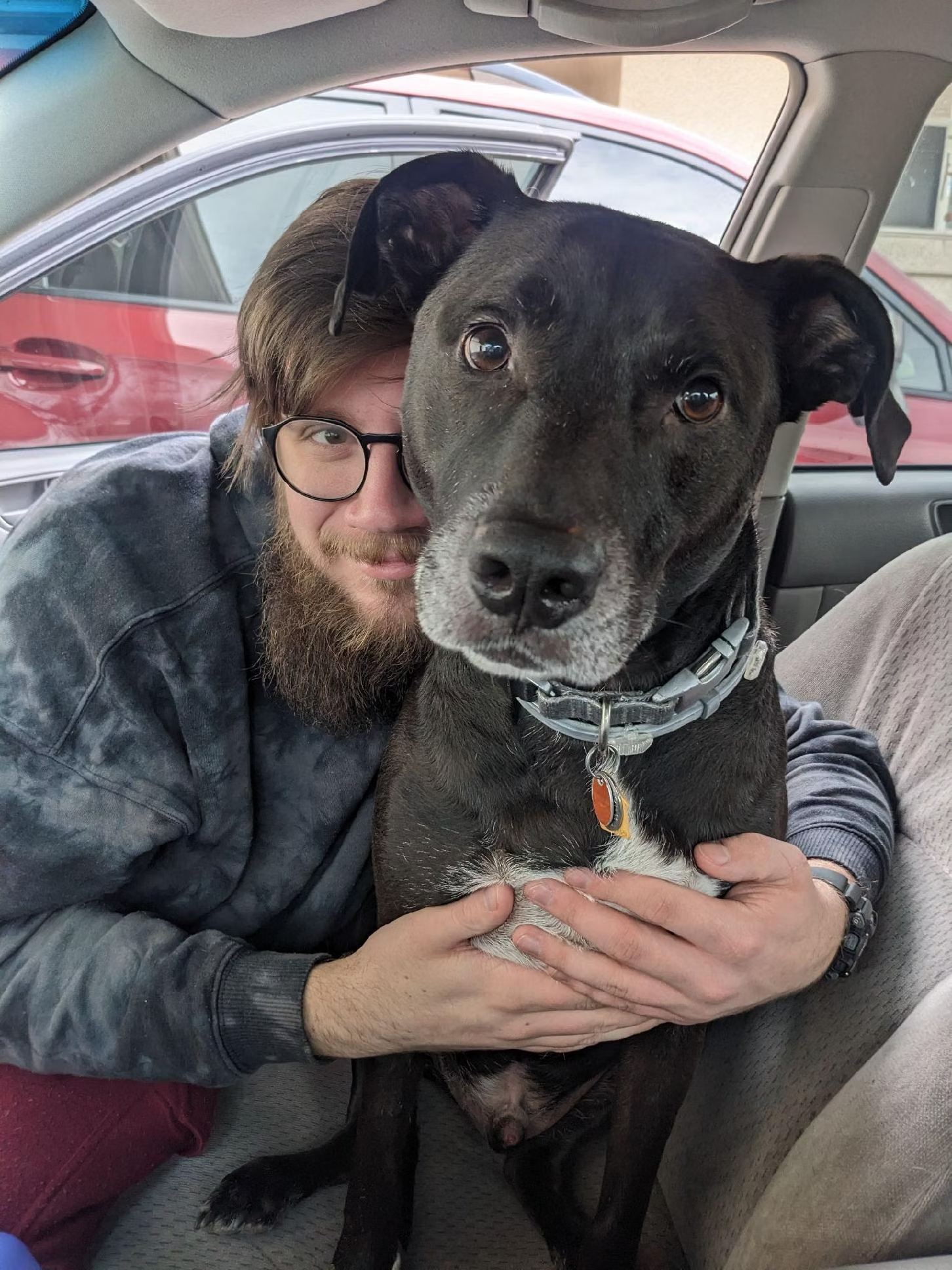

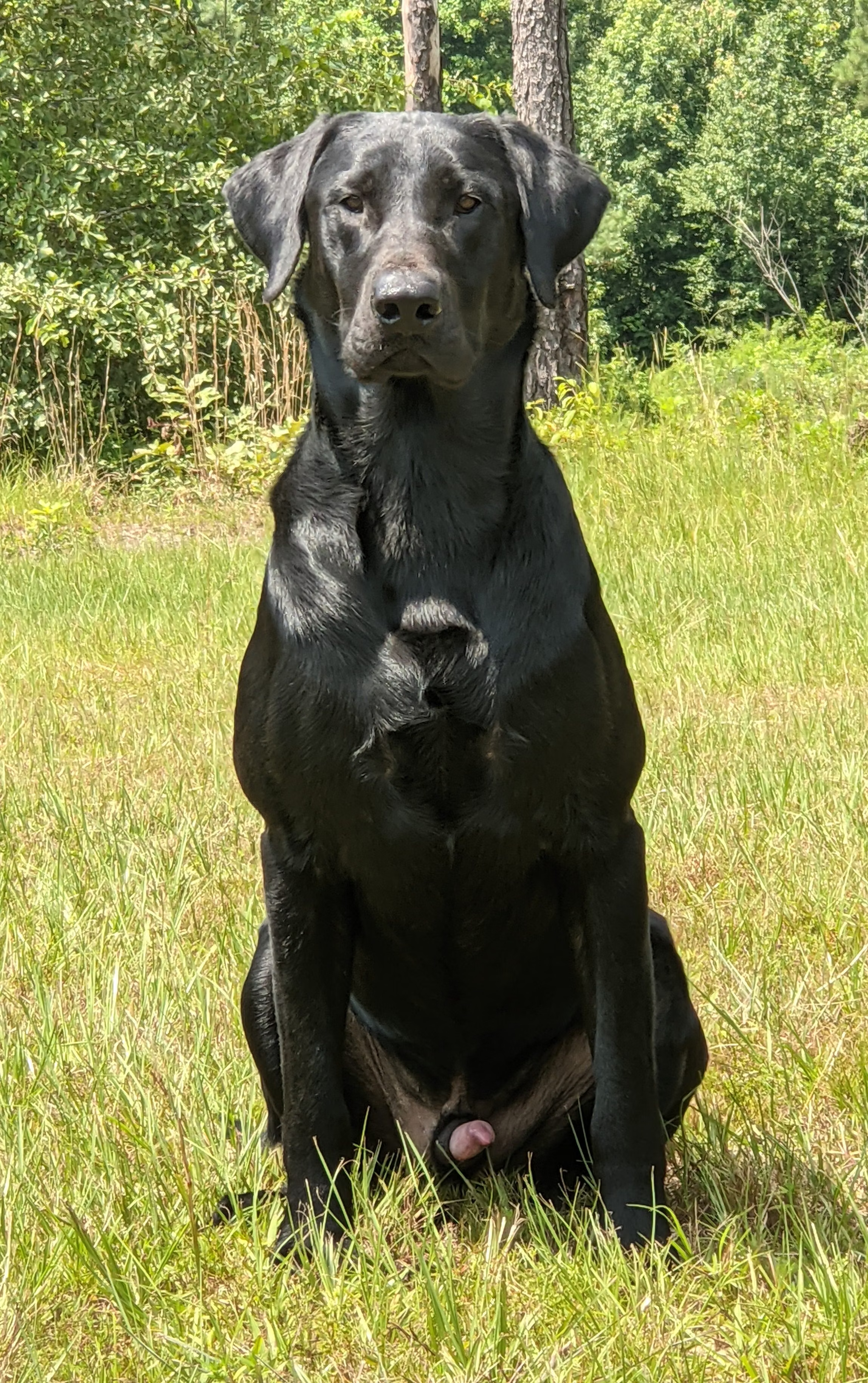


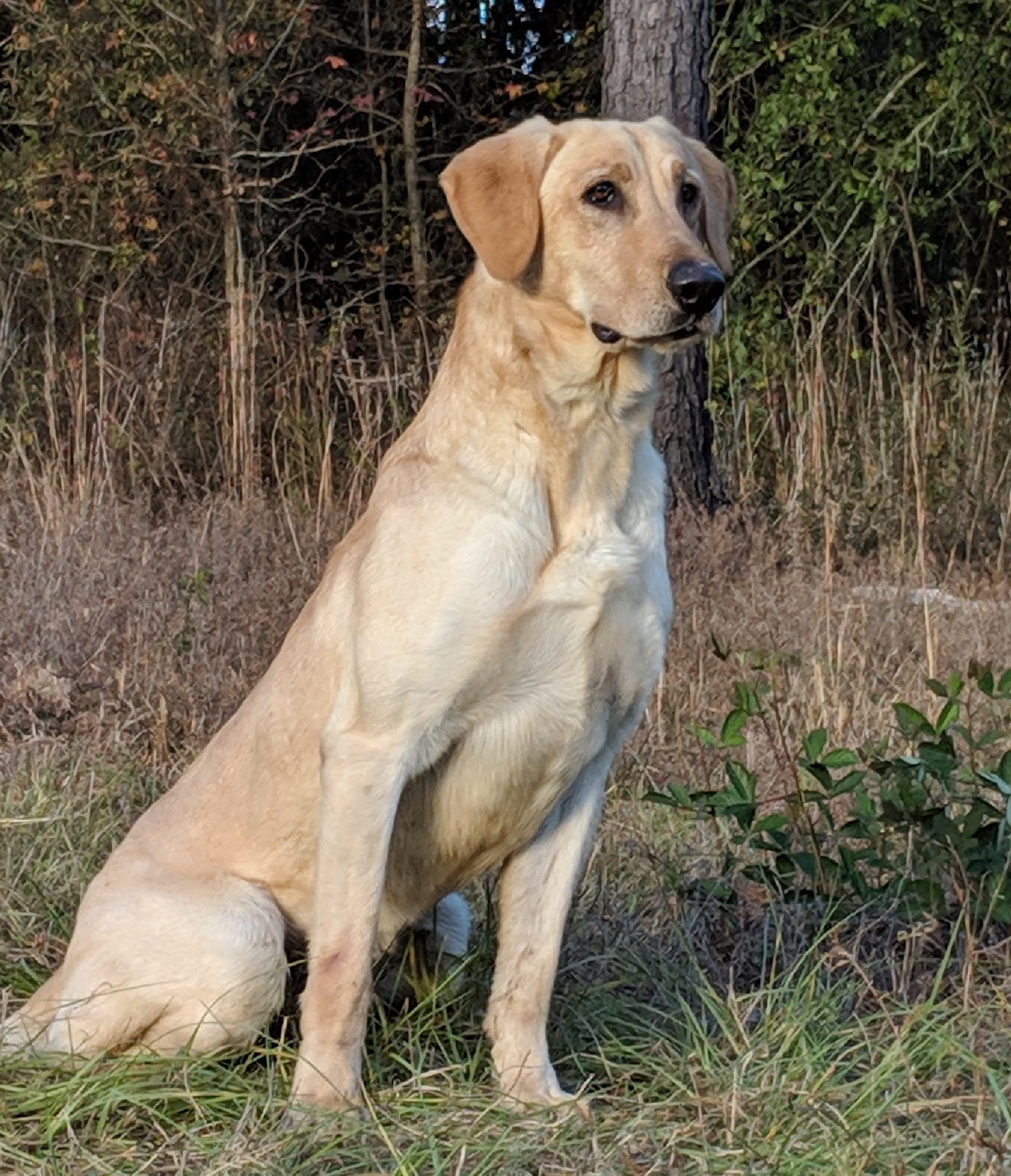


About the Labrador Retriever
The Labrador Retriever is a medium-to-large gundog from Newfoundland, widely registered with the Irish Kennel Club and kept across Ireland as a family pet, working dog and guide dog. Adults stand 55 to 62 cm at the shoulder and live roughly 11 to 13 years.
The Labrador Retriever is a breed most Irish people will recognise instantly, whether they have met it on a farm lane in Tipperary or on a footpath in Dublin 4. Bred originally to retrieve fish and game from cold Atlantic water, it carries traits that translate well to Irish life: a weather-resistant coat, an adaptable temperament and a strong willingness to work alongside people.
In Ireland the Labrador sits among the most commonly registered breeds with the Irish Kennel Club. It serves as a family pet, a guide dog for the Irish Guide Dogs for the Blind, and a working dog in detection and search roles.
The coat is short and dense with a water-resistant outer layer over a soft undercoat. Three colours are recognised under the IKC standard, which follows The Kennel Club in the United Kingdom: black, yellow and chocolate. Shedding is steady throughout the year with heavier seasonal periods.
| Attribute | Detail |
|---|---|
| Origin | Newfoundland (now part of Canada), developed further in the United Kingdom |
| Size | Medium to large; 25 to 36 kg |
| Lifespan | About 11 to 13 years |
| Group/role | Gundog; retriever, assistance and detection work |
| Good with | Children, families, other dogs; generally social with strangers |
Who the breed suits
The Labrador suits an active household that can commit to daily exercise and consistent training. It is a reasonable choice for first-time owners willing to put in the work, and it fits well in families with children. It is a poor match for anyone who wants a low-energy dog, a dog that barely sheds, or a dog that can be left alone for most of the working day. Labradors are social and prone to gaining weight when under-exercised.
History and origin
The Labrador descends from the St. John's water dog of Newfoundland, was shaped into its modern form on British shooting estates in the 1800s, and was formally recognised by The Kennel Club in 1903.
The breed's roots lie in Newfoundland, where dogs known as the St. John's dog, or lesser Newfoundland, helped fishermen retrieve fish, haul nets and pull lines from cold Atlantic water during the 1700s and early 1800s. These were working dogs well adapted to wet, cold conditions.
British visitors and traders brought dogs of this type to England in the early nineteenth century. Several aristocratic estates, among them those of the Earl of Malmesbury and the Duke of Buccleuch, kept and selectively bred them for retrieving game on shooting estates. The name "Labrador" attached to the breed during this period, though the dogs came from Newfoundland rather than the Labrador coast itself.
Over decades of breeding in Britain the type was refined and standardised. Quarantine regulations and a tax on female dogs in Newfoundland eventually cut off the flow of new imports, so British-bred lines became the foundation for the modern breed.
The Kennel Club in the United Kingdom granted formal recognition in 1903. Yellow and chocolate dogs were noted in the earliest records alongside the more common blacks, though black was by far the most prevalent colour in the founding stock. The breed came to Ireland through the Anglo-Irish sporting and gentry circles that maintained close ties with British estates throughout the nineteenth and early twentieth centuries.
Appearance and breed standard
Labradors are powerfully built dogs with a broad head, a distinctive otter-shaped tail and a short water-resistant double coat in black, yellow or chocolate. Males stand 57 to 62 cm and females 55 to 60 cm.
The coat is the first thing worth noting for owners in Ireland: short, straight and water-resistant over a dense soft undercoat. It dries relatively quickly after a wet walk, though it will carry mud. The overall build is muscular and well balanced, with a deep chest, a level topline and a broad head with a moderate stop. The ears lie close to the head. The tail is thick at the base, rounded in cross section and covered in dense fur; breeders call it the otter tail and it is one of the breed's most recognisable features.
| Trait | Detail |
|---|---|
| Height | Males 57 to 62 cm; females 55 to 60 cm |
| Weight | Males 29 to 36 kg; females 25 to 32 kg |
| Coat | Short, dense, straight double coat; water-resistant |
| Colours | Black, yellow, chocolate |
| Eyes | Brown or hazel; kind, alert expression |
Coat and colours
Yellow Labradors range from pale cream to fox-red. A small white patch on the chest is permitted by the breed standard but not sought after. Dogs marketed as "silver" are a dilute form of chocolate and are not recognised as a separate colour by the IKC or The Kennel Club. The double coat sheds steadily all year and more heavily during the two main seasonal moults.
Temperament and behaviour
Labradors are friendly, outgoing and people-focused, which makes them sociable with family, strangers and other animals. Their high energy needs an outlet; without enough exercise and mental work they develop destructive habits.
In both rural and urban settings in Ireland the Labrador tends to slot in easily. On a farm it will cheerfully follow the daily work; in a housing estate it will adapt to a tighter routine, though it still needs substantial daily exercise. The breed is people-focused to a degree that becomes a problem if the dog is regularly left alone for long stretches.
Labradors are usually patient and tolerant with children, though supervision is sensible with younger ones given the breed's size and enthusiasm during play. They greet most strangers with interest rather than wariness, which makes them poor guard dogs. Most get along readily with other dogs and will often accept cats in the household when introduced with care.
The retrieving instinct runs deep. A Labrador that does not get enough physical and mental work is likely to chew furniture, raid the press for shoes or dig up the garden. Clear routines and consistent training from early on prevent most of these habits from taking hold.
| Trait | Rating |
|---|---|
| Affection | 5 |
| Energy | 5 |
| Trainability | 5 |
| Vocalness | 3 |
| Shedding | 4 |
Care and grooming
Ireland's wet climate means coat drying and mud management are everyday practicalities. The breed also needs weekly brushing, at least an hour of daily exercise and regular company to stay settled.
Grooming
- Towel or blow-dry the coat after wet walks. The water-resistant outer layer sheds water well, but the dog will bring mud indoors if it comes straight in from a winter walk.
- Brush weekly to remove loose undercoat, and more frequently during seasonal moults.
- Bathe every couple of months or when the coat is genuinely dirty. Bathing too often strips the natural oils that give the coat its water resistance.
- Check and clean ears regularly. Drop ears trap moisture, and a dog that swims often or is out in heavy rain frequently is at higher risk of ear infection.
- Trim nails every few weeks and clean teeth several times a week.
Exercise
- Aim for at least 60 minutes of activity daily, split across walks, runs or play.
- Retrieving games and swimming suit the breed well. There are rivers, lakes and beaches across Ireland where a Labrador can use both instincts at once.
- Include training sessions or puzzle feeders to provide mental stimulation alongside physical exercise.
- Build up activity gradually for puppies. Growth plates are still developing in young dogs and sustained hard exercise can cause lasting joint damage.
Environment
A Labrador will adapt to a house with a garden or to a flat in the city, provided daily exercise is consistent and substantial. Access to a securely fenced garden is useful, since the breed's nose and wandering tendency mean an unfenced space carries risk. These dogs do poorly with long periods of isolation, so households where someone is home for most of the day suit them better than those where the dog is left for a full working day.
Nutrition and feeding
Labradors need a complete diet appropriate to their age and activity level, fed in measured portions to prevent weight gain. Adults typically need around 2.5 to 3 cups of dry food per day, divided into two meals.
Choose a complete and balanced dog food suited to the dog's life stage and activity level. Because Labradors are prone to obesity, portions must be measured rather than left available all day. The right amount depends on the calorie density of the food, the dog's current weight and how active it is. Product feeding guides are a starting point; adjust up or down based on body condition and monitor weight monthly. Fresh water should always be within reach.
| Life stage | Amount per day | Meals per day |
|---|---|---|
| Puppy (2 to 6 months) | About 2 to 3 cups | 3 to 4 |
| Puppy (6 to 12 months) | About 2.5 to 3.5 cups | 2 to 3 |
| Adult | About 2.5 to 3 cups | 2 |
| Senior/less active | About 2 to 2.5 cups | 2 |
Treats and supplements
Keep treats within about 10 percent of daily calorie intake and reduce the main meal accordingly. Many owners use a portion of the dog's measured kibble as training rewards rather than adding separate treats on top. Supplements such as fish oil or joint support are sometimes given, but a well-formulated complete diet meets the needs of a healthy adult dog. Speak to a vet before adding any supplement.
Health and common conditions
Labradors generally live 11 to 13 years and are a robust breed, but they are prone to obesity, hip and elbow dysplasia and several inherited conditions. Buying from a breeder who health-screens both parents reduces the risk of hereditary problems.
Obesity is the single most preventable health problem in the Labrador. It worsens joint conditions, shortens life and reduces the dog's capacity for the activity it needs. Beyond that, the main concerns are structural: hip and elbow dysplasia affect a meaningful proportion of the breed, and the risk is lower when both parents have been assessed and scored before breeding.
Responsible breeders in Ireland, including those registered with the IKC, should provide hip and elbow scores for both sire and dam. DNA tests exist for some inherited conditions, including exercise-induced collapse and progressive retinal atrophy, so ask to see results before buying a puppy.
| Condition | Signs | Note |
|---|---|---|
| Hip dysplasia | Limping, stiffness, trouble rising | Screened by hip scoring in breeding dogs |
| Elbow dysplasia | Front-leg lameness, reluctance to exercise | Inherited; screening recommended |
| Obesity | Excess weight, low stamina | Largely preventable with diet and exercise |
| Progressive retinal atrophy | Night blindness, declining vision | Inherited; DNA tests available |
| Exercise-induced collapse | Weakness or collapse after intense activity | Linked to a known gene; DNA test available |
| Ear infections | Head shaking, odour, scratching | Drop ears trap moisture; risk higher in dogs that swim or get wet frequently |
Preventive care
- Keep vaccinations and parasite treatments current.
- Feed measured portions and maintain a healthy body weight throughout the dog's life.
- Schedule an annual check with a vet; older dogs benefit from more frequent visits.
- Clean ears regularly, particularly if the dog swims or spends time outdoors in wet weather.
- Select puppies from parents with documented health screening results for hip, elbow, eye and relevant genetic conditions.
Training
The Labrador is among the most trainable breeds: food-motivated, attentive and willing to work with people. Starting early and using reward-based methods produces reliable results.
The Labrador's long history as a working gundog, cooperating closely with handlers in difficult conditions, is part of why the breed trains so readily. The same qualities that make it useful in detection work and as a guide dog make it cooperative in everyday training. It responds best to clear rewards, consistent cues and short sessions. The main difficulties are managing the breed's energy and discouraging its habit of mouthing and picking up objects.
Getting started
- Begin socialisation early, taking the puppy to different environments, people and other animals during the first few months.
- Teach core cues including sit, stay, recall and leave it, using small food rewards as reinforcement.
- Work on loose-lead walking from the start. An adult Labrador pulling on a busy footpath or through a town centre becomes difficult to manage.
- Redirect mouthing onto appropriate chew toys and reward the dog for settling calmly.
- Add retrieving tasks or scent work to make use of the dog's natural drive.
- Practise cues in different locations and with different distractions to build reliable responses regardless of setting.
Breeding and raising puppies
Female Labradors reach sexual maturity between 6 and 12 months but should not be bred until physically mature and health-tested. Gestation lasts about 63 days and litters commonly number 6 to 8 puppies.
Females typically have their first heat between 6 and 12 months, but breeding before the dog is fully mature and health-tested is not considered responsible practice. Cycles occur roughly twice a year. Before mating, both parents should have been assessed for hip and elbow condition and tested for inherited conditions relevant to the breed.
Gestation runs approximately 63 days from conception. Litter size is most commonly 6 to 8 puppies, though both smaller and considerably larger litters are possible. Newborns arrive with eyes and ears closed and rely entirely on the dam in the first weeks.
Weaning onto solid food begins around 3 to 4 weeks of age. Handling and exposure to household sights, sounds and people during the breeder's care lays the foundation for temperament. Puppies are generally ready for their new homes at 8 weeks, once weaned and started on their vaccination programme. In Ireland, microchipping is required by law before a puppy is sold or transferred to a new owner; breeders registered with the IKC are expected to comply with this requirement.
| Metric | Value |
|---|---|
| Sexual maturity | About 6 to 12 months |
| Heat cycles | Roughly twice per year |
| Gestation | About 63 days |
| Average litter size | 6 to 8 puppies |
| Weaning age | About 6 to 8 weeks |
| Age to new home | About 8 weeks |
Registering your Labrador Retriever in Ireland, chip and record both
Irish law wants every dog chipped and recorded; United Pet Club keeps your Labrador Retriever's record free, current, and there for life.
How to register a Labrador Retriever in Ireland
Irish law has required every dog to be chipped and registered since the 2015 Regulations came in, and it expects the details behind the chip to stay current, not gather dust. A free United Pet Club profile does that for your Labrador Retriever, for life. Registering your dog is a few minutes' work and costs nothing at all.
Lodge your Labrador Retriever's fifteen digit number with United Pet Club and the chip finally earns its keep: free registration for life, every brand accepted, and a record the ISPCA or any warden can turn into a phone call. Microchip registration takes minutes, and the free account covers the profile while you're at it.
How do I register my Labrador Retriever in Ireland?
Set yourself up with a free United Pet Club account, key in your Labrador Retriever's details and a photo, and save. The profile holds for the whole of his life without charge, and the chip number can be lodged whenever you have it.
How do I register my Labrador Retriever's microchip?
Lodge the fifteen digit chip number in your free account along with your address and phone number. The lifetime plan covers the registration and every update after it, free, whatever brand the vet used.
Is microchipping a Labrador Retriever required in Ireland?
It is. The 2015 Regulations require every dog to be chipped and registered, pup or rescue alike. Keeping the record current is the part that falls to you, and United Pet Club makes that part free.
What does it cost to register a Labrador Retriever in Ireland?
Not a penny. Profile, chip record, and every amendment are covered for life, with no renewal ever.
Frequently asked questions
Common questions from prospective owners in Ireland about Labrador Retrievers, covering size, shedding, suitability with children, lifespan, cost, daily care and temperament with strangers.
How big does a Labrador get?
Adult Labradors stand 55 to 62 cm at the shoulder. Males typically weigh 29 to 36 kg and females 25 to 32 kg. They are solidly built dogs, so even the lower end of that range is a substantial animal.
Do Labradors shed a lot?
Yes. The dense double coat sheds throughout the year, with two more intense moults each season. Weekly brushing is the minimum; during the heavy moults a daily brush for a week or two makes a noticeable difference to the amount of hair around the house.
Are Labradors good with children?
Generally yes. They are patient and tolerant, but their size and enthusiasm mean young children should be supervised, particularly during boisterous play where the dog might knock a small child over without any bad intention.
How long do Labradors live?
The typical lifespan is 11 to 13 years. Keeping the dog at a healthy weight throughout its life is one of the most significant things an owner can do to support both length and quality of life.
How much does a Labrador puppy cost in Ireland?
Prices vary depending on the breeder, the parentage and whether health tests have been carried out. Puppies from IKC-registered breeders with documented health screening for both parents tend to cost more than those without. Rescue organisations also rehome Labradors, usually at a lower cost.
Are Labradors easy to care for?
Coat care and training are both straightforward. The main demands are daily exercise, consistent company and careful portion control to prevent weight gain. In Ireland's climate, drying the dog and managing muddy paws after outdoor walks is a regular part of the routine.
Are Labradors good guard dogs?
No. They are inclined to greet strangers with enthusiasm rather than suspicion, which makes them poor deterrents. They may bark to let you know someone is at the door, but guarding is not a characteristic of the breed.